
Reviewed · SAMURAI & NINJA EXPERIENCES
Ninja Samurai 2-hour hands-on lesson by Japanese master in Tokyo
The most unusual part of this Tokyo experience is that you do not just watch a staged ninja show. You put on ninja clothing, learn Kuji-In meditation, handle traditional weapons, and practise sword movements under the direction of a Japanese sensei. The class covers both ninja skills and samurai sword technique, with history and myth-busting folded into the training.
I like the small maximum of six, which gives the instructor time to correct your stance and make the activities feel personal. I also like the range of activities: shuriken, blow darts, ninja tools, sword drawing, and a little performance practice. The main drawback is the location. It is in Shiomi rather than beside Tokyo’s best-known sights, and the building can take a little effort to find.
In This Review
- Key points to know before booking
- A two-hour lesson, not a costume photo stop
- Getting to the Shiomi training space
- Changing into ninja clothing
- Kuji-In meditation and the ninja mindset
- Ninja tools, shuriken, and blow darts
- Ninja trick-house ideas and movement drills
- Drawing and using a samurai sword
- The instructors make or break the lesson
- Is $86.22 good value for two hours?
- Who should book this Tokyo activity?
- Final verdict: a strong pick for active culture
- FAQ
- How long does the Ninja Samurai lesson last?
- Where does the class meet?
- How many people can join the class?
- Is the lesson taught in English?
- Is ninja clothing included?
- What activities are included?
- Do I need previous martial arts experience?
- Is transportation included?
- What is the cancellation policy?
Key points to know before booking
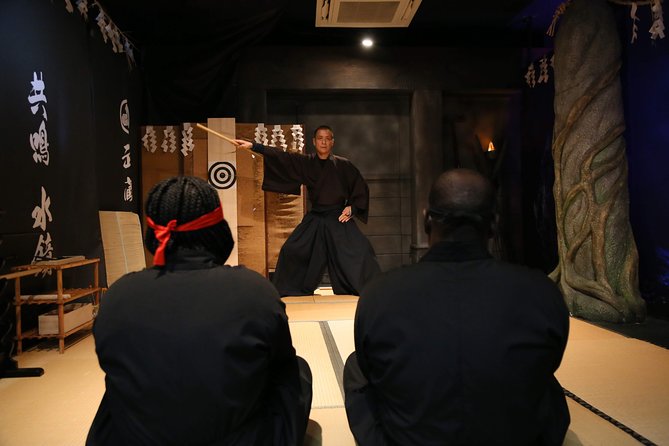
- Small class size: No more than six people take part, so you should receive direct instruction rather than simply watch from the back.
- Two traditions in one session: The class covers ninja methods and spirit as well as samurai sword handling.
- Hands-on weapons practice: You may try shuriken, blow darts, ninja swords, tools, and samurai sword movements.
- English-speaking instruction: Japanese sensei teach the lesson in English, with instructors including Hyoga, Asami, Onel, and Buddy.
- Cost and timing: At $86.22 per person for about two hours, this is priced as a special activity rather than a cheap museum visit.
- Plan your arrival: The venue is in Shiomi, and one visit required four short flights of stairs when the elevator was unavailable.
A two-hour lesson, not a costume photo stop
Tokyo offers plenty of polished cultural shows, but this class takes a more active route. You dress in ninja clothing, listen to explanations of Japan’s feudal period, then practise techniques instead of sitting through a performance.
The class is called a ninja and samurai lesson because it combines two related but distinct subjects. The ninja portion looks at stealth, tools, meditation, throwing weapons, and blowgun use. The samurai section focuses on the sword, including how to draw it, how to handle it, and how to perform learned movements.
I would set your expectations correctly. This is not a formal martial arts course that will turn you into a trained swordsman in two hours. It is an introductory lesson, built for visitors who want a lively look at the techniques and ideas behind ninja and samurai culture.
That makes it a good fit for a first visit to Japan. You get some history, some physical activity, and plenty of chances to try something with your own hands.
More samurai and ninja sessions:
- Tokyo: Samurai Ninja Museum Guided tour and Experience
★ 4.6 · 1,010 reviews - Tokyo: Samurai Sword & Archery Class from Samurai Descendant
★ 5.0 · 603 reviews - Best Samurai Experience in Tokyo
★ 5.0 · 458 reviews
Getting to the Shiomi training space
The meeting point is NINJA SAMURAI TOKYO in Shiomi, Koto City, at Bayfrere Shiomi, East, fourth floor, postal code 135-0052. The venue is near public transportation, and the activity finishes back at the same place.
Allow extra time to get your bearings. The address is not in the most obvious sightseeing district, and one visitor who arrived by taxi was unable to locate the class. The operator apologized for that problem, but I would still avoid arriving at the last minute. Check the address carefully before leaving your hotel and have the meeting details ready to show a driver or station staff member.
The venue is described in one account as a true dojo rather than a large, theatrical set. That matters because the surroundings may feel plain compared with glossy promotional photographs. You are coming for the lesson, not for an elaborate theme-park backdrop.
There are stairs to consider. On one visit, the elevator was not working and the group climbed four short flights. Most people can take part, but anyone with difficulty using stairs should confirm the current access arrangements before booking.
Changing into ninja clothing
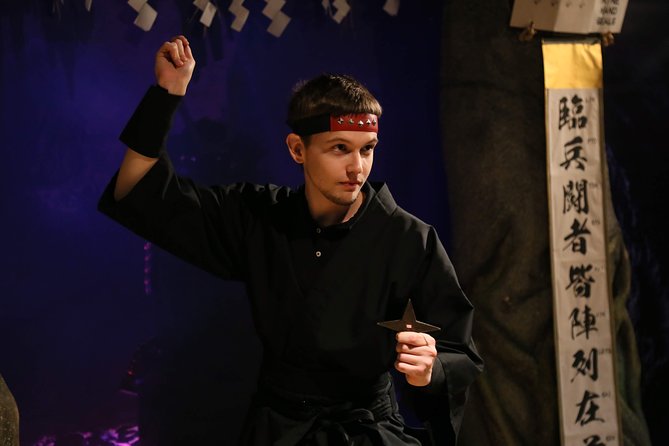
Ninja clothing rental is included, and changing into the outfit is more than a quick photo opportunity. It helps mark the change from sightseeing mode to training mode, especially for children and families.
The class welcomes a wide spread of ages. The reported groups have included children around 11 and 13, adults in their twenties, and people in their sixties and seventies. You do not need to be an athlete, but you should be comfortable with a class that may involve movement, running, jumping, and weapon drills.
I would wear comfortable clothes underneath the rental outfit and shoes that let you move safely. Bottled water is not included, so bring your own if you tend to get thirsty during active activities.
The changing process also gives the sensei a chance to introduce the class and set expectations. English instruction is included, and the named instructors have been described as funny, patient, and easy to follow. The exact teacher may vary, so do not book around one particular name unless the operator confirms it.
Kuji-In meditation and the ninja mindset
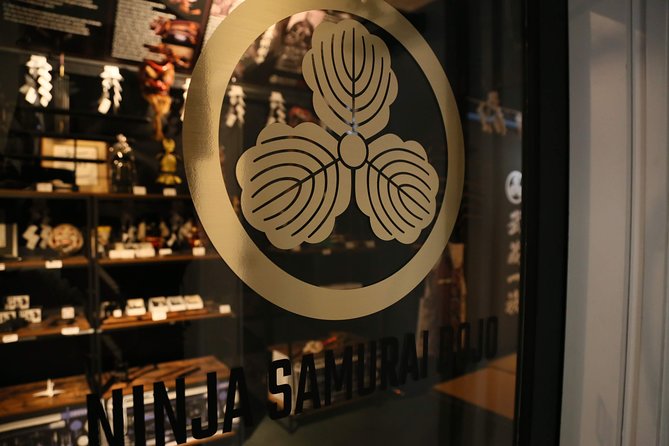
The class begins with ninja ideas as well as physical skills. Kuji-In, described here as ninja meditation, introduces the mental side of the tradition. It gives the session a useful pause before the faster activities begin.
This part may appeal to you if you want more than a weapons sampler. Ninja training is often reduced to movie images of smoke, rooftops, and impossible acrobatics. The lesson aims to separate those myths from the practices and spirit being taught.
The historical explanations are a strong part of the class. The instructors discuss ninja and samurai customs, tools, techniques, and differences between the two traditions. One particularly useful point is the distinction between a ninja sword and a samurai sword, something popular films often blur.
Do not expect a university lecture. The history is there to make the practical work more meaningful, and the teaching style is informal. That balance works well for families and mixed-age groups because you learn a little before trying the next activity.
A few more Tokyo bookings worth comparing
- Sushi Making Tokyo Roll and Authentic Japanese Sushi Class
★ 5.0 · 3,971 reviews - Tokyo: Roll and Authentic Sushi Making Class in Asakusa
★ 4.9 · 1,957 reviews - Tokyo Shinjuku Chopsticks Making Class
★ 5.0 · 1,763 reviews - Tokyo: Sushi Making Class in a Happi Coat near a Famous Spot
★ 4.9 · 1,377 reviews
Ninja tools, shuriken, and blow darts
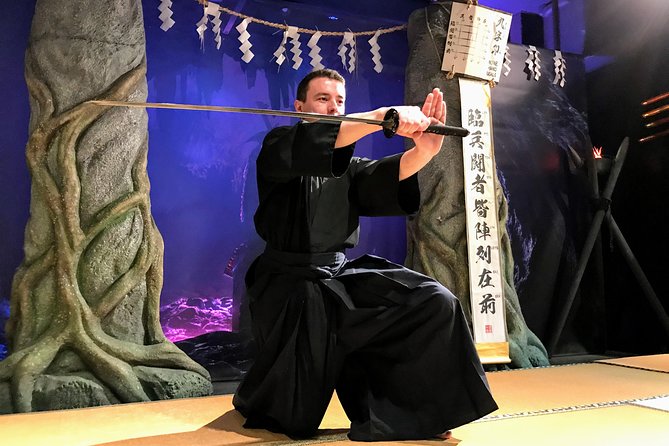
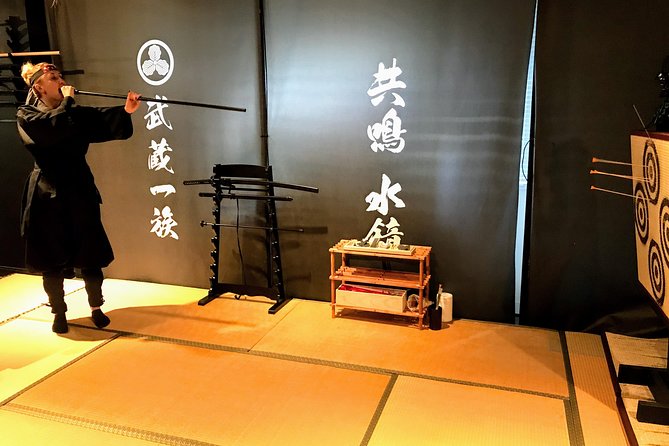
The equipment section gives you several short activities rather than one long drill. You are introduced to ninja weapons and tools, then get opportunities to handle selected items under instruction.
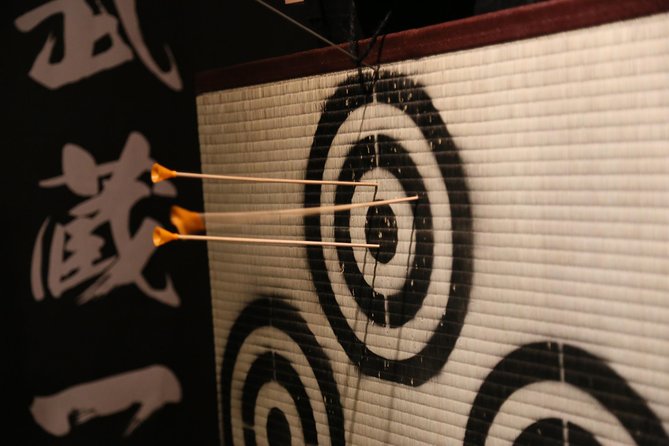
Shuriken, commonly called ninja stars, are one of the class highlights. You practise throwing them at targets, which gives you a clear goal and makes the lesson feel active from the start. Chopsticks are also mentioned in the experience, adding an unexpected detail to the tool demonstrations.
The blowgun, or ninja blow dart, is another memorable part of the session. You learn how the equipment is used and fire darts toward a target. It is a simple skill to explain, but the first attempt can be harder than it looks, which adds a bit of good-natured humor to the room.
The precise equipment may depend on the day and the group. One account describes real ninja stars, blow darts, ninja swords, and a metal sword, while other sessions may use different training equipment. The important point is that the class is hands-on, not just a demonstration from a distance.
Safety instructions should be taken seriously. These are weapons, even in a controlled lesson, so listen closely and wait for the instructor’s signal before handling anything.
Ninja trick-house ideas and movement drills
The lesson also includes an introduction to a gimmick or trick house. The supplied details do not spell out every feature, so you should not expect a full-scale maze or elaborate hidden passage system. Think of it as a short look at the clever devices associated with ninja stories and training.
Movement is part of the experience too. You may practise stealth movements, routines, or simple physical techniques. One account specifically notes that some activities involve running and jumping, so this is not ideal if you want a completely quiet, seated cultural presentation.
At the same time, the class is designed for ordinary visitors rather than martial arts experts. People with different ages and skill levels have completed the activities, and instructors adjust their approach to the group. You are not expected to arrive flexible, fast, or experienced.
This is where the small class size pays off. With no more than six participants, the instructor can watch each person, demonstrate again, and keep the pace from becoming too rushed.
Drawing and using a samurai sword
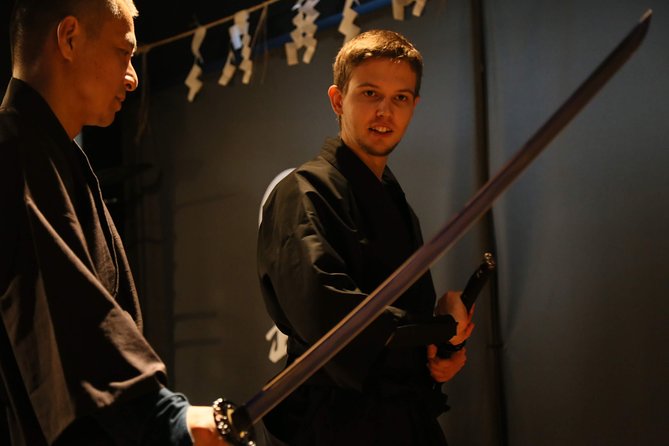
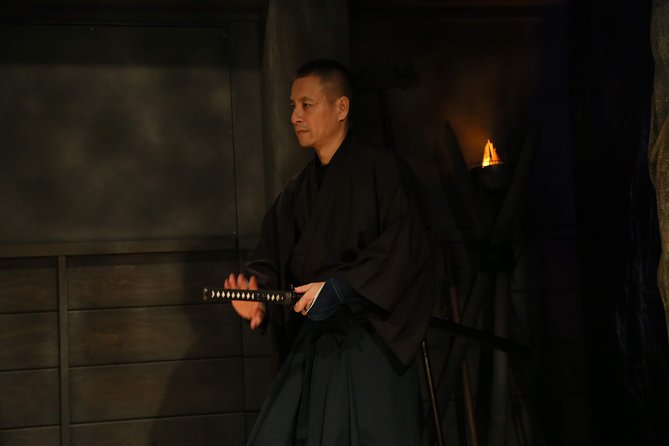
The samurai portion gives the experience its strongest sense of ceremony. You learn how to draw a Japanese samurai sword and how to use it in basic movements. The focus is on technique and control, not uncontrolled swinging.
The instructor demonstrates the correct sequence, then lets you practise. You may also perform the samurai routine you have learned, which turns the final part into a small presentation rather than a series of isolated exercises.
Some sessions have used a real metal sword, according to one detailed account. That should not be treated as a guarantee for every class, since training equipment can vary. Either way, the sword work is taught closely and should be approached with care.
I like this part because it shows the difference between holding a sword for a photograph and learning why posture, drawing technique, and movement matter. Even a short lesson gives you a better understanding of the discipline behind the familiar image of the samurai.
The comparison with ninja swords is also useful. The instructor explains differences in the weapons and traditions, helping you avoid treating every Japanese sword as the same object.
The instructors make or break the lesson
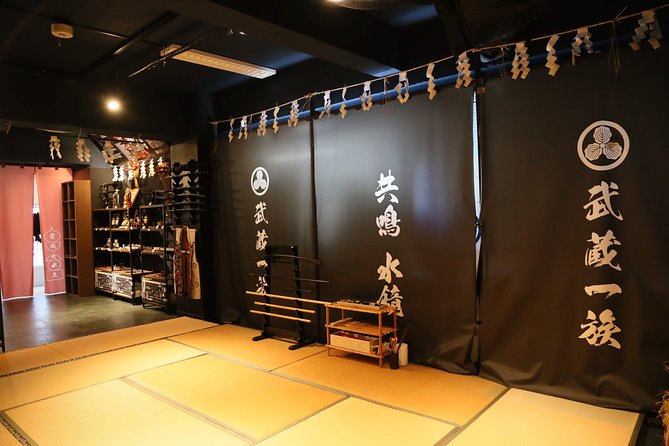
The sensei are central to the experience. Names appearing in the available information include Hyoga, Asami, Onel, and Buddy, but the teacher assigned to your class can change.
The strongest teaching qualities are clear English, patience, humor, and the ability to keep a mixed group involved. Hyoga is specifically praised for making the ways of the ninja and samurai easy to learn. Asami is described as strong at explaining history and technique. Onel is credited with making the activity a memorable family experience, while Buddy is described as a master who combined education with fun.
Those details point to an important strength: the session is not only about equipment. The instructor talks, demonstrates, corrects, and keeps the mood relaxed. That helps if you feel awkward in costume or worry that you will be the least athletic person in the room.
The tone also suits families. Children can enjoy the weapons and movements, while adults get more from the cultural background and historical comparisons. A group ranging from age 11 to 73 has taken part together, which gives you a good idea of the class’s broad appeal.
Is $86.22 good value for two hours?
At $86.22 per person, this is not a budget activity. You are paying more than you would for a simple self-guided museum visit, and the lesson lasts only about two hours.
The value comes from the combination of several elements in one booking: English-speaking instruction, clothing rental, a small group, historical explanation, sword training, shuriken practice, blow darts, ninja tools, and a final performance element. If you tried to arrange comparable instruction privately, the cost would likely be higher, though this class is not presented as a private lesson.
The maximum of six is important when judging the price. A large tourist show can be cheaper per person, but you may spend most of the time watching. Here, the format is built around participation and individual turns.
I would recommend it most strongly if you want an active cultural activity that breaks up temple visits, shopping, and long train rides. If you only want a quick costume photograph, the price may feel high. If you value instruction and hands-on practice, the two-hour format gives you a solid amount to do.
The 99 percent recommendation rate and 4.9 rating from 194 ratings suggest a very reliable experience, though no activity is perfect. The one serious complaint involved difficulty finding the venue, not the lesson itself.
Who should book this Tokyo activity?
This is a good choice for families, couples, friends, solo visitors, and groups with different ages. It works especially well for anyone interested in Japanese history, martial arts, anime-inspired culture, or unusual Tokyo activities.
You do not need prior training. You should, however, be willing to follow instructions, handle equipment carefully, and take part in physical movements. If running or jumping is uncomfortable for you, ask about the current exercises before booking.
I would also choose this for a second or third day in Tokyo, when you want something different from sightseeing. It works well as a planned two-hour activity, but allow time on either side for the trip to Shiomi and for finding the building.
Book with the cancellation terms in mind. You can receive a full refund if you cancel at least 24 hours before the start time. Within 24 hours, changes and cancellations are not accepted for a refund. The class also depends on suitable weather and a minimum number of participants, so an operator cancellation may lead to another date, another experience, or a full refund.
Final verdict: a strong pick for active culture
I would book this if you want to do more than look at Japan’s past. The class gives you a short, lively introduction to ninja meditation, tools, stealth ideas, and samurai sword work, all in English and with a small group.
The best reasons to go are the personal instruction, the funny and patient teaching style, and the number of activities packed into two hours. The main cautions are the price, the less central Shiomi location, possible stairs, and the fact that the class is an introduction rather than serious martial arts training.
Check the address before leaving, wear comfortable clothing, bring water, and arrive with enough time to find the fourth-floor dojo. If those details suit you, this is one of Tokyo’s more memorable hands-on cultural activities.
FAQ
How long does the Ninja Samurai lesson last?
The experience lasts approximately two hours.
Where does the class meet?
It meets at NINJA SAMURAI TOKYO, Bayfrere Shiomi, East, fourth floor, Shiomi, Koto City, Tokyo 135-0052. The activity ends back at the same meeting point.
How many people can join the class?
The maximum group size is six participants.
Is the lesson taught in English?
Yes. A Japanese sensei who has trained in ninja arts teaches the class in English.
Is ninja clothing included?
Yes. Ninja clothes rental during training is included in the price.
What activities are included?
The class includes Kuji-In ninja meditation, an introduction to ninja weapons and tools, a look at a ninja trick-house feature, ninja sword training, shuriken throwing, blowgun or blow-dart practice, and samurai sword instruction.
Do I need previous martial arts experience?
No previous experience is stated as a requirement. Most people can participate, and the class includes a wide range of ages and skill levels.
Is transportation included?
No. Private transportation is not included, though the meeting point is near public transportation.
What is the cancellation policy?
You can cancel at least 24 hours before the start time for a full refund. Cancellations or changes made less than 24 hours before the start time are not refunded. If the operator cancels because of poor weather or because the minimum number of participants is not met, you can receive another date or experience, or a full refund.
More 2-Hour Experiences in Tokyo
- Tokyo 2-Hour Genuine Samurai Experience: Kendo in Japan
★ 5.0 · 112 reviews - Tokyo: Flagship 2-Hour Street Go-Kart Tour by Street Kart
★ 4.9 · 94 reviews - Tokyo: Shinjuku Izakaya and Golden Gai Bar Hopping Tour (2h)
★ 4.9 · 67 reviews - Tokyo: 2-Hour Vegan and Vegetarian Ramen Guided Walking Tour
★ 4.8 · 33 reviews
New on our Tokyo list
- From Tokyo: Mount Fuji & Hakone Full Day Private Tour★ 4.9 · 25 reviews
- Tokyo Spectacular View Day-Cruise in 90 Minutes★ 5.0 · 25 reviews
- Real Tokyo Runner Club : Daikoku Car Meet Night Tour with JDM Car★ 5.0 · 25 reviews
- 2.5 Hour-Guided Cycle Tour in the Central Tokyo★ 5.0 · 25 reviews
- Tokyo: 2-Hour Night Bike Tour of the City’s Hidden Gems★ 4.9 · 25 reviews
- Ramen Making from Scratch +Akihabara Tour –Cooking Class★ 5.0 · 25 reviews
- [Self-Drive] Tokyo & Daikoku Custom Car Driving Tour★ 4.9 · 25 reviews
- Samurai themed Entertainment show in Shinjuku★ 4.5 · 25 reviews
Samurai & Ninja Experiences, compared.
Samurai Ninja Museum Guided tour and Experience
Read our review →
Samurai Sword & Archery Class from Samurai Descendant
Read our review →
Ninja Experience (Family Friendly) at Samurai Ninja Museum TOKYO
Read our review →
Samurai Entertainment Night Show in Kanda Shrine
Read our review →
Tokyo Sword Experience – includes Museum Ticket/Ninja Experience
Read our review →
Samurai Ninja Museum Asakusa: Samurai Sword Lesson & Tour
Read our review →
Samurai Sword Experience (Family Friendly)at SAMURAI MUSEUM TOKYO
Read our review →Browse the lists this tour appears in