

Reviewed · SAMURAI & NINJA EXPERIENCES
Tokyo: Samurai Sword & Archery Class from Samurai Descendant
The most unusual part of this three-hour class is that you do not simply pose with a sword while an instructor performs for you. At Toyama-Ryu BIZENKAI, samurai descendant Yoshioki Sumida teaches basic swordsmanship, sparring, target cutting, and Japanese horseback archery inside a working dojo near Machida.
I like the hands-on training and the way the class connects weapons to changing Japanese warfare. I also like the careful teaching: Sumida-sensei corrects your stance, grip, timing, and blade line rather than letting you wave a sword around for a photo. The main drawback is the price, $193 per person, and the class can be physically demanding.
In This Review
- Key points at a glance
- Entering the Machida dojo
- The opening lesson: swords, samurai, and changing weapons
- Iai: learning the basic sword forms
- Gekken sparring and timing
- Target cutting while moving
- Japanese bow and horseback archery tradition
- The final Toyama-ryu demonstration
- What makes the $193 price worthwhile
- Who should book this class
- Practical details before you reserve
- Should you book the samurai sword and archery class?
- FAQ
- Where is the samurai sword and archery class held?
- How long does the class last?
- What activities are included?
- Is the class taught in English?
- Is training clothing provided?
- How many people can join?
- What should I bring?
- Who should not take this class?
Key points at a glance
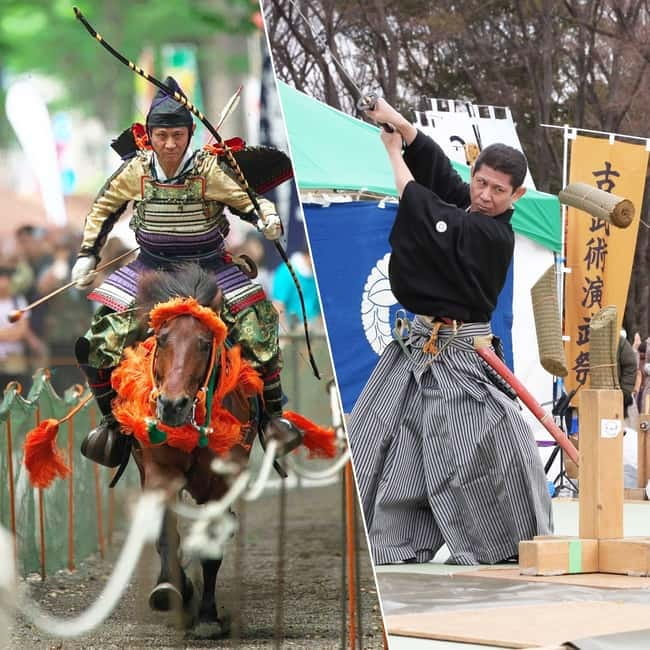
- Cutting while moving: Slashing a target in motion is far harder than a staged sword pose, and you will need focus, balance, and proper timing.
- Two old martial arts in one class: You practice swordsmanship and try a Japanese longbow linked to traditional horseback archery.
- A real dojo setting: The class takes place on the third floor of Toyama-Ryu BIZENKAI, not in a theme park or theatrical show.
- Strong instruction: Yoshioki Sumida teaches in Japanese and English, with assistants such as Harry helping participants follow the exercises.
- A useful history lesson: You learn why the bow, matchlock gun, and sword each mattered at different points in samurai warfare.
- Come ready to work: The session includes repeated sword movements, sparring, archery, and target practice, so expect some muscle soreness.
Entering the Machida dojo
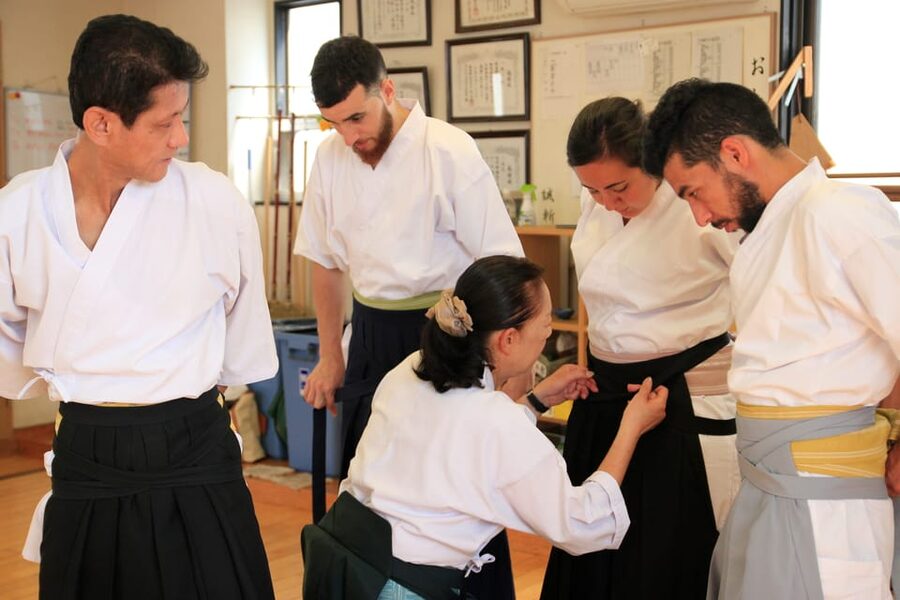
Toyama-Ryu BIZENKAI is about a 10-minute walk from JR Machida Station. The dojo is on the third floor. Look for the stairs at the back, between the sword shop and the vending machines on the first floor.
That final detail matters. This is not a large visitor center with obvious signs and a reception desk. Give yourself enough time to find the building and change without rushing. One useful tip is to arrive around 30 minutes early if possible. You may be able to watch the instructors practice or speak briefly with the teacher before class begins.
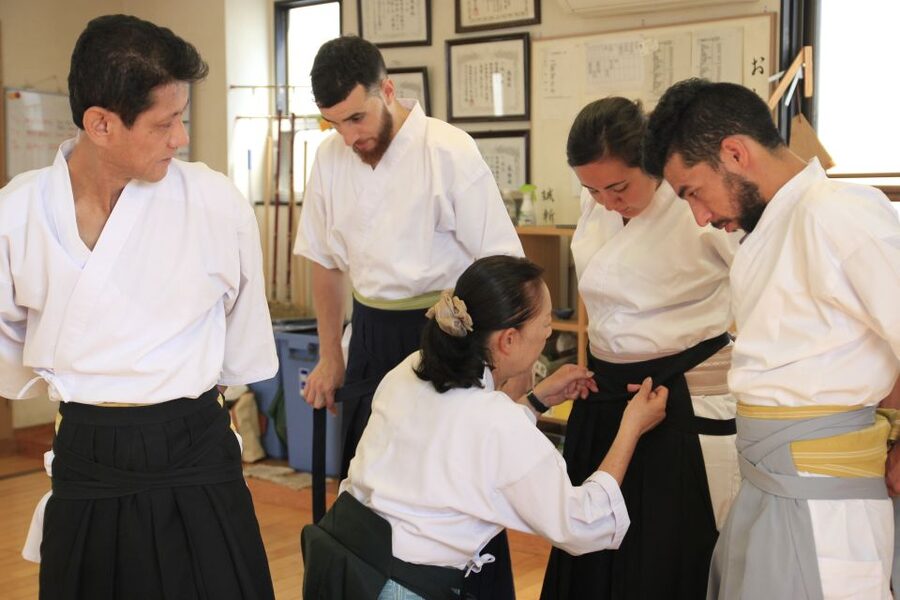
The room itself helps set the tone. You change into the provided training clothes, then take part as a student. The uniform is clean and practical, and wearing it makes the shift from sightseeing to training feel real without turning the session into costume theater.
The class is shared and can include up to 15 people. That means the amount of individual attention may vary with the group size. A smaller group can feel almost like a private lesson, while a full class will naturally involve more waiting between turns.
More dojo sessions:
- Tokyo:Samurai sword and archery class from a samurai descendant
★ 5.0 · 121 reviews - Tokyo 2-Hour Genuine Samurai Experience: Kendo in Japan
★ 5.0 · 112 reviews - Tokyo: Samurai Kendo Practice Experience
★ 4.7 · 102 reviews
The opening lesson: swords, samurai, and changing weapons
Sumida-sensei begins with an introduction to Japanese swords and samurai warfare. The useful point is that the sword was not always the main weapon associated with the samurai.
About 1,000 years ago, the bow was central to samurai combat. Around 450 years ago, the matchlock gun became more powerful. After civil war ended about 400 years ago, the sword became the main weapon in the cultural image most people recognize today.
This short timeline gives the practical exercises a reason. You are not just learning a series of poses. You are seeing how Japanese martial traditions developed as warfare changed.
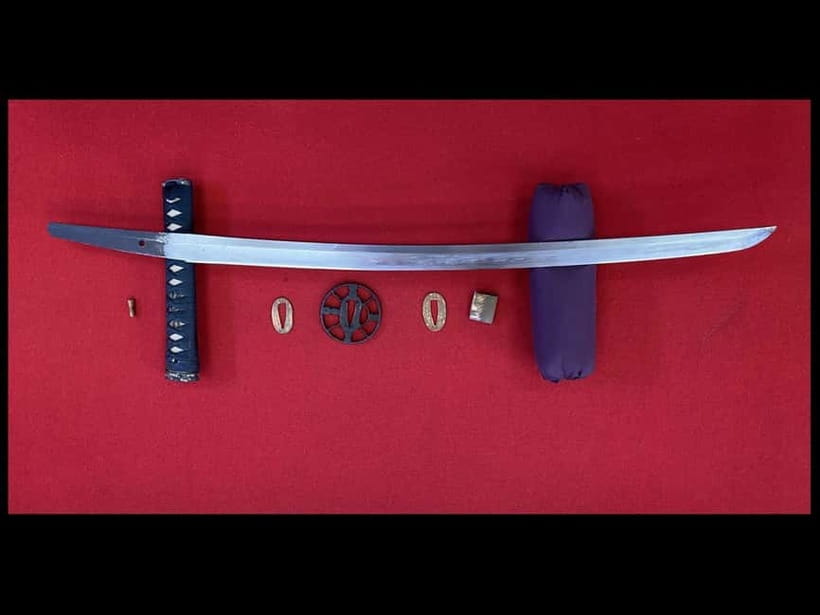
You may also hold an antique matchlock gun and examine traditional sword details. The class includes explanation of the blade and its construction, as well as basic etiquette and handling. That material is especially useful if your idea of samurai culture comes mainly from films or video games. Sumida-sensei is careful to point out where popular images get the details wrong.
The language is Japanese and English. Sumida-sensei speaks enough English to give clear instruction, explain the purpose of each movement, and correct beginners. Assistants may also help with demonstrations and safety. You do not need advanced Japanese, but you do need to pay close attention.
Iai: learning the basic sword forms
The iai lesson introduces you to controlled sword handling and swinging with a mock or practice sword. You learn the basic forms, often called kata, with attention to posture, grip, footwork, and the line of the blade.
This is where the class becomes more serious than a photo opportunity. A sword is not simply an extension of your arm. Small errors in wrist angle, shoulder position, or foot placement change the direction of the cut. Sumida-sensei repeats the movements and adjusts your form until the action begins to feel more controlled.
For a beginner, the sequence can look simple when demonstrated. It is less simple when you have to remember where your feet go, how your hands work together, and when to stop the blade. The value is in that difficulty. You begin to understand why formal sword practice depends on repetition and discipline.
The class also includes an exercise for checking the blade line. This helps you see whether the sword is traveling in a clean path rather than twisting or drifting. It is a small technical detail, but it gives you a better sense of what proper swordsmanship demands.
The pace is generally friendly, but the teacher expects attention. You may hear firm corrections as you repeat a movement. That is part of the lesson, not a sign that the instructor is trying to intimidate you.
Gekken sparring and timing
The gekken portion introduces attack and defense with practice swords. You learn the timing of a strike, how to respond, and how to spar in a controlled way.
This is one of the most enjoyable parts for many people because it turns the earlier forms into a live exercise. You must watch your partner, maintain your position, and respond rather than simply perform a memorized motion.
It is still a beginner class, not a full martial arts course. The goal is to understand distance, timing, and control. You should not expect a tournament or a free-for-all. The instructors set the pace and keep the activity structured.
I like this section because it exposes the gap between looking correct and reacting correctly. You can remember a form while standing still. Sparring asks you to make decisions. It also gives the group a social rhythm, since you work with another participant rather than only following the instructor.
Wear comfortable clothing under the uniform and be ready to move. The activity is not recommended for people with back, heart, or mobility problems, and it is not suitable for wheelchair users, pregnant women, people with epilepsy, or people with visual impairments.
More samurai and ninja sessions:
- Tokyo: Samurai Ninja Museum Guided tour and Experience
★ 4.6 · 1,010 reviews - Best Samurai Experience in Tokyo
★ 5.0 · 458 reviews - Ninja Experience (Family Friendly) at Samurai Ninja Museum TOKYO
★ 5.0 · 441 reviews - Tokyo: Samurai Entertainment Night Show in Kanda Shrine
★ 4.6 · 417 reviews
Target cutting while moving
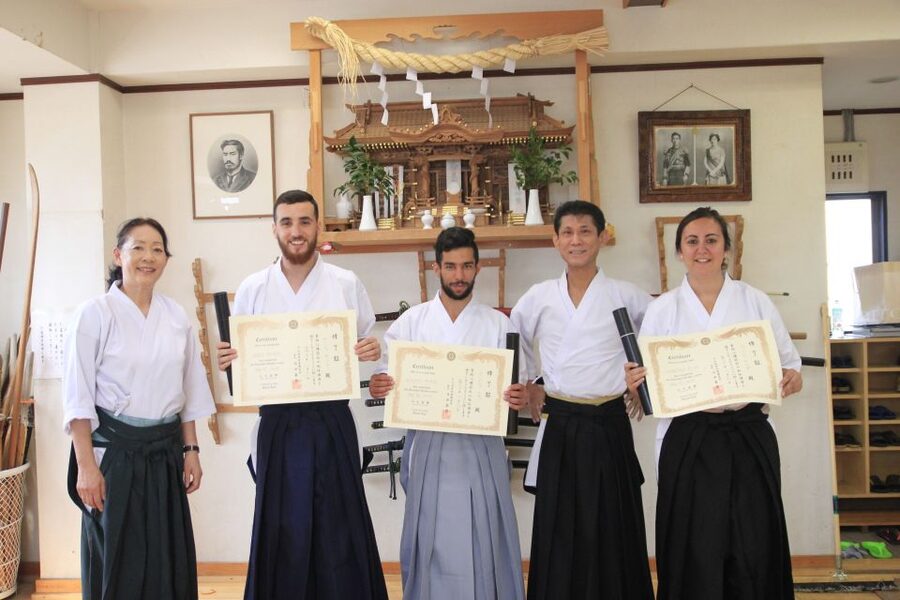
The target-cutting segment is the most physically and technically demanding part of the class. You slash multiple targets while moving, rather than making one stationary swing for a photograph.
That difference is important. A moving cut requires you to coordinate footwork, balance, timing, and the blade path at once. If your stance is wrong, the movement quickly feels awkward. If your timing is late, the cut loses force and accuracy.
The activity description refers to a mock sword for training, while participant accounts describe hands-on cutting with a katana. The exact weapon used for each exercise may depend on the instructor and safety setup, so follow Sumida-sensei’s directions closely. Do not assume that a sword is safe simply because the class is designed for beginners.
This is also the point where the training uniform earns its keep. You are moving, bending, stepping, and repeating forms. The session can feel like a workout, and some soreness the next day is possible.
Bring a drink and keep your attention on the instruction. You may take photographs and videos at suitable moments, but do not let your camera distract you during a technique. If someone in your group is filming the archery, a wide-angle lens is useful because the bow is long and the shooting position needs room in the frame.
Japanese bow and horseback archery tradition
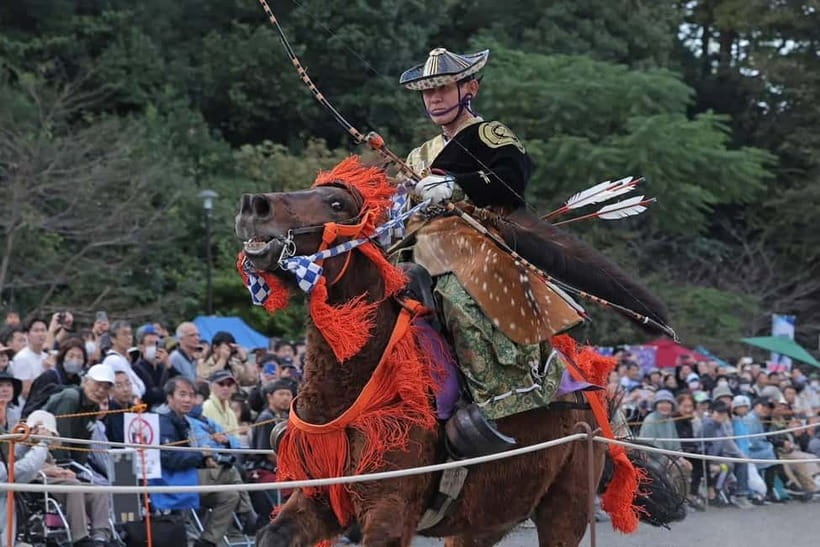
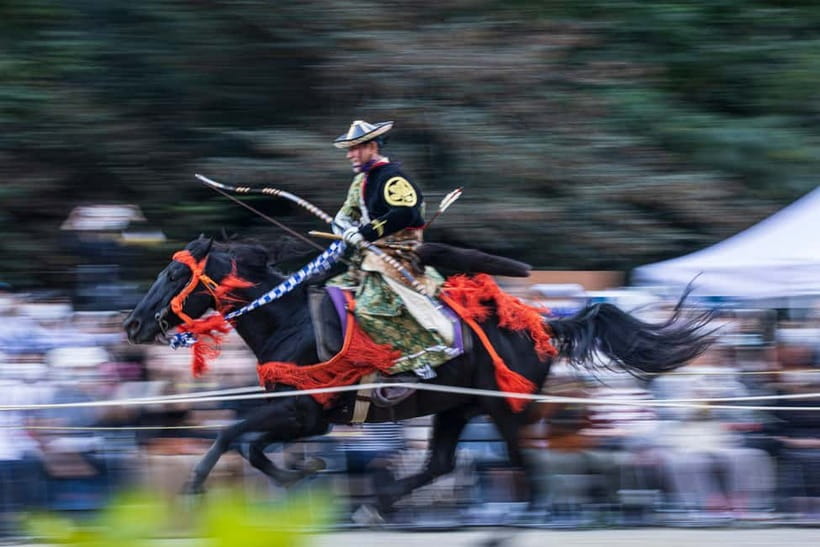
The archery section introduces a real horseback archery bow, the kind of long Japanese bow associated with the older samurai tradition. You try shooting arrows under instruction rather than watching only a demonstration.
A Japanese bow feels different from the compact bows many people know from modern target ranges. Its long shape and handling method require patience. You learn how to hold it, draw it, and release it with control.
The class does not turn you into a mounted archer in three hours. You are learning the basic feel of the bow and the discipline behind the technique. That limitation is worth understanding before booking. This is an introduction, not a complete course in yabusame or horseback shooting.
Still, the bow section gives the class a useful balance. The sword demands close control and quick movement. The bow asks for steadiness and patience. Together, they show two different sides of samurai training.
Left-handed participants should take note. One participant found that the sword work was taught right-handed and that this was more noticeable during archery. You may still be able to take part, but the standard instruction may not be adapted fully for left-handed technique.
The final Toyama-ryu demonstration
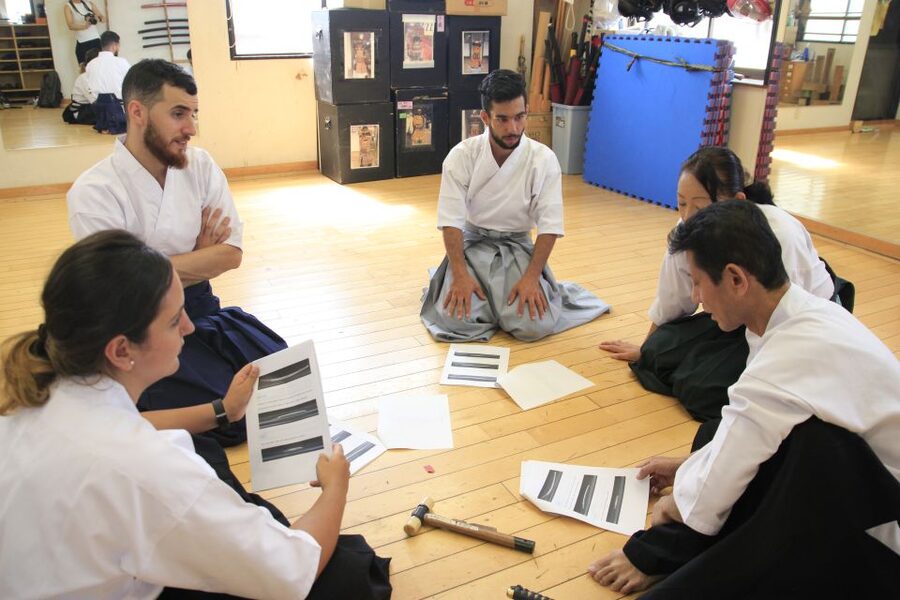
The class includes a live demonstration of Toyama-ryu by a seventh-grade practitioner. The instructor performs difficult techniques that are beyond what a first-time student can safely learn in one session.
This closing display gives you a clearer view of the art after you have tried the basics. Movements that seemed manageable in slow practice look far more exact when performed at speed. The demonstration also shows why this class is presented as training rather than a samurai show.
Expect precision and concentration, not stage effects. The appeal is seeing the control that comes from long practice. It can also help you understand the gap between a beginner’s first attempts and the level of a trained martial artist.
The demonstration is a good reason to arrive early if practice is visible before your scheduled class. You may see additional training, though you should remain respectful and follow the dojo’s instructions.
What makes the $193 price worthwhile
At $193, this is an expensive three-hour activity. You can find cheaper sword-themed photo sessions and short cultural demonstrations in Tokyo. Those options may suit you if you mainly want a costume, a few pictures, and a light introduction.
This class offers more instruction and more physical participation. The fee includes the instructor, samurai experience, training uniform, and practice sword. You also receive instruction in several connected activities rather than spending the whole session on one staged sword routine.
The value depends on your interests. If you already study martial arts, the chance to receive corrections from a master of swordsmanship and horseback archery may justify the cost. If you are fascinated by Japanese weapons and want to understand how they are used, the lecture and practice work well together.
For a couple or small group, the price is easier to justify if you treat it as one of the main cultural activities of your Tokyo stay. It is not a casual add-on between shopping stops. You are paying for a focused class, specialist instruction, equipment, and access to a real dojo.
The tradeoff is that three hours can feel short if you want a full martial arts course. You will learn foundations, not advanced forms. The class is also shared, so a large group may mean less personal time with the instructor.
Who should book this class
I would recommend it most strongly to you if you:
- Have a serious interest in samurai culture or Japanese martial arts
- Want to practice instead of watching a performance
- Can handle repeated sword movements and light-to-moderate physical exertion
- Enjoy learning correct form, etiquette, and historical context
- Are happy to follow strict safety instructions
- Want a distinctive half-day activity outside central Tokyo
It is also a good choice for beginners. You do not need previous sword or archery training, and the instructors teach the basic movements step by step. Several participants have found the teacher patient and approachable, even when their Japanese was limited.
I would think twice if you want a relaxed sightseeing stop. The class requires focus, punctuality, and physical effort. It may not suit you if you have a condition listed among the restrictions, or if you cannot swing a sword with enough strength and control.
Children under 18 may take part only with parental permission and supervision, and they need enough muscle strength to swing the sword. The activity information also lists people under 18 among those for whom the class is not suitable, so families should confirm eligibility with the organizer before booking.
Practical details before you reserve
Tell the organizer the height and weight of every participant so the training uniforms can be prepared. Bring a camera if you want photos, along with drinks for the workout.
Alcohol and drugs are not allowed. Arrive punctually, and allow extra time for the walk from JR Machida Station and for locating the staircase. The dojo is on the third floor, not at street level.
The class has a maximum of 15 people. Because it is shared, a private-feeling session is not guaranteed, though a small group can provide more direct correction and practice time.
You can cancel up to 24 hours before the activity for a full refund, and the reserve-now, pay-later option lets you keep your plans flexible. Starting times vary, so check availability before arranging your train connection.
Should you book the samurai sword and archery class?
Book it if you want a serious introduction to swordsmanship and Japanese archery, not a quick tourist photo. The strongest parts are the careful form corrections, the chance to practice sparring and target cutting, and the contrast between sword work and the long Japanese bow.
The price is high, and the class is not gentle entertainment. You will work, sweat, and possibly feel sore the next day. But if samurai culture is a real interest, this is the kind of focused activity that can become a highlight of your time in Japan.
My practical advice is to arrive early, wear comfortable clothes beneath the uniform, tell the organizer your measurements and any relevant physical concern, and keep an open mind about being corrected. Follow those rules, and Toyama-Ryu BIZENKAI offers a rare chance to train inside a real dojo with an instructor who has devoted his life to these arts.
FAQ
Where is the samurai sword and archery class held?
It is held at Toyama-Ryu Bizen-kai, written 戸山流備前会 BIZENKAI, about a 10-minute walk from JR Machida Station. The dojo is on the third floor. Use the stairs at the back between the sword shop and the vending machines on the first floor.
How long does the class last?
The class lasts three hours. Starting times vary, so check availability when making your reservation.
What activities are included?
You receive a lecture on Japanese swords and samurai culture, learn iai forms, practice sword handling, take part in gekken sparring, try target cutting, and shoot arrows with a traditional Japanese horseback archery bow.
Is the class taught in English?
Yes. The listed languages are Japanese and English. Yoshioki Sumida teaches the class, and assistants may help explain the exercises.
Is training clothing provided?
Yes. A practice uniform and practice sword are included. You must provide the height and weight of all participants after booking so the uniforms can be prepared.
How many people can join?
The class is shared and allows a maximum of 15 participants. The exact group size depends on the date you choose.
What should I bring?
Bring a camera and drinks. Comfortable clothing beneath the provided uniform is sensible because the class includes repeated movement and physical practice.
Who should not take this class?
The activity is not suitable for pregnant women, people with back, heart, or mobility problems, wheelchair users, people with epilepsy, people with visual impairments, and children under 18 as listed in the activity information. Minors may participate only with parental permission and supervision, and they must have enough strength to swing the sword.
More Workshops in Tokyo
- Sushi Making Tokyo Roll and Authentic Japanese Sushi Class
★ 5.0 · 3,971 reviews - Tokyo: Roll and Authentic Sushi Making Class in Asakusa
★ 4.9 · 1,957 reviews - Tokyo Shinjuku Chopsticks Making Class
★ 5.0 · 1,763 reviews - Tokyo: Sushi Making Class in a Happi Coat near a Famous Spot
★ 4.9 · 1,377 reviews
New on our Tokyo list
- From Tokyo: Mount Fuji & Hakone Full Day Private Tour★ 4.9 · 25 reviews
- Tokyo Spectacular View Day-Cruise in 90 Minutes★ 5.0 · 25 reviews
- Real Tokyo Runner Club : Daikoku Car Meet Night Tour with JDM Car★ 5.0 · 25 reviews
- 2.5 Hour-Guided Cycle Tour in the Central Tokyo★ 5.0 · 25 reviews
- Ramen Making from Scratch +Akihabara Tour –Cooking Class★ 5.0 · 25 reviews
- [Self-Drive] Tokyo & Daikoku Custom Car Driving Tour★ 4.9 · 25 reviews
- Tokyo: 2-Hour Night Bike Tour of the City’s Hidden Gems★ 4.9 · 25 reviews
- Samurai themed Entertainment show in Shinjuku★ 4.5 · 25 reviews
Samurai & Ninja Experiences, compared.
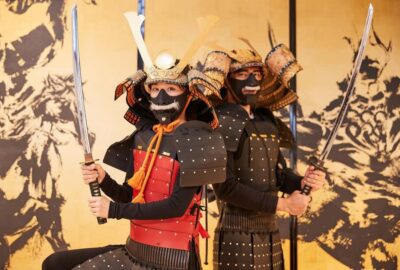
Samurai Ninja Museum Guided tour and Experience
Read our review →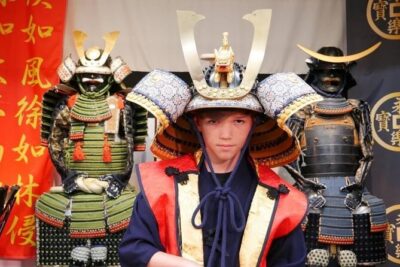
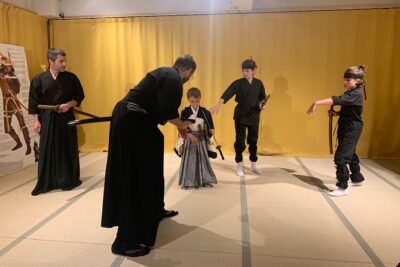
Ninja Experience (Family Friendly) at Samurai Ninja Museum TOKYO
Read our review →
Samurai Entertainment Night Show in Kanda Shrine
Read our review →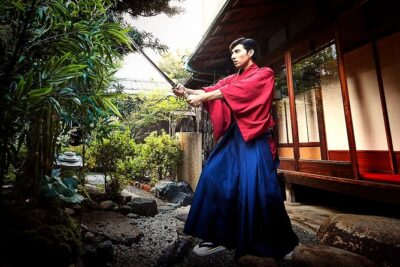
Tokyo Sword Experience – includes Museum Ticket/Ninja Experience
Read our review →
Samurai Ninja Museum Asakusa: Samurai Sword Lesson & Tour
Read our review →
Ninja Samurai 2-hour hands-on lesson by Japanese master in Tokyo
Read our review →
Samurai Sword Experience (Family Friendly)at SAMURAI MUSEUM TOKYO
Read our review →Browse the lists this tour appears in