
Reviewed · TOKYO GO-KART EXPERIENCES
Shibuya Crossing x Tokyo Tower and more! Go-Kart Tour
Tokyo looks different from a go-kart seat. You are low to the road, exposed to the city air, and suddenly part of the show as you pass Tokyo Tower, Harajuku, and Shibuya Crossing. Guides such as Izzy, Bingo, Nao, and Blake keep the group moving, suggest photo poses, and help you handle the streets.
I like the night departures, when Tokyo’s lights do much of the scenery work, and I like that the price includes fuel, a costume, photos, and locker access. The small group limit of 11 also gives the guide a better chance to watch the convoy and help when needed.
The catch is serious: your ordinary driving license is not enough. You need the correct Japanese driving authorization before you arrive, and a digital copy, fake permit, or forgotten document will not get you behind the wheel. Treat the paperwork as part of the booking, not a last-minute detail.
In This Review
- Key things to know before you book
- Tokyo by go-kart, not by observation deck
- Starting at TOKYO JOY KART in Hamamatsucho
- Tokyo Tower gives the ride an early landmark
- Roppongi adds city lights and faster streets
- Harajuku shows a different side of Tokyo
- Shibuya Crossing is the grand finale
- Why the guides matter so much
- Photos, costumes, and what is included
- Is $96 good value for 90 minutes?
- The driving permit is the make-or-break issue
- Who will enjoy this ride most?
- My recommendation: book it only after checking your documents
- FAQ
- How long does the Tokyo go-kart tour last?
- Where does the tour start?
- Which Tokyo sights does the route include?
- What driving documents do I need?
- Are photos and costumes included?
- Can I cancel the booking?
Key things to know before you book
- Shibuya Crossing from the driver’s seat: You pass one of Tokyo’s best-known intersections as part of a guided road route, not from a pavement lookout.
- Night rides bring the best mood: Later departures can mean fewer cars, glowing city lights, and a more dramatic ride.
- Izzy, Bingo, Nao, and Blake are part of the appeal: The guides give directions, manage the formation, take photos, and keep the mood light.
- The legal driving rules are strict: Most international visitors need a valid 1949 Geneva Convention International Driving Permit plus a passport.
- The $96 price covers useful extras: You get the kart, fuel, guide, costume use, photos, and a locker.
- Allow more than the advertised 90 minutes: Getting ready, receiving instructions, and returning to the shop can make the outing take closer to two hours.
Tokyo by go-kart, not by observation deck
A normal Tokyo sightseeing day puts you behind train windows, on crowded pavements, or high above the streets. This tour gives you a much more unusual view. You sit close to the road, follow a guide through several districts, and feel every turn and change in pace.
The karts are street-legal, and the activity begins with a safety briefing. You learn the basic controls, hand signals, and driving formation before setting off. That briefing matters because the fun depends on staying together and following the guide rather than treating Tokyo’s roads like a private racetrack.
The ride is not a free-for-all. You travel as a group behind the lead guide, with the guide watching the convoy and giving directions. That makes this a better choice for someone who wants a playful city tour, not a serious high-speed driving session.
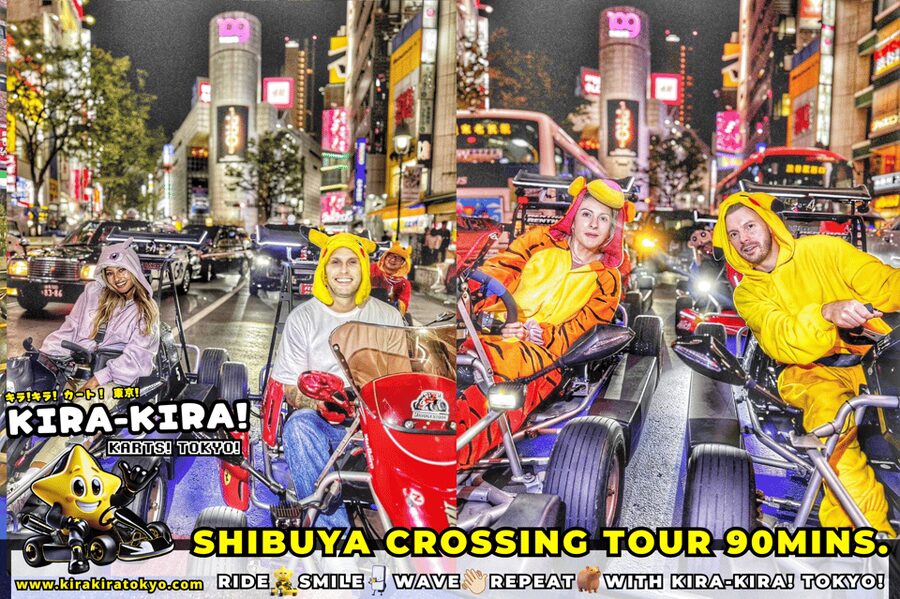
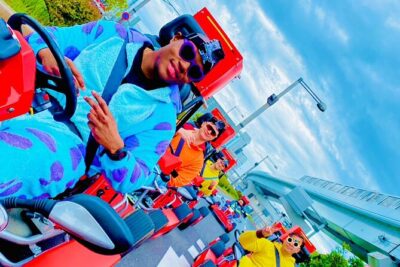
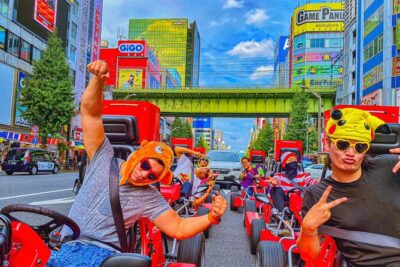
The reaction from the street is part of the fun. People in Shibuya and other districts may wave, take photos, or point at the costumed drivers. You should expect attention, especially at the crossing, so this suits outgoing visitors more than anyone hoping to pass unnoticed.
More street-kart slots:
- Flagship 2-Hours Official Street Go-Kart Tour – Tokyo Bay Shop
★ 5.0 · 4,974 reviews - Official Street Go-Kart in Shibuya
★ 5.0 · 3,435 reviews - Official Street Go-Kart Tour – Akihabara
★ 5.0 · 1,578 reviews
Starting at TOKYO JOY KART in Hamamatsucho
The meeting point is TOKYO JOY KART at 1 Chome-4-10 Shiba, Minato City, Tokyo 105-0014. Hamamatsucho Station is about a five-minute walk away, making the train the simplest way to reach the shop.
The shop has a racing-style feel, and you can use a free locker for belongings. Costumes are available at no extra charge. The costume choice adds comic color to the photos, but you should still dress for the weather because you are outdoors for the ride.
Wear closed shoes. Open-toed shoes and bare feet are not allowed. You also cannot drive while intoxicated or under the influence of alcohol or drugs. These rules are basic, but they are worth checking before you leave your hotel, since a rushed change of clothes can spoil an otherwise well-planned outing.
Arrive early enough to complete the paperwork and briefing without stress. One useful tip is to copy the address into Google Maps before heading out, especially if you are coming from another part of Tokyo or showing the location to a taxi driver.
Tokyo Tower gives the ride an early landmark

Tokyo Tower is one of the first major sights on the route. From the street, you see it in a different way than you would from an observation deck. The tower becomes part of the moving scenery, framed by roads, buildings, traffic lights, and the rest of the convoy.
This stop is mainly about the view and the photo opportunity. You are not visiting the tower interior, so do not book this as a tower admission tour. The value comes from passing close to one of Tokyo’s most recognizable structures while seated in a vehicle that attracts attention of its own.
The guide may take photos along the way, and the included pictures are a real advantage. You can focus on driving instead of trying to operate your phone while on the road. If you care about photographs, listen closely when the guide suggests a pose or asks the group to position itself.
Roppongi adds city lights and faster streets
The route continues through Roppongi, a district known for its nightlife and evening energy. At night, this part of the ride can feel especially lively, with illuminated buildings and a steady stream of urban scenery.
You should keep your expectations in check. This is a guided pass through Roppongi, not a stop for bars, galleries, or restaurants. The attraction is the movement between districts. You get a quick sense of how Tokyo’s central neighborhoods connect, but you will not have time to explore each one on foot.
The road sections vary in pace. Some stretches let the convoy move along comfortably, while others require more attention to traffic and formation. That variety helps keep a 90-minute ride from feeling repetitive. It also means you should follow the guide’s signals rather than focus only on the sightseeing.
More Shibuya plans:
- Tokyo: Street Kart Experience in Shibuya
★ 4.9 · 1,484 reviews - Shibuya Meltdown Nightlife Tour: All-You-Can-Drink Bar Hopping
★ 5.0 · 1,058 reviews - Shibuya Official Street Go-Kart in Shibuya Annex
★ 5.0 · 972 reviews - Tokyo: Shibuya Food Tour (13 dishes and 4 Eateries)
★ 5.0 · 770 reviews
Harajuku shows a different side of Tokyo
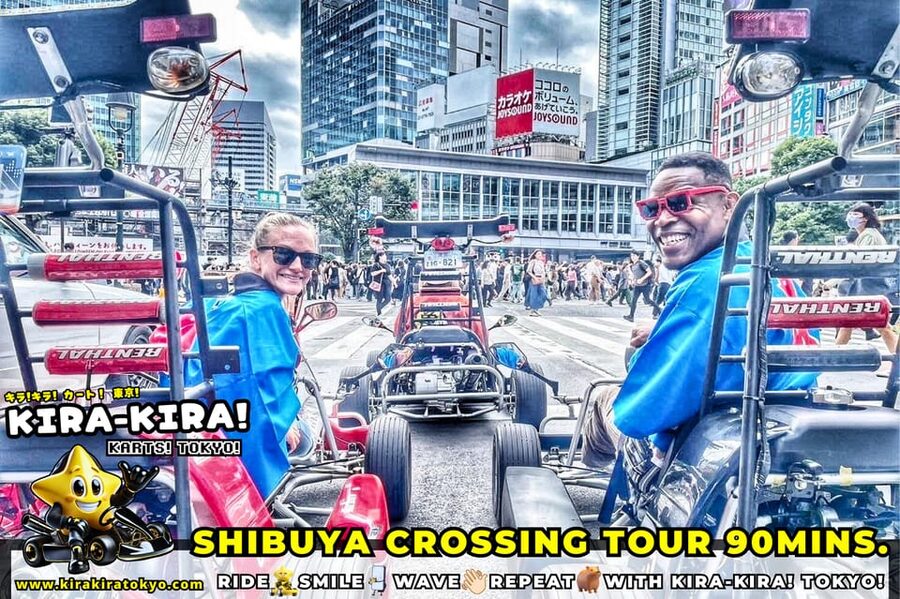
Harajuku brings a change in atmosphere. It is one of Tokyo’s best-known areas for youth culture, fashion, and distinctive street life. From a go-kart, you get a quick moving look rather than a full neighborhood visit.
That is both the strength and limit of this format. You can cover more ground than you would on foot, but you cannot stop to browse shops or wander down side streets. I would pair this ride with a separate Harajuku visit if you want time for shopping, cafés, or nearby sights.
Still, the pass through Harajuku gives the tour a useful rhythm. Tokyo Tower and Roppongi offer major city views, while Harajuku adds a more playful and youth-oriented setting. You are not just circling one attraction. You are seeing several parts of central Tokyo in one outing.
The route may also pass the Tokyo National Stadium and Aoyama, depending on the exact ride plan. These sections add more of the city’s broad avenues and central neighborhoods. Since traffic and the group can affect timing, think of the route as a guided overview rather than a fixed hop-on, hop-off schedule.
Shibuya Crossing is the grand finale
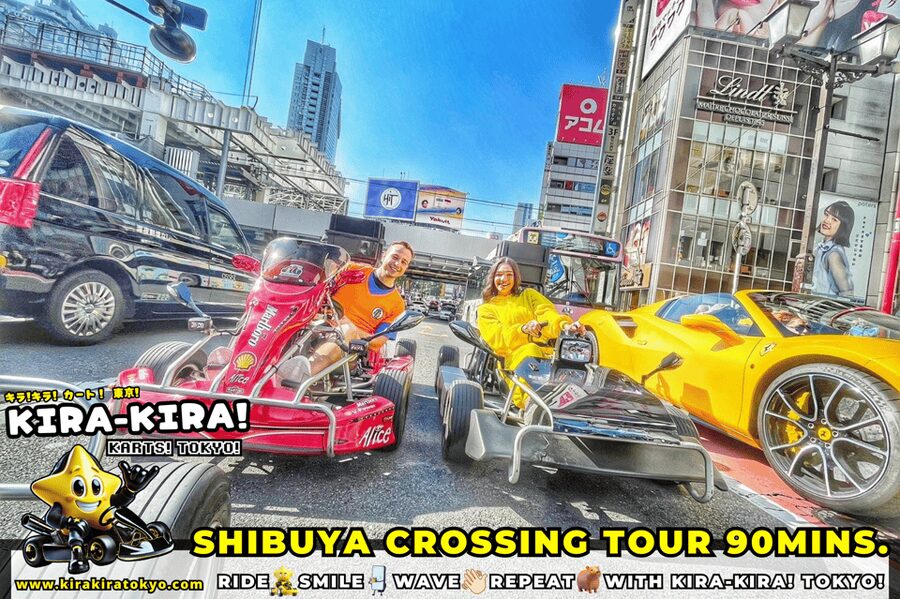
Shibuya Crossing is the moment most people have in mind when they book. The crossing is famous for its huge pedestrian waves, bright signs, and constant motion. Approaching it in a line of street-legal karts gives you a front-row place in one of Tokyo’s most photographed scenes.
You may find people waving or taking pictures as the group passes. Some participants describe feeling like temporary celebrities, and that is a fair description of the attention the karts can attract. Costumes make the scene even more noticeable.
The crossing is not a private photo set. You must follow traffic rules and the guide’s instructions. The guide controls the group’s movement, and the fun comes from passing through safely rather than trying to stage a dramatic maneuver.
If you want the liveliest atmosphere, an evening departure is a strong choice. One 9 p.m. ride was praised for lighter traffic and an easier run through the streets, while other night rides benefited from city lights. A later time may not suit everyone, but it can make the route feel more relaxed.
Why the guides matter so much
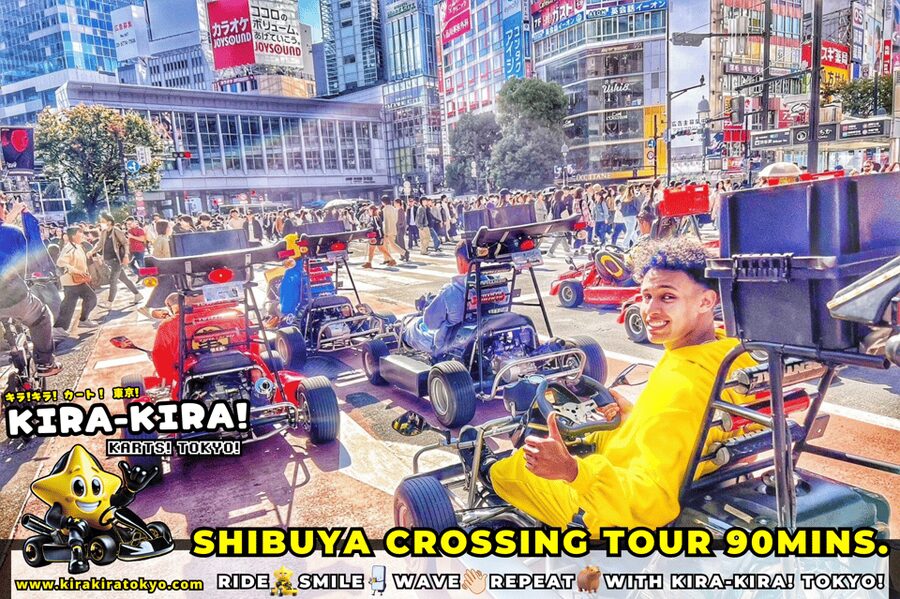
The guide is more than someone who points toward landmarks. The guide leads the formation, gives driving directions, watches the group, handles hand signals, and helps maintain a safe pace.
Izzy is known for an energetic but careful approach. Bingo has been praised for taking plenty of photos, playing music, and helping create a fun atmosphere. Nao has also been noted for photography and clear directions, while Blake has led rides that felt friendly and well organized.
The exact guide depends on the departure, so you should not book expecting one particular person. Still, the repeated importance of the guide tells you something useful about the activity: your enjoyment depends partly on how well the group is managed.
A good guide also helps mixed groups. You may be riding with couples, families, or solo drivers with different levels of confidence. The safety briefing and formation keep the outing from turning into a contest between the most confident and least confident drivers.
Photos, costumes, and what is included
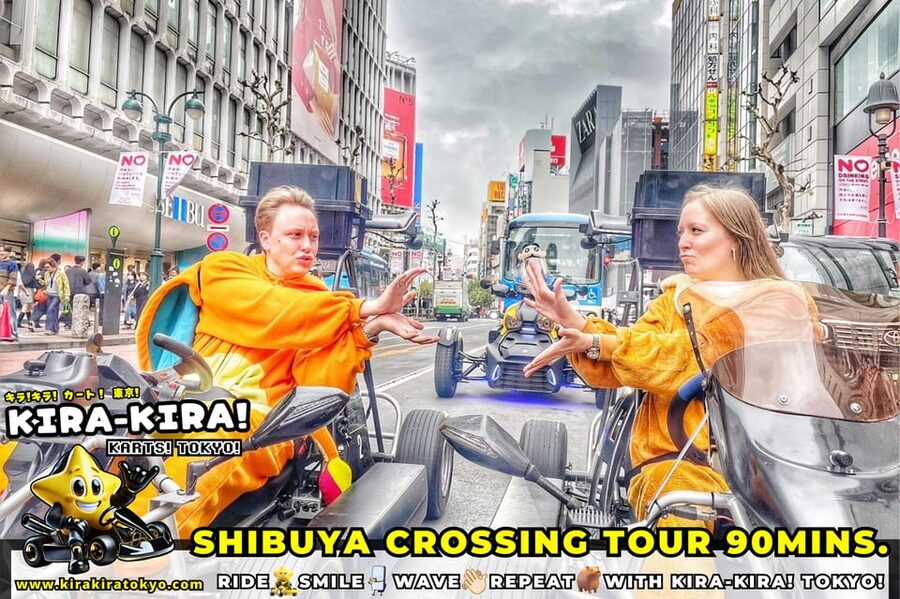
The activity includes the kart, fuel, an English-speaking guide, free costume use, complimentary photos, and locker access. That is a solid package for $96 per person, especially in an expensive city where small extras can add up quickly.
The photos are more useful than a simple souvenir. You cannot safely take your own pictures while driving, and the guide is in the best position to capture the group against Tokyo’s streets and landmarks. Expect posed shots and route photos rather than a professional portrait session.
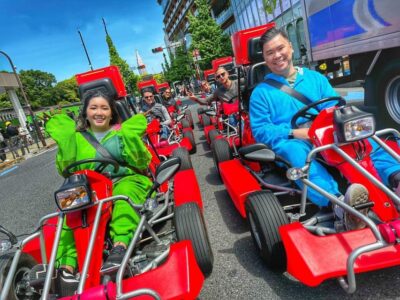
Costumes make the outing more memorable, but they also make you more visible. If you enjoy playful photos and do not mind drawing attention, they add a lot. If you prefer a low-key sightseeing tour, you can still enjoy the driving, but the public reaction may feel like part of the price.
Fuel is included, so you do not have to calculate an extra operating charge. The free locker is another small but practical benefit. You can put away items before setting off instead of trying to manage a bag in the kart.
Is $96 good value for 90 minutes?
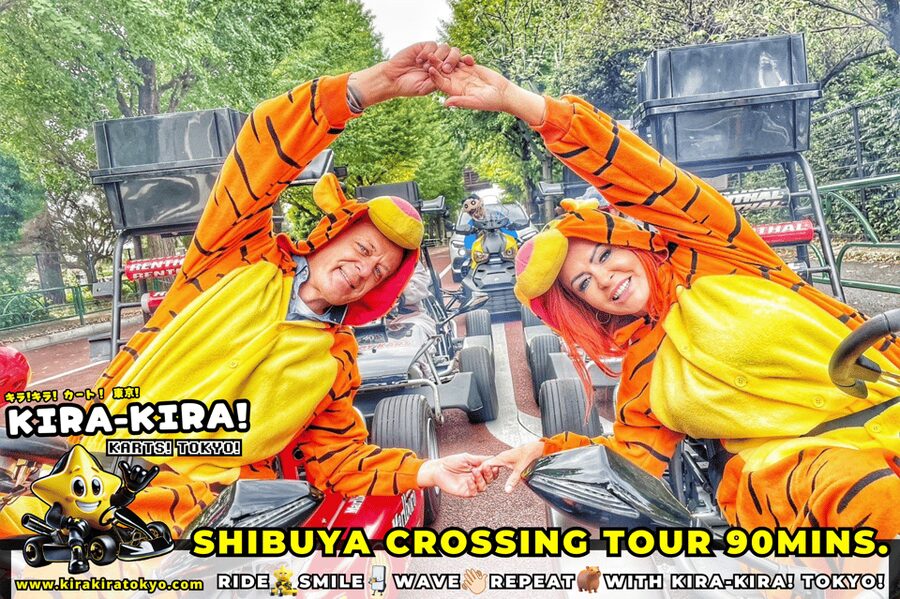
At $96, this is not a cheap way to get from one part of Tokyo to another. The train will cost far less, and a walking route lets you spend more time in each neighborhood.
The value comes from the combination of driving, guide support, landmark views, costumes, and photos. You are paying for an activity with a strong entertainment element, not simply transportation. If you want a memorable evening and enjoy being part of the scene, the price is easier to justify.
The 90-minute duration is long enough to feel like a proper outing, but short enough to fit into a busy Tokyo schedule. Several participants found the ride passed quickly, which is a good sign for the pace but also a reminder not to expect an all-day tour.
I would allow about two hours from arrival to departure. That gives you room for check-in, licensing checks, changing into a costume, the safety briefing, the drive, and the return process. The ride itself is listed as 90 minutes, but the whole visit takes longer.
The driving permit is the make-or-break issue
Read the legal requirements before paying. Japan does not generally accept your home-country driving license by itself for this activity.
Most eligible international visitors need:
- A valid 1949 Geneva Convention International Driving Permit issued by an authorized government office or properly certified agency
- Your passport
The permit must be based on the 1949 Geneva Convention and is valid for one year from its issue date. Some countries are not part of the 1949 Geneva Convention, so check your eligibility through the official Japan Automobile Federation information before you travel.
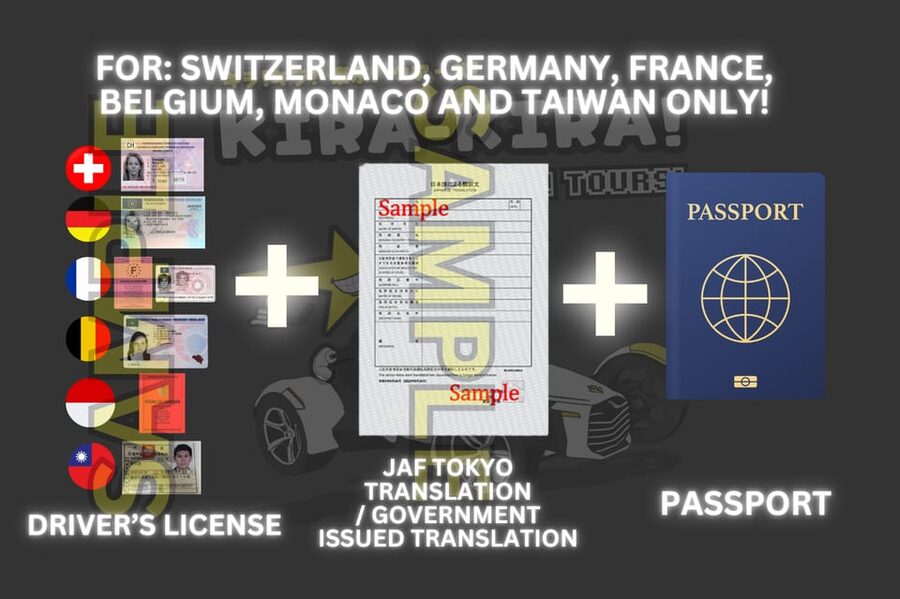
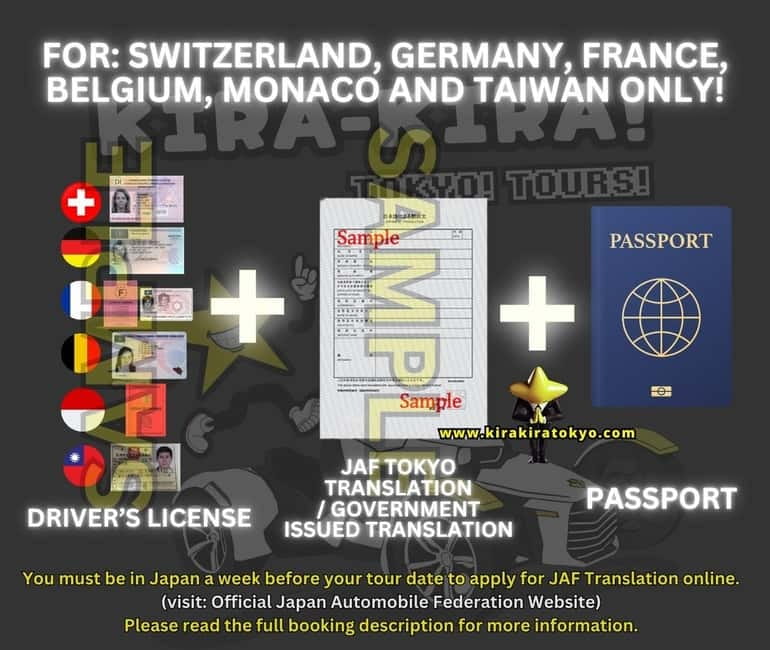
There are other accepted routes for specific groups. Drivers from Germany, France, Switzerland, Belgium, Monaco, and Taiwan can use an official JAF Japanese translation together with a passport. U.S. military personnel based in Japan need a valid SOFA license and military ID. Japanese residents can use a Japanese driver’s license.
A digital permit, unofficial document, fake IDP, lost permit, or forgotten passport will not work. The operator can refuse service under Japanese law, and the activity may not be refundable on the spot because the kart was reserved for you. This is the single most important booking warning.
Who will enjoy this ride most?
I would recommend it to couples, groups of friends, and solo visitors who want an unusual way to see central Tokyo. It is especially suitable if you like photography, playful costumes, night scenery, and activities that put you directly in the middle of the city.
It also works well as a trip highlight. The ride combines enough sightseeing to feel connected to Tokyo with enough novelty to feel unlike a standard city tour. The guide-led format helps if you are nervous about driving in Japan.
You may want to skip it if you dislike public attention, are uncomfortable driving in traffic, or want long stops at each landmark. This is not a walking tour, a food tour, or a detailed cultural tour. It gives you a fast, entertaining view of several districts.
The activity is not suitable for pregnant women. The supplied information also lists divers without certification as unsuitable, though that wording is unusual and does not explain how it relates to the kart ride. If that condition applies to you, contact the operator before booking rather than guessing.
The tour is listed as wheelchair accessible, but the supplied details do not explain the exact vehicle transfer arrangements. If you use a wheelchair, confirm the practical setup with the operator before committing.
My recommendation: book it only after checking your documents
I would book Kira-Kira Tokyo Go-Karts if you want a bold, funny, highly photogenic way to see Tokyo and you already have the correct driving permit. The strongest parts are the night scenery, Shibuya Crossing, the guides’ energy, and the included photos.
I would not book it as a substitute for exploring Harajuku, Roppongi, or Shibuya on foot. Think of it as a fast-moving city adventure that gives you a taste of several districts, then pair it with slower neighborhood visits.
Check your permit, bring your passport, wear closed shoes, arrive early, and consider a later departure if you want glowing signs and lighter traffic. Once those practical details are handled, the $96 cost buys more than a kart ride. It buys a memorable Tokyo story, with a guide helping you stay safe while the city becomes your backdrop.
FAQ
How long does the Tokyo go-kart tour last?
The listed duration is 90 minutes. You should allow additional time for arrival, document checks, the safety briefing, costumes, and returning the kart.
Where does the tour start?
It starts at TOKYO JOY KART, 1 Chome-4-10 Shiba, Minato City, Tokyo 105-0014. Hamamatsucho Station is about a five-minute walk away.
Which Tokyo sights does the route include?
The route includes Tokyo Tower, Roppongi, Harajuku, and Shibuya Crossing. It may also pass areas such as Aoyama and the Tokyo National Stadium, depending on the route and timing.
What driving documents do I need?
Most visitors need a valid 1949 Geneva Convention International Driving Permit and a passport. Drivers from Germany, France, Switzerland, Belgium, Monaco, and Taiwan may use an official JAF Japanese translation with a passport. Other accepted options include a SOFA license with military ID for eligible U.S. military personnel and a Japanese driver’s license for Japan residents.
Are photos and costumes included?
Yes. The tour includes complimentary photos, free costume use, fuel, the go-kart, the English-speaking guide, and free locker access.
Can I cancel the booking?
You can cancel up to 24 hours in advance for a full refund. The activity also offers a reserve-now-and-pay-later option.
New on our Tokyo list
- From Tokyo: Mount Fuji & Hakone Full Day Private Tour★ 4.9 · 25 reviews
- Tokyo Spectacular View Day-Cruise in 90 Minutes★ 5.0 · 25 reviews
- 2.5 Hour-Guided Cycle Tour in the Central Tokyo★ 5.0 · 25 reviews
- Real Tokyo Runner Club : Daikoku Car Meet Night Tour with JDM Car★ 5.0 · 25 reviews
- Ramen Making from Scratch +Akihabara Tour –Cooking Class★ 5.0 · 25 reviews
- [Self-Drive] Tokyo & Daikoku Custom Car Driving Tour★ 4.9 · 25 reviews
- Tokyo: 2-Hour Night Bike Tour of the City’s Hidden Gems★ 4.9 · 25 reviews
- Samurai themed Entertainment show in Shinjuku★ 4.5 · 25 reviews
Tokyo Go-Kart Experiences, compared.
Flagship 2-Hours Official Street Go-Kart Tour – Tokyo Bay Shop
Read our review →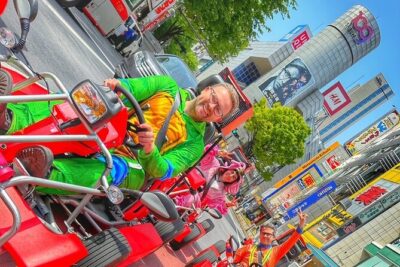
Tokyo Go Kart: Asakusa, Skytree, and Akihabara **IDP MUST**
Read our review →
Shibuya Official Street Go-Kart in Shibuya Annex
Read our review →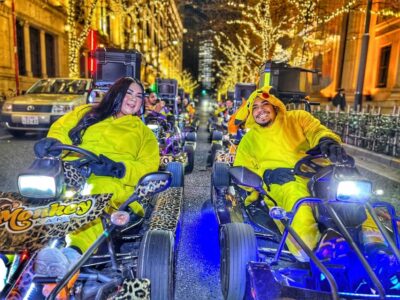
Asakusa, Skytree & Akhihabara Go-Kart City Experience
Read our review →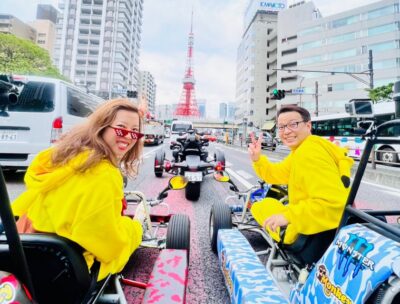
Premium Go-Kart Tour with Tower & Shibuya Crossing
Read our review →Browse the lists this tour appears in