
Reviewed · TOKYO GO-KART EXPERIENCES
Shibuya Kart: Premium Go-Karting Tour through Shibuya, Tokyo
Tokyo sightseeing usually means trains, pavements, and observation decks. This tour changes the view completely: you sit low in a go-kart and follow a guide through Shibuya Crossing, Roppongi, Omotesando, and past Tokyo Tower. It is part city tour, part traffic lesson, and part playful costume parade.
I like two things here. First, the route gives you a moving look at Tokyo rather than another view from behind glass. Second, guides such as San, Omar, Alice, Wataru, and Faiyaz are repeatedly praised for clear instructions, steady traffic control, and taking plenty of photos. The main consideration is simple: you must have the correct hard-copy driving permit for Japan, and driving in city traffic is not a quiet sightseeing experience.
In This Review
- Key points at a glance
- Why this Tokyo kart ride feels different
- Starting at Togoshi, not central Shibuya
- The first streets: learning the kart and the traffic
- Roppongi and the Tokyo Tower photo stop
- Omotesando and Shibuya’s bright streets
- Choosing between 45, 60, and 90 minutes
- Safety, licenses, and the rules that matter
- Photos, costumes, and what to wear
- Who will get the most from this tour
- Is Shibuya Kart worth $63?
- Should you book Shibuya Kart?
- FAQ
- How long does the Shibuya Kart tour last?
- Where does the tour start and finish?
- Which Tokyo areas does the route include?
- Is a guide included?
- What driving documents do I need?
- Do some countries require a Japanese translation instead of an IDP?
- Are costumes included?
- Are photos included?
- Can I cancel or pay later?
Key points at a glance
- Tokyo Tower and Shibuya Crossing: The route links some of Tokyo’s most recognizable sights in one unusual outing.
- 45, 60, or 90 minutes: Pick a short introduction, a standard ride, or a longer evening-style city run.
- Guides who stay involved: English- and Japanese-speaking guides lead the group, explain the route, and help you feel at ease.
- Costumes and camera moments: Free costumes, hats, and props add fun, while the guide takes photos and supplies digital images.
- A real driving requirement: You need a passport or ID card plus the correct physical international driving permit, or an accepted Japanese translation.
- Strong value for the right person: At $63 per person, this makes sense if you want an active Tokyo memory, not a conventional sightseeing tour.
Why this Tokyo kart ride feels different
The appeal is not speed alone. You are seeing Tokyo from street level, with the neon, traffic signals, office towers, shop fronts, and passing crowds close around you. The go-kart sits low, so even a familiar road can feel new.
You also get the shared energy of a group activity. Couples can ride side by side, friends can make a playful photo set, and families with licensed adult drivers can enjoy a common experience. The tour is not a private race, and the guide sets the pace, so think of it as a guided road tour in small vehicles rather than a competition.
The listed price is $63 per person. That includes the kart, fuel, a local guide, driving instruction, safety briefing, costumes and accessories, lockers, customer insurance, and digital photos. For a 45-minute ride, the price is not bargain sightseeing, but it covers more than vehicle rental. The value improves if you care about the unusual route, the guide’s help in traffic, and the photo record.
A small-group format is available. That matters because a compact group is easier to manage at intersections and makes it more likely that the guide can keep everyone together. Exact group size is not provided, so check the current option before booking if group atmosphere matters to you.
More street-kart slots:
- Flagship 2-Hours Official Street Go-Kart Tour – Tokyo Bay Shop
★ 5.0 · 4,974 reviews - Official Street Go-Kart in Shibuya
★ 5.0 · 3,435 reviews - Official Street Go-Kart Tour – Akihabara
★ 5.0 · 1,578 reviews
Starting at Togoshi, not central Shibuya
The tour starts and ends at the Shibuya Kart shop in Togoshi. This is important when planning your day. The experience is marketed around Shibuya, but you should allow time to reach the shop before your start time and to return there afterward.
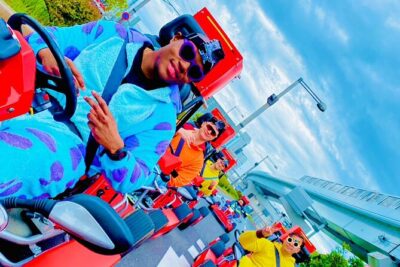
At the shop, you can use the lockers, complete the check-in process, and choose from costumes, hats, and other accessories. The costume choice is not just a side note. It is a major part of the playful feel, and it gives the guide an easy way to make group photos more memorable.
Some costume options may cost extra, particularly branded Mario or Nintendo-style outfits. The included selection has free choices, so you can enjoy the theme without paying more. If you plan to add a premium costume, confirm the extra charge at the shop.
The staff then provide driving instructions and a safety briefing. Several participants found this part thorough and reassuring. That is good news for anyone who has never driven a kart on Tokyo roads, but do not mistake a kart for a toy. You are operating a vehicle in city traffic and must follow Japanese driving rules.
The first streets: learning the kart and the traffic
The guide leads the group out from Togoshi and controls the route. The early part is useful because it lets you get used to the steering, pace, spacing, and traffic signals before the most famous parts of the ride.
This is where the guide makes the biggest difference. San is often singled out for humor, photos, and clear direction, while Omar, Alice, Wataru, Faiyaz, and other guides are praised for calm help and route control. Names can change by departure, but the setup is consistent: a local guide rides with the group and explains what to expect.
You are not left to work out the route on your own. The guide manages stops and points out places along the way. Some participants especially valued guides who knew quieter or easier streets and kept the ride orderly through changing traffic.
The ride can feel exhilarating, but city driving also means waiting at signals and moving with traffic. If you expect a race track, you may find the pace too controlled. If you want a memorable way to see Tokyo while still having a guide close by, that structure is a strength.
Roppongi and the Tokyo Tower photo stop
Roppongi supplies the flashy city scenery. The area is known for its nightlife and bright streets, and the kart gives you a quick, low-level look at this side of Tokyo. You are not stopping for a long neighborhood walk, so treat Roppongi as part of a moving route rather than a full district visit.
Tokyo Tower is the visual high point for many departures. The guide may stop or slow at suitable points for photographs, and several riders particularly enjoyed having pictures taken near the tower. At night, the lit tower adds a stronger sense of occasion. In daylight, you get a clearer look at the surrounding streets and buildings.
The guide handles the photography, often taking pictures during traffic stops or at planned points. Digital images are included, and some departures have also provided printed photos. Since the exact photo process can vary, keep your phone ready for the digital files and ask about prints if they matter to you.
Cold weather deserves attention here. One rider found the outing very cold but appreciated being offered gloves and a hat. Costumes can add a little warmth, but they are not a substitute for proper clothing. Sunglasses can help with wind in your eyes, and a face mask may be useful because one rider found the exhaust unpleasant. These are small items, but they can make the ride more comfortable.
More Shibuya plans:
- Tokyo: Street Kart Experience in Shibuya
★ 4.9 · 1,484 reviews - Shibuya Meltdown Nightlife Tour: All-You-Can-Drink Bar Hopping
★ 5.0 · 1,058 reviews - Shibuya Official Street Go-Kart in Shibuya Annex
★ 5.0 · 972 reviews - Tokyo: Shibuya Food Tour (13 dishes and 4 Eateries)
★ 5.0 · 770 reviews
Omotesando and Shibuya’s bright streets
The route continues through Omotesando, one of Tokyo’s best-known shopping avenues. From a kart, you are not browsing stores or stopping for meals. You are taking in the broad streets, polished buildings, and changing traffic from an unusual seat.
Then comes the part most people picture when they hear Shibuya Kart: the Shibuya area and Shibuya Scramble Crossing. Crossing with the group gives you the thrill of being part of one of Tokyo’s most famous street scenes, but it is also a moment when you need to stay alert and follow the guide precisely.
The crossing is a photo-friendly highlight, though it is not guaranteed that every departure will produce the same timing or view. Traffic, signals, and the guide’s safety decisions control the route. That is worth remembering when comparing this ride with a private photo tour. You get a genuine street experience, but not complete control over where and when you stop.
The city looks especially dramatic after dark, when signs and buildings glow around you. One 90-minute evening ride included views of illuminated Shibuya Crossing and Tokyo Tower. A late departure can offer the strongest atmosphere, while a morning slot may bring lighter traffic and a calmer first drive.
Choosing between 45, 60, and 90 minutes
The three durations suit different plans.
The 45-minute ride is the shortest introduction. Choose it if your schedule is tight, you are unsure about driving in traffic, or you mainly want the costume, the kart, and a taste of the city route. It gives you less time for the ride to settle into a rhythm.
The 60-minute ride is the sensible middle choice. One rider felt an hour was enough, and I agree that it should provide a good balance between sightseeing and concentration. You get time for the main street experience without making the activity take over half your day.
The 90-minute ride suits anyone who wants the fullest version of the outing. It gives the guide more time to connect several areas and can work well for a night ride. The tradeoff is physical and mental: sitting in wind and traffic for longer can become tiring, especially in cold or wet weather.
Morning departures can be practical. A 10 a.m. ride was appreciated for lighter traffic, which made it easier to move around and look at the city. A 3:30 p.m. departure can give you daylight first and darkness later, though traffic may increase as the day goes on. Check available start times and choose based on the kind of city mood you want.
Safety, licenses, and the rules that matter
The license requirement is the most important booking detail. Bring your passport or ID card and a hard copy of your international driving permit. Digital versions are not accepted.
Japan requires the correct permit under the 1949 Geneva Convention. That permit is valid for driving in Japan for one year. If you arrive with the wrong type, you may not be allowed to drive, and the supplied information says a refund will not be available in that case.
There are special rules for licenses issued in Switzerland, Germany, France, Taiwan, Belgium, and Monaco. You need a Japanese translation from the Japan Automobile Federation, known as JAF, rather than relying on an international driving permit.
Licenses from countries outside the 1949 Geneva Convention system, including Mexico, Kuwait, China, Colombia, and Saudi Arabia, cannot be used to operate in Japan under the stated rules. Indian license holders should contact the operator before booking because Indian permits vary and some are not legally accepted in Japan.
You cannot join without a driver’s license. You also cannot drive while intoxicated, bring drinks into the vehicle, or use alcohol or drugs during the activity.
Customer insurance is included, but kart insurance is not. The supplied terms describe kart insurance as cover for the kart itself, not personal insurance. Read the current conditions carefully so you understand what is and is not covered before you pay.
Photos, costumes, and what to wear
The photo service is one of the better extras. You do not have to keep filming yourself while steering, and the guide can take pictures when the group is stopped or positioned safely. Digital photo data is included, and some participants also received printed pictures.
Action cameras may be rented, and one rider wished they had brought their own GoPro. If you already own a small camera and the operator allows it, it can add a useful first-person view. Do not let photography distract you from the road.
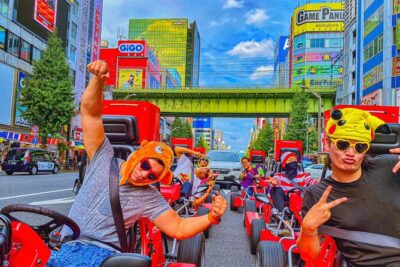
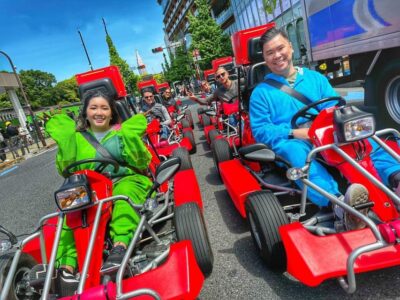
Costumes and accessories turn the outing into something more theatrical. You can choose free outfits, hats, and props, with some branded options available for an added fee. The costumes also make group photos easy to spot later among a crowded Tokyo camera roll.
Dress for exposure to wind. Sunglasses can protect your eyes, and warm layers are wise in winter. Gloves and hats may be offered in cold conditions, but rain and low temperatures can still affect your comfort. One rider enjoyed the experience even in the rain, but weather remains a real part of the decision.
Who will get the most from this tour
I would recommend this to an adult couple, a group of friends, or a family with properly licensed drivers that wants an active break from temples, museums, and train rides. It is also a good choice for a first visit because the route links several famous areas in one outing.
You should book it if you enjoy being part of the scene. People on the streets may notice the costumes and karts, and that public attention is part of the fun. If you prefer quiet, private sightseeing, you may feel exposed.
This is not the best fit for someone without the required permit, someone uncomfortable driving in traffic, or anyone looking for a technical kart race. It also deserves caution if you have mobility or comfort needs that make a low kart difficult, since no detailed accessibility information is provided.
The tour has a 4.6 out of 5 rating from 463 ratings, with 88 percent giving it a perfect score. The strongest praise centers on professional organization, safety explanations, friendly guides, well-kept karts, and photos. The repeated guide names, especially San, Omar, Alice, and Wataru, show how much the staff shape the experience.
Is Shibuya Kart worth $63?
At $63, this is not the cheapest way to see Tokyo. You can walk across Shibuya Crossing for free, take trains between districts for little money, and visit Tokyo Tower separately. The kart tour earns its price by combining transport, a guide, a costume activity, a small-group outing, and photos into one package.
The best value comes from the novelty. You are not only looking at Tokyo landmarks. You are actively moving through the city and sharing the road experience with a group. If that sounds like your kind of holiday memory, the cost is reasonable.
I would choose the 60-minute option for most people. Pick 45 minutes when time is tight, and 90 minutes if you want a longer night ride or simply cannot get enough of the experience. Book with free cancellation up to 24 hours before the activity if your plans may change, and the reserve-now, pay-later option keeps the initial booking flexible.
Should you book Shibuya Kart?
Book it if you have the right physical permit, enjoy playful activities, and want Tokyo from street level. The combination of Shibuya Crossing, Tokyo Tower, Roppongi, Omotesando, costumes, and guide-led photos is hard to duplicate on your own.
Before booking, check your driving documents, confirm the route and start time, and dress for wind or rain. If you do those three things, this can become one of the most distinctive activities in a Tokyo stay. It is touristy by design, but the actual road experience gives it more substance than the costume idea suggests.
FAQ
How long does the Shibuya Kart tour last?
You can choose a 45-minute, 60-minute, or 90-minute experience. Check the available start times for the date you want.
Where does the tour start and finish?
The tour starts and ends at the Shibuya Kart shop in Togoshi.
Which Tokyo areas does the route include?
The route can include Tokyo Tower, Roppongi, Shibuya, Shibuya Scramble Crossing, and Omotesando.
Is a guide included?
Yes. A professional local guide leads the group, gives driving instructions, and provides the safety briefing. Guides speak English and Japanese.
What driving documents do I need?
Bring your passport or ID card and a hard-copy international driving permit that is accepted in Japan under the 1949 Geneva Convention. Digital permits are not accepted.
Do some countries require a Japanese translation instead of an IDP?
Yes. Drivers with licenses issued in Switzerland, Germany, France, Taiwan, Belgium, and Monaco must obtain a Japanese translation from the Japan Automobile Federation.
Are costumes included?
Yes. Costumes and accessories are included, with free choices available. Some Mario or Nintendo-style costumes may require an extra payment.
Are photos included?
Yes. Photo shooting and digital photo data are included. Action cameras may also be available to rent.
Can I cancel or pay later?
You can cancel up to 24 hours in advance for a full refund. A reserve-now, pay-later option is also available.
New on our Tokyo list
- From Tokyo: Mount Fuji & Hakone Full Day Private Tour★ 4.9 · 25 reviews
- Tokyo Spectacular View Day-Cruise in 90 Minutes★ 5.0 · 25 reviews
- Real Tokyo Runner Club : Daikoku Car Meet Night Tour with JDM Car★ 5.0 · 25 reviews
- 2.5 Hour-Guided Cycle Tour in the Central Tokyo★ 5.0 · 25 reviews
- Ramen Making from Scratch +Akihabara Tour –Cooking Class★ 5.0 · 25 reviews
- [Self-Drive] Tokyo & Daikoku Custom Car Driving Tour★ 4.9 · 25 reviews
- Tokyo: 2-Hour Night Bike Tour of the City’s Hidden Gems★ 4.9 · 25 reviews
- Buddha, Bamboo & Zen – Bespoke Kamakura Private Walking Tours★ 5.0 · 25 reviews
Tokyo Go-Kart Experiences, compared.
Flagship 2-Hours Official Street Go-Kart Tour – Tokyo Bay Shop
Read our review →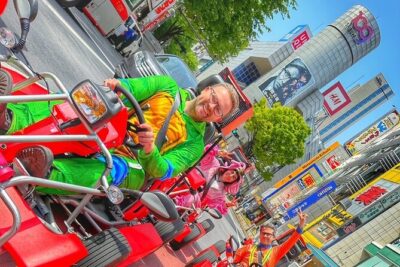
Tokyo Go Kart: Asakusa, Skytree, and Akihabara **IDP MUST**
Read our review →
Shibuya Official Street Go-Kart in Shibuya Annex
Read our review →
Asakusa, Skytree & Akhihabara Go-Kart City Experience
Read our review →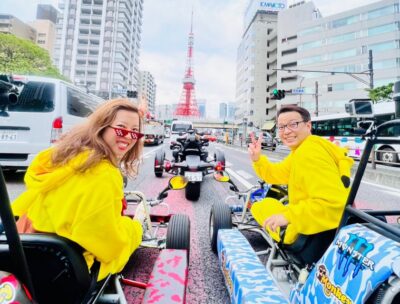
Premium Go-Kart Tour with Tower & Shibuya Crossing
Read our review →Browse the lists this tour appears in