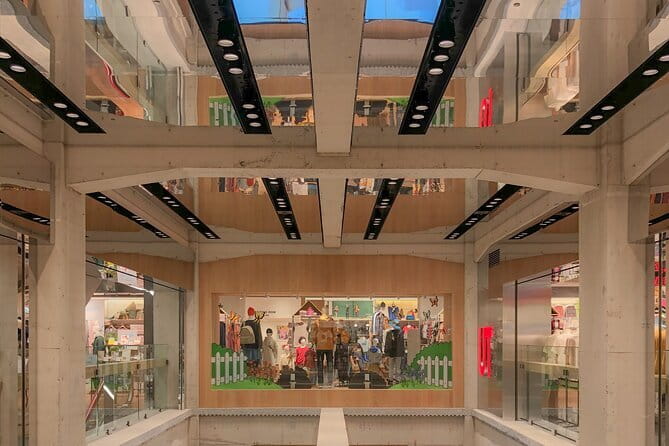
Reviewed · TOURS
Small-Group Architecture Tour in Ginza, Tokyo
Ginza’s best architecture is not always the tallest or flashiest. This small-group walking tour brings you close to temple roofs, theater details, old apartment interiors, and polished brand buildings that are easy to miss from a taxi. The guide also explains how the Shogun era and natural disasters helped shape what you see.
I like the maximum of six people, which makes it easier to stop for photos and ask about a building that catches your eye. I also like the mix of grand commercial design and quieter places such as Toyoiwa Inari Shrine and the Okuno Building. The main tradeoff is pace: you’ll walk for about three and a half hours, and the tour requires moderate fitness.
In This Review
- Key points for choosing this Ginza architecture walk
- Why Ginza works best on foot
- Tsukiji Hongwanji Temple: a strong opening contrast
- Kabukiza Theater: design made for performance
- The Nicolas G. Hayek Center and the art of the facade
- Toyoiwa Inari Shrine: a brief pause in the city
- Maison Hermès and Ginza’s polished modern face
- Mikimoto, Uniqlo, Wako, and a lesson in comparison
- Okuno Building: an older character at the finish
- What the guide adds to the experience
- Price, timing, and physical demands
- Who should book this Ginza architecture tour?
- Should you book it?
- FAQ
- Where does the Ginza architecture tour start?
- What time does the tour begin?
- Where does the tour finish?
- How many people can join the tour?
- Is hotel pickup included?
- What happens if the weather is poor?
Key points for choosing this Ginza architecture walk
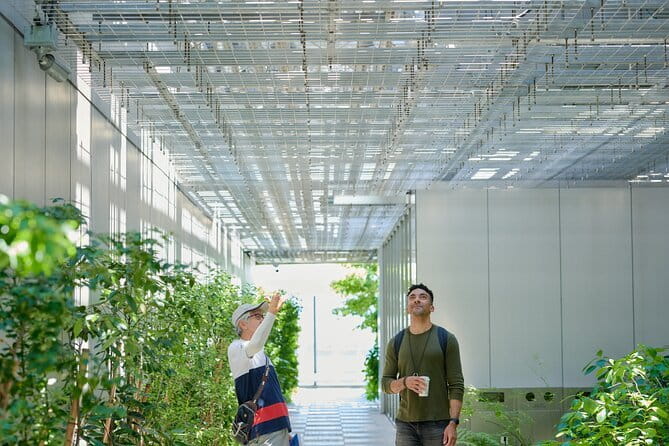
- Architecture at walking speed: You can study facades, entrances, signs, and materials instead of watching Ginza slide past a car window.
- A very small group: With no more than six people, the guide can answer individual questions and adjust attention to your interests.
- Guides with design expertise: Taka is a former urban planner and architect, while Hal brings strong technical insight and lively energy.
- More than luxury storefronts: The route includes Tsukiji Hongwanji Temple, Kabukiza Theater, Toyoiwa Inari Shrine, and the Okuno Building.
- Several interior visits: You may go inside Kabukiza, the Nicolas G. Hayek Center, Maison Hermès, and the Okuno Building.
- A useful Ginza finish: The walk ends near Ginza 4-chome, in front of Mitsukoshi, a convenient place to continue shopping or sightseeing.
Why Ginza works best on foot
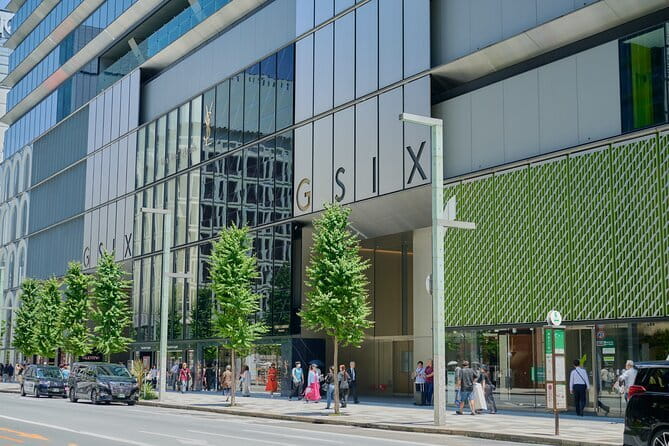
Ginza can look like a district built only for luxury shopping. Look closer, and its streets become a compact lesson in Tokyo design. A famous fashion building may use glass, stone, or a carefully controlled pattern, while a shrine or older structure nearby follows a completely different set of rules.
That contrast is the reason I prefer this route on foot. You have time to look up, compare one facade with the next, and ask why a building looks the way it does. The tour includes roughly 40 minutes of walking between sites in total, along with stops for explanations, photos, and interior visits.
The walk begins near Tsukiji Station and ends at Ginza 4-chome. That direction makes practical sense. You start with the temple area and move toward Ginza’s commercial core, finishing beside Mitsukoshi. Start time is 10:00 a.m., so you can use the rest of the day for lunch, shopping, or another part of central Tokyo.
The small group matters here. Ginza architecture is about small details, and a large crowd would make it harder to hear or gather around an entrance. With up to six people, you can ask about a sign, a structural feature, or a building that is not formally part of the route.
A few more Tokyo bookings worth comparing
- Mt Fuji and Hakone 1-Day Bus Tour Return by Bullet Train
★ 5.0 · 26,383 reviews - 1-Day Tokyo Bus Tour
★ 5.0 · 14,250 reviews - Tokyo: TOKYO SKYTREE® Admission ticket
★ 4.5 · 11,192 reviews
Tsukiji Hongwanji Temple: a strong opening contrast
The first major stop is Tsukiji Hongwanji Temple, where you go inside for a look and an explanation. It gives the tour an early change of mood. Instead of beginning with a department store or a luxury label, you start with a religious building that helps frame Tokyo’s architectural variety.
The tour connects what you see in Ginza to larger forces, including the Shogun era and natural disasters. That context is useful because Tokyo’s buildings are not simply expressions of fashion. Their forms also reflect history, rebuilding, safety, and the need to adapt to a crowded city.
You have about 10 minutes inside the temple. That is enough for an introduction and a focused look, but not enough for a long independent visit. If temples are your main interest, you may want to return another time. On this tour, the temple works best as the first piece of a wider architectural story.
Kabukiza Theater: design made for performance
Kabukiza Theater receives about 20 minutes, including an interior visit. That is one of the more substantial stops, and for good reason. A theater is not just a decorated box. Its entrances, public spaces, and visual identity all have to prepare people for a performance.
Your guide points out the features that make the building special. The tour is not limited to a quick exterior photo, which gives you a better chance to understand how the theater presents itself to the street and to the people entering it.
This is also a good stop for anyone who does not usually study architecture. A building connected to performance is easier to read because you can ask practical questions. How does it welcome an audience? Which parts are meant to be seen from the street? What feels formal, traditional, or modern?
The schedule allows time to appreciate the building without turning the visit into a full theater outing. If you want a complete Kabuki experience, that is a separate plan. Here, the focus is the building itself.
The Nicolas G. Hayek Center and the art of the facade
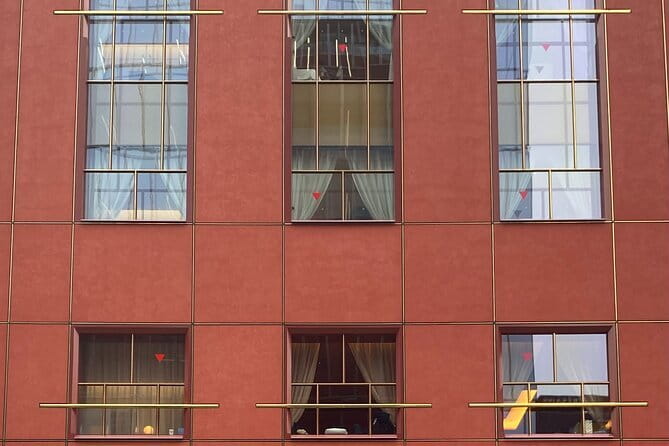
The Nicolas G. Hayek Center is another interior stop, planned for about 15 minutes. It is one of the places that makes this tour more useful than a simple list of famous Ginza addresses.
The building is associated with a major watch company, but the guide’s role is to show you how the project becomes more than a retail box. Taka, who worked as an urban planner and architect, is especially well suited to explain the design choices and the way modern buildings fit into Ginza’s tight streets.
You will want to look at the building as a whole, then at the smaller parts. Materials, openings, scale, and the relationship between the lower floors and the street all matter. The visit is short, so keep your attention on the details the guide draws out rather than trying to inspect every corner.
This is a good example of the tour’s value. You are not paying only to be led from one address to another. You are paying for a trained eye that helps you see why a building has become memorable.
Same corner of Tokyo, a completely different plan:
- Tokyo: teamLab Planets TOKYO Digital Art Museum Entry Ticket
★ 4.6 · 9,779 reviews - Mt Fuji & Hakone Cruise, Drum Show Bullet Train 1 Day from Tokyo
★ 4.0 · 7,413 reviews - Tokyo: Sumo Show Experience with Chicken Hot Pot and a Photo
★ 4.8 · 6,678 reviews - Tokyo: Shinjuku Food Tour (13 Dishes at 4 Local Eateries)
★ 5.0 · 6,603 reviews
Toyoiwa Inari Shrine: a brief pause in the city
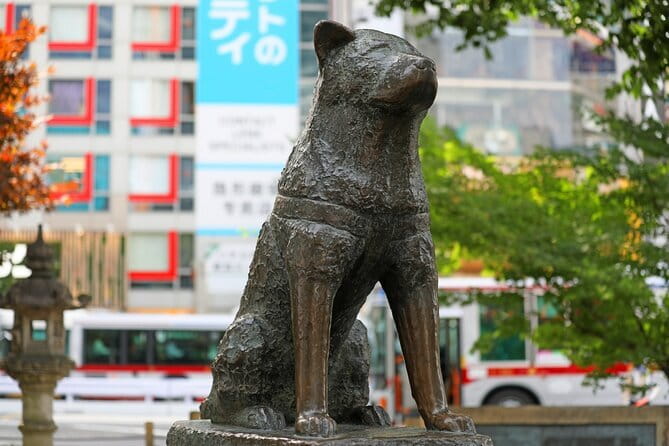
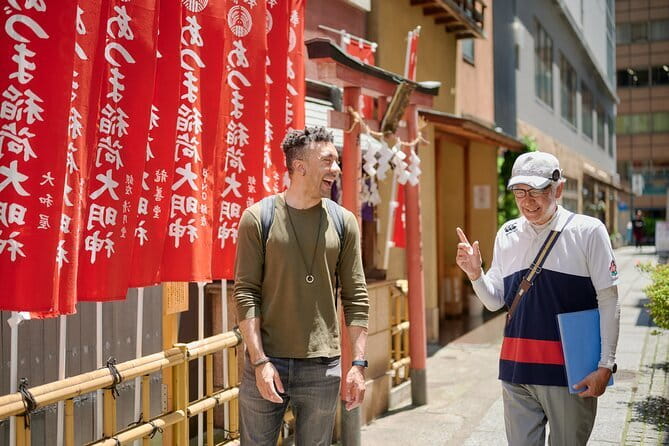
The stop at Toyoiwa Inari Shrine lasts about five minutes. That sounds short, and it is. Still, the shrine adds a useful note to the route because it shows how a small sacred place can sit within Ginza’s commercial setting.
Do not expect a long history lesson or an extended visit here. Think of it as a compact pause that helps you notice the district’s layers. Tokyo can place a tiny shrine, a retail building, and a major intersection within a very small area.
For photographers, the stop is also a reminder to keep your camera ready. The most interesting sight may not be a famous landmark. It may be the way a small place fits into its surroundings.
Maison Hermès and Ginza’s polished modern face
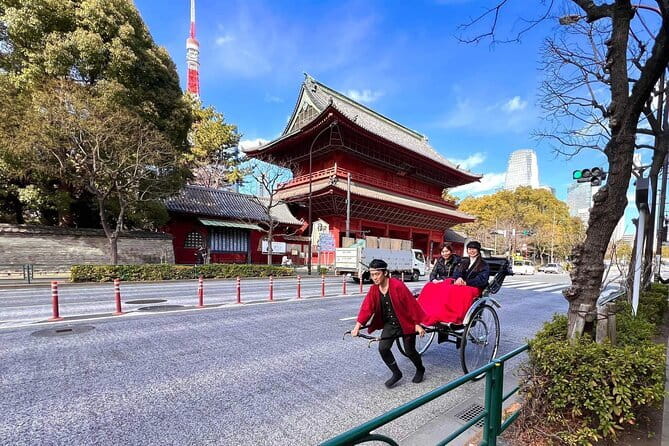
At Ginza Maison Hermès Le Forum, you go inside for about 15 minutes. The building is part of the district’s luxury image, but the point is not simply to admire an expensive shop. The architecture deserves attention on its own.
This is one of the better places to compare brand identity with building design. The building has to represent a fashion house, welcome shoppers, and make a clear mark on one of Tokyo’s most prominent shopping streets. Your guide can help you separate marketing from structure, materials, proportion, and light.
Taka’s professional background is useful here. His experience in planning and architecture gives the conversation a practical angle. You can ask not only if a building looks beautiful, but also how it meets the street and contributes to the city around it.
The interior visit may be especially valuable because a quick walk past the outside cannot show how the public spaces are arranged. As with all retail stops, normal store activity continues around you, so the visit is architectural rather than a private viewing.
Mikimoto, Uniqlo, Wako, and a lesson in comparison
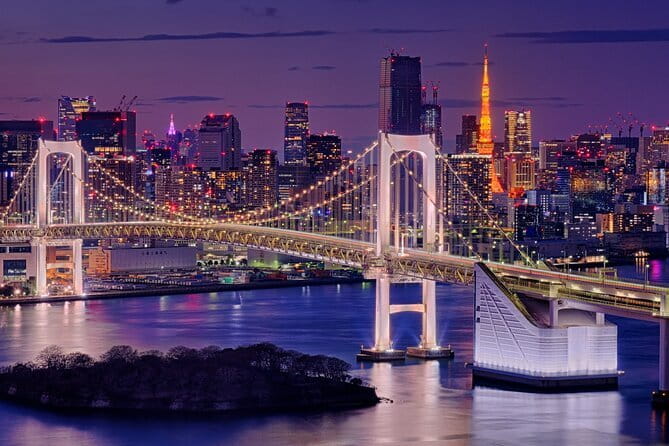
The route then moves through several well-known Ginza buildings. Mikimoto Boutique Ginza 2-chome may receive a brief interior visit if time allows, while UNIQLO Tokyo, Mikimoto Ginza 4-chome Honten, and Wako Ginza are viewed from outside.
The phrase if time allows matters. This is a compact tour with a lot of stops, and interior access can affect the exact rhythm. You should treat the Mikimoto 2-chome visit as a possible bonus, not the main reason to book.
The outside stops are still worthwhile because they let you compare different architectural answers to the same urban problem. Each building must attract attention along a busy commercial street, but each does so in its own way. Your guide can point out why one facade feels restrained, another highly polished, and another more direct.
Wako Ginza is given about 10 minutes, a little longer than some of the nearby exterior stops. That extra time lets you study a building that has become closely linked with Ginza’s public image. UNIQLO Tokyo gets about 10 minutes from outside, while Mikimoto Ginza 4-chome Honten gets around five.
This part of the tour rewards patience. You do not need to know architectural vocabulary in advance. Notice what catches your eye, then ask the guide to explain the choices behind it.
Okuno Building: an older character at the finish
The Okuno Building receives about 10 minutes, including an interior visit. It provides a useful closing note because the route does not end with only new retail architecture.
The building helps you look at Ginza through a different period and scale. Older structures often show wear, smaller spaces, and a less uniform relationship with the street than new luxury projects. That contrast can make the modern buildings easier to understand.
I like ending with a place such as this because it keeps the tour from becoming a parade of polished brand names. The route begins near a temple, passes through theater and retail design, includes a small shrine, and finishes with an older building. Ginza becomes a neighborhood with layers, not just a shopping district.
Afterward, you finish at the Ginza 4-chome intersection in front of Mitsukoshi department store. That is a clear landmark and a handy point for continuing on your own.
What the guide adds to the experience
The strongest part of this tour is the guide’s interpretation. Hal has been praised for strong technical insight into Ginza’s architecture and for bringing energy to the walk. Taka is a former urban planner and architect, which gives him a useful professional view of buildings, streets, and city planning.
Guide assignments can vary, so you should not assume you will get one specific person. Still, the experience is designed around local licensed guidance rather than a self-guided route with a list of addresses.
That difference matters. You can find many of these buildings on a map, but a map cannot explain how the Shogun era, disasters, rebuilding, and commercial ambition have shaped the area. A guide can also recommend other architectural places in Tokyo that match your interests.
Bring questions. Ask about a building you notice between official stops. The group limit makes that more realistic than it would be on a large coach outing.
Price, timing, and physical demands
The price is $84.70 per person for about three hours and 30 minutes. I would judge that as fair if architecture is a real interest, especially because the price includes a local licensed guide, a small group capped at six, several interior visits, and a drink pause along the way.
It is less compelling if you simply want a general introduction to Ginza. You can walk the shopping streets without paying for a tour. The value comes from the explanations, the focused route, and the chance to notice design details you might otherwise pass without a thought.
The tour is booked on average about 31 days ahead, so advance planning is sensible. Confirmation arrives when you book, and the mobile ticket makes access simple.
You need moderate physical fitness. The walk lasts several hours and includes repeated movement between stops. Wear comfortable shoes and be ready to remain on your feet. Hotel pickup and drop-off are not included, so plan your own route to Tsukiji Station and from Ginza 4-chome afterward.
The experience requires good weather. If poor weather causes cancellation, you are offered another date or a full refund. You can also cancel for a full refund up to 24 hours before the 10:00 a.m. start, but changes or cancellations inside that window are not accepted.
Who should book this Ginza architecture tour?
I would choose this tour if you enjoy cities through their buildings rather than only through major sights. It suits architecture students, designers, photographers, urban planners, and curious visitors who want more context than a standard shopping walk provides.
It also works well for a first visit to Ginza because the route covers several types of place in one outing. You get a temple, theater, shrine, luxury retail buildings, a department-store district, and an older structure without needing to organize the route yourself.
You may want something else if you dislike walking, want extended time inside each building, or hope for a full cultural performance at Kabukiza. The schedule is carefully packed, so no single stop becomes a long private visit.
Should you book it?
Book this Ginza architecture tour if you want to understand why the district looks the way it does. The small group, professional guides such as Taka and Hal, and mix of interior and exterior stops give you more than a quick photo walk.
Skip it if you are mainly shopping or if three and a half hours on foot sounds tiring. For the right audience, the $84.70 cost buys a sharper way of seeing Ginza, one building and one street detail at a time.
FAQ
Where does the Ginza architecture tour start?
It starts near Exit 1 of Tsukiji Station, at 3-chome 15-1 Tsukiji, Chuo City, Tokyo 104-0045.
What time does the tour begin?
The tour begins at 10:00 a.m.
Where does the tour finish?
It finishes at the Ginza 4-chome intersection, in front of Mitsukoshi department store.
How many people can join the tour?
The tour has a maximum of six travelers.
Is hotel pickup included?
No. Hotel pickup and drop-off are not included.
What happens if the weather is poor?
If the tour is canceled because of poor weather, you will be offered a different date or a full refund.
New on our Tokyo list
- Sumi-e Experience in a relaxing green tea shop in Tokyo★ 5.0 · 3 reviews
- Tokyo : Kamikaze Street Drift Ride★ 5.0 · 3 reviews
- Private Zen Meditation in English in Shinjuku, Tokyo★ 5.0 · 3 reviews
- Onsen Spa in Tokyo and Asakusa Bar Hopping with Local Guide★ 5.0 · 3 reviews
- Easy for everyone! Now you can play handmade mini shamisen and show off to everyone! Musical instruments, sweets and live music★ 5.0 · 3 reviews
- Tokyo: Private Tsukiji Street Food & Sake with Local Guide★ 5.0 · 3 reviews
- Mt Fuji Exploration Tour with Free Japanese Kusa Mochi from Tokyo★ 4.5 · 3 reviews
- Tokyo Tsukiji Fish Market Walking and Exploring Hidden Gems Tour★ 5.0 · 3 reviews
Tours, compared.
Mt Fuji and Hakone 1-Day Bus Tour Return by Bullet Train
Read our review →
Shinjuku Food Tour (13 Dishes at 4 Local Eateries)
Read our review →
Tokyo Mt Fuji 5th St & Hakone Cruise Bus Tour w/Bullet Train
Read our review →
Flagship 2-Hours Official Street Go-Kart Tour – Tokyo Bay Shop
Read our review →
Mt. Fuji Tour, Hakone Ropeway, Owakudani, Lake Ashi
Read our review →
Tokyo 6hr Private Tour with Government-Licensed Guide
Read our review →