
Reviewed · TRAIN EXPERIENCES
Snow Monkey Park and Miso Production Tour Bullet Train from Tokyo
At Jigokudani, wild Japanese macaques sit in steaming hot springs while snow gathers around them. That scene is the star, but this day gives you more than a quick monkey photo: you also see miso production, stroll through historic Obuse, and ride Japan’s famous bullet train from Tokyo to Nagano.
I like the included reserved Shinkansen seats, which remove much of the stress from a long day trip. I also like the new route’s cultural mix: a working miso producer and the traditional town of Obuse feel more distinctive than simply adding another temple visit. The catch is the hard walk to the monkey park, which can take about 50 minutes each way and become icy in winter.
This is a carefully timed 12-hour outing, not a relaxed countryside ramble. You leave Tokyo around 7:20 in the morning and return around 8:00 at night, carrying your own bags and managing the first train connection without a guide beside you.
In This Review
- Key points to know before booking
- Tokyo to Nagano by Hokuriku Shinkansen
- Suzaka and the smell of fresh miso
- Obuse, chestnuts, and Hokusai
- The forest walk to Jigokudani Monkey Park
- Guides, group size, and how the day feels
- Is $289.91 a fair price?
- Who should book this day trip?
- Practical details that affect your booking
- Should you book it?
- FAQ
- How long does the tour last?
- Is the bullet train ticket included?
- Is a guide present on the train?
- Where do I collect the train tickets?
- Is lunch included?
- How much walking is required?
- Can I touch or feed the monkeys?
- Will I definitely see monkeys bathing in the hot springs?
- What happens if I miss my designated Shinkansen?
Key points to know before booking
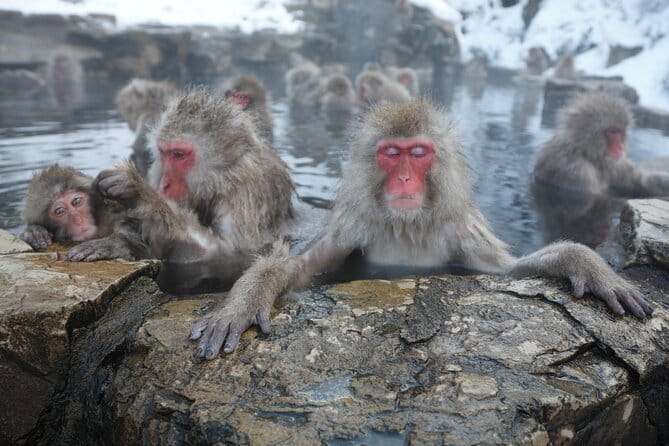
- Wild monkeys, not a petting zoo: You watch Japanese macaques at close range, but you cannot feed or touch them.
- About 50 minutes each way on foot: The route from the coach drop-off area to Jigokudani includes uphill walking, stairs, and slippery sections.
- The 2025 route includes miso and Obuse: The tour now visits Shioya Brewery in Suzaka and the Hokusai-linked town of Obuse instead of Zenkoji Temple.
- Your morning train is self-guided: You pick up the tickets in advance and board the designated Hokuriku Shinkansen from Tokyo Station on your own.
- Best monkey conditions run through winter: Snow and cold make the hot-spring scene more likely, but they also make the path harder.
- A small group helps: The maximum is 20 people, and the vehicle may be a bus, sedan, or taxi van depending on group size.
Tokyo to Nagano by Hokuriku Shinkansen
Your day begins before most sightseeing tours, at about 7:20 a.m. You make your own way to Tokyo City i, the tourist information center in the basement of the KITTE JP Tower at 2-7-2 Marunouchi. This is a ticket pickup point, not simply a casual meeting spot, so allow time to find it.
You must collect the Shinkansen tickets before departure. Pickup is available from three days before the tour until the day before, during the center’s 9:00 a.m. to 7:00 p.m. opening hours. It is not available on the booking day or the day after booking, and the facility can close without notice.
This arrangement is easy if you are staying near a major hotel and can arrange delivery or pickup early. It is less convenient if you are staying in an Airbnb. Plan a separate visit to Tokyo City i rather than leaving this job until the morning of the tour.
You board an ordinary-car reserved seat on the Hokuriku Shinkansen to Nagano. The journey takes about 90 minutes. There is no guide on the train, so you need to read the ticket, find the correct platform, and board on time. The instructions are designed to make this manageable, but first-time bullet-train riders should not treat the connection as completely foolproof.
If you miss the designated train, you may use a later Shinkansen that same day in the non-reserved section. The scheduled train cannot be changed at the ticket pickup desk, and unused tickets are not refundable. Keep your luggage modest, since storage space on board is limited.
At Nagano Station, meet the English-speaking National Government Licensed Guide Interpreter in the concourse on the second floor, in front of the Nagano City Tourist Information Center. The stated meeting time is 9:50 a.m., with departure at 10:00.
This split arrangement is worth understanding. The tour’s guide support begins in Nagano, not at Tokyo Station. Once you meet the guide, the day becomes much easier: road transfers, sightseeing times, and the return connection are handled for you.
A few more Tokyo bookings worth comparing
- Mt Fuji and Hakone 1-Day Bus Tour Return by Bullet Train
★ 5.0 · 26,383 reviews - Mt Fuji & Hakone Cruise, Drum Show Bullet Train 1 Day from Tokyo
★ 4.0 · 7,413 reviews - Tokyo Mt Fuji 5th St & Hakone Cruise Bus Tour w/Bullet Train
★ 4.4 · 5,024 reviews
Suzaka and the smell of fresh miso
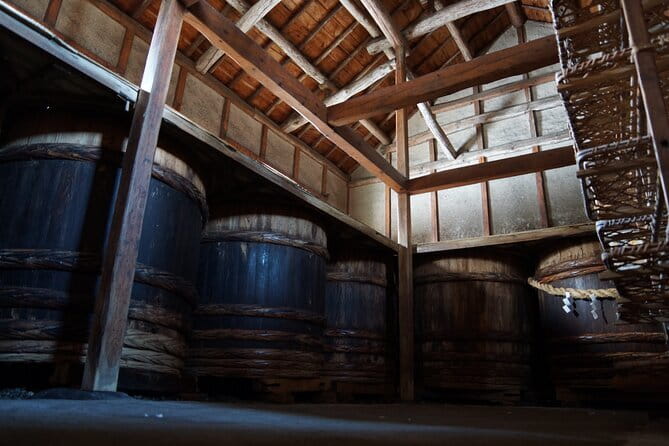
The first guided stop is Shioya Brewery in Suzaka, where you see how miso is made. Miso is the salty, fermented paste behind miso soup and many other Japanese dishes. It is closely tied to washoku, Japan’s traditional food culture, which has been recognized as an intangible cultural property.
The visit lasts about 40 minutes. You see the production process and sample the products. This is a short stop, but it gives the day a useful local-food angle. Instead of treating Nagano as a backdrop for monkeys alone, you get a look at an everyday ingredient with a central place in Japanese cooking.
Set your expectations correctly. This is a compact production visit, not a long cooking class or a full meal. The strongest value comes from seeing the process and tasting the finished food, then recognizing miso in meals later in your Japan trip.
The new miso stop also changes the balance of the tour. Earlier versions included Zenkoji Temple, and some older descriptions of the outing and past experiences refer to that temple. The current 2025 itinerary replaces it with miso production and Obuse, so check your final itinerary and do not book this tour expecting a Zenkoji visit.
Obuse, chestnuts, and Hokusai
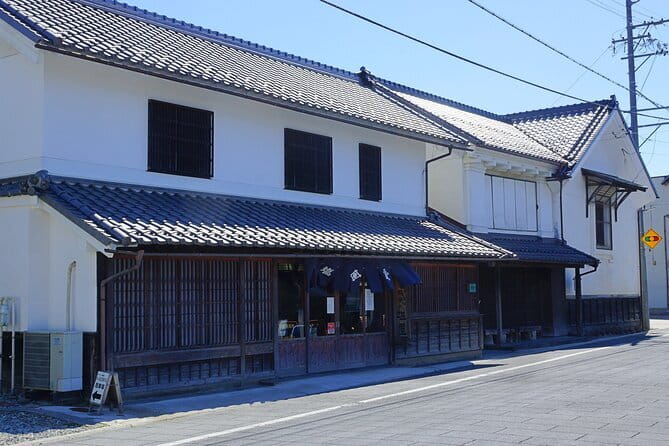
Next comes Obuse, a small town associated with Katsushika Hokusai, the famous ukiyo-e artist who spent his later years there. You have about 80 minutes to stroll through the traditional streets, browse, and find lunch at your own expense.
Obuse is known for chestnuts, so this is the place to try chestnut-based sweets or other local produce if you see something appealing. The stop works best when you enjoy wandering without needing every minute filled with formal sightseeing. You get a change of pace after the production visit and before the more active monkey-park section.
Lunch is not included, and the time is limited. Bring a payment method suitable for small purchases and do not assume you will have a long restaurant break. The tour information specifically leaves lunch to you, so treat Obuse as your chance to choose something quick and local rather than expecting a set meal.
I like this stop because it gives you a cultural setting with its own character. The drawback is that 80 minutes passes quickly, especially if you want to eat, shop, and explore. If you move slowly or need frequent breaks, you may have to choose between lunch and sightseeing.
The forest walk to Jigokudani Monkey Park
The main event is Jigokudani Snow Monkey Park. The park sits about 850 meters above sea level, and the route from the Shiga Kogen Roman Museum area to the entrance involves roughly 50 minutes of walking each way.
This is not a gentle stroll from a coach directly to a viewing platform. You walk uphill, use stairs, and follow a forest path beside the river. The route can be beautiful, but it becomes icy, wet, and slippery in winter. Some sections have no easy alternative, and the total day includes more than 200 stairs and inclines according to the practical experience of past participants.
Wear proper footwear. Winter boots or sturdy shoes with good grip are far more useful than fashionable sneakers. Warm layers matter too, since the park is cooler than the plains around Nagano. If the guide decides your cold-weather gear is not sufficient, you might be directed to rent equipment near the park at your own expense.
The walking time is the main reason this tour requires moderate physical fitness. If you use a cane, have trouble with steep paths, or are traveling with a small child, think carefully before booking. The operator cannot provide special support for people with walking difficulties or small children.
Once you reach the park, you have about two and a half hours at the site. That gives you enough time to watch the macaques, take photographs, and recover before the walk back. The monkeys are wild, so you cannot feed, touch, or approach them as if they were captive animals.
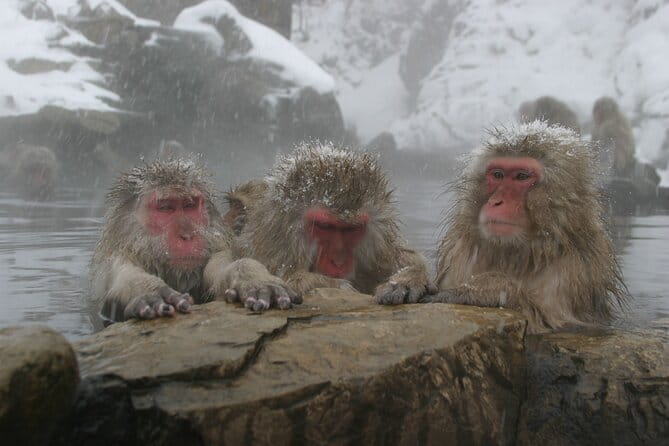
The hot-spring scene is seasonal and never guaranteed. Japanese macaques are most likely to be soaking through around March, especially during cold weather. You may see monkeys near the springs without seeing a dramatic bathing scene, and weather or animal behavior can change the experience. A lack of bathing monkeys does not qualify for a refund.
That uncertainty is part of the deal. You are observing wild animals, not attending a scheduled performance. The reward is a natural behavior that feels far more memorable than a staged animal encounter, but you should arrive ready to enjoy the park even if the monkeys choose the rocks, trees, or surrounding paths instead of the water.
Spring can bring young monkeys, while other seasons show different behavior. The park may also close suddenly because of weather, seasonal conditions, monkey behavior, or other safety concerns. If the entire tour is canceled, a full refund is issued.
Same corner of Tokyo, a completely different plan:
- 1-Day Tokyo Bus Tour
★ 5.0 · 14,250 reviews - Tokyo: TOKYO SKYTREE® Admission ticket
★ 4.5 · 11,192 reviews - Tokyo: teamLab Planets TOKYO Digital Art Museum Entry Ticket
★ 4.6 · 9,779 reviews - Tokyo: Sumo Show Experience with Chicken Hot Pot and a Photo
★ 4.8 · 6,678 reviews
Guides, group size, and how the day feels
The tour includes an English-speaking National Government Licensed Guide Interpreter once you meet at Nagano Station. Guides named Mariko and Ken have led this outing, with Mariko especially noted for her careful explanations and extra help during the day.
A good guide matters here because the schedule has several moving parts. You need to leave Nagano on time, fit the miso visit and Obuse into the morning, reach the monkey park during the afternoon, and return for the evening Shinkansen. The guide also helps keep the group together on the forest path.
The maximum group size is 20. Depending on the number of bookings, transportation may be a standard coach, a sedan, or a taxi van. Seats on the vehicle may not be assigned, so do not book this expecting a particular place to sit.
The day is organized rather than leisurely. You have no major dead time, but you also have little room to linger. That makes the tour a good match for you if you want to see Nagano highlights without building a complicated rail and local-transport plan.
Is $289.91 a fair price?
At $289.91 per person, this is not a cheap day trip. The price includes round-trip Shinkansen tickets from Tokyo, the English-speaking guide, transportation during the regional portion, admission to Jigokudani Monkey Park, and other listed admission fees.
The rail ticket is the largest practical benefit. Buying and coordinating the Tokyo to Nagano train, local transfers, and monkey-park transportation separately takes time and leaves you responsible for every connection. Here, the Nagano guide and regional transport turn a potentially awkward independent trip into one long, managed day.
Still, the price does not cover lunch, and you must handle the Tokyo ticket pickup yourself. You also carry your own luggage and receive no guide service during either train ride. If you are comfortable with Japanese rail travel and have time to plan, an independent visit may cost less.
The tour earns its price most clearly if you have only a few days in Tokyo and want to reach the countryside without spending a night in Nagano. It combines transport, interpretation, and access to a hard-to-reach attraction in one booking. If you already plan to visit Nagano independently, the package may offer less value.
Who should book this day trip?
I would choose this tour for a first visit to Japan when you want one full day outside Tokyo but do not want to rent a car or arrange several local connections. It suits adults, active families with older children, and anyone who likes mixing food, small-town streets, nature, and rail travel.
You should be comfortable walking for close to two hours in total at the monkey park, with hills and stairs included. Winter visitors need reliable non-slip footwear. People with limited mobility, vertigo, or young children may find the route too demanding.
Photographers should remember that the monkeys will not pose on command. The best photographs depend on weather, season, crowd conditions, and animal behavior. Bring patience, keep food packed away, and follow the park rules.
This also works well for anyone who considers the bullet train part of the Japan experience. The journey itself is short, smooth, and efficient, but the tour gives you the chance to combine it with places you would not easily reach from Tokyo in a single day.
Practical details that affect your booking
The tour starts around 7:20 a.m. and ends at Tokyo Station around 8:00 p.m. Make sure your day begins and ends there, rather than at your hotel. The departure point is Tokyo City i in the KITTE JP Tower, while the final return is Tokyo Station.
Confirmation is sent within 48 hours, subject to availability. Free cancellation is available up to 24 hours before the start time. After that cutoff, cancellations and changes are not accepted.
Participants under 18 need written parental permission. Anyone under 15, or not yet enrolled in middle school, must be accompanied by a parent or guardian. These rules matter if you are booking for teenagers or a family group.
The order of stops and arrival times can change because of traffic and road conditions. The Shinkansen timetable can also vary slightly because of unforeseen conditions. Build flexibility into any evening plans in Tokyo.
Should you book it?
Book this tour if seeing the snow monkeys is high on your Japan wish list and you value a guided, all-in-one day from Tokyo. The combination of Shinkansen travel, miso making, Obuse, and Jigokudani gives the outing more substance than a simple wildlife transfer.
Skip it if you dislike long days, icy paths, or fixed schedules. You might also save money by going independently if you are comfortable arranging Nagano transport and spending more time there.
For the best chance of seeing monkeys in the hot springs, choose a cold-weather date through around March, then prepare for the very same conditions that make the scene special: cold air, snow, and slippery ground. Bring serious shoes, travel light, and treat the monkeys as wild animals. Do that, and this is one of the more memorable ways to trade Tokyo’s city streets for Japan’s northern countryside.
FAQ
How long does the tour last?
The experience lasts about 12 hours. It begins around 7:20 a.m. and ends at Tokyo Station at approximately 8:00 p.m.
Is the bullet train ticket included?
Yes. Round-trip ordinary-car reserved Shinkansen tickets between Tokyo and Nagano are included.
Is a guide present on the train?
No. You travel without the National Government Licensed English Guide Interpreter between Tokyo and Nagano. You meet the guide at Nagano Station.
Where do I collect the train tickets?
You collect them at Tokyo City i in the basement of the KITTE JP Tower, 2-7-2 Marunouchi, Chiyoda-ku, Tokyo. Pickup is available from three days before the tour until the day before departure, during opening hours.
Is lunch included?
No. Lunch is at your own expense, with time provided during the Obuse visit.
How much walking is required?
The walk between the Shiga Kogen Roman Museum area and Jigokudani Monkey Park takes about 50 minutes each way. The route includes hills, stairs, and potentially slippery sections.
Can I touch or feed the monkeys?
No. The macaques are wild animals, and feeding or touching them is not allowed.
Will I definitely see monkeys bathing in the hot springs?
No. The bathing scene is most likely through around March, but weather, timing, and monkey behavior can prevent you from seeing it. No refund is provided for that reason.
What happens if I miss my designated Shinkansen?
You may take a later Shinkansen on the same day in the non-reserved car section. The designated train cannot be changed at the ticket pickup location.
New on our Tokyo list
- From Tokyo: Mount Fuji & Hakone Full Day Private Tour★ 4.9 · 25 reviews
- Tokyo Spectacular View Day-Cruise in 90 Minutes★ 5.0 · 25 reviews
- 2.5 Hour-Guided Cycle Tour in the Central Tokyo★ 5.0 · 25 reviews
- Real Tokyo Runner Club : Daikoku Car Meet Night Tour with JDM Car★ 5.0 · 25 reviews
- Ramen Making from Scratch +Akihabara Tour –Cooking Class★ 5.0 · 25 reviews
- [Self-Drive] Tokyo & Daikoku Custom Car Driving Tour★ 4.9 · 25 reviews
- Tokyo: 2-Hour Night Bike Tour of the City’s Hidden Gems★ 4.9 · 25 reviews
- Samurai themed Entertainment show in Shinjuku★ 4.5 · 25 reviews
Train Experiences, compared.
Mt Fuji and Hakone 1-Day Bus Tour Return by Bullet Train
Read our review →
Mt Fuji & Hakone Cruise, Drum Show Bullet Train 1 Day from Tokyo
Read our review →
Tokyo Mt Fuji 5th St & Hakone Cruise Bus Tour w/Bullet Train
Read our review →
Mt. Fuji & Hakone Tour w/ Return by Bullet Train
Read our review →
From Tokyo 1-Day Kyoto English-guided Tour by Bullet Train
Read our review →
Mt. Fuji and Hakone Day Trip From Tokyo with Bullet Train Option
Read our review →
Mt. Fuji & Hakone Bus Tour Bullet Train Return & 28-Hotel Pick-up
Read our review →
Kamakura & Enoshima Day Tour with Pickup & Train Ride
Read our review →Browse the lists this tour appears in