
Reviewed · JAPANESE CALLIGRAPHY CLASSES
Tokyo: Calligraphy Experience at Japanese Room in Shibuya
Japanese calligraphy is at its best when it slows you down. In this one-hour Shibuya workshop, you prepare ink the traditional way, practice basic strokes, and finish with a kanji character or name written on decorative paper. Instructor Sowa, also referred to as Soba by some participants, guides the session with clear explanations and a friendly manner.
I like two things right away: you make the ink yourself, rather than simply picking up a brush, and you leave with a personal piece of art. The small group, limited to eight people, also gives the class a calm feel. The main consideration is time: one hour is enough for an introduction, not a full study of Japanese scripts.
In This Review
- Key points
- Why this short Shibuya workshop works
- Preparing ink with an inkstone
- Learning strokes, scripts, and etiquette
- Choosing a character that means something
- Creating the decorative-paper keepsake
- What makes Sowa’s teaching useful
- The one-hour format and small group size
- Who should book this experience
- Is $32.84 good value in Tokyo?
- Booking details worth knowing
- Should you book the Shibuya calligraphy class?
- FAQ
- Where does the calligraphy experience begin?
- Where does the activity end?
- How long does the workshop last?
- How much does the experience cost?
- Who teaches the calligraphy class?
- Do I need previous calligraphy experience?
- Will I learn how to prepare ink?
- Can I choose what character to write?
- Can I take my calligraphy home?
- What is the cancellation policy?
Key points
- Traditional ink preparation: Grind and mix ink on an inkstone before you begin writing.
- A calm Shibuya setting: The workshop offers a quiet cultural pause in one of Tokyo’s busiest districts.
- Guidance from Sowa: Expect explanations of strokes, etiquette, kanji, and cultural context.
- A personal keepsake: Choose a character from a prepared list or write one based on your name.
- Practice before the final piece: You get time to work on basic strokes before using decorative paper.
- Small group size: The class is limited to a maximum of eight people.
Why this short Shibuya workshop works
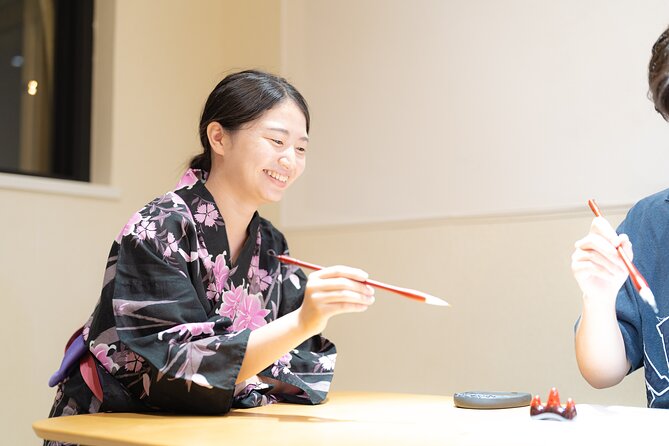
Tokyo offers plenty of fast-moving sights. This experience gives you a different rhythm. Instead of looking at Japanese culture from the outside, you handle the brush, prepare the ink, and make something with your own hands.
That change matters. Calligraphy is not just writing Japanese characters with a brush. It involves posture, pressure, stroke order, spacing, and the quiet habits that shape the practice. Even in a one-hour class, you get a useful sense of how much care goes into a single character.
The workshop begins at 2-chōme-14-13 Shibuya, Tokyo 150-0002, and returns to the same meeting point. The exact setting is described as a Japanese room, which suits the slow pace of the activity. Since the class is near public transportation, it should fit neatly into a day spent around Shibuya.
At $32.84 per person, this is fairly priced for a compact cultural activity. You are paying for instruction, materials, practice time, and a finished keepsake. It is not the cheapest way to fill an hour in Tokyo, but it offers more substance than a quick photo stop or a souvenir bought in a shop.
More calligraphy tables:
- Tokyo: Calligraphy on Kanji Fan & Scroll with Drink
★ 5.0 · 210 reviews - Let’s experience calligraphy in YANAKA, Taito-ku, TOKYO !!
★ 5.0 · 127 reviews - Tokyo: Calligraphy Workshop & Original T-Shirt Creation
★ 4.9 · 105 reviews
Preparing ink with an inkstone
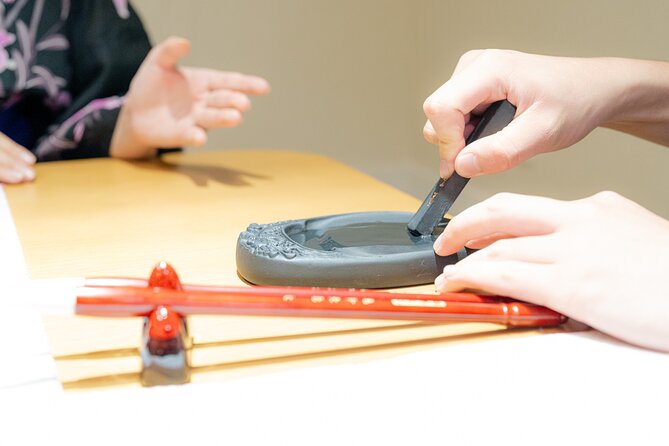
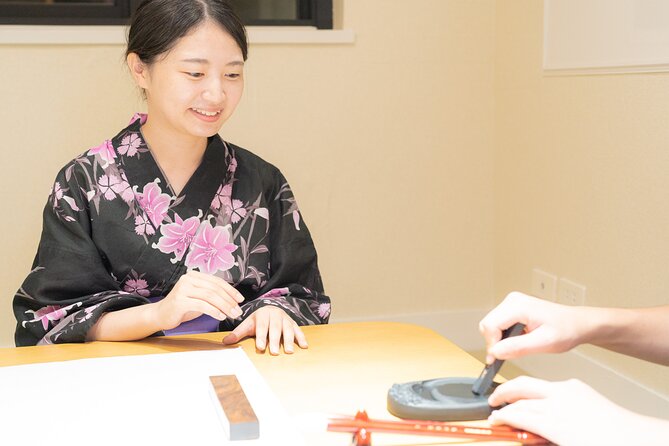
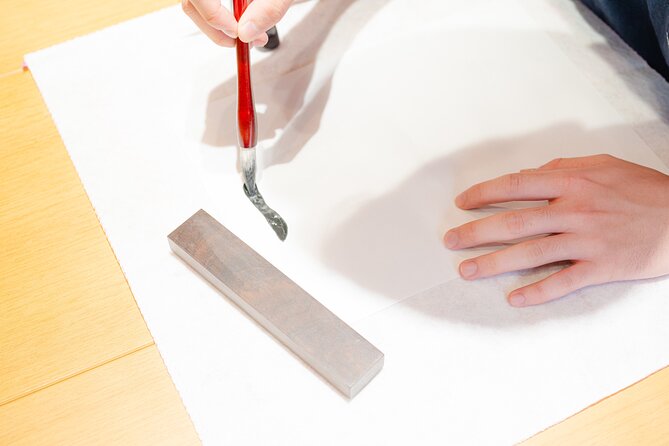
The first hands-on step is preparing the ink. You learn how to grind and mix it using a traditional inkstone, rather than starting with ready-made liquid ink.
This small ritual sets the tone. It makes you slow down before the first brushstroke and shows that calligraphy begins with preparation. You are not rushed straight toward the final character. Instead, the process starts with the tools and the correct way to use them.
Sowa explains the equipment and basic etiquette at the start. That context is useful because a brush, inkstone, and paper are not simply craft supplies. They are part of a long artistic practice with its own manners and methods.
You should expect this portion to be more about understanding the process than producing perfect ink. If you have never tried calligraphy before, the preparation gives you a practical introduction without requiring prior knowledge.
Learning strokes, scripts, and etiquette
After the ink is ready, Sowa introduces the basic techniques. You practice strokes at your own pace and learn how the brush should move across the paper.
The class also touches on the different Japanese scripts and the structure of kanji. One especially useful feature is the explanation of basic radicals and how characters are built. This helps you see kanji as more than complicated symbols. You begin to understand that small parts can carry meaning and that stroke order has a purpose.
The teaching style appears designed for beginners. Sowa breaks the activity into steps, offers encouragement, and connects characters with everyday examples. That is important in a short class, since too much technical detail could make the experience feel like a lesson instead of a cultural activity.
You will have time to practice before the final work. This is one of the strongest parts of the format. The practice sheet gives you room to make uneven lines, adjust your pressure, and get used to the brush. Your first attempt does not need to be your final one.
Still, keep your expectations sensible. A single hour cannot turn you into a calligrapher. The goal is to understand the basics, enjoy the act of writing, and produce something meaningful enough to take home.
Choosing a character that means something
For the final piece, you choose a character from a prepared list or select one connected to your own name. This personal choice gives the activity more meaning than copying a random symbol.
If you already have a favorite Japanese word or idea, you can ask about it, though the provided details only guarantee the prepared list and name-based options. Sowa can help explain the kanji and its cultural context, which is particularly useful if you do not read Japanese.
The choice also makes the class suitable for different ages and interests. You might select a character for its meaning, its appearance, or its connection to your trip. Someone else may prefer to write a name-based character and keep it as a personal souvenir.
I like that the activity does not force everyone into the same finished design. The structure is guided, but the final paper still feels individual.
More Shibuya plans:
- Official Street Go-Kart in Shibuya
★ 5.0 · 3,435 reviews - Tokyo: Street Kart Experience in Shibuya
★ 4.9 · 1,484 reviews - Shibuya Meltdown Nightlife Tour: All-You-Can-Drink Bar Hopping
★ 5.0 · 1,058 reviews - Shibuya Official Street Go-Kart in Shibuya Annex
★ 5.0 · 972 reviews
Creating the decorative-paper keepsake
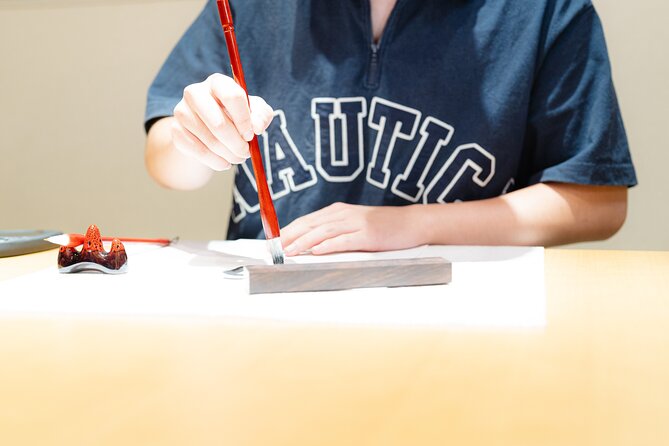
Once you have practiced, you write the chosen character on decorative paper. This is the part most people will remember, but it works because of the preparation that comes first.
The decorative paper gives your finished character a proper presentation. You are not simply taking home a practice sheet covered in attempts. You leave with a small piece that can serve as a reminder of Tokyo and of the time you spent learning the process.
Do not expect a museum-quality work of art. Your piece will reflect your level of experience, and that is part of its charm. The value comes from making it yourself under guidance, not from producing perfect professional calligraphy.
Sowa’s role is important here. The class format provides practice, but the instructor’s feedback helps you manage the final brushstroke with more confidence. Clear instruction and a relaxed attitude are especially helpful for anyone who feels nervous about making a permanent mark on decorative paper.
What makes Sowa’s teaching useful
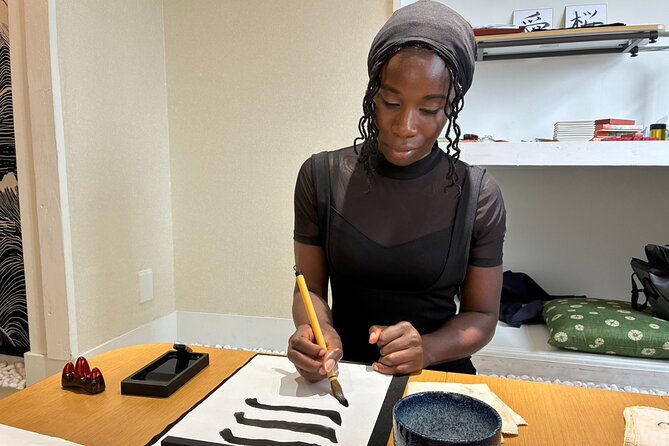
The instructor receives consistent praise for being friendly, encouraging, and clear. More importantly, the teaching covers both technique and meaning.
Sowa explains the history and cultural background of calligraphy, then connects that information to the characters you are writing. This gives the class more depth than a simple brush-painting session. You learn why the strokes matter and how kanji can relate to real-life ideas.
The tone is also described as calm and almost meditative. That does not mean the workshop is silent or formal from start to finish. You can ask questions, receive help, and work through the exercises at a comfortable pace.
This balance should suit beginners who want cultural context without a long academic lecture. The instructor’s friendly approach also makes the workshop a reasonable choice for families, since one participant specifically planned to return with children. The provided information does not give a minimum age, so check the booking details if you are arranging the class for young children.
The one-hour format and small group size
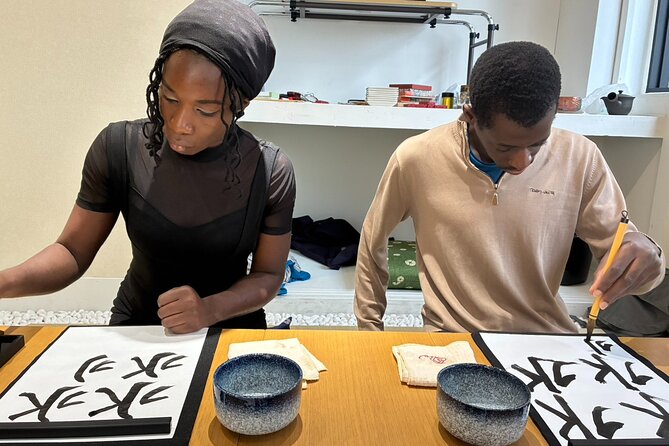
The duration is approximately one hour. That makes the workshop easy to fit between larger Tokyo plans, especially around Shibuya.
The schedule includes an introduction, ink preparation, technique practice, and the final character. You should arrive ready to focus, since the hour is compact. There is enough time to try the process properly, but not much room for a slow, extended art lesson.
The maximum group size is eight people. That limit matters because calligraphy benefits from individual guidance. A huge class would make it harder to ask about a stroke or get help with the final character.
A small class also supports the quiet atmosphere that makes this activity appealing. Shibuya itself can feel intense, noisy, and crowded. A calm room and a limited group offer a useful break without taking you far from the district’s main attractions.
The activity ends back at the meeting point. You can plan your next stop from there, but allow a little extra time to locate the address at 2-chōme-14-13 Shibuya before the start.
Who should book this experience
I would recommend this workshop to anyone who wants a hands-on cultural activity rather than a passive sightseeing stop. It is particularly well suited to first-time visitors who want a simple introduction to Japanese calligraphy.
It also fits:
- Couples looking for a shared creative activity
- Families interested in Japanese culture
- Solo visitors who enjoy guided workshops
- People who want a small, easy-to-pack souvenir
- Beginners with no calligraphy or Japanese-language experience
You do not need to know kanji before arriving. The session provides a prepared list and basic instruction. You also do not need an artistic background, since practice comes before the final paper.
This may be less suitable if you want a long, technical class or a detailed study of several Japanese scripts. The workshop is an introduction, and its greatest strength is accessibility rather than advanced training.
Is $32.84 good value in Tokyo?
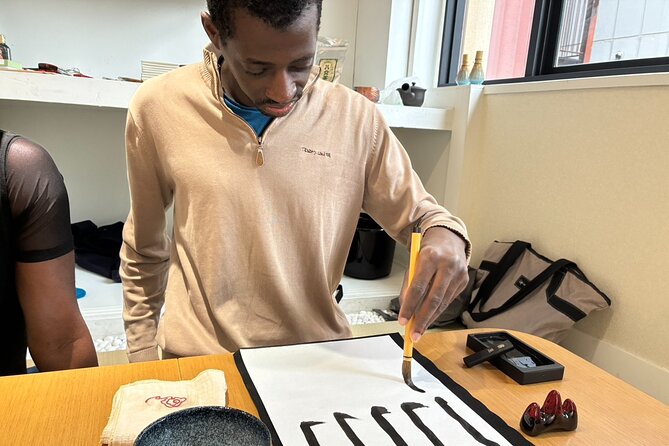
At $32.84, the experience offers solid value if you care about participation and cultural understanding. You receive instruction, access to traditional tools, practice materials, and a finished piece to take home.
The cost makes more sense when you think of it as both a class and a souvenir. A shop-bought calligraphy item may look polished, but it will not carry the memory of grinding the ink, learning the strokes, and writing the character yourself.
The one-hour length keeps the total commitment low. You are not giving up half a day of sightseeing, and the meeting point returns you to the same area. That makes the activity easier to combine with Shibuya shopping, dining, or other plans.
The tradeoff is that the final keepsake will be beginner work. If you want professional calligraphy or a long lesson, the price may feel less attractive. If you want a relaxed introduction with personal guidance, it is a reasonable spend.
Booking details worth knowing
Confirmation is provided at booking, and the experience accepts a mobile ticket. It is near public transportation, which is helpful in a district where walking routes and station exits can be confusing.
Most people can participate, according to the activity information. The group has a maximum of eight participants, and the activity ends where it begins.
Free cancellation is available if you cancel at least 24 hours before the start time. Cancellations made less than 24 hours ahead are not refunded, and late changes are not accepted. The cut-off follows Tokyo local time, so keep that in mind if you are booking from another country.
Should you book the Shibuya calligraphy class?
Book it if you want to slow down, learn a little about kanji, and make a souvenir with your own hands. The inkstone preparation, practice time, and personal final character give the hour a clear beginning, middle, and end.
I especially like the combination of traditional process and beginner-friendly teaching. Sowa’s explanations add cultural meaning, while the small group keeps the mood relaxed. Just remember that this is a short introduction, not an advanced course.
For $32.84, it is a good choice for a quiet break in Shibuya and a more personal connection to Japanese culture. If you prefer big sights, fast schedules, or highly technical instruction, use the hour elsewhere. For most first-time visitors interested in trying something creative, this is an easy activity to recommend.
FAQ
Where does the calligraphy experience begin?
It begins at 2-chōme-14-13 Shibuya, Tokyo 150-0002, Japan.
Where does the activity end?
The experience ends back at the meeting point.
How long does the workshop last?
The activity lasts approximately one hour.
How much does the experience cost?
The listed price is $32.84 per person.
Who teaches the calligraphy class?
The instructor is named Sowa. Some participant comments refer to him as Soba or Sowa-san.
Do I need previous calligraphy experience?
No previous calligraphy experience is stated as a requirement. The workshop teaches basic techniques and includes practice before the final piece.
Will I learn how to prepare ink?
Yes. You begin by grinding and mixing ink with a traditional inkstone.
Can I choose what character to write?
Yes. You can choose a character from a prepared list or select one based on your own name.
Can I take my calligraphy home?
Yes. Your final character is written on decorative paper, which you can take home as a keepsake.
What is the cancellation policy?
You can cancel for a full refund up to 24 hours before the experience start time. Cancellations or changes made less than 24 hours before the start are not accepted or refunded.
New on our Tokyo list
- Tokyo : Kamikaze Street Drift Ride★ 5.0 · 3 reviews
- Private Zen Meditation in English in Shinjuku, Tokyo★ 5.0 · 3 reviews
- Sumi-e Experience in a relaxing green tea shop in Tokyo★ 5.0 · 3 reviews
- Onsen Spa in Tokyo and Asakusa Bar Hopping with Local Guide★ 5.0 · 3 reviews
- Easy for everyone! Now you can play handmade mini shamisen and show off to everyone! Musical instruments, sweets and live music★ 5.0 · 3 reviews
- Tokyo: Private Tsukiji Street Food & Sake with Local Guide★ 5.0 · 3 reviews
- Mt Fuji Exploration Tour with Free Japanese Kusa Mochi from Tokyo★ 4.5 · 3 reviews
- Tokyo Tsukiji Fish Market Walking and Exploring Hidden Gems Tour★ 5.0 · 3 reviews
Japanese Calligraphy Classes, compared.
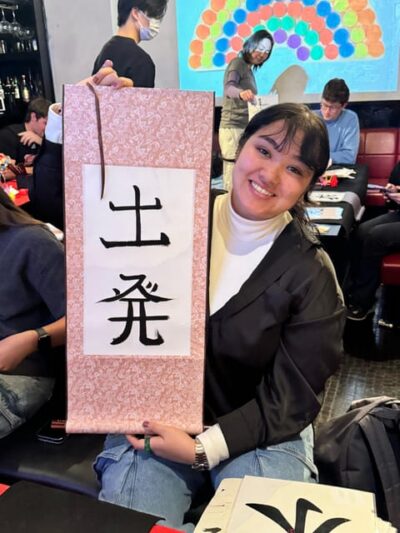
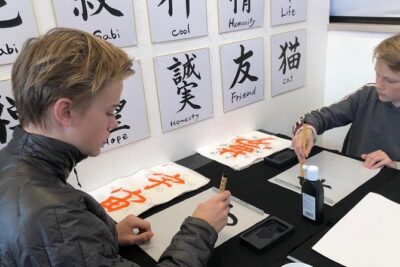
Let’s experience calligraphy in YANAKA, Taito-ku, TOKYO !!
Read our review →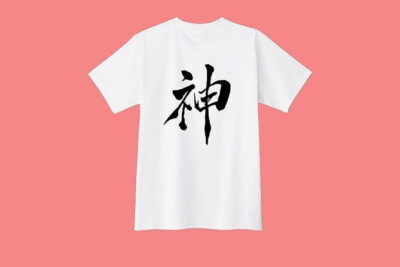
Calligraphy Workshop & Original T-Shirt Creation
Read our review →
Calligraphy Workshop & Original T-Shirt Creation
Read our review →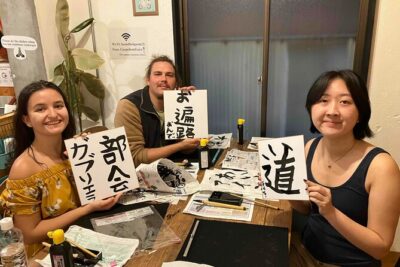
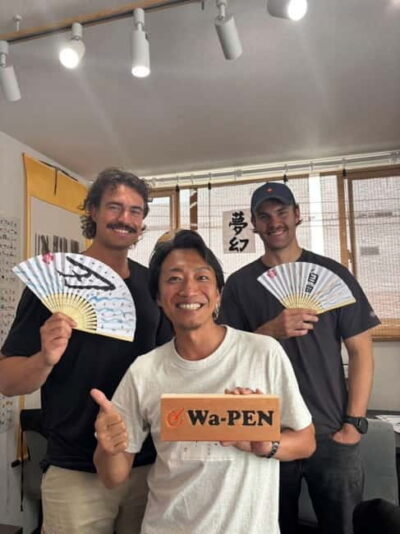
Calligraphy &Make your original folding fan in Asakusa
Read our review →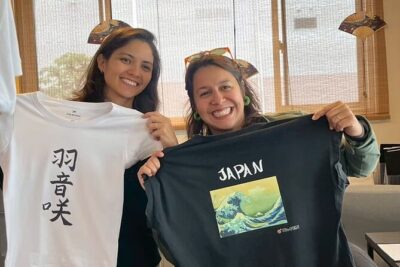
Tokyo Asakusa:Calligraphy & Make T-shirt Activity
Read our review →Browse the lists this tour appears in