
Reviewed · SHIBUYA TOURS
Tokyo: E-scooter Experience in Shibuya with Iconic Photos
Shibuya looks different from an e-scooter. Instead of seeing Tokyo’s famous crossing, neon signs, and tree-lined streets from one fixed point, you move through them at street level. This two-hour guided ride links Shibuya Crossing with the quiet gate of Meiji Shrine and the broad, leafy streets of Meijijingu Gaien.
I like the quick practice session for first-time riders, and I like the small group limit of seven people. The guides can slow down when needed, stop for extra pictures, and check that everyone is keeping up. The main catch is that this is an outdoor activity that depends on good weather, and the meeting point is in Mita, not directly at Shibuya Crossing.
In This Review
- Key points to know before you book
- A Tokyo ride that shifts from neon to trees
- Starting in Mita, then heading toward the famous sights
- Shibuya Crossing: Tokyo’s most energetic photo stop
- Meiji Shrine: a calm gate and a sharp change of mood
- Meijijingu Gaien and the autumn ginkgo streets
- How the guides handle first-time riders
- What the included photos add to the price
- Who will get the most from this experience
- Timing, weather, and the practical details
- Should you book the Shibuya e-scooter ride?
- FAQ
- Where does the e-scooter experience start?
- Where does the experience end?
- How long does the activity last?
- What sights are included?
- Is scooter rental included in the price?
- Are photographs included?
- Are food and drinks included?
- How many people can join the experience?
- What happens if the weather is poor?
Key points to know before you book
- Beginner-friendly instruction: You receive a short lesson and time to practice before joining the ride.
- Three very different Tokyo scenes: The route takes in Shibuya Crossing, Meiji Shrine’s gate, and the ginkgo-lined streets of Meijijingu Gaien.
- Small group size: A maximum of seven riders allows the guide to watch the group more closely.
- Photos are included: The guide takes pictures during the outing and sends them to you afterward.
- Speed stays manageable: The e-scooters travel up to 20 km/h, fast enough to feel exciting but not built for racing.
- Weather matters: Poor conditions can lead to a change of date or a full refund.
A Tokyo ride that shifts from neon to trees
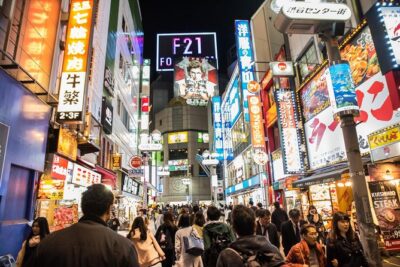
The clever part of this experience is the contrast. Shibuya gives you crowds, screens, traffic, and the famous flow of people across the intersection. A short time later, the route brings you to the solemn entrance of Meiji Shrine and the tree-lined streets of Gaien.
That change of mood is hard to get from a standard photo stop. You see a famous Tokyo scene, then move into quieter surroundings without spending the day on trains. The e-scooter also gives you a little more range than walking, while keeping the pace slow enough to notice what is around you.
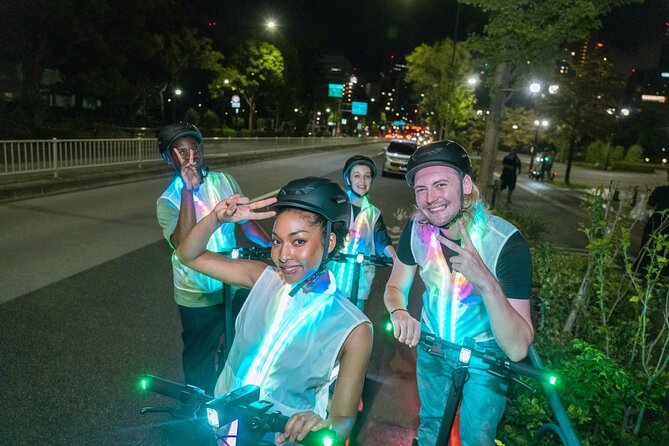
The ride is capped at 20 km/h. That is not a high-speed thrill ride, and it should not be treated as one. The appeal is the feeling of gliding through the city, with the guide setting the pace and keeping the group together.
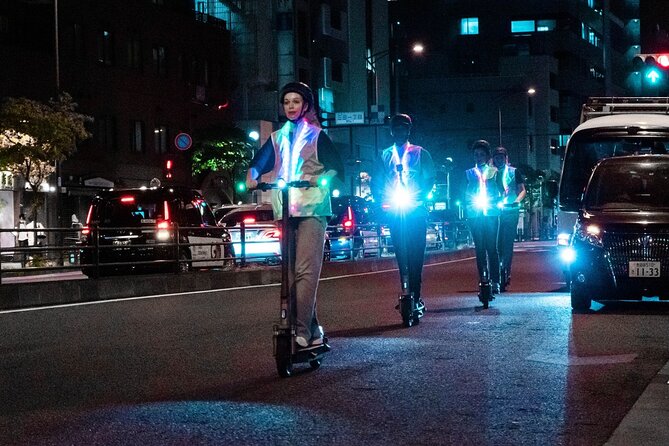
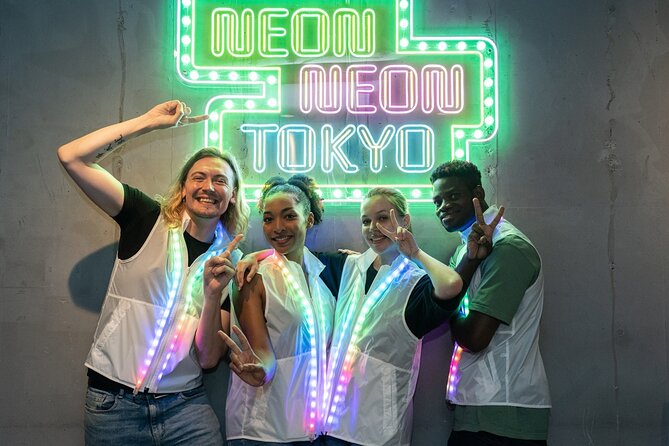
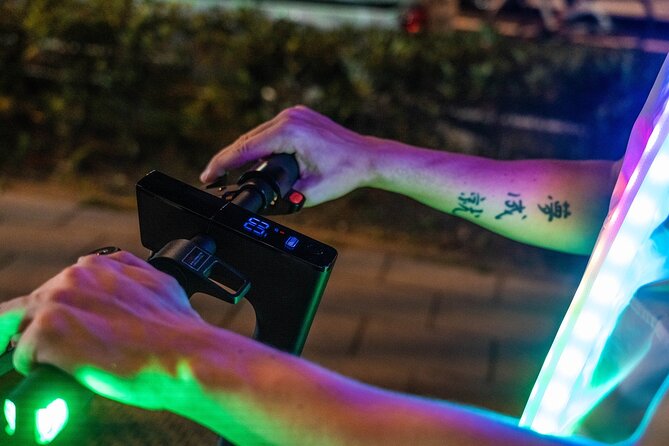
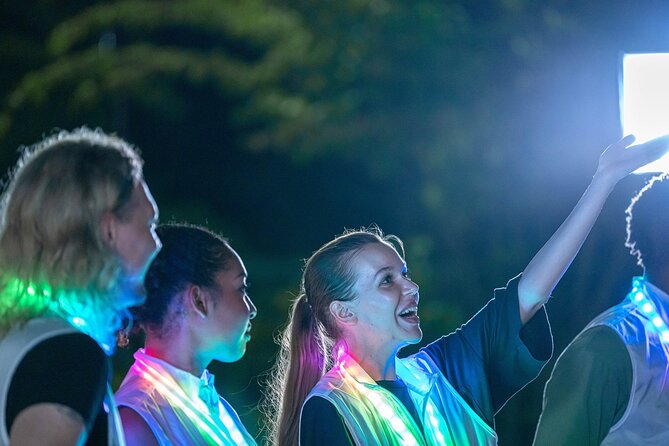
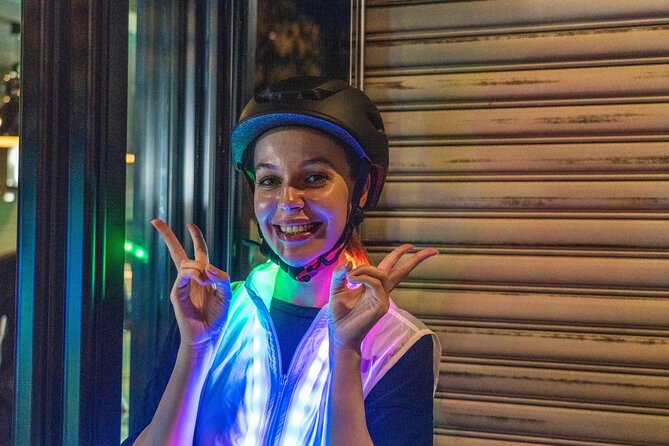
The glowing safety vest adds a playful touch. It helps make the group easier to spot and becomes part of the photographs, so your pictures have a clear record of the experience rather than looking like ordinary sightseeing snapshots.
More Shibuya plans:
- Official Street Go-Kart in Shibuya
★ 5.0 · 3,435 reviews - Tokyo: Street Kart Experience in Shibuya
★ 4.9 · 1,484 reviews - Shibuya Meltdown Nightlife Tour: All-You-Can-Drink Bar Hopping
★ 5.0 · 1,058 reviews
Starting in Mita, then heading toward the famous sights
The meeting point is NEON NEON TOKYO at 4-chome-1-4 Mita, Minato City. The location is near public transportation, but you should allow enough time to find it before the start. The ride ends back at the same meeting point, so you do not need to work out a separate return route.
The start point is worth noting because the experience is marketed around Shibuya, but you do not meet at Shibuya Crossing itself. Check the address carefully when planning your day. A mobile ticket is provided, which is handy for keeping the booking details on your phone.
At the beginning, the guide gives you a quick introduction to the scooter. If you have never used one, you get time to practice before joining the route. That matters more than it might sound. A first attempt in a busy city can feel awkward, and the practice period gives you a chance to get used to the controls before riding with the group.
The guides are also prepared to adjust the pace. One rider who felt nervous as a first-time scooter user found the instruction reassuring, while another rider appreciated the friendly tone and easy conversation. I would still recommend telling the guide at the start if you need extra practice or a slower pace.
Shibuya Crossing: Tokyo’s most energetic photo stop
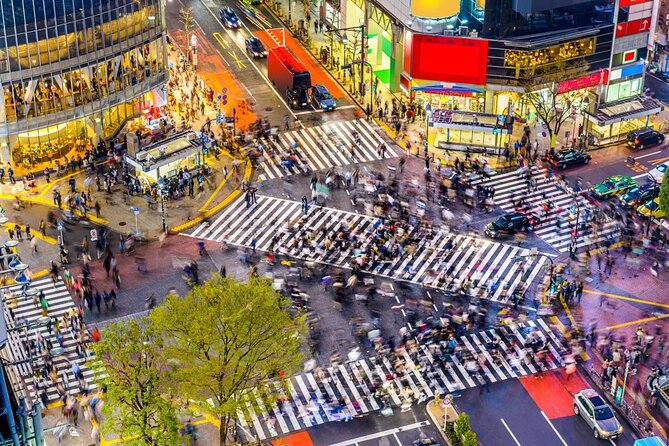
Shibuya Crossing is the headline stop, and for good reason. The crossing is one of Tokyo’s best-known public scenes, with people moving in several directions while giant signs and busy streets frame the view.
You do not ride across the crossing as a sightseeing stunt. The stop is mainly for seeing it and taking a picture with the famous setting behind you. The scheduled stop is brief, about five minutes, so think of it as a sharp photo opportunity rather than a long visit.
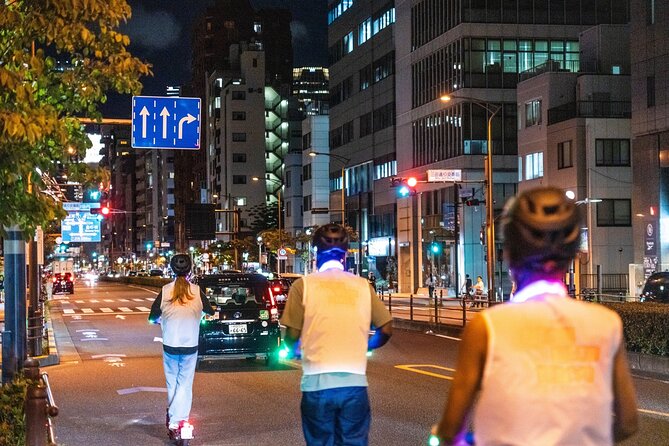
The e-scooter changes the way you approach the area. You arrive with the group, pause for photographs, and then continue instead of spending the whole visit searching for the right angle on foot. The glowing vest gives the photos a distinct look, especially if the ride takes place after dark and the surrounding signs are lit.
The short timing also means you should not expect a full exploration of Shibuya’s shopping streets or nightlife. This experience gives you a taste of the district’s visual energy, not a detailed neighborhood tour. If you want time for department stores, cafés, or a long look at the crossing from another viewpoint, plan that separately.
The city-light aspect is one of the strongest reasons to choose this outing. The ride is designed to let you watch the neon-lit surroundings from the scooter, and the low speed leaves room to take in the streets instead of rushing past them.
Meiji Shrine: a calm gate and a sharp change of mood
The next listed stop is Meiji Shrine. Here, the focus is a photograph at the shrine gate, where the setting feels more restrained and solemn than Shibuya.
This is not a long shrine visit. The planned stop lasts about five minutes, and the activity does not include a full tour of the shrine grounds or a detailed explanation of its religious traditions. Still, the gate gives you a strong visual contrast with the glowing signs and crowded crossing.
I like this stop because it gives the ride a sense of rhythm. You begin with Tokyo’s modern image, then pause at a place connected with quiet, ceremony, and wooded paths. You can take the picture, notice the change in sound and pace, and continue without giving up most of your afternoon.
Keep your expectations in line with the format. If Meiji Shrine is high on your list, you may want to return on your own for more time. The e-scooter outing offers a brief look and a photograph, not a dedicated shrine visit.
A few more Tokyo bookings worth comparing
- Night E-Scooter Ride to Tokyo Tower – No License Needed
★ 4.9 · 19 reviews - Tokyo: E-scooter Experience & Tokyo Tower night Tour
★ 5.0 · 12 reviews
Meijijingu Gaien and the autumn ginkgo streets
Meijijingu Gaien provides the third major setting. The streets here are lined with many trees, giving you a broad natural backdrop for pictures. In fall, the ginkgo trees turn yellow, creating the most seasonal version of this stop.
The planned visit is again about five minutes. That is enough for a few photographs, but it is not enough to wander the whole area or linger over the trees. The value comes from the transition between stops. You get a taste of Tokyo’s open, tree-lined side while still moving through the city by scooter.
Autumn may be the most appealing time for photographers because of the yellow ginkgo foliage. The tour data does not promise a particular level of seasonal color, so you should not book solely for peak leaves. Even outside fall, the trees offer a useful break from the hard edges and bright signs of central Tokyo.
This is also the stop that best shows why an e-scooter can be useful. Walking between major districts takes time, while the scooter lets you connect several different settings in a single outing. You are not simply being driven from one photo point to another. You are moving through the streets between them and getting a sense of the distance.
How the guides handle first-time riders
The guide is the key to this experience. The scooter itself is easy to ride for many people, but city riding still requires attention, balance, and comfort with the controls.
You receive a quick tutorial and a chance to practice. The guides also check that the group can keep up. If someone needs to slow down, the pace can be adjusted. That support is especially useful for a first ride, and it is one of the most important practical strengths of the experience.
The maximum group size is seven. That is small enough for the guide to notice if a rider is struggling or falling behind. It also keeps the outing from feeling like a large convoy moving through Tokyo.
The supplied information does not name the guides, so you cannot request a particular person in advance based on the booking details. What you can do is speak up early about your confidence level. A guide can only set a comfortable pace if you explain what you need.
The friendly tone is another plus. One rider specifically enjoyed the jokes and relaxed conversation, while another praised the guides for stopping to take extra pictures, including a view with Tokyo Tower. That suggests some flexibility beyond the three main stops, though extra stops should not be treated as guaranteed.
What the included photos add to the price
The cost is $52.02 per person. For two hours, that is not the cheapest way to see Tokyo, especially since food and drinks are not included. You are paying for the scooter rental, a local guide, safety support, and photographs, not for admission to an attraction.
The value improves if you want a ready-made activity with several photo settings. Renting a scooter separately would not give you the same route, group support, or guide-taken images. The included photos also mean you can focus on riding and enjoying the stops instead of handing your phone to someone at every location.
The price is less convincing if you mainly want a long visit at one place. Shibuya Crossing, Meiji Shrine, and Gaien each receive only a short stop, so this is best understood as a moving introduction. You get variety and a little adventure rather than depth at any single sight.
At the end of the outing, the photos are sent to you. The exact delivery method and timing are not specified, so keep your booking information available if you need to confirm how they will arrive. The important point is that photo service is part of the package rather than an extra charge.
Who will get the most from this experience
I would suggest this ride to you if you want to see several recognizable Tokyo settings without spending the whole afternoon walking. It also suits people who enjoy taking pictures and want something more active than a standard bus or walking tour.
First-time scooter riders can join because instruction and practice are included. Still, beginner-friendly does not mean completely passive. You need to be comfortable following the guide, paying attention to the route, and riding in an urban setting.
This is a good pick for:
- First-time scooter riders who want an introduction with a guide nearby.
- Small groups and couples looking for a shared activity with photos included.
- Nighttime sightseers who want to see Tokyo’s lights from the street.
- Photographers who like changing backdrops, from neon signs to shrine gates and trees.
- Repeat Tokyo visitors who have seen the main sights but want a different way to connect them.
It may not suit you if you dislike scooters, want a long cultural explanation at Meiji Shrine, or need a fully indoor plan. The outing requires good weather, and poor conditions can lead to cancellation or rescheduling.
Timing, weather, and the practical details
The experience lasts about two hours and returns to the starting point. Food and drinks are not included, so eat beforehand or plan a separate meal around the activity.
The booking confirmation arrives at the time of booking, and the mobile ticket makes the reservation easy to carry. The activity is near public transportation, but the supplied information does not give a specific station or travel time. Use the full Mita address rather than assuming the start is in Shibuya.
Most people can take part, according to the provided participation information. No special access details are given, so contact the operator before booking if you have mobility concerns or questions about using the scooter.
The weather rule is simple. You can cancel for a full refund up to 24 hours before the start time. Within 24 hours, changes are not accepted and the payment is not refunded. If the operator cancels because of poor weather, you are offered another date or a full refund.
Should you book the Shibuya e-scooter ride?
Book it if you want a lively, photo-focused introduction to Tokyo with a little motion built in. The strongest features are the patient instruction, small group, included photos, and the sharp change from Shibuya’s neon streets to Meiji Shrine and Gaien’s trees.
Think twice if you want deep time at each sight or if bad weather could disrupt your schedule. At $52.02, the experience offers fair value for the scooter, guide, safety support, and photo service, but its short stops make it a sampler rather than a full tour of these districts.
FAQ
Where does the e-scooter experience start?
It starts at NEON NEON TOKYO, 4-chome-1-4 Mita, Minato City, Tokyo 108-0073, Japan.
Where does the experience end?
The ride ends back at the meeting point in Mita.
How long does the activity last?
The experience lasts approximately two hours.
What sights are included?
The route includes Shibuya Crossing, Meiji Shrine, and Meijijingu Gaien.
Is scooter rental included in the price?
Yes. The e-scooter rental fee is included.
Are photographs included?
Yes. Photos are taken during the ride and sent to you at the end of the experience.
Are food and drinks included?
No. Food and drinks are not included.
How many people can join the experience?
The activity has a maximum group size of seven travelers.
What happens if the weather is poor?
If the experience is canceled because of poor weather, you can choose another date or receive a full refund. You can also cancel up to 24 hours before the start time for a full refund. Cancellations within 24 hours are not refunded.
New on our Tokyo list
- Sumi-e Experience in a relaxing green tea shop in Tokyo★ 5.0 · 3 reviews
- Tokyo : Kamikaze Street Drift Ride★ 5.0 · 3 reviews
- Private Zen Meditation in English in Shinjuku, Tokyo★ 5.0 · 3 reviews
- Onsen Spa in Tokyo and Asakusa Bar Hopping with Local Guide★ 5.0 · 3 reviews
- Easy for everyone! Now you can play handmade mini shamisen and show off to everyone! Musical instruments, sweets and live music★ 5.0 · 3 reviews
- Tokyo: Private Tsukiji Street Food & Sake with Local Guide★ 5.0 · 3 reviews
- Mt Fuji Exploration Tour with Free Japanese Kusa Mochi from Tokyo★ 4.5 · 3 reviews
- Tokyo Tsukiji Fish Market Walking and Exploring Hidden Gems Tour★ 5.0 · 3 reviews
Shibuya Tours, compared.
Shibuya Meltdown Nightlife Tour: All-You-Can-Drink Bar Hopping
Read our review →
Shibuya Official Street Go-Kart in Shibuya Annex
Read our review →
Premium Go-Kart Tour with Tower & Shibuya Crossing
Read our review →Browse the lists this tour appears in