
Reviewed · TOKYO FOOD TOURS
Best of Shibuya Food Tour
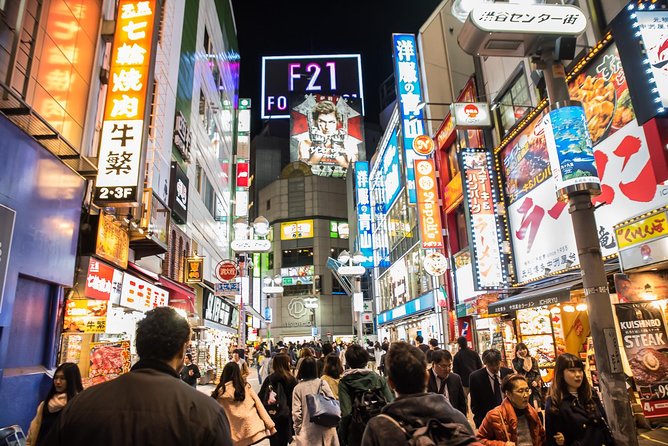
Shibuya after dark is more than the famous crossing. This three-hour food walk leads you into side streets, small eateries, Nonbei Yokocho, and the basement food counters of Tokyu Food Show, where Tokyo’s everyday eating culture feels more real than the polished restaurant fronts around the station.
I like the small group size of no more than 10 and the generous range of food. I also like having guides such as Jacob, Alex, Saika, Jane, Melissa, and Sandra who add local context and help with ordering. The main drawback is price: at $217 per person, you need to value the guidance and access, not just the meal.
In This Review
- Key points to know before you book
- Why this Shibuya food walk works
- Meeting Hachiko at 4 p.m.
- From Hachiko to the Myth of Tomorrow mural
- Center-gai, where the food tour takes shape
- Shibuya Crossing from a different angle
- Shibuya 109, Mega Don Quijote, and the neighborhood texture
- Five stops and a full Japanese meal
- Tokyu Food Show and the basement finish
- How much food value do you get for $217?
- Dietary needs, children, and drinking rules
- What to bring and how to pace the evening
- The guide can make or break the night
- Who should book this Shibuya food tour?
- Should you book the Best of Shibuya Food Tour?
- FAQ
- How long does the Best of Shibuya Food Tour last?
- What time does the tour start?
- Where does the tour begin?
- Where does the tour end?
- How many food stops are included?
- What food might be served?
- Is the tour suitable for children?
- Are vegetarian or vegan options available?
- Is a drink included?
- Is transportation included?
- What happens if the weather is poor?
- What is the cancellation policy?
Key points to know before you book
- Five food stops plus dessert: Expect a full evening of Japanese dishes, with possible sushi, ramen, okonomiyaki, yakitori, gyoza, and regional specialties.
- Starts at Hachiko Square: The meeting point is in front of the Hachiko wall mural at the Hachiko Exit, a busy spot where careful navigation matters.
- Shibuya beyond the crossing: You walk through Center-gai, Nonbeiyokocho, side streets, and a department-store food hall.
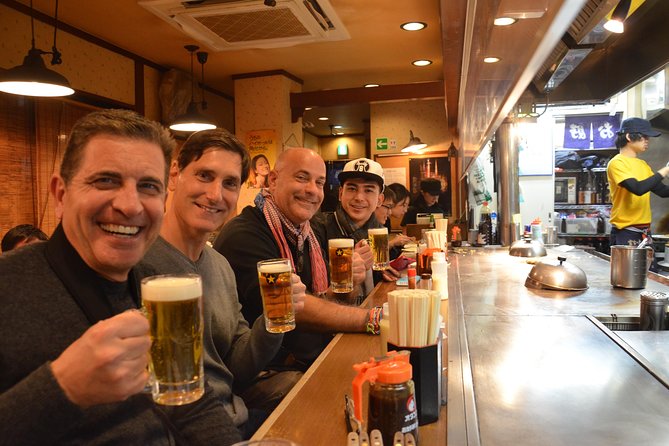
- One drink is included: Additional food, drinks, and transport are not included in the price.
- Family-friendly format: Children may join with an adult, and children receive chicken skewers instead of beef.
- Dietary flexibility: Vegetarian and vegan requests are accepted, with other substitutions possible depending on the restaurants.
Why this Shibuya food walk works
The best reason to book this tour is simple: Shibuya can be hard to read at street level. The station is huge, signs compete for your attention, and many small restaurants sit above shops, down narrow lanes, or behind unmarked doors. A local guide gives you a reason to keep walking after you have taken the usual crossing photo.
The food is only half the experience. You also get a short introduction to Hachiko, a look at the Myth of Tomorrow mural, a walk through Center-gai, and time around Shibuya 109 and Mega Don Quijote. These stops are brief, but they help you understand how the neighborhood changes from a transport hub into a night-time dining district.
This is not a formal tasting menu in one restaurant. It is a moving meal. You may eat a few bites at one stop, walk several minutes, then sit down for a larger dish at another. The exact restaurants and dishes can change because of restaurant schedules, holidays, weather, and other practical issues.
The experience has a 4.8 rating from 612 ratings, with 96 percent recommending it. That strong record fits the tour’s main strength: the guide often makes the difference. Guides named in the feedback include Seika, Clara, Ray, Saika, Melissa, Jacob, Jane, Alex, Sandra, Vanessa, Daniel, Yu, and Maya. The comments consistently praise their warmth, local insight, food explanations, and ability to keep groups moving without making the evening feel rushed.
More Tokyo food crawls:
- Tokyo: Shinjuku Food Tour (13 Dishes at 4 Local Eateries)
★ 5.0 · 6,603 reviews - Tokyo: Shinjuku Food Tour (15 Dishes and 4 Eateries)
★ 4.9 · 2,033 reviews - Best of Shinjuku: Izakaya Food Tour (4 Stops, 14+ Tastings)
★ 5.0 · 1,863 reviews
Meeting Hachiko at 4 p.m.
You meet at Hachiko Family, in front of the wall mural of Hachiko near the Hachiko Exit. The written meeting address is 2 Chome-1 Dogenzaka, Shibuya, Tokyo 150-0043. Start time is 4 p.m.
Give yourself extra time to find this point. Hachiko Square is crowded, and a taxi driver may not recognize a wall mural as easily as a convenience store or hotel. One person had trouble locating the exact meeting place and could not reach the guide after arriving late, so this is not a tour where you should cut the timing close.
The Hachiko stop itself lasts only a few minutes, but the guide uses it to explain local customs and the story behind the famous dog. It is a useful beginning because you start with one of Tokyo’s best-known symbols, then quickly move away from the postcard view.
The group limit of 10 is important here. Shibuya’s sidewalks and restaurant entrances are tight, so a small group is easier to manage than a large bus-sized crowd. It also gives you a better chance to ask about dishes, customs, and later restaurant suggestions.
From Hachiko to the Myth of Tomorrow mural
The next short stop is the Myth of Tomorrow mural. You will not spend long here, but it adds a cultural pause before the eating begins.
The tour is described as family-friendly, and children and adults can both take part. Keep in mind that this is a walking evening with repeated restaurant entries, street crossings, and stairs or changes in level that may occur at individual venues. A moderate level of fitness is recommended.
The guide’s explanations are a key part of these brief stops. A strong guide turns a quick look at a mural or alley into useful background about Japanese customs and city life. The tour does not try to give a full art lecture, so think of these moments as short windows into Shibuya rather than major sightseeing visits.
Center-gai, where the food tour takes shape
Center-gai is one of Shibuya’s best-known pedestrian areas, but the useful part of this stop is not simply seeing the main street. Your guide leads you toward restaurants and food spots that are easy to miss when you are focused on the big signs and crowds.
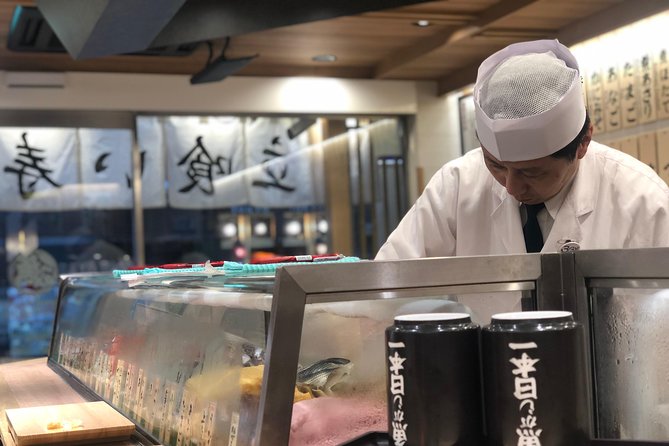
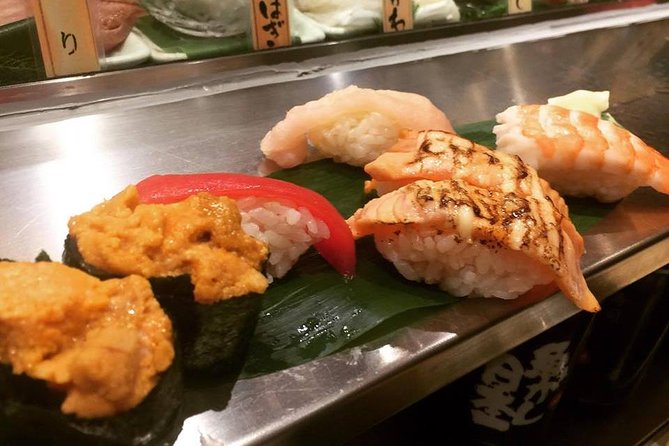
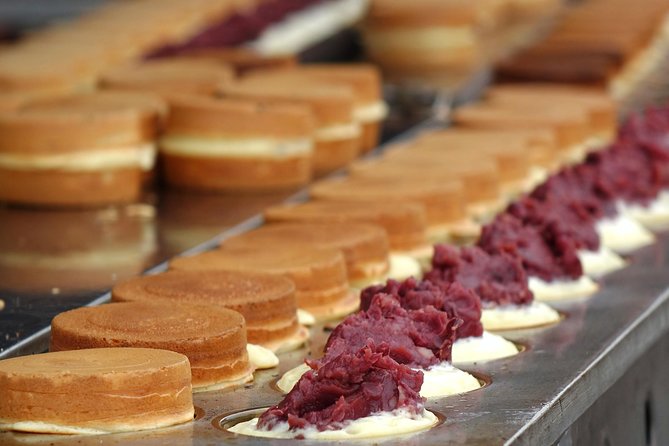
The possible food list is broad. You might encounter Hiroshima-style okonomiyaki, several kinds of sushi, Wagyu beef yakitori, ramen, gyoza, chicken wings, a vegetable-and-egg dish with bacon, and dessert. The exact combination is not guaranteed, but the structure promises five food stops rather than one restaurant meal.
That variety gives you a good introduction to the way Japanese food changes from place to place. Sushi shows the care given to rice and fish. Yakitori introduces grilled skewers and small-plate dining. Okonomiyaki brings a more filling, cooked-to-order style, while ramen offers a warm bowl with its own seasoning customs.
One especially useful guide tip concerns ramen. Alex reportedly showed how to season the bowl for the best result, which is the kind of small instruction you may not get when eating alone. Guides also explain the background of the food and the restaurants, so you gain more than a list of dishes.
The quantity can be substantial. Several people finished the tour very full, and one particularly enthusiastic account advised arriving hungry. I would treat this as dinner, not as a light pre-dinner snack. Eat a modest lunch and avoid making a firm dinner reservation soon after the tour.
More Shibuya plans:
- Official Street Go-Kart in Shibuya
★ 5.0 · 3,435 reviews - Tokyo: Street Kart Experience in Shibuya
★ 4.9 · 1,484 reviews - Shibuya Meltdown Nightlife Tour: All-You-Can-Drink Bar Hopping
★ 5.0 · 1,058 reviews - Shibuya Official Street Go-Kart in Shibuya Annex
★ 5.0 · 972 reviews
Shibuya Crossing from a different angle
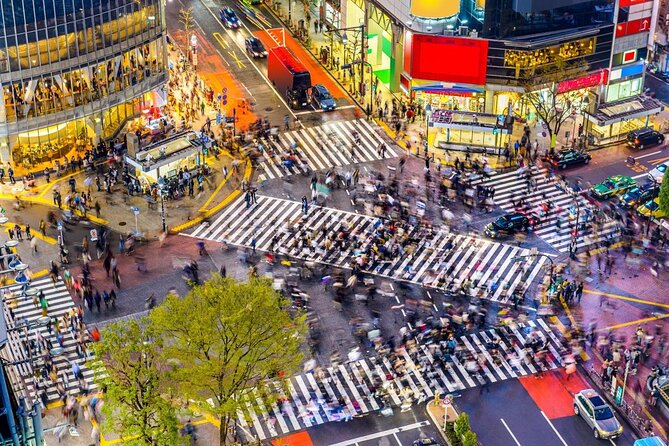
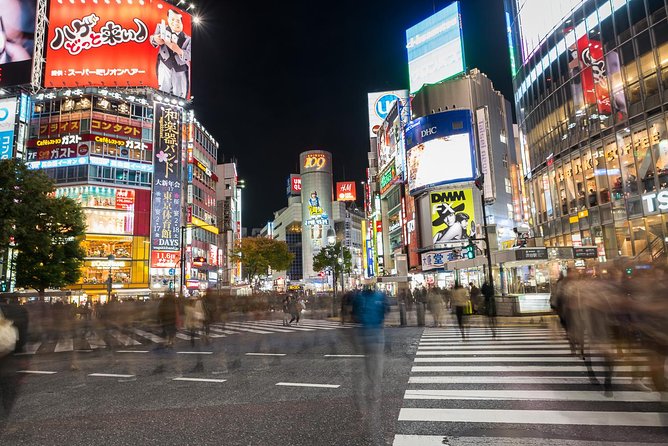
The famous crossing receives only a short formal stop, yet it helps connect the tour’s two sides. You see the public face of Shibuya, then move into the lanes and restaurants behind it.
Some guides also know good places for views of the crossing from above. That was a highlight for one group, though the exact viewpoint is not listed as a guaranteed stop, so do not book the tour solely for an observation deck or rooftop view.
The crossing can be disorienting, especially at the start of an evening when you are still learning the station exits. Stay close to the guide and note the route back to the station. If you arrive by taxi, walking from the drop-off point to Hachiko Square may take longer than expected.
Shibuya 109, Mega Don Quijote, and the neighborhood texture
Shibuya 109 and Mega Don Quijote appear as brief orientation points rather than long shopping visits. You are not buying a shopping pass with your food tour, but these places show the commercial side of the neighborhood.
Mega Don Quijote is useful for seeing the dense mix of snacks, cosmetics, souvenirs, household goods, and daily necessities that make Japanese discount stores so entertaining. The stop is very short, so save your serious shopping for another visit.
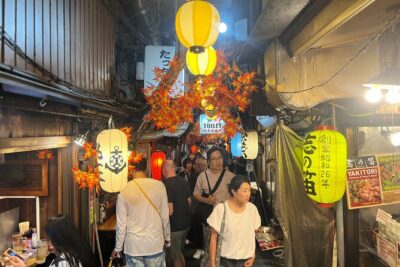
The route also includes Nonbeiyokocho, a narrow dining area with a very different feel from the broad avenues near the crossing. This is the kind of place many first-time visitors walk past without knowing what they are seeing. The guide provides context and helps you move through the small spaces without wasting time trying to decode every entrance.
The contrast is what makes this part worthwhile. Shibuya is not one single district with one mood. A few minutes can take you from enormous advertising screens to cramped restaurant lanes and then into a department-store basement filled with carefully presented food.
Five stops and a full Japanese meal
The five food stops are the heart of the experience. You may visit a mixture of small restaurants, side-street counters, and food venues. The tour includes the tastings and dessert, but the information also says food and drinks are not included unless specified, so read the inclusions carefully: five food stops, dessert, and one drink are covered, while extra orders are your responsibility.
The sample dishes give you a sense of the range:
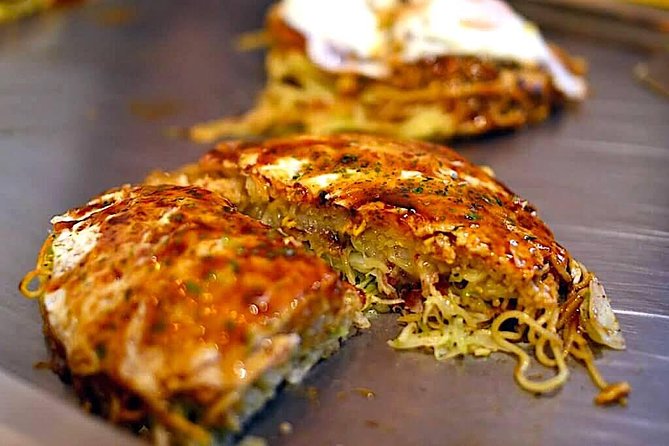
- Hiroshima-style okonomiyaki, a layered savory pancake with regional character
- Sushi, which may include several pieces of nigiri
- Yakitori, including Wagyu beef skewers for adults and chicken skewers for children
- Ramen, with advice on seasoning and eating it properly
- Gyoza, wings, seasonal vegetables, or other small Japanese dishes
- Dessert to finish the walk
Do not expect every item above on every departure. Restaurants sometimes change, and substitutions can be made. That flexibility keeps the tour running, but it also means you should not book with one exact dish as your main goal.
The portion size is one of the stronger points. Several accounts describe enough food to leave you stuffed, and one meal included ramen, eight pieces of nigiri, a vegetable and egg dish, chicken wings, gyoza, cucumber, and more. That account also felt the cost was too high, which is a useful warning: generous portions do not automatically make a $217 tour good value for everyone.
Tokyu Food Show and the basement finish
The final stop is Tokyu Food Show, ending at the Tokyu Department Store basement under the station. The listed end point is Tokyu Department Honten Store, 2 Chome-24-1 Dogenzaka, Shibuya, Tokyo 150-8019.
A Japanese department-store food hall, often called a depachika, is a fine place to end a food-focused walk. You see neatly arranged sweets, prepared food, boxed meals, seafood, and seasonal products. It is less about sitting down and more about seeing how carefully food is sold and presented in Japan.
The finish is practical. You end near the station rather than in an unfamiliar outer neighborhood, and you can continue shopping, return to your hotel, or use the train network. The tour does not include hotel pickup, hotel drop-off, or transport costs, so plan your return separately.
How much food value do you get for $217?
At $217 per person, this is an expensive food walk. You are paying for the food, the guide, the small group, the organization, and the chance to enter places you might not choose on your own. You are not paying for luxury dining or a fixed chef’s tasting menu.
I think the price makes the most sense if you are new to Tokyo, unsure about ordering, or keen to understand Japanese food while you eat it. It also works well early in your stay. Alex, in particular, gave useful recommendations for later meals, and that kind of advice can help you save time and avoid poor choices during the rest of your visit.
The value is weaker if you are already comfortable finding local restaurants, comparing menus, and navigating Shibuya. Two people found the meal and restaurant choices average for the cost, while another felt the stops were uninspired and too connected to other tours from the same company.
That difference may come from the guide and the changing venues. A great guide can turn an ordinary bowl of ramen into a useful lesson and make a simple alley feel worth exploring. A less effective evening may feel like an expensive series of basic meals.
Dietary needs, children, and drinking rules
Vegetarian-friendly and vegan options are available, but you should state your needs when booking. The tour can make substitutions, yet the exact restaurant choices change, so no specific replacement menu is promised.
Children must be accompanied by an adult. Children aged 10 and above require a copy of passport information, according to the tour details. Children receive chicken skewers instead of beef.
The experience is family-friendly, but remember that the route lasts about three hours and includes several food stops. Guides have helped families with restroom stops, which is useful, but restroom access at each venue is not guaranteed in the published details.
The minimum drinking age is 21. One drink is included, but you can take part without treating the evening as a drinking event. The optional karaoke after-party is available for those who want to continue, though it is not part of the core three-hour experience.
What to bring and how to pace the evening
Wear comfortable shoes. The route covers Shibuya streets and several food venues, and you should expect regular walking between stops.
Arrive hungry, but not so hungry that you rush the first dish. Because the portions can be large, a light lunch works better than skipping food all day. Bring a phone with the meeting details saved, and use the mobile ticket as a backup at the start.
Do not arrive late. The group moves from one venue to another, and late arrivals may not be able to join at a later stop. The meeting point is outside the station near Hachiko, not inside a restaurant.
Keep your expectations flexible. The tour may substitute restaurants because of weather, holidays, operating hours, or other problems. That is normal for a walking food route, but it means the advertised sample dishes are possibilities rather than a guaranteed menu.
The guide can make or break the night
The most praised part of this experience is the guide. Seika and Saika were praised for warmth and food knowledge. Jacob was singled out for his Japanese language ability, cultural background, restaurant advice, and large portions. Alex received praise for local recommendations and for knowing a useful view of Shibuya Crossing.
Jane was appreciated for explaining the food and adjusting the walking pace to the slowest person in the group. Sandra worked well with a family and helped make restroom stops possible. Melissa, Vanessa, Daniel, Yu, Clara, Ray, and Maya were also described as friendly, entertaining, and helpful with the food and neighborhood.
That range of names also tells you something important: you may not receive the same style of guiding on every date. The best version is conversational, flexible, and full of small details. The weaker version may feel like a standard route through average restaurants.
The maximum of 10 people gives the guide a chance to speak with everyone. It also makes it easier to handle food restrictions and keep the group together. If you value personal attention, this is a meaningful advantage over a large group food walk.
Who should book this Shibuya food tour?
You should consider it if you are visiting Tokyo for the first time, want a ready-made introduction to Japanese food, or feel unsure about small restaurants. It is also a good choice for families with older children, couples who want a guided first night, and anyone who prefers tasting several foods instead of committing to one dinner.
I would especially consider booking it near the beginning of your Tokyo stay. You can use the guide’s restaurant suggestions later, and the route gives you a practical sense of how Shibuya fits together.
I would skip it if you are a confident food explorer, have a tight budget, or expect premium restaurants for the price. The food sounds generous, but the exact quality depends on the day’s venues and the guide. At $217, that uncertainty matters.
Should you book the Best of Shibuya Food Tour?
Book it for the local orientation and guide-led access, not simply for the amount of food. You get five stops, dessert, one drink, a small group, and a route through parts of Shibuya that are easy to overlook.
The tour is a strong fit for curious first-time visitors who want help with Japanese dishes, customs, and ordering. It is less convincing for independent eaters who can find sushi, ramen, and skewers on their own for much less.
If you do book, meet early at the Hachiko mural, come very hungry, share all dietary needs in advance, and keep the restaurant choices flexible. Those simple steps give you the best chance of getting the lively, informative Shibuya evening this experience is designed to provide.
FAQ
How long does the Best of Shibuya Food Tour last?
The tour lasts approximately three hours.
What time does the tour start?
The stated start time is 4 p.m.
Where does the tour begin?
It begins in front of the Hachiko wall mural at Hachiko Exit in Shibuya’s Hachiko Square area. The listed address is Hachiko Family, 2 Chome-1 Dogenzaka, Shibuya, Tokyo 150-0043.
Where does the tour end?
It ends at Tokyu Food Show, in the basement level under the station. The listed end address is Tokyu Department Honten Store, 2 Chome-24-1 Dogenzaka, Shibuya, Tokyo 150-8019.
How many food stops are included?
Five food stops are included, along with dessert and one drink.
What food might be served?
Possible dishes include Hiroshima-style okonomiyaki, sushi, Wagyu beef yakitori, ramen, gyoza, chicken wings, seasonal foods, and dessert. The restaurants and dishes may change.
Is the tour suitable for children?
Yes. It is family-friendly, but children must be accompanied by an adult. Children receive chicken skewers instead of beef.
Are vegetarian or vegan options available?
The tour is vegetarian-friendly and can accommodate vegan dietary needs. Restaurant substitutions may be made depending on the circumstances.
Is a drink included?
Yes. One drink is included. Additional food and drinks are not included unless specifically provided as part of the tour.
Is transportation included?
No. Hotel pickup, hotel drop-off, and transportation costs are not included.
What happens if the weather is poor?
If poor weather causes the tour to be canceled, you will be offered a different date or a full refund.
What is the cancellation policy?
You can cancel at least 24 hours before the start time for a full refund. Cancellations or changes made less than 24 hours before the start time are not accepted for a refund.
New on our Tokyo list
- From Tokyo: Mount Fuji & Hakone Full Day Private Tour★ 4.9 · 25 reviews
- Tokyo Spectacular View Day-Cruise in 90 Minutes★ 5.0 · 25 reviews
- Real Tokyo Runner Club : Daikoku Car Meet Night Tour with JDM Car★ 5.0 · 25 reviews
- 2.5 Hour-Guided Cycle Tour in the Central Tokyo★ 5.0 · 25 reviews
- Ramen Making from Scratch +Akihabara Tour –Cooking Class★ 5.0 · 25 reviews
- [Self-Drive] Tokyo & Daikoku Custom Car Driving Tour★ 4.9 · 25 reviews
- Tokyo: 2-Hour Night Bike Tour of the City’s Hidden Gems★ 4.9 · 25 reviews
- Buddha, Bamboo & Zen – Bespoke Kamakura Private Walking Tours★ 5.0 · 25 reviews
Tokyo Food Tours, compared.
Shinjuku Food Tour (13 Dishes at 4 Local Eateries)
Read our review →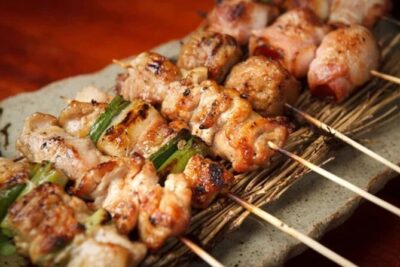
Shinjuku Food Tour (15 Dishes and 4 Eateries)
Read our review →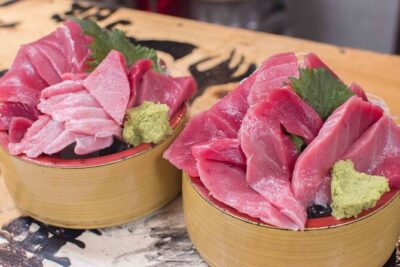
Best of Shinjuku: Izakaya Food Tour (4 Stops, 14+ Tastings)
Read our review →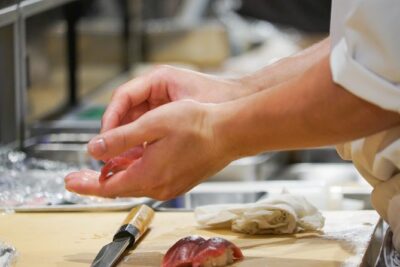
Tokyo Night Foodie Tour in Shinjuku – Seasonal Sushi, Wagyu Beef
Read our review →
Eat and Drink Like a Local: Tokyo Ueno Food Tour-Taverns&Ramen
Read our review →
Tsukiji Fish Market: Street Food & Culture Walking Tour
Read our review →Shinjuku Food Tour – 15 Dishes, 3 Drinks, 4 Eateries
Read our review →Browse the lists this tour appears in