
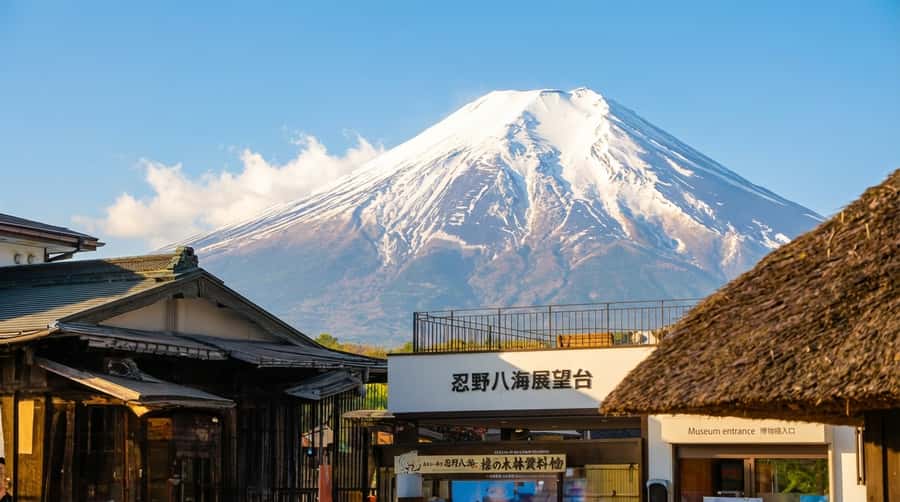
Reviewed · MT FUJI AREA TOURS
Tokyo: Full-Day Tour of the Six Majestic Spots of Mt Fuji
Mount Fuji is the star, but the clever part of this day trip is the variety of viewpoints. You may catch its reflection beside swans at Hirano Beach, frame it behind a red pagoda, or see it beyond flower fields at Lake Kawaguchi. The morning timing matters, especially if you want the calm lake reflection.
I like the way this tour combines famous photo spots with places that feel more rooted in daily Japanese life, such as the quiet Higashikawa Clock Shop street and Oshino Hakkai’s old-style village. I also like that transportation, a driver, and a guide are included for $45, a useful price when you want to reach several Fuji areas without arranging local buses.
The main caution is the mountain itself. Clouds can cover Fuji for much of the day, and traffic can force changes on weekends and holidays. A few practical complaints also matter: one visitor found the bus air-conditioning faulty, while another found the speaker volume uncomfortable.
In This Review
- Key points to know before booking
- Why this Tokyo to Fuji day trip works
- Hirano Beach and Fuji reflections before breakfast crowds
- Higashikawa Clock Shop and the straight road to Fuji
- Arakurayama Sengen Park and the red pagoda climb
- Oshino Hakkai, clear springs and a traditional village
- Oishi Park and Lake Kawaguchi’s changing colors
- What the guides add to the day
- Transport, timing and the realities of a full day
- Food, clothing and other practical details
- Is $45 good value for Mount Fuji?
- Who should book this Fuji tour?
- FAQ
- Where does the tour start and end?
- Is hotel pickup included?
- Which languages are available?
- Is Mount Fuji guaranteed to be visible?
- What should I bring?
- Is food included?
- Can I bring luggage?
- Is the tour wheelchair-accessible?
- Can I cancel the tour?
Key points to know before booking
- Hirano Beach works best early: Morning light can produce a mirror-like Fuji reflection, with swans close to the gravel shore.
- Six very different Fuji views: The route includes a lakeshore, a straight town street, a pagoda, mountain springs, a convenience store, and a flower park.
- Arakurayama requires a climb: The pagoda viewpoint is reached by stone steps, so it is the least accessible stop.
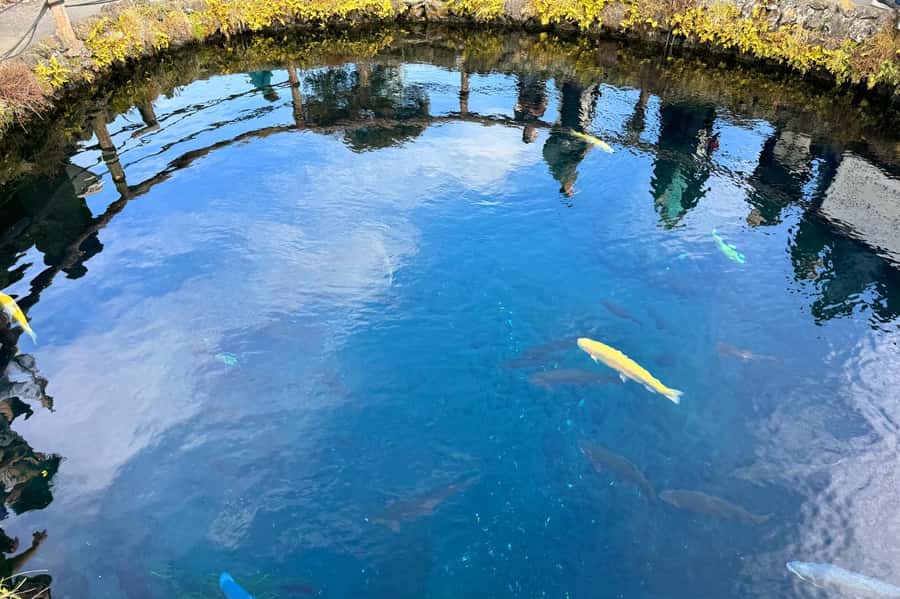
- Oshino Hakkai adds culture: You get clear spring water, wooden bridges, and traditional thatched-roof buildings, not only mountain photographs.
- Season changes the final stop: Oishi Park’s flowers shift from tulips and moss phlox to lavender, begonias, or autumn maple color.
- Guiding can vary: Guides including Tim, Agnes, and Sakuragi have received strong praise, but small groups may have limited English commentary.
Why this Tokyo to Fuji day trip works
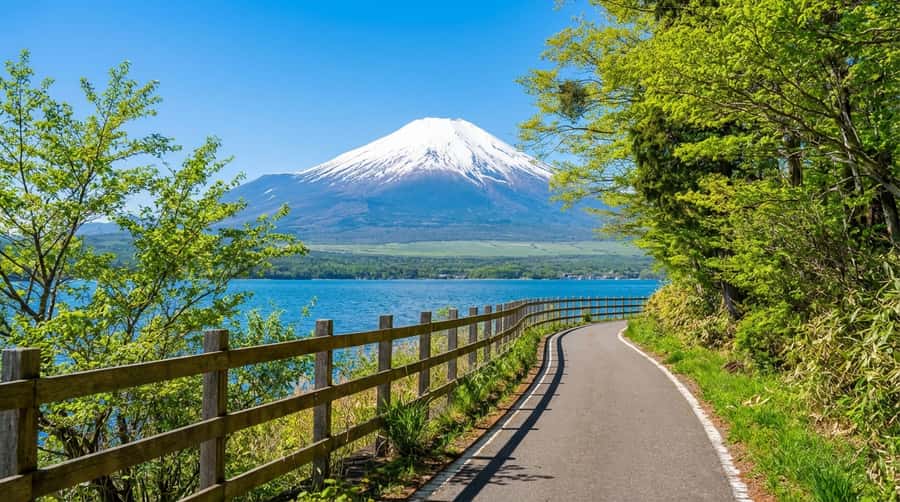
This is a long sightseeing day built around Mount Fuji’s many faces. Instead of taking you to one resort town and leaving you to work out the rest, it links six popular stops in the Lake Yamanaka, Oshino, and Lake Kawaguchi areas.
That matters because Fuji viewing is unpredictable. A mountain that disappears from one side may appear from another, and a cloudy sky at a pagoda might still leave you with attractive spring water, village scenery, or seasonal flowers.
You travel in an air-conditioned vehicle with a driver and guide. The tour begins and ends at the assigned meeting point, not at your hotel, so you need to allow time to reach the departure location. The exact meeting point depends on the option you book, and it cannot be changed on departure day.
At $45 per person, the value is straightforward. You are paying for a full day of transport across a wide area, plus a guide, rather than paying separate fares for trains, buses, and local transfers. Food, drinks, personal expenses, and insurance are extra.
The tradeoff is a fixed group itinerary. You will not linger wherever you want, and traffic or attraction closures can alter the order. If you prefer a slow day at one lake, this is not the right format. If you want to cover a lot from Tokyo, it makes good sense.
More Mt Fuji days from Tokyo:
- Mt Fuji and Hakone 1-Day Bus Tour Return by Bullet Train
★ 5.0 · 26,383 reviews - Mt Fuji & Hakone Cruise, Drum Show Bullet Train 1 Day from Tokyo
★ 4.0 · 7,413 reviews - Tokyo Mt Fuji 5th St & Hakone Cruise Bus Tour w/Bullet Train
★ 4.4 · 5,024 reviews
Hirano Beach and Fuji reflections before breakfast crowds
Hirano Beach sits on the northeastern side of Lake Yamanaka. It is a gravel shoreline, not a polished resort promenade, and that is part of its appeal.
The draw is the potential reflection. In calm morning conditions, Mount Fuji can appear both above the water and in the lake itself. The tour specifically schedules this stop early because the mirror effect is most likely before wind and activity disturb the surface.
You may also see resident swans near the shore. They add a close-up nature element to what could otherwise be a simple photo stop. Bring comfortable shoes, since the ground is gravel rather than smooth pavement.
This is one of the most time-sensitive parts of the day. If your main goal is a dual Fuji reflection, a morning departure is not merely a suggestion. It is the practical choice. Still, no guide can guarantee calm water or a clear mountain, so treat the stop as a strong opportunity rather than a promise.
Higashikawa Clock Shop and the straight road to Fuji
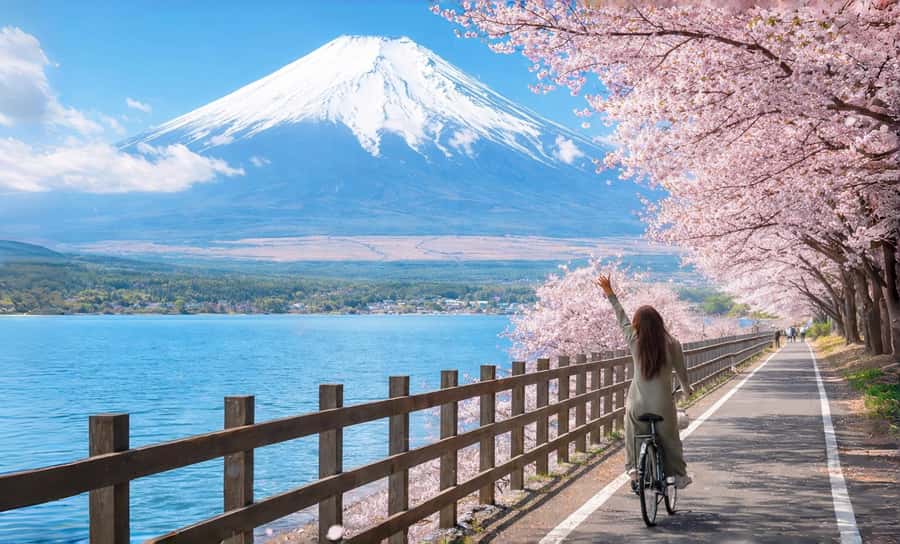
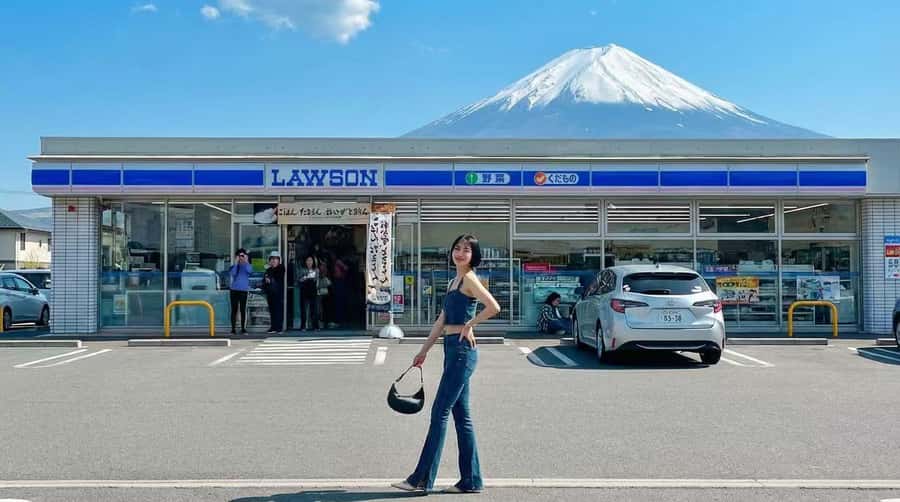
The Higashikawa Clock Shop stop offers a different kind of Fuji photograph. A quiet, straight road points toward the mountain, creating a strong line through the town and giving the impression that Fuji is unusually close.
There is no major climb here. The charm comes from the composition: a simple street, ordinary buildings, and the enormous mountain at the end. It is a good reminder that Japanese mountain photography does not always require a grand observation deck.
This stop also gives you a short change of pace after the lakeshore. You are looking at Fuji through a town setting rather than across open water. If the summit is hidden, the road still has a calm, graphic quality, but the famous image depends on visibility.
The location is associated with the Lawson convenience store as another Fuji photo point. Expect a quick stop rather than a full shopping visit. The store’s clean frontage and Fuji-facing view have made it a popular phone-photo background. You can pick up a snack, but food and drinks are not included, and eating or drinking is not allowed inside the vehicle.
Arakurayama Sengen Park and the red pagoda climb
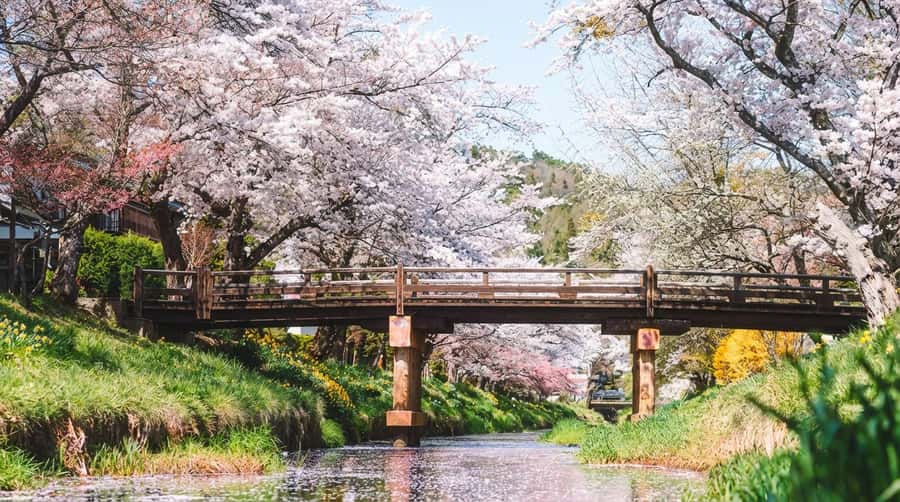
Arakurayama Sengen Park is the most recognizable viewpoint on the route. From the upper area, Mount Fuji rises behind the red five-story pagoda, with cherry blossoms in spring or autumn foliage later in the year.
The image is famous for good reason. It brings together three symbols of Japan in one frame: the mountain, the pagoda, and seasonal trees. You can understand why photographers make the short trip from Shimoyoshida Station to this hillside.
The important word is climb. You reach the pagoda area by stone steps, so this is the physically demanding stop. The information for the tour says other stops are wheelchair-accessible except for the pagoda steps, but the additional booking notes list the activity as not suitable for wheelchair users. If mobility is a concern, confirm the arrangement before paying rather than relying on the general accessibility note.
A coffee in the village below can make a pleasant pause after the steps, although drinks are your own expense. The park is also likely to feel crowded during the cherry blossom season and other peak periods. Your guide may help with photos and directions, but you should expect limited personal time if the group needs to maintain its schedule.
A few more Tokyo bookings worth comparing
- From Tokyo: Mount Fuji Full-Day Sightseeing Trip
★ 4.5 · 4,970 reviews - Mount Fuji Full-Day Private Tour from Tokyo (Customizable)
★ 4.9 · 1,470 reviews - Tokyo Private Full-Day Tour by Car or Van
★ 5.0 · 684 reviews - From Tokyo: Must-Visit Mount Fuji Highlight Full-Day Tour
★ 4.7 · 532 reviews
Oshino Hakkai, clear springs and a traditional village
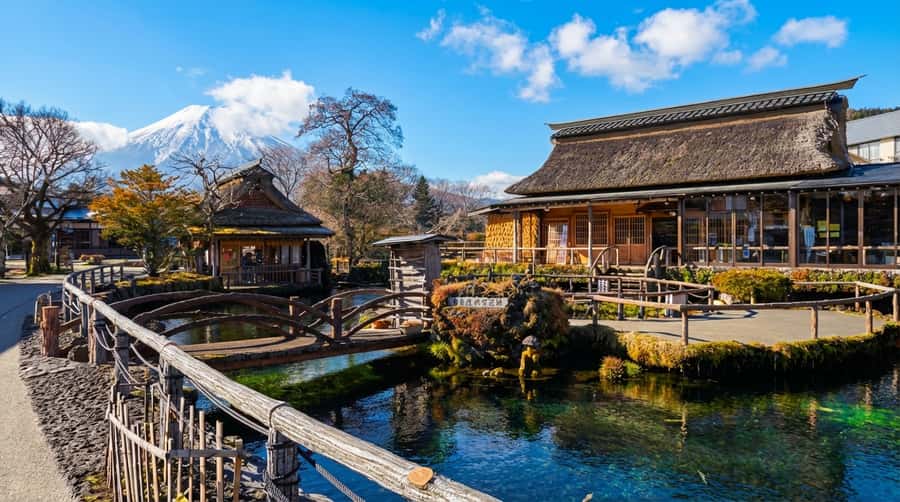
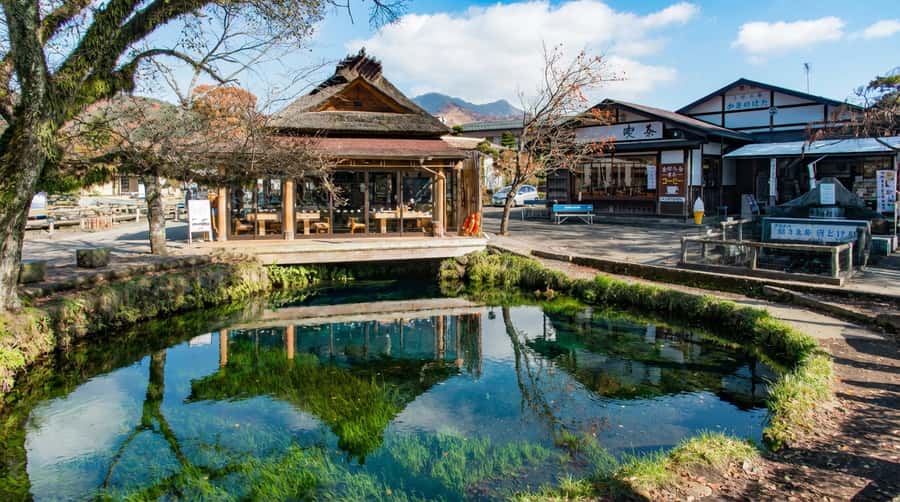
Oshino Hakkai brings more depth to the day. The site has eight clear springs fed by melted snow from Mount Fuji. Their turquoise water is the main visual attraction, but the surrounding traditional village gives you more to notice than a standard lookout.
Wooden bridges, thatched-roof buildings, and carefully maintained water basins create a slower, more grounded setting. You can look into the springs, walk through the village, and see how Fuji’s snowmelt connects the mountain to the communities below it.
This is one of the better stops if clouds cover the summit. The pools and old-style buildings remain worthwhile even without a perfect Fuji view. That was the experience for one visitor who found the mountain hidden but still enjoyed the local scenery and Japanese way of life.
The area can become crowded, particularly in high season. Stay aware of the meeting time, since the route has several stops and the vehicle cannot wait indefinitely for late arrivals. No-shows and late arrivals are not refundable.
Oishi Park and Lake Kawaguchi’s changing colors
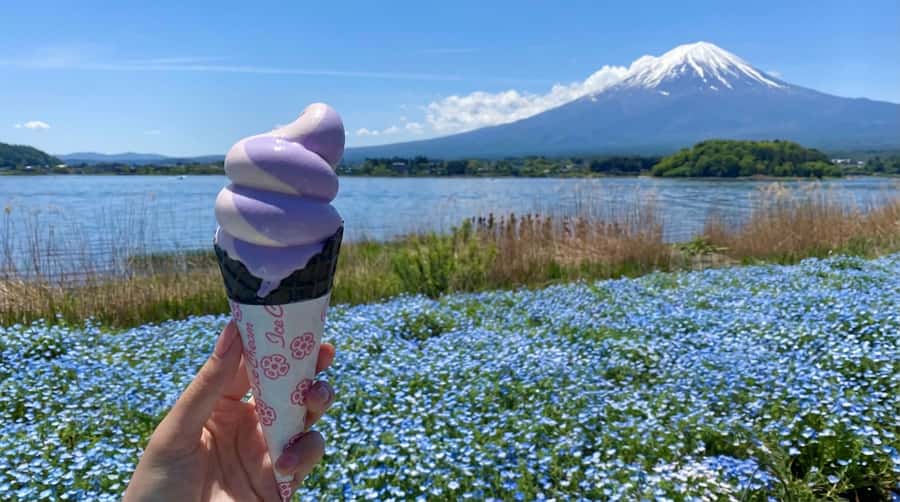
Oishi Park sits beside Lake Kawaguchi and is the tour’s main seasonal flower stop. Its appearance depends heavily on when you visit.
April can bring tulips, daffodils, and rapeseed flowers. Moss phlox is the big draw in May, while lavender usually takes over in June and July during the Kawaguchiko Herb Festival. Begonias appear from August through October, and November can bring red maple leaves.
These dates are approximate, not fixed guarantees. Weather and growing conditions can shift the flowering period, so check current conditions if the plants are a major reason for booking.
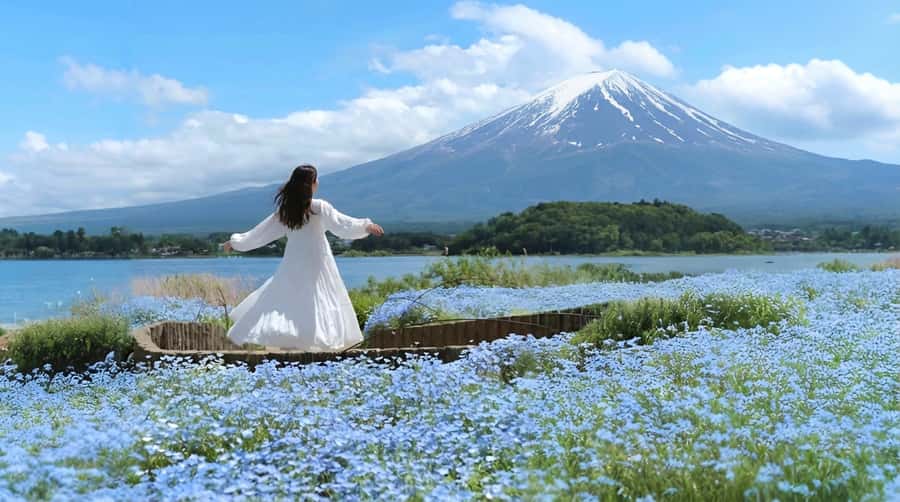
Oishi Park gives you a broad Fuji view with color in the foreground. It is a gentler photo stop than Arakurayama, with no pagoda staircase mentioned. The experience changes from month to month, which makes the tour more appealing for repeat visits, but it also means you should match your expectations to the season.
If Fuji is hidden, the flowers still provide a reason to walk around. If the mountain appears, the combination can look remarkably polished, almost like a printed travel postcard. Bring weather-appropriate clothing, since much of the appeal is outdoors.
What the guides add to the day
The guide can make a major difference because this is a packed route with several short visits. Tim has been praised for clear information, energy, and an inclusive manner. Agnes helped one couple get to all the scenic stops, suggested an authentic lunch, and pointed out a kimono experience. Sakuragi was described as helpful, punctual, and clear when explaining the route in both English and Chinese.
The language setup deserves careful attention. English and Chinese are offered, but small daily groups may use a driver who also acts as guide. In that case, English commentary can be limited, and no commentary is given while the driver is driving.
International groups may receive multilingual information rather than a full single-language presentation. That can work well if you mainly want transport and basic orientation. If detailed English explanations at every stop are essential, ask about the guide arrangement for your date.
There have also been a few presentation issues. One person found the bus speakers too loud, and another had difficulty understanding the guide at times. These are not reasons to reject the tour, but they are useful expectations for a mixed-language group.
Transport, timing and the realities of a full day
The air-conditioned vehicle is a major part of the value. Reaching six places around Fuji by public transport would require careful planning and several connections. Here, you can settle into one vehicle and focus on the scenery.
The day can be affected by road conditions. Weekend and holiday traffic may change the order of stops, and an attraction may close early. Weather can also lead to substitutions. These changes do not qualify for a refund when they result from traffic or force majeure conditions such as severe weather.
Do not pair this trip with a same-day flight, Shinkansen, or evening activity that you cannot miss. The return time is not described as fixed, and the Fuji area can experience delays.
The vehicle itself has received mostly positive comments for cleanliness, comfort, and punctuality, though one report noted that the air-conditioning did not work properly. Since summer in the Fuji area can still feel warm, this is worth keeping in mind without treating one maintenance problem as standard.
Luggage requires advance notice and may involve an extra payment. This is best treated as a day tour with a small personal bag, not as a transfer between hotels.
Food, clothing and other practical details
Food and drinks are not included. You may have opportunities to buy snacks or lunch at stops, but the supplied details do not promise a specific restaurant or meal. Wear comfortable shoes and comfortable clothes, especially for Arakurayama’s steps and outdoor walking at the lakes and parks.
Do not eat or drink in the vehicle. That rule may feel strict on a long day, so use the stops to buy refreshments and finish them before boarding.
The tour is listed as unsuitable for pregnant women, people with high blood pressure, people over 70, and wheelchair users. The separate accessibility note is not fully consistent, since it says the stops are accessible except for the pagoda steps. Ask the operator for a clear answer if any of these points affect you.
You can cancel up to 24 hours in advance for a full refund. Changes to the meeting point must be made at least two days ahead, and the departure-day meeting point cannot be altered.
Is $45 good value for Mount Fuji?
For $45, this is a strong budget option if you want breadth. The price covers an air-conditioned vehicle, driver, and guide, and the route reaches places that are awkward to combine independently in one day from Tokyo.
The value drops if your only goal is one perfect Fuji photograph. Clouds may hide the mountain, and traffic may shorten time at some stops. You are paying for access to several chances, not certainty.
I see the best value in the combination of transport and variety. You get a sunrise-style lakeshore opportunity, a town street, a pagoda, springs, a convenience store, and seasonal flowers. Even if Fuji disappears, several stops still offer distinct scenery and local character.
Who should book this Fuji tour?
I would recommend it to first-time Tokyo visitors who want a full day outside the city without handling regional transport. It suits photographers, families who prefer a guided route, and anyone who likes collecting different views of the same mountain.
It is also a good choice if you are visiting in April, May, June, July, or November and want to line up the day with the flowers or autumn color at Oishi Park. Book with realistic expectations about crowds and weather.
I would be more cautious if you dislike fixed schedules, need extensive English commentary, use a wheelchair, or have health concerns connected to the listed restrictions. I would also skip it if you have a flight or important evening booking afterward.
FAQ
Where does the tour start and end?
The tour starts and ends at a meeting point in Tokyo. The exact starting point depends on the option booked, and the activity ends back at the meeting point.
Is hotel pickup included?
No. Hotel pickup and drop-off are not included. You need to reach the assigned meeting point yourself.
Which languages are available?
English and Chinese are available. In small daily groups, the driver may also serve as the guide, with limited English commentary and no commentary while driving.
Is Mount Fuji guaranteed to be visible?
No. Weather can hide Mount Fuji, and clouds may affect every stop. If a site closes due to weather, the itinerary may switch to another location.
What should I bring?
Bring comfortable shoes and comfortable clothes. The day includes outdoor walking, gravel at Hirano Beach, and stone steps at Arakurayama Sengen Park.
Is food included?
No. Food and drinks are not included, and personal purchases are your responsibility. Eating and drinking are not allowed in the vehicle.
Can I bring luggage?
You must inform the operator in advance if you plan to bring luggage. An additional payment may be required.
Is the tour wheelchair-accessible?
The information says all stops are accessible except the steps to the pagoda, but the additional booking notes say the activity is not suitable for wheelchair users. Confirm the arrangements before booking.
Can I cancel the tour?
You can cancel up to 24 hours in advance for a full refund. There are no refunds for no-shows, late arrivals, or itinerary changes caused by traffic or weather-related force majeure.
New on our Tokyo list
- From Tokyo: Mount Fuji & Hakone Full Day Private Tour★ 4.9 · 25 reviews
- Tokyo Spectacular View Day-Cruise in 90 Minutes★ 5.0 · 25 reviews
- Real Tokyo Runner Club : Daikoku Car Meet Night Tour with JDM Car★ 5.0 · 25 reviews
- 2.5 Hour-Guided Cycle Tour in the Central Tokyo★ 5.0 · 25 reviews
- Ramen Making from Scratch +Akihabara Tour –Cooking Class★ 5.0 · 25 reviews
- [Self-Drive] Tokyo & Daikoku Custom Car Driving Tour★ 4.9 · 25 reviews
- Tokyo: 2-Hour Night Bike Tour of the City’s Hidden Gems★ 4.9 · 25 reviews
- Samurai themed Entertainment show in Shinjuku★ 4.5 · 25 reviews
Mt Fuji Area Tours, compared.
Mt Fuji and Hakone 1-Day Bus Tour Return by Bullet Train
Read our review →
Mt Fuji & Hakone Cruise, Drum Show Bullet Train 1 Day from Tokyo
Read our review →
Tokyo Mt Fuji 5th St & Hakone Cruise Bus Tour w/Bullet Train
Read our review →
Mt. Fuji Tour, Hakone Ropeway, Owakudani, Lake Ashi
Read our review →
Mt.Fuji,Kawaguchiko Oishi Park,Arakurayama Sengen Park
Read our review →
Mt. Fuji 5th Station & Hakone Cruise 1-Day Bus Tour
Read our review →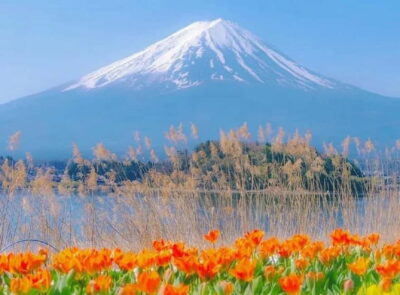
Mt Fuji Top 5 Spots Day Tour: Arakurayama Park,Oshino Hakkai
Read our review →Browse the lists this tour appears in