
Reviewed · TOKYO GO-KART EXPERIENCES
Tokyo Go-Karting Experience: Shibuya Crossing with Photos
Driving a go-kart across Shibuya Crossing is the headline here, and it is a wonderfully odd way to see Tokyo. You move through Harajuku, Omotesando, Yoyogi Park, Shinjuku, and Shibuya in a small convoy, with the city lights, crowds, and giant signs all around you.
I like two things in particular: the small group size, limited to four participants, and the guide-led photo stops. Guides such as Rakesh, Luna, Serhii, Julian, and Reece have been praised for clear instructions and good pictures. The main caution is simple: this is a real driving activity on public roads, not a slow sightseeing ride, so you need confidence behind the wheel and the correct paper driving permit.
In This Review
- Key points to know before booking
- Getting ready at Monkey Kart Shibuya
- Learning the kart before Tokyo traffic
- Harajuku and Omotesando: Tokyo’s style districts
- Yoyogi Park and the shift toward Shibuya
- The Shibuya Crossing moment
- Shinjuku and the city at speed
- Cost, photos, and what you actually receive
- How the small group changes the experience
- Who should book this Tokyo ride?
- Final verdict: a good fit for a playful Tokyo day
- FAQ
- How long does the Tokyo go-kart tour last?
- Where does the tour meet?
- What areas does the route cover?
- Does the tour cross Shibuya Crossing?
- Is a guide included?
- How many people are in each group?
- What driving document do I need?
- Are online or photocopied permits accepted?
- Are costumes included?
- Are photos included in the price?
Key points to know before booking
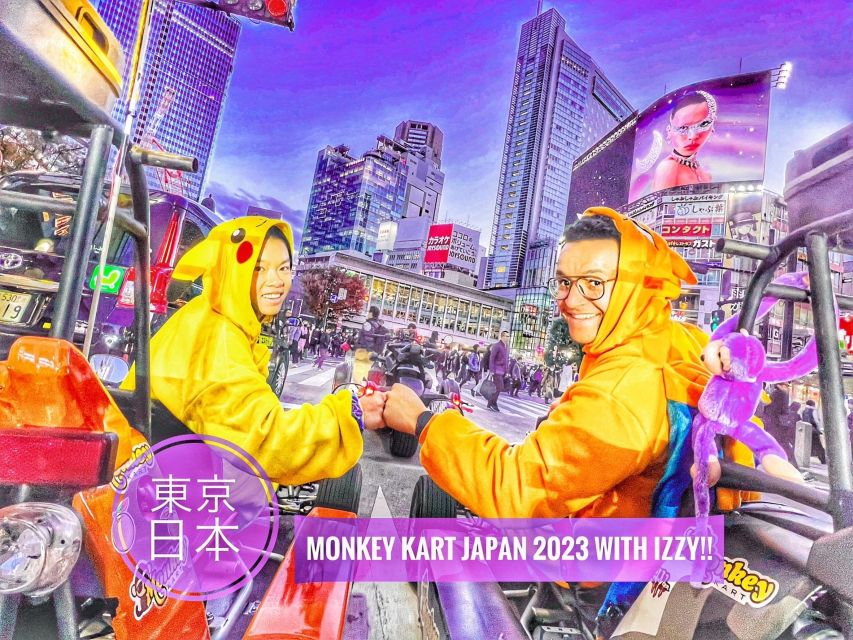
- Shibuya Crossing from the driver’s seat: The famous intersection is the tour’s big photo moment.
- A costume adds the comic touch: Choose from character outfits before setting off.
- Several central Tokyo districts in one hour: The route includes Harajuku, Omotesando, Yoyogi Park, Shinjuku, and Shibuya.
- Photos are part of the price: You receive digital images and one hard copy photo, while an action camera is optional and not included.
- Small groups keep the tour personal: Up to four participants ride with an English-speaking guide.
- Your permit must be exactly right: Japan does not accept every international driving document, and online or card-only copies are not valid.
Getting ready at Monkey Kart Shibuya
The meeting point is Monkey Kart SHIBUYA. Before you drive, you complete the practical checks, watch a safety and instruction video, receive guidance on operating the kart, and choose a costume.
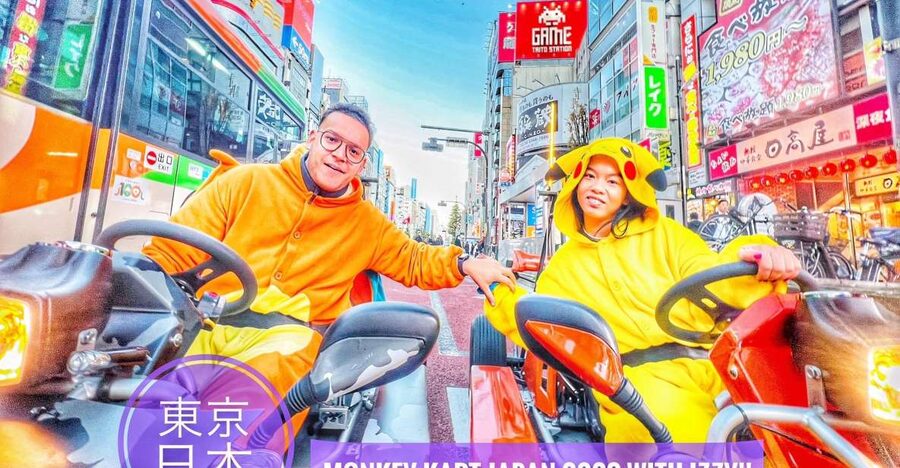
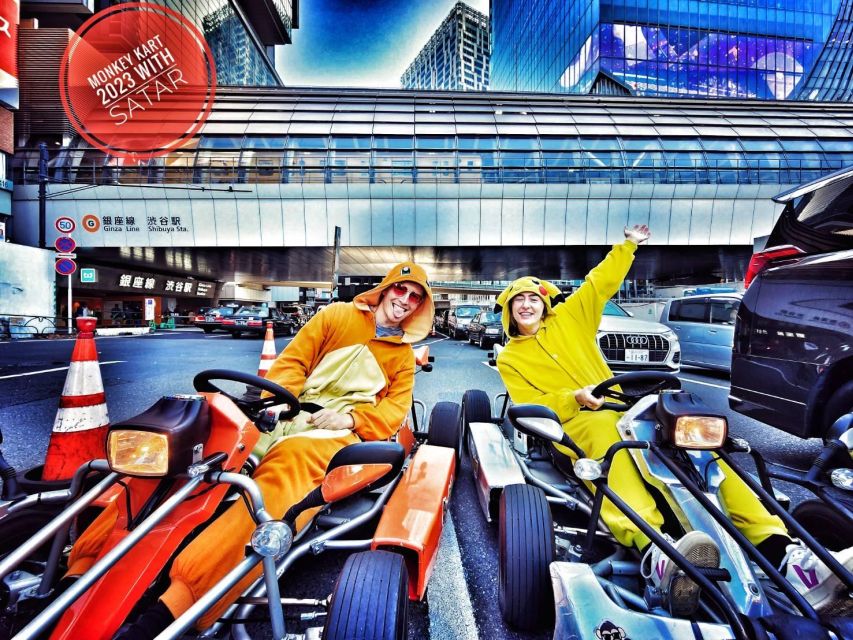
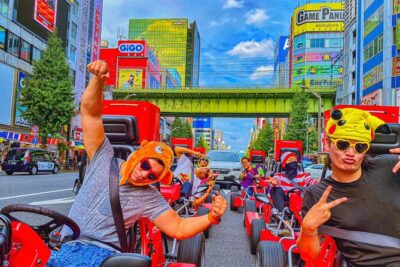
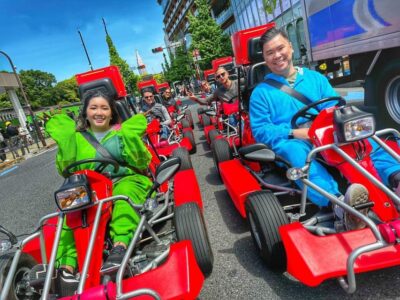
The costume choice is a large part of the fun. You might select a colorful character outfit, a Pikachu-style costume, or something less theatrical if that is more your taste. You do not need to dress up to appreciate Tokyo, but the costumes make the photos much more distinctive and explain why people on the pavement often notice the convoy.
The staff also provide water, and the information supplied for this activity says there is a secure place to leave phones, passports, and international driving documents. Still, take only what you need into the kart. One rider specifically suggested bringing a mask if you end up at the back of the group, since exhaust fumes can be noticeable.
The important part of check-in is your paperwork. Every driver over 18 must bring a hardcopy paper booklet of a 1949 Geneva Convention International Driving Permit issued by the official agency in their home country, such as AAA, AA, CAA, or another authorized body.
Japan does not recognize 1968 Vienna Convention permits, or permits issued by IDA and IAA. Online copies, photocopies, and card-style licenses are not accepted. Drivers from France, Switzerland, Taiwan, Germany, Monaco, and Belgium need a Japanese translation of their local license, obtained through the Japan Automobile Federation.
Some nationalities, including Indonesia, Pakistan, Saudi Arabia, Mexico, Brazil, Costa Rica, Colombia, Kuwait, and Qatar, may not be allowed to drive under this activity’s rules. Check the exact requirement before leaving home. Arriving in Tokyo with the wrong document can end the tour before it starts.
More street-kart slots:
- Flagship 2-Hours Official Street Go-Kart Tour – Tokyo Bay Shop
★ 5.0 · 4,974 reviews - Official Street Go-Kart in Shibuya
★ 5.0 · 3,435 reviews - Official Street Go-Kart Tour – Akihabara
★ 5.0 · 1,578 reviews
Learning the kart before Tokyo traffic
The briefing matters. This is not a closed track where you can simply learn by trial and error. You follow a guide through city streets, so you need to listen closely, watch the guide’s hand signals, and keep control of your vehicle.
The supplied information does not give a detailed technical description of the karts, but the repeated practical point is that they are easy to use once you understand the basic controls. One nervous participant said the kart felt natural after about five minutes. That is encouraging, but it does not remove the need for concentration.
The guide sets the pace and leads the route. Past guides have included Rakesh, Luna, Serhii, Julian, Reece, Izzy, Ken, Shing, and others. Their role is more than pointing out buildings. They explain what to expect, help riders feel at ease, and take photos at suitable stops.
You should still be comfortable driving on public roads. The experience is aimed at people who enjoy a little adrenaline and can react calmly around traffic. It is not suitable for children under 18, pregnant women, or people over 95.
Harajuku and Omotesando: Tokyo’s style districts
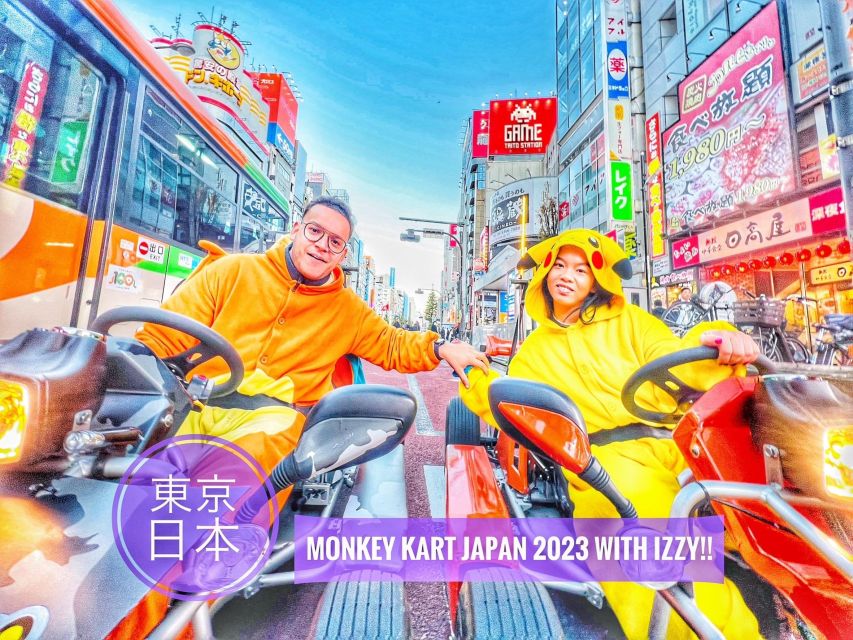
The route begins by showing you a side of Tokyo that is easy to miss from a train window. Harajuku is known for youth fashion, colorful shops, and a strong street style. From a go-kart, you are not browsing the stores, but you do get a moving view of the district’s energy and visual flair.
Omotesando provides a change of tone. Its broad, polished avenue has a more refined feel, with major shops and carefully designed buildings. The contrast between Harajuku and Omotesando gives the first part of the tour some range. You are not simply repeating the same type of street.
The drawback is time. One hour sounds reasonable, but it passes quickly once you include the briefing, stops, traffic lights, and photo opportunities. One participant wished the ride were longer. That is fair. This tour gives you a fast sample of several districts, not a full visit to each one.
Think of the route as an introduction. You may pass a shop, avenue, or building you want to revisit later on foot. The guide can add context along the way, but you should not expect long stops or detailed historical commentary. The focus is the driving experience.
Yoyogi Park and the shift toward Shibuya
Yoyogi Park brings greenery into the route. The park’s edges offer a visual break from Tokyo’s shopfronts and tall buildings, and the drive feels less tightly packed for a moment.
This part of the route also shows why a kart provides a different point of view from a walking tour. You cover ground quickly, but you remain close enough to see street details, passing buildings, signs, and the way different neighborhoods connect.
I would not book this solely for parks or architecture. The route is strongest as a sequence: Harajuku’s youth culture, Omotesando’s polished avenues, Yoyogi Park’s open feel, then the intense city scene around Shibuya. Each area works best as part of the full hour.
The guide’s presence helps here. Clear instructions are important when the convoy is moving between different kinds of streets. Guides praised in the supplied feedback, including Julian, Reece, Rakesh, Luna, and Serhii, were repeatedly singled out for keeping riders comfortable and organized.
More Shibuya plans:
- Tokyo: Street Kart Experience in Shibuya
★ 4.9 · 1,484 reviews - Shibuya Meltdown Nightlife Tour: All-You-Can-Drink Bar Hopping
★ 5.0 · 1,058 reviews - Shibuya Official Street Go-Kart in Shibuya Annex
★ 5.0 · 972 reviews - Tokyo: Shibuya Food Tour (13 dishes and 4 Eateries)
★ 5.0 · 770 reviews
The Shibuya Crossing moment
Shibuya Crossing is the tour’s main event. It is one of Tokyo’s most recognizable intersections, famous for the streams of people crossing from several directions while giant screens tower above the buildings.
Driving through it gives you a memorable angle, though it is worth setting expectations. You do not stop in the middle of the intersection for a long photo session. You pass through as part of the road route, then the guide takes pictures at suitable points.
The visual payoff is strong. Riders have described crossing at night with the surrounding lights on, waving at people who take pictures, and spotting the Godzilla display above the buildings. An evening departure, such as 5 p.m., can be especially appealing if you want Tokyo illuminated, though the exact light and traffic conditions vary by date.
One rider who booked alone was given a shorter, faster group arrangement and even crossed Shibuya twice after the guide added a small detour. That should not be treated as a standard promise, but it shows that the route can have some flexibility when circumstances allow.
Shibuya is also where you feel the limits of the activity. You are sharing the road with other vehicles, and you must follow the guide rather than chase the most dramatic photo. The thrill comes from being part of the city’s movement, not from driving recklessly.
Shinjuku and the city at speed
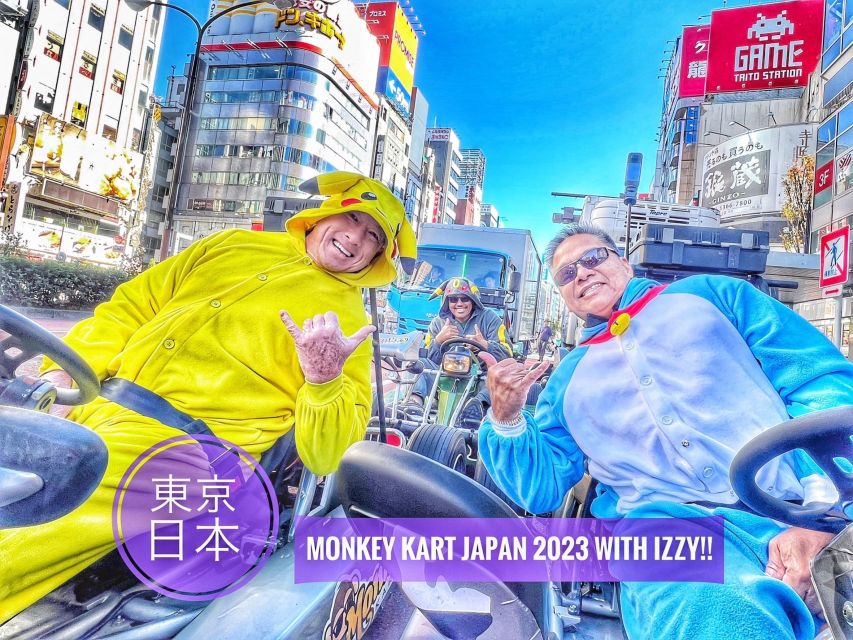
The route also reaches Shinjuku, giving you another look at central Tokyo’s huge signs, busy roads, and dense high-rise setting. Shinjuku feels different from the lower-scale streets around Harajuku and the carefully designed avenues of Omotesando.
Some participants particularly enjoyed morning departures because lighter traffic allowed more open driving. Others loved evening tours, when the signs and city lights made the pictures more striking. There is no single best time for everyone.
Choose a morning slot if you value clearer roads and a calmer start. Choose an evening slot if your priority is atmosphere and illuminated Tokyo scenery. Rain can cause the tour to be rescheduled, so keep some flexibility in your plans.
The driving itself is described as fun and fairly quick. One rider noted that the pace was exciting, while another pointed out that you need to drive fast. That is useful information if you feel nervous. The guide will explain what to do, but you should not expect a relaxed motorized stroll.
Cost, photos, and what you actually receive
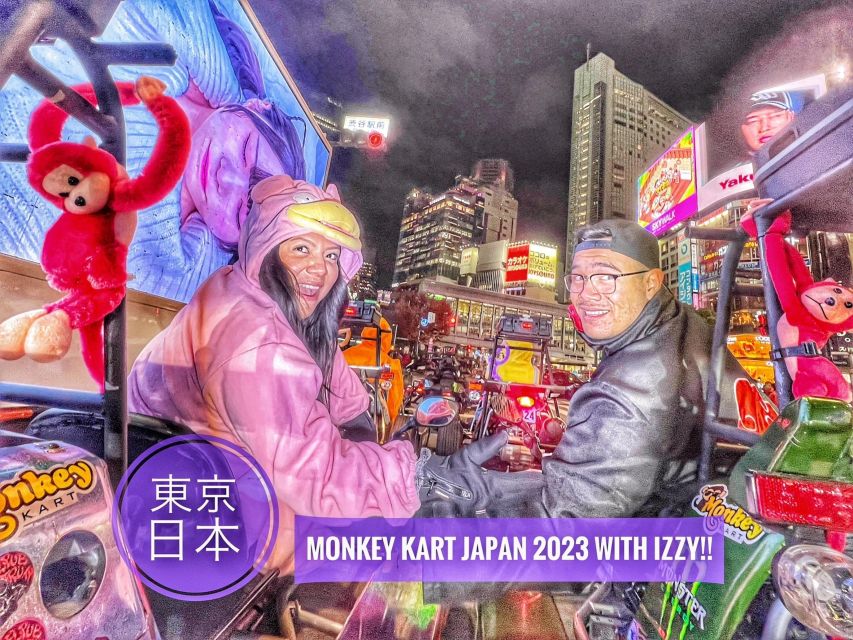
The price is $90 per person for one hour. That is not cheap for a short activity, but the value depends on what you want from your Tokyo day.
You are paying for more than the kart rental. The package includes the guide, water, a photo shoot, digital photos, one printed photo, the kart, and an action camera or Insta 360 mount. The action camera itself is not included, so bring your own compatible camera if you want to use that mount.
The included photos make a real difference. You can concentrate on driving instead of trying to hold your phone while steering. Guides have taken action shots, posed pictures, and images at major Tokyo backdrops. The digital files are shared after the tour, and the printed image gives you a small physical souvenir.
You may also be able to take pictures or videos with your phone at red lights, but you should follow the guide’s instructions and avoid distracting yourself while moving. The secure storage option for personal items is useful, especially since you need to carry your passport and permit for check-in.
For me, the price is justified if you value a special photo record and want an activity that feels different from a standard bus or walking tour. If your budget is tight, or if you mainly want to see landmarks slowly, a cheaper walking route will give you more time in each district.
How the small group changes the experience
The group limit is four participants. That is a real advantage in a driving activity. A small group is easier to keep together, and the guide has a better chance of checking that each person is comfortable.
It also helps with photos. Guides can stop and make sure each rider gets attention rather than leaving someone at the back without a good picture. The supplied feedback repeatedly praises guides for taking many photos and making sure everyone appears in them.
Solo bookings may receive extra attention if the time slot is quiet, but that depends on the day. One solo rider had a faster, more flexible outing and an extra crossing. Consider that a pleasant possibility, not part of the advertised schedule.
The guide names come up often in the available feedback, especially Rakesh, Luna, Serhii, Julian, Reece, Ken, and Izzy. Their shared strengths are clear explanations, friendly support, and careful photo timing. You cannot count on a particular guide unless the operator confirms it, but the guide is central to the value of the experience.
Who should book this Tokyo ride?
This is best for adults who want a memorable, playful activity and are comfortable operating a vehicle in an urban setting. It suits couples, friends, solo visitors, and small families with adult children.
It is also a strong choice if you have already seen Tokyo’s major sights and want a new way to connect them. You will not explore Harajuku, Shinjuku, or Shibuya in depth, but you will see how these districts fit together and collect photos that are difficult to recreate on foot.
I would be more cautious about booking it for someone who dislikes traffic, feels uneasy driving, or wants a quiet sightseeing experience. You need to be alert, follow directions, and accept that rain may change the schedule.
Do not leave the permit until the last minute. This is the most important practical warning in the entire booking process. A valid license is not a minor detail here. It determines if you can drive.
Final verdict: a good fit for a playful Tokyo day
Book this tour if crossing Shibuya in a costume sounds more appealing than another museum or restaurant reservation. The combination of Harajuku, Omotesando, Yoyogi Park, Shinjuku, and Shibuya gives you a quick tour of central Tokyo, while the photos preserve the experience better than ordinary snapshots.
At $90, it is a premium one-hour activity, but the small group, guide support, digital images, and printed photo add real value. I would choose an evening slot for city lights or a morning slot for lighter traffic.
Skip it if you lack the correct 1949 Geneva Convention permit, are not confident driving on public roads, or want a slow and detailed look at each neighborhood. For the right person, though, this is one of Tokyo’s most unusual ways to make a sightseeing memory.
FAQ
How long does the Tokyo go-kart tour last?
The activity lasts one hour. Starting times vary, so check availability when booking.
Where does the tour meet?
Meet at Monkey Kart SHIBUYA.
What areas does the route cover?
The route includes Harajuku, Omotesando, Yoyogi Park, Shibuya, and Shinjuku. The exact order may vary.
Does the tour cross Shibuya Crossing?
Yes. Driving through the famous Shibuya Crossing is one of the main highlights.
Is a guide included?
Yes. An English-speaking live guide leads the tour and provides driving instructions.
How many people are in each group?
The tour is limited to four participants.
What driving document do I need?
You need a hardcopy paper booklet of a 1949 Geneva Convention International Driving Permit issued by the official agency in your country.
Are online or photocopied permits accepted?
No. Online copies, Xerox copies, and card-style licenses are not valid for this activity.
Are costumes included?
You can choose from available costumes before the tour to add a character theme to your ride.
Are photos included in the price?
Yes. The package includes a photo shoot, digital photos, and one hard copy photo. An action camera is not included, though an action camera or Insta 360 mount is provided.
New on our Tokyo list
- From Tokyo: Mount Fuji & Hakone Full Day Private Tour★ 4.9 · 25 reviews
- Tokyo Spectacular View Day-Cruise in 90 Minutes★ 5.0 · 25 reviews
- Real Tokyo Runner Club : Daikoku Car Meet Night Tour with JDM Car★ 5.0 · 25 reviews
- 2.5 Hour-Guided Cycle Tour in the Central Tokyo★ 5.0 · 25 reviews
- [Self-Drive] Tokyo & Daikoku Custom Car Driving Tour★ 4.9 · 25 reviews
- Tokyo: 2-Hour Night Bike Tour of the City’s Hidden Gems★ 4.9 · 25 reviews
- Ramen Making from Scratch +Akihabara Tour –Cooking Class★ 5.0 · 25 reviews
- Samurai themed Entertainment show in Shinjuku★ 4.5 · 25 reviews
Tokyo Go-Kart Experiences, compared.
Flagship 2-Hours Official Street Go-Kart Tour – Tokyo Bay Shop
Read our review →
Tokyo Go Kart: Asakusa, Skytree, and Akihabara **IDP MUST**
Read our review →
Shibuya Official Street Go-Kart in Shibuya Annex
Read our review →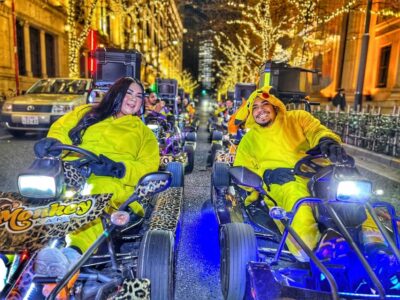
Asakusa, Skytree & Akhihabara Go-Kart City Experience
Read our review →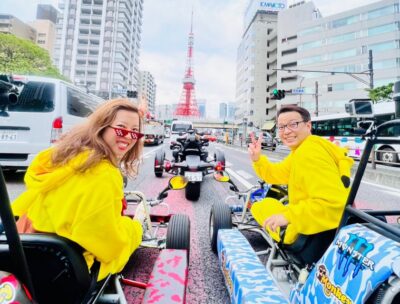
Premium Go-Kart Tour with Tower & Shibuya Crossing
Read our review →Browse the lists this tour appears in