Reviewed · TOURS
Tokyo Imperial Palace with Kagurazaka Alley Tour
Tokyo’s grand center gives way to a quieter side of the city on this three-and-a-half-hour walk. You begin among the polished towers and red-brick facade of Tokyo Station, pass through the Imperial Palace area, then finish in Kagurazaka, where narrow lanes recall its days as an Edo-period entertainment district.
I like the small group, capped at eight, and the way the route links major sights with places you could easily miss alone. I also like the human touch from guides such as Sho and Aya, who have explained palace history, roof ornaments, plants, Buddhist ideas, and Japanese architecture. The main drawback is that the palace interior is not open, and the tour involves steady walking with limited time at each stop.
In This Review
- Key points to know before you book
- From Tokyo Station to the old heart of Kagurazaka
- Tokyo Station, a five-minute introduction to modern Japan
- Imperial Palace grounds and the remains of Edo Castle
- Nippon Budokan and the public face of Kitanomaru Park
- Tokyo Daijingu, a calm shrine stop
- Kagurazaka, where Tokyo slows down
- Geisha Alley, Hyogo Yokocho, and Kakurenbo Yokocho
- Ushigome Mitsuke and the city’s defensive past
- What the guide adds to the walk
- Is $52.84 a fair price?
- Who should book this Tokyo walk?
- Final call: book it for context, not palace access
- FAQ
- Where does the Tokyo Imperial Palace with Kagurazaka Alley Tour start?
- What time does the tour begin?
- Where does the tour end?
- How long does the tour last?
- How large is the tour group?
- Is the Imperial Palace interior included?
- Is admission included?
- Can I cancel for a full refund?
Key points to know before you book
- Kagurazaka is the real payoff: Old geisha lanes, small eateries, and quiet alleys provide a sharp contrast to central Tokyo’s wide avenues.
- The group is limited to eight: That makes it easier to ask questions and stay connected with the guide.
- The Imperial Palace is viewed from its public grounds: The Emperor’s residence itself is not open to the public on this route.
- Guides add cultural detail: Sho has explained Japanese history, while Aya has helped with group photos and palace interpretation.
- The route ends in Kagurazaka: You finish near the main street and a FamilyMart, in a useful area for lunch or further exploring.
- The price is $52.84 per person: That is fair if you value context and local orientation, but less compelling if you only want quick photo stops.
From Tokyo Station to the old heart of Kagurazaka
This tour works because it tells a simple story about Tokyo. You start with the city as a modern transport capital, move into the ceremonial center of the nation, and end in a neighborhood shaped by Edo-period customs and old entertainment culture.
The 9:00 a.m. start helps. Tokyo Station and the Marunouchi district are easier to appreciate before the day reaches full speed. Your meeting point is outside the Shin-Marunouchi Building at 1-chōme-5-1 Marunouchi. It is near major public transportation, but Tokyo Station is large, so allow time to find the correct exit and building.
The tour uses a mobile ticket, and confirmation is provided when you book. Since the route covers several districts on foot, wear shoes you can walk in for three and a half hours. The tour is open to most people, but the listed details do not promise a slow pace or special mobility arrangements.
A few more Tokyo bookings worth comparing
- Mt Fuji and Hakone 1-Day Bus Tour Return by Bullet Train
★ 5.0 · 26,383 reviews - 1-Day Tokyo Bus Tour
★ 5.0 · 14,250 reviews - Tokyo: TOKYO SKYTREE® Admission ticket
★ 4.5 · 11,192 reviews
Tokyo Station, a five-minute introduction to modern Japan
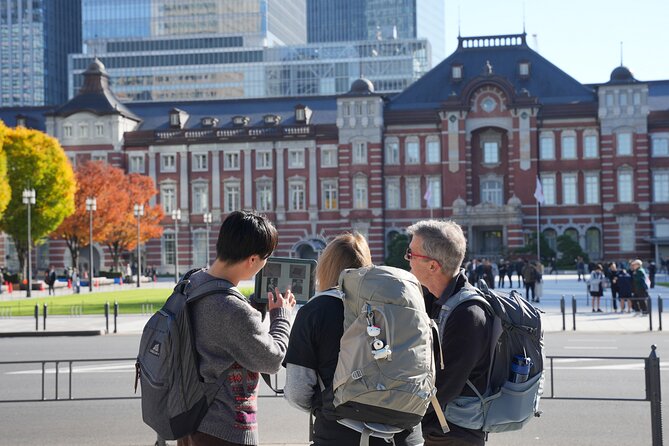
Tokyo Station receives only about five minutes on this route, so think of it as an orientation stop rather than a full station tour. Your guide can point out the station’s place in Tokyo’s rail network and its location in Marunouchi, one of the city’s central business districts.
The contrast is useful. Tokyo Station handles local and long-distance trains, while the surrounding district is filled with offices, hotels, and formal avenues. From here, you get a quick sense of Tokyo’s present-day power before turning toward the palace grounds.
If you want detailed architecture photography, come early or return later on your own. Five minutes is enough for a look and a few facts, not enough for an extended exploration.
Imperial Palace grounds and the remains of Edo Castle
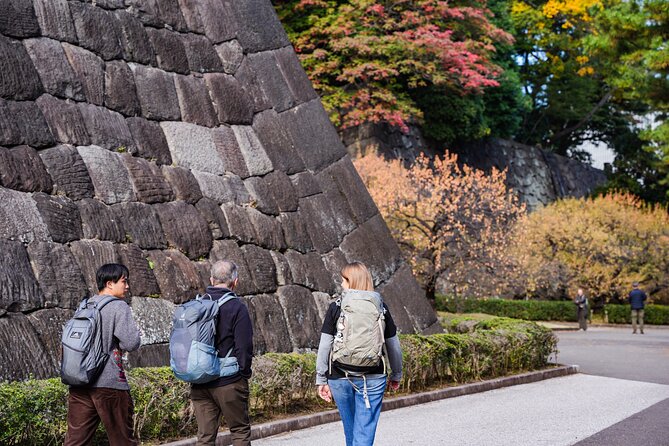
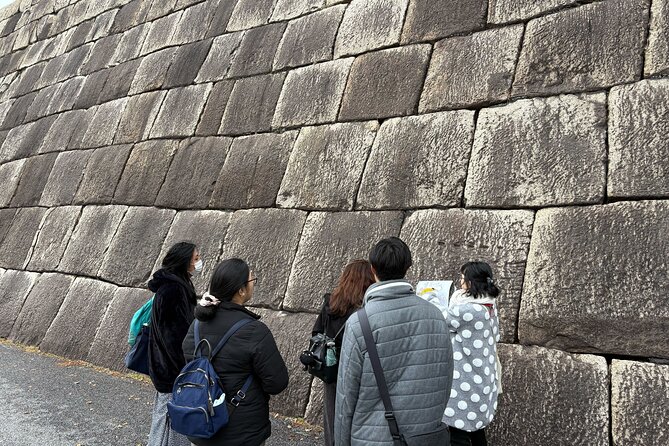
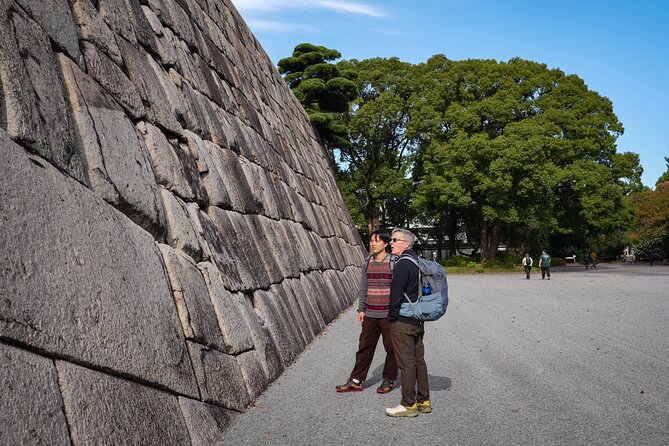
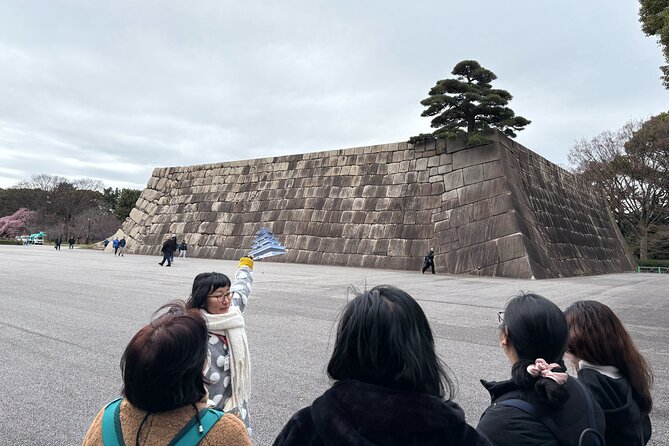
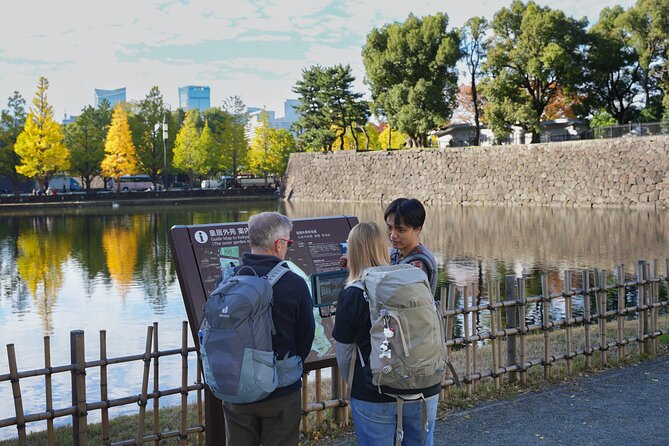
The Imperial Palace receives the longest listed stop, about 55 minutes. This is where the guide’s background matters most. The palace is the official residence of the Emperor of Japan, but the main residence is not open to the public. You will instead see the surrounding public areas, including moats, gardens, broad parkland, and traces of the former Edo Castle.
This setting gives you an important piece of Japanese history without requiring a museum visit. Edo Castle was the seat of the Tokugawa Shogunate, the military government that ruled Japan during the Edo period. The palace grounds show how the modern imperial center occupies a place once tied to military authority.
The stop is especially rewarding when your guide explains small details rather than simply naming buildings. One guide, Sho, has been praised for making both palace history and wider Japanese history clear. Another guide, Aya, has helped visitors notice the gardens and architecture while taking useful group photographs.
Plant life may also become part of the visit. A guide with a strong interest in plants can connect seasonal blossoms to Japanese customs and Buddhist traditions. The exact plants and flowers will depend on the date, but spring can bring a particularly attractive display.
Keep your expectations measured. This is not an indoor palace tour, and you should not expect access to private imperial rooms. The value comes from the grounds, the defensive remains, and the explanations that help you understand what you are seeing.
Nippon Budokan and the public face of Kitanomaru Park
The route also includes the Nippon Budokan in Kitanomaru Park. The arena was built in 1964 for martial arts events during the Tokyo Olympics and now hosts many kinds of performances and competitions.
The building is a useful reminder that Tokyo’s historic center is not frozen in the past. Traditional palace grounds, postwar architecture, sport, music, and public parks all occupy the same central area.
The supplied timing does not give a separate duration for this stop, so your guide may treat it as a brief exterior point rather than a long visit. It is best understood as part of the walk between the palace area and the shrine, not as a stand-alone arena tour.
Same corner of Tokyo, a completely different plan:
- Tokyo: teamLab Planets TOKYO Digital Art Museum Entry Ticket
★ 4.6 · 9,779 reviews - Mt Fuji & Hakone Cruise, Drum Show Bullet Train 1 Day from Tokyo
★ 4.0 · 7,413 reviews - Tokyo: Sumo Show Experience with Chicken Hot Pot and a Photo
★ 4.8 · 6,678 reviews - Tokyo: Shinjuku Food Tour (13 Dishes at 4 Local Eateries)
★ 5.0 · 6,603 reviews
Tokyo Daijingu, a calm shrine stop
Tokyo Daijingu receives about 15 minutes. This Shinto shrine was established in 1880 and is dedicated to Amaterasu, the sun goddess, along with spirits connected to Japan’s imperial family.
A short shrine visit can be easy to rush, especially in a city packed with famous temples and shrines. Here, the guide can explain how a Shinto site fits into Japanese religious life and how to behave respectfully around the entrance, worship area, and grounds.
Fifteen minutes is enough for a compact introduction, but not for a long prayer, extended photography session, or quiet personal visit. If the shrine interests you, note its location and consider returning independently after the tour.
Kagurazaka, where Tokyo slows down
Kagurazaka is the most distinctive part of the route. Once associated with geisha culture, the neighborhood now combines traditional restaurants, stylish cafes, small shops, and narrow lanes. The main street has a more ordinary Tokyo feel, but the side alleys reveal the character that makes the district worth visiting.
The listed walk through Kagurazaka lasts about 30 minutes, with several alley stops included. That timing gives you an introduction rather than a full neighborhood visit. I would treat the final stop as a starting point for your own afternoon, especially since the tour ends here.
The cobbled lanes can feel surprisingly quiet compared with the main roads. They are not museum pieces. People live and work here, and some alleys contain restaurants and bars rather than public attractions. Walk carefully, keep voices low, and remember that an old-looking lane may be someone’s daily street.
Geisha Alley, Hyogo Yokocho, and Kakurenbo Yokocho
The Geisha Alley recalls Kagurazaka’s former entertainment district. Traditional teahouses and narrow passages offer a glimpse of old Tokyo, though you should not expect a working geisha performance or a preserved historical set.
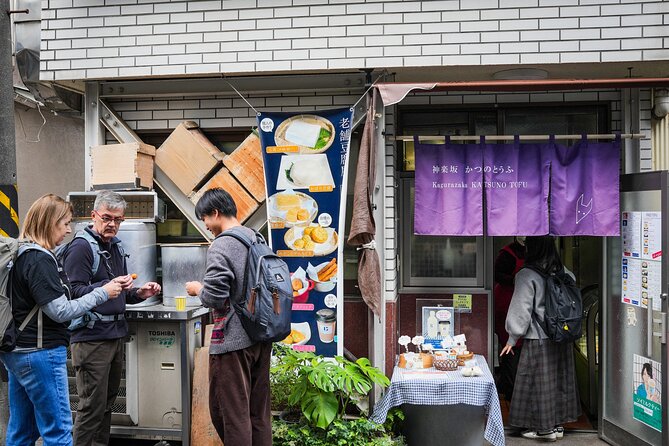
Hyogo Yokocho has old-fashioned character, with small eateries and traditional shops packed into a narrow lane. It is a good place to understand how Tokyo’s past survives through scale and atmosphere rather than through grand monuments.
Kakurenbo Yokocho adds another layer. Its small bars and eateries create a cozy evening feel, though this morning tour will show you the alley in daylight. You can use the guide’s local suggestions to decide which parts of Kagurazaka deserve a return visit for food or drinks.
These lanes are where the small group pays off. With eight people or fewer, the guide can keep the walk orderly without turning the experience into a large procession. You also have a better chance to ask why a lane matters, how the neighborhood changed, or what kind of food you might find nearby.
Ushigome Mitsuke and the city’s defensive past
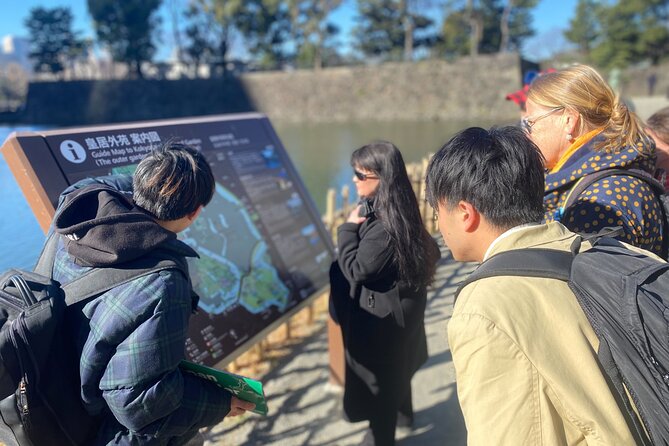
Ushigome Mitsuke was once one of the gates of Edo Castle. The gate itself no longer survives, but its former role helps explain the shape of the area and the reach of the old castle complex.
This is a good example of the tour’s approach. You are not only looking at intact buildings. You are learning to read absences, street patterns, and surviving traces. Without a guide, it would be easy to walk through this part of Tokyo without realizing that a defensive gate once controlled movement here.
The stop also ties Kagurazaka back to the palace. The morning begins with the imperial center and ends among former castle defenses and old neighborhood lanes. That connection gives the route more purpose than a simple list of unrelated sights.
What the guide adds to the walk
The tour’s strongest feature is interpretation. Tokyo’s central districts can look polished and modern, while much of their older meaning sits below the surface. A guide can point out the link between the Tokugawa Shogunate, Edo Castle, the Imperial Palace, Shinto practice, Buddhist influence, and neighborhood customs.
The personal style may vary by guide. Sho has led energetic walks in cold weather and explained both the palace and Japanese history with care. Aya has combined practical group help with explanations of the castle and gardens. Another guide has discussed roof ornaments, giving you a reminder that even decorative details can carry cultural meaning.
That kind of conversation is hard to price by the minute. You can walk around the palace and Kagurazaka without a guide, but you may miss why a feature matters. The private-tour experience is possible if no one else books your date, giving you more room for questions, though you should not count on having the tour to yourself.
Is $52.84 a fair price?
At $52.84 per person, this is not a bargain walking tour in the strictest sense. Several stops are free, and you are paying mainly for the guide, route design, historical context, and small-group format.
I think the price is fair if you are new to Tokyo, want a strong first look at the Imperial Palace area, or prefer to spend part of your trip with a local interpreter. The route covers several hard-to-connect subjects in one morning, then leaves you in Kagurazaka with time to continue independently.
The value drops if you already know the palace grounds and feel comfortable exploring Tokyo’s neighborhoods alone. The listed stops are brief, and there is no included meal, attraction admission, or palace interior access.
The tour has a 4.9 rating from 54 reviews and a 100 percent recommendation rate. Those figures suggest a consistently strong experience, especially for guide quality and personal attention, but they do not change the basic tradeoff: you are buying insight, not entry tickets.
Who should book this Tokyo walk?
I would choose this experience for a first or second visit to Tokyo, especially if you want more than the usual Shibuya, Asakusa, and Harajuku circuit. It suits curious walkers who enjoy history, architecture, gardens, religious sites, and neighborhood food districts.
It is also a good fit for solo visitors who want company without joining a large group. Families and couples may appreciate the manageable group size and the chance to ask questions as they go.
You may want a different plan if your top goal is entering the Imperial Palace, spending hours in a garden, or eating your way through Kagurazaka. The itinerary gives you an introduction to each area, not a full day in any one place.
Cancellation is free when you cancel at least 24 hours before the 9:00 a.m. start. Changes or cancellations inside that window are not accepted for a refund.
Final call: book it for context, not palace access
Book this tour if you want Tokyo’s central sights to make sense as one connected story. The Imperial Palace, former Edo Castle, Tokyo Daijingu, Nippon Budokan, and Kagurazaka each offer something different, and a small group makes the guide’s explanations easier to follow.
Skip it if you only want famous monuments, fast photography stops, or entry inside the palace. For most visitors who value local context and a quieter neighborhood finish, the $52.84 fee is a reasonable investment, with Kagurazaka providing the most memorable part of the morning.
FAQ
Where does the Tokyo Imperial Palace with Kagurazaka Alley Tour start?
The tour starts at the Shin-Marunouchi Building, 1-chōme-5-1 Marunouchi, Chiyoda City, Tokyo 100-6590, Japan.
What time does the tour begin?
The scheduled start time is 9:00 a.m.
Where does the tour end?
It ends at 3-chōme-2-202 Kagurazaka, Shinjuku City, Tokyo 162-0825, near Kagurazaka’s main street and close to a FamilyMart convenience store.
How long does the tour last?
The experience lasts approximately three hours and 30 minutes.
How large is the tour group?
The tour has a maximum of eight participants.
Is the Imperial Palace interior included?
No. The palace itself is not open to the public on this route. The experience focuses on the surrounding grounds, gardens, moats, park areas, and historic castle remains.
Is admission included?
The listed stops have free admission. The tour information does not list any separate paid admission.
Can I cancel for a full refund?
Yes, if you cancel at least 24 hours before the experience start time. Cancellations or changes made less than 24 hours before the start are not refunded or accepted.
New on our Tokyo list
- From Tokyo: Mount Fuji & Hakone Full Day Private Tour★ 4.9 · 25 reviews
- Tokyo Spectacular View Day-Cruise in 90 Minutes★ 5.0 · 25 reviews
- 2.5 Hour-Guided Cycle Tour in the Central Tokyo★ 5.0 · 25 reviews
- Real Tokyo Runner Club : Daikoku Car Meet Night Tour with JDM Car★ 5.0 · 25 reviews
- Ramen Making from Scratch +Akihabara Tour –Cooking Class★ 5.0 · 25 reviews
- [Self-Drive] Tokyo & Daikoku Custom Car Driving Tour★ 4.9 · 25 reviews
- Tokyo: 2-Hour Night Bike Tour of the City’s Hidden Gems★ 4.9 · 25 reviews
- Samurai themed Entertainment show in Shinjuku★ 4.5 · 25 reviews
Tours, compared.
Mt Fuji and Hakone 1-Day Bus Tour Return by Bullet Train
Read our review →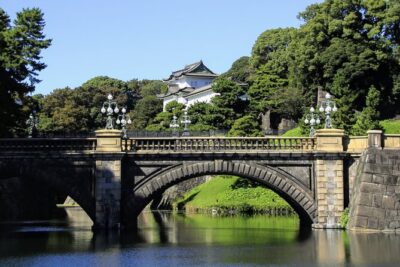
Shinjuku Food Tour (13 Dishes at 4 Local Eateries)
Read our review →
Tokyo Mt Fuji 5th St & Hakone Cruise Bus Tour w/Bullet Train
Read our review →
Flagship 2-Hours Official Street Go-Kart Tour – Tokyo Bay Shop
Read our review →
Mt. Fuji Tour, Hakone Ropeway, Owakudani, Lake Ashi
Read our review →
Tokyo 6hr Private Tour with Government-Licensed Guide
Read our review →