Reviewed · TOURS
Tokyo: Tour Privado por Tokio en español
Tokyo reveals itself in layers on this private Spanish-language tour. You move from temple bells and melon pan in Asakusa to anime, electronics, and maid cafes in Akihabara, then finish high above the city in Shinjuku. It is a smart way to cover four very different districts when your time is short.
I like the small private format, capped at five people, and the fact that the guide helps you handle Japanese transport rather than leaving you to decode every station alone. I also like the mix of food, tradition, pop culture, and city views. The main drawback is pace: four districts in eight hours leaves little room for lingering, and you pay for your own transport and food.
- Asakusa’s Senso-ji and Kaminarimon Gate provide the tour’s most traditional start, with mochi, dorayaki, and melon pan nearby.
- Ueno Park’s Sakura Avenue connects cherry-blossom culture with temples and open green space.
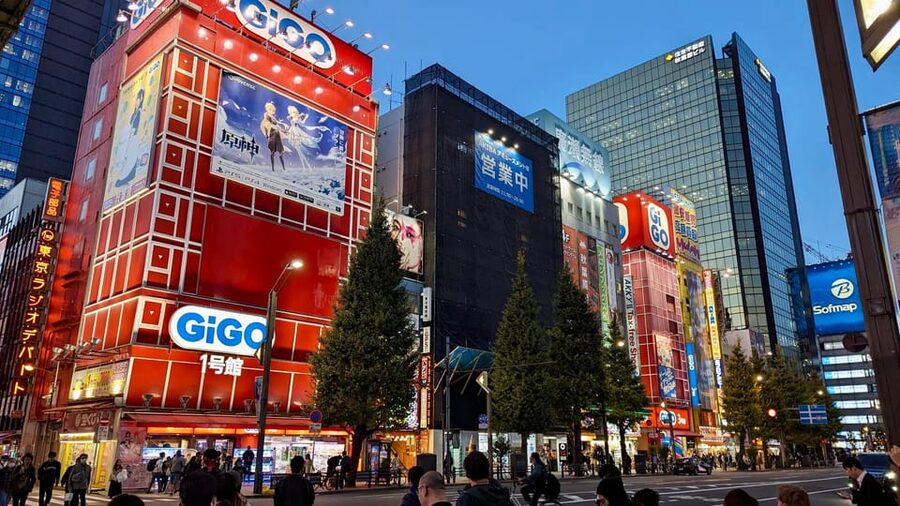
- Akihabara brings anime, manga, video games, electronics, and maid cafes into the same afternoon.
- Shinjuku City Hall’s 45th-floor observatory gives you a broad view of Tokyo without adding a separate skyline attraction.
- Kabukicho and Omoide Yokocho show Tokyo’s nightlife, entertainment, and adult-oriented side.
- Ignacio earned especially warm praise for handling information well, though one serious no-show complaint means you should confirm the meeting details carefully.
In This Review
- Four Tokyo districts, one long day
- Asakusa: Tokyo’s traditional front door
- Ueno: cherry trees, temples, and a change of pace
- Akihabara: anime, manga, and the maid cafe world
- Shinjuku City Hall and Tokyo from above
- Kabukicho after dark: see it, then choose your evening
- What the $338 group price really means
- The guide can make or break the experience
- Weather, walking, and practical limits
- Who should book this private Tokyo tour?
- FAQ
- How long does the private Tokyo tour last?
- Which language is the tour conducted in?
- How many people can join the private group?
- Is hotel pickup included?
- Are food and transport costs included?
- What places are visited?
- What should you bring?
- Is the tour suitable for wheelchair users?
Four Tokyo districts, one long day
This is not a slow, single-neighborhood stroll. It is a broad introduction to Tokyo, built around four two-hour stops. That makes the tour useful on a first visit, especially if you want Spanish explanations and a guide who can connect customs, food, temples, samurai traditions, cherry blossoms, and modern Japanese culture.
The private setup matters. You are not following a large flag through the city, and your guide can adjust explanations to your interests. A family focused on anime needs something different from a couple more interested in temples and Japanese traditions. With a maximum of five people, that kind of conversation should be easier.
Still, the schedule is full. Tokyo districts are spread out, and the tour includes public transport assistance rather than private transport. The eight hours cover the four districts, but travel between them takes part of the day. Think of this as a well-organized first look, not an exhaustive visit to each neighborhood.
Asakusa: Tokyo’s traditional front door
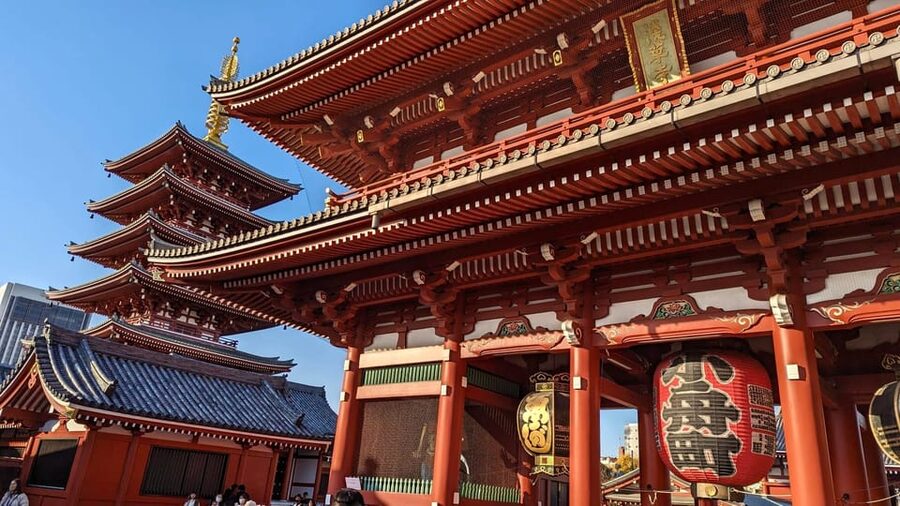
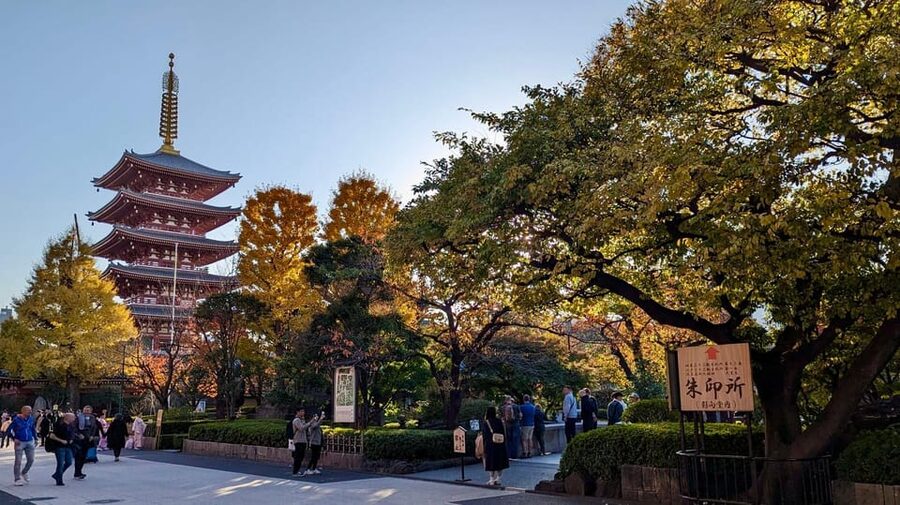
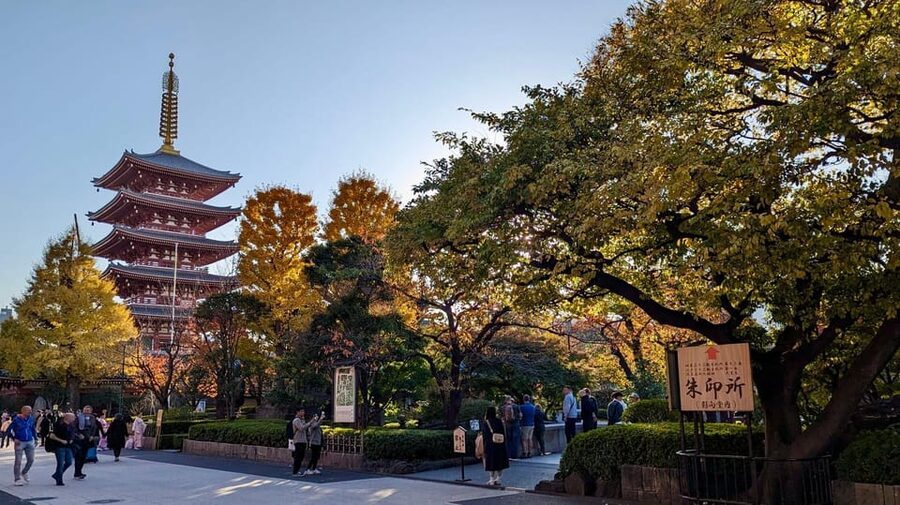
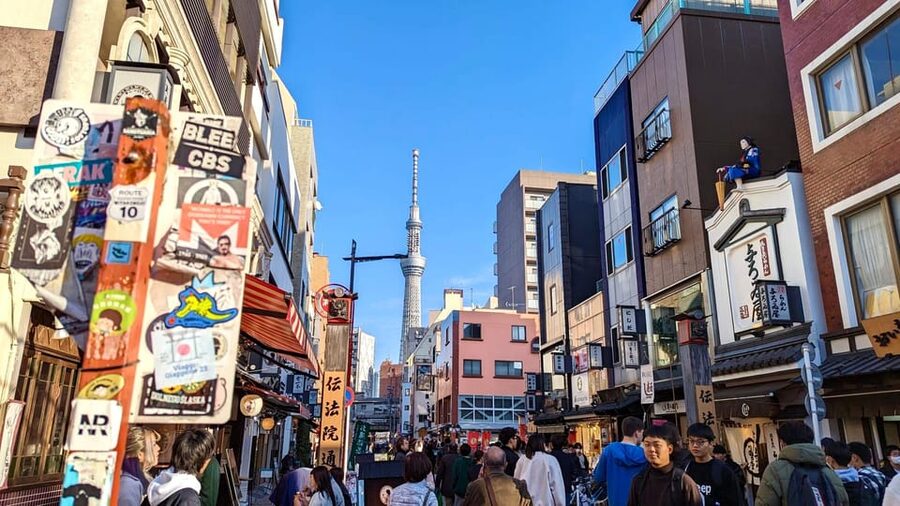
Asakusa is the right place to begin. The Kaminarimon Gate, with its large red lantern, is one of Tokyo’s easiest photo stops and a clear introduction to the city’s temple district. Your guide can explain the religious and cultural setting before leading you toward Senso-ji, Tokyo’s famous Buddhist temple.
The tour allows about two hours here. That is enough for an orientation walk, temple grounds, photos, and some time to sample traditional sweets. The food detail is important because Asakusa is not only about architecture. You can try mochi, dorayaki, and melon pan, a sweet bread with a crisp cookie-like top. The tour description singles out the melon pan as especially good, but your own taste will decide that.
You should bring cash. Small food purchases are not included, and cash is useful for snacks and other purchases during the day. The tour also does not include your transport fares, so keep money ready for trains or other public transit.
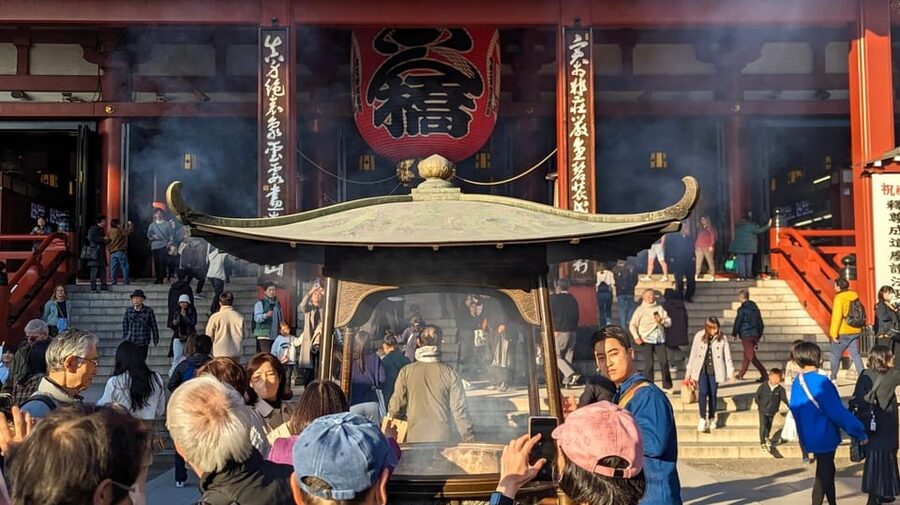
Senso-ji can feel crowded, particularly around its best-known entrance and shopping approach. A guide helps you understand what you are seeing instead of treating the temple as just a quick photo backdrop. The tradeoff is that two hours may feel short if you want to explore every shop or spend quiet time at the temple.
A few more Tokyo bookings worth comparing
- Mt Fuji and Hakone 1-Day Bus Tour Return by Bullet Train
★ 5.0 · 26,383 reviews - 1-Day Tokyo Bus Tour
★ 5.0 · 14,250 reviews - Tokyo: TOKYO SKYTREE® Admission ticket
★ 4.5 · 11,192 reviews
Ueno: cherry trees, temples, and a change of pace
Ueno gives the itinerary a different rhythm. Its park is known for cherry trees, the Sakura Avenue, and popular temples. During cherry-blossom season, the trees are the main event, but the park remains relevant outside that period because it adds open space and a calmer contrast to the dense commercial districts.
I like this stop because it helps explain why sakura season matters so much in Japan. Cherry blossoms are not simply pretty trees for photographs. They are tied to the passing of time, seasonal celebration, and a long tradition of gathering outdoors. Your guide can place the trees and temple visits in that larger cultural setting.
The two-hour block gives you enough time to walk through part of Ueno Park and hear context without turning the stop into an all-day outing. The limit is clear: the park and its surrounding attractions offer more than any two-hour visit can cover. If you have a special interest in temples, blossoms, or the park itself, make that known at the start.
The tour’s appeal here depends partly on timing. In cherry-blossom season, the Sakura Avenue may be the highlight. Outside that season, you will still see the park and temples, but the famous blossoms will not be in bloom. The tour does not promise a specific flowering period, so plan your expectations around the calendar.
Akihabara: anime, manga, and the maid cafe world
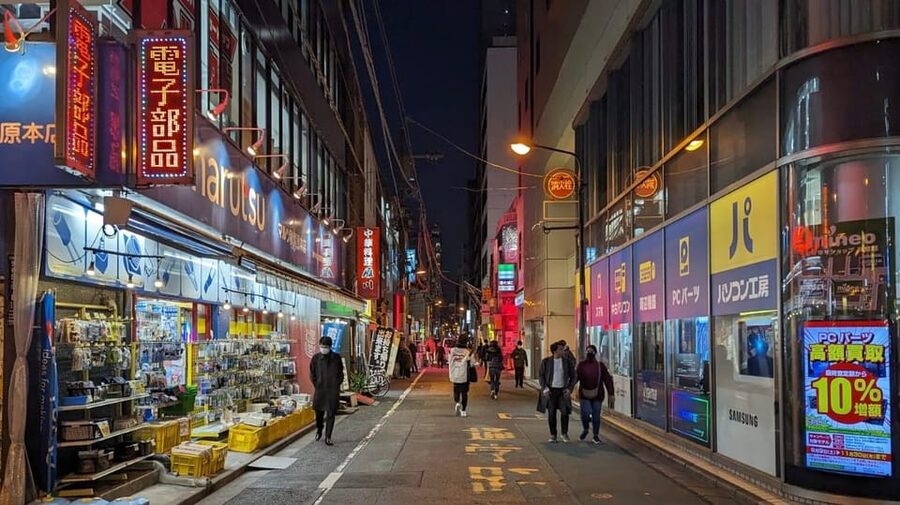
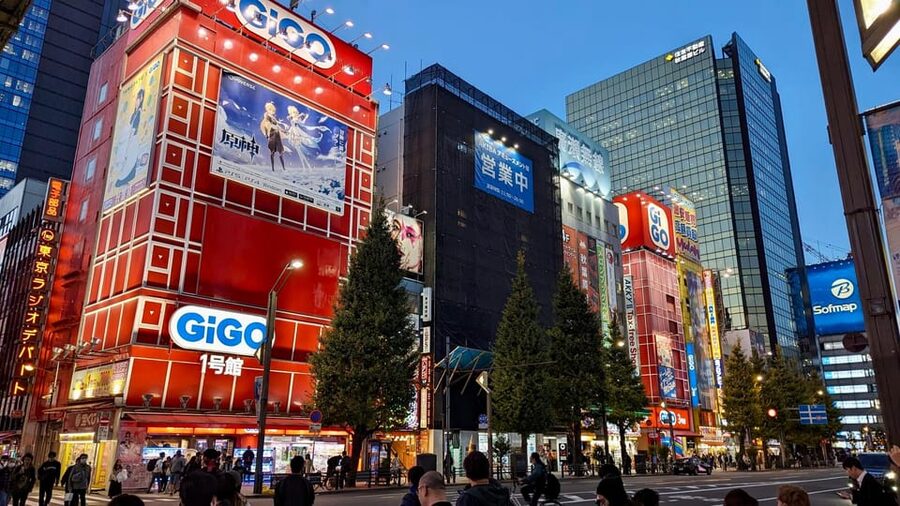
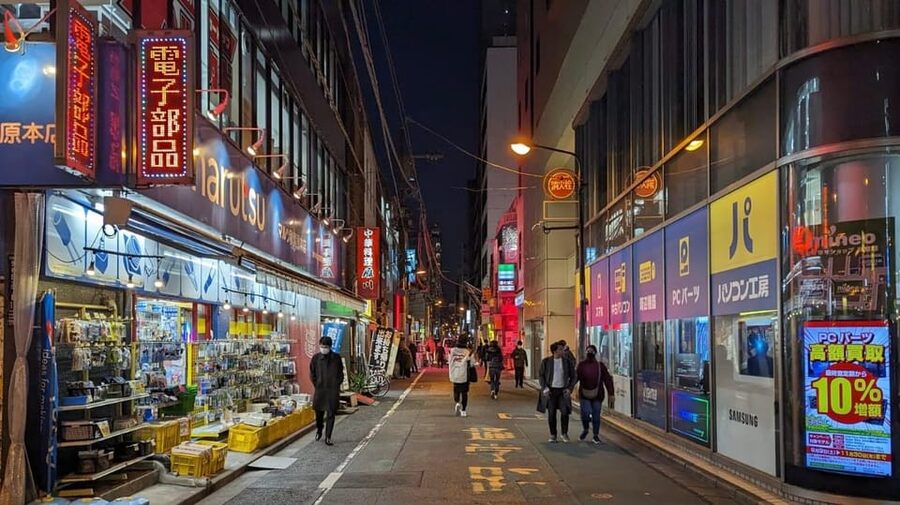
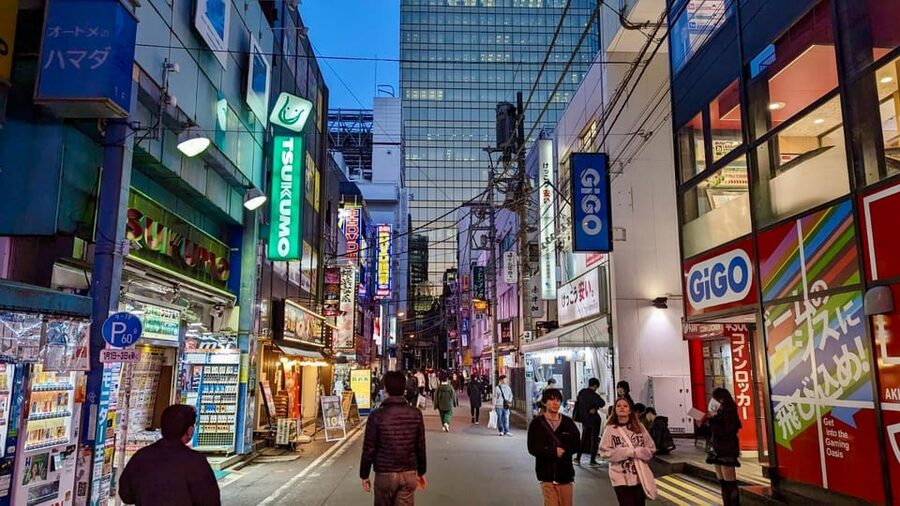
Akihabara shifts the subject from old Tokyo to modern Japanese fan culture. This is the district for anime, manga, video games, and electronics, and it can be confusing if you do not already know what you are looking at. A Spanish-speaking guide gives you a way into that world without requiring you to arrive as an expert.
The tour also introduces maid cafes, where staff wear themed uniforms and serve customers in a playful setting. The description refers to meeting the friendly young women who work there. This is a cultural experience tied to Akihabara’s pop entertainment scene, but it may not appeal to everyone. If your interest is mainly electronics or gaming, tell your guide so the time reflects your priorities.
Akihabara is visually loud and commercially focused. That is part of its character, but it can also feel less personal than Asakusa or Ueno. You are seeing a district shaped by shops, advertising, collectibles, and entertainment. The value of the guide is not only finding a store. It is understanding why this kind of fan culture has such a strong place in Tokyo.
Two hours gives you a useful introduction, yet serious shoppers will need more time. The tour does not include purchases, cafe bills, or transport fares, so budget separately if you plan to buy electronics, manga, figures, or other merchandise. Cash remains a practical item to carry.
Shinjuku City Hall and Tokyo from above
The final district is Shinjuku, where the tour heads to the observation deck on the 45th floor of the Tokyo Metropolitan Government Building. This is one of the strongest ways to finish the day because you can look back across the city after seeing several of its neighborhoods at street level.
The view helps you make sense of Tokyo’s scale. After temples, park paths, and neon shopping streets, the city from above becomes a pattern of dense buildings and distant horizons. You will want your camera ready, but the real benefit is orientation. The viewpoint gives you a broad sense of how much city lies beyond the four stops.
The tour provides access to the viewpoint as part of the Shinjuku visit, but the details do not specify additional admission arrangements. It is sensible to confirm what is covered when booking, especially since transport and food are clearly excluded.
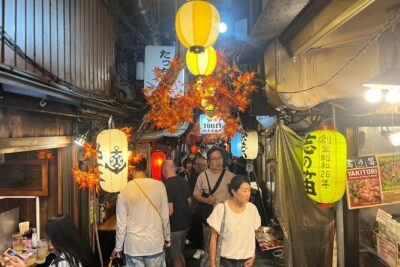
Shinjuku is a good place for a guide because it can be hard to know where one part of the district ends and another begins. The tour finishes in Kabukicho, the entertainment quarter known for its nightlife and adult-oriented businesses. You will see Godzilla, a very large 3D screen, and Omoide Yokocho, also called Memory Lane.
Same corner of Tokyo, a completely different plan:
- Tokyo: teamLab Planets TOKYO Digital Art Museum Entry Ticket
★ 4.6 · 9,779 reviews - Mt Fuji & Hakone Cruise, Drum Show Bullet Train 1 Day from Tokyo
★ 4.0 · 7,413 reviews - Tokyo: Sumo Show Experience with Chicken Hot Pot and a Photo
★ 4.8 · 6,678 reviews - Tokyo: Shinjuku Food Tour (13 Dishes at 4 Local Eateries)
★ 5.0 · 6,603 reviews
Kabukicho after dark: see it, then choose your evening
Kabukicho gives the tour an honest finish. Tokyo is not only temples and polite rituals. This district is famous for nightlife, entertainment, and adult businesses, and its atmosphere changes as evening arrives.
The stop is useful even if you have no interest in nightlife. You can see the Godzilla feature, the large 3D screen, and the narrow Omoide Yokocho area. Omoide Yokocho is known for its compact dining spaces and old-style alley atmosphere, but this tour does not include your meal. If you decide to eat there afterward, that is an extra expense and a separate choice.
Families and visitors who prefer a quiet evening should know what Kabukicho represents before booking. The tour does not suggest that you must enter adult venues, but you will end in Tokyo’s best-known adult entertainment district. For some people, that is a useful part of understanding the city. For others, it may be the least comfortable portion of the day.
What the $338 group price really means
The listed price is $338 for a private group of up to five people. At full capacity, that works out to about $67.60 per person before transport, food, and any other personal spending. For a group of five, the value is fairly strong because you receive eight hours of guiding and Spanish-language assistance across several districts.
For one or two people, the per-person cost rises sharply. The private format may still be worth it if you want Spanish explanations, hotel pickup, help with Japanese transport, and a day shaped around your group rather than a fixed large tour.
The price is less attractive if you are comfortable navigating Tokyo alone and only want to visit one or two of these neighborhoods. You could spend a full day in Asakusa and Ueno, or focus on Akihabara and Shinjuku, without paying for a guide across four districts. This tour earns its cost through coverage and support, not through included meals or private vehicles.
Hotel pickup is usually arranged from your hotel or a nearby station. Since the exact pickup point and start time depend on availability, confirm those details before the day begins. The guide helps with transport in Japan, but your transport cost is not included.
The guide can make or break the experience
The strongest personal feedback centers on the guides. Ignacio received specific praise for explaining information well, and another guide was described as warm and welcoming, with the ease of meeting an old friend. Those comments point to the quality this tour needs most: clear Spanish, good pacing, and an ability to make Tokyo feel understandable rather than overwhelming.
There is also one serious warning. One booking recorded a guide who did not appear, followed by more than an hour of waiting before the problem was addressed. That is not a minor inconvenience, especially on an eight-hour day with multiple timed stops.
Because of that, I would confirm the pickup time, location, guide contact, and provider details shortly before the tour. The activity offers free cancellation up to 24 hours in advance, and you can reserve now while paying later, which gives you some flexibility. The overall rating is 4.3 from four reviews, so the positive guide feedback is strong but the sample is small.
Weather, walking, and practical limits
The tour runs in normal weather and is canceled only for an earthquake or extreme weather event. Bring comfortable walking shoes, cash, and a plan for changing conditions. Tokyo’s public transport and large stations can add effort to a day that already includes several hours on foot, although the tour information does not provide a precise walking distance.
Wheelchair users should not book this activity because it is specifically marked as unsuitable. Pets and drones are not allowed, and you are expected not to litter.
The tour is a poor match if you want a slow day, a long restaurant meal, or extended shopping. It is a better match if you want a clear first-day map of Tokyo, particularly in Spanish. You will see major contrasts in one outing, then decide which districts deserve a return visit.
Who should book this private Tokyo tour?
I would recommend it to first-time visitors who want cultural explanation without an English-language barrier. It also suits families or small groups who can share the $338 price and want hotel pickup plus help with trains and stations.
Spanish-speaking visitors who care about both old and new Japan will get the most from it. Asakusa and Ueno cover temples, food, and cherry-blossom traditions. Akihabara adds anime and gaming culture. Shinjuku and Kabukicho show the modern city at its most dramatic.
I would think twice if you have limited mobility, dislike public transport, or prefer to spend a full day in one neighborhood. I would also ask about the guide and meeting arrangements before the cancellation deadline, given the reported no-show problem.
Book it if you want a fast, wide-ranging Tokyo orientation in Spanish and accept that food, transit, and extra shopping come out of your pocket. Skip it if you already know the city or want a relaxed specialist tour. For the right small group, the combination of Senso-ji, Sakura Avenue, Akihabara, the 45th-floor view, and Kabukicho offers a useful first chapter in Tokyo.
FAQ
How long does the private Tokyo tour last?
The tour lasts eight hours, with approximately two hours scheduled in each of Asakusa, Ueno, Akihabara, and Shinjuku.
Which language is the tour conducted in?
The tour includes a live guide who speaks Spanish.
How many people can join the private group?
The price covers one private group of up to five people.
Is hotel pickup included?
Yes. Pickup is included, usually from your hotel or a nearby station in Tokyo.
Are food and transport costs included?
No. Your meals, snacks, and transport costs in Japan are not included in the tour price.
What places are visited?
The tour visits Asakusa, Ueno, Akihabara, and Shinjuku. Stops include Senso-ji, Ueno Park, Akihabara’s anime and electronics area, the 45th-floor observation deck at Tokyo City Hall, Kabukicho, Godzilla, the large 3D screen, and Omoide Yokocho.
What should you bring?
Bring cash. You may need it for food and other personal purchases, which are not included.
Is the tour suitable for wheelchair users?
No. The activity is not considered suitable for wheelchair users.
New on our Tokyo list
- Sumi-e Experience in a relaxing green tea shop in Tokyo★ 5.0 · 3 reviews
- Tokyo : Kamikaze Street Drift Ride★ 5.0 · 3 reviews
- Private Zen Meditation in English in Shinjuku, Tokyo★ 5.0 · 3 reviews
- Onsen Spa in Tokyo and Asakusa Bar Hopping with Local Guide★ 5.0 · 3 reviews
- Easy for everyone! Now you can play handmade mini shamisen and show off to everyone! Musical instruments, sweets and live music★ 5.0 · 3 reviews
- Tokyo Tsukiji Fish Market Walking and Exploring Hidden Gems Tour★ 5.0 · 3 reviews
- Tokyo: Private Tsukiji Street Food & Sake with Local Guide★ 5.0 · 3 reviews
- Mt Fuji Exploration Tour with Free Japanese Kusa Mochi from Tokyo★ 4.5 · 3 reviews
Tours, compared.
Mt Fuji and Hakone 1-Day Bus Tour Return by Bullet Train
Read our review →
Shinjuku Food Tour (13 Dishes at 4 Local Eateries)
Read our review →
Tokyo Mt Fuji 5th St & Hakone Cruise Bus Tour w/Bullet Train
Read our review →
Flagship 2-Hours Official Street Go-Kart Tour – Tokyo Bay Shop
Read our review →
Mt. Fuji Tour, Hakone Ropeway, Owakudani, Lake Ashi
Read our review →
Tokyo 6hr Private Tour with Government-Licensed Guide
Read our review →