Reviewed · TOURS
Tokyo: True Crime And Ghost Stories Tour
Tokyo’s polished surface drops away quickly on this true crime and ghost stories tour, which moves from Shinjuku’s nightlife district to a site linked with wartime human experimentation, then into a cemetery made for ghost tales. Guide John mixes crime, organized gangs, prostitution, war crimes, and Japanese folklore into one unusual three-hour walk.
I like two things here. First, the route shows you parts of Tokyo that do not fit the usual shrine, shopping, and food itinerary. Second, John’s animated storytelling gives the difficult material some shape, using humor without turning the whole evening into a cheap fright show. The main drawback is clear: this is a long walk with adult language, sexual subjects, graphic crime, and grim wartime history, so it is not a casual family outing.
In This Review
- Key points to know before booking
- Starting at Hanazono Shrine beside Golden Gai
- Kabukicho: gangs, love hotels, and Tokyo’s nightlife economy
- Golden Gai and the value of seeing Tokyo’s less polished side
- Toyama Park and the tour’s most serious subject
- Aoyama Cemetery and the switch from evidence to folklore
- John’s style: part historian, part actor
- Who should book this three-hour walk
- What to bring and how to plan your evening
- Should you book the Tokyo True Crime and Ghost Stories Tour?
- FAQ
- How long is the Tokyo True Crime and Ghost Stories Tour?
- How much does the tour cost?
- Where does the tour begin?
- Where does the tour finish?
- Who guides the tour?
- What places are included on the route?
- Are transportation and entry fees included?
- Is dinner included?
- Is the tour suitable for children or people with limited mobility?
Key points to know before booking
- Kabukicho opens the story: Begin at Hanazono Shrine, then enter Tokyo’s famous red light and organized crime district.
- Toyama Park carries serious historical weight: The tour connects the area with Unit 731 and wartime human experimentation.
- Golden Gai adds nightlife context: Learn how tiny bars and the surrounding entertainment district fit into Shinjuku’s darker side.
- Aoyama Cemetery supplies the ghost-story setting: The final portion shifts from documented crimes to Japanese supernatural tales.
- John is the central attraction: His acting, jokes, dramatic delivery, and broad knowledge of Japan’s past shape the experience.
- Bring stamina and an open mind: Expect considerable walking, some stairs, and subjects that may be upsetting or uncomfortable.
Starting at Hanazono Shrine beside Golden Gai
The meeting point is in the grounds of Hanazono Shrine, directly in front of the stairs leading to the main shrine building. This is a useful starting place because it puts you beside Golden Gai and just a short step from Kabukicho’s entertainment streets.
Your guide is John, described as a thin, bald white man. Check your email or the GetYourGuide app for any final meeting instructions, since a large shrine complex can still take a few minutes to sort out when the area is busy.
The shrine gives the tour an interesting opening contrast. You begin beside a traditional religious site, then move into one of Tokyo’s most famous nightlife districts. That change of setting helps frame the whole experience: modern Tokyo is not one neat postcard, but a city where sacred spaces, office towers, bars, clubs, hotels, and old stories sit close together.
John’s personality matters here. The tour depends less on looking at monuments than on listening closely. His delivery is theatrical, and he sometimes acts out parts of a story. That works well for crime cases and ghost stories, though his humor is intentionally irreverent. If you prefer a quiet, formal guide, this will not be your ideal match.
A few more Tokyo bookings worth comparing
- Mt Fuji and Hakone 1-Day Bus Tour Return by Bullet Train
★ 5.0 · 26,383 reviews - 1-Day Tokyo Bus Tour
★ 5.0 · 14,250 reviews - Tokyo: TOKYO SKYTREE® Admission ticket
★ 4.5 · 11,192 reviews
Kabukicho: gangs, love hotels, and Tokyo’s nightlife economy
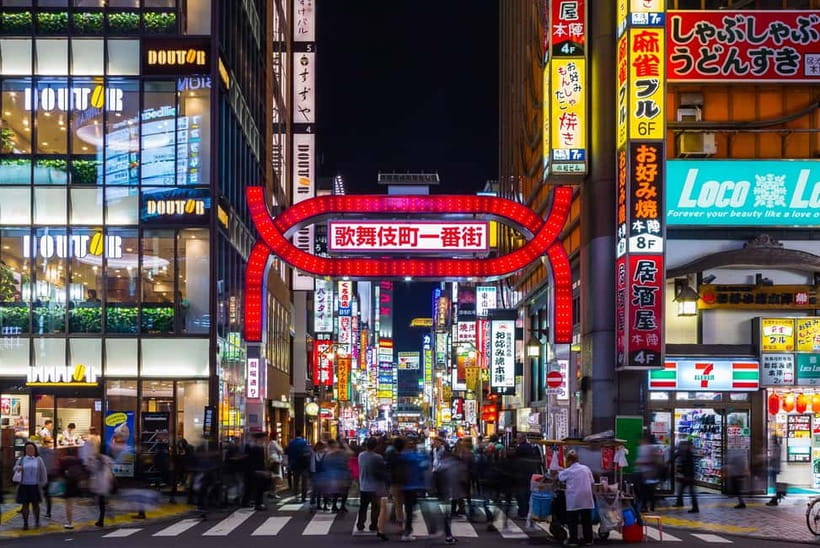
The first major section lasts about 45 minutes and takes place around Shinjuku and Kabukicho. This is Japan’s largest red light district and one of the most recognizable entertainment areas in Tokyo.
You will hear about gang conflicts, shocking murders, troubled relationships, and the quasi-legal sex industry. The point is not simply to collect gruesome anecdotes. John uses the streets to explain how organized crime, nightlife, hostess clubs, love hotels, and other adult businesses fit into the city’s social and commercial life.
That context is the strongest reason to choose this tour instead of a standard evening walk through Shinjuku. You will still see neon signs and crowded streets, but the guide adds a layer about who controls businesses, how the entertainment trade operates, and why some activities occupy a legally uncertain space.
Kabukicho can also be the most uncomfortable part of the route. The subject matter includes prostitution, sex, murder, and exploitation. The tour does not treat these topics as polite dinner conversation, and occasional adult language is part of John’s style. Children under 14 are not allowed, and I would not recommend bringing older children unless you already know they can handle frank discussions of violence and sex.
The opening section is also a good test of the tour’s tone. John uses jokes to keep the group from sinking under the weight of the material. Some people will find that balance helpful. Others may feel that humor and tragedy do not belong together. You should book this only if you are comfortable with a guide who treats dark subjects with a wicked, sometimes silly edge.
Golden Gai and the value of seeing Tokyo’s less polished side
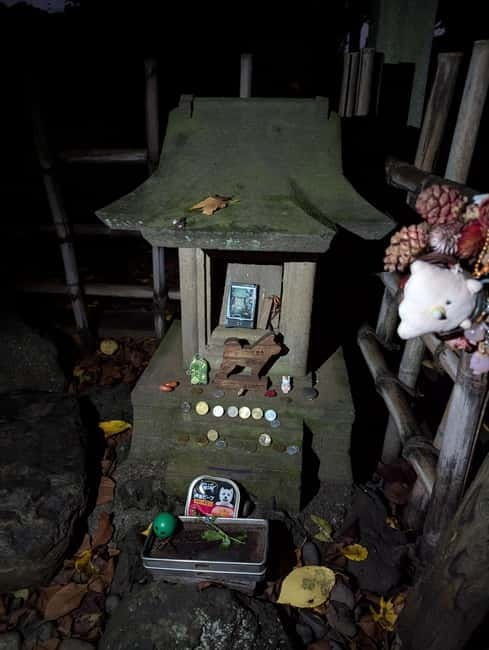
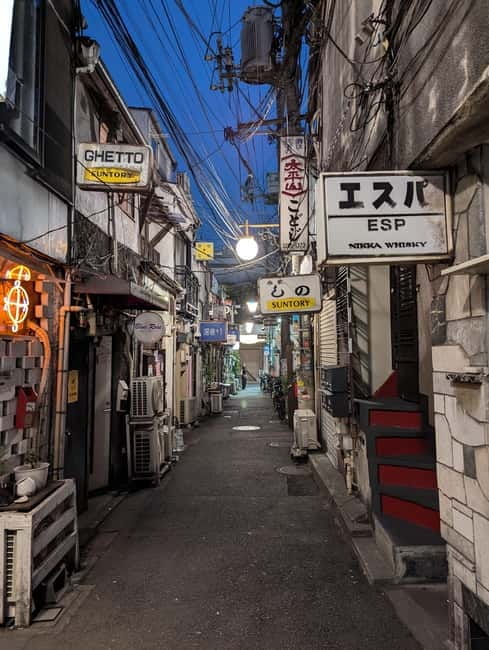
Golden Gai is best known for its narrow lanes and tiny drinking establishments. On this route, it is not presented only as a nightlife photo stop. It helps explain the close relationship between drinking culture, adult entertainment, local businesses, and the stories that grow around them.
You may already have Golden Gai on your Tokyo list, but a guide changes how you read the place. Instead of seeing a maze of small bars and taking a few pictures, you get a social backdrop for the crime stories. The district becomes part of a wider account of Shinjuku, rather than a stand-alone nightlife attraction.
There is no dinner included, so plan to eat before or after the walk. That is worth noting because the tour takes three hours and finishes across town at Aoyama-Itchome Station. Golden Gai is a natural place to continue your evening, but the tour itself is a walking and storytelling experience, not a bar crawl.
The route has no entry fees. At $35 per person, the price is reasonable if you want a focused English-language introduction to Tokyo’s crime and folklore. You are paying for John’s preparation, delivery, and local interpretation rather than admission to attractions. The value is strongest for people who would otherwise spend hours researching Japanese crime cases, wartime history, and ghost lore on their own.
Toyama Park and the tour’s most serious subject
The walk then turns toward Toyama Park, with about 30 minutes devoted to this section. The tour presents the park as a place linked with Unit 731 and human experimentation carried out during wartime.
This is the point where the experience shifts from urban crime stories to state violence and war crimes. The material is not light, and the tour description uses the phrase mini-Auschwitz to convey the scale and horror of what is discussed. That comparison is emotionally forceful, but you should treat it as the guide’s framing rather than a literal description of the site.
Toyama Park itself may not look like a conventional historical attraction. That is part of the value and also part of the challenge. You are not entering a museum with exhibits, labels, or a formal memorial sequence. Instead, the meaning comes through John’s explanation and the surrounding conversation.
For me, this is likely to be the most thought-provoking portion. The tour asks you to consider the parts of Japanese wartime history that receive less attention in ordinary sightseeing. Several people have found that this broader historical discussion adds more value than the crime stories alone. If you want only spooky entertainment, the Unit 731 section may feel heavy. If you want a more honest look at Japan’s past, it gives the tour needed weight.
The walking distance matters here. The route connects western Shinjuku with Aoyama, and the entire experience lasts three hours. You should wear comfortable shoes, carry water, and avoid booking it after an exhausting day of sightseeing if you tire easily. One person completed the tour after already walking about 20,000 steps and still found John’s stories carried the evening, but that should not be your planning strategy.
Same corner of Tokyo, a completely different plan:
- Tokyo: teamLab Planets TOKYO Digital Art Museum Entry Ticket
★ 4.6 · 9,779 reviews - Mt Fuji & Hakone Cruise, Drum Show Bullet Train 1 Day from Tokyo
★ 4.0 · 7,413 reviews - Tokyo: Sumo Show Experience with Chicken Hot Pot and a Photo
★ 4.8 · 6,678 reviews - Tokyo: Shinjuku Food Tour (13 Dishes at 4 Local Eateries)
★ 5.0 · 6,603 reviews
Aoyama Cemetery and the switch from evidence to folklore
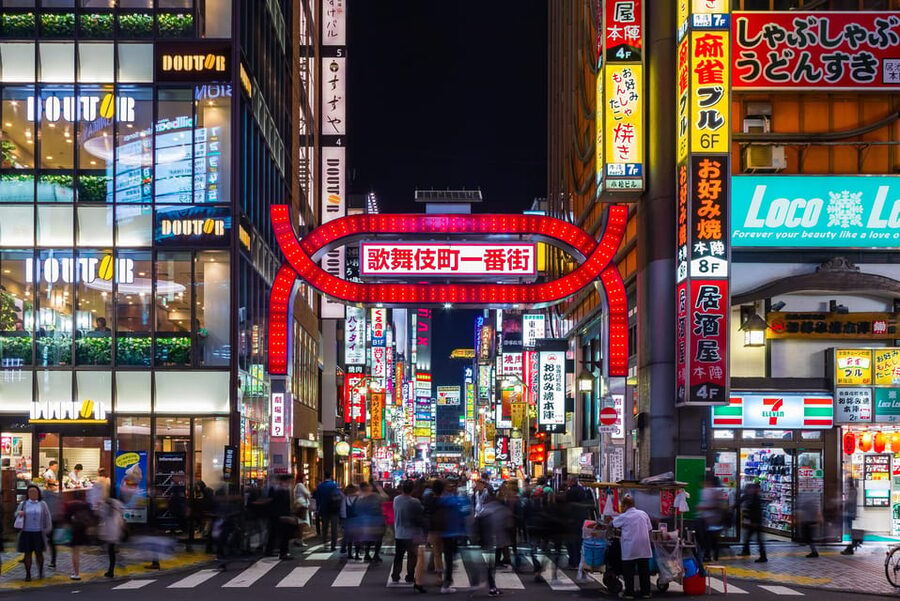
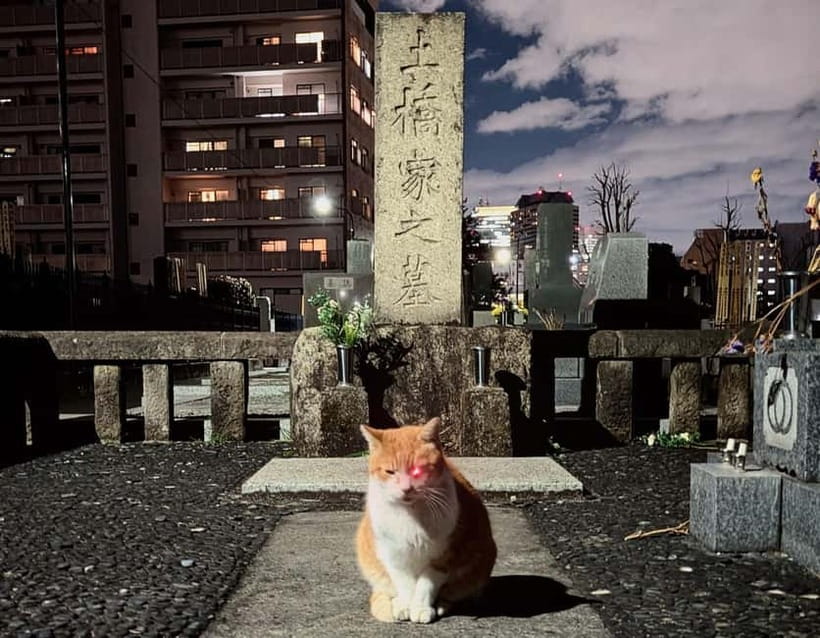
The final major section takes place at Aoyama Cemetery, Tokyo’s largest cemetery, with roughly 45 minutes of guided storytelling. The setting is a sharp change from Kabukicho. Instead of neon and crowds, you get cemetery paths, darkness depending on the start time, and a quieter atmosphere suited to Japanese ghost stories.
John shifts from documented crimes to legends and supernatural tales. The appeal here comes from the change in mood. The first part deals with criminal cases and organized crime. Toyama Park brings in wartime atrocities. Aoyama Cemetery lets the tour finish with folklore, ghosts, and the way frightening stories are attached to real places.
You will also visit the grave of Hachiko, Japan’s famous loyal dog. This gives the cemetery section a more familiar and tender note amid the darker material. It is a useful reminder that cemeteries are not only places of fear. They can also preserve stories of loyalty, memory, and public affection.
One practical point deserves attention: depending on the departure time and season, the cemetery may be quite dark. That is ideal for the atmosphere, but less useful if you want to see the cemetery clearly. A later start can make the ghost stories more effective, while an earlier start may give you a better sense of the site itself. Check the available times and choose based on your preference.
The walk ends at Aoyama-Itchome Station, not back at Hanazono Shrine. That makes the finish convenient for continuing your evening, but you should keep the route in mind when planning dinner or transport back to your hotel. Transportation fees are not included, and the listed estimate is 200 yen.
John’s style: part historian, part actor
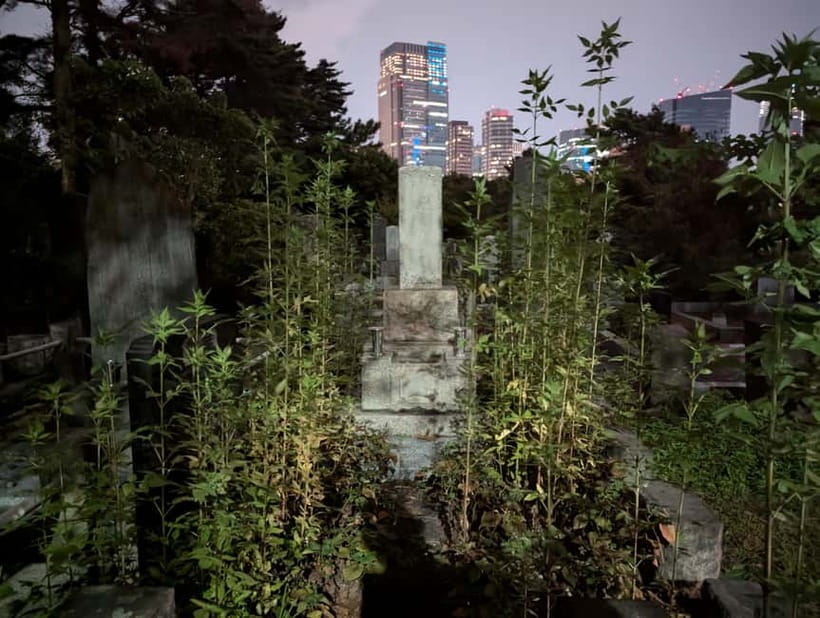
John is the element that ties the route together. His strengths are storytelling, historical context, and a willingness to answer questions. He does not simply recite a script and move on. He explains side points about Japan and often keeps a conversation going with the group.
His delivery is animated. He acts out scenes, changes his voice, and sometimes makes himself sound scarier than the ghosts. That theatrical touch helps maintain attention during a long walk, especially when the group is tired or the subject turns bleak.
The humor is central, not decorative. John uses silly jokes and dark comments to break up stories about murder, violence, and war crimes. Many people find that this keeps the mood manageable and makes the three hours pass quickly. You need to be comfortable with that approach, since the humor can be blunt and the language is occasionally adult.
The guide also appears to be helpful with practical problems. He has assisted people with finding the correct trains after the tour, which is useful when you finish in an unfamiliar neighborhood. Still, do not treat that as a promised separate service. The main offering is the guided walk and storytelling.
A private group is available. That may suit you if your party has a shared interest in true crime or if you want more room for questions. A regular group can be more lively, but the experience will depend on how well everyone handles the subject matter and John’s particular style.
Who should book this three-hour walk
I would choose this tour if you have already seen some of Tokyo’s standard sights and want a different angle on the city. It suits people interested in:
- Japanese crime and organized crime
- The history of Kabukicho and adult entertainment districts
- World War II and uncomfortable historical subjects
- Ghost stories and Japanese folklore
- Crime documentaries and horror
- Animated guides who use humor and performance
It is also a good choice if you want a tour that encourages questions rather than simply pointing out buildings. Several people found that conversations about wartime Japan and the less polished side of Tokyo stayed with them after the tour and affected how they viewed the rest of their visit.
I would skip it if you are easily disgusted, have limited fitness, dislike adult language, or want a gentle introduction to Japanese culture. It is not suitable for wheelchair users because of the walking route and stairs, and it is not recommended for people over 300 pounds, or 136 kilograms, according to the activity information.
The tour is not designed for children under 14. Even for teenagers, the combination of prostitution, sex, murder, graphic violence, and human experimentation may be too much.
What to bring and how to plan your evening
Wear shoes that can handle several hours of walking. The route includes stairs, and you will be moving between districts rather than standing in one place. Bring water, especially in Tokyo’s hot and humid months.
Allow time before the meeting point. Hanazono Shrine is near Golden Gai, but the exact gathering spot is inside the shrine grounds, by the stairs to the main building. Keep your phone available for messages from John or the booking platform.
Plan your meal separately. Dinner is not included, and the tour does not stop for food. You may want to eat first, especially if you are booking a later departure, or continue to a restaurant after reaching Aoyama-Itchome Station.
The tour costs $35 per person and has no attraction entry fees. That is fair value for a specialist walking tour led in English, especially if you care about the guide’s research and presentation. It is less compelling if you expect dramatic locations at every stop or want a museum-style lesson with documents and displays.
Free cancellation is available up to 24 hours before the tour for a full refund. You can also reserve and pay later, which helps if your Tokyo schedule is still changing.
Should you book the Tokyo True Crime and Ghost Stories Tour?
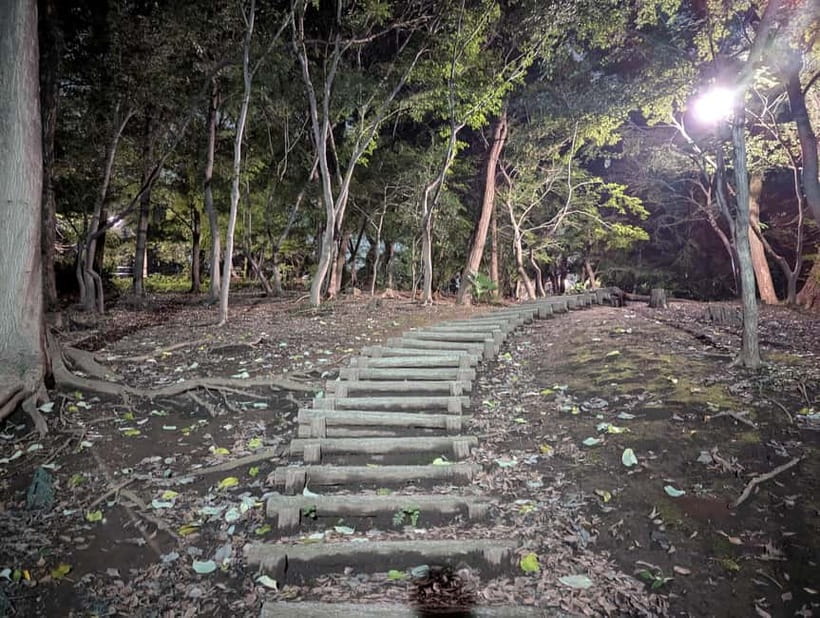
Book it if you want Tokyo beyond the usual postcard, and if you can handle a frank, sometimes irreverent look at crime, sex, war crimes, and ghosts. John’s passionate delivery is the main reason this experience works. He turns a long walk across several neighborhoods into a connected story about power, memory, fear, and the city’s hidden corners.
Do not book it for children, a quiet cultural walk, or a polished sightseeing script. The route can be tiring, and the jokes will not suit everyone. But for adults who enjoy dark history, folklore, and a guide with strong opinions and dramatic timing, this is one of the more distinctive ways to spend three hours in Tokyo.
FAQ
How long is the Tokyo True Crime and Ghost Stories Tour?
The tour lasts three hours.
How much does the tour cost?
The listed price is $35 per person.
Where does the tour begin?
It begins at Hanazono Shrine in Shinjuku, in front of the stairs leading to the main shrine building inside the shrine grounds, near Golden Gai.
Where does the tour finish?
The tour finishes at Aoyama-Itchome Station.
Who guides the tour?
The English-speaking guide is John.
What places are included on the route?
The route includes Kabukicho, Golden Gai, Toyama Park, and Aoyama Cemetery. It also includes a visit to Hachiko’s grave.
Are transportation and entry fees included?
Transportation is not included. The listed transportation cost is 200 yen. There are no entry fees for the stops along the route.
Is dinner included?
No. Dinner is not part of the tour.
Is the tour suitable for children or people with limited mobility?
Children under 14 are not permitted. The tour is not suitable for wheelchair users or people with a low level of fitness. It also includes stairs, substantial walking, adult language, sexual subjects, murder, and disturbing wartime material.
New on our Tokyo list
- From Tokyo: Mount Fuji & Hakone Full Day Private Tour★ 4.9 · 25 reviews
- Tokyo Spectacular View Day-Cruise in 90 Minutes★ 5.0 · 25 reviews
- Real Tokyo Runner Club : Daikoku Car Meet Night Tour with JDM Car★ 5.0 · 25 reviews
- 2.5 Hour-Guided Cycle Tour in the Central Tokyo★ 5.0 · 25 reviews
- Ramen Making from Scratch +Akihabara Tour –Cooking Class★ 5.0 · 25 reviews
- [Self-Drive] Tokyo & Daikoku Custom Car Driving Tour★ 4.9 · 25 reviews
- Tokyo: 2-Hour Night Bike Tour of the City’s Hidden Gems★ 4.9 · 25 reviews
- Buddha, Bamboo & Zen – Bespoke Kamakura Private Walking Tours★ 5.0 · 25 reviews
Tours, compared.
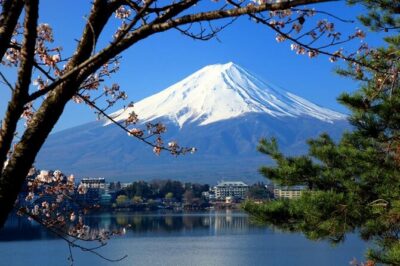
Mt Fuji and Hakone 1-Day Bus Tour Return by Bullet Train
Read our review →
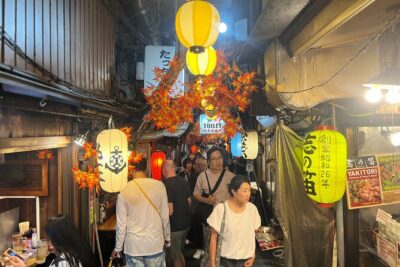
Shinjuku Food Tour (13 Dishes at 4 Local Eateries)
Read our review →
Tokyo Mt Fuji 5th St & Hakone Cruise Bus Tour w/Bullet Train
Read our review →
Flagship 2-Hours Official Street Go-Kart Tour – Tokyo Bay Shop
Read our review →
Mt. Fuji Tour, Hakone Ropeway, Owakudani, Lake Ashi
Read our review →
Tokyo 6hr Private Tour with Government-Licensed Guide
Read our review →