
Reviewed · JAPANESE CALLIGRAPHY CLASSES
Calligraphy & print your calligraphy on a T-shirt.
The clever part of this Asakusa activity is that you do not simply copy a Japanese character onto a souvenir shirt. You learn how the writing works, make your own sumi ink, practice on thin paper, then choose the design that will be printed on your clothing.
I like the calm, hands-on pace, especially the 30 minutes of brush practice with instructor Mana. I also like the useful souvenir: a T-shirt carrying your own work, plus a postcard and green tea along the way. The main consideration is timing. The class lasts from one hour to 90 minutes, and your shirt takes about 10 minutes to finish after printing, so you should not book it immediately before a fixed appointment.
In This Review
- Key points before you book
- Why this calligraphy class feels different
- Finding the red brick meeting point in Asakusa
- First lesson: characters, culture, and the Japanese fude
- Thirty minutes of practice on thin paper
- Choosing the design for your T-shirt
- Green tea and a postcard while you wait
- What the $48 price includes
- Who will enjoy this activity most
- Useful planning advice for your day
- The personal touch from Mana
- Final decision: should you book it?
- FAQ
- Where does the calligraphy class take place?
- How long does the activity last?
- How much does the activity cost?
- Is the instruction in English?
- Is a T-shirt included?
- Can I choose where the design goes on the T-shirt?
- Do I need previous calligraphy experience?
- What should I wear?
- What is included besides the T-shirt?
Key points before you book
- Make your own ink: Grind a Sumi ink stick with water on a traditional inkstone before writing.
- Practice before printing: You get time to copy Kanji designs on thin paper with guidance from Mana.
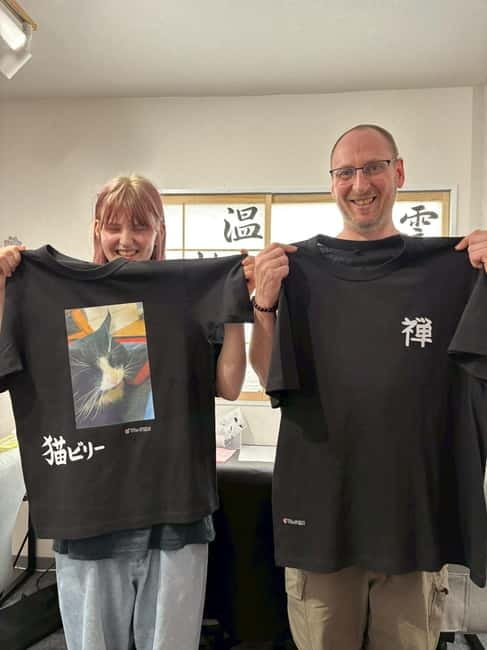
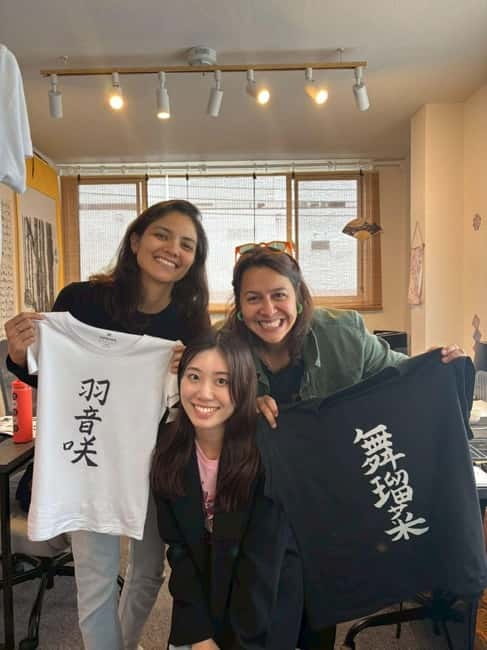
- Take home something wearable: Choose your favorite design and its position on a supplied T-shirt.
- English instruction: The class covers Japanese characters, culture, brush technique, and printing in English.
- A relaxed souvenir break: Sip green tea and write a postcard while your T-shirt is prepared.
- Convenient Asakusa plan: Some participants use the waiting time to explore Asakusa before collecting the finished shirt.
Why this calligraphy class feels different
Many Japanese craft activities give you a finished object after a short demonstration. This one gives you a little more ownership. You make the ink, hold the brush, work through several attempts, and decide which design deserves a place on your shirt.
That process matters. Your first brushstroke will not look like a professional calligrapher’s, and it does not need to. The appeal is seeing how a simple character changes as you adjust the pressure, direction, and amount of ink. You leave with a wearable record of the attempt, rather than a mass-produced item picked up in a shop.
The class also gives you a short introduction to the history of Japanese characters and culture. That context helps explain why the shapes are treated as more than decoration. You are not expected to read Japanese before arriving, and English is used throughout the lesson.
The tone appears to be especially gentle for beginners. Mana is described as patient and generous with her teaching time, offering pointers while allowing people to practice. That balance is important. Too much correction can make a creative class feel like school, while too little guidance leaves you unsure what to do next.
More calligraphy tables:
- Tokyo: Calligraphy on Kanji Fan & Scroll with Drink
★ 5.0 · 210 reviews - Let’s experience calligraphy in YANAKA, Taito-ku, TOKYO !!
★ 5.0 · 127 reviews - Experience all of Japanese culture and Japanese food experience classes “origami, udon, Japanese food, green tea, calligraphy” in 4 hours
★ 5.0 · 105 reviews
Finding the red brick meeting point in Asakusa
The meeting place is in a red brick building on the third floor. Look for a sign on the first floor. A restaurant occupies the ground floor, and you reach the class by taking the stairs to the right of the restaurant.
This is the kind of location where arriving early pays off. The instructions ask you to arrive 10 minutes before the start so you can prepare. Give yourself that cushion, especially if you are already carrying shopping bags or navigating unfamiliar streets in Asakusa.
The location also makes the class easy to pair with other plans. One useful approach is to schedule the activity in the morning, then explore Asakusa while the shirt is being completed. The final printing takes about 10 minutes, but you should still allow enough spare time for the class to run closer to 90 minutes.
First lesson: characters, culture, and the Japanese fude
The class begins with an introduction to Japanese characters and their cultural background. You then learn how to use a Japanese pen called a fude, the traditional brush used for this style of writing.
This opening section gives you a framework for the practical work. The brush does not behave like a ballpoint pen. Pressure changes the width of the line, and the amount of ink affects the weight and look of each stroke. Even a basic character can feel surprisingly expressive once you start working with those changes.
You will also learn about traditional ink. Rather than opening a ready-made bottle, you make ink with water and a Sumi ink stick. The ink stick is rubbed against an inkstone with water until the liquid reaches a usable consistency.
That small preparation step is one of the most memorable parts of the class. It slows you down and connects the writing to the tools themselves. You are not just handed materials and told to begin. You take part in preparing what you will use.
All the necessary writing supplies are included: brush or pen, paper, ink, inkstone, paper stopper, and an underpad. The underpad helps protect the work surface and gives the paper a stable base.
Thirty minutes of practice on thin paper
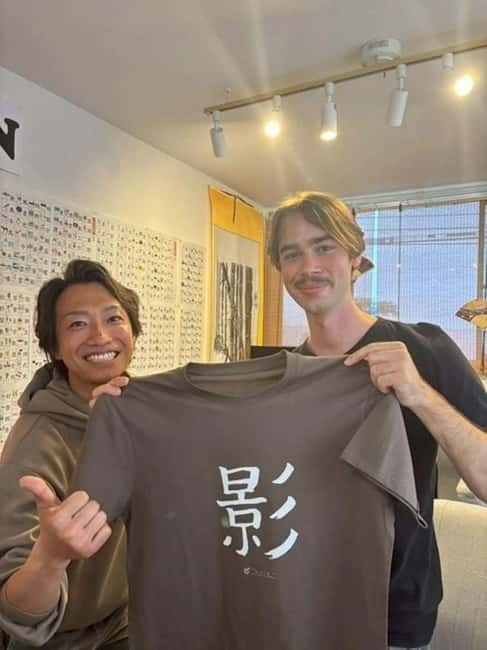
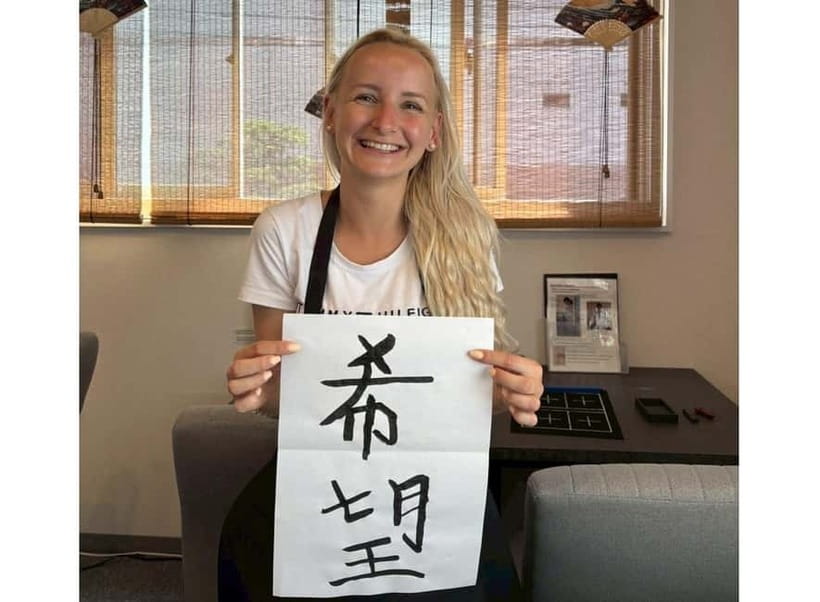
The main practice period lasts about 30 minutes. You write on thin paper while Mana guides you through the process.
This is the part where patience pays off. You may make several versions before finding one that feels right. The purpose is not perfect handwriting on the first attempt. It is to understand how the brush moves and to build enough confidence to choose a design for the T-shirt.
The paper gives you room to experiment without immediately committing your work to fabric. You can focus on the stroke order, spacing, and general shape. Mana’s role is particularly useful here because a small adjustment in how you hold or press the brush can change the result.
If you have children in your group, this practice period is worth noting. The class has worked well for children aged 10 and 14, with patient instruction that kept both involved. Younger children may need help staying focused, but the activity has a clear goal and a physical result at the end.
The group setting is not necessarily private. One family happened to be the only group in its session, which made the lesson feel personal, but you should not count on having a private class. The instruction is in English, and the exact group size is not specified.
A few more Tokyo bookings worth comparing
- Mt Fuji and Hakone 1-Day Bus Tour Return by Bullet Train
★ 5.0 · 26,383 reviews - 1-Day Tokyo Bus Tour
★ 5.0 · 14,250 reviews - Tokyo: TOKYO SKYTREE® Admission ticket
★ 4.5 · 11,192 reviews - Tokyo: teamLab Planets TOKYO Digital Art Museum Entry Ticket
★ 4.6 · 9,779 reviews
Choosing the design for your T-shirt
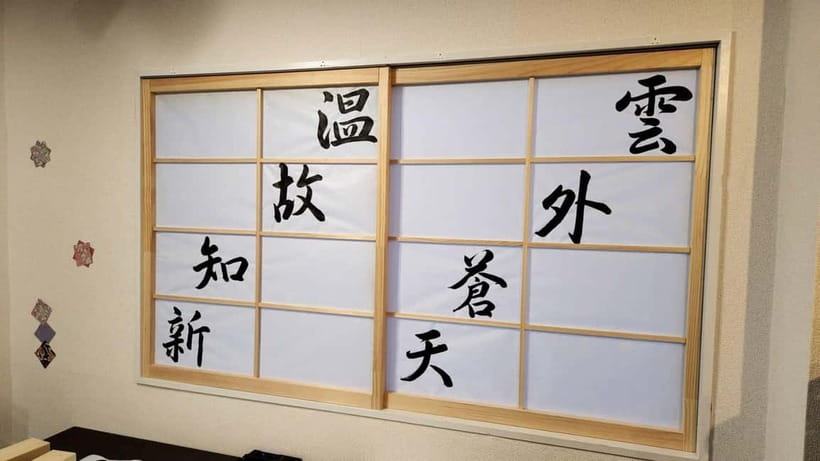
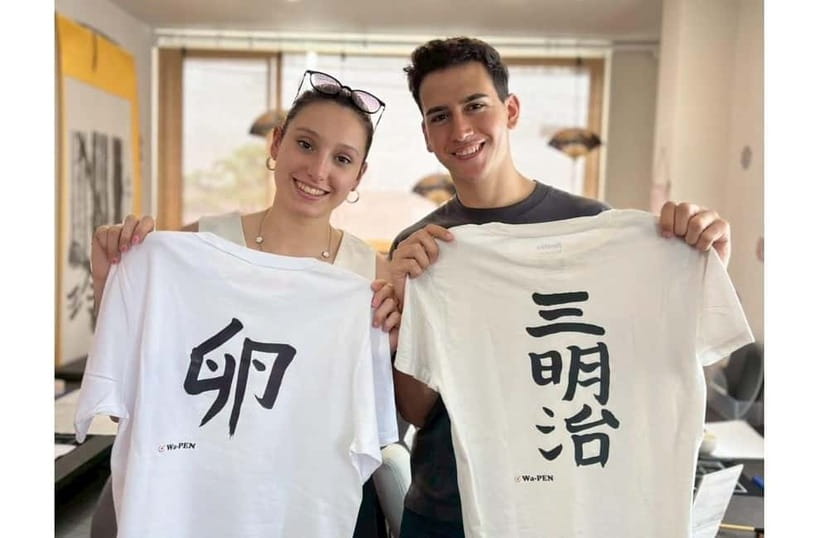
After practicing, you choose your favorite design and decide where it should go on the clothing. This is a nice shift from technique to personal choice.
You are not simply given a fixed print in a fixed position. The placement becomes part of the souvenir. You might prefer a small design in one area or a more visible central print, depending on the options provided during your session.
The supplied activity includes T-shirts, so you do not need to bring one to take part. One participant was also able to use a shirt brought from home, but this should be confirmed when booking if that option matters to you. The safest plan is to expect to use the included shirt.
Wear clothing you do not mind getting ink on. Calligraphy can be tidy when handled carefully, but this is still a brush-and-ink activity. Comfortable clothes are recommended, and a simple outfit makes it easier to concentrate on the writing.
The printing stage is where your practice becomes a keepsake. Your selected design is transferred to the T-shirt, and the finished item is ready after about 10 minutes. The result is not just a lesson certificate or a postcard. It is something you can wear, pack, and use as a reminder of your time in Japan.
Green tea and a postcard while you wait
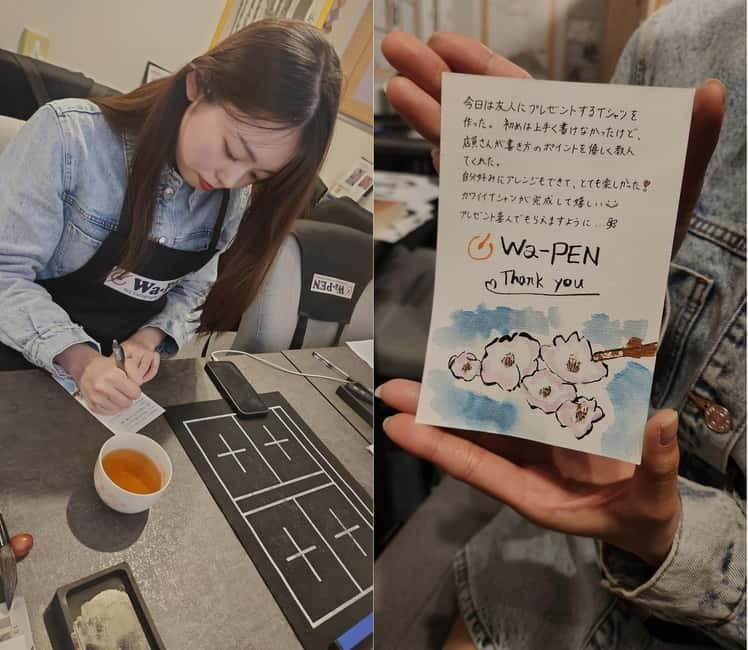
While the T-shirt is being prepared, you enjoy a cup of green tea and write a postcard. Both the tea and postcard are included.
This pause gives the class a pleasant rhythm. The brush work requires concentration, while the postcard is simple and relaxed. You can write a note to someone at home or keep it as another small souvenir from the session.
The postcard also gives you a second way to preserve the experience. The shirt shows your chosen calligraphy design, while the postcard captures the quieter side of the class. Some participants also received an additional postcard as a thoughtful surprise, but you should regard that as a possible extra rather than a guaranteed part of the package.
The waiting period is short, about 10 minutes for the printing. If you are planning your day around nearby sights, this is useful, but do not assume you will have a long break. The shirt should be ready soon after the final steps.
What the $48 price includes
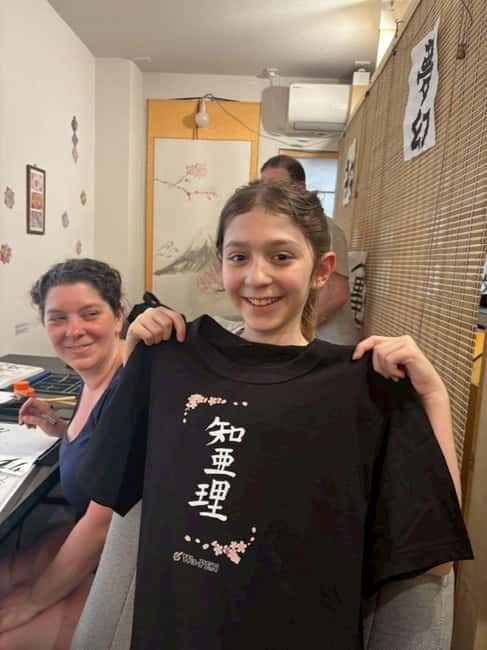
At $48 per person, this is not the cheapest souvenir activity in Japan. The value comes from the combination of instruction, materials, a cultural lesson, and the finished T-shirt.
You are paying for an English-led class rather than just a printing service. The price includes expert guidance, writing supplies, paper, ink, inkstone, protective materials, green tea, a postcard, and a T-shirt. You also get the time to practice instead of handing over a design and waiting for someone else to do all the work.
I think the price makes the most sense if you value participation over shopping. A T-shirt bought in a store may cost less, but it will not carry a character you practiced yourself or connect to an hour of focused activity.
The value is also stronger for families and small groups who want one shared event. Everyone can learn the basic method, practice, and leave with an individual design. For solo participants, the class offers a structured cultural activity that does not depend on speaking Japanese.
The main limitation is that your final work will reflect your beginner status. If you want a perfectly polished piece of professional calligraphy, this is not the right promise to expect. If you want to learn enough to make a personal design and enjoy the process, the price is easier to justify.
Who will enjoy this activity most
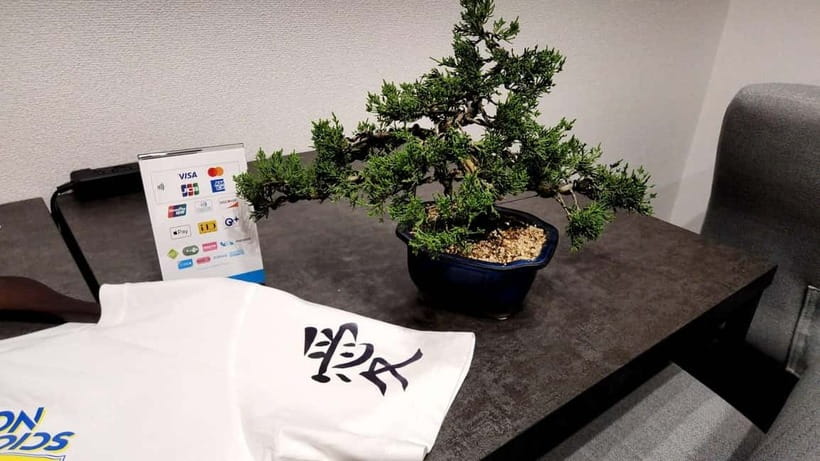
I would recommend this class to first-time visitors who want a cultural activity with a clear souvenir at the end. It suits people who enjoy making things, families with older children, couples, and solo visitors who want an English-language lesson.
It is also a good choice for anyone who has already visited Japan and wants something more active than buying another souvenir. The activity gives you a closer look at an everyday cultural art form without requiring previous experience.
Children can take part, but the class still requires some patience. The practice period lasts around 30 minutes, and the brush needs controlled handling. Children who like drawing, craft work, or trying unfamiliar tools are likely to get the most from it.
You may want to skip it if your schedule is extremely tight or if you dislike activities where the outcome is partly unpredictable. The class can last up to 90 minutes, and ink requires care. You should also avoid wearing a favorite outfit.
Useful planning advice for your day
Arrive 10 minutes early. This is not just a formality. You need time to find the red brick building, reach the third floor, and get ready before the instruction begins.
Plan the class with room around it. The advertised duration is one hour to 90 minutes, followed by the final printing time of about 10 minutes. If you have a timed train, restaurant reservation, or museum entry, leave a comfortable gap.
A morning booking may work well. After class, you can explore Asakusa while waiting for the shirt, then return when it is ready if the timing of your session allows. The activity information specifically supports checking availability for different start times, so choose one that fits your day rather than forcing it into a narrow opening.
Wear comfortable clothing that can tolerate a small ink mark. Bring only what you need to the worktable, and keep bags organized so the paper and ink have room.
Free cancellation is available up to 24 hours before the activity for a full refund. You can also reserve now and pay later, which helps if your Japan plans are still moving around.
The personal touch from Mana
The instructor is Mana, and her teaching style is a central part of the activity. She gives beginners time to practice, offers practical pointers, and keeps the lesson approachable.
That personal help makes a difference in calligraphy. Written instructions alone cannot show you exactly how much pressure to use or why a stroke looks heavy. A teacher watching your hand can correct small habits before they become frustrating.
Mana has also adapted the session for different groups. Families have found the class engaging for children, and one group was offered the chance to add fan calligraphy for a small extra fee. The fan option is not part of the stated package, so treat it as an occasional add-on rather than something to expect.
The strongest praise has focused on her kindness, patience, and generosity with teaching time. Those qualities matter more here than a fast, highly polished demonstration. You are coming to try the art yourself.
Final decision: should you book it?
Book this calligraphy class if you want a hands-on Japanese activity, clear English instruction, and a souvenir with a personal story behind it. The made-to-order T-shirt is the main draw, but the ink preparation, brush practice, green tea, and postcard make the hour feel like more than a quick printing stop.
I would especially choose it for a family day in Asakusa, a creative break from temples and shopping, or a first introduction to Japanese writing. At $48, the cost is fair when you count the instruction and included materials, though it is less appealing if you only want an inexpensive shirt.
Allow up to 90 minutes, arrive early, wear clothes you can risk staining, and leave space afterward for the shirt to be printed. If that suits your schedule, this is a friendly and memorable way to take home something you actually helped create.
FAQ
Where does the calligraphy class take place?
It takes place in a red brick building on the third floor. There is a sign on the first floor, and the entrance stairs are to the right of the restaurant on the ground floor.
How long does the activity last?
The activity lasts between one hour and 90 minutes. The printed T-shirt is generally ready about 10 minutes after the design is selected and printed.
How much does the activity cost?
The price is $48 per person.
Is the instruction in English?
Yes. The instructor teaches in English.
Is a T-shirt included?
Yes. T-shirts are included in the activity.
Can I choose where the design goes on the T-shirt?
Yes. You choose your favorite design and decide where to print it on your clothing.
Do I need previous calligraphy experience?
No previous experience is stated as a requirement. The activity includes an introduction, instruction on using the fude brush, ink preparation, and about 30 minutes of guided practice.
What should I wear?
Wear comfortable clothes that you do not mind getting ink on.
What is included besides the T-shirt?
The activity includes expert guidance, writing materials, a pen, paper, ink, an inkstone, a paper stopper, an underpad, historical and cultural content, green tea, and a postcard.
New on our Tokyo list
- Sumi-e Experience in a relaxing green tea shop in Tokyo★ 5.0 · 3 reviews
- Tokyo : Kamikaze Street Drift Ride★ 5.0 · 3 reviews
- Private Zen Meditation in English in Shinjuku, Tokyo★ 5.0 · 3 reviews
- Onsen Spa in Tokyo and Asakusa Bar Hopping with Local Guide★ 5.0 · 3 reviews
- Easy for everyone! Now you can play handmade mini shamisen and show off to everyone! Musical instruments, sweets and live music★ 5.0 · 3 reviews
- Tokyo: Private Tsukiji Street Food & Sake with Local Guide★ 5.0 · 3 reviews
- Mt Fuji Exploration Tour with Free Japanese Kusa Mochi from Tokyo★ 4.5 · 3 reviews
- Tokyo Tsukiji Fish Market Walking and Exploring Hidden Gems Tour★ 5.0 · 3 reviews
Japanese Calligraphy Classes, compared.
Let’s experience calligraphy in YANAKA, Taito-ku, TOKYO !!
Read our review →
Calligraphy Workshop & Original T-Shirt Creation
Read our review →
Calligraphy Workshop & Original T-Shirt Creation
Read our review →
Calligraphy &Make your original folding fan in Asakusa
Read our review →
Tokyo Asakusa:Calligraphy & Make T-shirt Activity
Read our review →Browse the lists this tour appears in