
Reviewed · CHERRY BLOSSOM TOURS
Cherry Blossom Highlights, Asakusa, Ueno, Imperial Palace Garden
Tokyo’s cherry blossom season is short, crowded, and hard to time from a hotel room. This private tour gives you a full day of spring scenery and old Tokyo neighborhoods, from the Imperial Palace gardens to Ueno’s famous rows of trees, with a Tsukiji food stop in between.
I like the flexible route and the chance to learn Tokyo’s public transportation with a guide beside you. I also like the personal touch shown by guides such as Hiroko and Nobuko Akimoto, who adjusted the day around questions and interests. The main drawback is that blossoms do not follow a schedule, and the guide’s English may not always be easy to understand.
In This Review
- Key points to know before booking
- A smart way to see Tokyo in cherry blossom season
- Imperial Palace gardens and the old Edo Castle site
- Tsukiji for sushi, snacks, and a self-funded lunch
- Senso-ji and the approach along Nakamise Street
- Ueno Park, temple remains, and Shinobazu Pond
- Ameyoko for downtown Tokyo atmosphere
- What the private format really gives you
- Price, lunch, and the value of a full day
- Timing, weather, and the cherry blossom gamble
- Who should book this Tokyo tour?
- FAQ
- How long does the cherry blossom tour last?
- What time does the tour start?
- Is this a private tour?
- Which places are included in the planned route?
- Are all cherry blossom stops guaranteed?
- Is lunch included?
- Is transportation included?
- Are entrance tickets included?
- Do I need to be physically fit?
- Can I cancel for a full refund?
- What happens if bad weather cancels the tour?
- Should you book it?
Key points to know before booking
- Five distinct Tokyo stops: See Imperial Palace gardens, Tsukiji, Senso-ji, Ueno Park, and Ameyoko in one long outing.
- Private attention: Only your group takes part, so the guide can adjust the pace and focus.
- Cherry blossoms are seasonal: The exact route may change when flowers bloom early or late.
- Public transportation is part of the lesson: Private transportation is not included, but your guide helps you use the city system.
- Tsukiji lunch costs extra: Food is not included, though you can choose sushi and other market snacks.
- Plan for a full morning and afternoon: The experience lasts about 6 to 7 hours and starts at 9 a.m.
A smart way to see Tokyo in cherry blossom season
This is not simply a flower-viewing walk. It is a private introduction to several sides of Tokyo, with cultural sights, food, shopping streets, and practical city skills folded into one day.
You begin at 9 a.m. and spend roughly an hour at the East Gardens of the Imperial Palace. From there, the route moves to Tsukiji for about an hour, then to Senso-ji for two hours. Ueno Park and Ameyoko Shopping Street each receive about an hour. The order or exact stops can change with the season, which matters greatly in early April when one park may have finished blooming while another still looks good.
I see the flexibility as the strongest reason to book this tour instead of a fixed sightseeing bus. A private guide can adjust the day when blossoms fade, weather changes, or you become more interested in temples, food, or daily life.
The tradeoff is cost. At $221.12 per person, this is not a cheap way to see Tokyo. It makes the most sense for a couple, family, or small private group that values direct help and a custom day. If you only want a list of famous places, you can visit most of these areas on your own for far less.
More blossom-season plans:
- Mt. Fuji, Cherry Blossom & Shiba Sakura Pvt. Day Tour
★ 5.0 · 326 reviews - Mt. Fuji & Hakone Cherry Blossom private One Day Tour
★ 4.5 · 35 reviews - Tokyo Cherry Blossoms blooming spots E-bike Tour, 3hrs
★ 5.0 · 27 reviews
Imperial Palace gardens and the old Edo Castle site
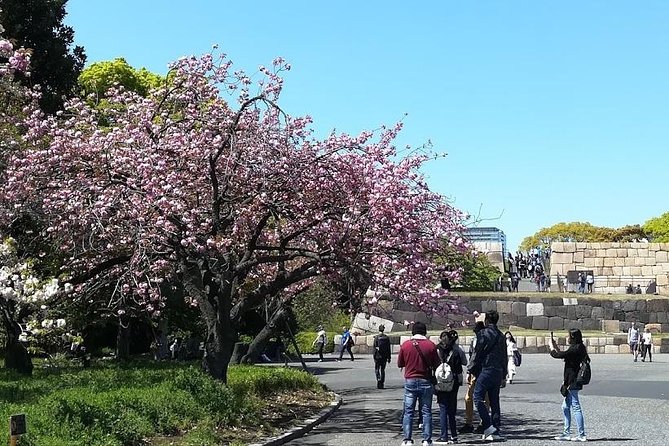
The East Gardens of the Imperial Palace provide a calm opening to a busy Tokyo day. The grounds sit on the former site of Edo Castle, with moats, stone walls, forests, and the remains of the castle complex around you.
You receive about an hour here, enough for a morning stroll and a first lesson in how Tokyo grew from the seat of the Tokugawa family into Japan’s modern capital. The gardens also serve as a useful pause before the denser neighborhoods later in the day.
The large tree-filled grounds are especially helpful during cherry blossom season because they give you more than a single photo stop. You can look at the flowers within a setting of old defensive walls and broad green spaces, rather than seeing trees in isolation.
Admission is free, which keeps this part of the day simple. Still, do not expect a full palace interior visit. The itinerary focuses on the East Gardens and Edo Castle ruins, not access to the Imperial Palace itself.
Your guide can add context that is easy to miss when walking alone. This is one place where a private tour earns its keep, especially if you want to understand why moats, stone foundations, and garden paths matter.
Tsukiji for sushi, snacks, and a self-funded lunch
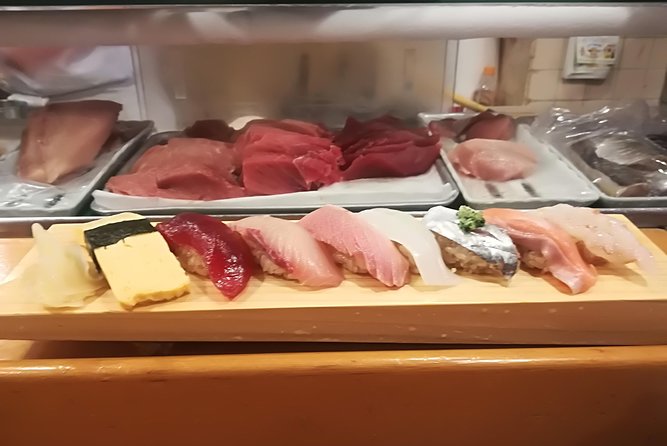
Tsukiji is the food center of the day. The outer market is described as a lively food park, with narrow streets lined with food shops and stands. Around noon, you might find grilled chicken, tuna, scallops, and the familiar long lines for bite-sized egg rolls.
Sushi is one of the main draws. The tour includes time to explore the market and enjoy various sushi options, but lunch is not included in the price. That distinction matters. You should budget separately for whatever you choose to eat.
I like this stop because it changes the rhythm of the day. After gardens and historic grounds, Tsukiji brings you close to everyday Japanese food culture. You can browse, choose a snack, or sit down for a more substantial meal, depending on your appetite and the time available.
The one-hour schedule may feel tight if you want a long meal and plenty of shopping. You will need to keep an eye on the clock, particularly if a market stall has a long line. Ask your guide how much time remains before ordering something that requires a wait.
The guide can also help you make sense of the market’s many choices. That is useful if you want to try sushi but do not know which option fits your budget or schedule. Since no private vehicle is provided, you also gain practical experience moving between neighborhoods by public transportation.
Senso-ji and the approach along Nakamise Street
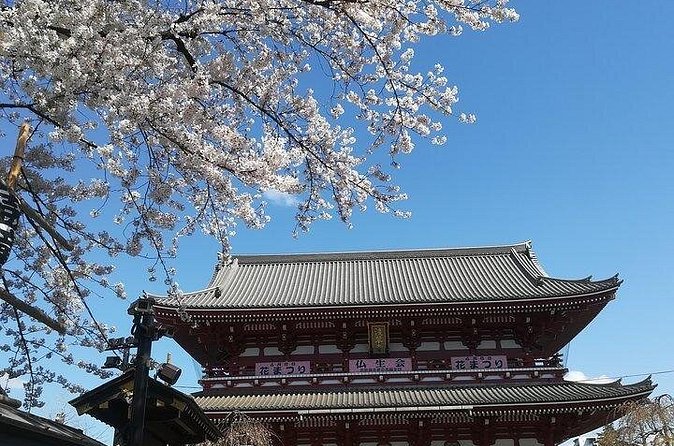
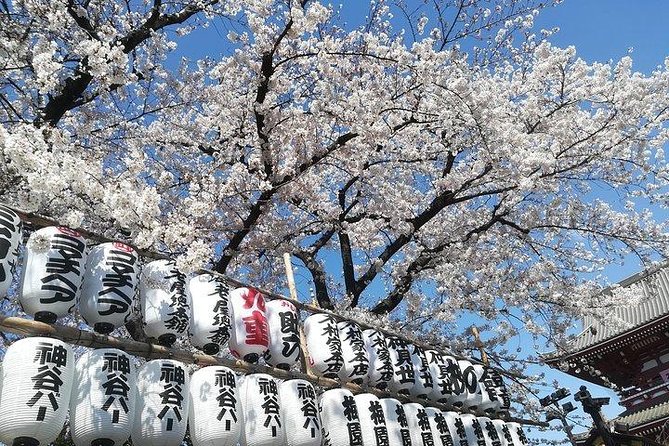
Senso-ji receives the longest scheduled visit, about two hours, and it is easy to understand why. This is one of Tokyo’s oldest temples, with the famous Thunder Gate and Nakamise Street leading toward the temple grounds.
During cherry blossom season, the walk offers a strong mix of flowers, temple architecture, and traditional shopping. Nakamise Street is lined with shops selling Japanese souvenirs and traditional goods, so this is a sensible place to look for small gifts.
Two hours gives you room to stroll rather than rush straight to the main temple. You can take in the approach, browse the shops, and spend time viewing the blossoms around Senso-ji. Your guide can also answer cultural questions as they come up.
That personal exchange is a key part of the tour’s value. Nobuko Akimoto, one of the named guides, was especially good at adjusting the route to cultural questions and explaining what you were seeing. That kind of conversation can make a temple visit more meaningful than a quick photograph and a brief caption.
Senso-ji is also one of the more crowded parts of the route. The narrow approach and popular shops can make the pace slow. If you prefer quiet gardens, this will be less peaceful than the Imperial Palace grounds. If you want a lively historic district with plenty to see, it is one of the day’s most rewarding stops.
More Asakusa visits:
- Tokyo: Japanese Dance Cabaret Theater Asakusa-Kaguwa Ticket
★ 4.8 · 2,270 reviews - Tokyo: Meiji Shrine, Asakusa, Skytree Bus Tour and Cruise
★ 4.7 · 1,986 reviews - Tokyo: Roll and Authentic Sushi Making Class in Asakusa
★ 4.9 · 1,957 reviews - Tokyo: Asakusa Walking Tour with Sensoji Temple Visit
★ 4.8 · 1,583 reviews
Ueno Park, temple remains, and Shinobazu Pond
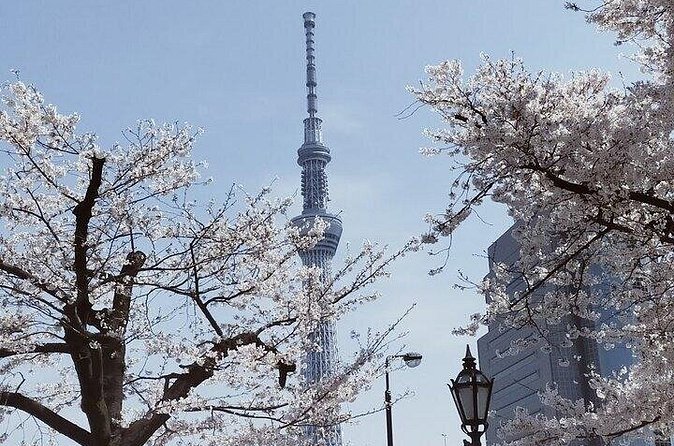
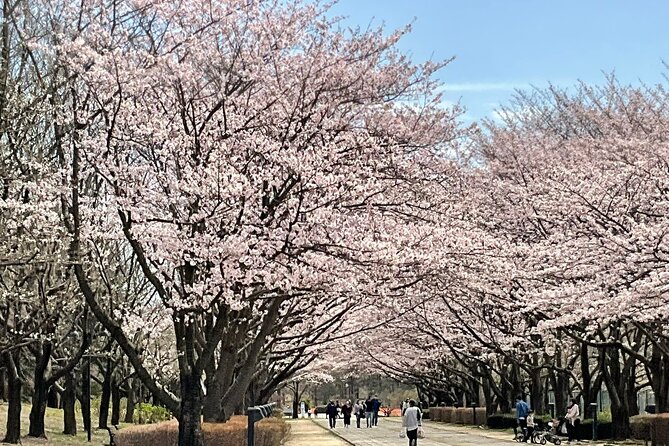
Ueno Park is the tour’s major cherry blossom setting. More than a thousand cherry trees line the park, creating the broad spring display many people picture when they think of Tokyo in blossom season.
The park is not only about flowers. You may also see remains connected with the Tokugawa family, including Ueno Toshogu and Kiyomizu Kannnon Temple, along with Shinobazu Pond. That mix gives the stop more substance than a simple walk under flowering trees.
You have about an hour here. That is enough for a good introduction, but not enough to explore every corner of the park. If you are eager to spend a slow afternoon under the trees, you may wish the schedule allowed more time.
The guide’s timing can make a real difference. Cherry blossoms can open early, fade quickly, or look better in one part of Tokyo than another. A fixed route can leave you looking at bare branches. This tour has enough flexibility to shift attention toward another garden when conditions change.
One past spring route moved to Hama-Rikyu Garden because the Imperial Palace blossoms had nearly finished by April 4. That change shows both the value and the limit of a seasonal tour. The guide may make a practical adjustment, but no guide can guarantee peak flowers at every stop.
Ameyoko for downtown Tokyo atmosphere
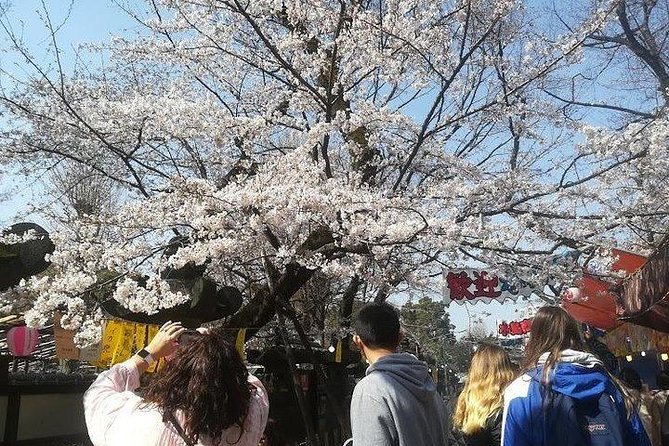
Ameya Yokocho, usually shortened to Ameyoko, closes the planned route with a very different mood. This shopping arcade has stores selling fresh fish, food, household goods, and souvenirs. Food stands offer a place to eat and drink while watching local street life.
I like the contrast. The Imperial Palace gardens show formal grounds and old castle remains. Senso-ji brings temple traditions and souvenir stalls. Ameyoko is more direct and commercial, with the feel of a neighborhood shopping street.
The scheduled hour gives you time to browse and take in the atmosphere without turning the stop into a major shopping expedition. If you want to buy food or daily goods, this may be more useful than a polished souvenir district.
Your guide can help you connect the areas rather than treating them as unrelated sights. You see how Tokyo shifts from imperial grounds to market streets, from temple precincts to a practical shopping arcade.
What the private format really gives you
This is a private activity, so only your group participates. That removes the problem of waiting for strangers, keeping up with a large crowd, or listening to a fixed script that does not match your interests.
The best use of that private format is to speak up. Tell your guide if you care most about cherry blossoms, Japanese culture, food, temple customs, or learning the train system. The day is described as customizable, and the strongest guide experience comes when you take advantage of that flexibility.
The named guides provide a useful sense of what to expect. Hiroko guided one successful spring outing and helped connect many parts of Tokyo in one day. Nobuko Akimoto gave generous time to cultural questions and adjusted the experience instead of following a strict routine.
There is one important caution about communication. One guide was described as kind and helpful, but her English was difficult to understand. That does not make the tour a poor choice, but it means you should be patient and ask for clarification when a point is unclear.
You also need moderate physical fitness. The day combines walking through gardens, temple grounds, markets, and shopping streets with public transportation between areas. Private transportation is not included, so expect movement through Tokyo rather than a vehicle waiting at every stop.
Price, lunch, and the value of a full day
The listed price is $221.12 per person. That covers the licensed tour guide, private participation, and help using public transportation. It does not cover private transport, lunch, or gratuity.
For a solo visitor, the cost is hard to justify unless you place a high value on one-to-one help. For two or more people, the private format becomes easier to defend because the guide’s time serves your whole group. Group discounts are offered, though the exact savings are not specified.
The six to seven hour length also affects the value. You are not paying for a brief orientation. You get a full sightseeing day that links five major areas, with enough time at Senso-ji and the market to do more than pass through.
Still, Tokyo’s public transportation is efficient enough that an independent visitor can create a similar route at lower cost. Choose this experience for the explanations, adjustment to blossom conditions, and help with transport, not because the individual admissions are expensive. The planned stops have free admission.
Lunch deserves a little planning. Tsukiji offers sushi and many other foods, but you pay directly for what you select. If you have dietary limits or a fixed budget, tell the guide early so the market stop fits your needs.
Gratuity is not included and is presented as expected, though not compulsory. The suggested amounts provided are $12 at 10 percent, $18 at 15 percent, or $24 at 20 percent per person. Since the tour price and suggested figures do not line up perfectly as percentages, treat those numbers as a guide rather than a strict rule.
Timing, weather, and the cherry blossom gamble
The tour starts at 9 a.m., a useful time for fitting several parts of Tokyo into one day. The morning opening at the Imperial Palace also gives you a calmer first stop before the market and temple areas.
Cherry blossom timing is the biggest variable. The exact itinerary changes with seasonal conditions, and the route may include Ueno Park, the Imperial Palace Gardens, and Senso-ji. A different garden can be selected when flowers are late or already fading.
The experience requires good weather. If poor weather cancels the tour, you are offered another date or a full refund. You can cancel for a full refund up to 24 hours before the start time, but changes or cancellations inside that window are not accepted.
I would avoid booking this as your only cherry blossom plan if your dates are fixed and your main goal is peak bloom at one exact location. I would choose it if you want a guide who can shift the day and still give you a worthwhile Tokyo outing when nature does not cooperate.
Who should book this Tokyo tour?
This experience suits first-time visitors who want help getting oriented quickly. It is also a good fit for families or private groups who prefer asking questions without a large audience.
You will get the most from it if you enjoy variety. The day moves from castle grounds to food stalls, a major temple, blossom-lined park paths, and a shopping arcade. It is less suited to someone who wants a slow photography session in one garden.
The tour is also useful if public transportation makes you nervous. You do not receive private rides, but you learn how to move around Tokyo with a guide’s help. That skill can pay off for the rest of your stay.
I would be cautious if you need a highly precise schedule, a guaranteed fluent English-speaking guide, or a meal included in the price. The experience is flexible, but that also means the route can change and communication may vary by guide.
FAQ
How long does the cherry blossom tour last?
The experience lasts approximately 6 to 7 hours.
What time does the tour start?
The scheduled start time is 9 a.m.
Is this a private tour?
Yes. Only your group participates in the activity.
Which places are included in the planned route?
The planned route includes the East Gardens of the Imperial Palace, Tsukiji, Senso-ji Temple, Ueno Park, and Ameyoko Shopping Street.
Are all cherry blossom stops guaranteed?
No. The exact itinerary can change because of timing and seasonal factors.
Is lunch included?
No. Lunch is not included. Tsukiji provides the chance to choose sushi and other food at your own expense.
Is transportation included?
Private transportation is not included. Your licensed guide helps you use public transportation.
Are entrance tickets included?
The listed stops have free admission, and the tour includes a licensed tour guide.
Do I need to be physically fit?
You should have a moderate level of physical fitness because the day includes walking and public transportation.
Can I cancel for a full refund?
Yes, if you cancel at least 24 hours before the experience starts. Cancellations made less than 24 hours before the start time are not refunded.
What happens if bad weather cancels the tour?
You will be offered a different date or a full refund.
Should you book it?
Book this tour if you want a personal Tokyo orientation with cherry blossoms, food, temples, and shopping in one day. Its best feature is not any single stop. It is the guide’s ability to connect several districts and adjust the plan when spring conditions change.
The $221.12 price is reasonable for a private day shared by a small group, but steep for anyone comfortable navigating Tokyo alone. Go in knowing that lunch and transport cost extra, blossoms are never guaranteed, and guide communication can vary. If those limits suit you, this is a practical and engaging way to get your bearings in Tokyo during cherry blossom season.
New on our Tokyo list
- Sumi-e Experience in a relaxing green tea shop in Tokyo★ 5.0 · 3 reviews
- Tokyo : Kamikaze Street Drift Ride★ 5.0 · 3 reviews
- Private Zen Meditation in English in Shinjuku, Tokyo★ 5.0 · 3 reviews
- Onsen Spa in Tokyo and Asakusa Bar Hopping with Local Guide★ 5.0 · 3 reviews
- Easy for everyone! Now you can play handmade mini shamisen and show off to everyone! Musical instruments, sweets and live music★ 5.0 · 3 reviews
- Tokyo: Private Tsukiji Street Food & Sake with Local Guide★ 5.0 · 3 reviews
- Mt Fuji Exploration Tour with Free Japanese Kusa Mochi from Tokyo★ 4.5 · 3 reviews
- Tokyo Tsukiji Fish Market Walking and Exploring Hidden Gems Tour★ 5.0 · 3 reviews
Cherry Blossom Tours, compared.
Tokyo Cherry Blossoms blooming spots E-bike Tour, 3hrs
Read our review →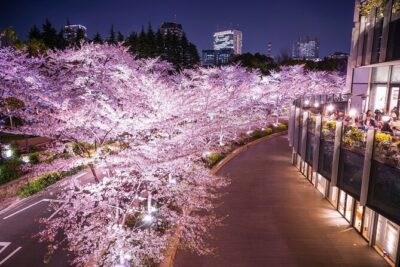
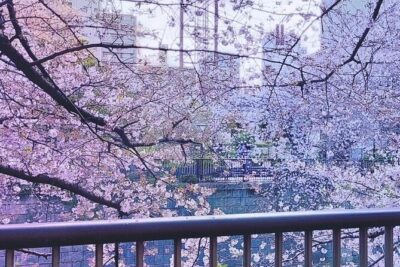
Licensed Guide Tokyo Meguro Cherry Blossom Walking Tour
Read our review →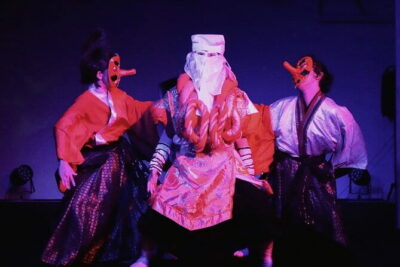
Tokyo Limited-Date Cherry Blossom Route Cruise & Show & Meal
Read our review →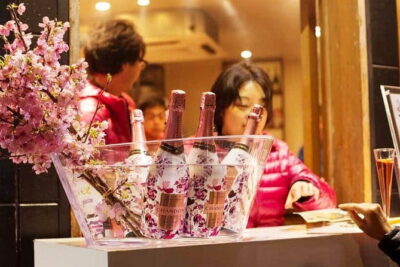
Evening Hanami (Cherry Blossom) Experience with a Local
Read our review →
Browse the lists this tour appears in