
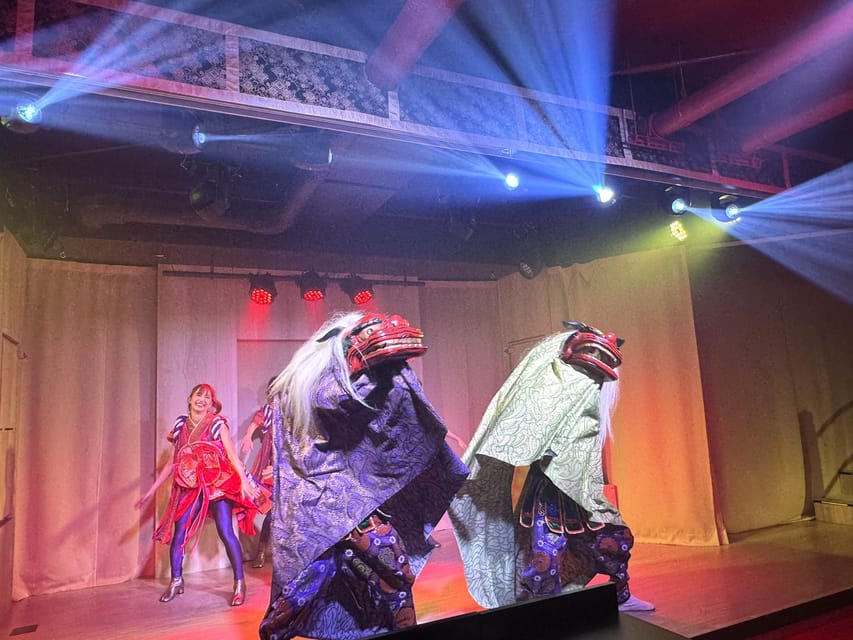
Reviewed · ASAKUSA TOURS
Tokyo: Japanese Dance Cabaret Theater Asakusa-Kaguwa Ticket
Asakusa-Kaguwa takes Japanese stage culture and gives it a modern Tokyo treatment: traditional garments, expressive dance, dramatic lighting, music, and fast-moving stories inside a small red theater. The show lasts one hour, but your visit can run close to two hours with drinks, cast introductions, and photos before or after the performance. The mix of old and new is the main attraction.
I like the intimate setting, where the dancers can connect with the audience before the curtain, and I like that the show relies on movement, acting, and visual drama rather than a lot of spoken language. The costumes, choreography, lasers, and sound also give the evening real variety. The main drawback is value: at $49 per person, the standard ticket is not cheap, and premium extras may not suit every budget.
In This Review
- Key points at a glance
- Why this Asakusa show feels different
- Arriving in Asakusa before the curtain
- Inside the red Japanese-style theater
- The pre-show hour: drinks, photos, and introductions
- What happens during the one-hour performance
- Photos and the personal farewell
- Is $49 a fair price?
- Who should book Asakusa-Kaguwa?
- Practical details that can shape your evening
- My call: book it if you want an evening with personality
- FAQ
- How long does the Asakusa-Kaguwa experience last?
- How long is the actual show?
- What time do the performances begin?
- What is included with a standard ticket?
- What can premium ticket options include?
- Can I order food at the theater?
- Can children attend the show?
- Is the theater accessible for people with mobility issues?
- What happens if I need to cancel?
Key points at a glance
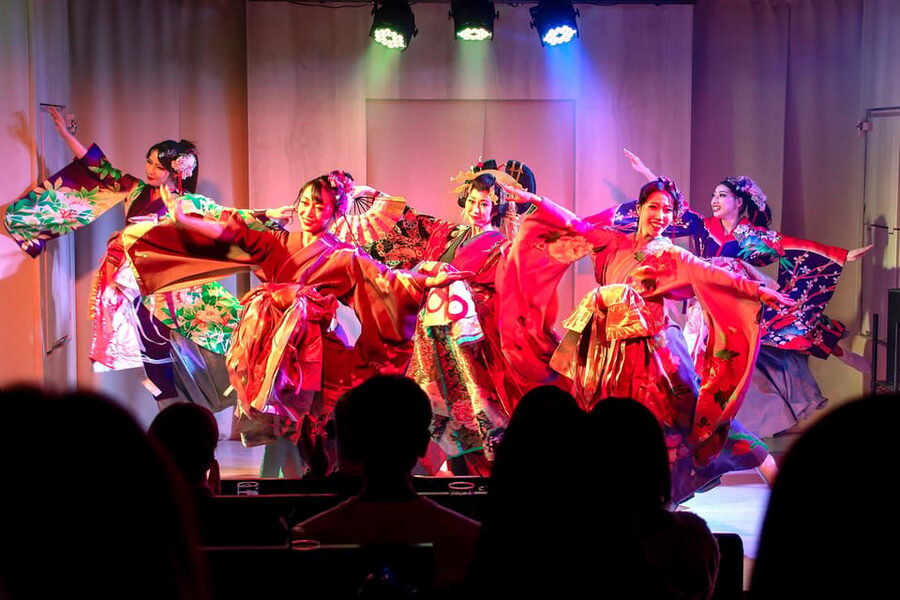
- One hour of Japanese dance theater: Expect a theatrical production combining traditional garments and movement with contemporary music, lights, and acting.
- A personal pre-show welcome: Performers may introduce themselves, mingle with the audience, and pose for photos before the show begins.
- One drink included: Standard seating includes a drink, while premium options can include unlimited drinks before the performance.
- A small, intimate theater: The compact room puts you close to the dancers, but steep stairs and no elevator may be difficult for some people.
- Asakusa location: Pair the show with sightseeing around one of Tokyo’s most popular cultural districts.
- Best for open-minded families and first-time visitors: You do not need prior knowledge of Japanese dance or theater to follow the broad emotional story.
Why this Asakusa show feels different
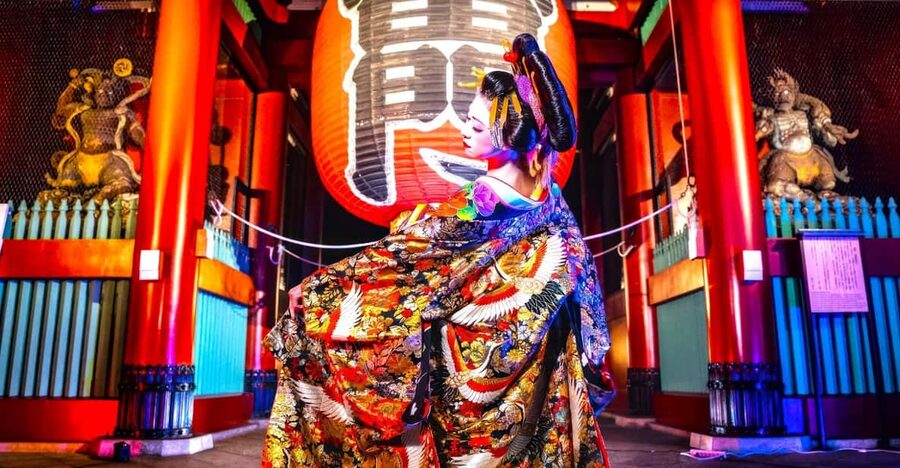
Many Tokyo stage experiences ask you to choose between traditional Japanese culture and modern entertainment. Asakusa-Kaguwa tries to do both at once. You may see dancers in gorgeous Japanese garments, then watch the production shift into contemporary music, laser effects, dramatic sound, and theatrical choreography.
That combination is not subtle. At times, the show can feel like traditional dance crossed with a Japanese television drama and a modern cabaret production. That is part of its charm. If you want a quiet, formal performance of classical dance, this is not the right ticket. If you enjoy bold costumes, emotional storytelling, and a little theatrical excess, it makes a memorable evening.
The show is designed to work across a language barrier. Movement and facial expression carry much of the story, and the broad plot is easy to follow even if you do not speak Japanese. That makes this a useful choice for a first Japanese theater experience. You can appreciate the performers without having to understand every spoken line or cultural reference.
The production has earned a 4.8 rating from 2,270 reviews, and the praise is unusually consistent around the same points: dancing, costumes, choreography, lighting, music, emotional storytelling, and the friendliness of the cast. That does not mean every person will find the price perfect, but it does tell you where the experience puts its effort.
More Asakusa visits:
- Tokyo: Meiji Shrine, Asakusa, Skytree Bus Tour and Cruise
★ 4.7 · 1,986 reviews - Tokyo: Roll and Authentic Sushi Making Class in Asakusa
★ 4.9 · 1,957 reviews - Tokyo: Asakusa Walking Tour with Sensoji Temple Visit
★ 4.8 · 1,583 reviews
Arriving in Asakusa before the curtain
The theater is in Asakusa, one of the easiest parts of Tokyo in which to build a full evening. Spend time in the area first, then make your way to Asakusa-Kaguwa for the performance. The show works especially well after a traditional sightseeing day because the theater provides a modern contrast to Asakusa’s older cultural sights.
Your voucher time can be confusing, so read it carefully. The performance begins one hour after the time shown on the voucher. The listed schedule gives the practical version:
- First show: doors open at 4:00 pm, performance from 5:00 pm to 6:00 pm
- Second show: doors open at 7:00 pm, performance from 8:00 pm to 9:00 pm
- Early show in April 2026 only: doors open at 1:00 pm, performance from 2:00 pm to 3:00 pm
Do not arrive before the voucher time, and aim to be there at least 15 minutes before the show starts. If you want food, drinks, introductions, or photos, arriving earlier is wiser. One particularly useful approach is to arrive about 30 minutes before curtain, giving yourself time to settle in and order something without rushing.
Inside the red Japanese-style theater
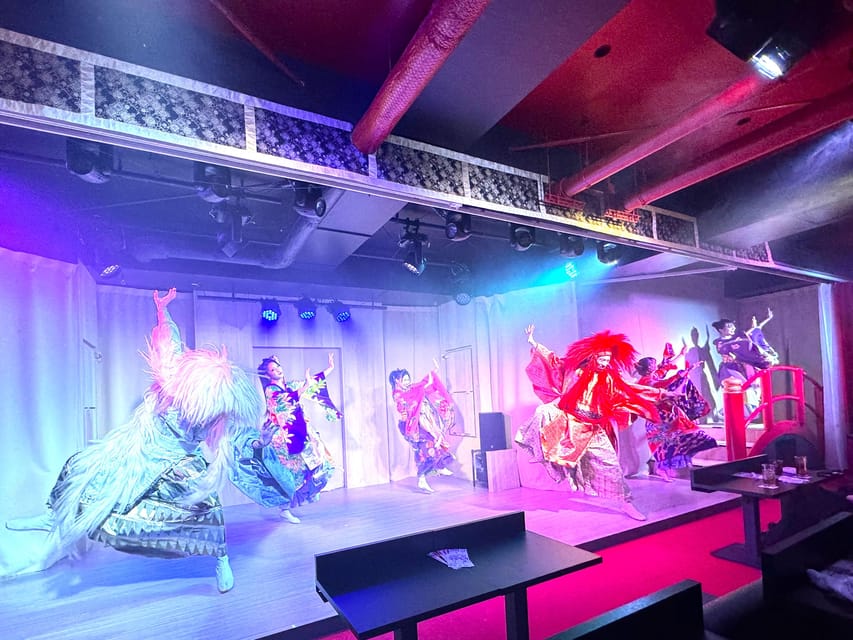
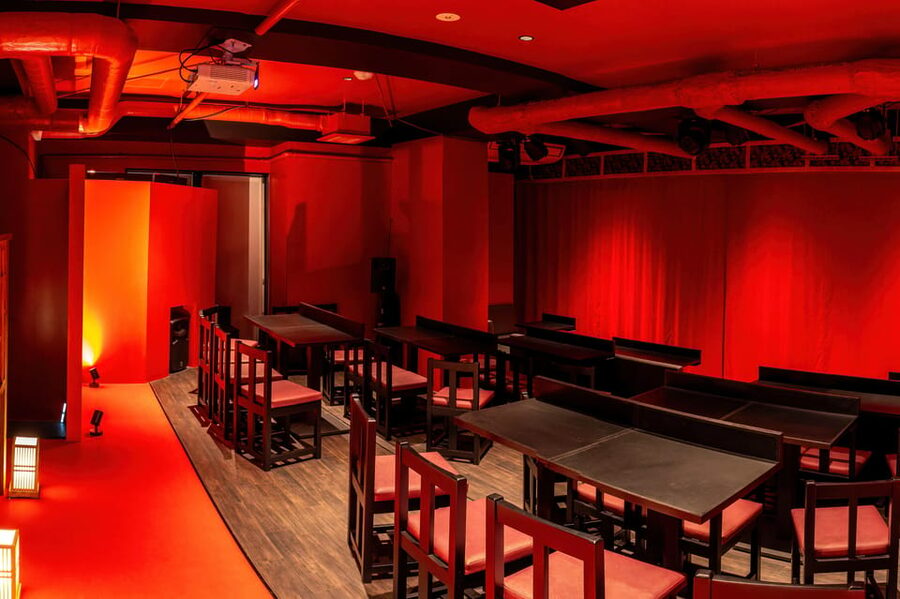
The interior is part of the experience. Expect a red Japanese-style design with a theatrical feel rather than a large concert hall. The compact setting helps the dancers feel close to you, and that closeness matters during the quieter acting and storytelling sections.
Seats are assigned by the theater in reservation order. If seeing the stage from the best possible position matters to you, select a front-row or VIP sofa table option when booking rather than assuming a standard ticket will provide it. The regular seat is enough to enjoy the production, but premium seating changes the evening from a simple show ticket into more of a hosted cabaret experience.
The stairs leading to the venue are steep, and there is no elevator. Staff can assist people who need help, but you should consider this before booking if stairs are a concern. Children can attend, and the show is suitable for families, although younger children may find the loud music, lights, and dramatic scenes intense.
The pre-show hour: drinks, photos, and introductions
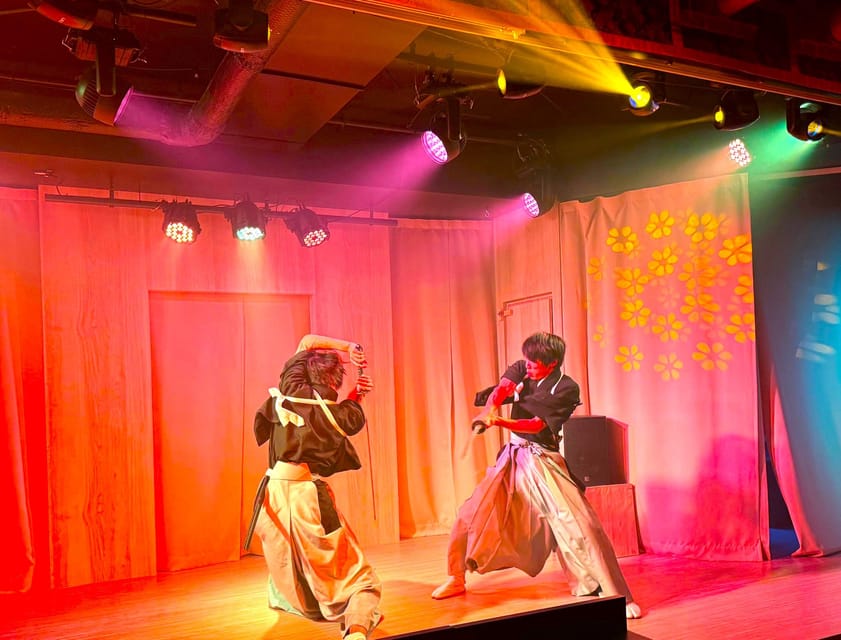
The hour before the performance is not dead time. Once you enter, you can collect your included drink and spend time in the theater before the music begins. The regular ticket includes one drink. Depending on the option you select, premium seating may include unlimited drinks until the show starts.
Food is available separately. The menu includes pizza, fried chicken, and vegetarian snacks made with soy meat. This is convenient if you want to make the show your main evening activity, but remember that food and extra drinks are not part of the standard ticket price.
The cast may come out before the show to introduce themselves and speak with the audience. This personal contact is one of the nicest features of the experience. It gives you a chance to recognize the dancers once the lights go down, and it makes the performers feel like people rather than distant figures on a stage. Some visitors have singled out the cast’s friendly manner and English ability, though the exact interaction can vary by evening.
There is also a photo booth, and some ticket options include a photo opportunity with all the dancers on stage. A premium package may include an original sparkling wine as well. Check the option details carefully, because a regular ticket with one drink is a different proposition from a VIP package with front seating, pre-show drinks, and photographs.
If you are not interested in taking pictures, you should still arrive early enough to get comfortable and order your drink. The show is easier to enjoy when you are not finding your seat as the opening music starts.
A few more Tokyo bookings worth comparing
- Mt Fuji and Hakone 1-Day Bus Tour Return by Bullet Train
★ 5.0 · 26,383 reviews - 1-Day Tokyo Bus Tour
★ 5.0 · 14,250 reviews - Tokyo: TOKYO SKYTREE® Admission ticket
★ 4.5 · 11,192 reviews - Tokyo: teamLab Planets TOKYO Digital Art Museum Entry Ticket
★ 4.6 · 9,779 reviews
What happens during the one-hour performance
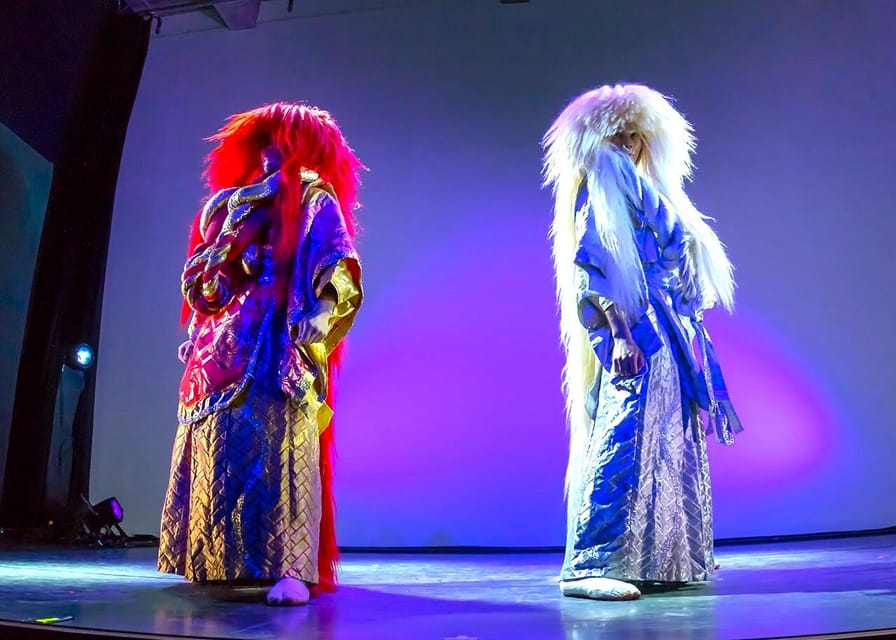
The performance uses a series of dance and theater scenes rather than a simple recital. The structure moves quickly, with changes in costumes, music, lighting, and mood. Expect moments of humor, drama, romance, and visual spectacle.
The dancers do more than perform steps. Their facial expressions and acting help carry the story, which is why the production can affect you even when you do not understand every word. Some scenes are light and energetic, while others are deliberately emotional. Several people have found themselves unexpectedly moved by the storytelling, so do not assume this is just a colorful dance show.
The visual design does much of the work. Traditional clothing gives the performance a clear Japanese identity, while modern sound and lighting keep it from feeling like a museum piece. Lasers and stage effects add a pop-concert edge. The result can be wonderfully dramatic, though anyone looking for a restrained cultural presentation may find it too flashy.
The choreography is the strongest reason to buy the ticket. The cast has to move between different styles and moods in a short space of time, and the show is built to keep your attention. You will see energetic group numbers, expressive acting, and scenes where the costumes and gestures do as much storytelling as the music.
Because the show lasts only one hour, it does not overstay its welcome. You get a complete evening attraction without giving up an entire night. The total visit can last up to two hours, including the pre-show period and any time spent with the performers afterward.
Photos and the personal farewell
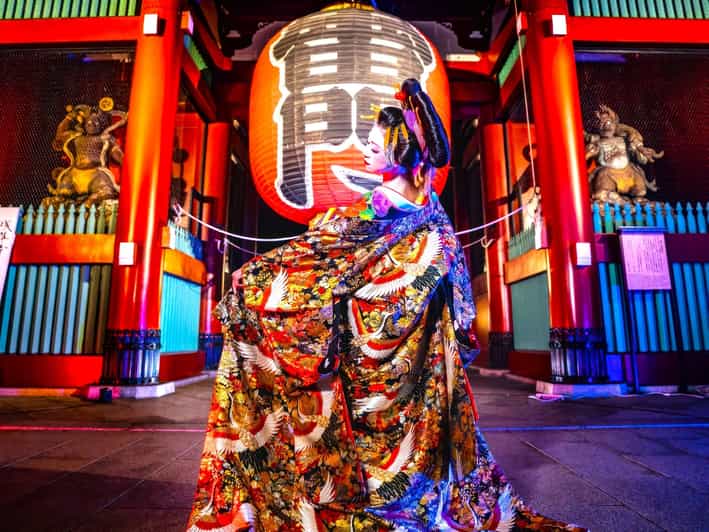
Depending on your ticket, you may have a chance to take photos with the full cast on stage. This is a more personal ending than simply walking out after the final number. If you are visiting alone, the photo option can also give you a keepsake of the evening rather than leaving you to take only pictures of the room.
Photos are not included with every package, so confirm what you are buying. The same applies to front-row seating, sofa tables, unlimited pre-show drinks, and sparkling wine. The names and exact details of premium choices matter here because the base ticket and upgraded experience offer noticeably different levels of involvement.
Tipping may be suggested at the end of the performance. Bring a little extra cash if you want to participate, but treat it as optional unless the theater states otherwise. Some people appreciate the chance to thank a favorite performer. Others may feel uncomfortable choosing one dancer when the production depends on the full cast. You should know about this possibility before arriving so it does not catch you off guard.
Is $49 a fair price?
At $49 per person, the standard ticket sits in the middle range for a major Tokyo evening attraction. You receive one hour of live theater, a standard seat, and one drink. The price makes the most sense if you value the performance itself, not just the drink or the chance to take a photo.
The show’s production elements help justify the cost. You are paying for live dancers, costumes, acting, choreography, sound, and lighting in a purpose-built theater. The one-hour format also fits neatly into a busy Tokyo schedule.
The premium packages require more thought. Front-row or VIP sofa seating, all-you-can-drink service before the show, photos with the dancers, and original sparkling wine can make the evening feel more special. But unlimited drinks before a one-hour show may be more than you need, especially if you drink slowly or plan to eat elsewhere.
Food and extra drinks cost more, so set a budget before you enter. If you are watching expenses, choose the regular ticket, use the included drink, and enjoy the performance without adding every extra. If this is a special night, the premium option may be worthwhile for the better seat and cast interaction rather than for the alcohol alone.
Who should book Asakusa-Kaguwa?
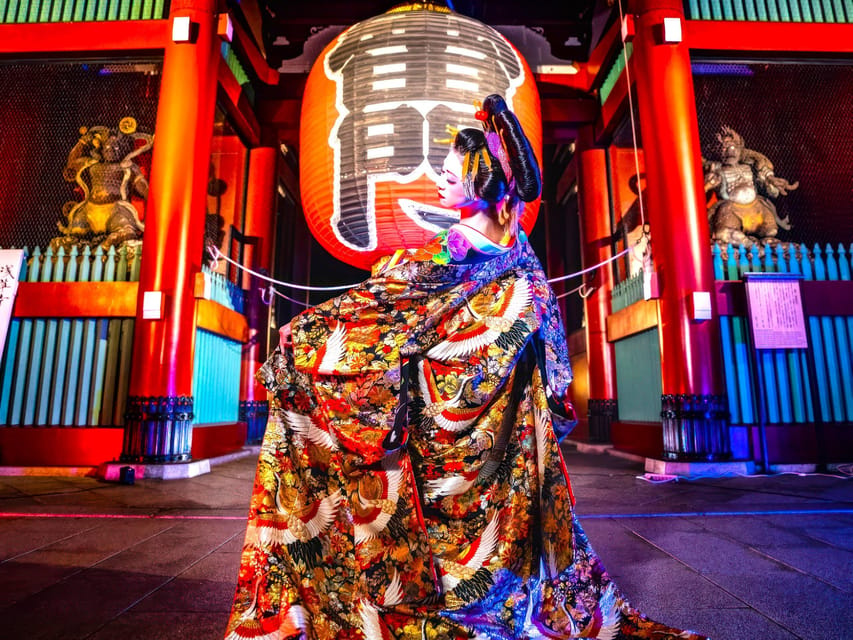
I would recommend this show to you if you want something distinctly theatrical and do not mind a modern, stylized interpretation of Japanese culture. It suits first-time visitors who want an accessible introduction to Japanese stage entertainment, since the story is conveyed through movement, acting, music, and visual effects.
Families and teenagers can enjoy it, and the short performance keeps the evening manageable. It also works well for solo visitors because the staff and performers make an effort to create a welcoming atmosphere before the show.
Couples may appreciate the dramatic setting and the photo option. Groups can make a full evening of it by ordering food and drinks before the curtain. Dancers and theater fans should pay special attention to the choreography, costume changes, and the way the cast shifts from classical movement to contemporary staging.
I would hesitate to recommend it to you if you want a formal, historically exact presentation of traditional Japanese dance. I would also think twice if steep stairs are difficult, if you dislike loud music and strong lighting, or if $49 feels high for a one-hour performance.
Practical details that can shape your evening
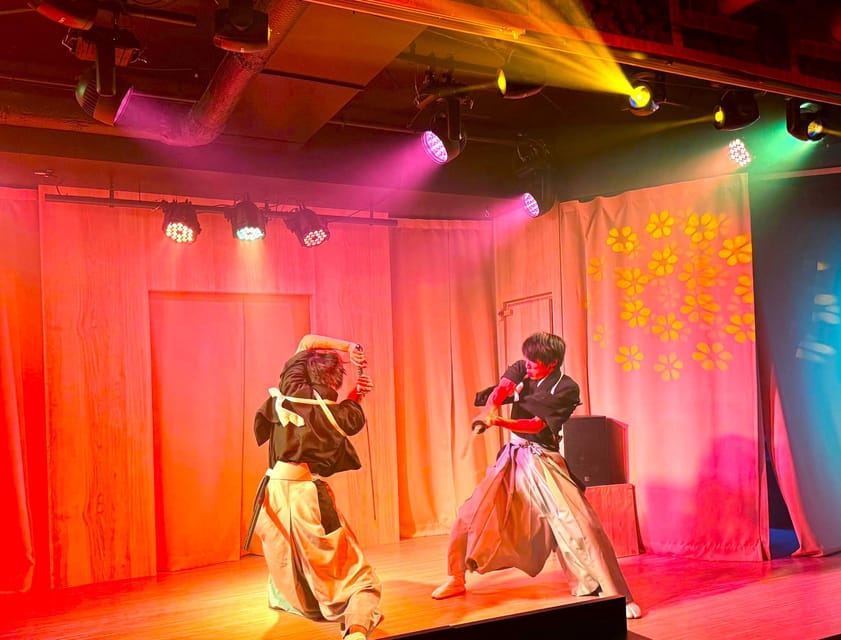
The meeting point can vary with the option booked, so check your voucher rather than relying only on a map pin. The performance schedule also changes for the early April 2026 show, so confirm the date and entry time before setting your Asakusa plans.
Free cancellation is available up to 24 hours in advance for a full refund, and you can reserve now and pay later. That flexibility is useful in Tokyo, where weather, jet lag, and long sightseeing days can change your plans.
The theater has no elevator, and the access stairs are steep. Staff are available to assist, but this is worth considering for anyone with mobility limits, young children, or heavy luggage. An infant reservation is required even though children up to age five are free, because the theater needs to know how many people are coming.
My call: book it if you want an evening with personality
Asakusa-Kaguwa is not a quiet cultural lecture or a conventional dance recital. It is a compact, high-energy stage show that combines Japanese clothing and performance traditions with modern music, lights, acting, and emotional storytelling.
I would book the standard ticket if you mainly want the show and one drink. Choose premium seating if meeting the cast, taking photos, or sitting close to the stage is central to your plans. Add food only if you want to make the theater your evening base.
For a first taste of Japanese theater that is easy to follow and full of visual variety, this is a strong choice. Go in expecting cabaret, not a museum display, and you are likely to get a memorable night in Asakusa.
FAQ
How long does the Asakusa-Kaguwa experience last?
Your total stay can be up to two hours. The live performance lasts one hour, with additional time for drinks, photos, introductions, and time before or after the show.
How long is the actual show?
The performance lasts one hour.
What time do the performances begin?
The first regular performance runs from 5:00 pm to 6:00 pm after doors open at 4:00 pm. The second runs from 8:00 pm to 9:00 pm after doors open at 7:00 pm. An early show is offered only in April 2026, from 2:00 pm to 3:00 pm after doors open at 1:00 pm.
What is included with a standard ticket?
A standard ticket includes admission to one performance, a standard seat, and one drink.
What can premium ticket options include?
Depending on the option selected, premium choices can include front-row or VIP sofa table seating, unlimited drinks until the show starts, a photo opportunity with all the dancers, and original sparkling wine.
Can I order food at the theater?
Yes. Food is available separately, including pizza, fried chicken, and vegetarian snacks made with soy meat.
Can children attend the show?
Yes. Families and children can attend. Children up to five years old are free, but an infant reservation is still required if you are bringing an infant.
Is the theater accessible for people with mobility issues?
The stairs to the venue are steep, and there is no elevator. Staff can assist people who need help, but you should consider the stairs before booking.
What happens if I need to cancel?
You can cancel up to 24 hours in advance for a full refund. The activity also offers a reserve-now, pay-later option.
New on our Tokyo list
- From Tokyo: Mount Fuji & Hakone Full Day Private Tour★ 4.9 · 25 reviews
- Tokyo Spectacular View Day-Cruise in 90 Minutes★ 5.0 · 25 reviews
- Real Tokyo Runner Club : Daikoku Car Meet Night Tour with JDM Car★ 5.0 · 25 reviews
- 2.5 Hour-Guided Cycle Tour in the Central Tokyo★ 5.0 · 25 reviews
- Ramen Making from Scratch +Akihabara Tour –Cooking Class★ 5.0 · 25 reviews
- [Self-Drive] Tokyo & Daikoku Custom Car Driving Tour★ 4.9 · 25 reviews
- Tokyo: 2-Hour Night Bike Tour of the City’s Hidden Gems★ 4.9 · 25 reviews
- Samurai themed Entertainment show in Shinjuku★ 4.5 · 25 reviews
Asakusa Tours, compared.
Meiji Shrine, Asakusa, Skytree Bus Tour and Cruise
Read our review →
Roll and Authentic Sushi Making Class in Asakusa
Read our review →
Asakusa Walking Tour with Sensoji Temple Visit
Read our review →
Tokyo Panoramic 1 Day: Meiji Shrine, Asakusa, Odaiba and SKYTREE®
Read our review →
Tokyo Go Kart: Asakusa, Skytree, and Akihabara **IDP MUST**
Read our review →
Asakusa, Skytree & Akhihabara Go-Kart City Experience
Read our review →
Matcha Making Experience with Mochi Sweets in Asakusa
Read our review →Browse the lists this tour appears in