
Reviewed · DRINKING TOURS
EXCLUSIVE Tokyo Secret: Kichijoji Small-Group Food & Bar Hopping
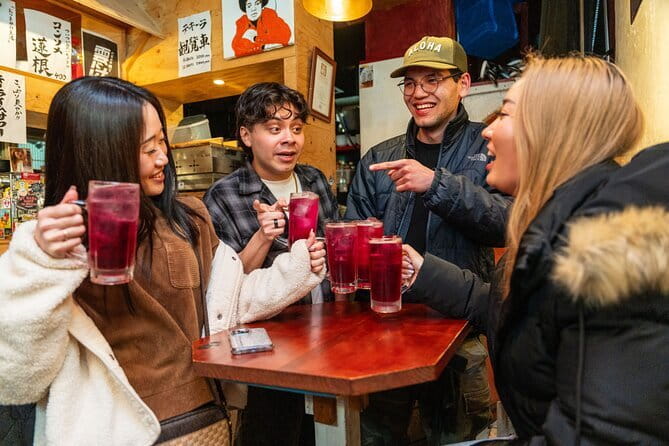
Kichijoji’s Harmonica Yokocho is the star here: a tight maze of tiny bars and food counters where a large tour simply would not fit. With Hibi leading, you move from one local stop to the next, tasting familiar Japanese bar food and seeing a side of Tokyo far removed from Shibuya’s big-name streets.
I like the small group limit of seven, which makes conversation and cramped doorways much easier. I also like that six to seven food plates are included, so you can sample widely without guessing at every menu. The catch is that drinks cost extra, and strict vegan, vegetarian, or celiac diets may not work well with traditional kitchen methods.
In This Review
- Key points to know before booking
- Why Kichijoji makes a better food night than another central Tokyo district
- Meeting Hibi at 6 pm near Kichijoji Station
- First stop: finding the character of Harmonica Yokocho
- Four to five bars, six to seven plates, and plenty of variety
- The drinking table, explained in plain terms
- Why the seven-person limit matters
- Food restrictions and what to tell Hibi
- Is $105.42 a fair price?
- The best fit for this Kichijoji night
- What the five-star experience gets right
- Should you book this Kichijoji food crawl?
- FAQ
- Where does the Kichijoji food and bar tour begin?
- What time does the tour start?
- How long does the experience last?
- How many people can join the public tour?
- Are drinks included in the price?
- Can people with dietary restrictions join?
Key points to know before booking
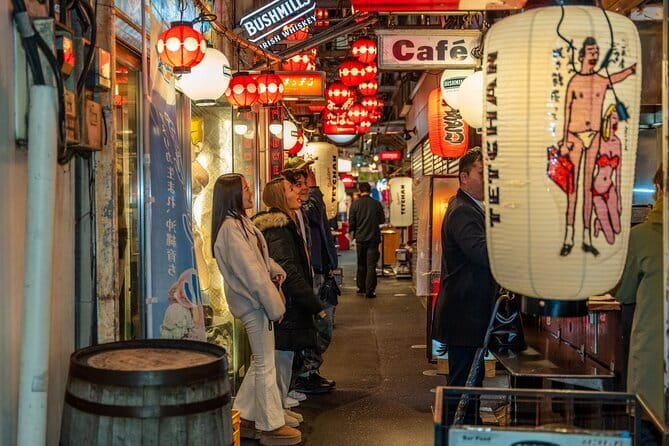
- Harmonica Yokocho after dark: Walk through Kichijoji’s narrow lanes, packed with small standing bars and old-style izakayas.
- Four to five local stops: Hibi takes you to intimate places that may be difficult to find or enter on your own.
- Six to seven food plates included: Dinner covers a range of izakaya dishes and street food, while drinks are purchased separately.
- Groups capped at seven: The size suits tiny counters, personal guidance, and easy conversation.
- A social night out: You may end up chatting with local regulars, and the evening can include spontaneous singing.
- Adults only on public tours: Participants must be at least 20, and the meeting time is 6 pm.
Why Kichijoji makes a better food night than another central Tokyo district
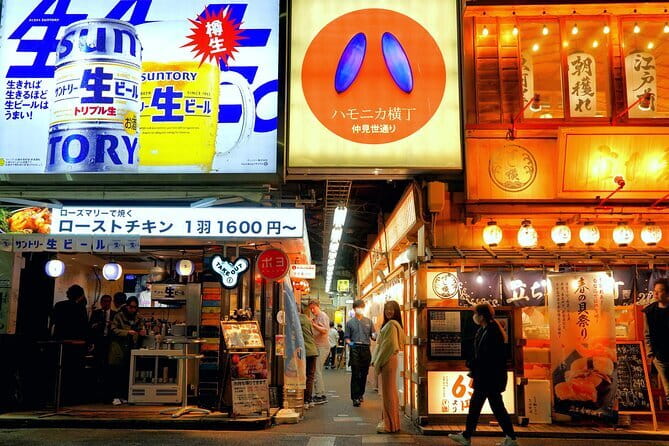
Tokyo has no shortage of places to eat and drink, but the major nightlife districts can feel built for crowds. Kichijoji gives you a different rhythm. It is a desirable residential area with old and new sides, and its small lanes retain a local feel that is easy to miss if you stay around the main station exits.
The area is in Musashino, west of Tokyo’s biggest tourist zones. That distance matters. You are not being led from one polished restaurant to another. Instead, you are walking through a neighborhood where small bars sit close together, menus may not be written for English readers, and the room itself is part of the experience.
Harmonica Yokocho is especially suited to a guided evening. Its lanes are narrow and its businesses are small. A place that feels welcoming once you are seated may look hard to enter when you are standing outside, trying to work out the menu and the house rules.
That is where Hibi adds real value. The guide helps you move through the area, explains the customs of the Japanese drinking table, and points out the stories behind the food. You get more than a meal. You get a way to understand why people gather in these compact places after work.
More old-Tokyo backstreet walks:
- The Old Quarter of Tokyo – Yanaka Walking Tour
★ 4.5 · 590 reviews - Yanaka Walking Tour: Historic and Traditional District of Tokyo
★ 5.0 · 530 reviews - Tokyo: Old Quarter Yanaka Walking Tour
★ 4.8 · 406 reviews
Meeting Hibi at 6 pm near Kichijoji Station
The meeting point is the Baskin Robbins at 1-chōme-4-18 Kichijōji Honchō. The tour begins at 6 pm and returns to that same meeting point, so you do not need to arrange a separate ride back from an unfamiliar bar.
Plan to arrive with enough time to find the meeting spot. Kichijoji is served by public transportation, but a busy station and unfamiliar Japanese street signs can slow you down. The exact meeting point is clear, yet you will be more relaxed if you are there a few minutes early.
The evening lasts about three hours. One part of the itinerary describes a longer four-hour guided walk, so allow some flexibility if the night runs beyond the approximate schedule. The practical expectation is a progressive food and bar crawl beginning at 6 pm, not a quick dinner at one fixed address.
You will be walking between stops. Private transportation is not included, though it should not be needed for the central Kichijoji route. Wear shoes that are comfortable on ordinary city streets, and bring a light layer if you expect to linger outside between bars.
First stop: finding the character of Harmonica Yokocho
The first major setting is Harmonica Yokocho, a maze of lanes with tiny izakayas, standing bars, and food stalls. The name fits the layout: the passages run close together like the pipes of a harmonica, with very little spare room.
This is the part of Tokyo where the size of the room changes the way you eat. You may sit at a counter or stand close to other customers. You are not there for a long, quiet restaurant meal. You are there to try a dish, have a drink, talk, and move on before the night loses its pace.
The guide’s role is important because the best stops are not necessarily easy to identify from outside. Some are family-run places with limited seating. Others may be the sort of bar where a first-time visitor would hesitate before opening the door.
Hibi’s route is designed around four to five such places. The stops can include both izakayas and bars, along with street-food options. The exact lineup may change with availability and seasonal offerings, so you should think of the variety and local setting as the fixed parts of the experience, not a guaranteed menu.
Four to five bars, six to seven plates, and plenty of variety
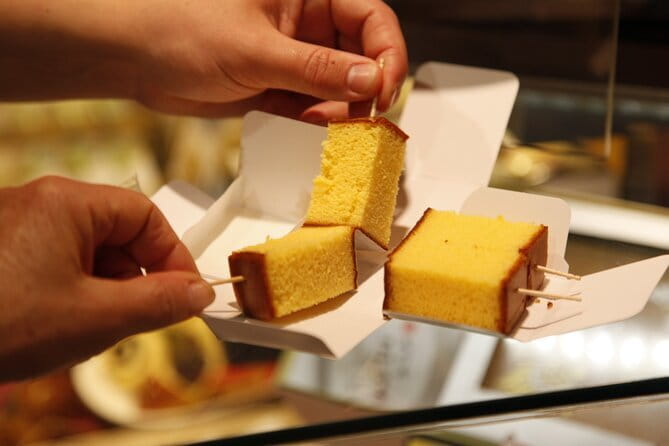
Dinner is included in the price, with six to seven plates of traditional izakaya food and street food. That is a strong feature for anyone who wants to taste broadly rather than order one large dish.
I like this format because small Japanese bar dishes often work best as a group meal. You can try several flavors, textures, and seasonal items without committing to a full portion of something unfamiliar. Hibi also explains the food’s background, giving you useful context instead of leaving you to guess what has just arrived.
The meal is not a formal tasting menu. It is a moving dinner, spread across several small businesses. You might sample one specialty at one stop, then continue to another place for a different dish. The appeal is the sequence, the changing atmosphere, and the chance to see how each bar handles its own style.
Drinks are not included. Expect to pay about 400 to 700 yen per drink, or roughly $2.50 to $5. The final cost depends on how much you order. At $105.42 per person, the tour is not a budget dinner if you count only food and drink. Its value comes from the guide, the route, the translations and explanations, and access to places you may not feel ready to enter alone.
If you are a light drinker, the extra cost should be manageable. If you plan to order at every stop, budget above the advertised price. Hibi offers recommendations at each bar, which is useful when you want to stay within a preferred budget or choose a local drink with confidence.
More Tokyo nights out:
- Tokyo Bar Hopping Tour in Shinjuku (All-You-Can-Drink + Dinner)
★ 5.0 · 3,587 reviews - Best of Shinjuku: Izakaya Food Tour (4 Stops, 14+ Tastings)
★ 5.0 · 1,863 reviews - Tokyo: Shinjuku Local Bar and Izakaya Guided Walking Tour
★ 4.9 · 1,794 reviews - Shibuya Meltdown Nightlife Tour: All-You-Can-Drink Bar Hopping
★ 5.0 · 1,058 reviews
The drinking table, explained in plain terms
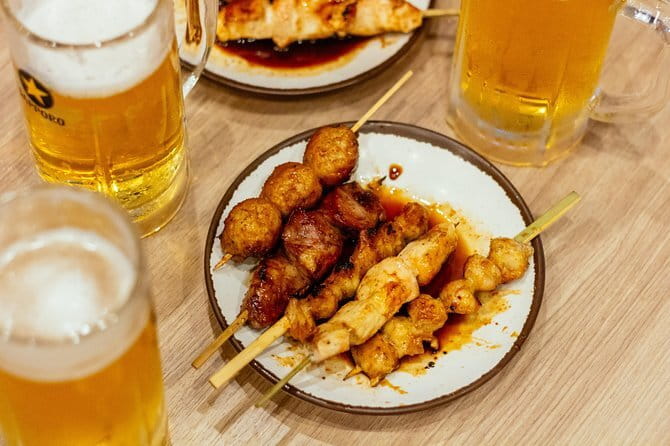
A Japanese izakaya is more than a place to consume alcohol. It is a social setting built around shared food, short visits, and easy conversation. Dishes are often ordered for the table, and the meal develops in stages rather than arriving all at once.
Hibi explains these customs as you go. That guidance can make a real difference in a very small bar, where you want to understand what to do without turning every moment into a puzzle.
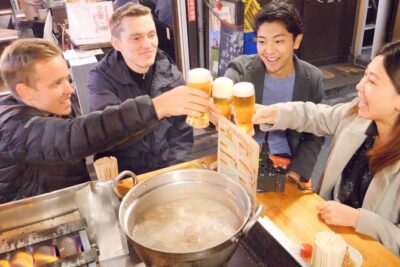
The social side is one of the strongest reasons to book this experience. The evening is set up for conversation with the guide and with the people around you. At some stops, you may chat with local regulars. One evening even included impromptu singing, a reminder that these bars can be warm, informal places rather than silent dining rooms.
You should not expect every interaction to happen in English or every night to include singing. The point is the chance for contact. A small group makes it easier to respond naturally instead of being separated from the room by a large tour party.
Why the seven-person limit matters
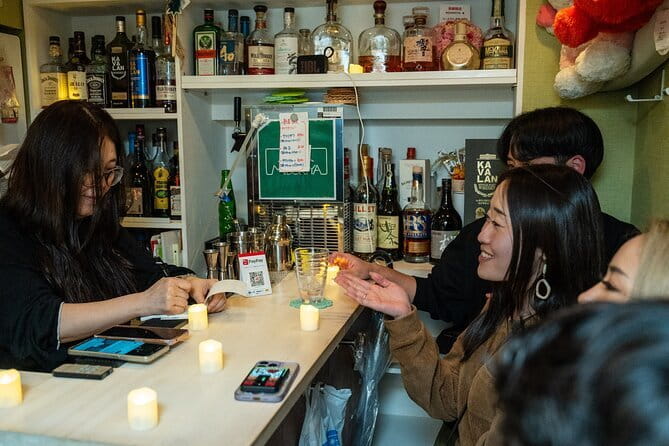
The maximum group size is seven people. That is not just a marketing number in this neighborhood. Tiny izakayas have limited seats, and a group of 15 or 20 would lose much of the reason for coming.
With seven or fewer, you can fit into smaller places and keep the guide’s explanations personal. You also have a better chance to ask questions about the dishes, local customs, and Kichijoji itself.
The group size suits solo visitors, couples, and friends who want a social evening without a busload of strangers. If you are hoping for a private celebration or want the route adjusted around your party, private tours are available for all ages. The public tour is for people aged 20 and over.
There is a tradeoff. A small bar is not the right setting for everyone. If you prefer a spacious restaurant, a fixed table, or a quiet meal with plenty of personal space, the close quarters may feel tiring. This is a crawl through compact rooms, not a polished restaurant tour.
Food restrictions and what to tell Hibi
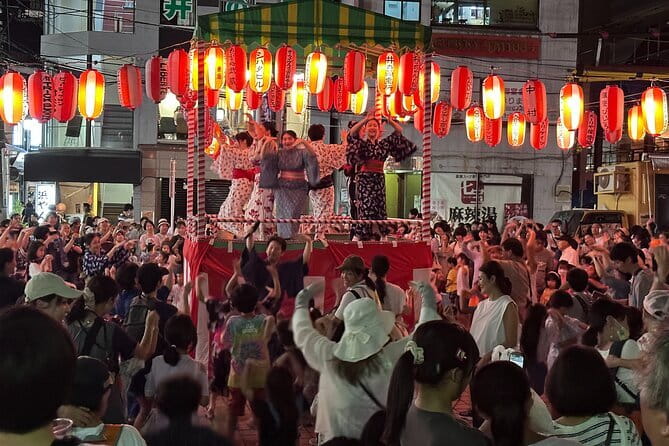
This experience cannot accommodate strict vegan or vegetarian diets, or severe gluten allergies such as celiac disease, because traditional kitchen methods may involve shared ingredients and preparation areas.
If you have flexible dietary needs, contact the operator when booking. That gives Hibi a chance to discuss possible options before the evening begins. Do not wait until you are seated at the first bar, especially if avoiding an ingredient is medically important.
The included food is described as a selection of traditional dishes and street food. Since the menu changes with local specialties and seasonal offerings, you should be comfortable with some uncertainty. This is a good match for an adventurous eater who wants guidance, but not for someone who needs a tightly controlled menu.
Service animals are allowed, and the activity is near public transportation. Most people can participate, though the narrow lanes and several stops mean you should be comfortable walking around the neighborhood for the evening.
Is $105.42 a fair price?
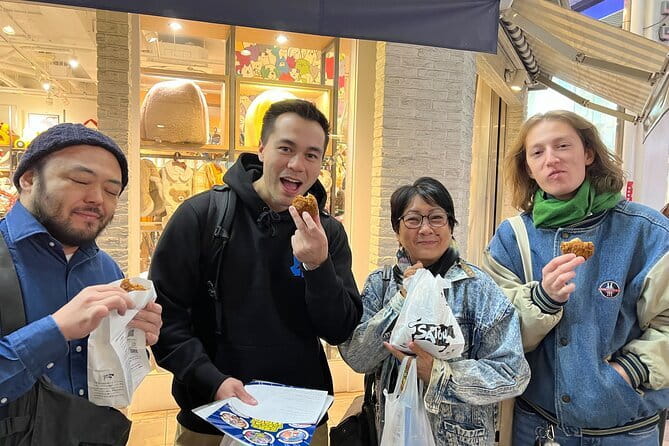
The price deserves a clear look. At $105.42 per person, plus drinks, this is a premium night out compared with simply choosing an izakaya near Kichijoji Station.
You are paying for six to seven food plates, but the food alone does not explain the full cost. The more important part is the access. Hibi knows how to connect you with four to five small places, manage the route, explain the customs, and help you order where English information may be limited.
That can be worth a lot on a first visit to Tokyo. Without a guide, you might spend the same evening searching menus, missing a small bar because it looks full, or settling for a restaurant designed for international visitors. You might also spend less, especially if you order only one meal and one drink.
I would judge the price by your travel style. If you want a local evening and value help with food, language, and social customs, the cost is reasonable for a specialist small-group outing. If your main goal is inexpensive eating, use the tour as an introduction and explore Kichijoji on your own afterward.
Drinks add another variable. At 400 to 700 yen each, one or two are modestly priced, but five stops can push the total higher. Ask Hibi for recommendations and keep track of your orders if you are watching expenses.
The best fit for this Kichijoji night
This experience suits you if you want to:
- See a Tokyo neighborhood beyond Shibuya and Shinjuku.
- Try several Japanese dishes in one evening.
- Visit small bars that may feel difficult to enter alone.
- Meet local people in an informal setting.
- Learn how an izakaya meal works.
- Spend time with a guide in a group of seven or fewer.
It is less suitable if you need a strict diet, dislike alcohol-centered settings, or want a private, quiet dinner. It also may not be ideal for anyone who expects every stop to be fully explained in English from a written menu. The route is designed around local places, and that is both the charm and the limitation.
You can make the most of the evening by arriving early in Kichijoji. One useful plan is to walk around the area before 6 pm, then meet Hibi ready for dinner. Kichijoji has enough old and new character to reward extra time, and arriving early removes the stress of trying to explore after the tour ends.
What the five-star experience gets right
The strongest part of the evening is its sense of place. You are not simply being taken to a restaurant that could be anywhere in Tokyo. You are moving through a specific neighborhood, entering very small venues, and learning how local food and drinking fit together.
Hibi’s enthusiasm also matters. A guide who enjoys Kichijoji can make a narrow bar feel welcoming rather than intimidating. The guide’s local recommendations at each stop help you choose drinks, while the food explanations give meaning to dishes that might otherwise pass by as unfamiliar plates.
The atmosphere can be especially memorable when local customers join the conversation or break into song. That cannot be promised, but the small-group format creates room for those moments. A large organized tour would likely pass through without the same contact.
The main limitation is that the experience depends on your comfort with uncertainty. You will not receive a fixed restaurant meal with every detail set in advance. You will walk, share space, buy drinks separately, and eat what fits the local stops that night.
Should you book this Kichijoji food crawl?
Book it if you want an evening built around small local bars, shared food, and neighborhood contact, not a standard sightseeing route. The combination of Hibi’s guidance, four to five stops, and six to seven included plates makes the tour a practical introduction to Kichijoji’s nightlife.
Think twice if you need strict dietary control or want to keep the total cost low. For everyone else, this is a smart first step into an area that can be hard to read from the street. Arrive early, budget extra for drinks, and expect a close, social night rather than a formal dinner.
FAQ
Where does the Kichijoji food and bar tour begin?
The tour begins at the Baskin Robbins at 1-chōme-4-18 Kichijōji Honchō, Musashino, Tokyo 180-0004, Japan.
What time does the tour start?
The start time is 6 pm.
How long does the experience last?
The stated duration is approximately three hours. The itinerary description also refers to a four-hour guided tour, so allow some flexibility in case the evening takes longer.
How many people can join the public tour?
The public tour has a maximum of seven participants.
Are drinks included in the price?
No. Food is included, but alcoholic beverages are separate. Drinks typically cost 400 to 700 yen each, or about $2.50 to $5.
Can people with dietary restrictions join?
Strict vegan, vegetarian, and severe gluten allergies such as celiac disease cannot be accommodated because of traditional kitchen methods. If your dietary needs are flexible, notify Hibi when booking to discuss possible options.
More Drinking Tours in Tokyo
- Tokyo: Pub Crawl and Bar Tour
★ 4.5 · 951 reviews - Tokyo: Shinjuku Local Bar & Izakaya Crawl Tour
★ 5.0 · 890 reviews - Tokyo: Shinjuku Bar Hopping with All-You-Can-Drink & Dinner
★ 4.9 · 440 reviews - Shibuya: Local Bar & Izakaya Crawl
★ 4.9 · 354 reviews
New on our Tokyo list
- From Tokyo: Mount Fuji & Hakone Full Day Private Tour★ 4.9 · 25 reviews
- Tokyo Spectacular View Day-Cruise in 90 Minutes★ 5.0 · 25 reviews
- Real Tokyo Runner Club : Daikoku Car Meet Night Tour with JDM Car★ 5.0 · 25 reviews
- 2.5 Hour-Guided Cycle Tour in the Central Tokyo★ 5.0 · 25 reviews
- Ramen Making from Scratch +Akihabara Tour –Cooking Class★ 5.0 · 25 reviews
- [Self-Drive] Tokyo & Daikoku Custom Car Driving Tour★ 4.9 · 25 reviews
- Tokyo: 2-Hour Night Bike Tour of the City’s Hidden Gems★ 4.9 · 25 reviews
- Samurai themed Entertainment show in Shinjuku★ 4.5 · 25 reviews
Drinking Tours, compared.
Tokyo Bar Hopping Tour in Shinjuku (All-You-Can-Drink + Dinner)
Read our review →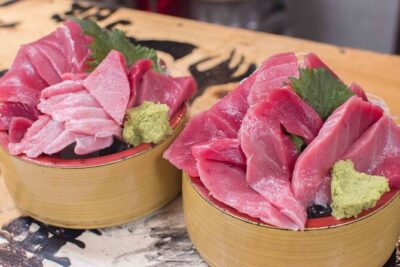
Best of Shinjuku: Izakaya Food Tour (4 Stops, 14+ Tastings)
Read our review →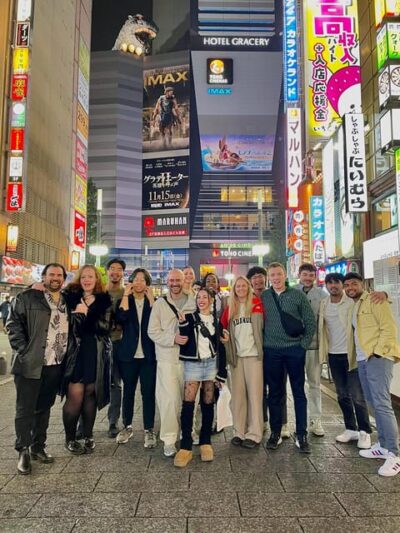
Shinjuku Local Bar and Izakaya Guided Walking Tour
Read our review →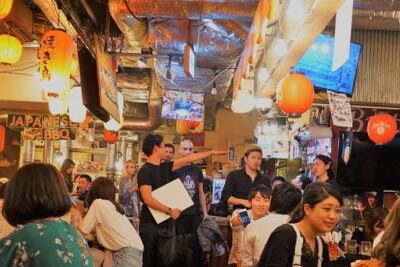
Shibuya Meltdown Nightlife Tour: All-You-Can-Drink Bar Hopping
Read our review →

Shinjuku Bar Hopping with All-You-Can-Drink & Dinner
Read our review →
Browse the lists this tour appears in