
Reviewed · SAMURAI & NINJA EXPERIENCES
Samurai Guide Sho’s:Kichijoji Night Training–Drink & Dish Pairing
Kichijoji’s best nightlife is not found by racing from one bar to the next. This three-hour evening with Samurai Guide Sho takes you into Harmonica Yokocho, a craft beer bar, and a sushi spot, using food and drink pairing as the thread that holds the night together. You sit, taste, talk, and let the neighborhood set the pace.
I like the small group of no more than five and the reserved seats at the first bar. I also like the thoughtful mix of sake, Japanese craft beer, gin, and sushi, with Sho helping you choose without turning the evening into a lecture. The main drawback is cost: at $97.73 per person, drinks are still extra, so this is not Tokyo’s cheapest night out.
In This Review
- Key points about Sho’s Kichijoji night
- Why Kichijoji makes a good night out
- First stop: reserved seats in Harmonica Yokocho
- Second stop: Japanese craft beer in the fermentation dojo
- Final stop: seasonal sushi and a quiet finish
- What the pairing idea really means
- A personal night, not a standard Tokyo tour
- Who gets good value from the $97.73 price
- Practical details before you book
- Should you book Sho’s Kichijoji night?
- FAQ
- Where does the experience meet?
- What time does the tour start?
- Where does the experience end?
- How many people can join?
- Are drinks included in the price?
- Do I need to understand sake or craft beer?
- Can dietary restrictions be accommodated?
Key points about Sho’s Kichijoji night
- Three local stops: Harmonica Yokocho, a Japanese craft beer bar, and a sushi bar.
- Pairing rather than drinking contests: You select a drink to suit each dish, with quiet help from Sho.
- Very small group: The maximum is five people, making conversation and reserved seating easier.
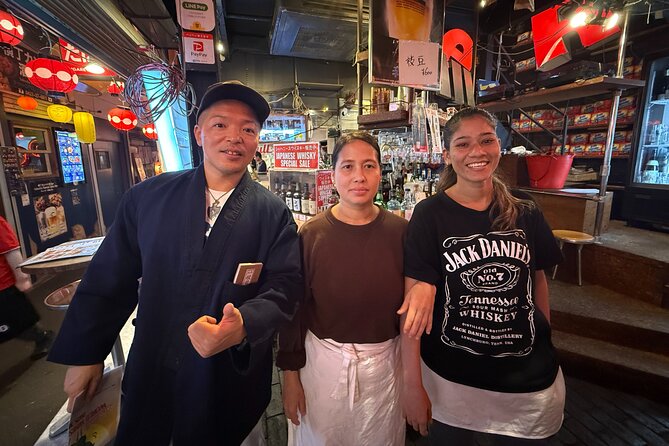
- A relaxed modern Samurai theme: Sho wears an indigo haori, but this is not a costume performance.
- Substantial food at every stop: Expect four or five dishes at the first bar, one to four dishes at the beer stop, and seasonal sushi at the final venue.
- Extra budget needed: Drinks cost about ¥1,000 each and are ordered and paid for separately.
Why Kichijoji makes a good night out
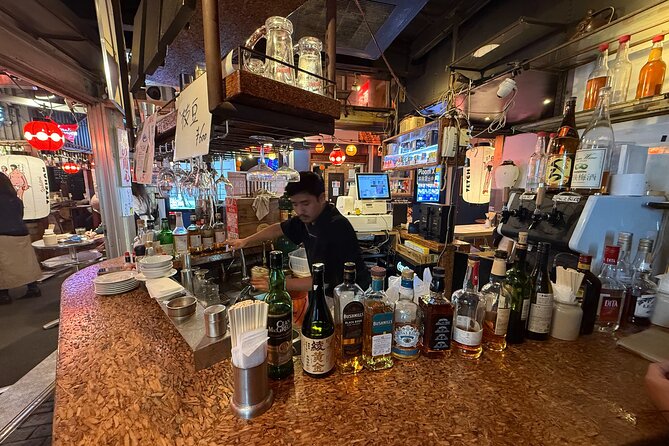
Kichijoji sits in western Tokyo and has a character that feels less polished than the city’s major sightseeing districts. Its narrow alleys, small bars, and local food shops make it a good place to spend an evening without chasing famous landmarks.
The night begins at the north exit of JR Kichijoji Station, in front of Baskin-Robbins at 1-chōme-4-18 Kichijōji Honchō. Look for Sho in an indigo haori. His clothing gives the meeting a clear visual sign, but the mood is understated. He presents the Samurai idea as a modern code of respect and attention, not as a theatrical act.
That distinction matters. You will not get staged swordplay, loud role-play, or a history lesson. Sho describes himself as a drinking companion as much as a guide. His English is supported by translation tools, and he uses simple language rather than trying to explain every detail. If you enjoy quiet conversation and do not need a constant stream of facts, this approach can feel natural.
The route involves walking between venues, so wear comfortable shoes. The exact stops or route may change with crowd conditions and the mood of each place. That flexibility is part of the design, though it also means you should not expect a fixed, tightly scripted program.
More old-Tokyo backstreet walks:
- Small Town in the Big City: Tasting Tokyo’s Kichijoji
★ 5.0 · 195 reviews - EXCLUSIVE Tokyo Secret: Kichijoji Small-Group Food & Bar Hopping
★ 5.0 · 29 reviews - Explore Kichijoji: Walk Through One of Tokyo’s Beloved Districts
★ 5.0 · 21 reviews
First stop: reserved seats in Harmonica Yokocho
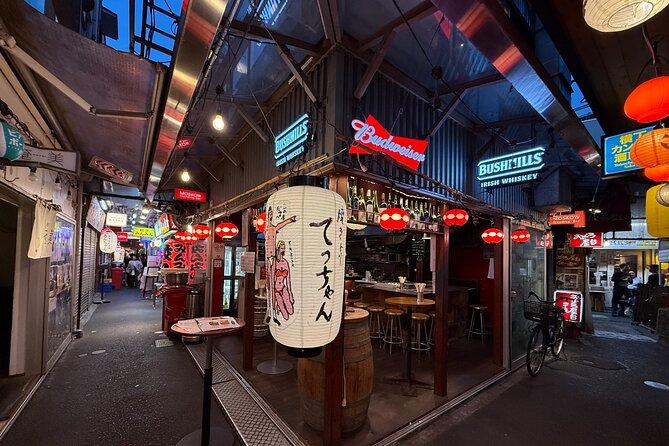
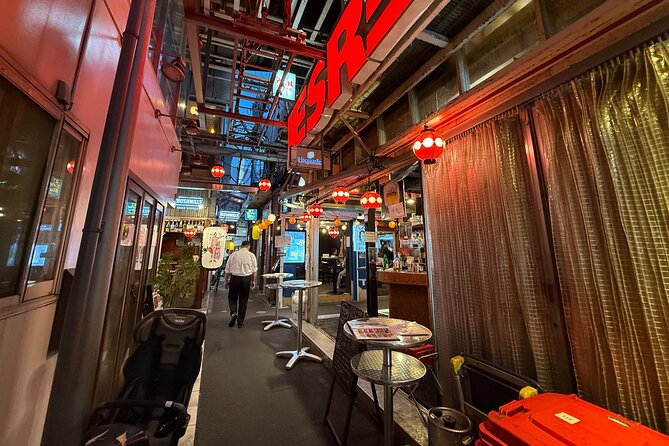
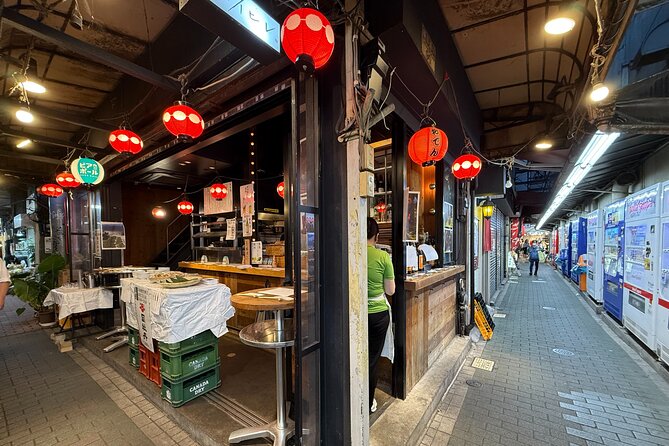
The opening stop sets the tone. Harmonica Yokocho is known for its tight lanes and old-style drinking places, and Sho takes you to a small yakitori bar tucked inside the alley. Reserved seats are included, which is a useful detail in a place where space can be limited.
You receive four or five carefully selected local dishes. The menu changes with the chef and the season, so you should think of the meal as a particular night’s selection rather than a standard tasting menu. Dishes may include animal products, seafood-based broth, and alcohol-based seasonings, so this stop is not suitable for vegetarian, vegan, kosher, or halal diets.
Drinks are not served as a fixed package. You order what you want and pay for each drink yourself, with about ¥1,000 per drink as a rough guide. Sake and Japanese whisky may be available, along with other choices. Sho’s role is to help you think about the match: do you want something that cuts through a savory dish, echoes its sweetness, or simply appeals to you at that moment?
That freedom is central to the experience. You do not need to know the difference between every style of sake or recognize a particular regional label. The point is to notice your own preferences. Sho can offer a small word of guidance if you hesitate, but you remain the person making the choice.
I like this opening because it gives you time to settle into Kichijoji. The reserved seats also let you watch the alley’s energy without fighting for a place. The limitation is that the atmosphere may be close and informal. If you prefer spacious dining rooms or a formal tasting setup, this bar may feel too compact.
Some dishes can be ordered separately if you want more food. These optional items are paid for on the spot, and cards are accepted. The included food is intended to be satisfying, so you should not need to order extras unless something catches your eye.
Second stop: Japanese craft beer in the fermentation dojo
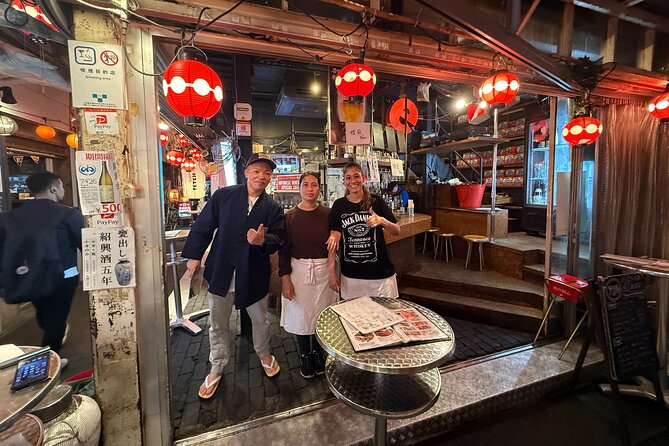
The middle stop shifts the focus from sake and alley dining to draft beer. Here you taste Japanese craft beer and consider the balance between aroma, bitterness, and food.
The beer bar has many taps, giving you a wider choice than a typical neighborhood pub. Depending on the evening, Japanese craft gin, sake, and other drinks may also be available. A gin and tonic received particular praise, so do not assume beer is your only sensible order.
The included food at this stop ranges from one to four carefully selected dishes. It is enough to give the pairing idea another setting, but the selection is likely smaller than at the first bar. Sho is friendly with the staff, which helps the stop feel like a visit to a real local drinking place rather than a staged stop for a tour group.
This is one of the strongest reasons to book the experience. A craft beer bar with many Japanese taps can be difficult to choose on your own, especially if you do not read the labels or know the local beer scene. Sho can help narrow the field, while you still decide what sounds best.
Do not expect a technical beer class. The experience is more about noticing what works with the dish in front of you. If you want a detailed account of brewing methods, hop varieties, or regional production, you may find the explanations light. If you prefer tasting without a long presentation, that restraint is an advantage.
The evening is also paced for conversation. You are not expected to finish a drink quickly and move on. This makes the tour calmer than a standard bar crawl, but it also means you visit only three main venues. Anyone hoping to collect as many bars as possible in one night should choose a different format.
Final stop: seasonal sushi and a quiet finish
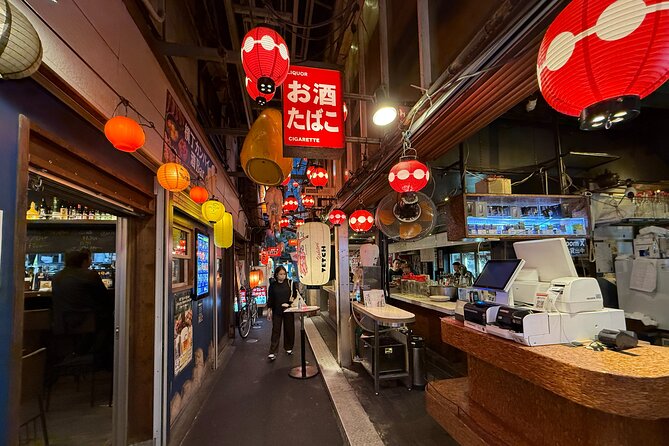
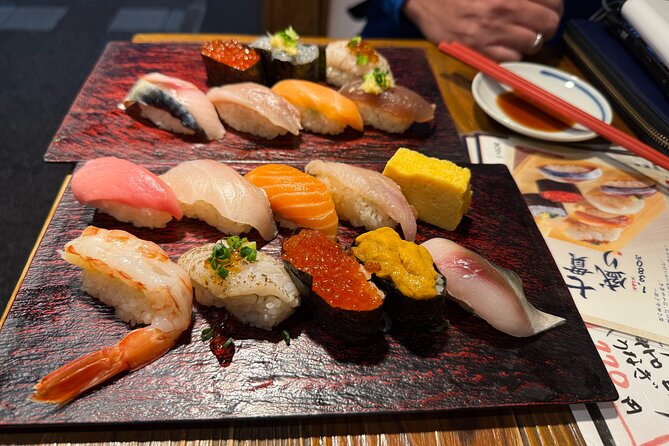
The last stop is a sushi bar, where the evening closes with a seasonal recommended assortment. You again choose a drink to accompany the food, with sake as the natural option but not the only one.
This final course gives the night a clear shape. You begin in the narrow, nostalgic setting of Harmonica Yokocho, switch to beer and fermentation, then finish with the precision of sushi. The appeal is less about consuming a large number of drinks than about seeing how the same simple idea changes from one venue to the next.
The sushi selection changes with the season and the chef’s recommendations. You should come hungry, since food is served at all three stops and the final course is meant to leave you satisfied. Still, the experience is not designed as a luxury sushi dinner with a long, formal menu. The focus remains on the relationship between the sushi and the drink you choose.
The quiet mood here may be exactly what you want after the first two stops. It also reinforces the difference between this evening and a party tour. There are no shots, shouting, or all-you-can-drink rules. You sit down, eat slowly, and finish the night in a more measured way.
After the sushi, Sho walks you back to the Kichijoji Station meeting point. The activity lasts about three hours, with roughly 50 minutes planned at each main stop and short meeting or return periods at the station.
More samurai and ninja sessions:
- Tokyo: Samurai Ninja Museum Guided tour and Experience
★ 4.6 · 1,010 reviews - Tokyo: Samurai Sword & Archery Class from Samurai Descendant
★ 5.0 · 603 reviews - Best Samurai Experience in Tokyo
★ 5.0 · 458 reviews - Ninja Experience (Family Friendly) at Samurai Ninja Museum TOKYO
★ 5.0 · 441 reviews
What the pairing idea really means
The word pairing can sound intimidating, especially if you think you need formal training. You do not. Sho’s approach is based on instinct and preference. You might choose a drink because it feels refreshing with a salty dish, or because you like its aroma beside something delicate.
That makes the evening accessible to people who know little about alcohol. You can simply say what you normally enjoy, ask for a suggestion, and test it. The small group also gives you room to change your mind without feeling that you are being graded.
There is a practical side to this format. Because drinks are ordered individually, you control your pace and spending. You can choose fewer drinks, select less expensive options, or order something different at each venue. The tradeoff is that the advertised price does not cover your alcohol.
The approximate ¥1,000-per-drink figure helps with planning, but your final bill will depend on what you order and how much you drink. Optional food orders also cost extra. Credit cards are accepted for drinks and optional dishes.
A personal night, not a standard Tokyo tour
The maximum group size is five. If you join alone or with one other person, you may share the evening with people from other countries and backgrounds. That is part of the point: you sit together, share dishes, and gradually become comfortable in the same small circle.
Sho uses translation tools along with simple English. Communication should be workable, but this is not a tour built around long cultural explanations. You may hear short comments about Japanese customs or the Samurai spirit, then return to the food, the drink, or the atmosphere around you.
I see this as a good match for someone who enjoys pauses. Silence is treated as acceptable rather than awkward. Sho’s version of the Samurai theme is based on ichi-go ichi-e, the idea of valuing a meeting that happens only once. You do not need to adopt the philosophy, but it explains why the evening favors attention over speed.
The same design can frustrate people who want certainty. Venues and routes may change based on conditions that night. The guide chooses the place with the best energy, so you should accept some spontaneity. You are paying for a shaped experience, not a rigid schedule.
Who gets good value from the $97.73 price
At $97.73 per person, this experience asks you to pay for more than food. Included in the price are the guide’s time, small-group scale, venue planning, reserved seating at Harmonica Yokocho, food at three stops, and help with drink selection.
The value is strongest if you would struggle to find these places alone. The craft beer stop, in particular, could be hard to identify without local help. The reserved seats at Harmonica Yokocho also matter, since they make it easier to enjoy the alley without worrying about where to sit.
The value is weaker if your main aim is simply to drink cheaply. Drinks are extra, and the tour does not provide an all-you-can-drink deal. A self-guided night in Kichijoji could cost less, especially if you already know where you want to go and are comfortable choosing dishes and drinks without help.
I would budget for several drinks in addition to the tour price, while keeping in mind that you can order freely. The package gives you structure and local access, not unlimited alcohol.
Practical details before you book
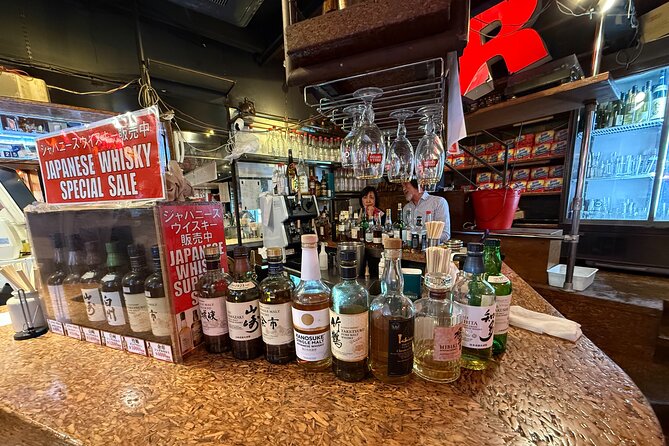
The meeting time is 5:30 pm, and the activity ends back at the station meeting point. The start and finish near JR Kichijoji Station make the experience easy to connect with public transportation.
You must be at least 20 years old, the legal drinking age in Japan. Comfortable walking shoes are important, and you should arrive ready to eat. The food served at each stop is substantial, so this is not an evening for having a full dinner beforehand.
Tell the provider about allergies or dietary restrictions in advance. Some accommodations may be possible, but vegetarian, vegan, kosher, and halal diets cannot be supported because of the ingredients and seasonings used.
The experience is intended for respectful behavior. Disruptive conduct can bring the evening to an early end without a refund. Free cancellation is available if you cancel at least 24 hours before the start time. Changes or cancellations inside that window are not accepted for a refund.
Should you book Sho’s Kichijoji night?
Book it if you want a small, calm introduction to local drinking culture, enjoy trying food with different drinks, and like the idea of a guide who acts more like a companion than a lecturer. The combination of Harmonica Yokocho, Japanese craft beer, and sushi gives the night variety without making it feel rushed.
Skip it if you want a loud party, many bars, unlimited drinks, detailed sightseeing commentary, or the lowest possible price. Sho’s Kichijoji night is best for someone who values atmosphere, good food, and a little uncertainty. Bring an open mind, a comfortable pair of shoes, and enough room in your budget for drinks.
FAQ
Where does the experience meet?
Meet Samurai Guide Sho in front of Baskin-Robbins at the north exit of JR Kichijoji Station, at 1-chōme-4-18 Kichijōji Honchō, Musashino, Tokyo 180-0004, Japan.
What time does the tour start?
The experience starts at 5:30 pm and lasts about three hours.
Where does the experience end?
The activity ends back at the Kichijoji Station meeting point.
How many people can join?
The maximum group size is five people. If you join alone or with one other person, you may be joined by other participants.
Are drinks included in the price?
Drinks are not included as a fixed set. You order and pay for them individually, with an approximate cost of ¥1,000 per drink. Credit cards are accepted.
Do I need to understand sake or craft beer?
No. The pairing activity is designed for people without expert alcohol knowledge. Sho can offer guidance while you choose the drink you most want to try with each dish.
Can dietary restrictions be accommodated?
You should report allergies or dietary restrictions in advance. Vegetarian, vegan, kosher, and halal diets cannot be accommodated, and the food commonly includes animal products, seafood-based broth, and alcohol-based seasonings.
More Evening Experiences in Musashino
- Tokyo Night Foodie Tour in Shinjuku – Seasonal Sushi, Wagyu Beef
★ 5.0 · 1,161 reviews - Tokyo: Daikoku JDM Car Meet & Night Car Culture Tour
★ 4.8 · 626 reviews - Tokyo After 5: Authentic Japanese Food & Drink Night Tour
★ 4.5 · 560 reviews - EVO, WRX, Skyline – JDM Night Run to Daikoku Car Meet
★ 4.9 · 478 reviews
New on our Musashino list
- Experience Mikoshi Parade in Kichijoji, Tokyo!★ 5.0 · 3 reviews
- Tokyo Kichijoji 4hr Private Tour: Fun for Kids and Parents★ 4.5 · 3 reviews
- Jindaiji Traditional Temple Purification Tour with Local Soba★ 5.0 · 4 reviews
- Tokyo Kichijoji Twilight: Explore Instagram-Worthy Hidden Spots★ 5.0 · 4 reviews
- 3-Hour Manga Drawing Workshop in Tokyo★ 5.0 · 5 reviews
- Plant-Based Sushi Diversity for All (vegan-friendly)★ 5.0 · 5 reviews
- Seafood Sushi Diversity for All★ 5.0 · 8 reviews
- Small Town in the Big City: Tasting Tokyo’s Kichijoji★ 5.0 · 16 reviews
Samurai & Ninja Experiences, compared.
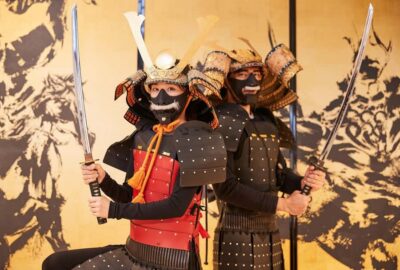
Samurai Ninja Museum Guided tour and Experience
Read our review →
Samurai Sword & Archery Class from Samurai Descendant
Read our review →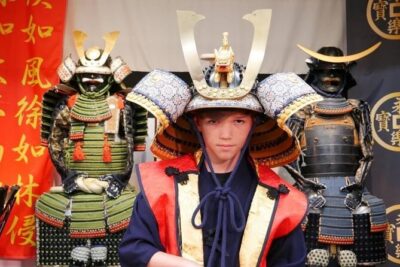
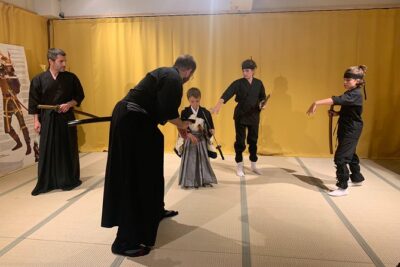
Ninja Experience (Family Friendly) at Samurai Ninja Museum TOKYO
Read our review →
Samurai Entertainment Night Show in Kanda Shrine
Read our review →
Tokyo Sword Experience – includes Museum Ticket/Ninja Experience
Read our review →
Samurai Ninja Museum Asakusa: Samurai Sword Lesson & Tour
Read our review →
Ninja Samurai 2-hour hands-on lesson by Japanese master in Tokyo
Read our review →Browse the lists this tour appears in