
Reviewed · SUSHI EXPERIENCES
Seafood Sushi Diversity for All
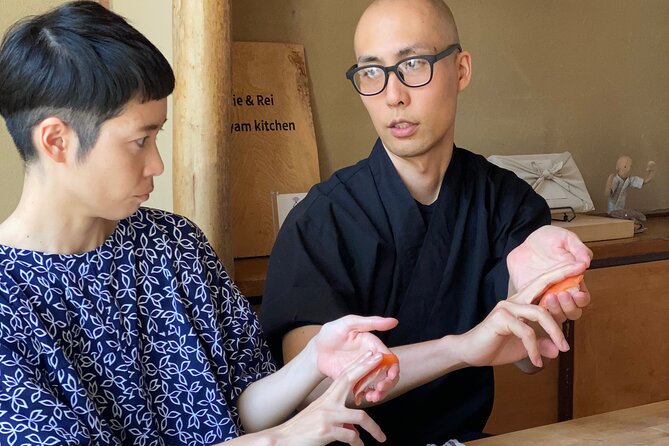
The most interesting part of this Musashino experience is that it treats sushi as a broad food tradition, not just the familiar raw-fish pieces you see at a restaurant. Rei, an artist with experience in traditional Japanese arts and cuisine, leads you through six forms of sushi while explaining how food, tools, and customs change over time. I like the hands-on variety and the warm, patient teaching from Rei and Chie. The main consideration is that seafood is central, and the class takes place in a private home rather than a purpose-built cooking studio.
I also like the small private setting, which gives you room to ask questions and work at your own pace. The class suits families and complete beginners, including people who are not already fascinated by Japanese culture. At $65.15 per person for about four hours, it offers good value if you want lunch, instruction, local transportation from the station, and a personal cultural experience in one package.
In This Review
- Key points to know before booking
- Starting at Musashi-Sakai Station at 11:00
- A renovated traditional house instead of a restaurant kitchen
- The opening lesson: what sushi means
- Making sushi rice from the start
- Six sushi forms, six different skills
- Nigiri
- Inarizushi
- Gunkan
- Hosomaki
- Oshizushi
- Temari
- Traditional knives, fish handling, and hygiene
- Eating what you made for lunch
- Why the teaching style matters for beginners
- What $65.15 buys you
- Who should book this Musashino sushi class
- FAQ
- Where does the sushi class meet?
- Where does the activity end?
- How long does the class last?
- Is transportation included?
- Is this a private activity?
- Do I need sushi-making experience?
- Which types of sushi will I make?
- Can the class be changed or extended?
- What is the cancellation policy?
- Should you book it?
Key points to know before booking
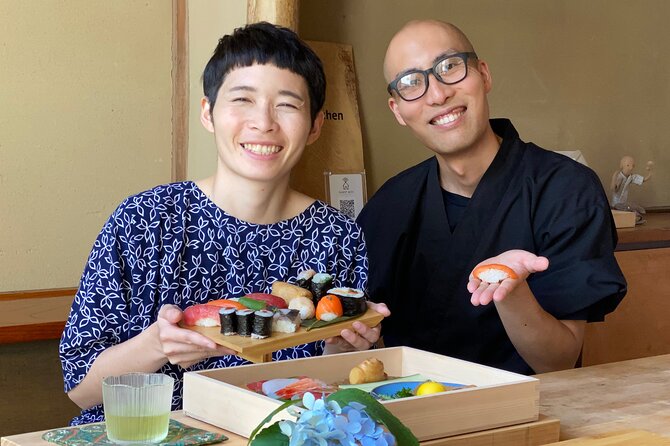
- Six sushi styles in one class: Make nigiri, inarizushi, gunkan, hosomaki, oshizushi, and temari.
- A private home setting: Travel by private car from JR Musashi-Sakai Station to the hosts’ renovated traditional house.
- Beginner-friendly instruction: Rei and Chie explain each step carefully, including rice preparation, fish handling, hygiene, and knife use.
- A wider view of sushi: Learn how sushi developed and why there is no single, fixed form of Japanese tradition.
- A handmade lunch: Eat the sushi you prepare and share pieces with others in your group.
- Flexible course design: The standard class lasts about four hours, but longer or customized sessions can be arranged.
Starting at Musashi-Sakai Station at 11:00
Your meeting point is JR Musashi-Sakai Station in Musashino, at 11:00 in the morning. The listed meeting address is 2-chōme-1-12 Kyōnanchō, Musashino, Tokyo 180-0023, Japan.
From the station, the hosts drive you to their home in a private car. This is a useful touch because you do not need to work out the final route to a residential neighborhood on your own. It also gives the class a clear rhythm: meet at the station, travel together, cook, eat, and return to the same meeting point.
You should allow the full four hours rather than treating this as a quick morning demonstration. The class ends back at the meeting point, so you can plan a later lunch, shopping stop, or sightseeing activity in the Tokyo area. Since the start time is fixed at 11:00, arrive with enough time to find the station meeting place without rushing.
The location outside central Tokyo is part of the appeal, but it may not suit every schedule. If you are trying to pack several major Tokyo sights into one day, Musashino adds travel time. If you want a slower morning built around food and conversation, the setting makes more sense.
More sushi mornings and classes:
- Plant-Based Sushi Diversity for All (vegan-friendly)
★ 5.0 · 5 reviews - Sushi Making Tokyo Roll and Authentic Japanese Sushi Class
★ 5.0 · 3,971 reviews - Tokyo: Roll and Authentic Sushi Making Class in Asakusa
★ 4.9 · 1,957 reviews
A renovated traditional house instead of a restaurant kitchen
The class takes place in the hosts’ renovated traditional house. That changes the feel of the activity. You are not simply watching a chef work behind a counter. You are handling ingredients and tools in a domestic setting, then sitting down to enjoy what you made.
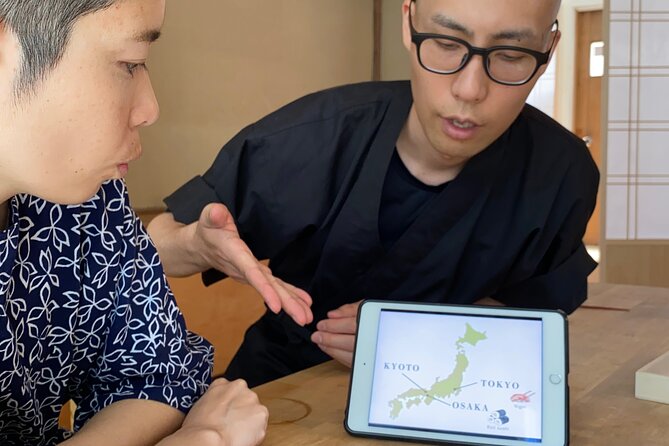
The house also supports the central idea of the class. Rei connects food with traditional Japanese arts and with the way people lived before industrial production changed daily life. You learn about sushi as a practice shaped by many cultures and periods, rather than as one rigid recipe.
That approach should appeal to you if you like understanding the ideas behind a dish. It is also a good fit if you feel uncomfortable with overly polished cultural performances. One especially useful feature is the relaxed tone. The class is designed around mutual understanding and friendship, not around telling you that every part of Japan is automatically wonderful.
The trade-off is simple: a home kitchen may have less space and fewer commercial conveniences than a large cooking school. The available information does not specify the exact kitchen layout, seating arrangement, or facilities, so ask the provider if those details matter for your group.
The opening lesson: what sushi means
Before you start shaping sushi, you learn about the meaning and development of the food. This introduction gives the practical work some context. Instead of memorizing a few movements, you begin to see why sushi can take so many different forms.
The class also challenges the narrow idea that sushi must mean raw fish on rice. The six preparations cover pressed, rolled, filled, molded, and hand-shaped styles. That range is one of the strongest reasons to choose this workshop over a shorter class focused only on basic rolls.
Rei’s background in both Japanese arts and cuisine adds another layer. The class presents tradition as something that has grown and changed over time. For you, that means the discussion is not only about copying an old technique. It is also about how food reflects the people and communities that make it.
This portion may be especially useful if you are new to sushi or Japanese food. A person who is not naturally interested in sushi can still follow the class because the subject is connected to everyday life, tools, and cultural change.
Making sushi rice from the start
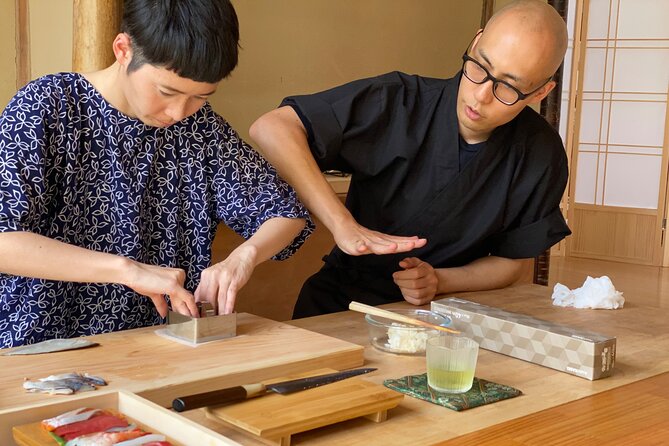
You then learn how to prepare sushi rice by mixing cooked rice with vinegar. This sounds basic, but it is the foundation for nearly everything that follows. If the rice is too wet, too dry, too warm, or poorly seasoned, even well-shaped sushi can fall apart.
The class explains the process rather than handing you finished rice. That gives you a better sense of the balance required before you move on to shaping. You also see why sushi-making is more than placing a topping on rice.
The practical value here is high. Rice preparation is one of the parts you can repeat at home, although the exact ingredients and equipment available in your own kitchen may differ. Pay close attention to the texture and handling instructions, since those lessons apply to several of the six styles.
A few more Musashino bookings worth comparing
- Small Town in the Big City: Tasting Tokyo’s Kichijoji
★ 5.0 · 195 reviews - The 10 Tastings of Tokyo With Locals: Private Street Food Tour
★ 5.0 · 48 reviews - EXCLUSIVE Tokyo Secret: Kichijoji Small-Group Food & Bar Hopping
★ 5.0 · 29 reviews - Explore Kichijoji: Walk Through One of Tokyo’s Beloved Districts
★ 5.0 · 21 reviews
Six sushi forms, six different skills
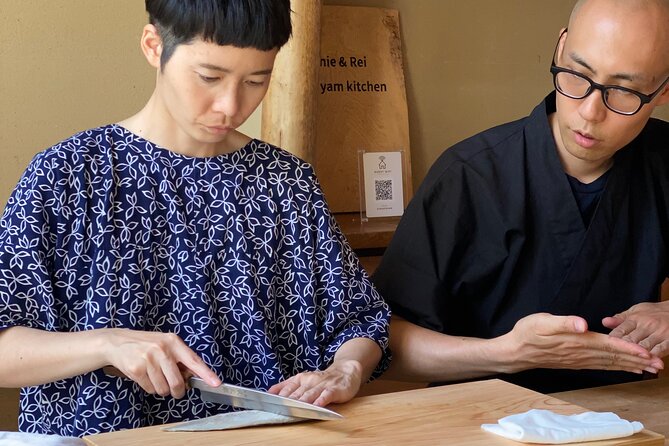
The workshop includes six types of sushi. Each one asks you to use your hands in a different way, and that variety keeps the four-hour session from becoming repetitive.
Nigiri
Nigiri is hand-pressed sushi with a topping. It is probably the form most familiar to people who have eaten sushi in restaurants, but making it yourself shows how much control is needed to keep the rice together without crushing it.
You learn the relationship between the rice portion, the topping, and the pressure of your hand. It is a small object with little room for error, so careful instruction matters. This is where Rei’s patient approach is especially useful for beginners.
Inarizushi
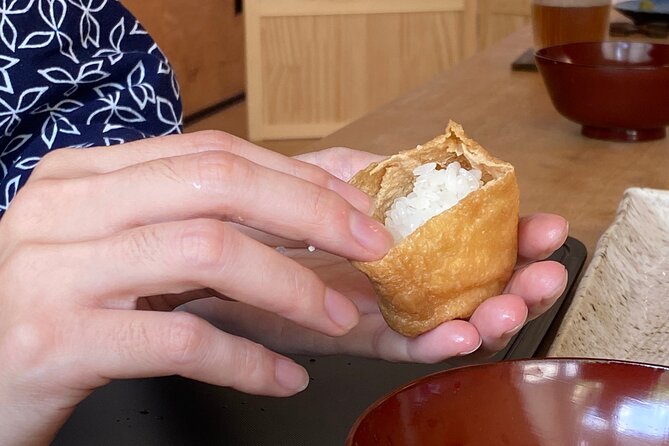
Inarizushi places rice inside seasoned tofu pouches. The soft pouch gives you a different challenge from nigiri. You must fill it neatly while keeping the shape intact.
This is also one of the more approachable styles for a family group because it feels less delicate than hand-pressed sushi. It shows that sushi can be sweet, savory, soft, crisp, simple, or elaborate depending on the ingredients and form.
Gunkan
Gunkan is a rounded mound of rice wrapped with seaweed and topped with a loose ingredient. The seaweed acts like a small wall, so the shape can hold a topping that would not sit securely on ordinary nigiri.
This preparation helps you understand the practical reason behind a sushi shape. You are not just learning names. You are seeing how the design solves a food-handling problem.
Hosomaki
Hosomaki are thin seaweed rolls. Rolling them requires a steady hand and an even distribution of rice and filling.
The thin format makes proportions important. Too much rice or filling can make the roll difficult to close. This is a familiar style for many first-time students, but the class places it alongside less familiar forms so you can compare methods rather than stopping at the easiest roll.
Oshizushi
Oshizushi is layered sushi pressed into a mold. Here, the shape comes from pressure and a traditional tool rather than from your hands alone.
This is a good example of the class’s wider message. Sushi is not one technique repeated in different sizes. Regional tools and methods have created different forms over time. The mold also gives you a clear visual result, with neat layers and defined edges.
Temari
Temari is ball-shaped sushi. Its rounded form looks playful, but creating an even shape still takes control.
This style can be a pleasant finish to the shaping portion because it is visually distinct from nigiri and rolls. It also gives you another way to arrange toppings and rice without relying on a long roll or a rectangular mold.
Traditional knives, fish handling, and hygiene
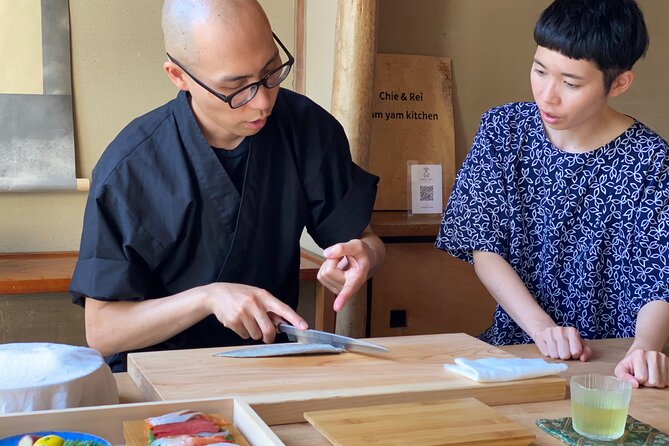
You also practice with traditional Japanese kitchen knives. Knife work is included as part of the lesson, but the available details do not state how much cutting each participant performs or which seafood cuts are prepared in advance.
The instruction includes practical information about fish handling and hygiene. That is important for a seafood class, especially if you have little kitchen experience. You learn not only how to make the food look right, but also how to handle ingredients responsibly.
For safety, follow the hosts’ directions closely and tell them before booking about allergies, dietary restrictions, or ingredients you cannot eat. The supplied details do not promise vegetarian, vegan, allergy-free, or substitution options, so you should not assume that alternatives will be available.
Seasonal ingredients are used, which means the toppings can vary. That is a plus if you enjoy eating according to the time of year, but it also means the exact seafood selection is not fixed in advance. Ask about the planned ingredients if you have strong preferences.
Eating what you made for lunch
At the end, you eat the sushi you prepared. This turns the class into both a cooking workshop and a meal. You can also exchange pieces with others in your group, which lets you compare shapes, fillings, and techniques.
That shared meal is a practical reward for the work. It also fits the hosts’ goal of using food to create friendship and mutual understanding. A handmade piece does not need to look perfect to be satisfying, and the meal gives you a chance to appreciate the differences between everyone’s results.
Some of the strongest comments about the experience focus on the food as well as the teaching. Dessert has also been part of the experience described by one family, but dessert is not listed as a guaranteed part of the standard program. If that matters to you, confirm it before booking.
Because the class begins at 11:00 and lasts about four hours, you should think of it as a late lunch activity rather than a quick breakfast class. The timetable can be adjusted by request, but the provider sets the price for a changed course after discussing your preferences.
Why the teaching style matters for beginners
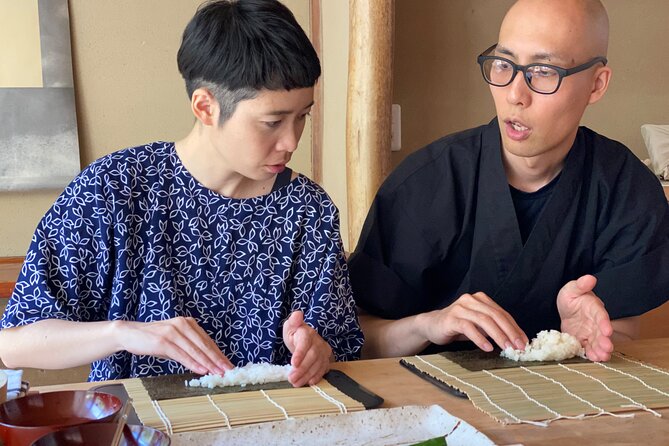
You do not need previous sushi-making experience. Rei and Chie are used to explaining steps more than once, which matters when your hands are occupied and the technique feels unfamiliar.
The teaching is described as careful and friendly, with clear explanations of both the process and the reasons behind it. That combination is more useful than a fast demonstration. You learn what to do, then why the step matters.
This is particularly helpful for families. Children and adults may work at different speeds, and a private group can ask questions without worrying about slowing down strangers. The private format also lets the class feel more personal than a large group workshop.
The class is not only for sushi fans. Its broader cultural discussion can work for someone who feels detached from Japanese culture or dislikes exaggerated national pride. You can take the food seriously without being expected to admire everything uncritically.
What $65.15 buys you
The cost is $65.15 per person. For about four hours, that includes instruction, six sushi styles, seasonal ingredients, use of traditional tools, the food you make, and private-car transport from the station to the home and back.
I consider that a fair price when you want more than a quick roll-making activity. You are paying for personal instruction and a meal, but also for the time spent discussing sushi’s development and showing how different forms work.
The value is strongest for a private group that wants a shared activity. Families and friends can cook together without being mixed into a larger class. If you only want to learn one basic roll and take a few photos, a shorter class may be a better use of your money.
The price can change if you request a different program. The provider has offered much longer instruction, including a 12-hour, two-day course covering everything from cooking rice to full preparation. Contact them before booking if you want a specialist lesson, a longer course, or a different balance of history and cooking.
Free cancellation is available until 24 hours before the start time. Cancellations made less than 24 hours before the class, along with late changes, are not refunded or accepted.
Who should book this Musashino sushi class
I would choose this experience for a family, a couple, or a small private group that wants to cook and eat together. It is also a strong choice for beginners who want patient guidance rather than a rushed demonstration.
You should book it if you care about the story behind food, enjoy working with traditional tools, and like the idea of visiting a private home outside central Tokyo. The variety of sushi forms gives you more to remember than a single roll recipe.
You may want to skip it if you dislike seafood, need guaranteed dietary substitutions, or have a tightly packed Tokyo schedule. The exact seasonal ingredients are not listed, and the class takes a substantial part of the day.
FAQ
Where does the sushi class meet?
You meet at JR Musashi-Sakai Station in Musashino at 11:00 am. The listed meeting address is 2-chōme-1-12 Kyōnanchō, Musashino, Tokyo 180-0023, Japan.
Where does the activity end?
The activity ends back at the meeting point at Musashi-Sakai Station.
How long does the class last?
The standard experience lasts about four hours.
Is transportation included?
Yes. From the station, the hosts drive you to their home in a private car, and the activity ends back at the meeting point.
Is this a private activity?
Yes. Only your group participates.
Do I need sushi-making experience?
No. The class is open to beginners, and no previous experience is required.
Which types of sushi will I make?
You will make nigiri, inarizushi, gunkan, hosomaki, oshizushi, and temari.
Can the class be changed or extended?
Yes. The provider can adjust the class length and content. A longer or customized course receives a price set after discussing your preferences.
What is the cancellation policy?
You can cancel up to 24 hours before the start time for a full refund. Cancellations or changes made less than 24 hours before the activity are not accepted, and the payment is not refunded.
Should you book it?
Book this class if you want a personal, food-centered morning with real hands-on work and a broader look at sushi culture. Rei and Chie’s patient teaching, the six different forms, and the private home setting give the experience more substance than a simple restaurant meal.
Before paying, confirm the seasonal seafood and any dietary needs. Also check that four hours in Musashino fits your Tokyo plans. If it does, $65.15 buys you a useful skill, a handmade meal, and a relaxed way to understand sushi beyond the usual restaurant plate.
New on our Musashino list
- Experience Mikoshi Parade in Kichijoji, Tokyo!★ 5.0 · 3 reviews
- Tokyo Kichijoji 4hr Private Tour: Fun for Kids and Parents★ 4.5 · 3 reviews
- Jindaiji Traditional Temple Purification Tour with Local Soba★ 5.0 · 4 reviews
- Tokyo Kichijoji Twilight: Explore Instagram-Worthy Hidden Spots★ 5.0 · 4 reviews
- 3-Hour Manga Drawing Workshop in Tokyo★ 5.0 · 5 reviews
- Plant-Based Sushi Diversity for All (vegan-friendly)★ 5.0 · 5 reviews
- Samurai Guide Sho’s:Kichijoji Night Training–Drink & Dish Pairing★ 5.0 · 7 reviews
- Small Town in the Big City: Tasting Tokyo’s Kichijoji★ 5.0 · 16 reviews
Sushi Experiences, compared.
Sushi Making Tokyo Roll and Authentic Japanese Sushi Class
Read our review →
Roll and Authentic Sushi Making Class in Asakusa
Read our review →
Make Sushi and Create Unforgettable Memories in Tokyo
Read our review →
Sushi Making Class in a Happi Coat near a Famous Spot
Read our review →
Tokyo Sushi Making Class in Tsukiji with Professional Chef
Read our review →
Tokyo Night Foodie Tour in Shinjuku – Seasonal Sushi, Wagyu Beef
Read our review →
Tsukiji Fish Market Guided Tour and Sushi Making with Pro Chef
Read our review →
Tsukiji Fish Market Sushi Making Class with Pro Chef
Read our review →Browse the lists this tour appears in