
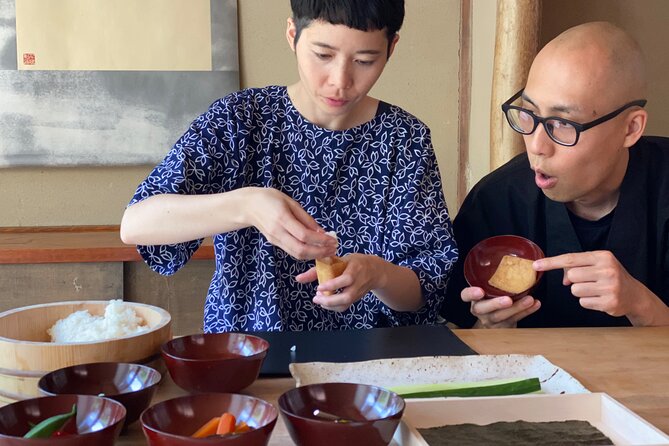
Reviewed · SUSHI EXPERIENCES
Plant-Based Sushi Diversity for All (vegan-friendly)
Sushi here is more than neat rolls and raw fish. At Rei’s home in Musashino, you’ll look at how sushi changed across time and regions, then make six kinds of plant-based sushi with seasonal ingredients and traditional Japanese tools. The class is led by Rei, a cultural storyteller and artist whose work spans Japanese arts and cuisine.
I like the private format, since your group gets direct help rather than being lost in a large cooking class. I also like the wider lesson: sushi becomes a way to discuss culture, daily life, and how food traditions change. The main point to consider is that some kitchen tools may also be used for fish or meat outside this vegan class, even though the equipment is washed and sanitized before you use it.
In This Review
- Key points at a glance
- Meeting Rei at Musashi-Sakai Station
- Why this is not just a sushi-making lesson
- Mixing the sushi rice by hand
- Making six kinds of vegan sushi
- Using traditional Japanese kitchen tools
- Eating what you made with the group
- What makes the private setting worthwhile
- Is $65.04 a fair price?
- Who should book this workshop?
- Practical details before you book
- Should you book Plant-Based Sushi Diversity for All?
- FAQ
- Where does the sushi class begin?
- How long does the activity last?
- Is the class fully vegan?
- Do I need previous sushi-making experience?
- How many kinds of sushi will I make?
- Can the class be changed or extended?
Key points at a glance
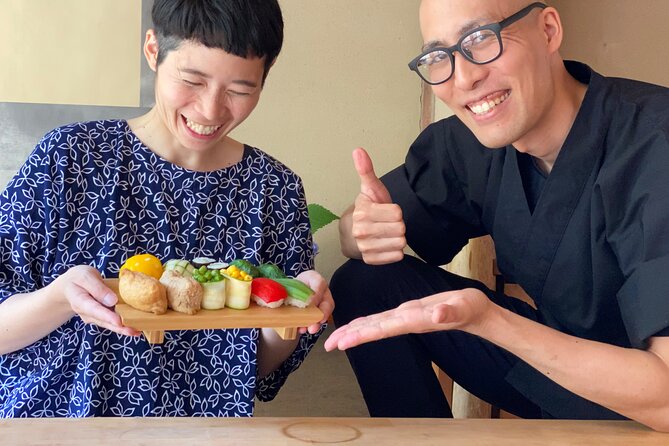
- Six plant-based sushi styles: Prepare a varied set of vegan sushi rather than making only one familiar roll.
- A history lesson with your lunch: Learn how sushi developed and changed across time and regions.
- Traditional tools included: Practice with Japanese kitchen knives and other cooking equipment.
- Private ride to a local home: Meet at JR Musashi-Sakai Station, then travel by private car to the class.
- Four hours of hands-on cooking: Make sushi rice, prepare the food, and eat what you create.
- A thoughtful vegan option: The class is open to all skill levels and centers on shared food and cultural exchange.
Meeting Rei at Musashi-Sakai Station
Your morning begins at 10:00 AM at JR Musashi-Sakai Station in Musashino. From there, Rei drives your group in a private car to the home where the workshop takes place.
That short transfer matters. You are not simply walking into a commercial cooking studio with a row of identical workstations. The class takes place in a home setting, which gives the experience a more personal feel. It also means the meeting instructions deserve your attention. The listed meeting point is JR Musashi-Sakai Station, at 2-chōme-1-12 Kyōnanchō, Musashino, Tokyo 180-0023.
You should plan to arrive on time for the 10:00 start. Since the class includes a ride to the home, a late arrival could affect the whole group’s schedule. A mobile ticket is provided, and confirmation arrives when you book.
The activity is private, so only your own group participates. That makes this a good choice if you want to ask questions freely, need a slower pace, or prefer not to cook in front of a room full of strangers. It also gives Rei more room to adjust the class to your interests.
More sushi mornings and classes:
- Seafood Sushi Diversity for All
★ 5.0 · 8 reviews - Sushi Making Tokyo Roll and Authentic Japanese Sushi Class
★ 5.0 · 3,971 reviews - Tokyo: Roll and Authentic Sushi Making Class in Asakusa
★ 4.9 · 1,957 reviews
Why this is not just a sushi-making lesson
The opening part of the class looks at what sushi means and how it has changed. That is useful because the word sushi now brings one narrow picture to mind for many people: vinegared rice paired with raw seafood. This workshop asks you to set that picture aside.
Rei’s approach treats tradition as something shaped by many communities and changing ways of life, not as one fixed recipe that must be copied exactly. The class connects this idea with the period before industrialization, when food was tied more closely to available ingredients, local habits, tools, and the pace of home cooking.
You do not need to know anything about Japanese food before arriving. The history section gives the cooking a larger frame, while the hands-on work keeps the lesson practical. You learn not only what to do, but why sushi can take different forms.
This is one of the strongest reasons to choose the experience over a basic cooking class. You leave with food in your stomach, but also with a better way to think about Japanese culinary customs. The discussion is especially useful for anyone who enjoys art, food history, or the way ordinary meals can explain a culture.
Mixing the sushi rice by hand
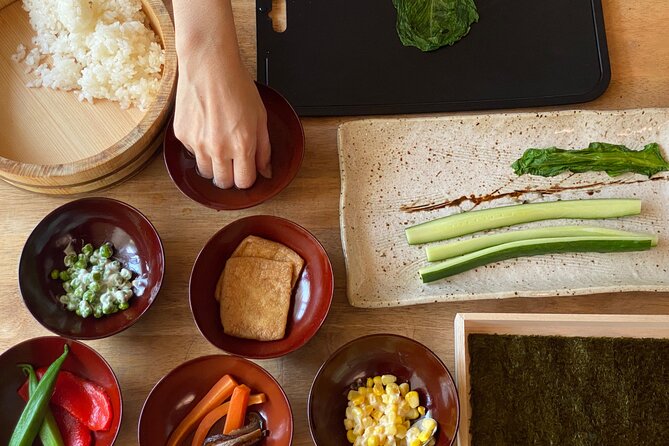
After the introduction, you learn how to prepare sushi rice by mixing it with vinegar. This step may look simple, but it is the base for everything that follows.
The rice needs to be handled with care so it holds together without turning heavy or sticky in the wrong way. You will be shown how the vinegar is mixed in, then use the prepared rice in the different sushi forms. The class is built around doing the work yourself, not watching Rei prepare everything while you wait.
Because the workshop uses seasonal ingredients, the exact plant-based toppings or fillings can vary. That is a plus if you want to see how food changes with the time of year, though it means you should not expect a fixed menu of named sushi pieces in advance.
This part also gives you a chance to ask about the balance between the rice and other ingredients. In a vegan class, texture and seasoning become especially important. The rice supplies much of the structure, while the vegetables and other plant-based ingredients bring contrast.
Making six kinds of vegan sushi
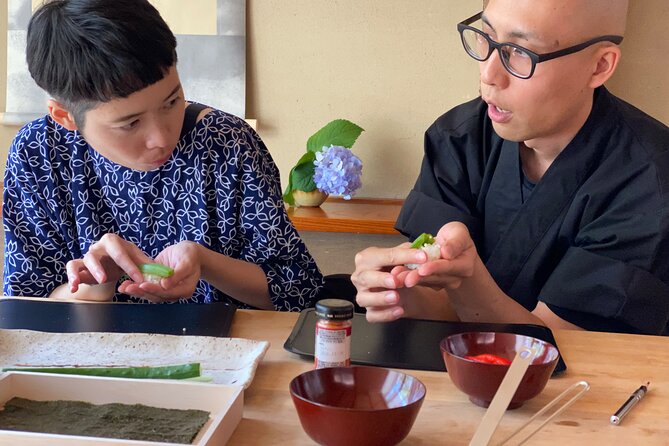
The main cooking session guides you through six types of plant-based sushi. The supplied details do not list the exact six forms, so you should think of the number as a promise of variety rather than a menu you can select ahead of time.
That variety is valuable. A class devoted to one basic roll can teach you a technique, but six styles show how the same core ingredient, seasoned rice, can be shaped and paired in different ways. You get a better sense of sushi as a broad category.
Rei provides hands-on guidance throughout. You will practice forming the sushi, handling ingredients, and working with the tools. Since no previous experience is required, the class should suit a first-time cook as well as someone who already enjoys making food at home.
The class is vegan, but it is not presented as a lesson only for vegans. It is open to everyone, including people who simply want to try a different side of Japanese cooking. That broad welcome fits the class’s central idea: food can create a comfortable place for people with different backgrounds to meet.
You should expect to work at a steady pace for several hours. This is not a quick demonstration followed by a short tasting. The length allows time for explanation, practice, mistakes, and conversation. If you like active classes, that is good news. If you prefer a fast sightseeing stop, four hours may feel long.
A few more Musashino bookings worth comparing
- Vegan Friendly Sushi & Okonomiyaki Shibuya Night Foodie Tour
★ 5.0 · 124 reviews - Ramen & Dumpling Cooking in Tokyo with Chef/Vegan possible
★ 5.0 · 107 reviews - Vegan/Vegetarian Ramen and Gyoza by Bentoya cooking
★ 5.0 · 59 reviews - Ramen Making from Scratch with Tokyo Mom(Vegan Option Available)
★ 5.0 · 39 reviews
Using traditional Japanese kitchen tools
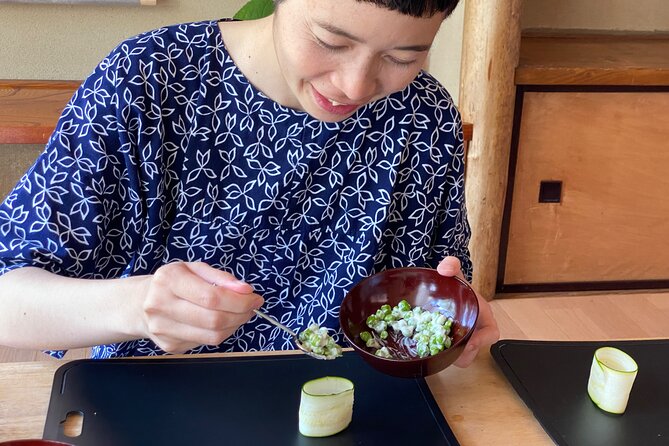
The workshop includes traditional tools, including Japanese kitchen knives. This adds a useful physical element to the class. You are not only learning a recipe. You are learning how the preparation feels when done with tools tied to Japanese cooking.
Knife work requires attention. Listen closely to Rei’s instructions and do not rush to copy a technique before you understand it. The point is to handle the tools with care, not to prove how quickly you can chop.
All equipment is washed and sanitized before your use. The important qualification is that some tools may also be used for preparing fish or meat outside this vegan class. If you need equipment that has never been used with animal products, ask about this before booking.
That detail does not change the fact that the class itself is plant-based. It does matter for people with strict religious, medical, or personal requirements. The provider may be able to discuss preferences and adjust the course, but you should raise the issue in advance rather than assume.
Eating what you made with the group
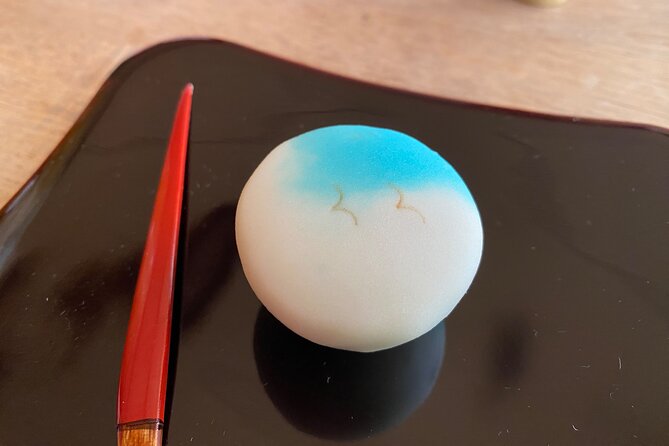
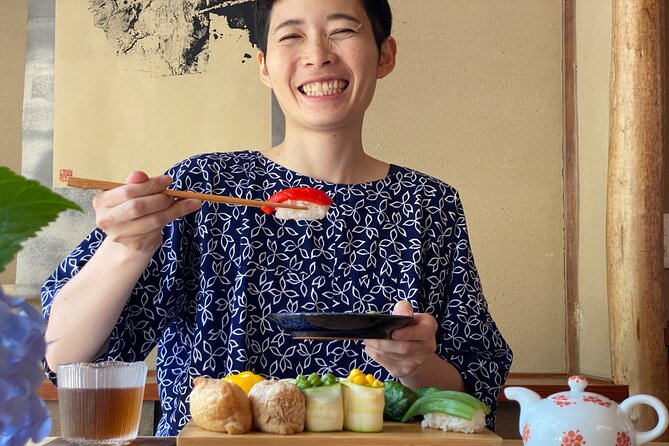
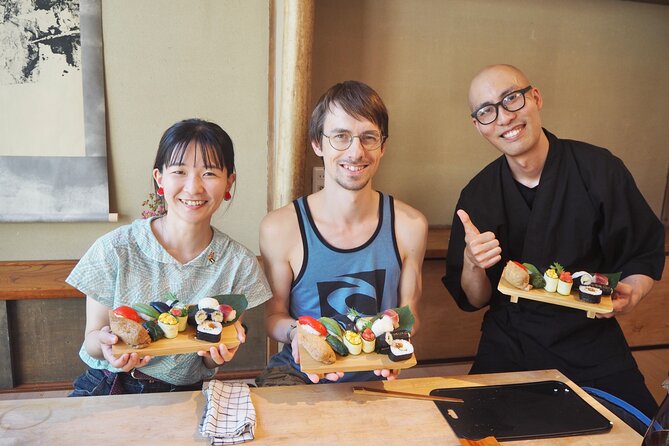
At the end, you eat the sushi you prepared. You can also try the pieces made by the other people in your group, which adds a friendly comparison to the meal.
This shared tasting is more than a reward for finishing the work. It lets you see how different hands produce different results from the same guidance. One person’s sushi may be tightly formed, while another person’s may be more rustic. That is part of the charm of a small cooking class.
The meal also gives you time to talk with Rei and the rest of your group. The experience is built around mutual understanding and friendship through food, so the social part is not an afterthought. If you enjoy meeting people through cooking, this will likely be one of the best parts.
Do not expect a restaurant-style lunch with a long menu. You are eating the sushi you have made, using the techniques and ingredients introduced during the class. The value is in the process as much as the final plate.
What makes the private setting worthwhile
The private format changes the tone. Rei can respond to your questions and adjust the pace for your group. The provider also says the class length and content can be changed if you make arrangements in advance.
A previous custom course lasted 12 hours over two days and covered everything from cooking rice to full preparation. That example shows the workshop is not locked into one rigid format. Still, the standard experience lasts about four hours, and any major change should be discussed before booking so the price and schedule can be set properly.
For most people, four hours is a sensible length. It gives you a real lesson without taking up an entire day. It works well as a quieter change of pace after busy sightseeing in central Tokyo, although the meeting point in Musashino means you need to build the station trip into your plans.
You should also remember that this is a home-based experience. It may not have the polished feel of a purpose-built culinary school. That is part of its appeal, but it also means the setting is more personal and less standardized.
Is $65.04 a fair price?
At $65.04 per person, this is not the cheapest way to eat sushi in Tokyo. You can buy a meal for far less, and a basic cooking demonstration may cost less as well.
The price makes more sense when you count what is included: about four hours, a private group, transport by car from the station, instruction from Rei, seasonal ingredients, traditional tools, and the meal you prepare. You are paying for time and personal attention, not just food.
The cultural discussion also adds value. Rei’s background in traditional Japanese arts and cuisine gives the class a wider focus than a recipe lesson. You are learning how food connects with changing customs and different ideas of tradition.
I would call the price fair for someone who wants an intimate, thoughtful activity rather than a quick meal. It is less attractive if your main goal is simply to sample vegan sushi or if your schedule is packed with major Tokyo sights.
Because the experience is private, the value improves when two or more people in your party are interested in cooking and conversation. A solo booking may still be worthwhile, but the social exchange is a bigger part of the class when your group is willing to share and compare its results.
Who should book this workshop?
I would point this class toward several types of visitors:
- You want a vegan or plant-based food activity in Japan.
- You like learning the story behind a dish, not just copying instructions.
- You prefer a private lesson to a large group class.
- You have no sushi-making experience and want patient, practical guidance.
- You enjoy traditional tools and hands-on preparation.
- You are curious about how Japanese customs change over time.
- You want a four-hour activity with a local, home-based setting.
It may not suit you if you want to choose every ingredient in advance, avoid tools that may have been used with animal products, or spend the morning at a fast pace. The class also asks you to travel to Musashi-Sakai Station and then continue by private car, so it is not the simplest option if you are staying far from Musashino.
The experience is particularly appealing to couples, families, friends, and small private groups with different food preferences. Since the class is open to all, a vegan participant can join people who are simply curious about plant-based Japanese cooking.
Practical details before you book
The activity starts at 10:00 AM and ends back at the meeting point. It lasts about four hours. The meeting point is JR Musashi-Sakai Station, and the group then travels to Rei’s home by private car.
Confirmation is provided at booking, and the activity is near public transportation. You receive a mobile ticket, so keep it available on your phone.
Free cancellation is available if you cancel at least 24 hours before the local start time. Cancellations or changes made within 24 hours are not accepted for a refund. This is worth noting because the class involves a private schedule and transport arrangement.
If you have questions about ingredients, tool use, or the pace of the workshop, contact the provider before booking. The class can be adjusted in some cases, but the content and price should be agreed in advance.
Should you book Plant-Based Sushi Diversity for All?
Book it if you want sushi explained as a living food tradition, not just a famous Japanese dish. The combination of six plant-based sushi styles, traditional tools, a private home setting, and Rei’s wider cultural approach gives you a full morning with substance.
I especially like the way the class links food preparation with friendship and cultural exchange. It also earns points for welcoming beginners and people who are not vegan. Just be clear about the equipment policy, and allow enough time to reach Musashi-Sakai Station.
Skip it if you only want a quick tasting, a fixed menu, or a central Tokyo activity with no transfer. For the right person, though, the $65.04 price buys more than lunch. It buys time to learn, cook, talk, and understand why sushi has never been only one thing.
FAQ
Where does the sushi class begin?
The class begins at JR Musashi-Sakai Station at 10:00 AM. The listed meeting address is 2-chōme-1-12 Kyōnanchō, Musashino, Tokyo 180-0023, Japan.
How long does the activity last?
The standard workshop lasts approximately four hours. It ends back at the meeting point.
Is the class fully vegan?
The class itself is vegan and uses plant-based ingredients. Some tools may also be used for cooking fish or meat outside this class, even though all equipment is washed and sanitized before your use.
Do I need previous sushi-making experience?
No. The class is open to all skill levels, and no experience is required.
How many kinds of sushi will I make?
You will learn to make six types of plant-based sushi using seasonal ingredients and traditional Japanese tools.
Can the class be changed or extended?
The class length and content can be adjusted by prior arrangement. Custom options, including longer courses, should be discussed with the provider before booking so the price can be set accordingly.
New on our Musashino list
- Experience Mikoshi Parade in Kichijoji, Tokyo!★ 5.0 · 3 reviews
- Tokyo Kichijoji 4hr Private Tour: Fun for Kids and Parents★ 4.5 · 3 reviews
- Jindaiji Traditional Temple Purification Tour with Local Soba★ 5.0 · 4 reviews
- Tokyo Kichijoji Twilight: Explore Instagram-Worthy Hidden Spots★ 5.0 · 4 reviews
- 3-Hour Manga Drawing Workshop in Tokyo★ 5.0 · 5 reviews
- Samurai Guide Sho’s:Kichijoji Night Training–Drink & Dish Pairing★ 5.0 · 7 reviews
- Seafood Sushi Diversity for All★ 5.0 · 8 reviews
- Small Town in the Big City: Tasting Tokyo’s Kichijoji★ 5.0 · 16 reviews
Sushi Experiences, compared.
Sushi Making Tokyo Roll and Authentic Japanese Sushi Class
Read our review →
Roll and Authentic Sushi Making Class in Asakusa
Read our review →
Make Sushi and Create Unforgettable Memories in Tokyo
Read our review →
Sushi Making Class in a Happi Coat near a Famous Spot
Read our review →
Tokyo Sushi Making Class in Tsukiji with Professional Chef
Read our review →
Tokyo Night Foodie Tour in Shinjuku – Seasonal Sushi, Wagyu Beef
Read our review →
Tsukiji Fish Market Guided Tour and Sushi Making with Pro Chef
Read our review →
Tsukiji Fish Market Sushi Making Class with Pro Chef
Read our review →Browse the lists this tour appears in