
Reviewed · SUSHI EXPERIENCES
Learn Sushi-grade fish with a licensed guide @Yokohama fishmarket
Yokohama Fish Market gives you something Tokyo’s famous fish markets cannot: a close look at a working local market with a guide who has fished from Hokkaido to Kyushu for more than 50 years. You’ll see fish, shellfish, vegetables, tuna, bones, and eyes up close, then learn how the catch reaches the stalls and how to judge freshness.
I like the tiny group size, limited to two people, and the practical focus on sushi ingredients rather than a quick walk past counters. I also like the chance to taste free tuna and learn useful Japanese fish names and questions. The main drawback is the early 7:30 am start, plus wet, slippery floors and a setting that may not suit anyone uneasy around raw fish.
In This Review
- Key points to know before you book
- Why Yokohama Fish Market makes sense for sushi fans
- Starting at Yokohama Station at 7:30 am
- Inside the wholesale market
- Fish names, freshness, and old preservation methods
- The free tuna tasting and tuna preparation
- Ending among restaurants and sushi counters
- What the $55.28 price delivers
- Who should book this early morning experience
- Timing, weather, and cancellation details
- Should you book the Yokohama fish market tour?
- FAQ
- Where does the tour start?
- What time does the tour begin?
- How long does the experience last?
- How far is the market from Yokohama Station?
- Is food included in the tour price?
- How much does a sushi meal cost?
- Can I taste tuna during the tour?
- How many people can join the tour?
- Is the market suitable for someone uncomfortable with raw fish?
- What should I wear for the market visit?
- What happens if bad weather cancels the tour?
Key points to know before you book
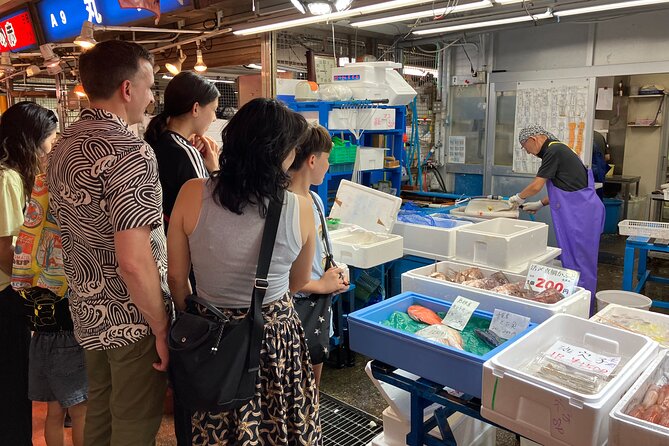
- A true wholesale market visit: You receive permission to enter the full market area, not just the restaurant section.
- A guide with 50 years of fishing experience: Learn how fish are caught, handled, kept fresh, and preserved before modern freezing.
- Free tuna tasting: You can taste tuna during the visit and buy fresh fillets or blocks if you wish.
- A maximum of two people: The small group makes it easier to ask questions and follow explanations in the local market setting.
- Optional sushi afterward: In-market restaurants sell sushi and fish dishes, with a sushi set costing about ¥2,200.
- Practical footwear matters: The market floor can be slippery, so leave high heels at your hotel.
Why Yokohama Fish Market makes sense for sushi fans
Many visitors head straight to Tokyo for fish markets, but Yokohama offers a different kind of morning. This tour takes you into an active wholesale market where fish from more than 20 local fishing grounds arrives for sale. You are not simply looking at a display designed for sightseeing. You are learning how the products move through a working food market.
The guide has spent more than five decades fishing from Japan’s northern island of Hokkaido to Kyushu in the south. That background matters because the tour covers more than names and translations. You learn how fish are caught, how they are kept fresh, and how seafood was preserved before freezing became common.
I especially like that the lesson connects the fish on the counter with the sea and the people who handle it. If you eat sushi often but know only a few familiar fish, this can make a restaurant menu much easier to understand later.
The tour also gives you Japanese words for fish and teaches you how to ask the fish’s name. That is a small but useful skill. You can use it at a sushi counter, in a market, or when you want to identify an unfamiliar topping instead of pointing and hoping for the best.
More sushi mornings and classes:
- Yokohama: Sushi & Gyoza Cooking with Matcha Experience
★ 5.0 · 4 reviews - Sushi Making Tokyo Roll and Authentic Japanese Sushi Class
★ 5.0 · 3,971 reviews - Tokyo: Roll and Authentic Sushi Making Class in Asakusa
★ 4.9 · 1,957 reviews
Starting at Yokohama Station at 7:30 am
Meet your guide at the north gate of JR East Yokohama Station at 7:30 am. From there, you walk about 15 minutes to the fish market. Build that walk into your plans, especially if you are carrying luggage or arriving after a long train ride.
The early start is part of the appeal. Fish markets are tied to the morning trade, so you see the market at a useful time rather than after the day’s best activity has passed. It also leaves you with most of the day free in Yokohama or Tokyo.
The tradeoff is simple: this is not a late-morning sightseeing activity. If you dislike early starts, the schedule may feel demanding. I would book it on a morning when you can sleep well the night before and reach Yokohama Station without rushing.
The walk to the market is not long, but wear shoes with a firm grip. The market floor can be very slippery, and high heels are specifically discouraged. Comfortable walking shoes are the sensible choice.
Inside the wholesale market
Once inside, you walk through the market with permission to access the wholesale area. The guide explains what you are seeing as you move among fish and seafood caught that morning at local fishing grounds.
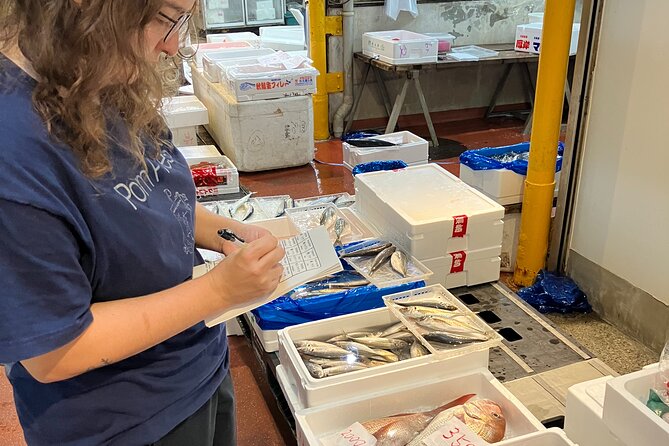
Expect a working environment, not a polished food hall. You may see raw fish, fish eyes, bones, shellfish, and other parts of the trade that are usually hidden from a restaurant customer. That makes the experience more honest, but it also means this is a poor fit if you do not want to see seafood in its unprepared form.
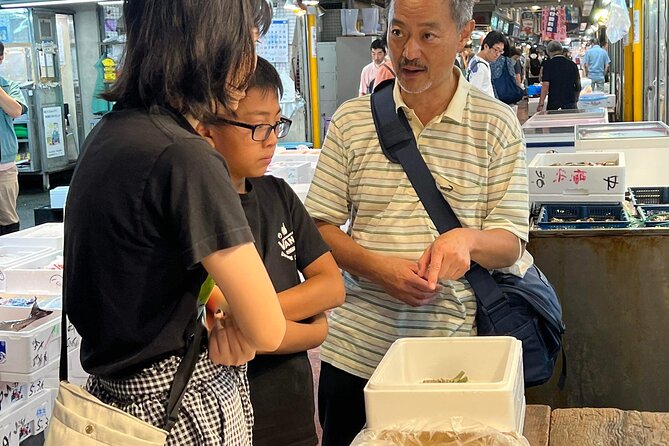
The guide helps you read the market. Local Yokohama dialect can make conversations difficult for visitors who do not speak Japanese, even when the subject seems straightforward. With someone interpreting the names and explanations, you can focus on the products instead of trying to guess what sellers are saying.
Along the way, expect questions and quizzes. This gives the walk some structure and keeps you paying attention to differences among fish. You are not only being told facts. You are asked to recall what you have learned, which can help the information stick.
Fish names, freshness, and old preservation methods
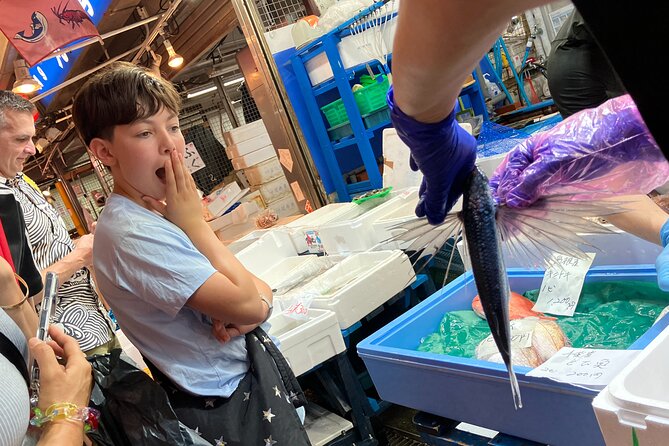
The strongest part of the tour is its practical instruction. You learn how fish are caught and transported, how freshness is maintained, and how seafood was preserved before freezing technology became widespread.
That context helps explain why certain fish are treated in particular ways. It also gives you a better sense of what fresh means in a market setting. Freshness is not just a slogan on a menu. It depends on the catch, timing, handling, storage, and preparation.
The guide’s fishing background adds a useful connection between the market and Japan’s many fishing regions. Hokkaido and Kyushu are far apart, and the tour uses that broad experience to explain the range of seafood found in Japan.
You also learn cooking tips. The exact tips can vary with the fish you encounter, but the focus is practical: how ingredients are used and what makes them suitable for sushi or other dishes. This is more useful than memorizing a long list of Japanese words with no idea how the ingredients fit into a meal.
More Yokohama outings:
- Authentic Sumo Experience in Tokyo: Enter the Sanctuary
★ 5.0 · 603 reviews - EVO, WRX, Skyline – JDM Night Run to Daikoku Car Meet
★ 4.9 · 478 reviews - Tokyo: Best Price Daikoku Parking Area JDM Car Meet
★ 4.9 · 192 reviews - Daikoku & Tokyo Private JDM Tour by 700HP R34 GT-R
★ 4.9 · 101 reviews
The free tuna tasting and tuna preparation
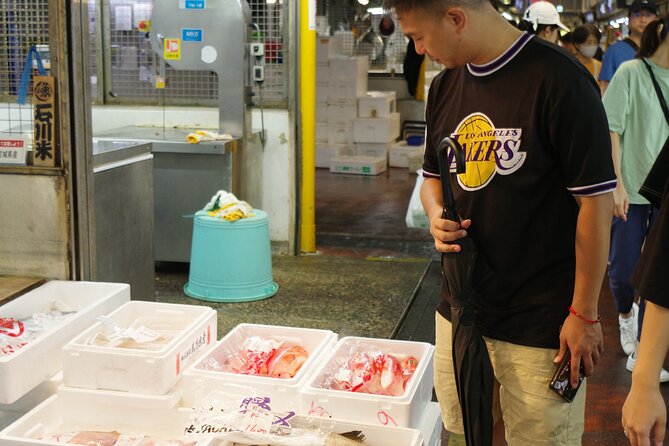
A highlight is the chance to taste free tuna during the tour. You can also purchase tuna fillets or blocks if you want to take some with you.
The market may include a tuna dismantling presentation, with explanations of how the large fish is broken down. This is one of the clearest ways to connect the whole fish with the neat slices served at a sushi restaurant. You see that sushi is not just about attractive pieces on a plate. There is skill and careful cutting behind each portion.
The tuna segment is especially useful for sushi fans who want to understand cuts and preparation. You should not expect the food portion to be a full breakfast, though. The tour price includes the market access and tasting opportunity, but not a meal.
If you buy tuna, remember that the tour does not include food or bottled water. You are responsible for the cost of anything you purchase and for handling it afterward. The information provided does not promise a cooler or transport service, so ask your guide before making a larger purchase.
Ending among restaurants and sushi counters
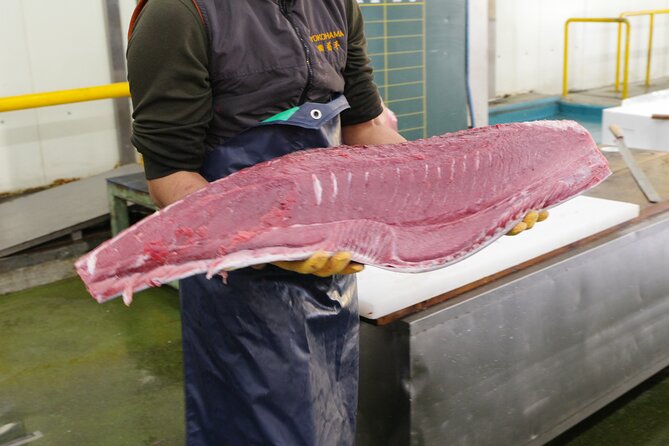
After the market walk, the guide takes you around the in-market restaurants and shops. This is where you can turn the morning lesson into lunch or an early breakfast.
Sushi is optional, and the food bill is separate. A sushi set menu costs about ¥2,200, which gives you a useful budget figure before you arrive. You might also find other fish dishes, depending on the restaurant or shop you choose.
The planned return to Yokohama Station is around 9:00 to 9:30 am, but you can stay behind to eat at the market. That flexible ending is helpful. You can keep the tour to its advertised two-hour length if you have plans, or remain for a meal if the market has made you hungry.
I would not book this expecting an included sushi feast. The better way to see it is as a market lesson with an optional meal afterward. That keeps the base price reasonable and lets you decide how much to spend on food.
What the $55.28 price delivers
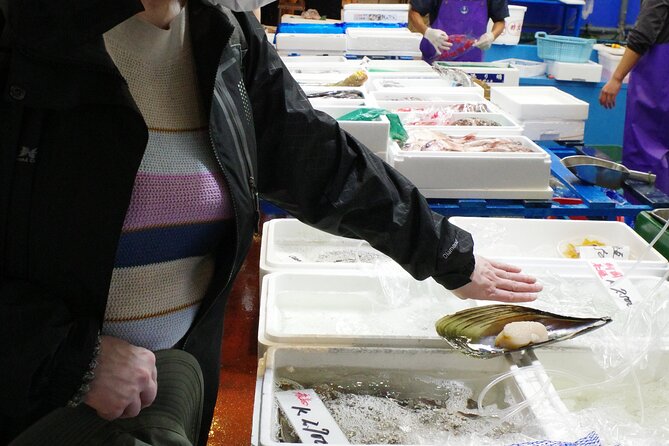
At $55.28 per person, this is not the cheapest way to see fish in Japan. You are paying for access to a wholesale market, a licensed guide, translation help, and a highly personal group experience rather than simply wandering through a public food area.
The group limit is important here. With no more than two people, you have a better chance to ask about a fish, stop for an explanation, or take part in the quizzes without being lost in a crowd. For someone serious about sushi, that personal attention can justify the price.
The value depends on your interests. If you only want a quick look at seafood stalls, you can probably spend less elsewhere. If you want to understand Japanese fish, ask questions in a market where language can be a barrier, and learn from someone with long fishing experience, the price is easier to defend.
Remember to add the cost of your meal, drinks, and any fish you buy. A sushi set is about ¥2,200, while bottled water and soda are not included.
Who should book this early morning experience
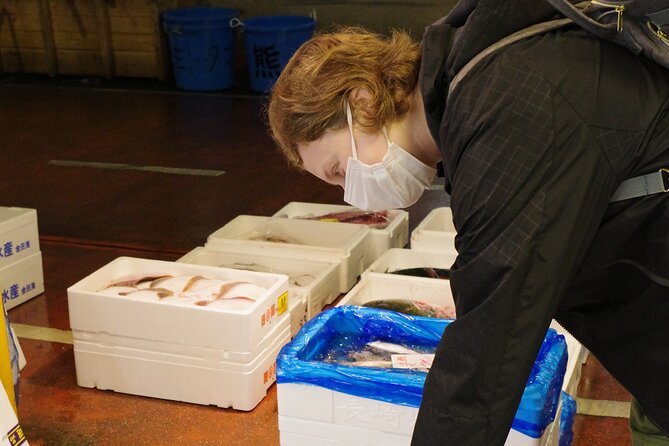
I would recommend this tour to:
- Sushi lovers who want to recognize more than salmon and tuna
- People who enjoy food markets and working environments
- Visitors who want an authentic Yokohama activity close to Tokyo
- Anyone interested in fishing, seafood handling, or Japanese food vocabulary
- Couples or friends who value a private-feeling group of no more than two people
It is also a good choice if you have already seen Tokyo’s major sights and want a food-focused morning outside the usual route. Yokohama Station is about 25 minutes from Tokyo, according to the tour information, so it can fit into a wider Tokyo-area itinerary.
I would skip it if you dislike raw fish, fish eyes, bones, wet floors, or early mornings. The tour does not hide the market’s working side, and that is precisely why some people will love it while others will not.
Timing, weather, and cancellation details
The activity lasts about two hours, starting at 7:30 am and usually returning to Yokohama Station around 9:00 to 9:30 am. The meeting and ending point is Yokohama Station, at 2 Chome-16 Takashima, Nishi Ward, Yokohama.
You receive booking confirmation at the time of reservation. Free cancellation is available if you cancel at least 24 hours before the start time. Cancellations or changes made inside that window are not refunded or accepted.
The experience requires good weather. If poor weather forces a cancellation, you are offered another date or a full refund. Keep that in mind when building the tour into a tightly scheduled holiday.
Should you book the Yokohama fish market tour?
Book it if you want more than a photo stop. The combination of a licensed guide, a maximum of two people, free tuna tasting, Japanese fish vocabulary, and access to a genuine wholesale market gives you a useful look at how sushi begins.
The best reason to choose it is the guide’s fishing experience and the chance to ask questions in a market where local language can otherwise shut you out. The best reason to hesitate is the early hour, slippery floor, extra food cost, and very direct contact with raw seafood.
For sushi fans, food-market regulars, and curious visitors who do not mind an unpolished setting, I think the tour offers good value. Wear sensible shoes, arrive ready for a 15-minute walk, and budget separately for the sushi meal. If that sounds like your kind of morning, this is a more personal way to learn Yokohama’s fish culture than simply stopping at a restaurant.
FAQ
Where does the tour start?
The tour starts at the north gate of JR East Yokohama Station, at 2 Chome-16 Takashima, Nishi Ward, Yokohama, Kanagawa 220-0011, Japan.
What time does the tour begin?
The start time is 7:30 am.
How long does the experience last?
The experience lasts approximately two hours. The group usually returns to Yokohama Station around 9:00 to 9:30 am.
How far is the market from Yokohama Station?
You walk about 15 minutes from the station to the fish market.
Is food included in the tour price?
No. Food is not included. You can visit the market restaurants and buy sushi or other fish dishes at your own expense.
How much does a sushi meal cost?
An approximate sushi set menu price is ¥2,200.
Can I taste tuna during the tour?
Yes. Free tuna tasting is included as part of the market experience. You can also purchase fresh tuna fillets or blocks.
How many people can join the tour?
The activity has a maximum of two travelers.
Is the market suitable for someone uncomfortable with raw fish?
The tour is not recommended for people who do not want to see raw fish, fish eyes, or fish bones.
What should I wear for the market visit?
Avoid high heels. The market floor can be very slippery, so walking shoes with good grip are recommended.
What happens if bad weather cancels the tour?
If poor weather causes a cancellation, you are offered a different date or a full refund.
New on our Yokohama list
- Yokohama Chinatown: Authentic Local Street Food Experience★ 4.7 · 3 reviews
- Yokohama: A City at the Corner of Tradition and Modernity★ 4.7 · 3 reviews
- 【50 mins】 City lights HelicopterTour: Tokyo and Yokohama plan★ 5.0 · 3 reviews
- Wheelchair Accessible Taxi from HND to Yokohama Port★ 5.0 · 3 reviews
- Tokyo/yokohama: Full Day Nikko Private Sightseeing Trip★ 5.0 · 3 reviews
- Eat like a local in Yokohama – with a Local Expert Guide!★ 4.7 · 3 reviews
- Tokyo JDM Daikoku PA Car Meet Private LEXUS RC Tour from Yokohama★ 5.0 · 3 reviews
- Yokohama: Soba Noodle Workshop with a Soba Master★ 5.0 · 3 reviews
Sushi Experiences, compared.
Sushi Making Tokyo Roll and Authentic Japanese Sushi Class
Read our review →
Roll and Authentic Sushi Making Class in Asakusa
Read our review →
Make Sushi and Create Unforgettable Memories in Tokyo
Read our review →
Sushi Making Class in a Happi Coat near a Famous Spot
Read our review →
Tokyo Sushi Making Class in Tsukiji with Professional Chef
Read our review →
Tokyo Night Foodie Tour in Shinjuku – Seasonal Sushi, Wagyu Beef
Read our review →
Tsukiji Fish Market Guided Tour and Sushi Making with Pro Chef
Read our review →
Tsukiji Fish Market Sushi Making Class with Pro Chef
Read our review →Browse the lists this tour appears in