
Reviewed · SUSHI EXPERIENCES
Make Sushi and Create Unforgettable Memories in Tokyo
Making sushi in Tokyo is far more satisfying than simply ordering a plate at a restaurant. In this hands-on Asakusa class, you learn to shape nigiri, roll maki, and prepare other sushi styles, then sit down to eat what you made. The setting is close to Sensoji Temple, so it fits neatly into a morning or afternoon of sightseeing.
I especially like the clear English instruction and the generous meal. You also get a small lesson in sushi history and culture, not just a quick assembly exercise. The main consideration is group size: as many as 30 people may attend, although the class is divided into smaller working groups. Instruction can feel less like a professional chef course and more like a lively family activity.
In This Review
- Key points to know before booking
- Why making sushi beats simply eating it
- Starting near Sensoji Temple in Asakusa
- What the 1-hour-40-minute class is like
- The sushi you make and eat
- The cultural lesson adds useful context
- A strong choice for families and solo visitors
- Is $79.59 a fair price?
- Practical details that affect your day
- Who should book this sushi class?
- FAQ
- Where does the sushi-making class meet?
- How long does the activity last?
- Is the class taught in English?
- Do I need cooking experience?
- What types of sushi can I make?
- Is the food included?
- Can children take part?
- What is the cancellation policy?
Key points to know before booking
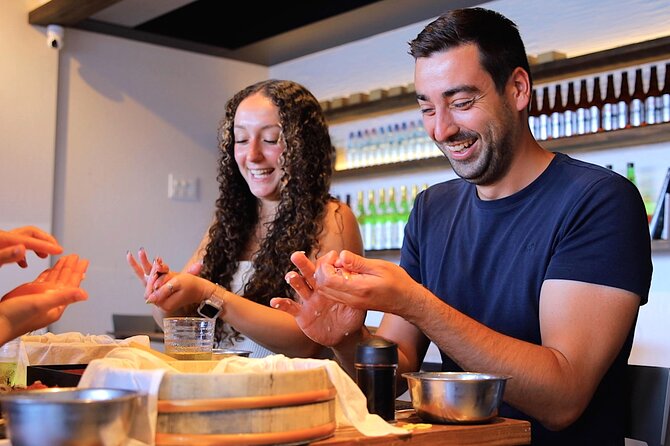
- Make several sushi styles: Practice nigiri, maki rolls, hand rolls, and in some sessions cute temari sushi.
- Eat what you prepare: Portions can include eight maki pieces and eight nigiri pieces per person, enough for a filling meal.
- English-speaking instructors: Staff members including Ken, Momo, Yuto, Rino, Yui, and others guide the class.
- Easy Asakusa location: Meet at 2-chome-17-9 Kaminarimon, just steps from Sensoji Temple and near public transportation.
- Good for mixed-age groups: Children, teenagers, solo visitors, couples, and families can all take part without prior cooking skills.
- Allow 1 hour 40 minutes: The class is a compact activity that works well between Asakusa sights.
Why making sushi beats simply eating it
Tokyo gives you endless chances to eat sushi. You can find everything from inexpensive conveyor-belt plates to polished counter service. This class offers something different: it lets you understand the small movements behind food that often looks simple.
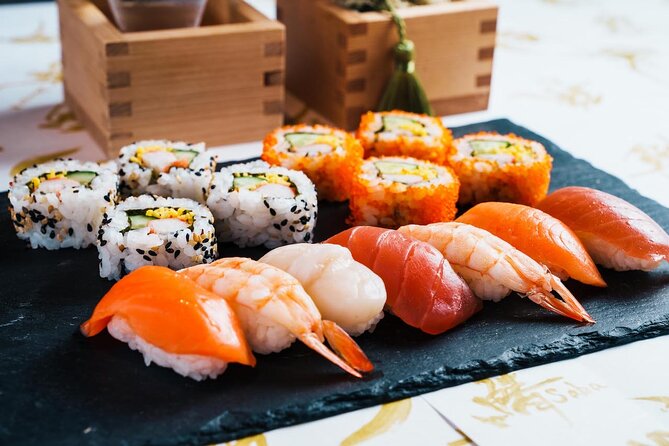
Nigiri is a good example. At first glance, it seems to be just rice and fish. In practice, the rice needs the right pressure, the topping needs to sit neatly, and the finished piece must hold together without being compressed into a brick. The instructors break the process into short steps, which makes the task manageable for a first attempt.
You also work with rolled sushi. Some sessions include maki, inside-out rolls, hand rolls, and temari-style sushi. The temari pieces are especially appealing if you enjoy food with a visual side, since the small rounded shapes can look almost too neat to eat.
I like that the class gives you both a skill and a story. The introduction covers sushi origins and types, adding context to the meal. You are not expected to leave as a sushi chef, but you should leave with a better sense of how Japanese cooks balance rice, seafood, shape, and presentation.
More sushi mornings and classes:
- Sushi Making Tokyo Roll and Authentic Japanese Sushi Class
★ 5.0 · 3,971 reviews - Tokyo: Roll and Authentic Sushi Making Class in Asakusa
★ 4.9 · 1,957 reviews - Tokyo: Sushi Making Class in a Happi Coat near a Famous Spot
★ 4.9 · 1,377 reviews
Starting near Sensoji Temple in Asakusa
The meeting point is at 2-chome-17-9 Kaminarimon, Taito City, Tokyo 111-0034. This puts you in Asakusa, one of the easiest Tokyo districts for pairing food with sightseeing. Sensoji Temple is only a short walk away, making the class simple to add before or after a visit to the temple grounds.
That location matters. You do not need to spend half a day crossing Tokyo for a 100-minute activity. If you are already planning to see Sensoji, Kaminarimon Gate, or the traditional streets around Asakusa, the class becomes a natural part of your day rather than a separate excursion.
The activity ends where it begins. Hotel pickup and drop-off are not included, so you handle your own route to the class. The mobile ticket is useful for a phone-based itinerary, but I would still check the meeting address carefully before setting out. Tokyo addresses can be confusing, especially when several nearby streets use similar names.
What the 1-hour-40-minute class is like
The class begins with an introduction from an English-speaking instructor. Staff members have included Ken, Momo, Yuto, Rino, Yui, Ayu, Kento, and others, so the exact teaching team can vary. The tone is friendly and energetic, with cultural information mixed into the practical work.
Ingredients and cooking equipment are prepared for you. That saves time and keeps the class focused on making sushi rather than shopping, measuring, or cleaning a kitchen. You can expect the instructor to demonstrate each stage, then give you a chance to copy it.
The work generally moves through several sushi forms. You may begin with a simpler style before trying rolled sushi, then tackle nigiri, which requires a little more control. One useful feature of the class is that the demonstrations are broken into manageable steps, so children and first-time cooks can take part.
The class has a maximum of 30 people. That is not a tiny private lesson, and one person described a session with more than 30 participants. Still, the larger group is split into smaller subgroups for the actual work, and the staff circulate to help.
This arrangement has two sides. A bigger class can bring more energy and make solo visitors feel less conspicuous. It also means you may need to pay attention during demonstrations and ask for help when the room gets active. If you want advanced knife work or a quiet masterclass, this is probably not the right format.
The sushi you make and eat
The meal is the heart of the experience. Ingredients for the class and the food you prepare are included in the price, so you are not paying separately for the main meal. Reports from the class describe portions of roughly eight maki pieces and eight nigiri pieces per person, though the exact selection may vary.
That is a useful amount of food for a short activity. You are not merely decorating one small roll and calling it lunch. Several people found the portion filling, and the fresh fish and range of ingredients received consistent praise.
The ingredients also appear designed to keep the class approachable. You work with prepared components, which lets you spend your time on technique and presentation. The focus includes traditional Japanese sushi styles rather than only novelty shapes.
Not every piece will look perfect. That is part of the fun. Nigiri can be harder than it appears, and your first roll may be loose, uneven, or slightly overfilled. The instructors help you turn the results into something edible, and eating your own work gives the class a satisfying finish.
Some sessions offer non-raw options, which is helpful for children or anyone who does not eat raw fish. The class has also accommodated shellfish and gluten-free needs in individual cases. I would contact the provider in advance about allergies or dietary restrictions rather than assume every substitution is automatic.
A few more Tokyo bookings worth comparing
- Mt Fuji and Hakone 1-Day Bus Tour Return by Bullet Train
★ 5.0 · 26,383 reviews - 1-Day Tokyo Bus Tour
★ 5.0 · 14,250 reviews - Tokyo: TOKYO SKYTREE® Admission ticket
★ 4.5 · 11,192 reviews - Tokyo: teamLab Planets TOKYO Digital Art Museum Entry Ticket
★ 4.6 · 9,779 reviews
The cultural lesson adds useful context
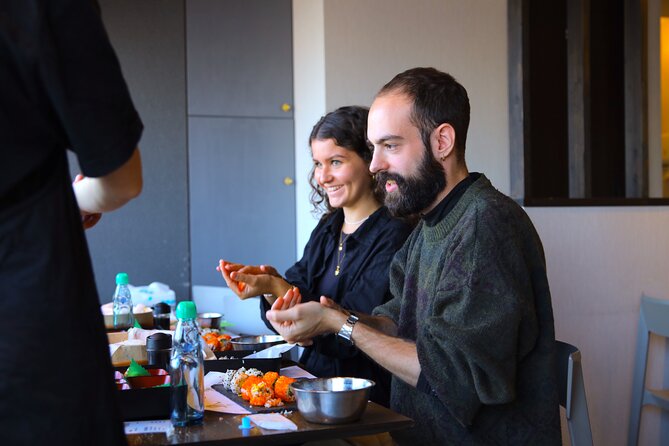
A short food class can easily become a craft project with no connection to the place you are visiting. This one includes an explanation of sushi history and the origins of different styles, which gives the activity more purpose.
You learn why nigiri, maki, hand rolls, and temari sushi look and feel different. That background helps you recognize what you see later in sushi shops around Tokyo. It also gives children and teenagers a simple way to connect a meal with Japanese culture.
The teaching is aimed at international visitors, so the explanations are described as professional and easy to follow. English is used throughout. The pace is generally comfortable, though one participant found that an instructor occasionally spoke a little quickly. In a lively room, it pays to watch the demonstration closely and ask questions when needed.
I would treat the cultural material as a pleasant introduction, not a full culinary lecture. The class gives you useful facts and practical techniques, but the main goal is participation, not specialist training.
A strong choice for families and solo visitors
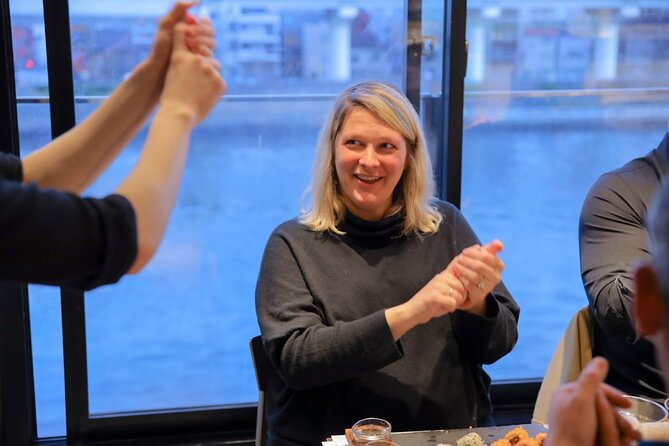
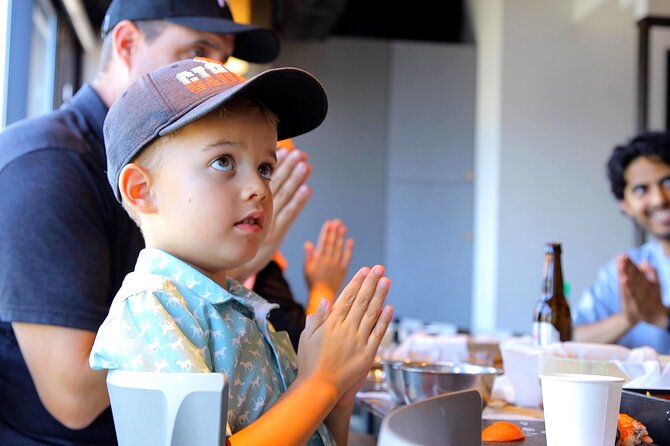
Families are a natural match for this activity. Children around 10 and 11 have been able to follow the instructions, and teenagers have enjoyed the funny, welcoming teaching style. The hands-on format gives younger visitors something to do, rather than asking them to stand quietly through a long explanation.
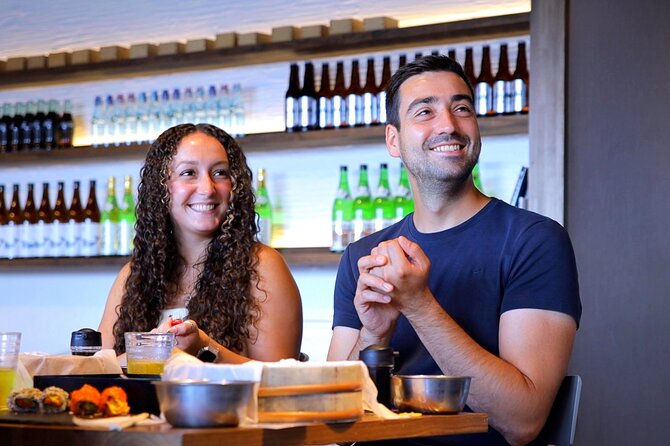
The activity also works well for a solo visitor. You are placed in a social setting where everyone has the same task, so conversation comes easily. A solo participant can learn, make a meal, and leave with a shared memory without needing to arrange a private group.
Couples and friends will find it easy to enjoy together, too. The process creates plenty of small moments to laugh about, especially when the first nigiri does not quite resemble the instructor’s version. Photos are encouraged at the end, giving you a record of the finished sushi and the class itself.
People with serious culinary ambitions should set their expectations correctly. The instruction teaches basic techniques and gives useful confidence, but it is not an apprenticeship at a sushi counter. One less enthusiastic assessment found the level too simple for a professional course. That is a fair warning, and it helps define the activity clearly.
Is $79.59 a fair price?
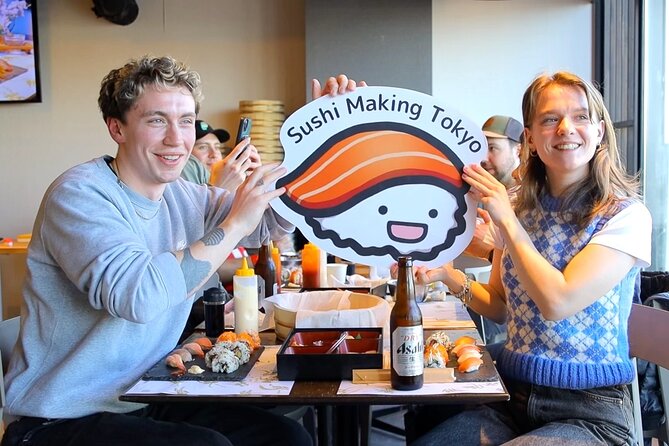
At $79.59 per person, this is not the cheapest meal you will find in Asakusa. You could eat sushi for less, especially at a casual restaurant. The price makes more sense when you count the English instruction, ingredients, equipment, cultural explanation, and the full meal you prepare yourself.
I see the value in the activity rather than in the food alone. You are paying for about 100 minutes of structured participation in a central Tokyo district. It can also replace another lunch or afternoon snack, since the portions are reported to be generous.
The price is strongest for families and people who want an experience they can talk about after the meal. It is less compelling for someone who only wants high-end sushi or a quiet restaurant lunch. Sake and other drinks may cost extra, so check before ordering. One useful language tip from the class is that set in Japan usually means a combination meal, not a single drink.
The activity has a 99 percent recommendation rate and a five-star score based on 1,413 reviews, along with two TripAdvisor Best of the Best awards. Those numbers suggest unusually steady satisfaction, though they do not change the basic trade-off: this is an entertaining beginner class, not a formal chef course.
Practical details that affect your day
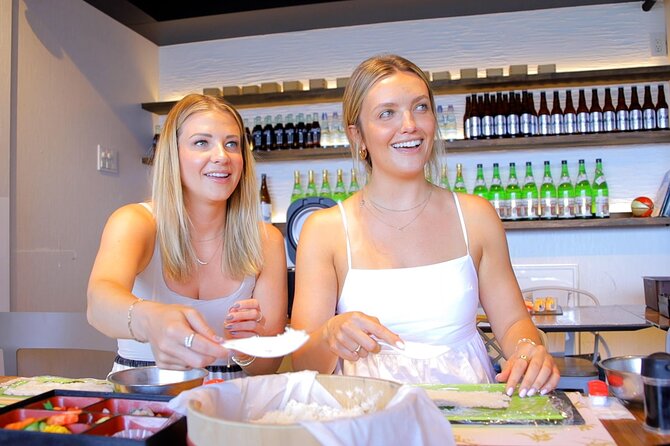
Confirmation arrives at booking, and the mobile ticket makes entry simple. The activity is near public transportation, but hotel transfers are not included. Plan your route so you arrive at the Kaminarimon address on time.
The class accepts service animals. The maximum group size is 30 people, and the activity requires a minimum number of participants. If that minimum is not met, you are offered another date or experience, or a full refund.
Free cancellation is available up to 24 hours before the start time. Canceling or changing the booking less than 24 hours ahead does not qualify for a refund, and the cut-off uses Tokyo local time. That matters if you are booking from another time zone.
Since the activity lasts only 1 hour 40 minutes, it is easy to fit into a day that includes Sensoji Temple and Asakusa. I would avoid placing it too close to a train departure or another timed reservation. A few extra minutes help in a busy part of Tokyo.
Who should book this sushi class?
I would choose this class if you want an approachable way to connect food with Japanese culture. It suits families, teenagers, first-time sushi makers, couples, groups of friends, and solo visitors. The English instruction removes much of the stress, and the meal means you get a practical return for your time and money.
I would skip it if you want advanced sushi theory, professional knife skills, or a very small private lesson. The class can feel crowded, and the teaching is designed for broad appeal rather than expert cooks.
For most people, the best reason to book is simple: you make several types of sushi, learn enough to understand what you are doing, and eat the results near one of Tokyo’s most historic sights. If that sounds more appealing than another restaurant meal, this is a smart Asakusa stop.
FAQ
Where does the sushi-making class meet?
The meeting point is 2-chome-17-9 Kaminarimon, Taito City, Tokyo 111-0034, Japan. The location is near Sensoji Temple and public transportation.
How long does the activity last?
The class lasts approximately 1 hour and 40 minutes. It ends back at the original meeting point.
Is the class taught in English?
Yes. An English-speaking instructor guides you through the sushi-making process and explains sushi history and cultural details.
Do I need cooking experience?
No. The class is designed for beginners, and no previous sushi-making or cooking experience is required.
What types of sushi can I make?
The class teaches sushi rolls and authentic nigiri. Depending on the session, you may also make maki, hand rolls, or temari-style sushi.
Is the food included?
Yes. The class ingredients and the meal you make are included in the price. Drinks such as sake may involve an additional charge.
Can children take part?
Yes. The activity is suitable for families, and children and teenagers have been able to follow the instructions and make sushi.
What is the cancellation policy?
You can cancel up to 24 hours before the start time for a full refund. Changes or cancellations made less than 24 hours before the start time are not accepted for a refund.
New on our Tokyo list
- From Tokyo: Mount Fuji & Hakone Full Day Private Tour★ 4.9 · 25 reviews
- Tokyo Spectacular View Day-Cruise in 90 Minutes★ 5.0 · 25 reviews
- Real Tokyo Runner Club : Daikoku Car Meet Night Tour with JDM Car★ 5.0 · 25 reviews
- 2.5 Hour-Guided Cycle Tour in the Central Tokyo★ 5.0 · 25 reviews
- Ramen Making from Scratch +Akihabara Tour –Cooking Class★ 5.0 · 25 reviews
- [Self-Drive] Tokyo & Daikoku Custom Car Driving Tour★ 4.9 · 25 reviews
- Tokyo: 2-Hour Night Bike Tour of the City’s Hidden Gems★ 4.9 · 25 reviews
- Samurai themed Entertainment show in Shinjuku★ 4.5 · 25 reviews
Sushi Experiences, compared.
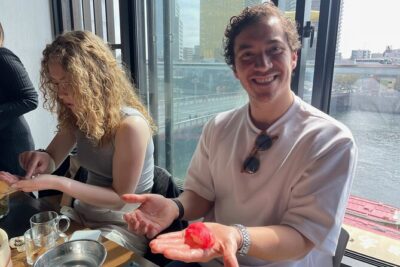
Sushi Making Tokyo Roll and Authentic Japanese Sushi Class
Read our review →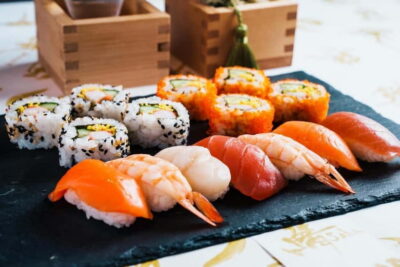
Roll and Authentic Sushi Making Class in Asakusa
Read our review →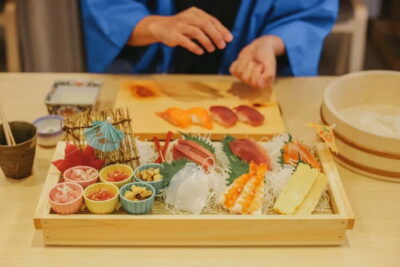
Sushi Making Class in a Happi Coat near a Famous Spot
Read our review →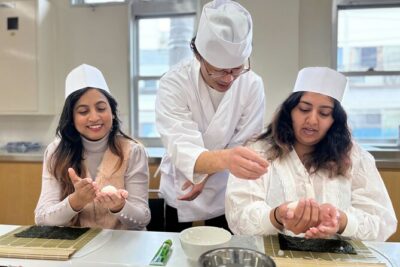
Tokyo Sushi Making Class in Tsukiji with Professional Chef
Read our review →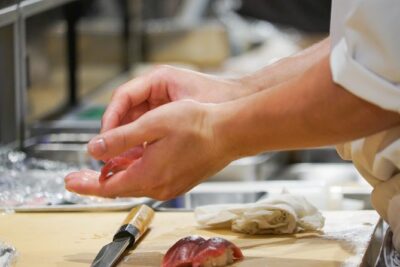
Tokyo Night Foodie Tour in Shinjuku – Seasonal Sushi, Wagyu Beef
Read our review →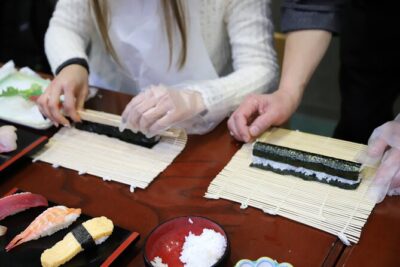
Tsukiji Fish Market Guided Tour and Sushi Making with Pro Chef
Read our review →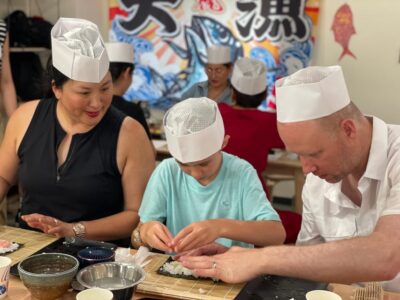
Tsukiji Fish Market Sushi Making Class with Pro Chef
Read our review →
Browse the lists this tour appears in