
Reviewed · SUSHI EXPERIENCES
Tokyo: Sushi Making Class in a Happi Coat near a Famous Spot
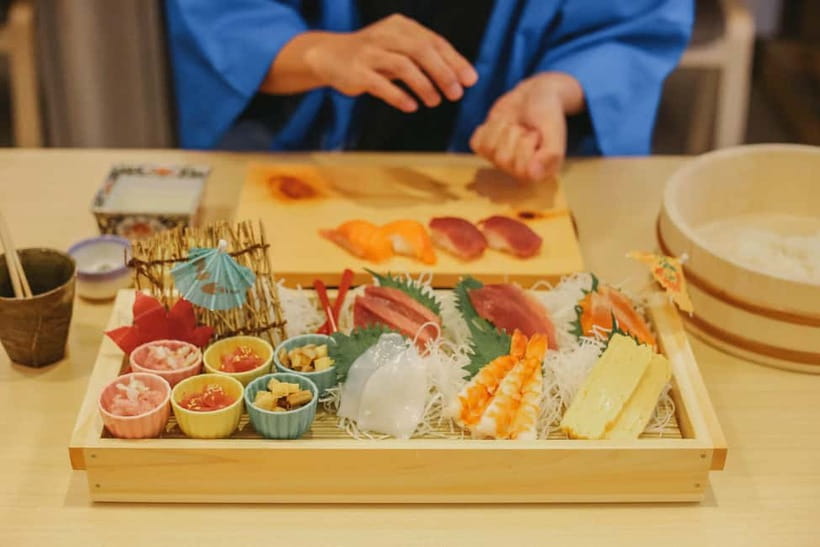
Making sushi in Tokyo is more satisfying when you do more than watch a chef work. At SUSHI GARYU, you put on a traditional happi coat, learn the basic hand movements, then shape tuna and salmon nigiri under a chef’s direction. Some sessions also include maki or other rolls.
I like the generous food portion and the friendly, small-group feel. Instructors such as Hide, Mikoto, Kohji, Ami, Emi, and Masa have been praised for clear English, patience, humor, and practical tips. The main consideration is that the meeting point varies by booking option, and you may share a table with other customers.
In This Review
- Key points to know before you book
- A 90-minute introduction to sushi craft
- Putting on the happi coat
- Learning nigiri with tuna and salmon
- Maki and rolls may add variety
- Why the instructors matter
- Small groups, shared tables, and private-feeling sessions
- Eating the sushi you prepared
- Dietary needs require planning
- Finding the meeting point in a busy Tokyo day
- What the $42 price really covers
- Who should book this Tokyo sushi class
- Should you book SUSHI GARYU?
- FAQ
- How long is the sushi-making class?
- How much does the class cost?
- Which languages are offered?
- What sushi will I learn to make?
- Can I request vegetarian, vegan, or gluten-free food?
- Can children take part?
Key points to know before you book
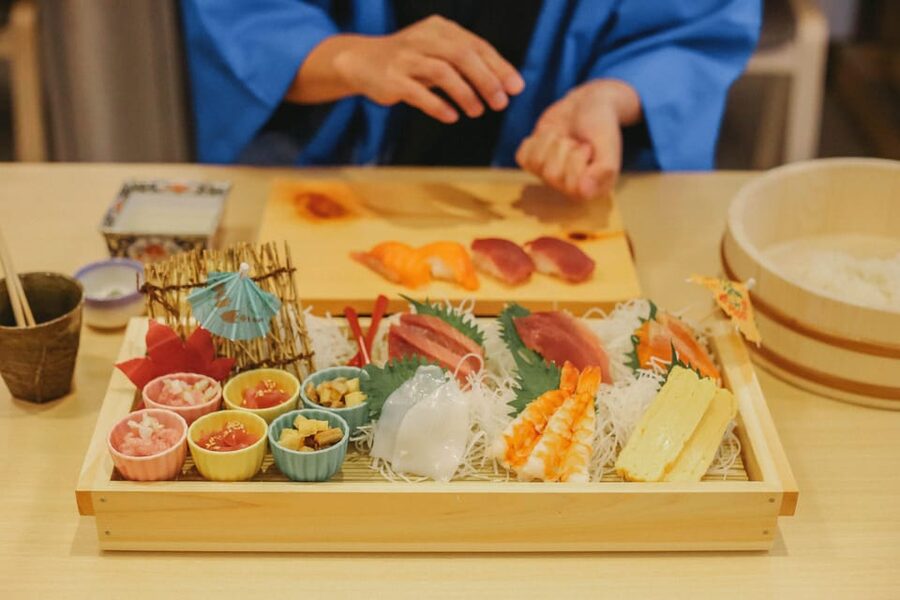
- You make and eat your own sushi: The class is not just a demonstration. You prepare the sushi, then sit down to enjoy it as a proper meal.
- Nigiri is the main skill: Tuna and salmon are central ingredients, with some sessions also covering maki, onigiri, or other rolls.
- Happi coats make the photos memorable: The traditional tube-sleeved coat adds a playful Japanese touch and creates good picture opportunities.
- The teaching is beginner-friendly: Chefs explain each step slowly and help you correct your technique as you work.
- The class can feel quite personal: Some hosts work with about five people, and quiet time slots may become private lessons.
- Dietary requests need advance notice: Vegetarian, vegan, and gluten-free options are available, but you must send the request before the day of the class.
A 90-minute introduction to sushi craft
This is a compact workshop, not a full-day culinary course. In 90 minutes, you get a practical look at how sushi is prepared, enough hands-on time to make several pieces, and time to eat what you have made.
The format suits a Tokyo itinerary well. You can fit it between major sights, use it as a lunch activity, or book it early in your trip so you can try the technique again at home. At $42 per person, the price includes the cooking class, ingredients, and instructor. Since you also eat the finished sushi, the cost compares well with a standard meal plus a separate cultural activity.
The class is designed for beginners. You do not need prior knife skills or sushi experience. The chef demonstrates the process, then gives you a turn. This matters because sushi can look simple from across a counter, but shaping rice with the right pressure takes practice.
More sushi mornings and classes:
- Sushi Making Tokyo Roll and Authentic Japanese Sushi Class
★ 5.0 · 3,971 reviews - Tokyo: Roll and Authentic Sushi Making Class in Asakusa
★ 4.9 · 1,957 reviews - Make Sushi and Create Unforgettable Memories in Tokyo
★ 5.0 · 1,413 reviews
Putting on the happi coat
The happi coat is more than a costume prop, though it certainly makes the class more fun. This traditional Japanese-style coat has wide, tube-like sleeves and gives the workshop a clear visual link to Japanese festival and workwear traditions.
You wear it while preparing sushi and can use the setting and props for photos. Several people have especially liked having pictures and short videos taken during the activity. If you are traveling as a couple, with children, or with friends, these images give you a souvenir that feels connected to the experience rather than simply another city snapshot.
The coat also helps set the mood from the start. You are not standing behind glass watching a professional. You are given a role, a workstation, and a task. That simple change makes the class feel active.
Learning nigiri with tuna and salmon
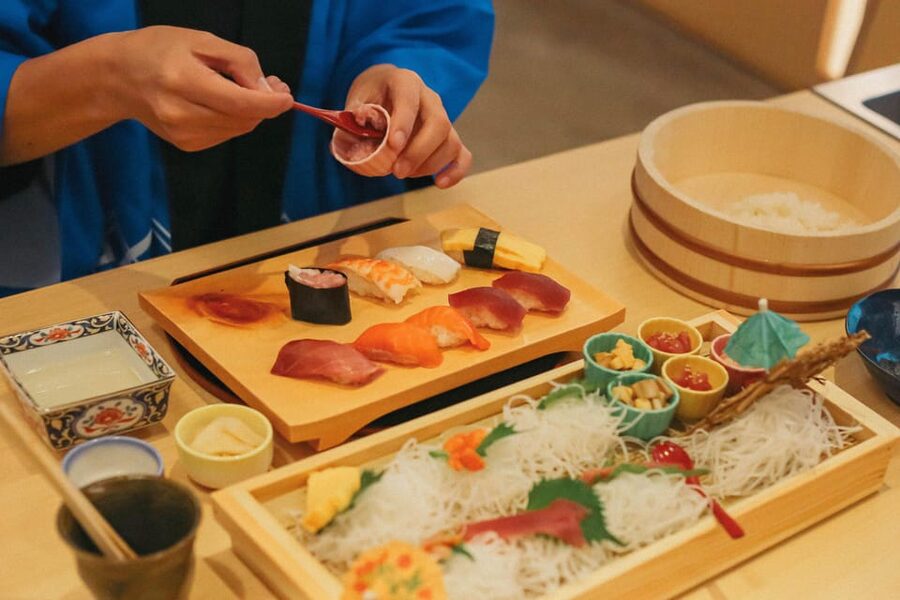
Nigiri is the heart of the workshop. It consists of a small hand-shaped mound of seasoned rice topped with fish. The class focuses on familiar choices such as tuna and salmon, which makes it approachable for first-time sushi makers.
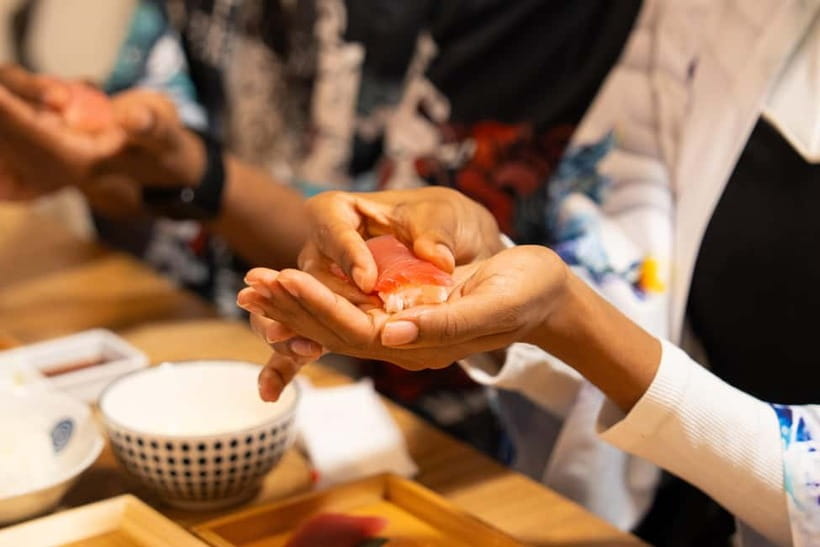
Your chef explains how to handle the rice and fish, then shows you the correct shape. The key lesson is control. Press too hard and the rice becomes dense. Press too lightly and the piece falls apart. The instructor’s job is to show you the balance, then give you enough time to try it yourself.
The strongest part of this format is the immediate feedback. You can ask why a piece cracked, why the rice did not hold, or how much topping to use. Instructors including Mikoto, Ami, Mai, and Mizuki have been praised for patient explanations and hands-on help.
You also get cultural context along the way. The lesson is not only about assembling food. It connects the ingredients, presentation, and careful movements to Japanese food traditions. Guides have also offered food and sightseeing suggestions, which can be useful if this is one of your first days in Tokyo.
Maki and rolls may add variety
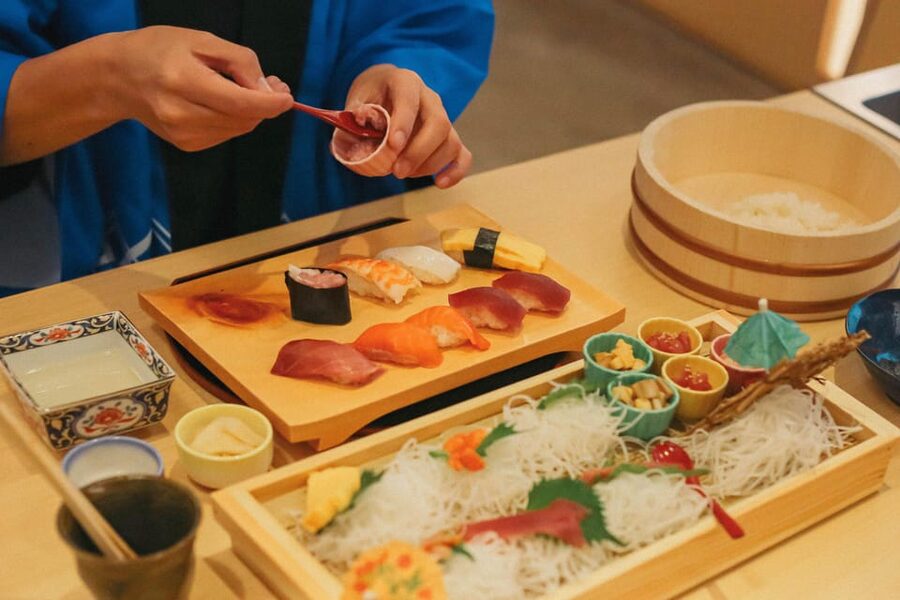
The advertised focus is nigiri, but the class experience can include other forms of sushi. Several sessions have covered maki, onigiri, or sushi rolls, giving you a second technique to take home.
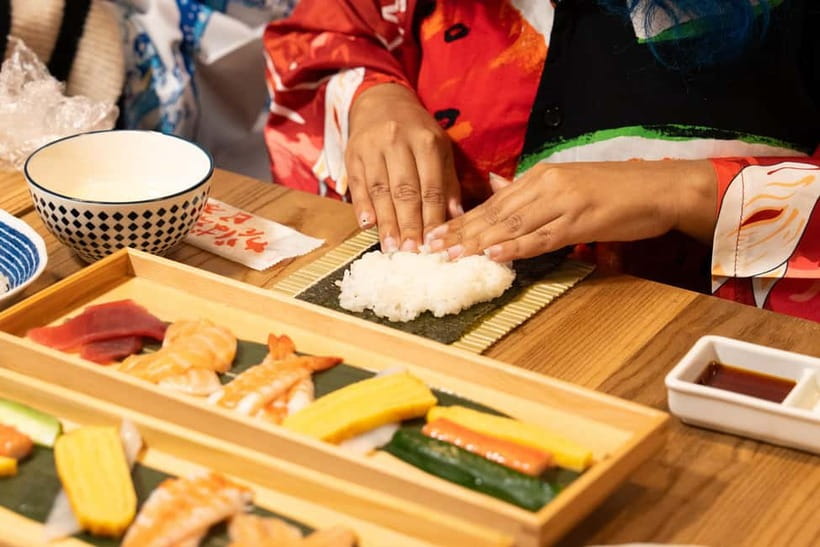
Maki requires a different approach. Instead of shaping a topping onto rice, you spread ingredients and roll them together. It is often easier for beginners to understand at first, but getting a neat, firm roll still takes practice.
This added variety is helpful if you want more than one new kitchen skill. It also keeps the class moving. You may switch between making individual nigiri and preparing rolls, then arrange the finished pieces before eating.
The exact menu can vary by session or option, so I would not book this expecting a fixed restaurant-style tasting menu. Book it for the teaching and hands-on work. The food is the reward at the end, but the real value is learning how to repeat the process at home.
A few more Tokyo bookings worth comparing
- Tokyo Shinjuku Chopsticks Making Class
★ 5.0 · 1,763 reviews - Chopstick Making Workshop in Ginza
★ 4.8 · 1,366 reviews - Tokyo Sushi Making Class in Tsukiji with Professional Chef
★ 5.0 · 1,177 reviews - Ramen & Gyoza Cooking Class in Tokyo with Local Supermarket Visit
★ 5.0 · 823 reviews
Why the instructors matter
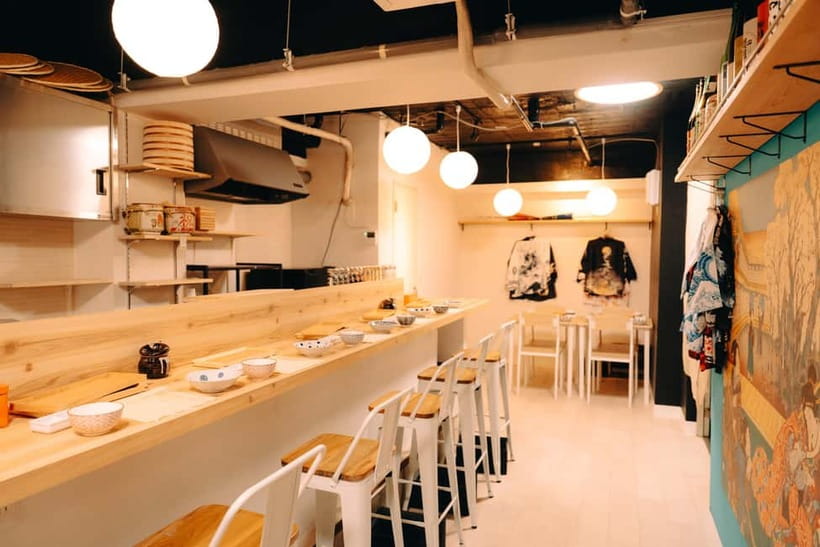
A sushi class succeeds or fails on the teacher. Here, the strongest praise has focused on the instructors’ warmth, clear explanations, and ability to make nervous beginners relax.
Hide has been described as skilled, funny, and good at explaining both technique and tradition. Kohji and Mikoto have helped participants through the process with a friendly approach. Ami has made both maki and nigiri easy to understand, while Masa and Mai have been singled out for keeping the steps simple.
You may be taught by someone else. The listed teaching languages are English and Japanese, and many sessions have had strong English support. That is important for a class based on small hand movements. If you cannot understand the pressure or order of each step, the practical benefit drops.
The teaching style also appears conversational. You can ask questions about sushi, Japanese culture, or food elsewhere in the country. Some people have received restaurant suggestions and local advice after the cooking portion finished.
Small groups, shared tables, and private-feeling sessions

The class can be intimate without guaranteeing a private booking. One arrangement has placed about five people with one host, while other participants used a separate instructor. Depending on how busy the venue is, you may be seated with other customers.
That setup has two sides. A shared table can make the class more social, especially if you enjoy meeting people from other countries. It can also mean less individual space than you would have in a private lesson.
The time of day may affect the feel. A quiet booking has sometimes turned into a private class for two people or even one person. That gives you more freedom to ask questions and get corrections. Still, you should treat that as a possible bonus, not a promise.
Families can also use the format well. One parent described children enjoying the activity and finding the process easier than expected. Children over four are charged according to the applicable fee, while younger children may share a dish. Check the child pricing and arrangement when booking.
Eating the sushi you prepared
The final meal is a big part of the value. You do not simply make a few sample pieces and leave. You eat the sushi prepared during the session, and the portions can be generous enough to serve as lunch.
That creates a useful sense of payoff. Even if your first nigiri looks uneven, it tastes better because you understand the work behind it. You also leave with a clearer idea of what to look for when ordering sushi in Japan.
Freshness is important here, and the ingredients have been praised as fresh and tasty. The central choices are tuna and salmon, with additional sushi types possible depending on the class. This is not positioned as an elaborate chef’s tasting, so keep your expectations in the right place. It is a hands-on meal built around learning.
If you plan to eat a large dinner soon after, the generous portion may be more than you need. For a lunch slot, though, it can replace a separate meal and make the $42 price easier to justify.
Dietary needs require planning
Vegetarian, vegan, and gluten-free options are available, which makes this activity more flexible than a standard sushi counter experience. You must tell the operator in advance by message.
Do not wait until you arrive. The instructions clearly warn that a same-day request may not be possible. The same applies to food allergies. Send the details before the class so the team has time to prepare.
The standard class uses fish, especially tuna and salmon. If you do not eat seafood, confirm the exact substitute ingredients before booking. The stated availability of vegetarian, vegan, and gluten-free options is encouraging, but advance communication remains essential.
Finding the meeting point in a busy Tokyo day
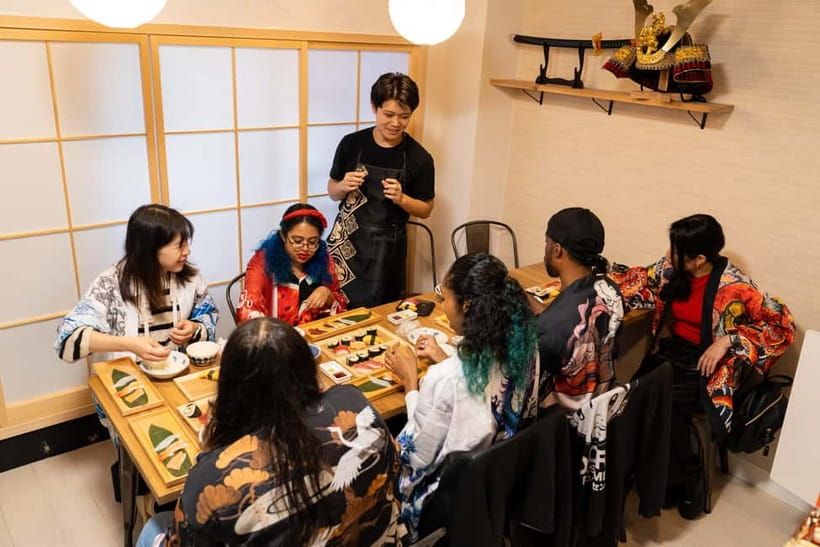
The meeting point depends on the option you select. That is the main practical detail to watch when you book.
Tokyo is easy to navigate once you know the exact station, street, and building, but a vague assumption about the neighborhood can cost you time. Save the meeting instructions, check the map before leaving your hotel, and allow extra time. One person found the location slightly hard to locate, even though it became manageable once they understood the route.
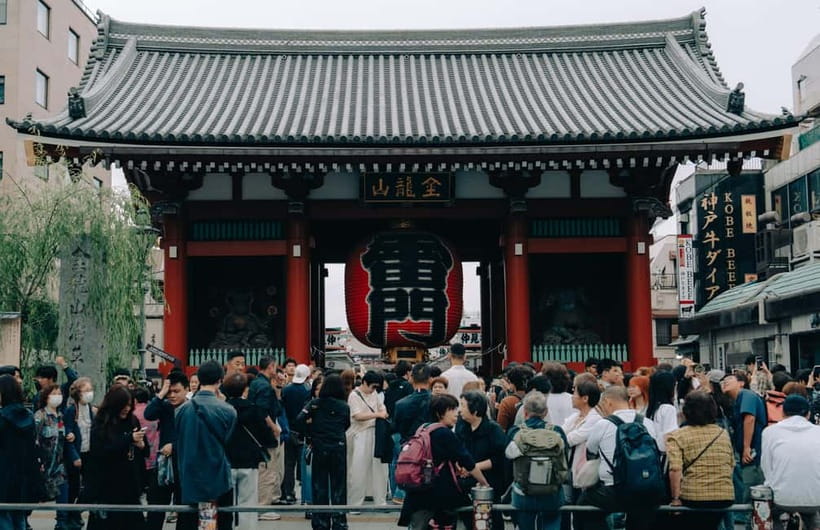
This also matters if you are booking around a temple, market, or another famous Tokyo sight. The class can fit neatly into a sightseeing day, and one itinerary paired it with a visit to a nearby temple and markets afterward. Just confirm the actual location for your selected option rather than relying on the general description.
Arriving late is not ideal because the instructor must keep the group moving. Still, the teaching team has shown patience when people were delayed, including in bad weather. I would not count on that flexibility, but it is reassuring if Tokyo transport causes trouble.
What the $42 price really covers
At $42, you are paying for three things: instruction, ingredients, and a meal you prepare yourself. You also receive the cultural setting, the happi coat, and the chance to take photos.
That is good value for a 90-minute activity, especially if you want an experience rather than another restaurant meal. A standard lunch might cost less, but it would not teach you a skill or give you the same interaction with a sushi chef.
The value is strongest for couples, families, and food-minded visitors. Couples get a playful date activity. Families get a task children can take part in. Solo visitors can benefit from the social table and the chance to chat with the guide and other participants.
It is less useful for you if you already make sushi often or want advanced professional training. The workshop is aimed at beginners, and the pace is intentionally friendly rather than technical.
The booking terms add some useful flexibility. You can reserve now and pay later, and cancellation is free up to 24 hours before the activity for a full refund. Starting times depend on availability, so check the schedule that fits your day.
Who should book this Tokyo sushi class
I would put this high on the list for first-time visitors who want a simple way to connect with Japanese culture through food. You get more contact with the craft than you would from ordering sushi at a restaurant, but without committing to a long cooking course.
It also works well for:
- Couples looking for an easy shared activity
- Families with children who can participate in food preparation
- Solo visitors who enjoy small-group classes
- Food lovers who want a skill to practice at home
- Visitors with a short Tokyo stay who need a compact activity
- Anyone who wants photos in a happi coat
You should think twice if you need a guaranteed private lesson, a fixed menu, or advanced sushi training. Group seating can change, the meeting point depends on the option, and additional sushi types may vary.
Should you book SUSHI GARYU?
Yes, if you want a friendly, practical sushi lesson that also functions as lunch. The 4.9 rating from 1,377 reviews matches the most consistent strengths: clear instruction, warm hosts, fresh ingredients, generous portions, and a relaxed setting.
The best reason to book is not simply that you will eat sushi in Tokyo. It is that you will understand the basic movements behind it, take a few photos in a happi coat, and leave with a skill you can try again at home.
Book ahead if you need vegetarian, vegan, gluten-free, or allergy-friendly preparation. Check the meeting point carefully, allow time to find it, and treat a private-feeling session as a lucky possibility rather than a guarantee. For $42 and 90 minutes, this is a strong choice for a hands-on Tokyo afternoon or a memorable lunch with a little Japanese tradition built in.
FAQ
How long is the sushi-making class?
The activity lasts 90 minutes. Check the available starting times when you select your booking option.
How much does the class cost?
The listed price is $42 per person. The cooking class, ingredients, and instructor are included.
Which languages are offered?
Instruction is available in English and Japanese.
What sushi will I learn to make?
The main focus is nigiri sushi using ingredients such as tuna and salmon. Depending on the session, you may also make maki, onigiri, or other sushi rolls.
Can I request vegetarian, vegan, or gluten-free food?
Yes. These options are available, but you must inform the operator in advance by message. Same-day requests may not be possible.
Can children take part?
Children over four years old are charged according to the listed child fee. Children under four may share a dish. Check the booking details for the exact arrangement and pricing.
New on our Tokyo list
- From Tokyo: Mount Fuji & Hakone Full Day Private Tour★ 4.9 · 25 reviews
- Tokyo Spectacular View Day-Cruise in 90 Minutes★ 5.0 · 25 reviews
- Real Tokyo Runner Club : Daikoku Car Meet Night Tour with JDM Car★ 5.0 · 25 reviews
- 2.5 Hour-Guided Cycle Tour in the Central Tokyo★ 5.0 · 25 reviews
- Ramen Making from Scratch +Akihabara Tour –Cooking Class★ 5.0 · 25 reviews
- [Self-Drive] Tokyo & Daikoku Custom Car Driving Tour★ 4.9 · 25 reviews
- Tokyo: 2-Hour Night Bike Tour of the City’s Hidden Gems★ 4.9 · 25 reviews
- Samurai themed Entertainment show in Shinjuku★ 4.5 · 25 reviews
Sushi Experiences, compared.
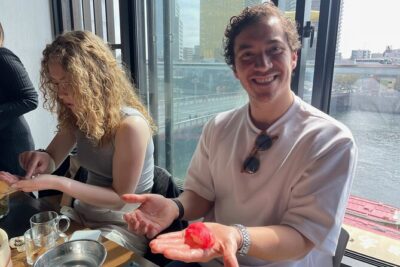
Sushi Making Tokyo Roll and Authentic Japanese Sushi Class
Read our review →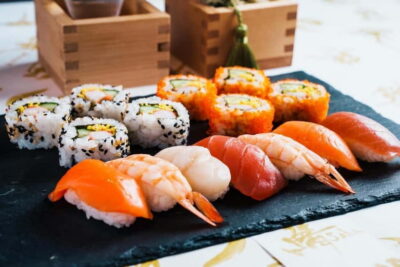
Roll and Authentic Sushi Making Class in Asakusa
Read our review →
Make Sushi and Create Unforgettable Memories in Tokyo
Read our review →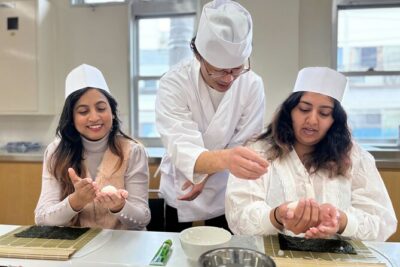
Tokyo Sushi Making Class in Tsukiji with Professional Chef
Read our review →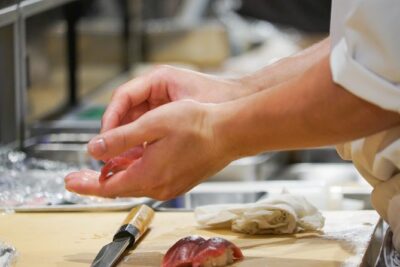
Tokyo Night Foodie Tour in Shinjuku – Seasonal Sushi, Wagyu Beef
Read our review →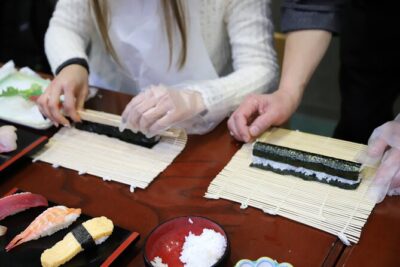
Tsukiji Fish Market Guided Tour and Sushi Making with Pro Chef
Read our review →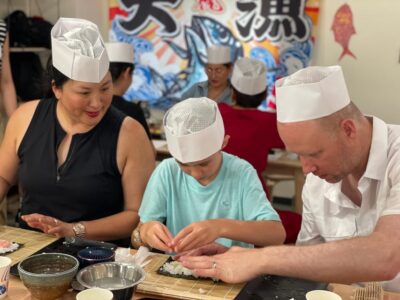
Tsukiji Fish Market Sushi Making Class with Pro Chef
Read our review →
Browse the lists this tour appears in