
Reviewed · RAMEN EXPERIENCES
Made from flour in 30min! Ramen-noodle Making Experience!
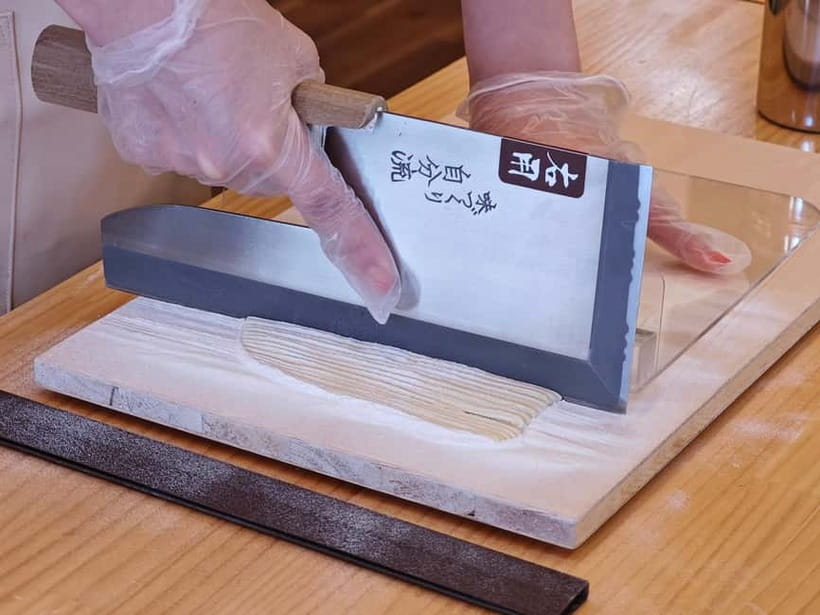
Making ramen from flour usually sounds like a long kitchen project. Here, the process is compressed into about 30 minutes, including kneading, flattening, and cutting each noodle by hand with a large knife. Staff then cook your noodles and serve them as ramen, so you get both a hands-on lesson and a proper meal.
I like the small six-person limit, which gives the instructor room to help with the fine cutting technique. I also like the bright, spacious first-floor setting in Kappabashi, not a cramped back-room workshop. The main consideration is that children must safely knead dough and handle a heavy knife on their own, or work one-to-one with a parent.
In This Review
- Key points
- Turning Flour Into Ramen in 30 Minutes
- What Happens From Arrival to First Bite
- Choosing Between Soy, Miso, Shio, and Vegan Ramen
- The Free Drink and Japanese Snack Table
- Why Kappabashi Is the Right Setting
- Family Rules and Knife Safety
- Is $57 a Fair Price?
- What the Ratings Tell You, and What to Watch
- Who Should Book This Ramen Class?
- Final Call: Book It for the Experience, Not Just the Bowl
- FAQ
- How long does the ramen-making experience take?
- Where does the activity take place?
- How far is the venue from Sensoji Temple?
- What languages are available?
- Which ramen flavors can I choose?
- Is a drink included?
- Are snacks included?
- Can children participate?
- Is the venue wheelchair accessible?
Key points
- Cut every noodle by hand: Learn a Japanese noodle-cutting technique linked to the Edo period, rather than simply feeding dough through a pasta machine.
- A compact 50-minute activity: It fits neatly into a shopping walk through Kappabashi and does not take up half your day.
- Your bowl is cooked for you: Choose from soy sauce, miso, shio, vegan, and vegan soup curry ramen options.
- Food and drink are built in: One drink is included, along with all-you-can-eat snacks from Japanese manufacturers.
- A useful family option: The venue accepts families, groups, wheelchairs, and English speakers, with safety rules for young children.
- Right by Kappabashi’s kitchen shops: It is about 25 minutes from Sensoji Temple and easy to pair with Asakusa sightseeing.
Turning Flour Into Ramen in 30 Minutes
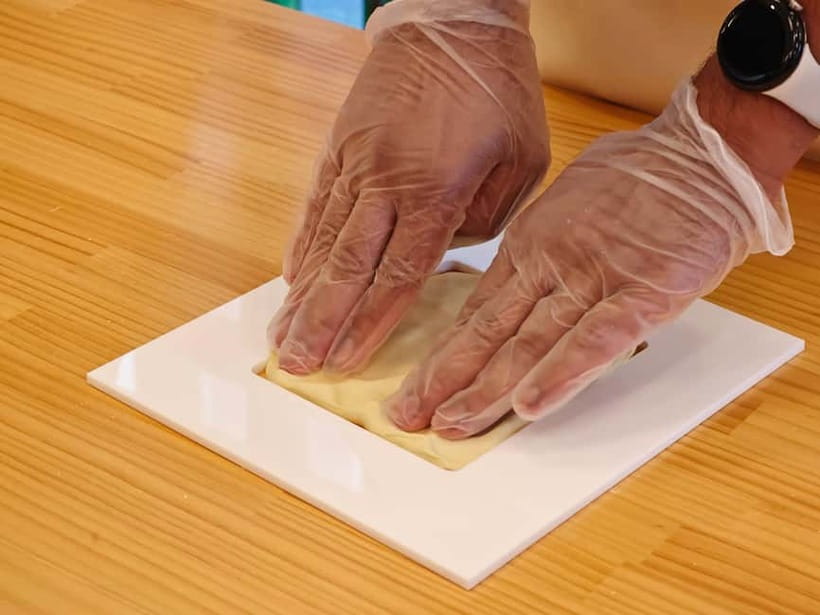
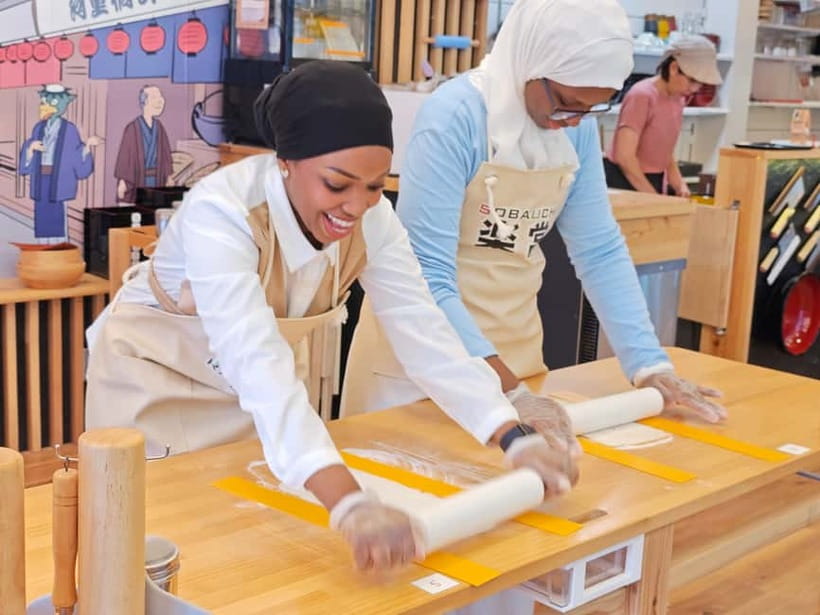
SOBAGIRI-RAKUJYO takes a process that can seem complicated and gives it a brisk, visitor-friendly format. You begin with flour, add water, knead the mixture, stretch it flat, and cut it into thin strips. The unusual part is the speed. The shop has developed a method that fits the full sequence into roughly half an hour.
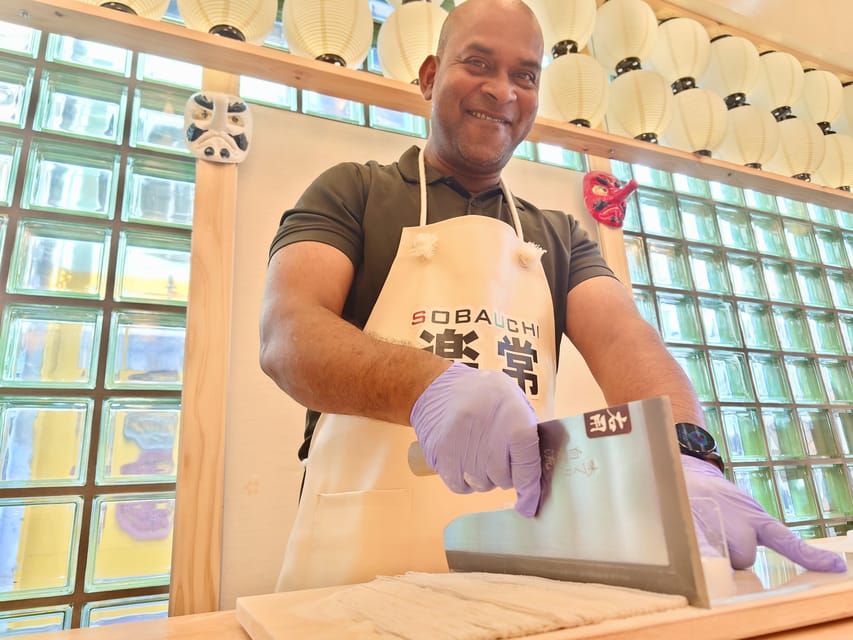
The cutting is the part you will remember. Instead of using a pasta machine, you work with a large knife made for noodle cutting. Each stroke slices the flattened dough into noodles. The technique needs care and a little patience, but instruction is available in Japanese and English, with an English audio guide included.
This is not a quiet demonstration where you watch a chef do all the work. You handle the dough yourself. At the same time, the compact format keeps the activity moving. That matters in Tokyo, where you may want to fit in Sensoji, Kappabashi’s shops, and an evening meal on the same day.
The workshop is described as a way to learn a cutting practice passed down in Japan since the Edo period, from 1603 to 1868. You are not signing up for a long historical lecture. Instead, the connection comes through the tool, the hand movements, and the old-fashioned method of cutting noodles one by one.
More ramen stops:
- Eat and Drink Like a Local: Tokyo Ueno Food Tour-Taverns&Ramen
★ 5.0 · 957 reviews - Ramen & Gyoza Cooking Class in Tokyo with Local Supermarket Visit
★ 5.0 · 823 reviews - Tokyo: Ramen Tasting Tour with 6 Mini Bowls of Ramen
★ 4.9 · 432 reviews
What Happens From Arrival to First Bite
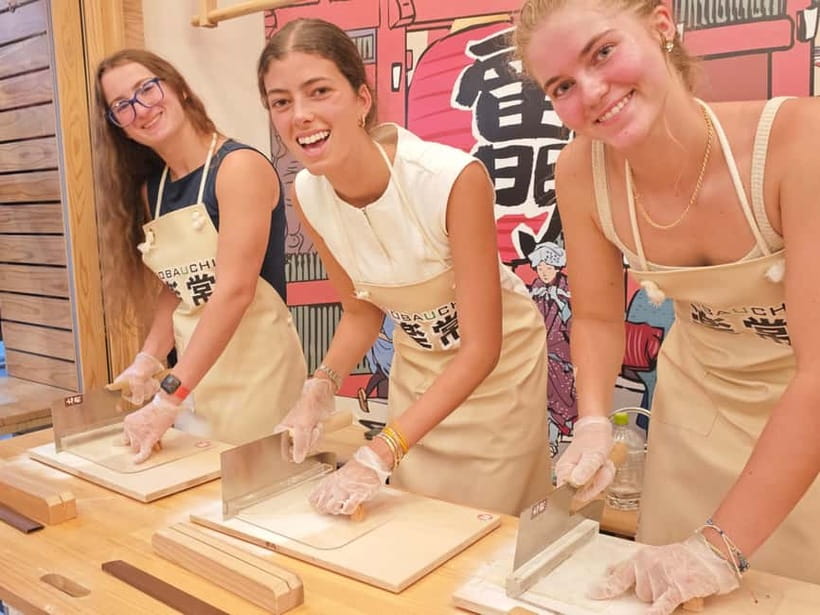
Arrive 10 minutes before your reserved time. The meeting point is diagonally across from a food sample specialty shop marked by a large beetle object on Kappabashi Kitchenware Street. That landmark is useful in a district packed with signs, displays, and restaurant-supply stores.
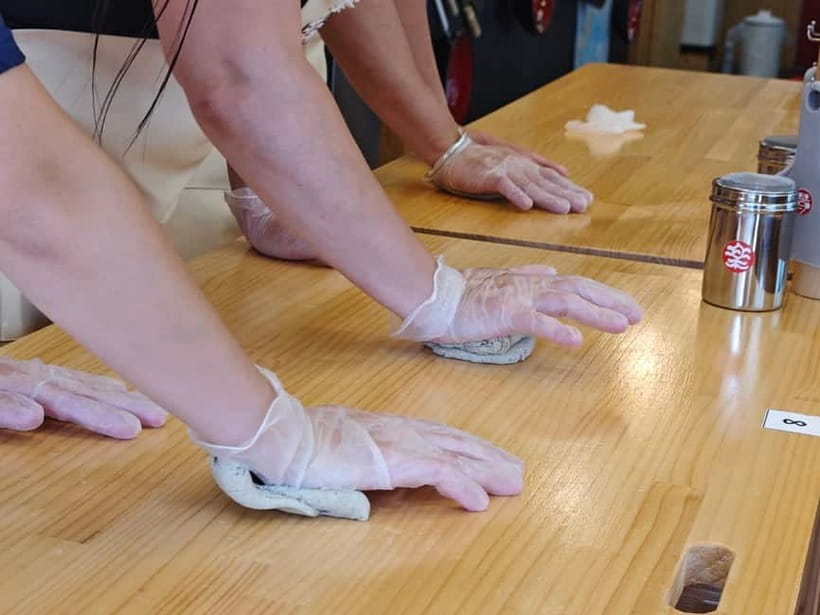
After reception, you prepare by washing your hands. The open first-floor kitchen studio is designed for practical work, with generous space and an authentic-style system table. The shop can accommodate up to 30 people in the venue, but this activity is limited to six participants, so the working group remains small.
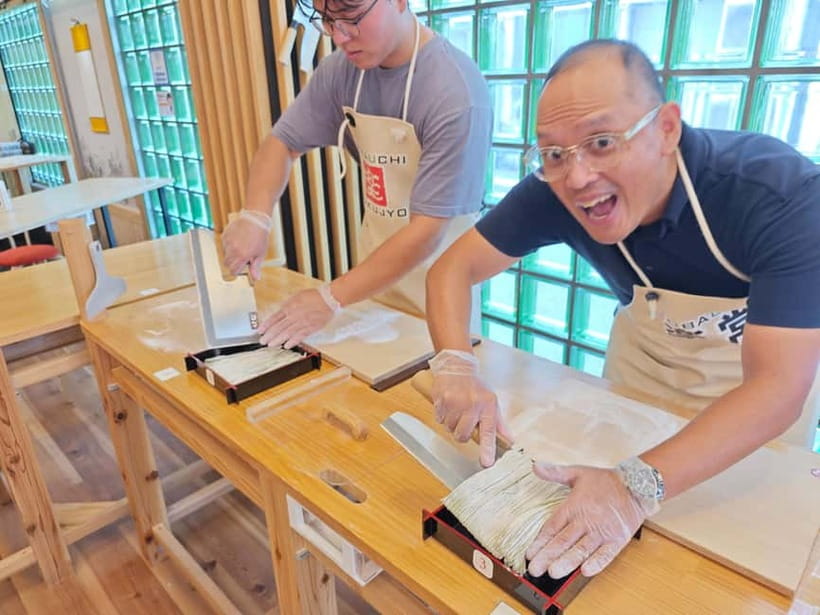
The noodle-making section takes about 30 minutes. You work through the dough process, then practice the fine cutting technique. The staff teach the safe way to handle the large knife and guide you through the delicate movements. The tone is intended to be gentle and a little amusing rather than stern or overly formal.
Once the noodles are cut, staff cook them for your meal. An important detail is that your own noodles are kept for your own bowl. That gives the meal a clear payoff: you are eating the result of the work you just completed, not a separate serving prepared in advance.
The activity is listed as 50 minutes, with the making portion taking about 30 minutes and dining time afterward. The highlights also describe roughly 30 minutes to make and 30 minutes to eat, so allow a little flexibility if you want to sit with your drink and snacks rather than rush away.
Choosing Between Soy, Miso, Shio, and Vegan Ramen
Soy sauce ramen is the familiar choice, and it comes with the classic ramen profile many first-time visitors expect. Miso and shio, or salt ramen, give you different flavor directions without changing the basic reward of eating your own noodles.
The choice gets more interesting if someone in your group does not eat meat or animal products. Vegan ramen and vegan soup curry ramen are available, so the menu is not limited to one standard bowl. This is especially helpful for mixed groups, since one person can choose vegan ramen while others order soy sauce, miso, or shio.
The broth recipe is described as a house secret, with a small home-use tip offered after the meal. You should not expect a full recipe lesson for the soup. The main kitchen lesson is the noodle itself, while the staff handle the cooking and final assembly.
Additional ingredients are included with the ramen. Specific feedback highlights the egg and pork in the soy sauce version, though the exact toppings may depend on the option you choose. The important practical point is that this is a finished meal, not a tiny tasting portion after a craft activity.
The Free Drink and Japanese Snack Table
One drink is included in the price. Choices listed include beer, highball, lemon sour, juice, and non-alcoholic beer. That range works well for a mixed group, though drink refills cost extra.
The eating space also offers all-you-can-eat snacks from Japanese manufacturers. This is a small feature, but it changes the feel of the visit. You can linger over the ramen, try packaged Japanese snacks, and choose a drink without having to arrange a second stop immediately afterward.
I would treat the snacks as an extra rather than the reason to book. The noodle lesson and ramen bowl carry the experience. Still, the drink and snack table add value to a $57-per-person activity, particularly if you are comparing it with a short class that charges separately for food.
Attendants who do not participate do not receive the included meal. The cost of an attendant’s meal is not included, and observation-only entry is generally not available. If one adult plans to watch a child rather than take part, confirm the meal arrangement before booking.
A few more Tokyo bookings worth comparing
- Mt Fuji and Hakone 1-Day Bus Tour Return by Bullet Train
★ 5.0 · 26,383 reviews - 1-Day Tokyo Bus Tour
★ 5.0 · 14,250 reviews - Tokyo: TOKYO SKYTREE® Admission ticket
★ 4.5 · 11,192 reviews - Tokyo: teamLab Planets TOKYO Digital Art Museum Entry Ticket
★ 4.6 · 9,779 reviews
Why Kappabashi Is the Right Setting
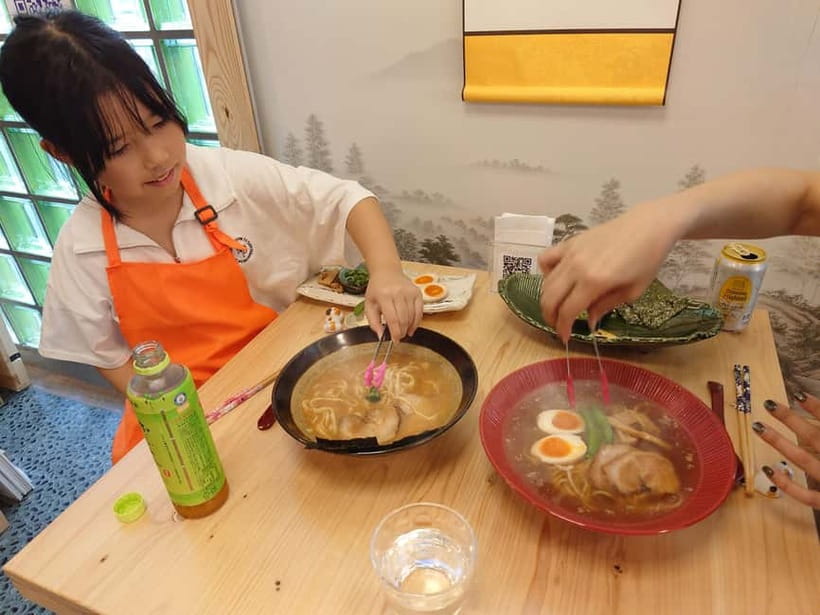
Kappabashi is Tokyo’s kitchen-tool district, located between the Asakusa area and Ueno. It is the sort of place where a ramen-making class makes sense because the surrounding streets are filled with professional cookware, knives, tableware, restaurant signs, and plastic food displays.
The shop is about 25 minutes from Sensoji Temple. You can combine the activity with a visit to the temple, then walk through Kappabashi’s specialty stores before or after your class. The timing is useful for a shopping day because the workshop does not consume one or two hours.
The location also adds context without forcing the class to become a museum visit. You are making noodles in a district built around the tools and supplies used by Japanese restaurants. Afterward, you can continue browsing kitchen shops with a better idea of what some of those tools are for.
The first-floor space is bright, clean, and open. That matters for a food activity. You will be working with flour and a large knife, so a well-organized room is more reassuring than a dark, improvised workshop. The setting is also described as photogenic, and staff take professional-style photos during the workshop.
The photos are a thoughtful touch because flour-covered hands are not ideal for handling your phone. Images are shared by QR code, including some edited versions. You can focus on the dough and knife work, then look at the pictures later.
Family Rules and Knife Safety
The activity is open to families, but it is not automatically suitable for every child. Children under two are not suitable, and the information also lists children under three and babies under one as unsuitable. The overlapping age guidance is a reason to ask the operator directly if your child is near the cutoff.
A child taking part alone must be able to knead the dough and use a large, heavy knife independently. If that seems difficult, the child is paired with a parent. Each child in a parent-child pairing needs one accompanying adult, and three participants at one table are not allowed.
Those rules are practical, not decorative. The knife is a real part of the noodle-cutting method, and injuries are the participant’s responsibility. Parents are responsible for their children, so I would choose a paired session for a young or hesitant child rather than treat the activity as a chance for adults to step away.
People with buckwheat allergies cannot participate. The experience is also not suitable for people with gluten intolerance or for anyone with a cold. Contact the provider before booking if an allergy or dietary concern is not clearly covered by the listed vegan options.
The venue is wheelchair accessible. English instruction and an English audio guide are available, which makes the class workable for international visitors even if no one in your group speaks Japanese.
Is $57 a Fair Price?
At $57 per person, this is more than the cost of an ordinary bowl of ramen in Japan. You are paying for the instruction, equipment, staff time, your noodle-making session, the cooked meal, one drink, and unlimited Japanese snacks.
The value depends on what you want from your Asakusa day. If your goal is simply to eat inexpensive ramen, this is not the economical choice. If you want a short cultural activity that also covers lunch, the price is easier to justify.
The small group helps the price. With no more than six participants, the instructor can watch your cutting technique and step in when needed. A larger class might cost less, but you would likely get less individual attention during the most delicate part of the process.
The compact schedule is another part of the value. Many food classes take half a day and require you to build the rest of your sightseeing around them. Here, you can plan the experience between temple visits and shopping in Kappabashi.
The meal also seems to be a genuine part of the experience, not an afterthought. Your noodles go into your own bowl, and the menu includes several ramen styles. Add the drink, snacks, and photos, and the package feels more complete than a simple dough demonstration.
What the Ratings Tell You, and What to Watch
The experience has a 4.8 rating from 24 reviews, with repeated praise for the friendly staff, clear instructions, tidy setup, speed, and flavor of the finished ramen. The strongest pattern is that the class works for different ages and food preferences without becoming a long production.
Specific feedback praises the instructor’s energy and sense of humor. Staff are also described as kind and helpful, which is important when you are holding an unfamiliar knife and trying to produce evenly cut noodles.
The ramen itself receives strong approval, especially the soy sauce version, broth, egg, pork, and homemade noodles. The vegan choices make the activity more practical for a mixed group.
There is one serious operational warning. One booking resulted in a participant arriving to find that the owner said the scheduled session had been canceled. The available information does not explain why this happened, and it conflicts with the otherwise positive pattern. I would keep your booking confirmation handy and contact the operator if anything about the time or status seems unclear.
The high rating should not make you ignore the safety and allergy rules. This is still a hands-on food workshop with a heavy knife, flour, and possible buckwheat exposure. Read those conditions carefully before paying.
Who Should Book This Ramen Class?
I would recommend it to you if you want a short, active food experience rather than another restaurant meal. It suits couples, friends, families with appropriately supervised children, and small groups that want a shared task with an edible result.
It is also a good fit if your Tokyo schedule is tight. The class sits near Sensoji and Kappabashi, and the 30-minute making session leaves plenty of time for kitchen-tool shopping and Asakusa sightseeing.
You should think twice if you want a slow, detailed culinary course. The quick method is the selling point, but it also means the lesson is compressed. You will learn the essential movements, not spend an afternoon studying every stage of traditional noodle production.
It is not right for people with gluten intolerance, buckwheat allergies, a cold, or for children who cannot safely manage the dough and knife. It also is not designed for someone who wants to sit nearby and watch without ordering a meal.
Final Call: Book It for the Experience, Not Just the Bowl
Book SOBAGIRI-RAKUJYO if you want to make something with your hands, eat a meal from that effort, and keep your Tokyo schedule moving. The 30-minute noodle lesson, six-person limit, multiple ramen flavors, included drink, and snack table create a well-rounded stop in Kappabashi.
Skip it if you only want the cheapest ramen or if you prefer a long, technical cooking class. For most visitors who want an easy-to-fit cultural activity near Asakusa, $57 is reasonable, provided the allergy, child-safety, attendant-meal, and cancellation details work for your group.
FAQ
How long does the ramen-making experience take?
The listed duration is 50 minutes. The noodle-making portion takes about 30 minutes, followed by time to eat the ramen you made.
Where does the activity take place?
It takes place at SOBAGIRI-RAKUJYO on the first floor in Kappabashi, Asakusa. The meeting point is diagonally across from a food sample specialty store with a large beetle object on Kappabashi Kitchenware Street.
How far is the venue from Sensoji Temple?
The restaurant is about 25 minutes from Asakusa Sensoji Temple.
What languages are available?
Instruction is available in Japanese and English. An English audio guide is also included.
Which ramen flavors can I choose?
Options include miso ramen, soy sauce ramen, shio ramen, vegan ramen, and vegan soup curry ramen.
Is a drink included?
Yes. One drink is included. Listed choices include beer, highball, lemon sour, juice, and non-alcoholic beer. Refills cost extra.
Are snacks included?
Yes. All-you-can-eat snacks from Japanese manufacturers are included in the eating space.
Can children participate?
Children under two are not suitable, and the information also lists children under three and babies under one as unsuitable. A child participating alone must be able to knead and safely use a large, heavy knife. Otherwise, the child must work with a parent, with one adult accompanying each child.
Is the venue wheelchair accessible?
Yes, the activity is wheelchair accessible.
New on our Tokyo list
- Private tour Tokyo – The Harmony of Modernity and Tradition★ 5.0 · 24 reviews
- Customizable Private Tokyo Trip with an English Speaking Driver★ 5.0 · 24 reviews
- Mt. Fuji Private Chartered Tour with Nature and Wasabi Farm★ 5.0 · 24 reviews
- 1- Day Private Tour to Nikko Tochigi With English Speaking Driver★ 5.0 · 24 reviews
- Tokyo VIP private nightlife tour with a local insider★ 5.0 · 24 reviews
- [1 Group Only] Explore Tokyo Ginza Food Tour for Family★ 5.0 · 24 reviews
- Private Tour – History, Art and Nature at the Imperial Palace★ 5.0 · 24 reviews
- Tokyo: Wagyu and Sushi Gastronomic Journey★ 4.3 · 24 reviews
Ramen Experiences, compared.

Eat and Drink Like a Local: Tokyo Ueno Food Tour-Taverns&Ramen
Read our review →
Ramen & Gyoza Cooking Class in Tokyo with Local Supermarket Visit
Read our review →

Easy Ramen Cooking Experience in Kabukicho, Shinjuku
Read our review →
Ramen and Sushi Cooking Class with Sake Pairing Set in Tokyo
Read our review →
Professional Ramen & Gyoza with Ramen Chef in a restaurant!
Read our review →
Ramen Dojo Tokyo | Make All 3 (Tonkotsu/Shoyu/Miso)
Read our review →Ramen Dojo Tokyo | Make All 3 (Tonkotsu/Shoyu/Miso)
Read our review →Browse the lists this tour appears in