
Reviewed · RAMEN EXPERIENCES
Shibuya: Ramen Dojo Tokyo | Make All 3 (Tonkotsu/Shoyu/Miso)
The best part of Ramen Dojo Tokyo is the three-bowl finish: you make fresh noodles, prepare chicken chashu, and compare tonkotsu, shoyu, and miso in one sitting. I like the hands-on noodle work and the clear English instruction, especially from guides such as Kazuki, Kensei, Kai, and Arata. It feels like a cooking lesson that also solves lunch or dinner.
I also like that the method can be repeated at home without special equipment, even though the studio uses a professional noodle machine. The catch is that the long-cooked soup bases are prepared in advance, so you are assembling and adjusting three ramen styles rather than making every broth from the beginning. Flour, egg, soy, chicken, and pork are used, and the studio is reached by stairs only.
In This Review
- Key points to know before booking
- Why three ramen bowls make this class worthwhile
- Walking from Shibuya to the studio
- The first 10 minutes: briefing and setup
- Chicken chashu before the noodles
- Twenty minutes of kneading, rolling, and cutting
- Soup preparation and the reality of pre-made broth
- Plating three bowls in five minutes
- Thirty minutes to taste, compare, and ask questions
- What the $64 price includes
- Practical details that can affect your day
- Who should book Ramen Dojo Tokyo?
- Should you book this ramen workshop?
- FAQ
- Where is Ramen Dojo Tokyo located?
- How long does the ramen class last?
- Which ramen styles will I make and taste?
- Do I make the soup broth from scratch?
- Is the class taught in English?
- How many people can join the class?
- Are children allowed to participate?
- Can the class accommodate allergies or dietary restrictions?
Key points to know before booking
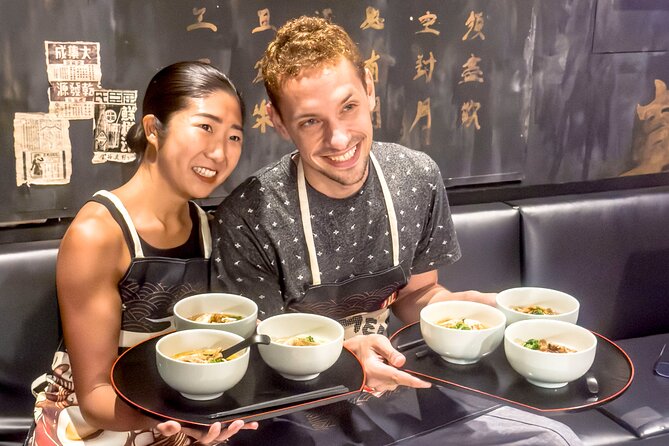
- Three ramen styles in 90 minutes: Taste tonkotsu, shoyu, and miso as three mini bowls rather than choosing just one.
- Fresh noodles are the main hands-on skill: Knead dough, roll it, and cut it with a professional noodle cutter.
- Chicken chashu is prepared in class: You work on the meat, then finish it before plating.
- Small English-guided groups: The class is limited to eight people, with instructors who explain each step carefully.
- A useful take-home recipe: A digital recipe is sent after class, making the lesson practical beyond your Tokyo visit.
- Plan your arrival and appetite: Doors open 10 minutes before the start, late arrivals can be refused, and three small bowls can make a full meal.
Why three ramen bowls make this class worthwhile
Ramen is often treated as a quick, inexpensive meal in Japan. This workshop gives you a closer look at the parts that disappear once a bowl reaches the counter: the texture of the noodles, the strength of the soup, the meat, and the toppings.
You do not simply watch a chef work. You handle the dough, use the equipment, help prepare the chicken, and decide how strongly to season the soup. Then you taste three versions side by side. That comparison is the clever part of the class because it lets you notice how much the broth changes the whole bowl.
Tonkotsu is the creamy, pork-based style. Shoyu brings a soy sauce seasoning and a darker, more savory profile. Miso adds a fuller, fermented flavor. The class gives you small portions of each, so you can enjoy variety without committing to one large bowl.
The three bowls are described as mini servings, but do not assume this is only a light snack. The combination of noodles, soup, and chicken chashu can be surprisingly filling. If you book around lunchtime or dinner, treat the activity as your meal and arrive hungry.
More ramen stops:
- Eat and Drink Like a Local: Tokyo Ueno Food Tour-Taverns&Ramen
★ 5.0 · 957 reviews - Ramen & Gyoza Cooking Class in Tokyo with Local Supermarket Visit
★ 5.0 · 823 reviews - Tokyo: Ramen Tasting Tour with 6 Mini Bowls of Ramen
★ 4.9 · 432 reviews
Walking from Shibuya to the studio
The studio is at 1F, 2-16-29 Ohashi, Meguro-ku, Tokyo. It is about a 10-minute walk from Shibuya Station, and the activity starts and ends at this same location.
That setup works well in a day of sightseeing. You can finish the class and continue around Shibuya without waiting for a return transfer or following a guide across the city. It also means you should allow enough time to find the building. Tokyo addresses can take a little patience, and the class has a firm start because cooking involves hot equipment and a shared workspace.
Doors open 10 minutes before the scheduled time. Do not arrive much earlier, since there is no waiting area and early entry is not available. Plan to arrive 5 to 10 minutes before class. If you are five or more minutes late, you may need to join in progress or be refused entry, with no refund in some cases. If you are delayed, contact the provider before the start time through the listed Instagram account or email.
The building has stairs only. That matters if you have mobility concerns, heavy luggage, or a condition that makes repeated stair use difficult.
The first 10 minutes: briefing and setup
The class begins with check-in and a short briefing. You learn the order of the work, receive an apron, and get oriented to the kitchen.
The small-group format matters here. With a maximum of eight participants, the instructor can watch your technique and help when several steps happen at once. The class is offered in English and Japanese, and the English instruction is designed for beginners.
You do not need previous cooking experience. The instructors break the work into short tasks and keep the pace moving. Guides named in class feedback include Kazuki, Kensei, Kai, Arata, Atari, and Rin-san, although the instructor for your booking may differ.
This opening is also when you should ask about food restrictions. Wheat, egg, soy, chicken, and pork are used, and cross-contamination cannot be completely prevented. Partial accommodation may be possible for guests avoiding chicken or pork, vegetarians, or vegans, but you must ask in advance. This is not suitable for severe wheat, egg, or soy allergies, celiac disease, severe airborne flour sensitivity, or anyone who needs strict dietary compliance.
Chicken chashu before the noodles
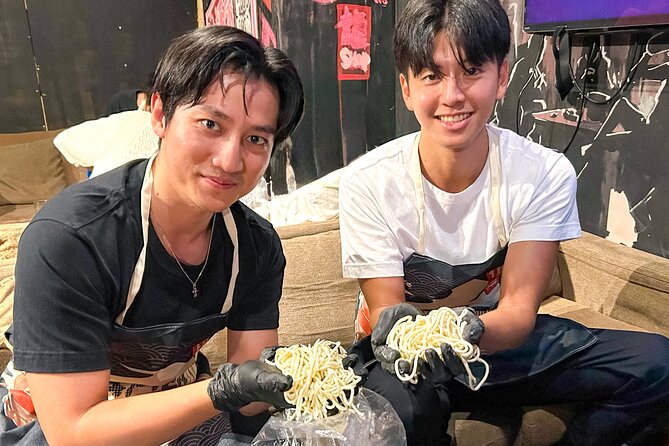
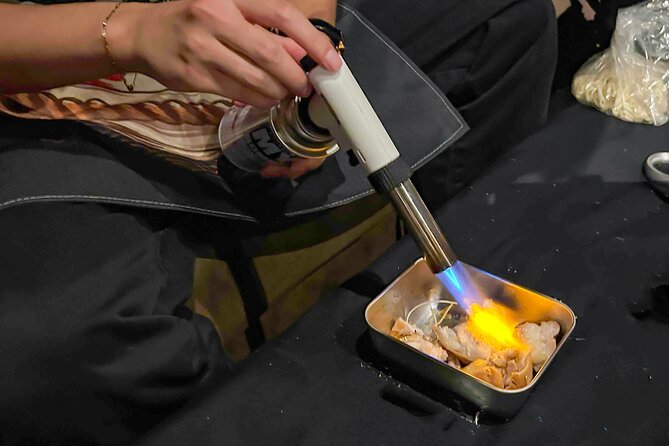
The chicken chashu preparation takes about five minutes at first, followed by another 10 minutes later in the session to finish it.
This is a useful choice for a 90-minute class. Meat can take time to cook safely, so the workshop gives you a real preparation task without pretending that a full restaurant-style chashu process can happen from start to finish during the lesson.
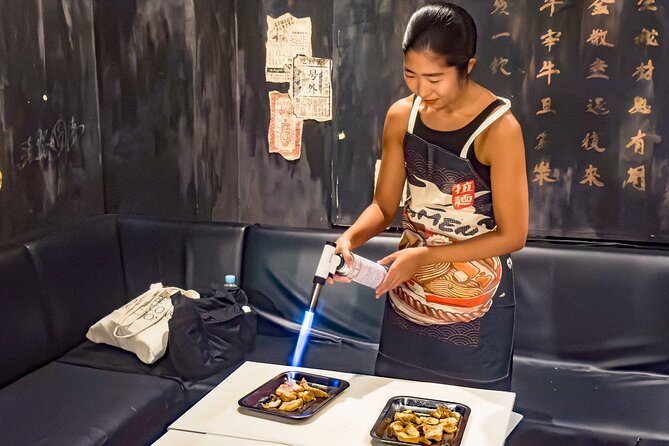
You work with the chicken, then return to it after the noodle session. The final meat becomes part of all three bowls. It gives the meal a common ingredient, allowing you to focus on how tonkotsu, shoyu, and miso change the taste.
The class uses chicken chashu, but pork is also among the ingredients used in the workshop. Ask about substitutions before booking rather than assuming the chicken preparation makes the entire class pork-free.
More Shibuya plans:
- Official Street Go-Kart in Shibuya
★ 5.0 · 3,435 reviews - Tokyo: Street Kart Experience in Shibuya
★ 4.9 · 1,484 reviews - Shibuya Meltdown Nightlife Tour: All-You-Can-Drink Bar Hopping
★ 5.0 · 1,058 reviews - Shibuya Official Street Go-Kart in Shibuya Annex
★ 5.0 · 972 reviews
Twenty minutes of kneading, rolling, and cutting
The noodle session is the most memorable part for many people, and it is where the class feels most like a workshop rather than a guided tasting.
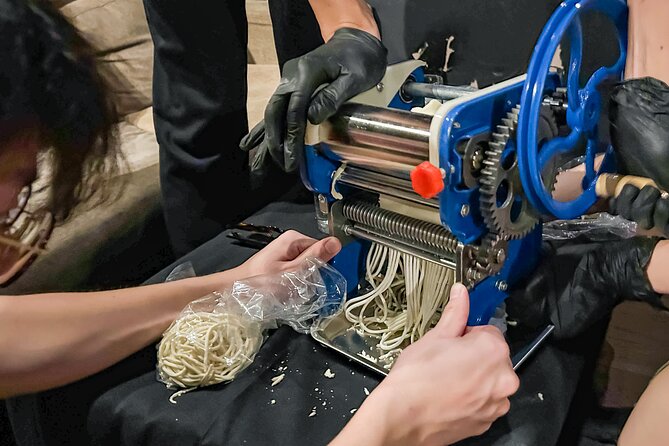
You knead the dough, roll it, and cut it into noodles. A professional noodle machine helps with the process, but the lesson also places attention on hand technique. One instructor encouraged participants to use their hands instead of relying entirely on electronic equipment, which is good advice for anyone hoping to repeat the recipe at home.
You may get flour on your clothes during this stage. Aprons are provided, but wear something you do not mind spotting with flour. This is not a polished demonstration where you stay safely away from the work surface. The mess is modest, but it is part of the point.
The machine adds a photo-friendly moment, especially when the dough passes through the cutter. Take pictures during the activity, but follow the instructor’s directions around equipment and hot surfaces. Photography is welcome, and the studio appreciates posts using #RamenDojoTokyo.
The method is also practical. You do not leave thinking homemade ramen requires a restaurant kitchen. The class uses professional equipment during the lesson, yet the basic noodle process can be adapted at home without special machinery. The digital recipe provided afterward helps keep that idea alive once you return from Japan.
Soup preparation and the reality of pre-made broth
After the noodles and chashu work, you boil the noodles and prepare the soup. This section takes about 10 minutes.
Here is the important distinction: the three long-cooking soup bases are prepared ahead of time. You are not simmering pork bones or building three full broths in a 90-minute class. Instead, you adjust the soup base to your preferred strength and learn how the seasoning affects the final bowl.
That is not a flaw so much as a time limit. A true tonkotsu broth can require many hours, and trying to make three complete soup stocks in one short workshop would leave little time for noodles, meat, and eating. The pre-prepared bases let you compare the finished styles while still giving you control over the final seasoning.
This is also where the class has real teaching value. You can taste the difference between a creamy tonkotsu base, a soy-seasoned shoyu soup, and a miso soup with a deeper fermented flavor. Adjusting the strength helps you understand that ramen is not just about a fixed recipe. Small changes in seasoning can make a bowl taste lighter, saltier, richer, or more intense.
Plating three bowls in five minutes
Plating takes only about five minutes, so the kitchen becomes more active at this point. You add noodles, soup, chicken chashu, and toppings to three mini bowls.
The trio makes a good photo. Three bowls lined up together tell the story of the class more clearly than a single finished dish, and the colors and toppings make this a natural picture-taking moment.
Do not worry about restaurant-level perfection. The goal is to understand the order of assembly and make something you can eat with satisfaction. The instructor helps you manage the timing, since ramen noodles are best served promptly after boiling.
Because you have worked on the noodles yourself, texture becomes easier to notice. A noodle that is slightly thicker or thinner changes the bite, and the soup clings differently depending on the cut. This is the kind of small cooking lesson you might miss when eating ramen at a restaurant.
Thirty minutes to taste, compare, and ask questions
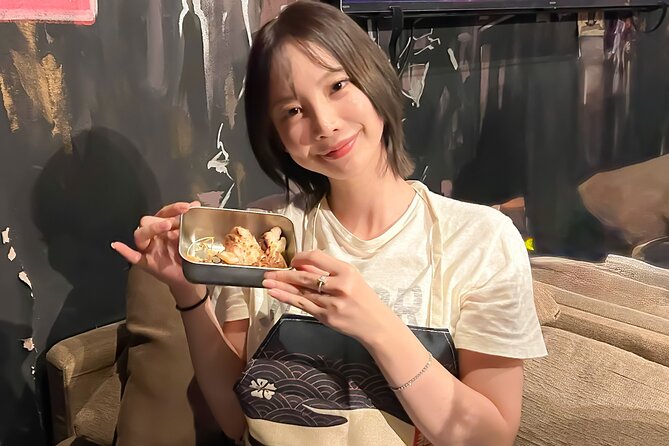
The last 30 minutes are set aside for eating, photos, and conversation. This is not a rushed bite at a counter. You sit down with all three bowls and compare them while the differences are fresh.
I recommend tasting each soup before adding anything else, if the instructor presents the bowls that way. Start with the lighter impression, then move to the stronger flavors, and pay attention to how the same noodles and chicken work with each base.
This is a good time to ask questions about the process. The strongest part of the instruction is its step-by-step pace. Guides such as Kazuki and Kensei were repeatedly singled out for clear explanations, patient help, and an easygoing manner. Kai was also praised for keeping the class both informative and fun.
The class can feel almost private when fewer people book a session. That gives you more time for questions and one-on-one help, though the official group limit remains eight. You should not count on having the studio to yourself, but the small-group design keeps the class personal.
The digital recipe arrives after the class. That adds value because you are not forced to rely on memory after a busy day in Tokyo. You can try the noodle technique at home and use the lesson as a starting point for your own ramen experiments.
What the $64 price includes
At $64 per person, this is more expensive than ordering three bowls of ramen at ordinary shops. The comparison, however, is not quite fair. You are paying for a 90-minute activity, an English-speaking instructor, ingredients, kitchen equipment, an apron, instruction, and a meal of three small bowls.
I consider the price fair for someone who wants an activity rather than just lunch. The class combines a cooking lesson with food, which makes the cost easier to accept when booked during a mealtime. The recipe also gives the experience some use after your trip.
The value is weaker if you mainly want a full restaurant meal or a detailed lesson in traditional broth production. The soup bases are already made, and the portions are mini bowls rather than three large servings. You are paying for participation, variety, and guidance.
The experience suits couples, friends, families with children age six and older, and solo visitors who enjoy joining a small class. It is especially useful on a rainy day or when you want an indoor activity close to Shibuya. It may not suit someone looking for a quiet meal, strict dietary control, or a fully authentic restaurant kitchen shift.
Practical details that can affect your day
The total duration is 90 minutes. The published schedule is:
- Check-in and briefing: 10 minutes
- Initial chicken chashu preparation: 5 minutes
- Noodle making: 20 minutes
- Chicken chashu finishing: 10 minutes
- Noodle boiling and soup preparation: 10 minutes
- Plating: 5 minutes
- Tasting and photos: 30 minutes
English and Japanese are available. The maximum group size is eight, and an English-speaking instructor leads the session. Drinks and alcoholic beverages are not included, so bring or buy something separately if you want one with the meal.
The class starts and ends at the studio. There is no hotel pickup or drop-off. Aprons are supplied, but flour may reach your clothes. Follow staff instructions around the noodle machine, boiling water, and other kitchen equipment.
Free cancellation is available up to 24 hours before the activity for a full refund. A reserve-now, pay-later option is also offered, which can help if you are still adjusting your Tokyo schedule.
Who should book Ramen Dojo Tokyo?
Book this if you want to do something active with your meal. The class gives you a clear task, a friendly instructor, three flavors to compare, and a recipe to take home. It is a good choice for first-time cooks because the steps are short and carefully explained.
It is also a strong pick for ramen fans who want to understand the dish beyond the bowl. You will not learn every part of a professional ramen shop’s operation, but you will learn how dough becomes noodles, how chashu fits into the dish, and how different soup bases shape the final taste.
Families should note the minimum recommended age of six. Children who enjoy hands-on activities can take part, but adults still need to keep an eye on them around hot cooking equipment.
Skip it if you have severe allergies, celiac disease, serious sensitivity to flour in the air, or need strict vegetarian, vegan, or religious dietary compliance. Ask about possible substitutions well before the class, and do not rely on a last-minute adjustment.
Should you book this ramen workshop?
I would book Ramen Dojo Tokyo if you have 90 minutes near Shibuya and want a meal with a story attached. The strongest reasons are the fresh noodle work, the chance to compare three major ramen styles, and the instructors’ careful English guidance.
Go in knowing what the class is and is not. You make the noodles and chicken, but the broths are prepared ahead of time. You may get flour on your clothes, you must arrive on time, and the stairs and shared ingredients matter.
For a hands-on introduction that is fun, filling, and easy to remember, the $64 cost is reasonable. Arrive hungry, ask dietary questions early, and leave room in your Shibuya plans for the digital recipe to become your next homemade ramen project.
FAQ
Where is Ramen Dojo Tokyo located?
The studio is at 1F, 2-16-29 Ohashi, Meguro-ku, Tokyo 153-0044, Japan. It is about a 10-minute walk from Shibuya Station.
How long does the ramen class last?
The activity lasts 90 minutes, including check-in, cooking, plating, tasting, and photo time.
Which ramen styles will I make and taste?
You will prepare and taste three mini bowls: tonkotsu, shoyu, and miso.
Do I make the soup broth from scratch?
The long-cooking soup bases are prepared in advance. During the class, you adjust the soup strength and complete the preparation of the three bowls.
Is the class taught in English?
Yes. English and Japanese are available, and the class is led by an English-speaking instructor.
How many people can join the class?
The small-group class is limited to a maximum of eight participants.
Are children allowed to participate?
Children ages six and older are recommended for the activity.
Can the class accommodate allergies or dietary restrictions?
Partial accommodation may be possible for guests avoiding chicken or pork, vegetarians, and vegans if you ask in advance. Wheat, egg, soy, chicken, and pork are used, cross-contamination cannot be completely prevented, and the class is not suitable for severe wheat, egg, or soy allergies, celiac disease, or strict dietary requirements.
New on our Tokyo list
- From Tokyo: Mount Fuji & Hakone Full Day Private Tour★ 4.9 · 25 reviews
- Tokyo Spectacular View Day-Cruise in 90 Minutes★ 5.0 · 25 reviews
- Real Tokyo Runner Club : Daikoku Car Meet Night Tour with JDM Car★ 5.0 · 25 reviews
- 2.5 Hour-Guided Cycle Tour in the Central Tokyo★ 5.0 · 25 reviews
- Ramen Making from Scratch +Akihabara Tour –Cooking Class★ 5.0 · 25 reviews
- [Self-Drive] Tokyo & Daikoku Custom Car Driving Tour★ 4.9 · 25 reviews
- Tokyo: 2-Hour Night Bike Tour of the City’s Hidden Gems★ 4.9 · 25 reviews
- Tokyo: Mt. Fuji, Owakudani, Hakone Shrine, & Open-Air Museum★ 4.7 · 25 reviews
Ramen Experiences, compared.

Eat and Drink Like a Local: Tokyo Ueno Food Tour-Taverns&Ramen
Read our review →
Ramen & Gyoza Cooking Class in Tokyo with Local Supermarket Visit
Read our review →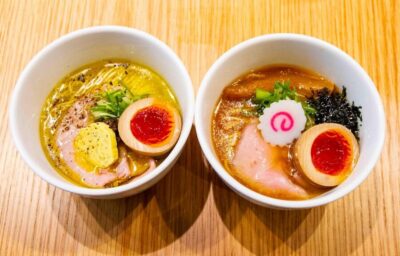
Easy Ramen Cooking Experience in Kabukicho, Shinjuku
Read our review →
Ramen and Sushi Cooking Class with Sake Pairing Set in Tokyo
Read our review →
Professional Ramen & Gyoza with Ramen Chef in a restaurant!
Read our review →
Ramen Dojo Tokyo | Make All 3 (Tonkotsu/Shoyu/Miso)
Read our review →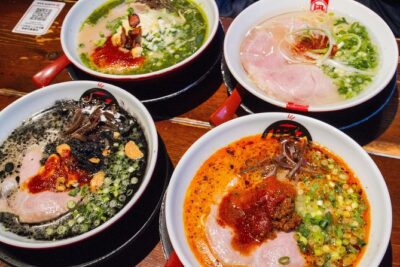
Browse the lists this tour appears in