
Reviewed · RAMEN EXPERIENCES
Tokyo: Ramen Tasting Tour with 6 Mini Bowls of Ramen
Tokyo: Ramen Tasting Tour With Six Mini Bowls
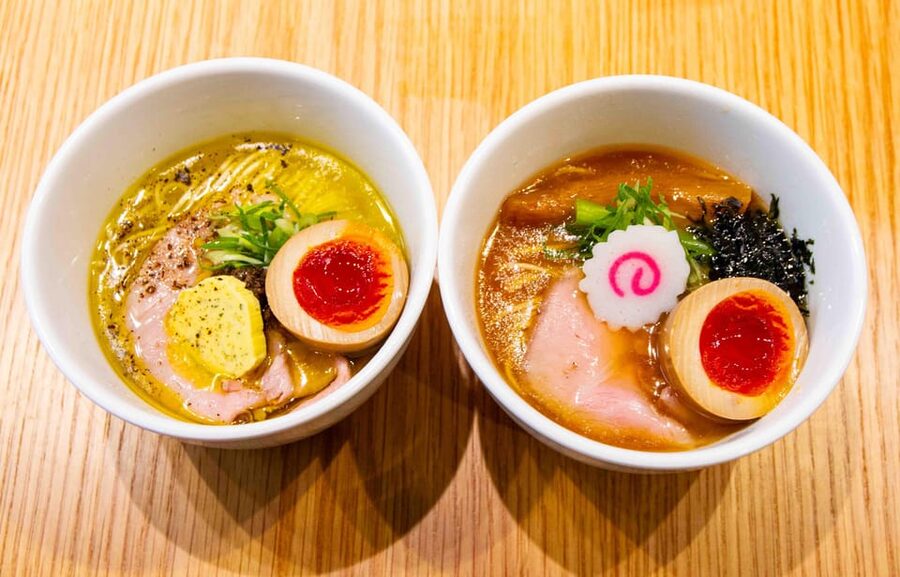
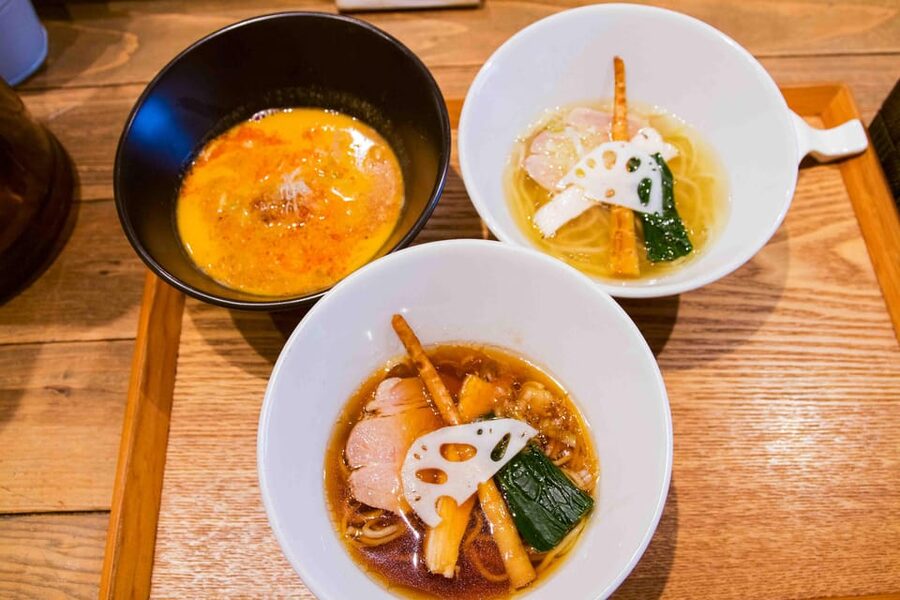
Six bowls of ramen in three hours sounds excessive until you see the portion size. Each bowl is about one-quarter of a normal serving, so you can compare styles that would be impossible to order in one sitting. The tour moves through three Tokyo neighborhoods and three shops, with your guide explaining what makes each broth, noodle, and topping different.
I especially like the choice of 11 to 12 ramen styles, since you are not locked into a fixed tasting menu. I also like the small group limit of eight people. Guides such as Sahori, Bunga, Makayla, Daisy, and Brian have been praised for making the history clear and the food stops fun.
The main catch is price: at $122 per person, this is not a cheap lunch. You also walk about 3 kilometers and may use a train, with the fare not included. If you want a quick bowl of ramen, eat elsewhere. If you want to understand Tokyo’s ramen culture while tasting six very different bowls, the cost makes more sense.
In This Review
- Key points at a glance
- Why six small bowls work better than one large bowl
- The opening lesson turns ramen into more than noodles
- Shibuya route: Hokkaido, tonkotsu, and curry
- Shinjuku route: Tokyo classics and polished modern bowls
- Ueno route: Kyushu ramen, tsukemen, and Tokyo again
- Three shops, three neighborhoods, and a fair amount of walking
- What the $122 price really covers
- Dietary limits and family considerations
- The best time to schedule it in your trip
- Who will get the most from this ramen tour
- Should you book the Tokyo ramen tasting tour?
- FAQ
- How many bowls of ramen do I receive?
- Can I choose which ramen styles I try?
- How many ramen shops does the tour visit?
- Which Tokyo neighborhoods are included?
- How long does the tour last?
- Is transportation included?
- How much walking is involved?
- Are the ramen broths vegetarian or vegan?
- Is a drink included?
- Is the tour conducted in English?
- How large is the group?
- Where does the tour start and finish?
Key points at a glance
- Six exclusive mini bowls: Each serving is about one-quarter the size of a standard ramen bowl, letting you sample six styles without ordering six full meals.
- Three carefully different stops: The shops focus on distinct ramen traditions, from Hokkaido miso to Kyushu tonkotsu, curry, tori paitan, and tsukemen.
- Choose your own tasting lineup: Pick six bowls from roughly 11 to 12 available choices, usually two at each restaurant.
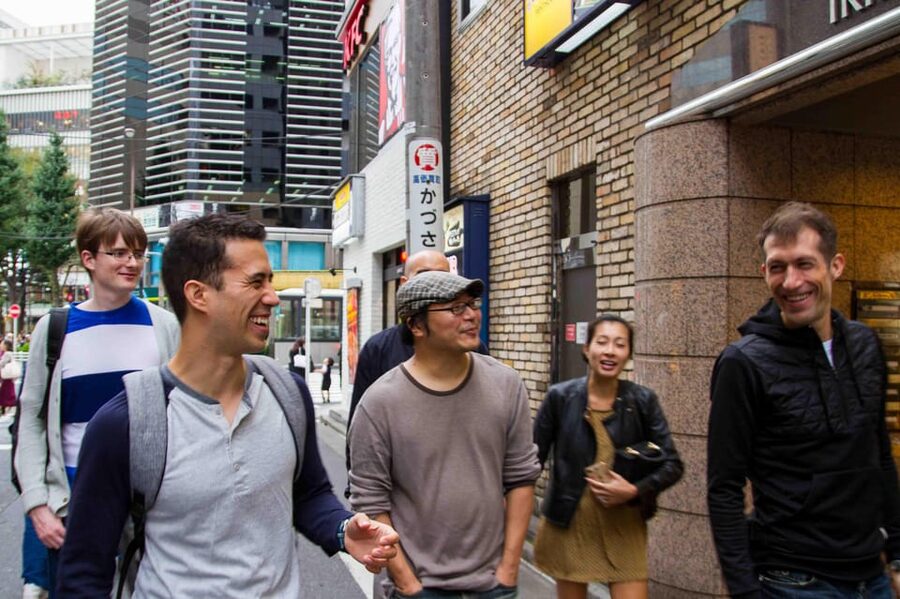
- Neighborhood walking included: Depending on the option, you explore parts of Shibuya, Shinjuku, or Ueno, with the route ending in Ebisu or Shinjuku on some days.
- A useful ramen lesson: Slides and handouts cover ramen’s origins, regional types, broth, noodles, and preparation.
- Best for serious ramen fans: The tour is filling, involves substantial walking, and includes chicken, pork, and fish in all broths.
Why six small bowls work better than one large bowl
Ramen shops in Tokyo often specialize. One place may focus on a clear Tokyo-style broth, another on thick pork bone soup, and another on dipping noodles. The trouble is that a full bowl can be a meal in itself. Order three or four bowls in one day and you will spend the rest of the afternoon looking for a place to sit.
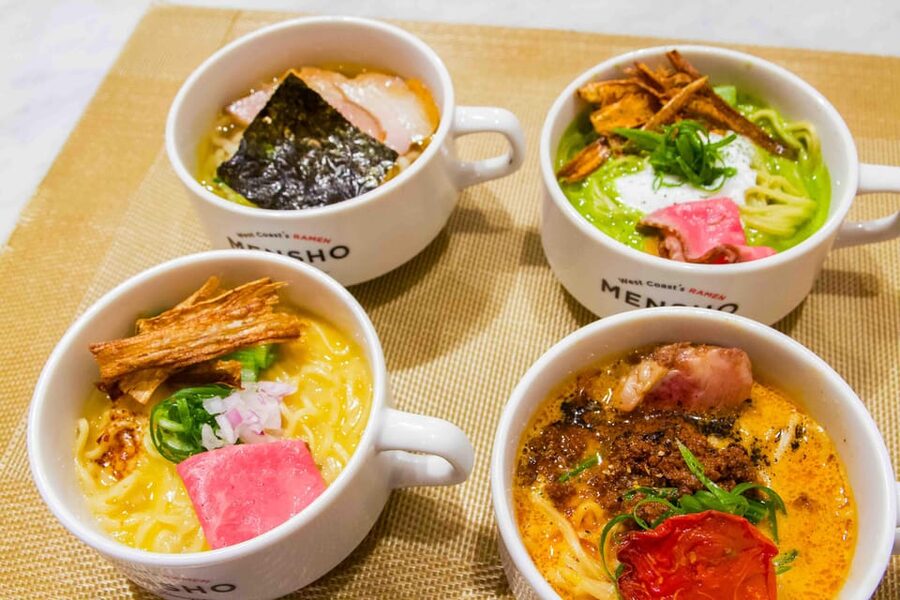
This tour solves that problem with mini bowls made only for the tasting. At roughly one-quarter of a normal serving, each bowl gives you enough to judge the broth, noodles, toppings, and overall balance without committing to a full portion.
You usually choose two ramen styles at each stop, for six bowls altogether. The selection changes by route, but the important point is contrast. You might move from a classic regional recipe to a modern interpretation, then finish with something unexpected such as curry, squid ink, pesto, or a dipping style.
The portions are small, but do not mistake the tour for a light snack. Six bowls add up, especially when some broths are creamy or pork-based. One person found the final bowl difficult to finish, while another advised skipping lunch. I would plan this as your main meal and arrive hungry without arriving starved.
More ramen stops:
- Eat and Drink Like a Local: Tokyo Ueno Food Tour-Taverns&Ramen
★ 5.0 · 957 reviews - Ramen & Gyoza Cooking Class in Tokyo with Local Supermarket Visit
★ 5.0 · 823 reviews - Tokyo: Easy Ramen Cooking Experience in Kabukicho, Shinjuku
★ 4.6 · 321 reviews
The opening lesson turns ramen into more than noodles
The tour is not simply a restaurant crawl. Your guide uses colorful slides and handouts to explain how ramen came to Japan, how it developed into regional forms, and how shops build a bowl.
That background matters because the differences can be subtle when you first start eating ramen. A salty broth, a pork bone broth, and a chicken broth can all contain noodles and sliced toppings, yet they have very different textures and aromas. The visual material helps connect what you are tasting with the larger story.
Guides have included Sahori, Bunga, Makayla, Daisy, Brian, Michaela, and Manny. The guide you receive depends on the day, but the strongest part of the experience is clearly the human explanation. Sahori has been praised for her clear English and easy conversation, while Bunga is known for his enthusiasm and broad knowledge of ramen styles. Daisy has also helped families and answered questions about Tokyo beyond food.
You can ask questions as you go, which is useful if you are unsure about broth ingredients or how one style differs from another. The format is visual, conversational, and practical rather than a long lecture.
Shibuya route: Hokkaido, tonkotsu, and curry
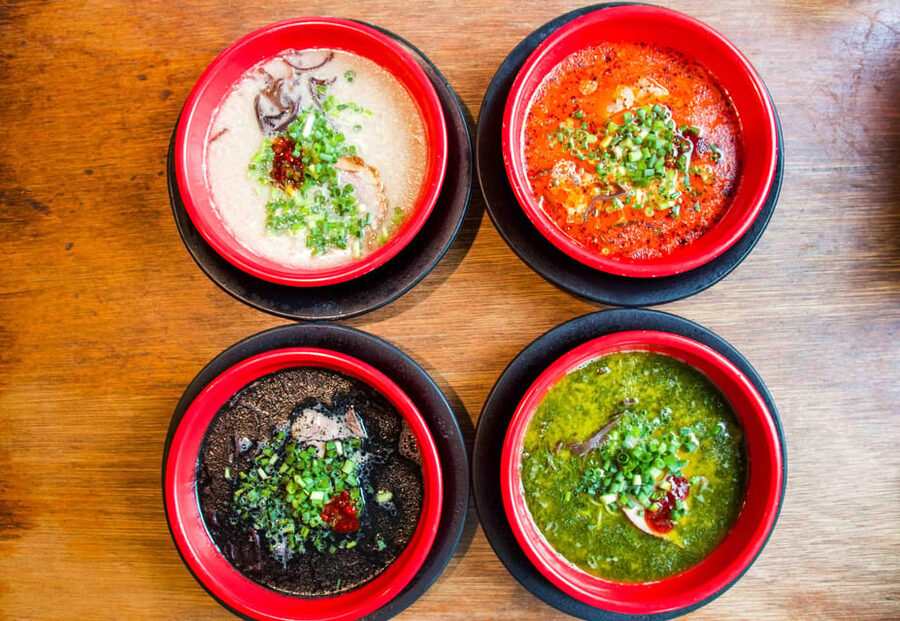
The Shibuya route begins with classic Hokkaido ramen. Hokkaido is strongly linked with miso ramen, hearty bowls, and noodles with more body. The exact bowl offered can vary, but this first stop gives you a traditional regional reference point.
That reference makes the next bowl easier to appreciate. The second shop serves fusion tonkotsu, a modern take on pork bone ramen. Tonkotsu is known for a thick, creamy broth, but the fusion approach may add ideas from other ramen traditions or ingredients. This is a good place to compare old regional habits with newer Tokyo experimentation.
The third stop focuses on savory curry ramen. Curry and ramen are both familiar Japanese comfort foods, but together they create a very different bowl. The spice and warmth can make this a memorable finish, though it may also feel heavier after five earlier tastings.
The walking route adds useful breathing room between bowls. You get a chance to see more of Shibuya rather than simply entering three restaurants by train. One guide also provided a walking tour of the area, and another arranged a taxi when heavy rain made the final leg unpleasant. Do not count on a taxi, though. The stated plan involves walking, and you should dress for the weather.
The Shibuya option starts in Shibuya and ends in Ebisu. That makes it useful if you want to continue your evening in Ebisu, though you should check the exact meeting point and route when booking.
Shinjuku route: Tokyo classics and polished modern bowls
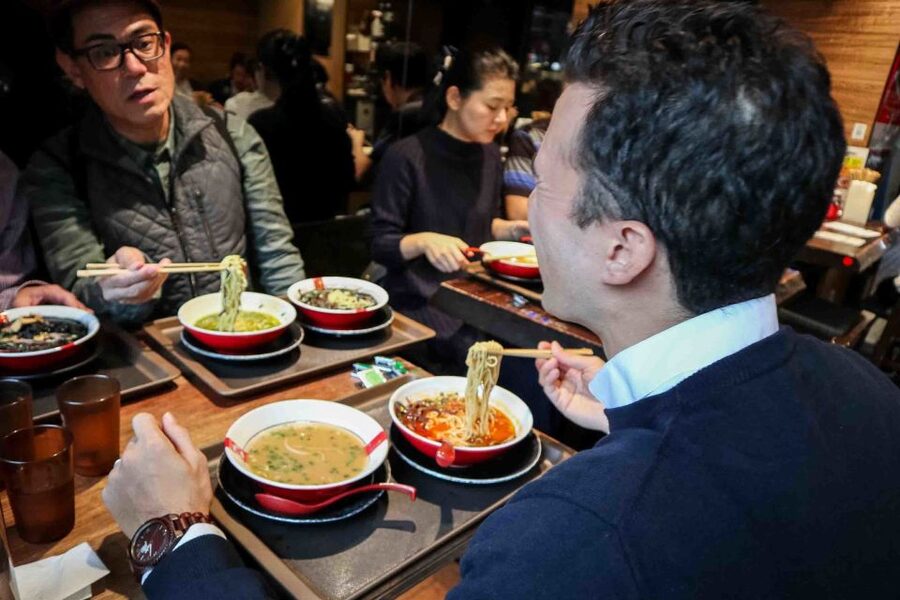
The Shinjuku route opens with classic Tokyo ramen. Tokyo-style ramen is often associated with a clear, savory soup and soy sauce seasoning, giving you a useful baseline before the richer bowls arrive.
The second shop serves modern tori paitan, a thick chicken ramen. Unlike pork-based tonkotsu, tori paitan gets its creamy texture from chicken. This is one of the most useful comparisons on the tour because the appearance may suggest similarity, while the flavor and character are different.
The final stop offers luxurious chicken or fish ramen. This gives the route a more refined finish and helps show how far ramen can move from the basic image of noodles in soup. You are not simply tasting stronger and heavier bowls. The point is to notice how chefs use different proteins and preparation methods to create a distinct result.
Shinjuku is a practical setting for this route because it is one of Tokyo’s major districts, but the tour is not designed as a broad sightseeing walk through every major landmark. The food remains the focus. Depending on the day, the tour may end in Shinjuku, so check the final location before planning your next reservation.
A few more Tokyo bookings worth comparing
- Mt Fuji and Hakone 1-Day Bus Tour Return by Bullet Train
★ 5.0 · 26,383 reviews - 1-Day Tokyo Bus Tour
★ 5.0 · 14,250 reviews - Tokyo: TOKYO SKYTREE® Admission ticket
★ 4.5 · 11,192 reviews - Tokyo: teamLab Planets TOKYO Digital Art Museum Entry Ticket
★ 4.6 · 9,779 reviews
Ueno route: Kyushu ramen, tsukemen, and Tokyo again
The Ueno route starts with classic Kyushu ramen. Kyushu is especially associated with tonkotsu, thin noodles, and a pronounced pork bone broth. This bowl gives you a traditional southern Japanese style to compare with Hokkaido and Tokyo examples.
The second shop serves contemporary tsukemen, or dipping ramen. Instead of noodles sitting in broth, you dip separate noodles into a concentrated sauce or soup. The eating method changes the balance of noodle and broth, and it is one of the clearest ways to see that ramen is not one single format.
The route finishes with modern Tokyo ramen. After trying a regional Kyushu style and a contemporary dipping bowl, this final stop shows how Tokyo cooks borrow from tradition while developing new combinations.
The Ueno route is a good choice if you care more about ramen variety than about spending the afternoon around Shibuya or Shinjuku. The available route depends on the option and day, so confirm the neighborhood before you book if location matters to your itinerary.
Three shops, three neighborhoods, and a fair amount of walking
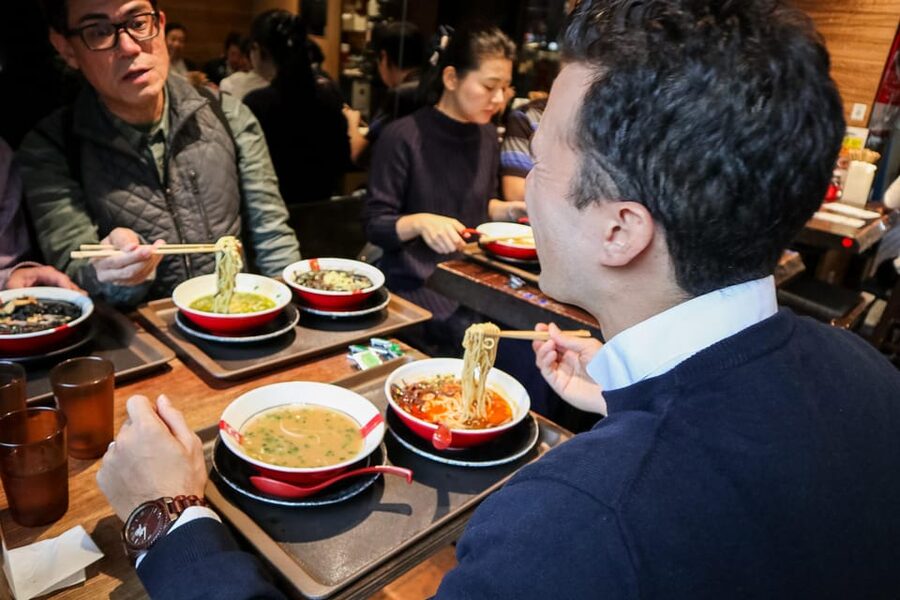
The tour lasts three hours and covers about 3 kilometers on foot. You may also need a train, and that ticket is not included in the $122 price.
The walking is not just a nuisance. It breaks up the meal, gives you a look at three different parts of Tokyo, and helps prevent the six bowls from arriving too quickly. Several people found the route easy to manage because there was time between tastings. Still, the distance may feel tiring in hot, wet, or cold weather.
I would wear comfortable shoes and keep your schedule open after the tour. You may finish full rather than ready for another major meal. The tour is not recommended for anyone with a low level of fitness, and that warning is worth taking seriously.
The small group limit of eight is a real advantage. A large food tour can turn into a queue behind a guide, especially in compact ramen shops. With fewer people, it is easier to hear the explanation, ask questions, and make your six choices without a lot of confusion.
What the $122 price really covers
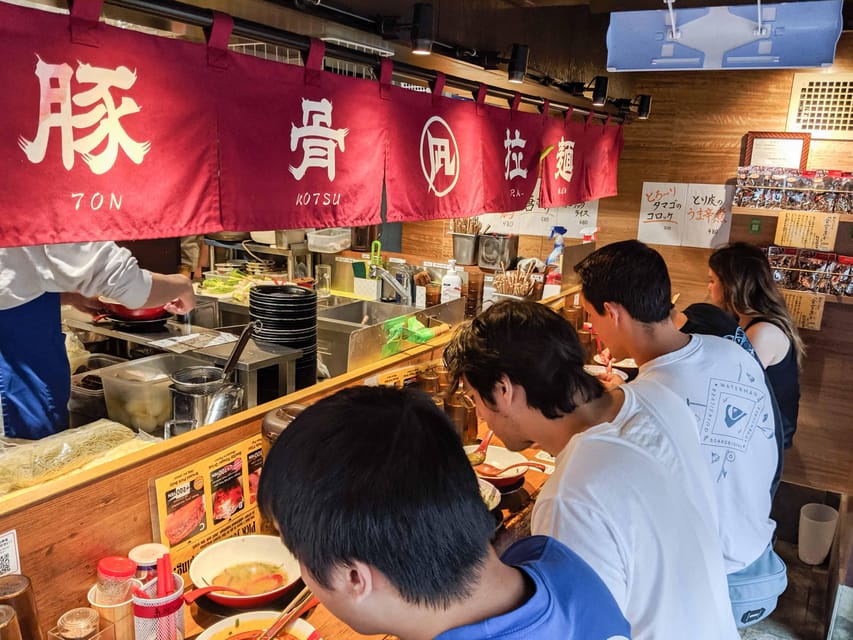
At $122 per person, the tour costs much more than buying a single bowl of ramen. You are paying for six small servings, one beverage, the guide, the route between three restaurants, the educational material, and the chance to taste styles you might not order on your own.
The value depends on how you use it. If you already know Tokyo ramen well and are comfortable finding specialty shops, you may prefer to spend the money on several independent meals. If you are new to Japan, do not read Japanese, or want a guide to explain the regional differences, the tour can save you guesswork and food waste.
The mini bowls are also important to the calculation. You could visit three shops yourself, but ordering six full bowls would cost more and leave you with a much bigger eating problem. The tour gives you controlled portions and a guide who can help you choose from the available styles.
The beverage is included, but train fare is not. Keep a little extra room in your budget for transportation if the route requires it.
Dietary limits and family considerations
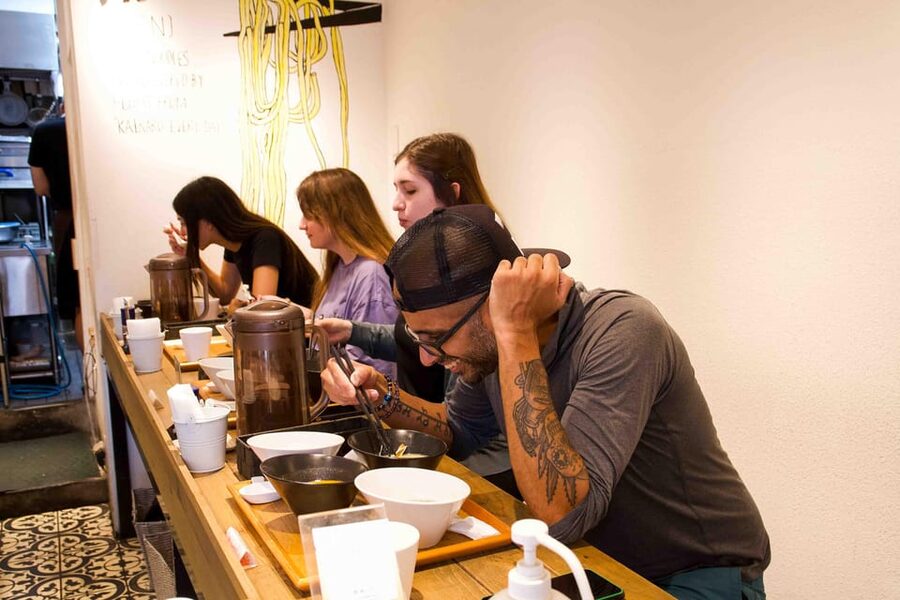
All ramen broths on this tour contain chicken, pork, and fish. That includes the listed styles, so this experience is not suitable for vegans or vegetarians. A separate vegan and vegetarian ramen tasting tour is available, and that is the correct option if you avoid animal products.
The tour can work for children who enjoy trying new foods. One guide successfully hosted a group that included a nine-year-old, but the meal is still long and the walking is substantial. Six tastings also require patience, especially if your child prefers familiar flavors.
If you have allergies or strict dietary requirements, the supplied information does not promise substitutions. Ask the provider before booking rather than assuming a mini bowl can be changed.
The best time to schedule it in your trip
I would book this tour early in your Tokyo stay, not on your final day. The ramen lesson gives you a framework for choosing bowls on your own later, and the guides often share useful food and neighborhood advice.
It is also smart to avoid a heavy meal beforehand. The walk helps, but six tastings and a beverage will fill you up. Plan a light breakfast or lunch depending on the start time, and do not schedule another major food experience immediately afterward.
The tour is offered at different starting times, so check availability. Meeting points vary by the option booked. The Shibuya route starts in Shibuya and ends in Ebisu or, on some days and routes, the tour ends in Shinjuku.
Free cancellation is available up to 24 hours before the tour for a full refund. You can also reserve and pay later, which helps if your Tokyo schedule is still changing.
Who will get the most from this ramen tour
I would recommend it most strongly if you meet three conditions:
- You already like ramen or want a serious introduction to it.
- You are willing to walk between restaurants.
- You value explanation and comparison as much as the food itself.
It is especially useful for first-time visitors who see a long ramen menu and have no idea where to begin. It also suits food-focused visitors who want to taste unusual styles such as curry, squid ink, pesto, or tsukemen without ordering full bowls.
You may want to skip it if you prefer slow meals at one restaurant, have a small appetite, dislike walking, or need vegetarian food. The cost can also be hard to justify if your main goal is simply to eat an inexpensive bowl of noodles.
Should you book the Tokyo ramen tasting tour?
Book it if you want ramen to become part of your understanding of Japan, not just a convenient meal. Six mini bowls let you compare regional and modern styles in one organized outing, while the guide connects each taste to ingredients, technique, and history.
The strongest reasons to go are the unusual range of ramen, the exclusive tasting portions, and the guides’ clear enthusiasm. The main reasons to hesitate are the $122 price, the 3-kilometer walk, and the fact that every broth contains chicken, pork, and fish.
My practical advice is to choose the route that fits your plans, arrive hungry, wear good shoes, and book early in your visit. For a ramen fan, this is a useful starting point for exploring Tokyo’s many noodle shops on your own.
FAQ
How many bowls of ramen do I receive?
You receive six mini bowls of ramen. Each is approximately one-quarter the size of a full ramen bowl.
Can I choose which ramen styles I try?
Yes. You choose six ramen styles from a selection of approximately 11 to 12 choices, generally choosing two at each of the three shops.
How many ramen shops does the tour visit?
The tour visits three award-winning ramen shops, with a different ramen style at each stop.
Which Tokyo neighborhoods are included?
The available routes include Shibuya, Shinjuku, and Ueno. The exact route depends on the option and day booked.
How long does the tour last?
The tour lasts three hours.
Is transportation included?
Walking between the shops is part of the experience. A train ticket may be required, and train fare is not included.
How much walking is involved?
The tour includes approximately 3 kilometers, or 1.86 miles, of walking.
Are the ramen broths vegetarian or vegan?
No. All broths contain chicken, pork, and fish. A separate vegan and vegetarian ramen tasting tour is available.
Is a drink included?
Yes. One beverage is included with the six mini bowls of ramen.
Is the tour conducted in English?
Yes. The tour includes a live English-speaking guide.
How large is the group?
The group is limited to eight participants.
Where does the tour start and finish?
The starting point varies by the option booked. The tour starts in Shibuya and may end in Ebisu or Shinjuku, depending on the day and route.
New on our Tokyo list
- From Tokyo: Mount Fuji & Hakone Full Day Private Tour★ 4.9 · 25 reviews
- Tokyo Spectacular View Day-Cruise in 90 Minutes★ 5.0 · 25 reviews
- Real Tokyo Runner Club : Daikoku Car Meet Night Tour with JDM Car★ 5.0 · 25 reviews
- 2.5 Hour-Guided Cycle Tour in the Central Tokyo★ 5.0 · 25 reviews
- Ramen Making from Scratch +Akihabara Tour –Cooking Class★ 5.0 · 25 reviews
- [Self-Drive] Tokyo & Daikoku Custom Car Driving Tour★ 4.9 · 25 reviews
- Tokyo: 2-Hour Night Bike Tour of the City’s Hidden Gems★ 4.9 · 25 reviews
- Samurai themed Entertainment show in Shinjuku★ 4.5 · 25 reviews
Ramen Experiences, compared.

Eat and Drink Like a Local: Tokyo Ueno Food Tour-Taverns&Ramen
Read our review →
Ramen & Gyoza Cooking Class in Tokyo with Local Supermarket Visit
Read our review →
Easy Ramen Cooking Experience in Kabukicho, Shinjuku
Read our review →
Ramen and Sushi Cooking Class with Sake Pairing Set in Tokyo
Read our review →
Professional Ramen & Gyoza with Ramen Chef in a restaurant!
Read our review →
Ramen Dojo Tokyo | Make All 3 (Tonkotsu/Shoyu/Miso)
Read our review →Ramen Dojo Tokyo | Make All 3 (Tonkotsu/Shoyu/Miso)
Read our review →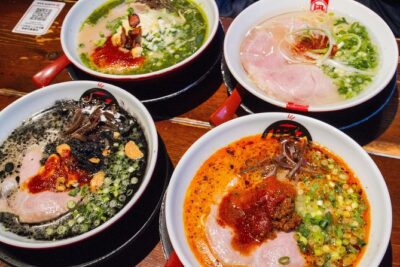
Browse the lists this tour appears in