
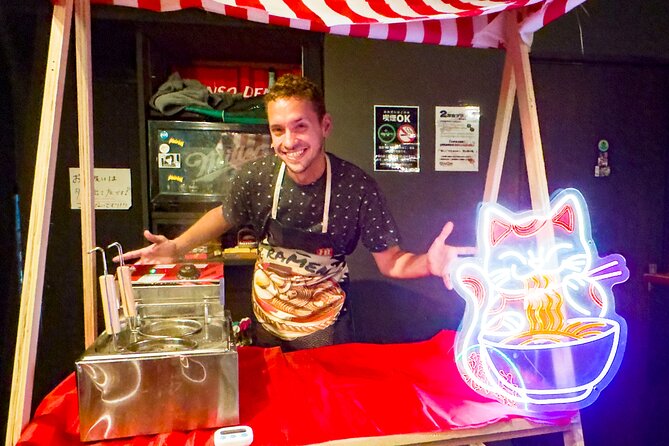
Reviewed · RAMEN EXPERIENCES
Shibuya: Ramen Dojo Tokyo | Make All 3 (Tonkotsu/Shoyu/Miso)
The best part of this Shibuya class is the three-style ramen tasting. In 90 minutes, you make noodles, prepare chicken chashu, adjust the soups, and compare tonkotsu, shoyu, and miso in three small bowls. It gives you more than a single lunch: you learn how the main ramen styles differ.
I like the hands-on noodle work and the small group, capped at eight people. The instructor can give close help, which matters if you have never handled ramen dough before. I also like that the class ends with a digital recipe, so the lesson can continue in your own kitchen.
The main consideration is that you do not make every broth from raw ingredients. The soups are prepared for the class, while you adjust and combine them with your noodles and toppings. If broth-making is your main goal, this may feel incomplete.
In This Review
- Key points at a glance
- Making three ramen styles near Shibuya
- The first 10 minutes: check-in and a clear plan
- Kneading dough and cutting fresh noodles
- Preparing chicken chashu in two short stages
- Comparing tonkotsu, shoyu, and miso
- Boiling, plating, and the 30-minute meal
- What the instructor does well, and where the lesson is limited
- Is $86.22 a fair price?
- Who should book this ramen workshop?
- Practical details before you reserve
- FAQ
- How long does the ramen class last?
- Where does the class meet?
- How far is the studio from Shibuya Station?
- What types of ramen will I make?
- Are the ramen bowls full size?
- Is the class taught in English?
- Is the activity suitable for beginners?
- How many people can join the class?
- Are ingredients and cooking equipment included?
- Can people with allergies or strict dietary requirements join?
- Should you book Ramen Dojo Tokyo?
Key points at a glance
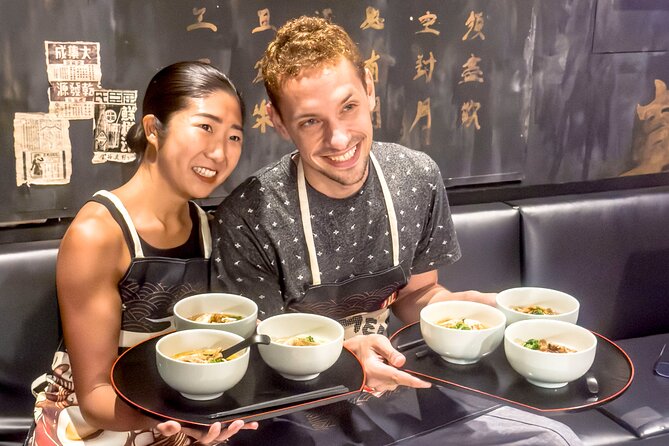
- Three ramen styles in one sitting: Taste mini bowls of tonkotsu, shoyu, and miso side by side.
- Fresh noodles are the star: Knead the dough and cut it with a professional noodle machine.
- Small classes keep help close: The maximum group size is eight people.
- Chicken chashu is included: Prepare the topping before assembling your bowls.
- A practical Shibuya location: Walk about 10 minutes from Shibuya Station, then continue exploring the area after class.
- Best for curious beginners: English instruction, patient support, an apron, ingredients, equipment, and a digital recipe are included.
Making three ramen styles near Shibuya
Tokyo is a fine place to eat ramen without lifting a finger. You can find bowls in every neighborhood, at every price level, and at nearly every hour. This workshop offers a different kind of meal. You still get to eat ramen, but you also learn why the noodles, broth, seasoning, and toppings work together.
The class takes place at the Umekita Building at 7-11 Maruyamacho, roughly a 10-minute walk from Shibuya Station. That walk is short enough to fit into a day of sightseeing, though you should allow time to find the building and arrive ready for the opening briefing.
The experience begins and ends at the same place. That makes planning easy. You do not need to arrange a separate ride back to your hotel, and you can head into Shibuya afterward for shopping, cafés, views, or nightlife.
The maximum group size is eight. That number matters here because the lesson includes kneading, machine-cutting, chashu preparation, noodle boiling, soup adjustment, and plating. In a large cooking class, you might spend much of the time watching. Here, the design gives you a better chance to handle the food yourself.
More ramen stops:
- Eat and Drink Like a Local: Tokyo Ueno Food Tour-Taverns&Ramen
★ 5.0 · 957 reviews - Ramen & Gyoza Cooking Class in Tokyo with Local Supermarket Visit
★ 5.0 · 823 reviews - Tokyo: Ramen Tasting Tour with 6 Mini Bowls of Ramen
★ 4.9 · 432 reviews
The first 10 minutes: check-in and a clear plan
The opening briefing lasts about 10 minutes. Expect the instructor to explain the sequence, the equipment, and the three ramen styles you will taste. This is useful because the class moves through several short stages rather than one long recipe.
You receive an apron, and all ingredients and kitchen equipment are supplied. You do not need to bring cooking tools or prepare anything in advance. Instruction is in English, with support for beginners.
The class has a relaxed teaching style, which is especially useful for families and first-time cooks. An 8-year-old has been accommodated successfully, although an adult should still consider the child’s comfort with stairs, flour, hot cooking equipment, and following kitchen instructions.
Kneading dough and cutting fresh noodles
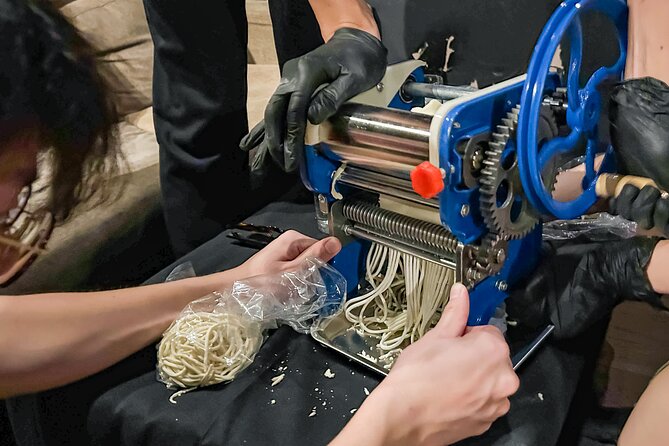
Noodle-making takes about 20 minutes, the longest hands-on section of the class. You knead the dough, work it through the professional cutter, and create the noodles used in your three bowls.
This is the part that gives the lesson its strongest practical value. Ramen noodles are not just a delivery system for soup. Their thickness, texture, and bite change how each bowl feels. Cutting noodles yourself helps you understand the basic process in a way that simply watching a chef cannot.
The dough ingredients are prepared for you, so this is not a full lesson in measuring and building the dough from pantry staples. You focus on kneading and using the machine. That keeps the class within 90 minutes and makes it friendly to beginners, but it also means the digital recipe may be more useful as a guide to repeating the method than as a full professional ramen manual.
Expect flour to be part of the room. The activity is not suitable for someone with severe airborne flour sensitivity, celiac disease, or a severe wheat allergy. It is also not suitable for severe egg or soy allergies.
Preparing chicken chashu in two short stages
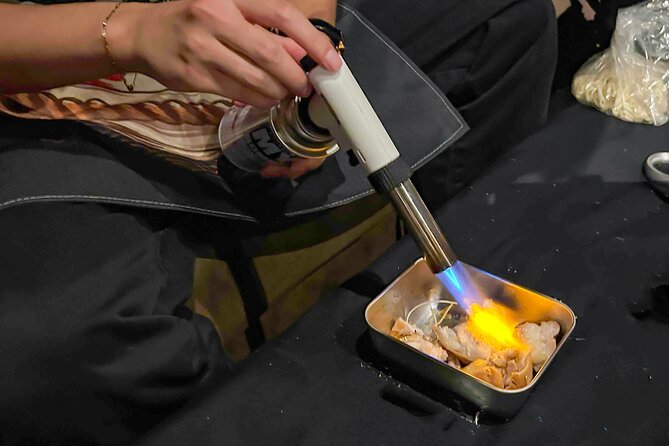
The class gives about five minutes to preparing chicken chashu, followed by another 10 minutes to finish it. Chicken chashu is the topping that adds savory flavor and a tender bite to the finished bowls.
The split timing makes sense. You begin preparing the chicken early, then return to it after the noodles are ready. This keeps the class moving while other parts of the meal are underway.
You should think of this as a focused introduction rather than a full chashu masterclass. The ramen remains the central subject, and the topping is one part of the final assembly. Still, it adds a useful home-cooking lesson because ramen feels more complete when you understand how the topping fits into the bowl.
More Shibuya plans:
- Official Street Go-Kart in Shibuya
★ 5.0 · 3,435 reviews - Tokyo: Street Kart Experience in Shibuya
★ 4.9 · 1,484 reviews - Shibuya Meltdown Nightlife Tour: All-You-Can-Drink Bar Hopping
★ 5.0 · 1,058 reviews - Shibuya Official Street Go-Kart in Shibuya Annex
★ 5.0 · 972 reviews
Comparing tonkotsu, shoyu, and miso
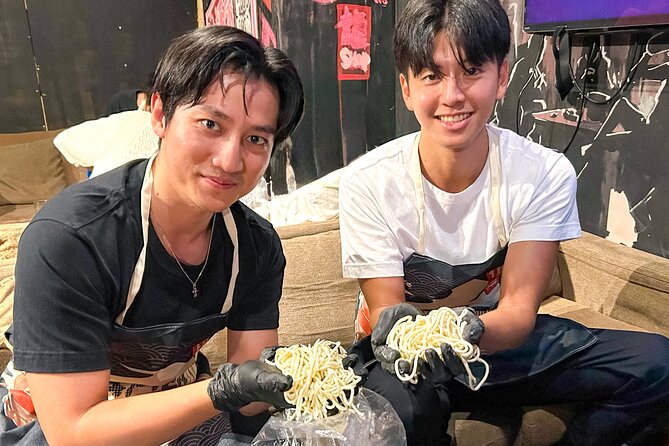
The main reward comes at the tasting stage. You assemble three mini bowls, one each of tonkotsu, shoyu, and miso ramen. The small servings are a smart choice because you can compare the styles without turning the lesson into an overly heavy meal.
Tonkotsu is generally associated with a pork-bone style of ramen, shoyu with soy sauce seasoning, and miso with a fermented soybean base. In this class, the practical focus is tasting and adjusting the prepared soups rather than making each broth from raw bones or a long simmer.
That distinction is important. If you want to learn how to cook a tonkotsu broth from scratch, this is not that kind of course. Long broth preparation would not fit into a 90-minute workshop. Instead, you learn how seasoning affects the bowl and how the same freshly made noodles work with different soup styles.
The three-bowl format is valuable for first-time ramen students. One bowl can be enjoyable, but three bowls let you compare salt, richness, and depth while the lesson is still fresh in your mind. You can adjust the soup to your preferred taste, which gives you a small but useful lesson in balance.
Boiling, plating, and the 30-minute meal
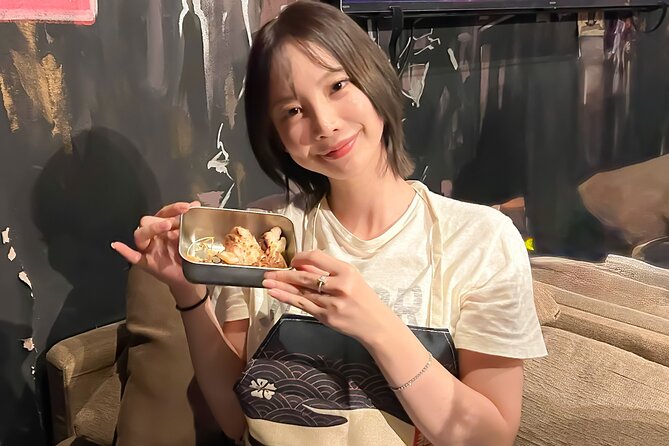
About 10 minutes goes to boiling the noodles and preparing the soups. This is where the class shifts from dough work to actual ramen service. Timing matters: noodles can lose their best texture if they sit too long, so the sequence gives you a feel for why ramen is assembled quickly.
Plating takes about five minutes. You add noodles, soup, chicken chashu, and toppings to create the three bowls. The presentation is designed to be attractive, so you have time for photographs before eating.
The final tasting and photo period lasts about 30 minutes. This is not a rushed sample at the end of a cooking demonstration. You sit down, eat the ramen you made, and compare the three styles.
Because the bowls are mini portions, you should leave satisfied but not expect a large dinner. That can be a benefit if you have restaurant plans afterward. If you are booking this as your main evening meal, plan on a snack or another meal later, depending on your appetite.
What the instructor does well, and where the lesson is limited
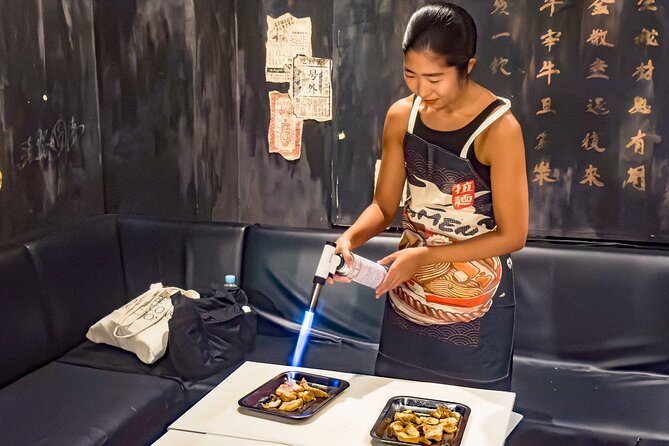
The class is built around patient support. That matters more than fancy cooking language when you are learning to knead dough or use unfamiliar equipment. Beginners can find the process difficult at first, but the structure allows the instructor to help you through each stage.
The small group helps here. With no more than eight people, you should have better access to the instructor than you would in a large demonstration. The available feedback points to patience and encouragement as major strengths, especially for people who are new to cooking.
The limitation is the broth. You see and taste three prepared broths, then work on adjusting and serving them. You do not spend the class building a long-simmered stock. If you are most interested in soup science, ask yourself if tasting and balancing prepared broths will meet your expectations.
There is also no special substitute promised for strict diets. The class includes standard ingredients, and special dietary replacements beyond the stated offering are not included. Fully strict vegan or religious diets are not suitable for this activity.
Is $86.22 a fair price?
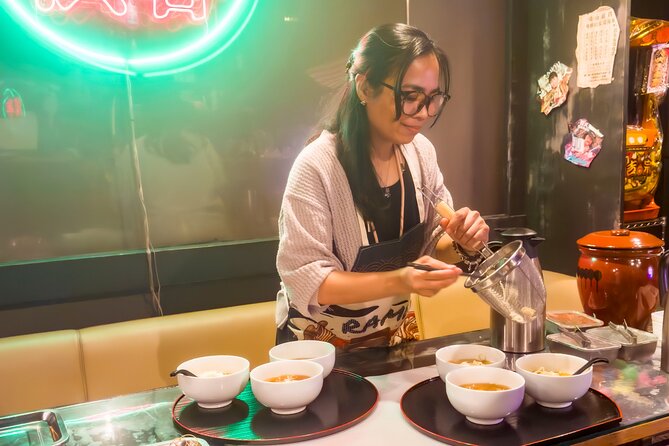
At $86.22 per person, this is not a cheap bowl of ramen. You can eat ramen in Tokyo for much less. The value comes from the combination of instruction, ingredients, equipment, three tastings, and the recipe you take home.
The price makes more sense if you want a participating food activity, not simply lunch. You are paying for a small-group lesson near one of Tokyo’s best-known districts, fresh noodle preparation, chicken chashu work, three soup styles, and time with an English-speaking instructor.
It is also a useful choice for a short Tokyo itinerary. The class lasts about 90 minutes, starts and ends in the same location, and does not require a full-day commitment. You can pair it with other Shibuya plans instead of giving up an entire afternoon.
For a family, the cost adds up quickly, so consider whether everyone will enjoy the cooking as much as the eating. For a ramen fan, food-focused couple, or small group of friends, the three-style comparison and take-home recipe provide more lasting value than a standard restaurant meal.
The 4.9 rating from 214 reviews and 100 percent recommendation rate suggest that the format is working well for most people. I would still read those figures alongside the broth limitation. High satisfaction does not change the fact that the class concentrates on noodles, assembly, and tasting more than from-scratch soup production.
Who should book this ramen workshop?
I would recommend it to:
- First-time cooks who want clear English support
- Ramen fans who want to compare three major styles
- Families with children who can follow kitchen instructions
- Couples and friends looking for a practical food activity in Shibuya
- People who want a recipe and technique they can try at home
- Anyone with a free 90-minute gap between Shibuya sightseeing plans
I would be more cautious if you have a strict allergy, need a fully vegan or religiously compliant meal, dislike stairs, or cannot tolerate airborne flour. The experience is also less suitable if your sole aim is to learn how to simmer ramen broth from raw bones and ingredients.
Practical details before you reserve
The meeting point is the Umekita Building, 7-11 Maruyamacho, Shibuya, Tokyo 150-0044. It is near public transportation and about a 10-minute walk from Shibuya Station.
The activity has mobile ticketing, and confirmation is provided when you book. It runs for approximately 90 minutes and returns you to the original meeting point.
Free cancellation is available if you cancel at least 24 hours before the local start time. Cancellations within 24 hours are not refunded, and late changes are not accepted.
Bring an appetite, but do not assume the three mini bowls equal a full meal for everyone. Wear something comfortable for kitchen work, and remember that the apron is provided. Alcoholic drinks, hotel pickup, private transportation, personal costs, and gratuities are not included.
FAQ
How long does the ramen class last?
The class lasts approximately 90 minutes. The schedule includes a briefing, chicken chashu preparation, noodle-making, soup preparation, plating, and tasting.
Where does the class meet?
It meets at the Umekita Building, 7-11 Maruyamacho, Shibuya, Tokyo 150-0044, Japan.
How far is the studio from Shibuya Station?
The studio is about a 10-minute walk from Shibuya Station.
What types of ramen will I make?
You will make and taste three styles: tonkotsu, shoyu, and miso ramen.
Are the ramen bowls full size?
The class includes three mini bowls of ramen. They are intended for tasting all three styles in one session.
Is the class taught in English?
Yes. An English-speaking instructor leads the class.
Is the activity suitable for beginners?
Yes. Beginners are welcome, and the small group allows for attentive support during the cooking steps.
How many people can join the class?
The maximum group size is eight people.
Are ingredients and cooking equipment included?
Yes. All ingredients and kitchen equipment are included, along with an apron loan.
Can people with allergies or strict dietary requirements join?
The class is not suitable for severe wheat, gluten, egg, or soy allergies, celiac disease, severe airborne flour sensitivity, or strict vegan and religious diets. Special dietary substitutes beyond the stated offering are not included.
Should you book Ramen Dojo Tokyo?
Book this class if you want to do more than eat ramen in Tokyo. The fresh noodle work, three mini bowls, patient English guidance, and digital recipe give you a useful introduction in a compact format.
Skip it if broth-making is your top priority, since the soups are prepared rather than cooked entirely from scratch during the lesson. For most first-time cooks, food-focused families, and ramen fans with time in Shibuya, the class offers a friendly, practical way to turn a familiar Japanese meal into something you understand and can try again at home.
New on our Tokyo list
- From Tokyo: Mount Fuji & Hakone Full Day Private Tour★ 4.9 · 25 reviews
- Tokyo Spectacular View Day-Cruise in 90 Minutes★ 5.0 · 25 reviews
- 2.5 Hour-Guided Cycle Tour in the Central Tokyo★ 5.0 · 25 reviews
- Real Tokyo Runner Club : Daikoku Car Meet Night Tour with JDM Car★ 5.0 · 25 reviews
- Ramen Making from Scratch +Akihabara Tour –Cooking Class★ 5.0 · 25 reviews
- [Self-Drive] Tokyo & Daikoku Custom Car Driving Tour★ 4.9 · 25 reviews
- Tokyo: 2-Hour Night Bike Tour of the City’s Hidden Gems★ 4.9 · 25 reviews
- Samurai themed Entertainment show in Shinjuku★ 4.5 · 25 reviews
Ramen Experiences, compared.

Eat and Drink Like a Local: Tokyo Ueno Food Tour-Taverns&Ramen
Read our review →
Ramen & Gyoza Cooking Class in Tokyo with Local Supermarket Visit
Read our review →
Easy Ramen Cooking Experience in Kabukicho, Shinjuku
Read our review →
Ramen and Sushi Cooking Class with Sake Pairing Set in Tokyo
Read our review →
Professional Ramen & Gyoza with Ramen Chef in a restaurant!
Read our review →
Ramen Dojo Tokyo | Make All 3 (Tonkotsu/Shoyu/Miso)
Read our review →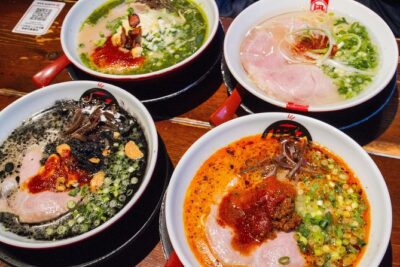
Browse the lists this tour appears in