
Reviewed · HIKING & TREKKING
Oiso: Adventure Hike to See Mt. Fuji & Historic Coastal Walk
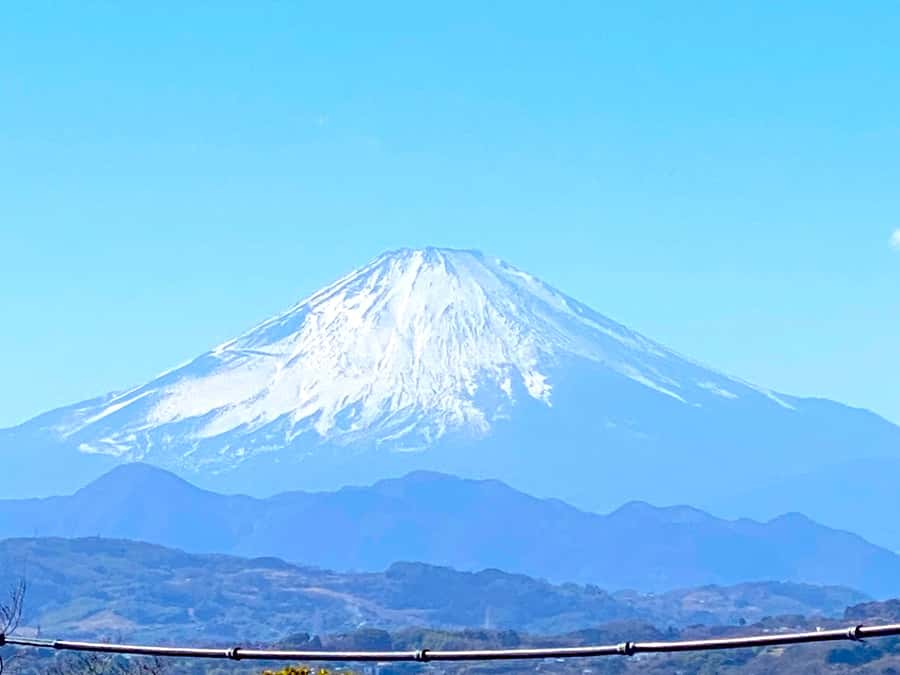
Oiso gives you a side of Japan that busy Tokyo and Kamakura cannot. In six hours, you move from the sea to a forest trail, a 1,300-year-old shrine, a hilltop lookout, and elegant former political residences. The prize is Shonan-Daira’s 360-degree view, with Sagami Bay, Mt. Oyama, the Izu Peninsula, and sometimes Mt. Fuji spread before you.
I like two things especially. First, guide Yuki connects the places with stories, including the legend of Mt. Koma, instead of treating each stop as a separate photo opportunity. Second, this is a private tour, so the pace can change when you need a rest or want more time at a shrine, garden, or restaurant. The main consideration is the hike: it is not a technical mountain climb, but steep or slippery ground can make the day tiring.
In This Review
- Key points to know
- Why Oiso makes a fine break from Tokyo
- Starting at the port and Japan’s first public beach
- Takaku Shrine and the story of Mt. Koma
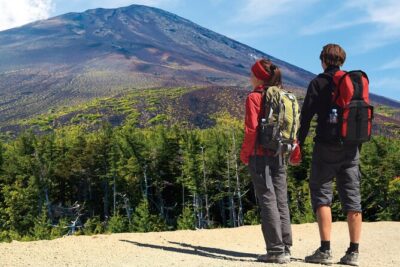
- The Mt. Koma trail and Shonan-Daira views
- Lunch built around Oiso’s seafood and local food
- Meiji Memorial Garden and former political homes
- How the private format affects the day
- Rain, heat, and the right level of fitness
- Who will get the most from this Oiso day
- Should you book the Oiso hike?
- FAQ
- Where does the Oiso tour begin?
- How long does the experience last?
- Is the tour private?
- Who guides the tour?
- Is Mt. Fuji guaranteed to be visible?
- How difficult is the hike?
- What should I wear and bring?
- Is lunch included?
- What happens if it rains?
Key points to know
- Mt. Koma to Shonan-Daira: A roughly two-hour walking section brings you through light forest to one of the area’s best viewpoints.
- A rare mix of sea and history: Oiso’s port, first public beach, old Tokaido route, shrine, tombs, and villas all fit into one compact town.
- Yuki’s flexible guiding: The licensed English-speaking guide can adjust the day to your energy and interests.
- Lunch is local and separate: Choose from recommended sashimi, soba, meat, or vegetable restaurants, with lunch paid directly by you.
- Fuji is not guaranteed: The lookout is a noted Mt. Fuji viewing spot, but clouds and haze can hide the mountain.
- Good access from Tokyo and Hakone: Meet at JR Oiso Station, making this practical as a day trip or a stop along the route west.
Why Oiso makes a fine break from Tokyo
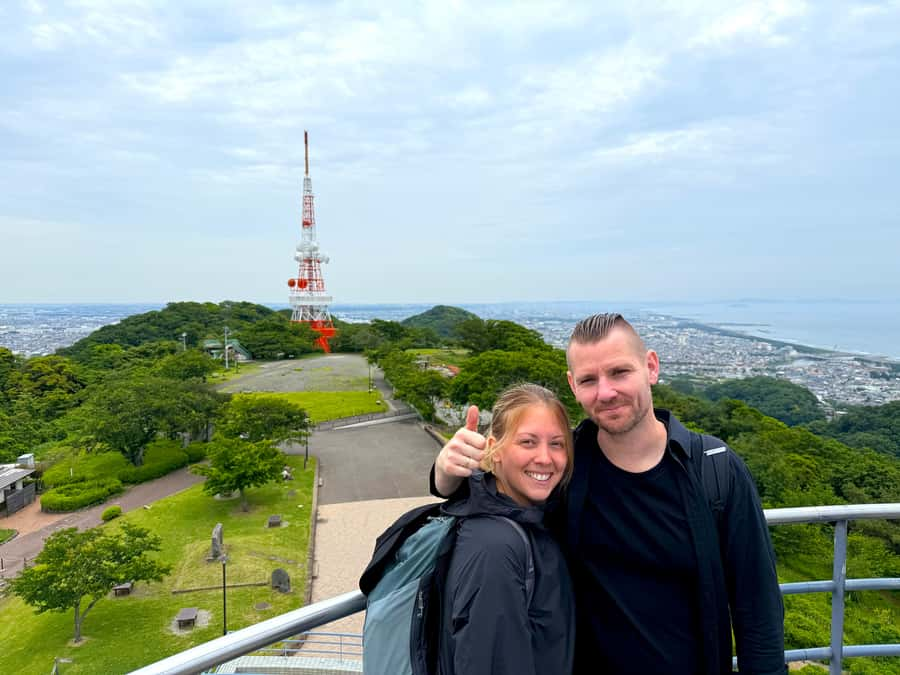
Oiso sits along the Shonan coast of Kanagawa, close enough to reach from Tokyo yet far removed from the crowds of the best-known sightseeing towns. The town combines mountains, sea, old roads, fishing, gardens, and political history in a surprisingly small area.
That compact layout matters. You do not spend the day riding between disconnected sights. The walk begins at JR Oiso Station, heads toward the port and coast, climbs toward Mt. Koma and Shonan-Daira, then returns to town for gardens, food, and the station.
The setting also gives the tour a useful contrast. At the port, you see an active coastal community and may find freshly caught whitebait in the morning. Later, inside a traditional villa, you see how major political figures lived during the Meiji era. Between those points, the forest trail provides a welcome change of pace.
Yuki is a governmental licensed guide who lives in the Shonan area. Her connection to Oiso is personal: she moved nearby because of the nature, history, and culture, then became attached to this slower coastal town. That local focus is important here, since much of Oiso’s appeal comes from small details and stories that are easy to miss on your own.
More Mt Fuji days from Mt Fuji Area:
- Mt Fuji and Hakone 1-Day Bus Tour Return by Bullet Train
★ 5.0 · 26,383 reviews - Mt Fuji & Hakone Cruise, Drum Show Bullet Train 1 Day from Tokyo
★ 4.0 · 7,413 reviews - Tokyo Mt Fuji 5th St & Hakone Cruise Bus Tour w/Bullet Train
★ 4.4 · 5,024 reviews
Starting at the port and Japan’s first public beach
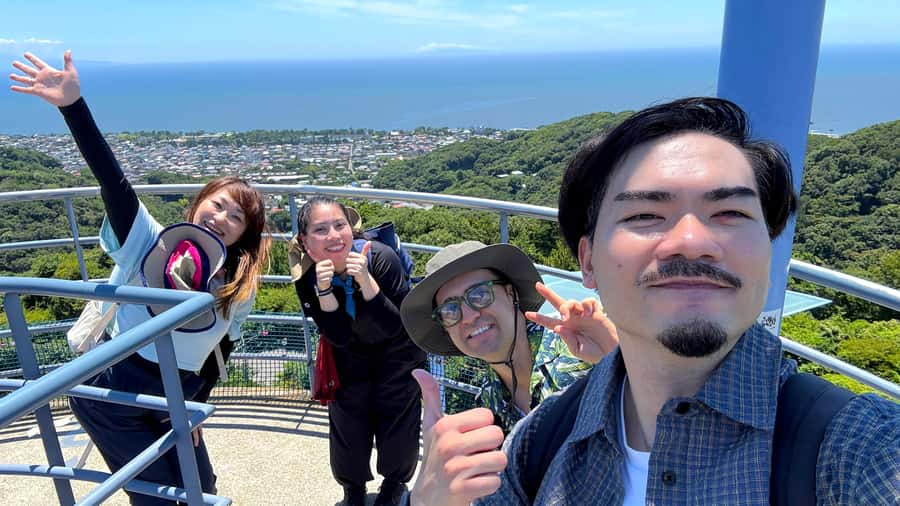
From the station, you walk for about ten minutes before reaching the coastal area. A short photo stop gives you time to get your bearings, then the route continues to Oiso Port for about 20 minutes of sightseeing.
Oiso is associated with Japan’s first established public beach. The beach and port help explain why the town became known as a seaside resort, long before modern resort culture took its current form. You can feel the sea air here, watch the harbor activity, and see a different side of Kanagawa from the temple-and-shopping streets found elsewhere.
If you begin in the morning and conditions are right, you might have a chance to find fresh raw whitebait. This is not promised, and availability depends on the day, but it is one of the more distinctive food details connected with Oiso. The town’s fishing culture also makes the later lunch suggestions more meaningful than simply stopping at a convenient restaurant.
The port is a relaxed opening, but do not linger too long if you want to keep to the full route. You still have the shrine and uphill walk ahead, and the afternoon includes the Meiji Memorial Garden.
Takaku Shrine and the story of Mt. Koma
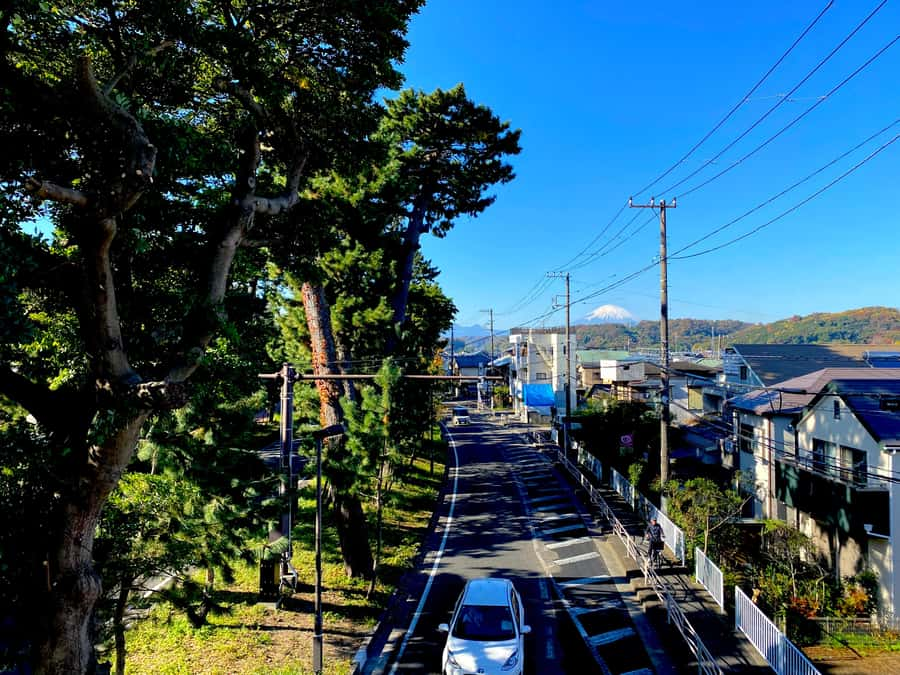
The walk from the port to Takaku Shrine takes about 25 minutes. Along the way, you follow sections of the old Tokaido highway, once an important Edo-period route. Pine trees and older town scenes help you picture Oiso before it became an easy coastal stop from the capital.
Takaku Shrine has about 1,300 years of history and gives the walk a spiritual center. Yuki introduces the proper Shinto ritual, so you are not left guessing what to do at the shrine. You can also touch the spring water considered divine.
The shrine visit lasts about 20 minutes. That is enough time for the ritual, a look around, and an explanation of the Mt. Koma legend without turning the stop into a long lecture. I appreciate this kind of context because a short trail feels more meaningful when you understand why the mountain matters locally.
From the shrine, the route begins its more active section. The goal is the top of Mt. Koma, where Koraiji Temple once stood. The trail is described as suitable for people looking for a light experience in Japanese nature, but you should still wear proper shoes and expect uneven or sloping ground.
The Mt. Koma trail and Shonan-Daira views
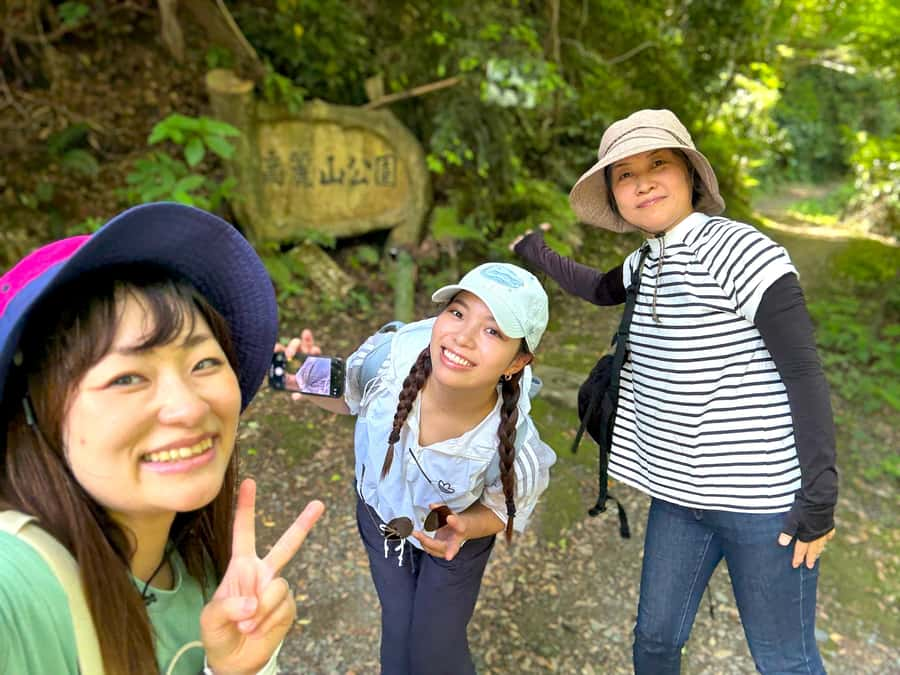
The hiking portion is the heart of the experience. The route first climbs Mt. Koma, then continues along the ridge toward Shonan-Daira Observatory. The listed schedule gives roughly one hour for the first hike, a 40-minute break at the observation deck, and another hour of hiking afterward.
This is a useful point to set expectations. It is not an all-day wilderness trek, but it is much more than a paved stroll. The trail can feel demanding in hot weather, and rain makes it slippery. Long pants, a long-sleeved shirt, and hiking shoes are required recommendations for good reason.
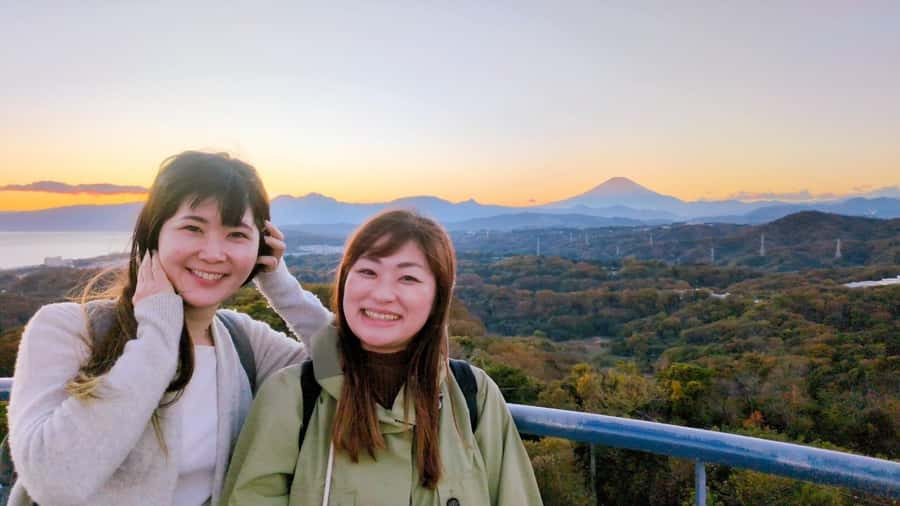
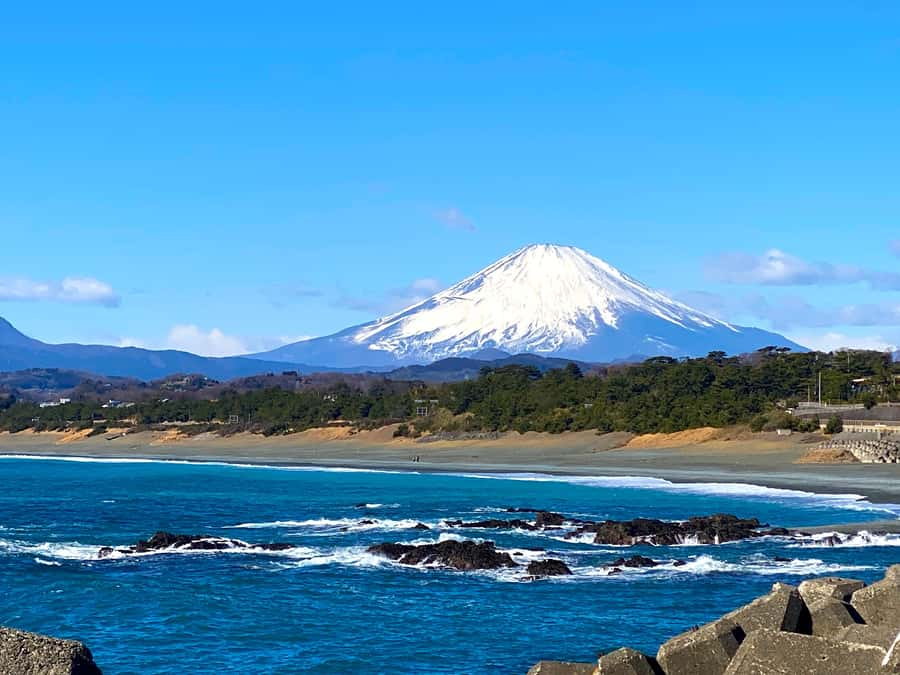
At the top, Shonan-Daira offers a broad panorama. On a clear day, you can see Sagami Bay, Mt. Oyama, the Izu Peninsula, Mt. Fuji, and the Tanzawa mountain range. The lookout is also known as one of the notable Mt. Fuji viewing places in the area.
Fuji sightings depend entirely on weather and visibility. Even a bright day may have enough cloud or haze to hide the summit, so do not book this only for a guaranteed Fuji photograph. The sea-and-mountain view remains worthwhile, and the observation area includes a photogenic tower, art, and objects that give you more than one way to enjoy the stop.
There is a small shop at the top selling drinks, ice cream, and light snacks. That is handy after the climb, particularly in summer. One practical detail from a hot-weather outing: Yuki has provided iron candy to help keep the group going. Still, carry enough water and do not assume the shop replaces your own supplies.
After the break, you continue hiking and then walk back toward the foot of the town. The route includes views of Oiso and archaeological sites, including Yagura tombs associated with the Kofun period. These tomb clusters add an unexpected historical layer to a walk that already includes a shrine and old highway.
More trails within reach of Mt Fuji Area:
- Private Local Hiking to enjoy the nature and culture of Mt.Fuji
★ 5.0 · 22 reviews - Mt.Fuji Trekking 1 Day Tour up to the summit
★ 5.0 · 14 reviews - Private Hiking Tour to View Mt. Fuji
★ 5.0 · 10 reviews - Shizuoka : Mt Fuji Secret Canyon River Trekking
★ 5.0 · 6 reviews
Lunch built around Oiso’s seafood and local food
Lunch comes after the outdoor section, which is sensible planning. You can choose from Yuki’s recommendations, including sashimi, soba, local meat, and vegetables. The lunch cost is not included, so plan to pay separately at the restaurant.
The port location makes seafood a natural choice. A fishing cooperative restaurant at Oiso Port has served fresh local fish to people on this route, and sashimi is a recurring recommendation. If you prefer something lighter or less seafood-focused, the suggested soba restaurant has also earned strong praise.
The benefit of having Yuki recommend lunch is not simply convenience. She can point you toward food tied to the town, rather than a generic chain near the station. The tradeoff is that restaurant choice, opening hours, and exact meal cost are not fixed in the tour price. If lunch is a major priority, tell her your preference early.
Meiji Memorial Garden and former political homes
After lunch, you visit Meiji Memorial Garden for about 45 minutes. This brings the tour back from nature and coastal food to architecture and national history.
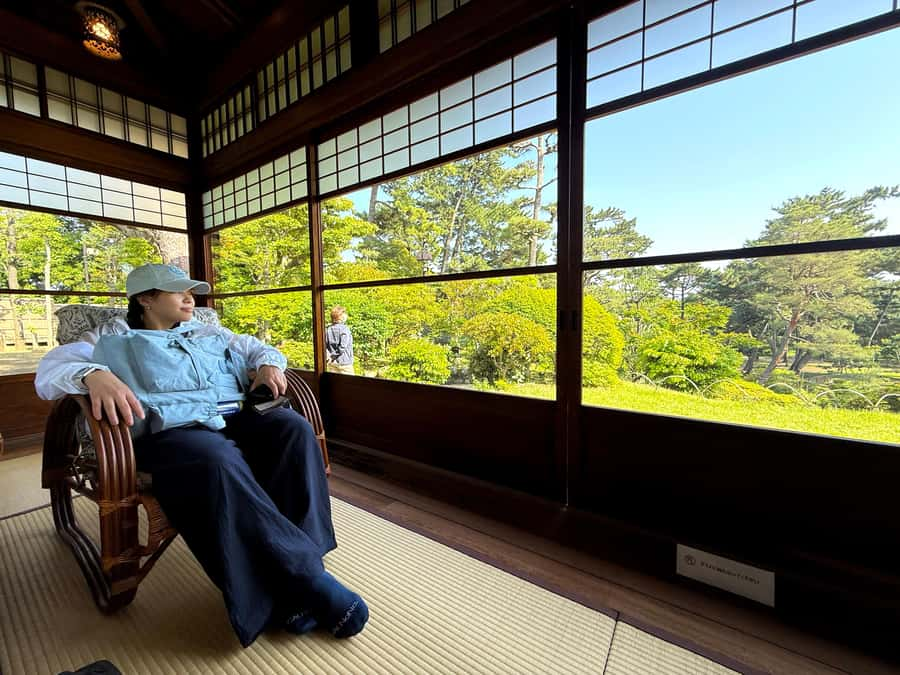
Oiso became a favored place for prominent politicians and diplomats, and the villas show why. The properties combine quiet surroundings, sea views, traditional Japanese rooms, and carefully planned gardens. You may enter two traditional-style villas connected with famous figures from the Meiji era.
The Yoshida Shigeru residence is a particularly important stop. Yoshida was a major postwar political figure, so the house offers a direct link to Japan’s recovery and political life after the Second World War. The restored modern sukiya-style architecture and Japanese garden also give you a close look at a form of domestic design that is easy to admire but harder to understand from outside a building.
This is not just a house tour. The villas show how Oiso developed as a retreat for people who shaped modern Japan. Yuki explains the political setting and the daily life associated with these homes, helping connect polished rooms and gardens with the people who used them.
Rain does not necessarily ruin this part of the day. The garden and indoor buildings can still provide a rewarding visit, and the guide can shift attention toward historic homes, museums, shops, and other gardens when the trail is unsafe.
How the private format affects the day
The tour costs $114 per group of up to six people. That is a different value calculation from a per-person group excursion. For six people, the effective guide cost is about $19 per person. For one or two people, it is a much more significant expense, but you are paying for a private English-speaking guide and a full six-hour route rather than a short introduction.
The private format is most useful on a physically varied day like this. You can ask questions at the shrine, slow down on the hill, spend more time taking photos, or adjust the schedule around your energy. Yuki has already adapted the route for a tired participant, so the flexibility is practical rather than just a booking label.
You meet outside the ticket gate at JR Oiso Station. The station works well for people coming from Tokyo toward Odawara or Hakone, and it can also fit a westbound route toward Osaka or Kyoto. Transportation to and from the station, lunch, and any checkroom use are not included.
The tour ends back at JR Oiso Station. That makes onward travel simple, but do not arrive with large luggage. Oversize bags, large luggage, strollers, and handcarts are not allowed, and there is no listed luggage service included.
Rain, heat, and the right level of fitness
The biggest practical issue is ground condition. If it rains, or if the trail has been wet from rain the previous day, the shrine visit, observatory, and hiking may be removed for safety. The replacement plan can include Japanese gardens, a local history museum, and shops.
That policy protects the experience, but it also means you should not treat the observatory as guaranteed. You may want to check the forecast before booking, particularly if the mountain walk is your main reason for coming.
The tour suits active adults, couples, friends, families with children over eight, and active seniors who can manage a moderate outdoor walk. It is not suitable for children under eight, pregnant women, wheelchair users, people with mobility limits, people afraid of heights or prone to vertigo, or people with heart, respiratory, or seizure conditions. The stated guidance also excludes people over 75, people with a cold, and people with visual or hearing impairments.
Those limits are unusually specific, but they make sense. The day combines a climb, a ridge walk, a lookout, and uneven outdoor ground. High heels, sandals, flip-flops, open-toed shoes, slippers, and short skirts are poor choices and are not allowed.
Who will get the most from this Oiso day
I would choose this tour if you have already seen the headline sights in Tokyo or Kamakura and want a quieter town with a stronger local feel. It also works well for a first visit to the Shonan area because you see the coast, forest, food, religion, archaeology, and architecture in one outing.
It is particularly good for you if you like asking questions. The town’s best qualities are not always obvious at a glance, and Yuki’s explanations about the Tokaido, Mt. Koma, the seaside resort tradition, and former residents add much of the value.
Families should judge the hike honestly. Children over eight are welcome, but the trail, heat, and long six-hour schedule still require reasonable stamina. Active seniors may enjoy the route, while anyone with mobility or balance concerns should choose a flatter outing.
The best seasons may be spring and autumn for more comfortable walking conditions. Seasonal flowers, cherry blossoms, or red leaves may add interest, but the tour does not promise them. Summer brings bright coastal views and the chance of especially warm weather, while winter can offer crisp visibility but does not guarantee Fuji.
Should you book the Oiso hike?
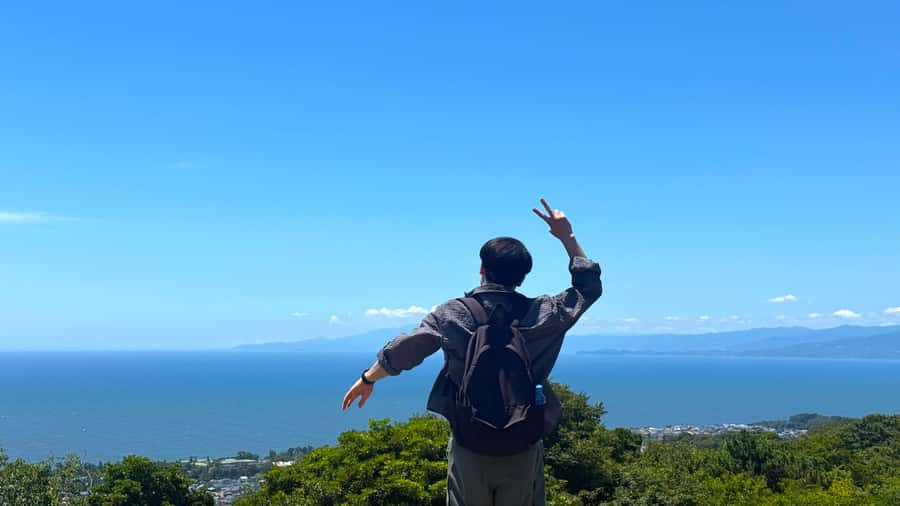
Book it if you want a private, story-led day that mixes a real coastal town with a manageable mountain walk. The strongest reasons are Yuki’s personal guiding, the flexible pace, and the rare combination of Shonan sea views, Mt. Fuji possibilities, shrine ritual, old tombs, seafood, and Meiji-era villas.
Skip it if you need a fully accessible route, dislike uneven trails, or would be disappointed by a day without Mt. Fuji. The mountain is a bonus, not a promise.
For active visitors based in Tokyo, Kamakura, Odawara, or Hakone, Oiso offers a rewarding change from the usual sightseeing circuit. Bring hiking shoes, water, sun protection, and an appetite for local fish. If your group has several people, the $114 private rate is particularly attractive.
FAQ
Where does the Oiso tour begin?
You meet outside the ticket gate at JR Oiso Station.
How long does the experience last?
The tour lasts six hours and ends back at JR Oiso Station.
Is the tour private?
Yes. It is a private group experience for up to six people.
Who guides the tour?
Yuki, a governmental licensed local guide who speaks English and Japanese, leads the experience.
Is Mt. Fuji guaranteed to be visible?
No. Mt. Fuji may be hidden by clouds or weather conditions, and there is no refund if it cannot be seen.
How difficult is the hike?
The route is described as a light nature hike, with hiking sections of about one hour each. You should still expect uphill and possibly uneven ground.
What should I wear and bring?
Bring hiking shoes, a long-sleeved shirt, and long pants. High heels, sandals, flip-flops, open-toed shoes, slippers, and similar footwear are not allowed.
Is lunch included?
No. Lunch is paid separately. You can choose from recommended local restaurants serving sashimi, soba, meat, and vegetables.
What happens if it rains?
If rain makes the trail slippery, the shrine, observatory, and hiking may be replaced with Japanese gardens, a local history museum, and shops.
More Walking Tours in Mt Fuji Area
- Walk the Ancient Pilgrim Paths of Mt. Fuji – Private Tour
★ 5.0 · 10 reviews - Private Tour of Mt. Fuji Culture and Nature Walk
★ 5.0 · 5 reviews - Tokyo Tsukiji Fish Market Food and Culture Walking Tour
★ 5.0 · 3,184 reviews - Tokyo: Shinjuku Local Bar and Izakaya Guided Walking Tour
★ 4.9 · 1,794 reviews
More Historical Tours in Mt Fuji Area
- Mt. Fuji Heritage Tour: Traditional Villages, Lakes & Shrine
★ 4.5 · 509 reviews - Mount Fuji E-Bike Tour: Explore Nature and History
★ 5.0 · 7 reviews - Tokyo: Imperial Palace and Shogun Historical Walking Tour
★ 5.0 · 2,251 reviews - Tokyo: Imperial Palace Japanese History Walking Tour
★ 4.9 · 987 reviews
New on our Mt Fuji Area list
- Mt Fuji Exploration Tour with Free Japanese Kusa Mochi from Tokyo★ 4.5 · 3 reviews
- Mount Fuji – Private Tour with English Speaking Chauffeur★ 3.7 · 3 reviews
- Day Trip To Mount Fuji and Hakone from Tokyo with English Guide★ 4.5 · 3 reviews
- 3-Row Luxury Bus Tour to Mt. Fuji, Lake Kawaguchi from Tokyo★ 4.3 · 3 reviews
- Full Day Private Tour of Mt Fuji★ 5.0 · 3 reviews
- From Tokyo: Mount Fuji One Day Private And Customized Tour★ 4.7 · 3 reviews
- Mt Fuji, Hakone Private Tour by Car Pickup from Tokyo★ 5.0 · 3 reviews
- Mt. Fuji 5th Station Oshino Hakkai & Gotemba, Hot Spring Day Tour★ 5.0 · 3 reviews
Hiking & Trekking, compared.
Full Day Hiking Tour at Mt.Takao including Hot Spring
Read our review →
Hike Japan Heritage Hakone Hachiri with certified mountain guide
Read our review →
Traverse Outer Rim of Hakone Caldera and Enjoy Onsen Hiking Tour
Read our review →
Hakone Hachiri: Old Tokaido Highway Hiking Tour
Read our review →
Private Local Hiking to enjoy the nature and culture of Mt.Fuji
Read our review →
Browse the lists this tour appears in