
Reviewed · MUSEUMS
Private Edo-Tokyo Open Air Architectural Museum Tour
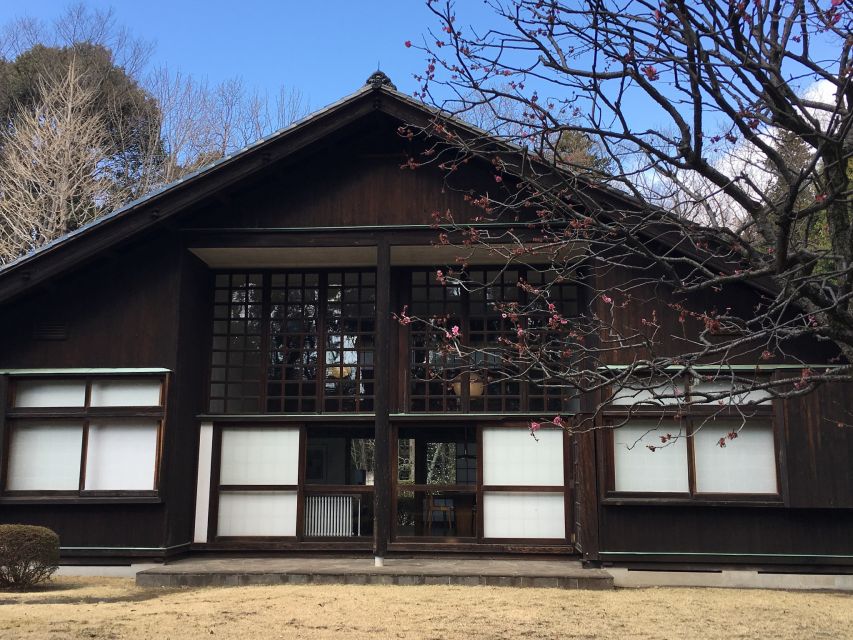
Tokyo’s past comes into focus through its buildings at the Edo-Tokyo Open Air Architectural Museum. Instead of viewing architecture behind glass, you walk into relocated homes, salons, bathhouses, shops, and public buildings from different periods of the city’s growth. I especially like the way the tour links old Japanese rooms with European design, and I like having a private guide who can adjust the pace and explain details that are easy to miss.
The main consideration is getting there. You pay about 700 yen each way for the train and bus, and the five-hour tour includes a fair amount of transit and walking. Also, this is not a visit to the Ghibli Museum, though the old Shitamachi streets and bathhouse can feel wonderfully close to the mood of a Studio Ghibli film.
In This Review
- Key points at a glance
- Why this open-air museum makes Tokyo’s history easier to see
- Meeting your guide and making the journey to Tatemono-en
- Kunio Maekawa’s house and the arrival of modern Japan
- Sutemi Horiguchi’s 1925 blend of Europe and Japan
- The Mitsui residence and the world of elite Tokyo
- Shitamachi streets, the bathhouse, and the old train
- What a private English-language guide adds
- Is the $193 price fair?
- Timing, walking, and what to wear
- Who should book this Tokyo architecture tour?
- Should you book it?
- FAQ
- Does this tour visit the Ghibli Museum?
- How long does the experience last?
- Where do I meet the guide?
- How do I recognize the guide?
- Is transportation to the museum included?
- Is the tour private?
- Should I wear special shoes?
Key points at a glance
- Maekawa’s wartime home: See how Kunio Maekawa adapted modern European ideas to Japan during the Second World War.
- Horiguchi’s 1925 design: Spot Dutch architecture, Art Deco, and De Stijl forms inside rooms that still follow Japanese traditions.
- A private, interest-led visit: Guides such as Yuichi and Yuki can focus on tea rooms, gardens, architecture, or the wider story of Tokyo.
- A real cross-section of Tokyo: The museum moves from the end of the samurai age through the Meiji period and into the Showa era.
- Shitamachi atmosphere: Walk among traditional buildings, a bathhouse, and an old train that recall an earlier East Tokyo.
- Plan for shoes and transit: Wear slip-on shoes, and budget roughly 1,400 yen for round-trip transportation to the museum.
Why this open-air museum makes Tokyo’s history easier to see
Tokyo’s history can feel abstract when it is told only through dates and political changes. At this museum, the changes are built into the walls, floor plans, windows, kitchens, and gardens.
You can move from traditional Japanese residences to homes shaped by European ideas, then into buildings connected with modern urban life. That range gives you a useful visual guide to the city’s transformation after the samurai era, through the Meiji restoration, and into the Showa period.
I like this approach because it avoids treating Japanese architecture as one fixed style. A tatami room, a formal family residence, a modernist house, and a public bathhouse each tell a different story about money, technology, social habits, and outside influence.
The museum is also a good choice if you want some breathing room from central Tokyo. It is an outdoor setting rather than a single indoor gallery, with historic buildings spread through a calm area. The five-hour private tour gives you time to look closely instead of rushing from one famous sight to the next.
More museums worth an hour:
- Tokyo: teamLab Planets TOKYO Digital Art Museum Entry Ticket
★ 4.6 · 9,779 reviews - Tokyo: Samurai Ninja Museum Guided tour and Experience
★ 4.6 · 1,010 reviews - Ninja Experience (Family Friendly) at Samurai Ninja Museum TOKYO
★ 5.0 · 441 reviews
Meeting your guide and making the journey to Tatemono-en
The stated meeting point is the Marunouchi Front Plaza at Tokyo Station. After leaving the JR Tokyo Station Marunouchi Central Gates, head toward the center of the station building. Look for the carriage porch used for VIP arrivals, with a Japanese national flag on each side. The guide is due to wait there with a bag showing an illustration of the Nakagin Capsule Tower.
The tour uses trains and buses to reach Tatemono-en, and transportation is not included in the tour price. Plan on about 700 yen each way. That cost is modest, but the transit matters because it becomes part of the five-hour schedule.
I see this as a benefit if Tokyo’s public transportation feels confusing. A guide can help you get through the station and onto the correct train and bus, rather than leaving you to sort out the route alone. One guide, Yuki, has been praised for explaining the journey as well as the museum.
The details supplied for this experience name Tokyo Station as the meeting point, while the booking information also refers to pickup at JR Tokyo Station or JR Shinjuku Station. Confirm your exact meeting instructions before the day of the tour. Do not assume that a car or hotel pickup is included. A private guide may sometimes help with a hotel meeting arrangement, but the clear written meeting point is Tokyo Station.
Kunio Maekawa’s house and the arrival of modern Japan
The first major stop is a house designed by Kunio Maekawa, a key figure in the development of modern architecture in Japan. Maekawa worked under Le Corbusier and Antonin Raymond, two major influences on modern design, and his own work shows how those ideas could be adapted rather than simply copied.
The house was built during the Second World War, which makes its design especially interesting. It was created in a difficult period, yet it has a polished, thoughtful quality. You can look for the way modern planning and materials meet the practical needs of a Japanese home.
This is a strong opening stop because it gives you a clear question to carry through the rest of the visit: what happens when a country adopts foreign design ideas but keeps its own habits and room types?
Your guide can help explain the distinction between European influence and Japanese use. A Western-inspired exterior does not mean that Japanese life disappeared inside. The value lies in seeing the two systems meet in one building.
If architecture is not your usual museum subject, Maekawa’s house may still hold your attention because it connects design to a wider story. Japan was modernizing quickly, and architects had to decide how much to borrow, how much to adapt, and how much to protect.
Sutemi Horiguchi’s 1925 blend of Europe and Japan
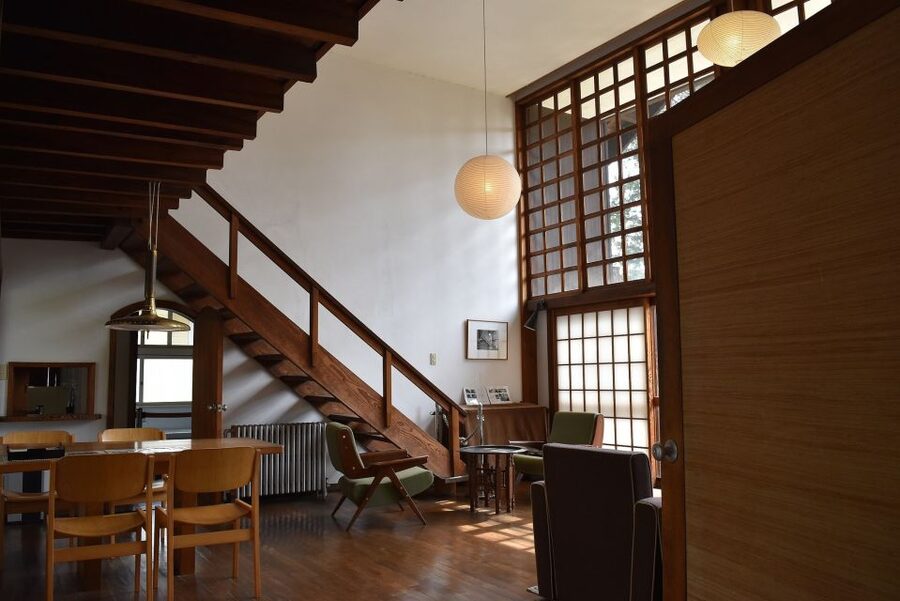
Next comes a residence designed by Sutemi Horiguchi in 1925, shortly after he returned from Europe. Horiguchi introduced Dutch architecture to Japan, and this building shows that European influence in a particularly clear way.
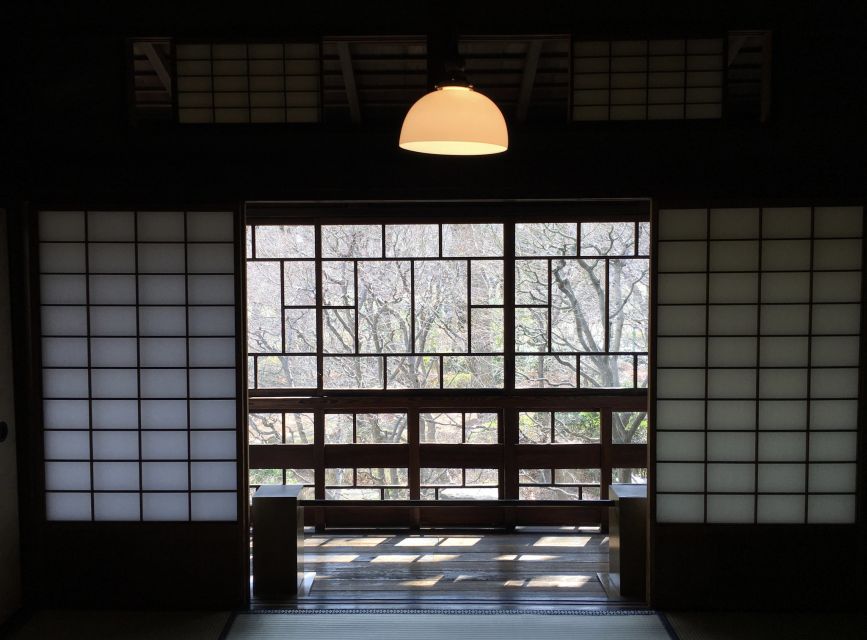
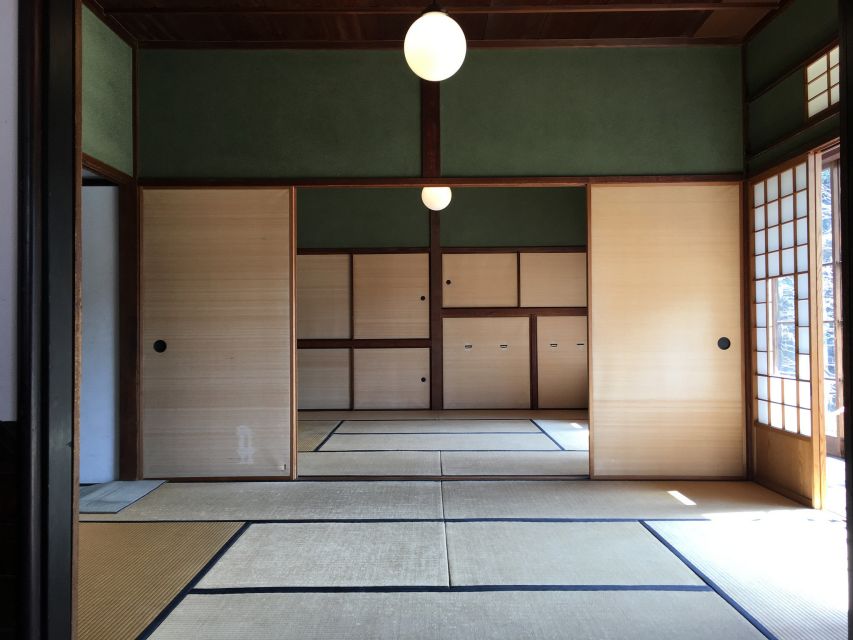
Look for Art Deco details and compositions linked to De Stijl, often known as The Style. These geometric ideas appear alongside traditional Japanese rooms, creating a mix that is more subtle than a simple Western house placed in Japan.
This stop is useful because it shows that architectural exchange was not limited to one famous foreign architect or one imported building type. Japanese designers were watching Europe, traveling there, and returning with ideas that they reshaped for local use.
I would ask your guide to point out where the European design language is easiest to see. The private format makes that possible. You are not tied to a large group’s fixed explanation, and the guide can spend more time on a detail if it interests you.
Horiguchi’s residence also helps explain why this museum works best with interpretation. Without context, you may notice handsome lines and unusual decoration. With context, you can understand the home as a record of Japan’s early modern design debates.
A few more Tokyo bookings worth comparing
- Mt Fuji and Hakone 1-Day Bus Tour Return by Bullet Train
★ 5.0 · 26,383 reviews - 1-Day Tokyo Bus Tour
★ 5.0 · 14,250 reviews - Tokyo: TOKYO SKYTREE® Admission ticket
★ 4.5 · 11,192 reviews - Mt Fuji & Hakone Cruise, Drum Show Bullet Train 1 Day from Tokyo
★ 4.0 · 7,413 reviews
The Mitsui residence and the world of elite Tokyo
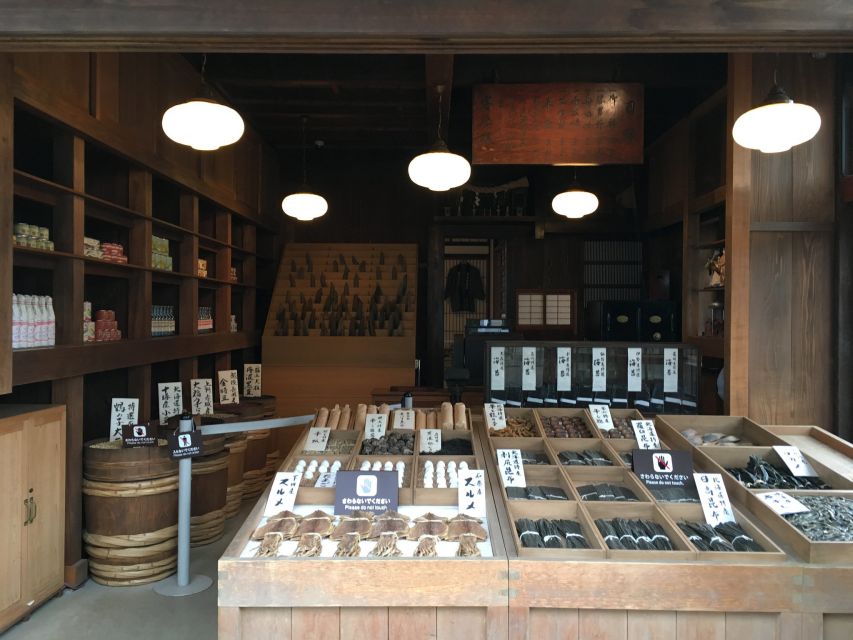
The Mitsui family residence offers a different view of the city. The Mitsui family was said to be among Japan’s richest, and the house reflects the resources available to an elite household.
Here, pay attention to the interior decoration, scale, and formal presentation. This is not only a story about beautiful rooms. It shows how wealth shaped domestic space and how a powerful family could express status through architecture.
The residence adds needed balance to the tour. Maekawa’s home shows modern design thinking, while Horiguchi’s house shows international influence. The Mitsui residence brings class and privilege into the picture.
I like having this stop in the middle of the itinerary because it prevents the museum from becoming a parade of styles with no social context. Your guide can connect the house to the people who used it and explain how a residence differs when it serves a wealthy family rather than an ordinary urban household.
You should also expect some buildings to require shoes to be removed before entry. Wear clean socks and shoes that slip off easily. Laces become a small nuisance when you are taking them on and off throughout an afternoon.
Shitamachi streets, the bathhouse, and the old train
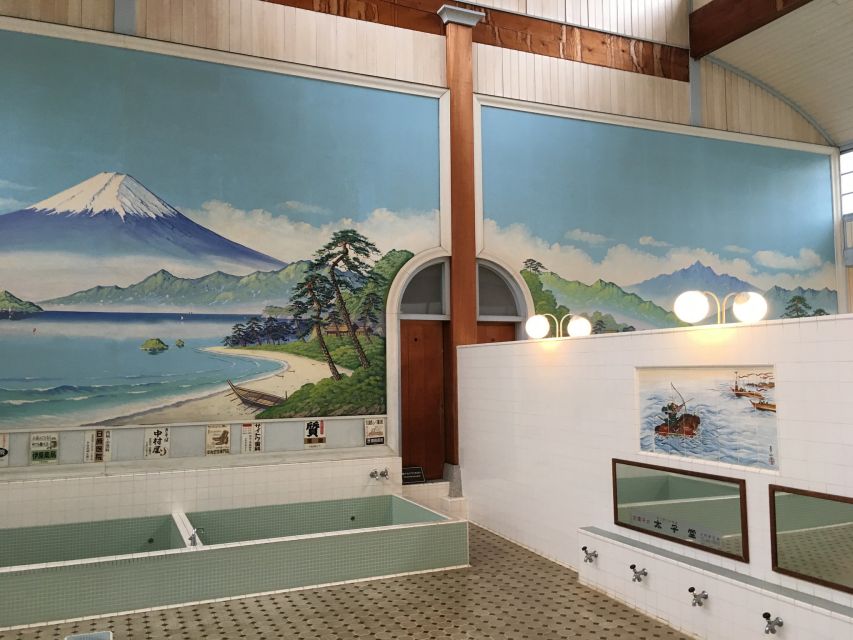
The latter part of the tour shifts toward Shitamachi, the traditional East Tokyo area. The buildings here can feel like they belong in an animated film, especially if you enjoy Studio Ghibli’s way of turning ordinary streets, bathhouses, trains, and old homes into memorable places.
The important point is that the tour visits the Edo-Tokyo Open Air Architectural Museum, not the Ghibli Museum. You will not see Ghibli exhibits or enter the Ghibli Museum. The connection is one of atmosphere: old-fashioned buildings, narrow streets, traditional public life, and a slightly dreamlike setting.
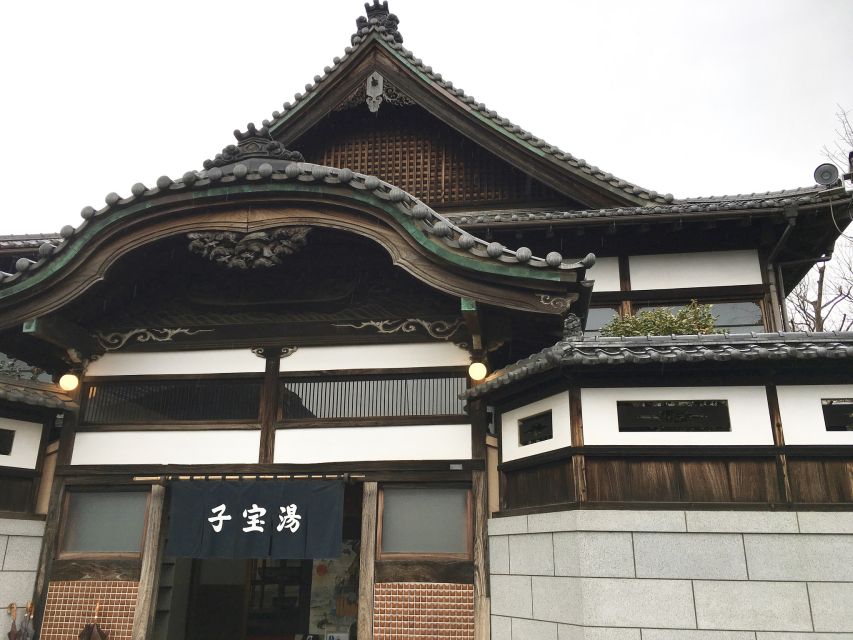
The bathhouse is one of the most appealing stops in this section. A public bath was more than a place to wash. It was part of neighborhood life, and its design gives you a sense of how shared spaces shaped daily routines in older Tokyo.
You will also see an old train that once ran through Tokyo. It is a small but effective reminder that the city’s growth depended on transportation. After seeing homes and family residences, the train brings the focus back to public movement and the expanding city.
This section may be the most immediately enjoyable part for anyone who likes atmosphere and visual detail. It is also a good place to slow down. Look at the signs, timber, tiled surfaces, and practical features that make these buildings feel lived in rather than merely displayed.
What a private English-language guide adds
The guide is the main reason to choose a private tour instead of visiting alone. The museum has enough buildings and periods to reward independent exploration, but the connections are not always obvious.
Yuichi has been especially praised for clear English, patience, and the ability to shape the day around a guest’s interests. If you care about traditional architecture, tea rooms, or gardens, say so at the start. If you are more interested in modernism, European influence, or Tokyo’s social history, make that clear too.
Yuki has also been praised for bringing the buildings to life with stories about their designers and occupants. That kind of explanation changes the experience from looking at old structures to understanding why they matter.
One private-tour advantage is the ability to ask practical questions as you go. You can stop to clarify a design detail, spend more time in a favorite house, or move on when a period is less interesting to you.
The guides’ helpfulness can matter beyond architecture. One guest became ill during a tour, and Yuichi assisted with getting that person to a hospital. You should not book any tour expecting medical support, but it does suggest the kind of attentive service this private format can provide.
Is the $193 price fair?
At $193 per person, this is not a bargain museum outing. The price includes admission and an English-speaking licensed guide, but not the train and bus fare, which adds about 1,400 yen for a round trip.
The value depends on how much you want interpretation. If you are happy reading signs and exploring at your own pace, a private five-hour tour may cost more than you need. If you want architecture explained in clear English, help with Tokyo transit, and a route shaped around your interests, the price becomes easier to justify.
The private group format is important here. You are paying for focused attention rather than a standard commentary delivered to a large crowd. That is particularly useful at a museum with buildings from several periods and design traditions.
I would consider this good value for travelers who have already seen Tokyo’s headline sights and want a more thoughtful look at how the city changed. It is less suitable if you want a quick, low-cost museum visit or if you are mainly seeking the actual Ghibli Museum.
Timing, walking, and what to wear
The experience lasts five hours, including the journey to and from the museum. Starting times vary, so check availability before booking and allow enough room around the tour for the train and bus ride.
You will spend time outdoors and move between buildings. The information provided does not give a precise walking distance, so I would plan for a full half-day on your feet rather than treating this as a seated lecture.
Comfortable shoes are essential, but easy removal matters just as much as support. Several historic buildings require you to remove your shoes, and slip-on footwear will save time and patience.
The tour is offered in English with a live guide. Since it is private, you can ask questions without feeling that you are holding up a group. That makes the experience a strong fit for couples, families, and small groups with a shared interest in design.
Who should book this Tokyo architecture tour?
I would choose this tour if you are curious about how Japanese architecture changed from traditional residences to modern design. It is also a good fit if you want to understand the European connection without losing sight of Japanese rooms, customs, and daily life.
Architecture students, design fans, and Studio Ghibli admirers will find plenty to enjoy. The Ghibli connection is atmospheric rather than official, so book it for the buildings and history first, then enjoy the animated-film feeling as an extra.
The tour may not suit you if your main goal is the Ghibli Museum, central Tokyo sightseeing, or a short indoor attraction. It also requires a willingness to use public transportation and pay that fare separately.
The cancellation terms are practical: you can cancel up to 24 hours in advance for a full refund, and you can reserve now and pay later. Those options help if your Tokyo schedule is still shifting.
Should you book it?
Book this experience if you want Tokyo explained through real buildings rather than a list of dates. The mix of Maekawa’s modernism, Horiguchi’s European influence, the Mitsui residence, and the Shitamachi bathhouse creates a clear, varied picture of the city.
I would especially recommend it for anyone who values a guide who listens. Yuichi and Yuki are noted for making the route personal, and that matters at a large outdoor museum with more material than you can absorb at a glance.
Skip it if you want the Ghibli Museum itself or a cheap, self-guided outing. For everyone else, the added cost buys context, transit help, and a more meaningful look at Tokyo’s architecture.
FAQ
Does this tour visit the Ghibli Museum?
No. The tour visits the Edo-Tokyo Open Air Architectural Museum. Its Shitamachi buildings, bathhouse, and old train can suggest the atmosphere of a Studio Ghibli film, but the Ghibli Museum is not included.
How long does the experience last?
The tour lasts five hours, including travel to and from the Edo-Tokyo Open Air Architectural Museum.
Where do I meet the guide?
The stated meeting point is the Tokyo Station Marunouchi Front Plaza. After leaving the JR Tokyo Station Marunouchi Central Gates, head toward the center of the station building and look for the carriage porch with Japanese flags.
How do I recognize the guide?
The guide is expected to hold a bag with an illustration of the Nakagin Capsule Tower.
Is transportation to the museum included?
No. The tour uses trains and buses, and transportation to and from Tatemono-en costs about 700 yen each way.
Is the tour private?
Yes. It is a private group experience with a live English-speaking licensed guide.
Should I wear special shoes?
Wear comfortable shoes that are easy to slip on and off. Several historic buildings require you to remove your shoes before entering.
New on our Tokyo list
- Sumi-e Experience in a relaxing green tea shop in Tokyo★ 5.0 · 3 reviews
- Tokyo : Kamikaze Street Drift Ride★ 5.0 · 3 reviews
- Private Zen Meditation in English in Shinjuku, Tokyo★ 5.0 · 3 reviews
- Onsen Spa in Tokyo and Asakusa Bar Hopping with Local Guide★ 5.0 · 3 reviews
- Easy for everyone! Now you can play handmade mini shamisen and show off to everyone! Musical instruments, sweets and live music★ 5.0 · 3 reviews
- Tokyo: Private Tsukiji Street Food & Sake with Local Guide★ 5.0 · 3 reviews
- Mt Fuji Exploration Tour with Free Japanese Kusa Mochi from Tokyo★ 4.5 · 3 reviews
- Tokyo Tsukiji Fish Market Walking and Exploring Hidden Gems Tour★ 5.0 · 3 reviews
Museums, compared.

teamLab Planets TOKYO Digital Art Museum Entry Ticket
Read our review →
Samurai Ninja Museum Guided tour and Experience
Read our review →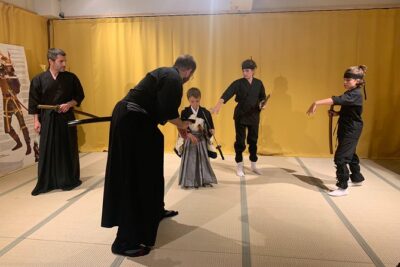
Ninja Experience (Family Friendly) at Samurai Ninja Museum TOKYO
Read our review →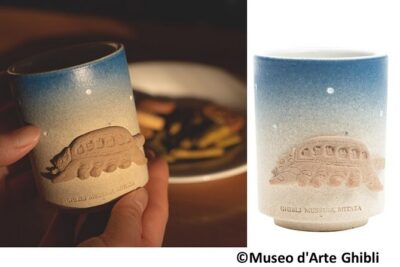
Tokyo Studio Ghibli Museum and Ghibli Film Appreciation Tour
Read our review →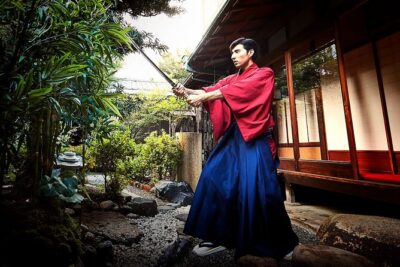
Tokyo Sword Experience – includes Museum Ticket/Ninja Experience
Read our review →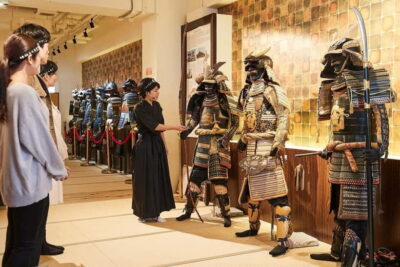
Samurai Ninja Museum Asakusa: Samurai Sword Lesson & Tour
Read our review →

Samurai Sword Experience (Family Friendly)at SAMURAI MUSEUM TOKYO
Read our review →Browse the lists this tour appears in