
Reviewed · JAPANESE CALLIGRAPHY CLASSES
Sumi-e (ink painting) experience in Tokyo
Tokyo has plenty of polished sightseeing, but this one-hour Sumi-e class gives you something quieter: a brush, black ink, and the simple challenge of making bamboo look alive with a few controlled strokes. The lesson covers the tools, basic technique, and how to view Sumi-e, not just how to copy a picture.
I like the small maximum group of nine, which should leave room for questions, and I like the choice of four art styles. You can paint bamboo in ink, work from a Japanese mountain scene in watercolor or ballpoint pen, or learn realistic colored-pencil technique on postcard-size paper. The main caution is the meeting point. One participant missed the class after having trouble finding the way, and the communication afterward felt too blunt, so arrive early and confirm the route.
In This Review
- Key points at a glance
- Why Sumi-e bamboo makes a good first lesson
- From Asagaya Station to the studio
- What happens during the 60-minute lesson
- Choosing between four Japanese art activities
- Sumi-e ink painting
- Watercolor painting
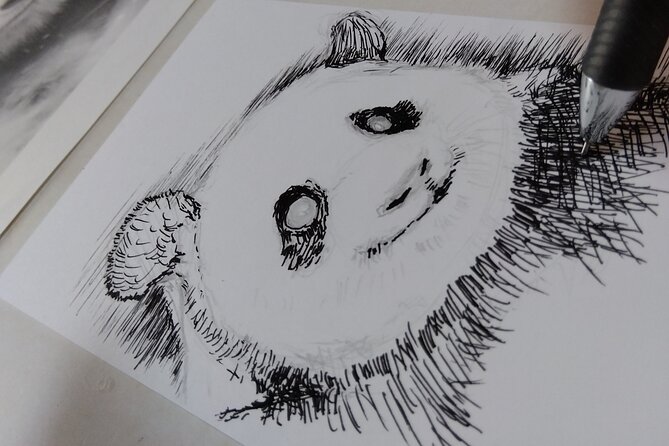
- Ballpoint pen drawing
- Colored-pencil drawing
- How the small group affects the experience
- Is $65.15 a fair price?
- The practical weak spots to consider
- Who should book this experience?
- Should you book the Asagaya Sumi-e class?
- FAQ
- How long does the Sumi-e experience last?
- Where do I meet the instructor?
- How far is the venue from Asagaya Station?
- Can I choose an activity besides Sumi-e?
- What is included in the price?
- Are travel expenses included?
- How many people can join the class?
Key points at a glance
- Paint bamboo with a few deliberate strokes: The Sumi-e lesson focuses on basic tools, brush handling, and the way ink creates different shades.
- Choose your art style before arriving: Options include Sumi-e, watercolor, ballpoint pen, and colored pencil.
- Meet at JR Asagaya Station: The group gathers at the ticket gate five minutes before the start, then walks about five minutes to the venue.
- A compact class with tools included: The one-hour session includes calligraphy equipment and an instructor, with no art supplies to purchase.
- A useful alternative to a busy sightseeing day: The class offers a calm, hands-on activity in a Tokyo neighborhood rather than another quick photo stop.
- Plan carefully around the strict booking terms: The experience is non-refundable and cannot be changed after booking.
Why Sumi-e bamboo makes a good first lesson
Sumi-e, or Japanese ink painting, is built around restraint. You are not filling a page with layers of paint. You are learning how pressure, ink, water, and brush angle can create a dark stem, a lighter wash, or the fine point of a bamboo leaf.
That makes bamboo a smart subject for a short class. Its long stems and narrow leaves can be reduced to clear brush movements. You do not need to complete a large painting to understand the basic idea. In one hour, you can produce a small piece while also learning why an ink painting looks the way it does.
The lesson includes an explanation of the tools before you begin. That matters because the equipment is part of the tradition, not just a set of supplies handed over for convenience. You learn how to use the brushes and ink, then practice the strokes needed for the bamboo subject.
The class also includes instruction on how to look at Sumi-e. That is a useful touch. You are not only being shown a sequence of movements. You are being given a way to notice line, tone, empty space, and the amount of ink placed on the paper.
More calligraphy tables:
- Tokyo: Calligraphy on Kanji Fan & Scroll with Drink
★ 5.0 · 210 reviews - Let’s experience calligraphy in YANAKA, Taito-ku, TOKYO !!
★ 5.0 · 127 reviews - Experience all of Japanese culture and Japanese food experience classes “origami, udon, Japanese food, green tea, calligraphy” in 4 hours
★ 5.0 · 105 reviews
From Asagaya Station to the studio
Your meeting point is the ticket gate of JR Asagaya Station, at 3-chōme-36-2 Asagayaminami, Suginami City. You are asked to arrive five minutes before the scheduled meeting time, and the group then walks together to the venue. The walk takes about five minutes.
This is simple on paper, but the meeting instructions deserve attention. A one-hour activity leaves little room for a wrong turn, a delayed train, or a long search outside the station. The clearest plan is to allow extra time to reach Asagaya, stay inside or near the correct ticket gate, and have the meeting details ready on your phone.
The location is close to public transportation, which makes it practical to fit into a Tokyo day. Still, the short walk does not mean you can arrive at the station at the last second. One participant reported missing the class after finding the route confusing. The provider apologized and acknowledged that the communication had not been handled well, but that does not change the practical lesson: build in a buffer.
Pickup is listed as available, but the detailed meeting instructions center on JR Asagaya Station. Confirm the exact pickup arrangement by email after booking rather than assuming a hotel pickup is included.
What happens during the 60-minute lesson
The session follows a compact, sensible order.
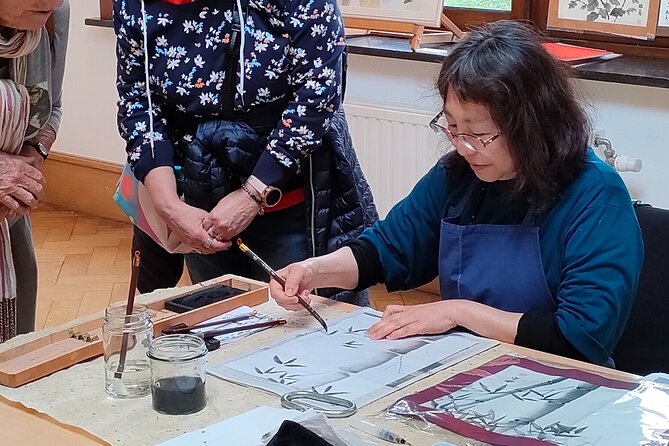
First, you meet the instructor and walk to the venue. Once there, the instructor explains the tools and gives basic tips for making the strokes correctly. The aim is to give you enough control to work with the materials instead of simply watching a demonstration.
Next comes the actual drawing. For the Sumi-e option, the subject is basic bamboo. The instructor guides you through the strokes and shows how to handle the brush. The lesson is not described as an advanced studio course, so you should approach it as an introduction rather than formal training.
The final part includes time for questions and answers. In a one-hour class, that period may be brief, but it gives you a chance to ask about a difficult stroke or clarify how the ink behaves.
The schedule is short enough to suit a morning or afternoon plan. It is also short enough that you should keep your expectations realistic. You will get a focused introduction, not a long personal painting session with hours for corrections.
Choosing between four Japanese art activities
You need to choose your preferred experience after the reservation is confirmed. The provider contacts you by email and asks you to select the activity, so watch for that message and respond before the class.
A few more Tokyo bookings worth comparing
- Mt Fuji and Hakone 1-Day Bus Tour Return by Bullet Train
★ 5.0 · 26,383 reviews - 1-Day Tokyo Bus Tour
★ 5.0 · 14,250 reviews - Tokyo: TOKYO SKYTREE® Admission ticket
★ 4.5 · 11,192 reviews - Tokyo: teamLab Planets TOKYO Digital Art Museum Entry Ticket
★ 4.6 · 9,779 reviews
Sumi-e ink painting
Sumi-e is the most distinctly Japanese option in this experience. You learn about the tools, practice basic brush handling, and draw bamboo. The appeal is the directness of the method. A few strokes can suggest a complete plant, but those strokes require attention.
Choose this option if you want to work with traditional ink and prefer a lesson built around technique and simplicity. It is also the best fit if learning how to read an ink painting interests you as much as making one.
Watercolor painting
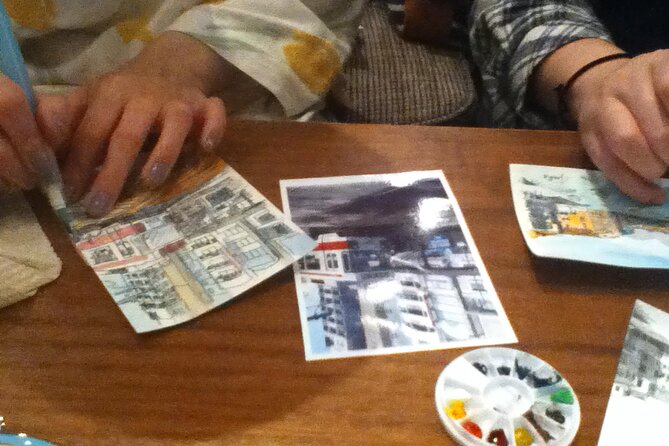
For watercolor, the instructor selects a photo of a Japanese scene, such as Mount Fuji, as the subject. You learn how to paint your own favorite scenery.
This option may suit you better if you like color and want a more familiar painting method. The subject gives you a clear starting point, while the instruction then shifts toward helping you paint scenery you personally enjoy.
Ballpoint pen drawing
The ballpoint pen option also uses a photo of a Japanese scene selected by the instructor. You practice drawing it and learn shortcuts for a rough finish.
This could be a good choice if you want a casual sketching lesson rather than a brush-and-ink exercise. The focus on shortcuts suggests a practical approach, especially if you like the idea of producing a recognizable drawing without spending a long time on fine detail.
Colored-pencil drawing
The colored-pencil activity teaches realistic drawing on postcard-size paper. The instructor focuses on how to create a realistic result with colored pencils.
The smaller paper size is worth noting. It keeps the task manageable in a one-hour class and gives you a compact format that is easier to finish than a large sheet. Choose this option if careful color work appeals to you more than expressive ink strokes.
How the small group affects the experience
The class allows a maximum of nine participants. That is small enough to feel more personal than a large demonstration, while still leaving room for a shared activity.
I would value this most during the actual drawing. Beginners often have the same questions: how hard to press, how much ink to use, and how to correct a line that went wrong. A group capped at nine should give the instructor a reasonable chance to move around and offer guidance.
The class is not described as private, so you should expect to share the space and the instructor’s attention. If every participant needs lengthy one-to-one help, the hour could feel tight. The benefit is that you get a social art session without the scale of a workshop packed with people.
Most people can take part, according to the activity information. No special skill level is required, and the lesson is designed around basic tools and techniques. You do not need to arrive as an artist. You do need patience, since Sumi-e rewards careful movement more than force.
Is $65.15 a fair price?
At $65.15 per person, this is not the cheapest way to spend an hour in Tokyo. The value depends on what you want from the activity.
You are paying for an instructor, the use of calligraphy tools, a guided lesson, and a small-group setting. You are also paying for a planned cultural activity that does not require you to buy supplies or figure out a studio on your own.
The price makes more sense if you want an organized introduction and a finished piece from a short session. It is less appealing if you already have painting experience, own the tools, and mainly want a long period of quiet practice.
Group discounts may be available, which could improve the value for friends or family traveling together. Travel expenses are not included, so add the cost of reaching Asagaya Station to your budget.
I would compare this with the cost of another one-hour paid activity in Tokyo, not with the price of free temple visits or a museum ticket. The point here is participation. You are spending the hour making something, asking questions, and learning a traditional art form.
The practical weak spots to consider
The biggest concern is the meeting process. The route from the station is short, but one person missed the class after struggling to find the way. The provider’s response apologized for the poor communication, yet the incident shows why you should not treat the five-minute lead time as generous.
The class also has a strict cancellation policy. It is non-refundable, and you cannot change the booking for any reason. I would book only after your Tokyo schedule is firm, your transport plan is clear, and you have chosen the art style you want.
The email choice of activity is another small detail that can affect the experience. Do not assume you can decide at the last moment. Check your email after confirmation and send your preference promptly.
Finally, one hour goes quickly. If your goal is to create a highly finished painting, this may feel rushed. If your goal is to try a Japanese art form, learn basic handling, and make a small work, the timing is more reasonable.
Who should book this experience?
I would recommend it to first-time visitors who want a hands-on cultural activity without giving up half a day. It also suits couples, friends, and families who want to make something together, especially if a group discount applies.
Sumi-e is the natural choice for anyone interested in Japanese brushwork, black ink, and controlled lines. Watercolor may be better for someone who wants Mount Fuji or another Japanese scene in color. Ballpoint pen suits a quick sketching style, while colored pencil fits someone who enjoys realistic detail on a small page.
This is less suitable for an artist seeking advanced critique or a long independent studio period. The format is introductory and fixed at about 60 minutes. It is also a poor match for a schedule that leaves no margin for finding the meeting point.
The strong overall score of 4.6 from 10 ratings and a 90 percent recommendation rate suggest that the class generally delivers what it promises, but the small number of ratings means you should not treat that score as a guarantee. The one clearly negative account centers on navigation and follow-up communication, not on the painting lesson itself.
Should you book the Asagaya Sumi-e class?
Book it if you want a short, structured introduction to Japanese ink painting and like the idea of leaving Tokyo with a piece you made yourself. The tool lesson, bamboo subject, small group, and chance to ask questions give the hour a clear purpose.
Before paying, make sure your schedule is fixed, choose your art style in advance, and plan to arrive at JR Asagaya Station well before the meeting time. If you want the most traditional option, select Sumi-e. If you prefer color or a more familiar drawing method, choose one of the other three activities.
I would book this as a focused cultural break, not as a major art course. With that expectation, the price can be reasonable and the experience can add a thoughtful, creative hour to a Tokyo itinerary.
FAQ
How long does the Sumi-e experience last?
The class lasts approximately 60 minutes.
Where do I meet the instructor?
You meet at the ticket gate of JR Asagaya Station in Tokyo, at 3-chōme-36-2 Asagayaminami, Suginami City.
How far is the venue from Asagaya Station?
The group walks together from the station to the venue, and the walk takes about five minutes.
Can I choose an activity besides Sumi-e?
Yes. You can choose watercolor painting, ballpoint pen drawing, or colored-pencil drawing. You are contacted by email after booking to select your preferred activity.
What is included in the price?
Calligraphy tools and a guide are included.
Are travel expenses included?
No. Your transportation costs are not included.
How many people can join the class?
The activity has a maximum of nine participants.
New on our Tokyo list
- Sumi-e Experience in a relaxing green tea shop in Tokyo★ 5.0 · 3 reviews
- Tokyo : Kamikaze Street Drift Ride★ 5.0 · 3 reviews
- Private Zen Meditation in English in Shinjuku, Tokyo★ 5.0 · 3 reviews
- Onsen Spa in Tokyo and Asakusa Bar Hopping with Local Guide★ 5.0 · 3 reviews
- Easy for everyone! Now you can play handmade mini shamisen and show off to everyone! Musical instruments, sweets and live music★ 5.0 · 3 reviews
- Tokyo: Private Tsukiji Street Food & Sake with Local Guide★ 5.0 · 3 reviews
- Mt Fuji Exploration Tour with Free Japanese Kusa Mochi from Tokyo★ 4.5 · 3 reviews
- Tokyo Tsukiji Fish Market Walking and Exploring Hidden Gems Tour★ 5.0 · 3 reviews
Japanese Calligraphy Classes, compared.
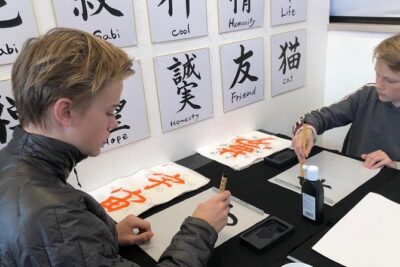
Let’s experience calligraphy in YANAKA, Taito-ku, TOKYO !!
Read our review →
Calligraphy Workshop & Original T-Shirt Creation
Read our review →
Calligraphy Workshop & Original T-Shirt Creation
Read our review →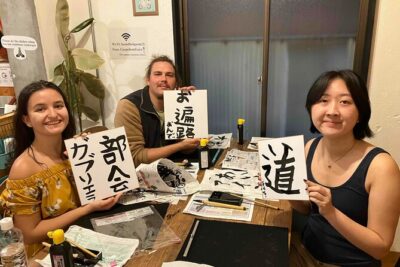
Calligraphy &Make your original folding fan in Asakusa
Read our review →
Tokyo Asakusa:Calligraphy & Make T-shirt Activity
Read our review →Browse the lists this tour appears in