
Reviewed · DAY TRIPS FROM TOKYO
Tokyo Customized Private Tour: See Top Attractions in 1 Day
Tokyo’s greatest challenge is not finding things to see. It is choosing among them. This private tour helps you connect the city’s far-flung pieces, from the food stalls of Tsukiji and old lanes of Asakusa to the forested Meiji Shrine and electric energy of Harajuku. Your guide can also teach you how to use Tokyo’s famously complex subway.
I like the private format, which lets you shape the day around food, temples, shopping, history, or family needs. I also like the practical value of learning the train system while sightseeing, a benefit several guides, including Yoko, Mieko, and Ike, have provided especially well.
The main caution is pacing. A four-hour tour covers only two or three areas, and even eight hours usually includes four or five. Entrance fees, meals, and transit costs are extra, so you need to set a clear plan before the day begins.
In This Review
- Key points at a glance
- A private introduction to Tokyo’s many sides
- Senso-ji and Asakusa: the traditional starting point
- Tsukiji Outer Market: come hungry
- Meiji Shrine and Harajuku: old Japan meets youth culture
- Shibuya, Shinjuku, and Ginza: choose your modern Tokyo
- Imperial Palace, Yanaka, Ueno, and Tokyo National Museum
- Tokyo Skytree, Odaiba, and Hama Rikyu Gardens
- What the guides add to the day
- Walking, trains, and the optional private vehicle
- The price and what you really receive
- Best tour plans for four, six, and eight hours
- Practical details before you book
- Should you book this Tokyo private tour?
- FAQ
- How long does the Tokyo private tour last?
- Is the tour private?
- Which Tokyo attractions can be included?
- Are transportation costs included?
- Are attraction entrance fees included?
- Is hotel pickup available?
- What happens if it rains?
- Can I cancel the tour?
Key points at a glance
- Choose two to five Tokyo areas: A four-hour tour covers two or three stops, six hours covers three or four, and eight hours covers four or five.
- Learn the subway with a local guide: This is useful on a first Tokyo visit, especially if train maps make your eyes cross.
- Mix old and new Japan: Pair Senso-ji and Asakusa with Meiji Shrine, Harajuku, Shibuya, or Shinjuku.
- Ask for a food-focused route: Tsukiji Outer Market can turn a sightseeing morning into a grazing session.
- Private means flexible: Guides such as Osamu, Fumi, Yoko, Tak, and Ike have adjusted routes for families, rain, food allergies, and special interests.
- Budget for extras: Public transit, meals, and admission fees for you and your guide are not included.
A private introduction to Tokyo’s many sides
This is best understood as a guided orientation rather than a fixed sightseeing circuit. You and your guide decide which parts of Tokyo matter most, then move between them by subway and on foot.
That arrangement makes sense in Tokyo. The city is spread across distinct districts, and crossing from Asakusa to Harajuku or Shibuya can take time. A good guide turns those train rides into useful lessons, showing you how to read station signs, handle transfers, and move around with less worry for the rest of your trip.
You can book a four-hour, six-hour, or eight-hour outing. The longer the tour, the more districts you can connect, but no version can cover every place on the long list of possible stops. If you want temples and old neighborhoods, say so. If you want food and pop culture, say that instead.
The experience is private, so only your party participates. That matters for families, older relatives, first-time visitors, and anyone who dislikes being rushed by a large group. Guides have helped children obtain transit passes, found food suitable for allergies, taught visitors how to pray at temples and shrines, and adjusted plans at short notice.
More day trips out of Tokyo:
- Mt Fuji and Hakone 1-Day Bus Tour Return by Bullet Train
★ 5.0 · 26,383 reviews - 1-Day Tokyo Bus Tour
★ 5.0 · 14,250 reviews - Mt Fuji & Hakone Cruise, Drum Show Bullet Train 1 Day from Tokyo
★ 4.0 · 7,413 reviews
Senso-ji and Asakusa: the traditional starting point
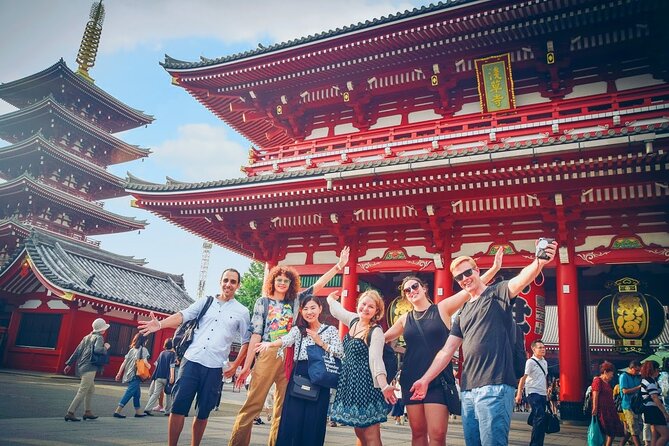
Senso-ji Temple in Asakusa is one of the easiest places to understand Tokyo’s older face. The temple grounds, nearby shopping streets, and traditional town setting offer a strong first look at Buddhist customs and local life.
Your guide can explain how to approach the temple, make an offering, and show respect. One guide even supplied coins for an offering, while another taught visitors the proper way to pray at sacred sites. These small details help turn a quick photo stop into a cultural visit.
The nearby Asakusa Culture Tourist Information Center is another possible stop. From there, you can see much of the Asakusa area and get a sense of how the historic district fits into modern Tokyo.
The listed stop times are short, often around 15 minutes, so you should ask for more time if Senso-ji is a priority. The temple, shopping streets, and surrounding lanes deserve more than a hurried look. Also note that Senso-ji appears twice in the possible itinerary, but it is one destination, not two separate attractions.
Tsukiji Outer Market: come hungry
Tsukiji Fish Market, described here as the outer market, is the tour’s best choice for food lovers. It is a place to browse seafood, knives, small food shops, and market specialties while your guide explains what you are seeing.
The market stop is listed at about 30 minutes, but that may pass quickly if you want to sample food. One useful tip is simple: do not eat a large breakfast beforehand. You may find plenty to taste, and your guide can point out good options instead of leaving you to guess at every counter.
A private guide is particularly helpful here because food customs and menus can be unfamiliar. Guides have also helped families find restaurants that could handle food allergies. Still, meals and drinks are not part of the tour price, so carry a separate food budget.
Tsukiji works well with Asakusa for a half-day plan. You get market food, traditional streets, and a major temple without trying to cross the whole city. It is less suitable if your top priority is museum time or gardens.
Meiji Shrine and Harajuku: old Japan meets youth culture
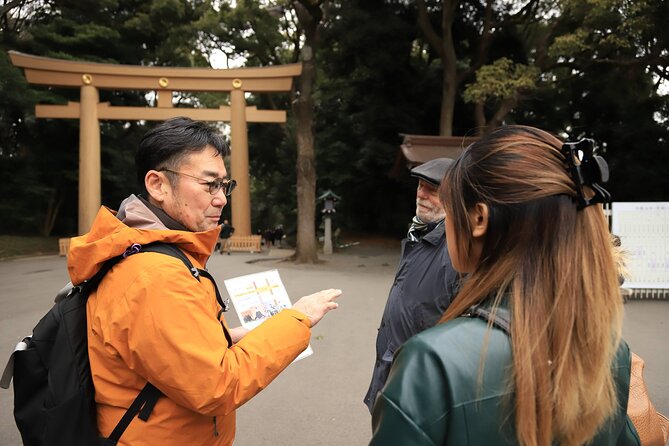
The move from Asakusa to Harajuku gives you one of Tokyo’s sharpest changes of mood. Meiji Jingu Shrine sits in a broad wooded setting and offers a quiet Shinto pause, even though the surrounding district is one of the city’s busiest.
The shrine is described as the largest in Tokyo, and it is a good place to learn the basics of Shinto etiquette. A guide can explain the gestures used at the entrance and shrine, as well as the meaning behind the rituals.
Afterward, Takeshita Street brings you into Harajuku’s youth and pop culture. The shops, fashion, unusual sweets, and bold style create a strong contrast with the calm shrine grounds. Guides can add context about how Harajuku’s fashion culture developed and how the area has changed.
This pairing is one of the strongest full-day combinations. Osamu, for example, took visitors from Senso-ji and Asakusa to Harajuku and Meiji Shrine, creating a clear story about traditional and modern Tokyo. The drawback is that Harajuku can be crowded, and a short stop may feel more like a glance than a proper visit.
A few more Tokyo bookings worth comparing
- Tokyo: TOKYO SKYTREE® Admission ticket
★ 4.5 · 11,192 reviews - Tokyo: teamLab Planets TOKYO Digital Art Museum Entry Ticket
★ 4.6 · 9,779 reviews - Tokyo: Sumo Show Experience with Chicken Hot Pot and a Photo
★ 4.8 · 6,678 reviews - Tokyo: Shinjuku Food Tour (13 Dishes at 4 Local Eateries)
★ 5.0 · 6,603 reviews
Shibuya, Shinjuku, and Ginza: choose your modern Tokyo
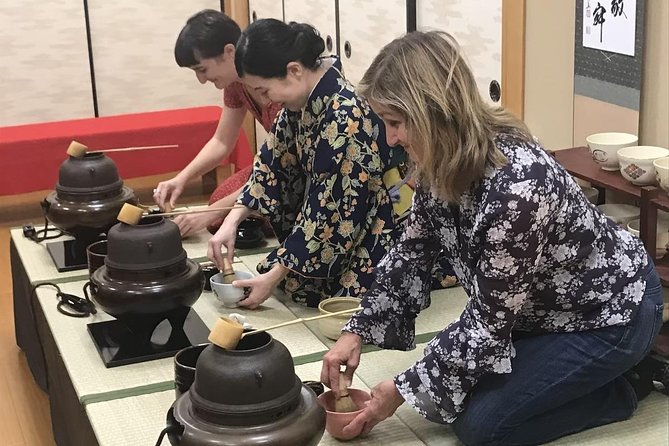
Shibuya Crossing is the obvious choice if you want a quick symbol of present-day Tokyo. You can watch the crowds move through the famous intersection, then ask your guide for help finding a good viewpoint or understanding the district’s role in city life.
Shinjuku offers a different urban mood, with tall buildings, busy streets, shopping, and nightlife. The tour can include Shinjuku Gyoen National Garden, though an admission fee may apply. If you want both the city and the garden, tell your guide early, since garden time reduces the number of other stops you can fit in.
Ginza is the right pick for department stores, polished shopping streets, and major brand names. It is less about old Tokyo and more about the city’s refined commercial side. Add it if shopping matters to you, but skip it if you would rather spend your limited hours at temples, markets, or neighborhoods with a stronger local feel.
I would not try to combine Shibuya, Shinjuku, and Ginza with several distant historic districts in a short tour. Tokyo’s trains are efficient, but stations are large, and walking between platforms and exits takes real time.
Imperial Palace, Yanaka, Ueno, and Tokyo National Museum
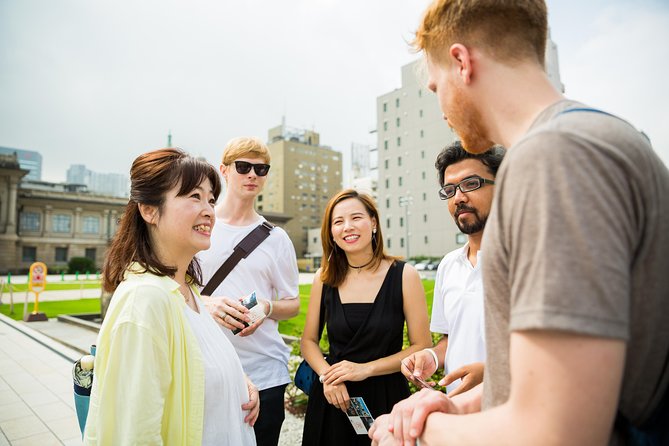
The Imperial Palace East Garden offers open space and a look at the grounds connected with Japan’s imperial institution. It suits visitors interested in history and formal gardens, though the stop may be brief unless you request extra time.
Yanaka Ginza Shopping Street gives you a more local neighborhood feel. It is a good alternative to the famous central districts, especially if you want small shops and a less polished side of Tokyo. Fumi’s full-day approach, combining major sights with local areas, shows why this kind of customization can work well.
Ueno Park is another flexible option. It is known for cherry blossoms and provides access to several cultural attractions. The Tokyo National Museum is one of the city’s major museums and can add real depth to a history-focused day, but admission costs extra for both you and your guide.
Do not add the museum casually. A 15-minute museum visit would be too short to make much sense. If you choose it, make it a main focus and reduce the number of outdoor stops.
Tokyo Skytree, Odaiba, and Hama Rikyu Gardens
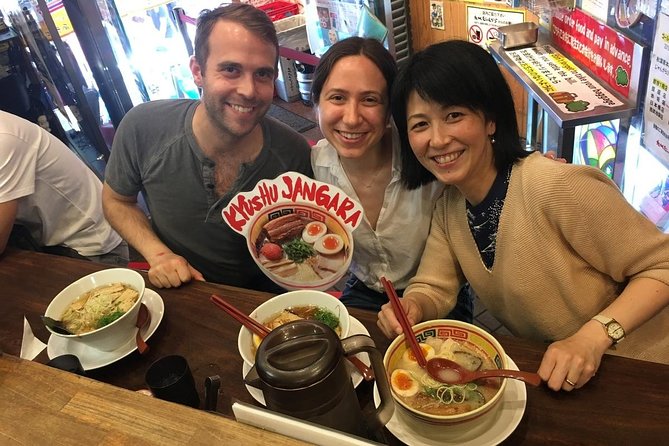
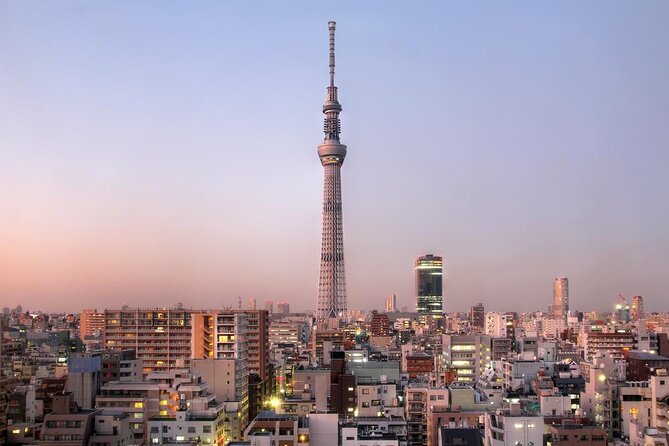
Tokyo Skytree is Japan’s tallest building and a natural choice if you want a major city view. Admission is optional and extra, and time spent inside the tower can take a large part of your tour. It works best for an eight-hour plan or for visitors who care more about the view than seeing several neighborhoods.
Odaiba is a waterfront district with a modern, planned feel. It offers a change from the dense central city, but its distance makes it a poor match for a packed itinerary. Add it when the waterfront is a priority, not as an afterthought.
Hama Rikyu Gardens provides another garden option, with admission fees applying. It can complement Tsukiji because the areas are relatively close compared with many other combinations, though your guide will need to balance garden time against market tasting.
These three choices illustrate the central tradeoff of the tour: Tokyo has many excellent places, but distance and walking make it impossible to treat every stop as a full visit.
What the guides add to the day
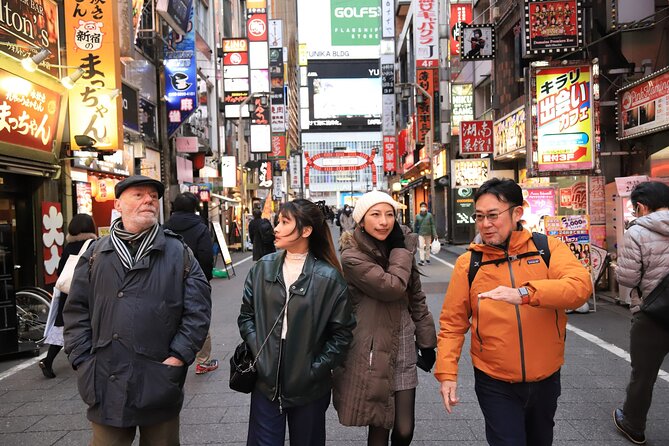
The guide is the most important part of this experience. The company uses different guides, and the quality of your day will depend on how clearly you communicate before meeting.
Tak has helped visitors make sense of Tokyo’s sites and suggested useful places to eat. Hiro has built four-hour historical routes around the Imperial Palace, Asakusa, and the Asakusa Culture Tourist Information Center. Yoko has helped first-time visitors use the train system, handled rainy-day changes, and explained Japanese history, customs, and language.
Ike has guided families through Shibuya, Meiji Shrine, Takeshita Street, Shinjuku, Tsukiji, Asakusa, and Yanaka. He has also helped with food allergies and gone out of his way to find a desired soccer jersey. Fumi has combined major sights with local areas and taught visitors how to use trains and shrine etiquette.
These details point to the tour’s real value. You are not simply hiring someone to point at a temple. You are hiring a local companion who can answer questions, solve small problems, and make Tokyo less intimidating.
Still, customization works best when you take part in the planning. One poor experience came from a route that felt under-structured, visited only one temple, and ended sooner than expected. Before the tour, name your interests and ask for a clear plan with an agreed finish time.
Walking, trains, and the optional private vehicle
The standard tour uses public transportation and walking. You need a moderate level of fitness, comfortable shoes, and a willingness to walk through large stations and busy districts.
All public transport fares are extra for you and your guide. This is not a major expense compared with the tour price, but it is easy to overlook when planning your budget. The guide can help you buy or use transit passes, including a children’s pass, which is useful if this is your first time navigating Tokyo’s rail network.
Hotel pickup is included, but the details depend on the transport option. A private vehicle is available for an additional fee. With that option, you can visit places within the Tokyo metropolitan area, but you cannot travel outside Tokyo.
Private vehicle pickup and drop-off are not available for hotels in Urayasu, including hotels near Tokyo Disney Resort. If you are staying there, confirm the meeting arrangement before booking.
A vehicle may help families, people carrying luggage, or groups that want to reduce walking. It does not remove every timing issue, since many major districts are still best explored on foot.
The price and what you really receive
The listed price is $145.91 per person. The value depends heavily on the size of your group and how well you use the private format.
For a solo visitor or couple, this is a meaningful expense, but you receive a private guide, hotel pickup, route planning, cultural explanations, and help with public transportation. That can be worthwhile on your first day, when a few hours of guidance may save much longer periods of confusion.
For a family or larger private group, the per-person cost can feel more reasonable, especially with group discounts. You also gain the ability to slow down for children, add a food stop, adjust for rain, or focus on interests that a fixed group tour could not handle.
Remember the extra costs. You pay for your own and your guide’s meals, all public transit, and any entrance fees. If you enter Tokyo Skytree, Tokyo National Museum, Ueno attractions, Shinjuku Gyoen, or Hama Rikyu Gardens, ask how the admission arrangement works and budget for both people.
The tour has a 5.0 rating from 1,351 reviews and is recommended by 99 percent of customers. Those numbers suggest a strong overall record, but they do not remove the need to plan your route carefully.
Best tour plans for four, six, and eight hours
For four hours, choose two or three nearby areas. Tsukiji and Asakusa make a practical food and culture combination. Meiji Shrine and Harajuku also work well together. Avoid attempting Tsukiji, Asakusa, Shibuya, and Tokyo Skytree in one short outing.
For six hours, choose three or four districts and leave room for lunch. Tsukiji, Asakusa, and Yanaka create a traditional, food-focused day. Imperial Palace, Asakusa, and Ueno suit history lovers. Meiji Shrine, Takeshita Street, Shibuya, and Shinjuku focus on modern Tokyo, with a major shrine included.
For eight hours, you can connect four or five places. A balanced route might include Tsukiji, Asakusa, Meiji Shrine, Harajuku, and Shibuya. Another could pair the Imperial Palace, Ginza, Tokyo Skytree, Ueno, and Asakusa, though this plan includes more transit and optional admissions.
Do not measure success by the number of pins you visit. Tokyo rewards time spent noticing details, eating something unfamiliar, and asking questions.
Practical details before you book
The tour operates rain or shine. Bring comfortable walking shoes and dress for the weather, since much of the day takes place outdoors and in open station areas.
Confirmation arrives when you book, and a mobile ticket is provided. The activity is near public transportation, and hotel pickup is offered.
You can cancel for a full refund if you do so at least 24 hours before the start time. Cancellations or changes made less than 24 hours before the start are not accepted for a refund, and cut-off times follow Tokyo local time.
Should you book this Tokyo private tour?
Book it if you are visiting Tokyo for the first time, want help with trains, or have a group with mixed interests. It is especially useful for families, history lovers, food-focused visitors, and anyone who wants both major sights and neighborhood time.
I would also choose it as a first-day tour. Guides such as Mieko, Yoko, and Ike have helped visitors get comfortable with the metro, while guides including Osamu and Fumi have added useful cultural context beyond the standard photo stops.
Skip it if you prefer exploring alone, want long museum visits, or expect a fixed sightseeing program that covers every famous landmark. The price rises once you add transit, meals, and admissions, and a loosely planned route can feel thin.
The best booking strategy is simple: choose two or three priority areas, tell the operator what you care about, and ask for a realistic schedule. Used that way, this private tour offers something valuable in Tokyo: not just a list of sights, but the confidence to keep exploring after your guide goes home.
FAQ
How long does the Tokyo private tour last?
You can choose a tour lasting approximately four, six, or eight hours. A four-hour tour generally covers two to three spots, six hours covers three to four, and eight hours covers four to five.
Is the tour private?
Yes. Only your group participates in the private tour or activity.
Which Tokyo attractions can be included?
Possible stops include Senso-ji Temple, Asakusa, Meiji Jingu Shrine, Takeshita Street, Tsukiji Fish Market, the Imperial Palace, Yanaka Ginza, Shibuya Crossing, Shinjuku Gyoen, Ginza, Tokyo National Museum, Ueno Park, Tokyo Skytree, Odaiba, and Hama Rikyu Gardens.
Are transportation costs included?
No. Public transportation fares for you and your guide are not included. A private vehicle is available for an additional fee.
Are attraction entrance fees included?
No. Entrance or admission fees for you and your guide are extra. Optional paid attractions include Shinjuku Gyoen, Tokyo National Museum, Ueno Park attractions, Tokyo Skytree, and Hama Rikyu Gardens.
Is hotel pickup available?
Hotel pickup is offered. If you choose the private vehicle option, pickup and drop-off are not available for hotels in Urayasu, including hotels near Tokyo Disney Resort.
What happens if it rains?
The tour operates rain or shine. Comfortable walking shoes are recommended, and the itinerary can be adjusted with your guide when conditions require a change.
Can I cancel the tour?
You can cancel up to 24 hours before the experience start time for a full refund. Cancellations or changes made less than 24 hours before the start time are not accepted for a refund.
New on our Tokyo list
- From Tokyo: Mount Fuji & Hakone Full Day Private Tour★ 4.9 · 25 reviews
- Tokyo Spectacular View Day-Cruise in 90 Minutes★ 5.0 · 25 reviews
- Real Tokyo Runner Club : Daikoku Car Meet Night Tour with JDM Car★ 5.0 · 25 reviews
- 2.5 Hour-Guided Cycle Tour in the Central Tokyo★ 5.0 · 25 reviews
- [Self-Drive] Tokyo & Daikoku Custom Car Driving Tour★ 4.9 · 25 reviews
- Tokyo: 2-Hour Night Bike Tour of the City’s Hidden Gems★ 4.9 · 25 reviews
- Ramen Making from Scratch +Akihabara Tour –Cooking Class★ 5.0 · 25 reviews
- Samurai themed Entertainment show in Shinjuku★ 4.5 · 25 reviews
Day Trips from Tokyo, compared.
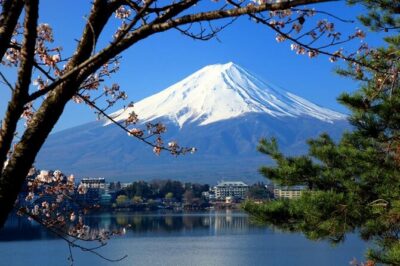
Mt Fuji and Hakone 1-Day Bus Tour Return by Bullet Train
Read our review →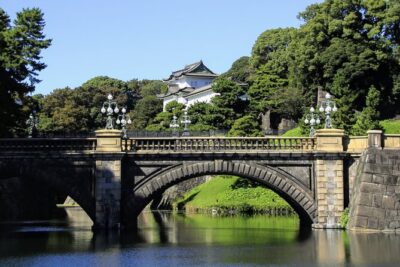
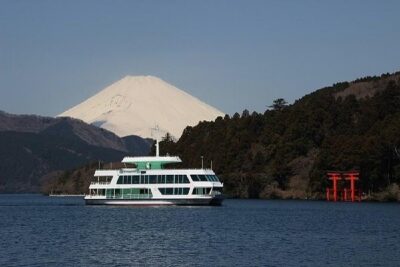
Mt Fuji & Hakone Cruise, Drum Show Bullet Train 1 Day from Tokyo
Read our review →

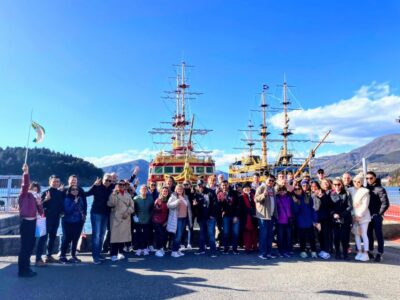
Mt. Fuji 5th Station & Hakone Cruise 1-Day Bus Tour
Read our review →
Tokyo Customized Private Tour (Must See Places in 1 Day)
Read our review →
Kamakura & Enoshima Day Trip including Temple Tickets
Read our review →Browse the lists this tour appears in