Reviewed · TICKETS
Tokyo: Hop-On Hop-Off Sightseeing Bus Ticket
Tokyo is easier to understand from the top of a bus. This open-top ride gives you a useful first look at a city that can feel enormous on arrival, linking Tokyo Tower, Asakusa, Shibuya, Ginza, Tsukiji, and Tokyo SkyTree without making you decode the subway on your first morning. I especially like the choice of three routes and the freedom to use one ticket for all of them. The audio guide on your own phone is also a practical touch, with 10 languages available.
I like this most as a getting-your-bearings tour, not as Tokyo’s main transport system. Buses can be 30 to 45 minutes apart, and a missed connection may mean waiting an hour or more. The bus is open-air, with no air-conditioning, so hot summer days, rain, and strong wind require a little planning.
In This Review
- Key points to know before you ride
- Why this bus works well for a first look at Tokyo
- Route 1: Tokyo SkyTree, Asakusa, Ueno, and Akihabara
- Route 2: Tokyo Tower, Zojo-ji, Tokyo Teleport, Tsukiji, and Ginza
- Route 3: Shinjuku and Shibuya by open air
- The audio guide and what to bring
- Timing, queues, and the real meaning of hop-on hop-off
- Weather, comfort, and the upper deck
- Is the $30 price good value?
- Who should book this Tokyo bus?
- Final verdict: a useful introduction, not a replacement for Tokyo’s trains
- FAQ
- How long is the Tokyo hop-on hop-off ticket valid?
- Which Tokyo sights are covered?
- Where can I board the bus?
- Do I need to reserve a seat?
- Is the bus air-conditioned?
- What happens if it rains?
- Which languages are available for the audio guide?
Key points to know before you ride

- Three routes cover different sides of Tokyo: Choose the SkyTree and Asakusa route, the Tokyo Tower, Tsukiji, and Ginza route, or the Shinjuku and Shibuya route.
- The upper deck is open to the weather: Raincoats are supplied when needed, but umbrellas are not allowed and there is no air-conditioning.
- Your phone provides the best audio choice: Commentary is available in Japanese, English, Korean, Chinese, French, German, Spanish, Thai, Vietnamese, and Indonesian.
- A QR code lets you board at Tokyo stops: You can begin at the Mitsubishi Building meeting point or go directly to another listed stop.
- The service is not a bus every few minutes: Seats are not reserved, and a full bus means waiting for the next one.
- A two-day ticket reduces the pressure: One day works for a broad overview, but two days are better if you want to get off and explore.
Why this bus works well for a first look at Tokyo
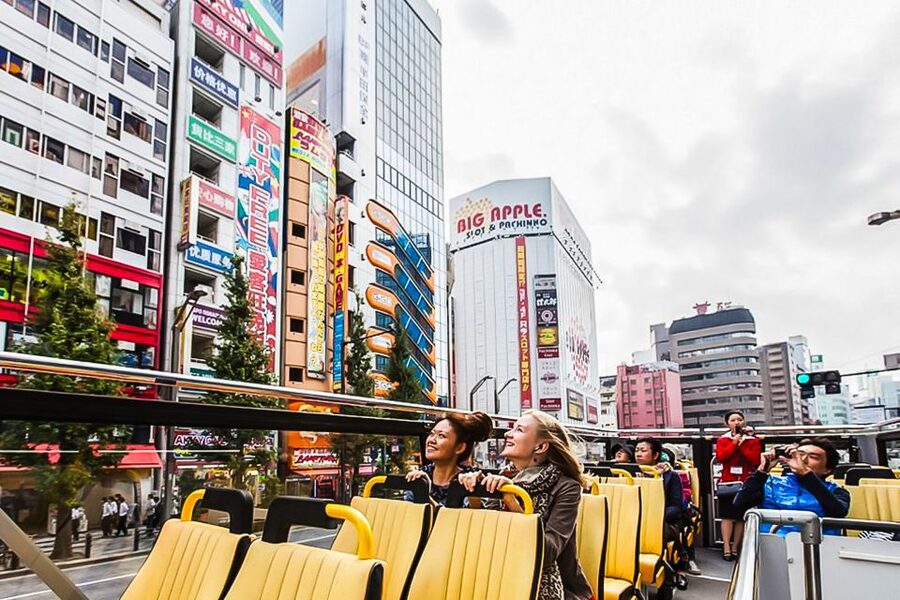
Tokyo spreads across distinct districts, and each has its own feel. Asakusa is traditional and temple-centered, Ginza is polished and commercial, Shibuya is youthful and energetic, and Shinjuku mixes tall offices with major rail connections and quieter garden space. A subway map can move you between these places, but it does not show you how they fit together.
That is the main value here. You sit above street level, listen to commentary, and watch Tokyo change from one district to the next. The ride gives you a mental map before you start walking or using the train. Several passengers used the first day to mark the places they wanted to revisit, then returned by train or on foot later.
The staff are a strong part of the experience. The driver and attendants speak Japanese and English, and the service has earned praise for being punctual, clean, organized, and easy to find. Staff have helped with boarding, explained route changes, handed out ponchos, and warned passengers about the open-air design.
Still, keep your expectations straight. This is not a private sightseeing vehicle, and it is not a fast way to cross Tokyo. Traffic can delay the bus, and the timetable matters. If your priority is reaching a restaurant or museum at a precise time, the JR network or Metro will usually be more dependable.
A few more Tokyo bookings worth comparing
- Mt Fuji and Hakone 1-Day Bus Tour Return by Bullet Train
★ 5.0 · 26,383 reviews - 1-Day Tokyo Bus Tour
★ 5.0 · 14,250 reviews - Tokyo: TOKYO SKYTREE® Admission ticket
★ 4.5 · 11,192 reviews
Route 1: Tokyo SkyTree, Asakusa, Ueno, and Akihabara
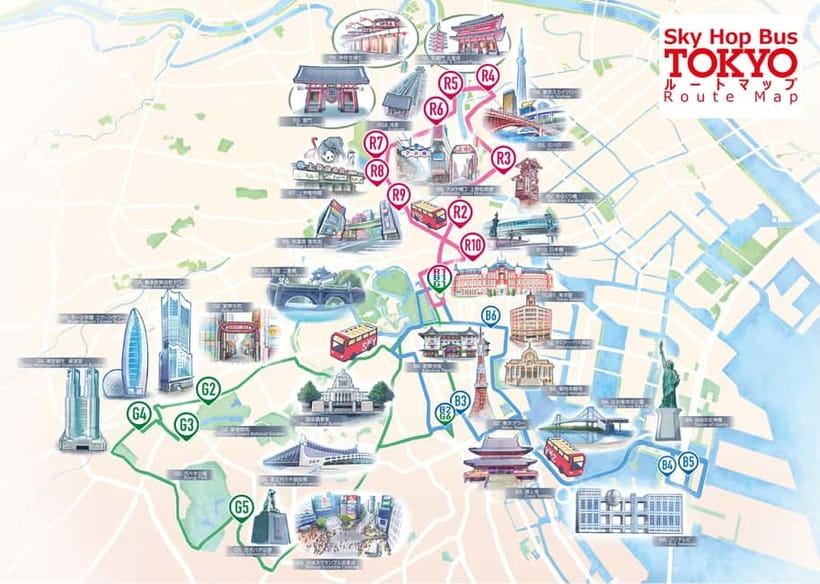
The Tokyo SkyTree course begins at the Marunouchi Mitsubishi Building and loops through central and eastern Tokyo. Along the way, it passes Kodemmacho Station, the Ryogoku Edo-Tokyo Museum, Tokyo SkyTree, Asakusa, Ueno, Akihabara, and Shin-Nihombashi Station before returning to Marunouchi.
This is the route for Tokyo’s older neighborhoods and major city icons. Tokyo SkyTree gives you the most dramatic vertical view of the city, though this ticket does not include admission to the tower or aquarium. The bus stop makes it easy to combine the ride with your own visit if you have reserved entry separately.
Ryogoku is associated with sumo, and the Edo-Tokyo Museum area offers a reminder that Tokyo was once Edo, a city shaped by wooden buildings, merchant districts, and the Tokugawa shogunate. The exact sightseeing value depends on how long you get off, since the bus itself only provides a passing view and commentary.
Asakusa is the most rewarding stop for many people on this route. It is home to Senso-ji, Tokyo’s best-known Buddhist temple, along with Nakamise shopping street and the Kaminarimon gate. Give yourself time here. The route also stops at Asakusa Hanakawado and Asakusa Tawaramachi, which can be useful for reaching different parts of the district.
Ueno offers museums, park space, and a major station area. Akihabara shifts the mood again, with its electric shops and popular culture stores. You will not see every side street from the bus, but the route makes a good visual introduction to the contrast between old Tokyo, museum districts, and modern retail zones.
A full loop takes a substantial part of the day, so do not plan to hop off at every stop. If SkyTree and Asakusa are your main goals, choose one or two stops and check the return timetable before leaving the bus.
Route 2: Tokyo Tower, Zojo-ji, Tokyo Teleport, Tsukiji, and Ginza
The second route leaves the Mitsubishi Building for Tokyo Tower, Tokyo Prince Hotel and Zojo-ji Temple, Tokyo Teleport Station, Tsukiji Ginza, and then returns to Marunouchi.
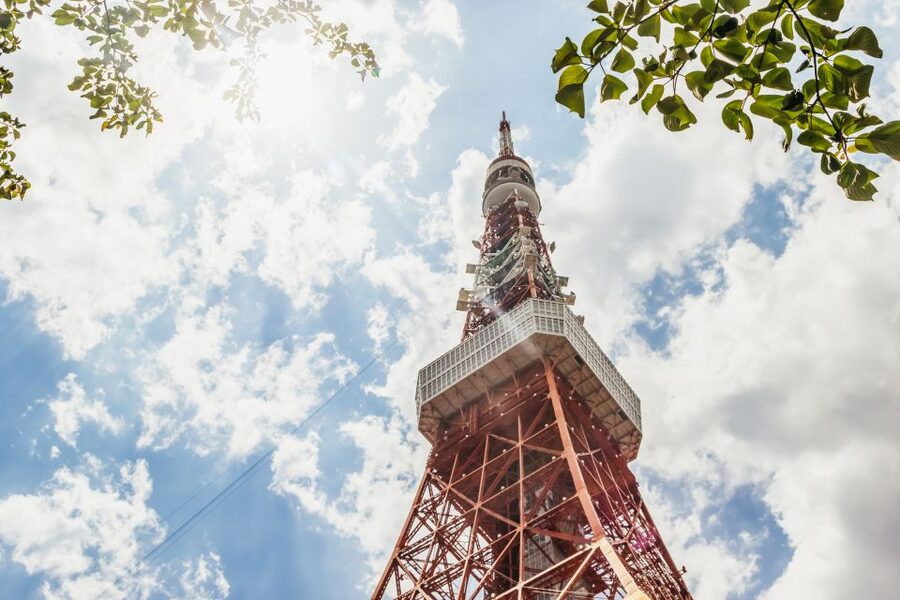
Tokyo Tower is the visual star of this loop. From an open-top bus, you get a changing view as the tower rises above the surrounding streets. The nearby Zojo-ji Temple adds a more traditional setting, with the tower and temple often appearing together in the same visit. This pairing gives the route a nice Tokyo contrast: a modern landmark beside a major Buddhist temple.
Tokyo Teleport Station connects the route with the waterfront side of the city. The ride through this area can feel more spacious than central Tokyo. One of the route’s pleasures is the view from elevated roads and bridges, where the city opens up and the bus itself becomes part of the sightseeing.
The Tsukiji and Ginza section is better for atmosphere than for a single must-see stop. Tsukiji is still a popular place for seafood restaurants and food shopping, while Ginza is known for department stores, luxury brands, galleries, and wide avenues. If you get off in Tsukiji, plan your food stop carefully and keep an eye on bus times.
This route is also a good choice at dusk if the timetable allows. City lights begin to appear around Tokyo Tower, Ginza, and the waterfront. A later ride can be especially memorable on the expressway, where the moving view and evening illumination provide something you cannot get from a subway platform.
The drawback is frequency. If you leave the bus near Tokyo Tower and miss the next departure, the wait can be long. Take a photo of the timetable at the stop and mark it on your phone map before walking away.
Route 3: Shinjuku and Shibuya by open air
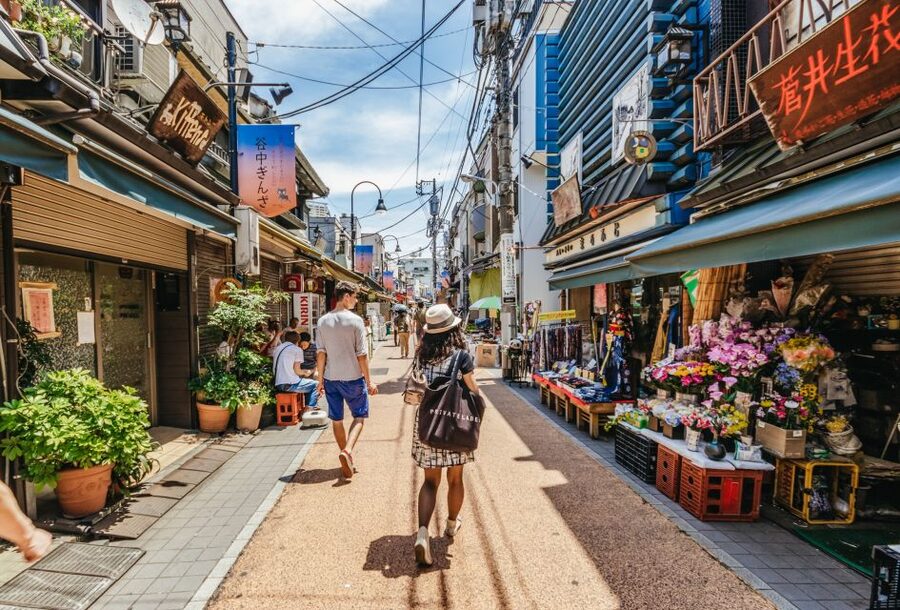
The Shinjuku Shibuya course starts at Marunouchi Mitsubishi Building and runs to Shinjuku-gyoemmae Station, Shinjuku Station South Exit and Hotel Century Southern Tower, the Shinjuku Mitsui Building in Nishi-Shinjuku, Shibuya City Hall, Harajuku, and Meiji Jingu Shrine before returning downtown.
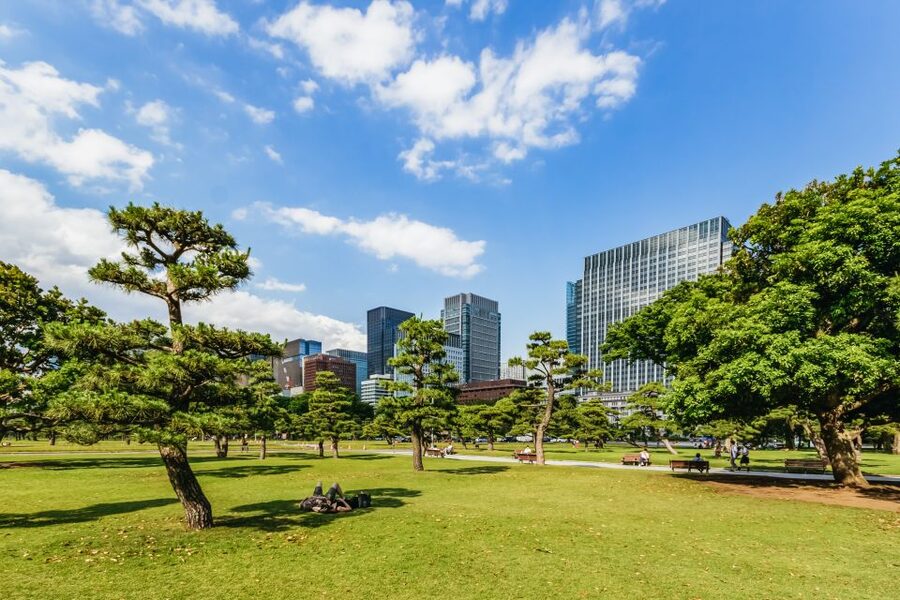
This is the route to choose for Tokyo’s western districts. Shinjuku changes quickly from garden calm to high-rise city. Shinjuku Gyoen is one of the city’s best-known parks, while Nishi-Shinjuku is a forest of office towers. From the bus, you get a broad sense of that contrast without navigating the huge Shinjuku Station complex.
The Shinjuku Station South Exit stop is useful if you want to explore department stores, restaurants, and the station area. It is also a practical place to end a bus ride and continue by train, but do not assume the bus will be your fastest way back later in the day.
The route then heads toward Shibuya, Harajuku, and Meiji Jingu Shrine. Shibuya is the place for Tokyo’s famous crossing and large-scale shopping streets. Harajuku has a younger, fashion-focused character, while Meiji Jingu offers a quieter wooded approach and a major Shinto shrine.
The route provides an overview rather than a detailed tour of each neighborhood. If you want to visit Meiji Jingu, walk Takeshita Street, and spend time around Shibuya Crossing, you will need to get off and allow several hours. Trying to fit all of that into one loop can leave you watching the clock instead of enjoying Tokyo.
Same corner of Tokyo, a completely different plan:
- Tokyo: teamLab Planets TOKYO Digital Art Museum Entry Ticket
★ 4.6 · 9,779 reviews - Mt Fuji & Hakone Cruise, Drum Show Bullet Train 1 Day from Tokyo
★ 4.0 · 7,413 reviews - Tokyo: Sumo Show Experience with Chicken Hot Pot and a Photo
★ 4.8 · 6,678 reviews - Tokyo: Shinjuku Food Tour (13 Dishes at 4 Local Eateries)
★ 5.0 · 6,603 reviews
The audio guide and what to bring
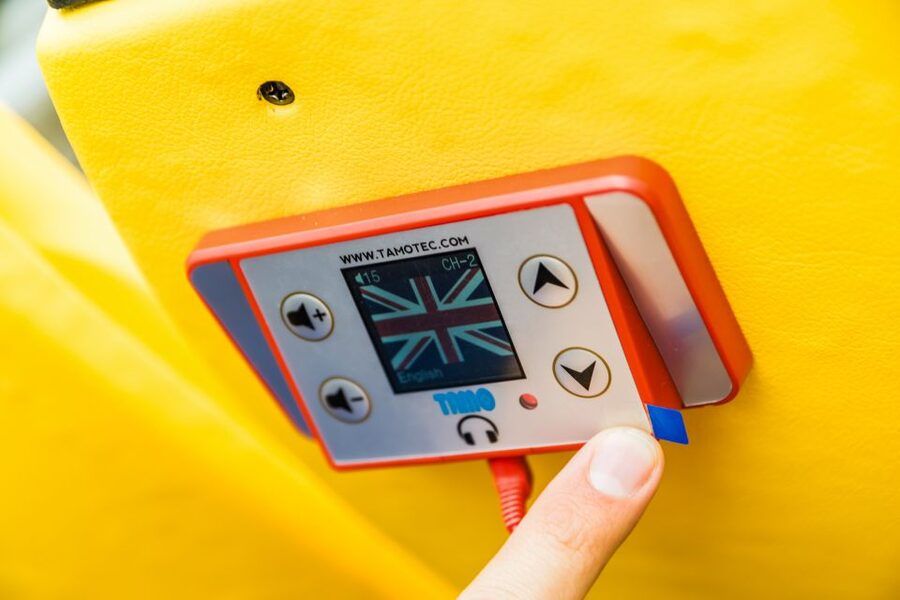
Sky Hop Bus Tokyo now uses a bring-your-own-device audio system. You scan or follow the instructions on your smartphone or tablet, then listen through your own earphones. The 10 available languages are Japanese, English, Korean, Chinese, French, German, Spanish, Thai, Vietnamese, and Indonesian.
The commentary covers attractions, buildings, Japanese culture, and local history. It is timed to the route and can help you understand what you are seeing, though some audio recordings may cut off mid-sentence. The vehicle-mounted system may be available on some buses, but you should not depend on it.
Bring:
- A charged smartphone or tablet
- Earphones
- Mobile data, since data charges may apply
- A light jacket or sun protection
- A raincoat or poncho if the forecast is uncertain
The audio choice is a real advantage for international visitors because it offers more languages than the traditional vehicle system. The tradeoff is that you are responsible for your own device, connection, and earphones. Download or check the required system before boarding if possible.
Timing, queues, and the real meaning of hop-on hop-off
The ticket lasts one or two days, depending on the option you choose. You can board with the QR code sent on your voucher at the Mitsubishi Building or at any of the listed bus stops in Tokyo. It is not a seat reservation. If the upper deck is full, you must wait for the next bus.
This matters more in practice than the phrase hop-on hop-off suggests. The buses are not necessarily arriving every 10 minutes, and 30 to 45 minutes between buses is possible. At busy times, some passengers may board while others wait. A missed bus near Tokyo Tower has led to waits of roughly an hour and a half.
I suggest treating each route as a planned sightseeing ride. Before getting off, photograph the stop timetable, note the direction of travel, and set an alarm. Use the bus for long scenic stretches, then use the Metro or JR trains when you need to move quickly between distant stops.
One day is enough for a broad overview if you start early and limit your stops. You might complete parts of all three routes, but a full day can feel rushed. Two days are better for families, first-time visitors, photographers, and anyone who wants to visit SkyTree, Asakusa, Tokyo Tower, and Shibuya without hurrying.
Weather, comfort, and the upper deck
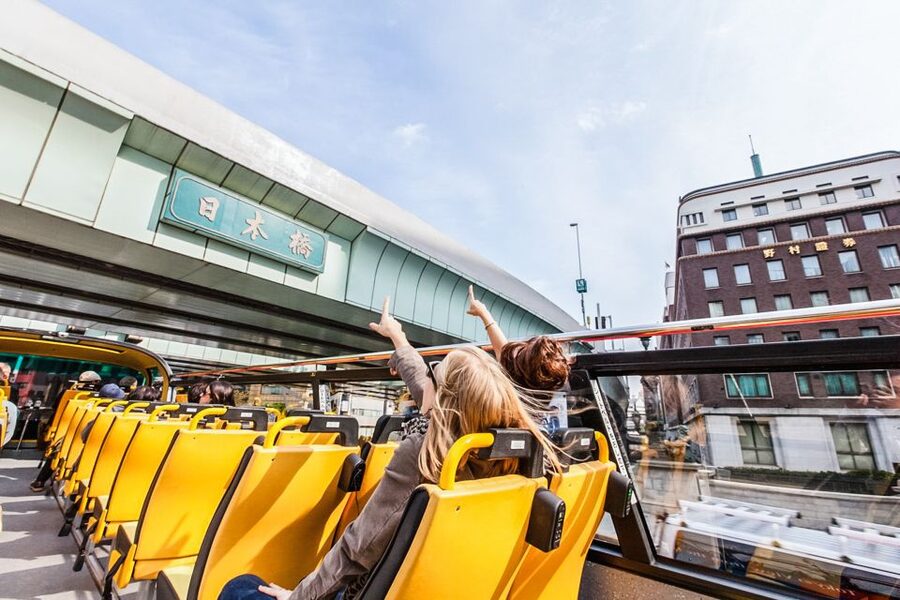
The passenger seats are on the second floor. The first floor is used for storage, so you cannot retreat downstairs for a cool, enclosed ride. There is no air-conditioning because the bus is open-air.
That design is the reason to book this experience, but also its biggest limitation. On a clear spring or autumn day, the elevated seat gives you excellent views and a pleasant breeze. On a hot August afternoon, the same seat can be punishing. Staff have warned passengers about the heat and, on some occasions, provided frozen towels.
Rain does not automatically end the ride. Ponchos or raincoats are distributed when needed, but umbrellas cannot be used on board. Typhoons and thunderstorms can stop service, and traffic can cause delays even in ordinary weather.
Strong wind is another small issue. Bridges and expressway sections can be surprisingly windy, so hold on to hats and loose items. If you are sensitive to heat, cold, or motion, choose your riding hours carefully and consider using the bus mainly in the morning or near sunset.
Is the $30 price good value?
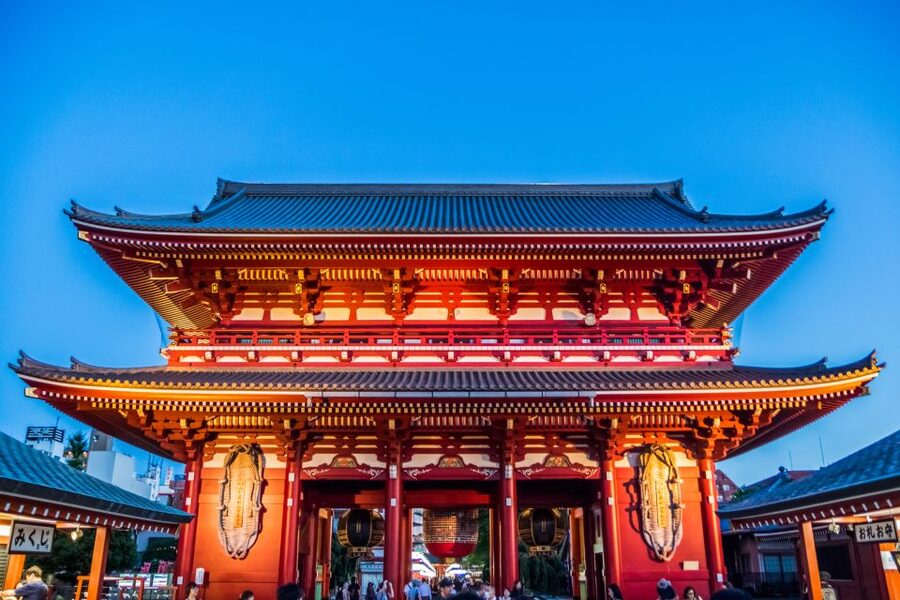
At about $30 per person, the ticket costs more than simply taking the Metro between districts. Tokyo’s rail system is extensive, fast, and often cheaper, so budget-focused visitors should compare the price with their expected train fares.
The bus earns its price when you value the view and the orientation. You are not only being transported to a stop. You are seeing the connections between districts, listening to commentary, and avoiding the effort of planning every first-day transfer. For someone with only a few days in Tokyo, that can save time and reduce stress.
The value improves with a two-day ticket if you use several routes and get off at major stops. It is weaker if you ride only one short section or use it as a regular taxi substitute. Traffic and long gaps between buses mean that convenience is not guaranteed.
A practical plan is to ride one complete route first, then choose the stops you want to revisit. If you find that a neighborhood deserves more time, return by train. This lets the bus do what it does best: show you the shape and variety of Tokyo.
Who should book this Tokyo bus?
I would recommend it to first-time visitors, people staying only two or three days, families who want a simple overview, and anyone who enjoys sightseeing from an open deck. It is also useful if you like to orient yourself before exploring independently.
The experience suits you less if you already understand Tokyo’s rail network, want to reach destinations quickly, or dislike waiting in sun and rain. It is not ideal for a tightly scheduled day with several timed reservations.
Book the two-day option if you want SkyTree, Asakusa, Tokyo Tower, Tsukiji, Ginza, Shinjuku, and Shibuya at a relaxed pace. Choose one day if you mainly want the overview, can start early, and are comfortable using trains for the stops you decide to explore further.
Free cancellation is available up to 24 hours before the activity, and you can reserve now and pay later. Hotel transfers are not included, so you must reach the route yourself.
Final verdict: a useful introduction, not a replacement for Tokyo’s trains
Sky Hop Bus Tokyo is a good first-day tool. It gives you a broad view, covers three very different route areas, and adds commentary without requiring a live guide on every bus. The most praised qualities are its helpful staff, clear organization, regular service when running to schedule, and the chance to see Tokyo from above.
The weak points are equally clear: limited bus frequency, traffic delays, no air-conditioning, and the need to manage your own audio device. Plan around those facts and the ride becomes much more enjoyable.
I would book it for your arrival day, especially with two days available. Use it to mark the places you want to explore, then switch to Tokyo’s trains and your own feet when you are ready for the details.
FAQ
How long is the Tokyo hop-on hop-off ticket valid?
You can choose a ticket lasting one day or two days. Check the available starting times when booking.
Which Tokyo sights are covered?
The routes cover Tokyo SkyTree, Asakusa, Ueno, Akihabara, Tokyo Tower, Zojo-ji Temple, Tokyo Teleport Station, Tsukiji, Ginza, Shinjuku, Shibuya, Harajuku, and Meiji Jingu Shrine.
Where can I board the bus?
You can begin in front of the Mitsubishi Building, or board directly at listed bus stops in Tokyo using the QR code sent with your voucher.
Do I need to reserve a seat?
No. The ticket does not reserve a seat. If a bus is full, you must wait for the next bus.
Is the bus air-conditioned?
No. The bus is open-air, and all passenger seats are on the second floor. The first floor is used for storage.
What happens if it rains?
Raincoats are distributed when needed. Umbrellas are not permitted on board. Service may stop during severe weather such as typhoons or thunderstorms.
Which languages are available for the audio guide?
The personal-device audio guide supports Japanese, English, Korean, Chinese, French, German, Spanish, Thai, Vietnamese, and Indonesian. Bring your own smartphone or tablet and earphones, and note that data charges may apply.
New on our Tokyo list
- From Tokyo: Mount Fuji & Hakone Full Day Private Tour★ 4.9 · 25 reviews
- Tokyo Spectacular View Day-Cruise in 90 Minutes★ 5.0 · 25 reviews
- Real Tokyo Runner Club : Daikoku Car Meet Night Tour with JDM Car★ 5.0 · 25 reviews
- 2.5 Hour-Guided Cycle Tour in the Central Tokyo★ 5.0 · 25 reviews
- Ramen Making from Scratch +Akihabara Tour –Cooking Class★ 5.0 · 25 reviews
- [Self-Drive] Tokyo & Daikoku Custom Car Driving Tour★ 4.9 · 25 reviews
- Tokyo: 2-Hour Night Bike Tour of the City’s Hidden Gems★ 4.9 · 25 reviews
- Samurai themed Entertainment show in Shinjuku★ 4.5 · 25 reviews
Tickets, compared.
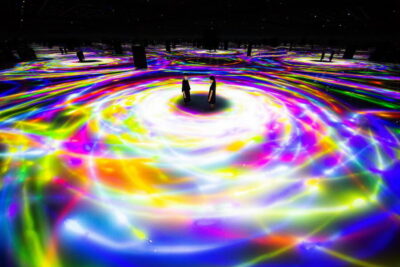
teamLab Planets TOKYO Digital Art Museum Entry Ticket
Read our review →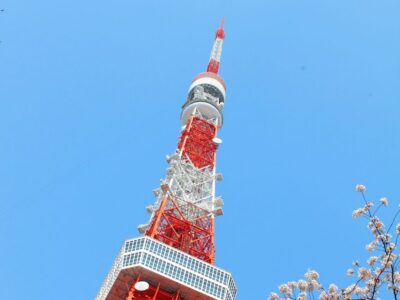

Japanese Dance Cabaret Theater Asakusa-Kaguwa Ticket
Read our review →
Kamakura & Enoshima Day Trip including Temple Tickets
Read our review →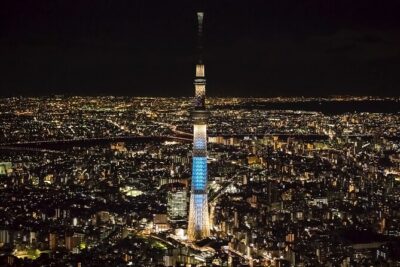
Tokyo Skytree Admission Ticket with Tembo Deck and Galleria
Read our review →
‘Red Tokyo Tower’ Digital Amusement Park Ticket
Read our review →