
Reviewed · CYCLING TOURS
3h Tokyo E-Bike Tour: Hidden Gems, and Local Life with guide
Tokyo is easier to understand from a bike seat. In three hours, you can move from office towers and palace moats to narrow local streets, old food shops, sumo country, and the pop-culture center of Akihabara. The e-bike helps you cover ground without arriving worn out.
I like the small maximum group of six, which makes it easier to ask questions and stay together. I also like the choice of routes: the morning ride favors central Tokyo landmarks, while the afternoon ride gives you Asakusa, Kappabashi, and Ryogoku. Guides such as Yo, Jenny, Take, Ted, Kazu, and Ninja bring their own style and local knowledge.
The main thing to consider is city traffic. You need to be comfortable riding on busy streets and able to keep pace with the group. Tokyo summers can also be hot and muggy, and rain may cancel the ride or cut it short.
In This Review
- Key points before you book
- Starting near Kanda and getting set up
- Kanda shows Tokyo after the offices close
- The morning route: Tokyo Station, palace moats, and Ginza
- Local streets reveal the Tokyo between attractions
- The afternoon route: Akihabara, kitchen tools, and old Tokyo
- Asakusa and Ryogoku bring older traditions into view
- Nihonbashi connects old roads with modern Tokyo
- Guides shape the experience
- Is $63.01 good value for three hours?
- Heat, rain, traffic, and riding ability
- Who should book this Tokyo e-bike tour?
- Should you book it?
- FAQ
- Where does the Tokyo e-bike tour begin?
- How long does the experience last?
- What is included in the price?
- Are food and drinks included?
- What is the difference between the morning and afternoon routes?
- What age and height requirements apply?
- How many people can join?
- What happens if it rains or becomes dangerously hot?
Key points before you book
- Morning and afternoon routes differ: Morning focuses on Tokyo Station, the Imperial Palace, Ginza, Tsukiji, and local backstreets. Afternoon heads toward Akihabara, Kappabashi, Asakusa, Ryogoku, and Nihonbashi.
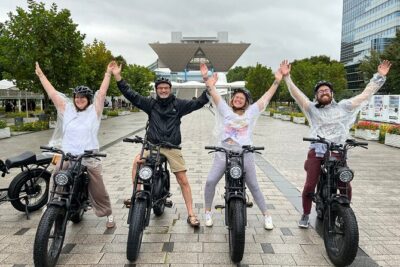
- Electric assistance makes a long city ride manageable: The bikes help you cover more ground with less effort, especially in summer heat.
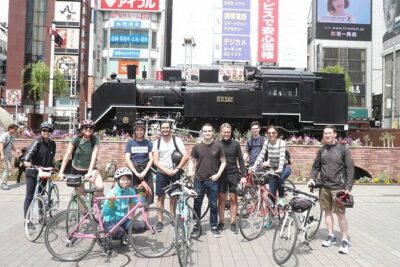
- The group stays small: A maximum of six people per booking allows for a more personal pace and easier conversations with the guide.
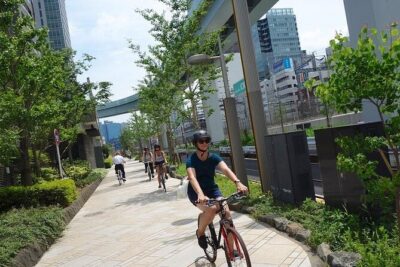
- You see more than famous landmarks: Narrow neighborhood roads and everyday Tokyo streets are an important part of the ride.
- You need basic cycling confidence: Participants must know how to ride a bicycle, be at least 147 centimeters tall, and be 12 or older.
- Weather affects the plan: The operator checks the forecast the day before and may cancel for rain or dangerous summer heat.
Starting near Kanda and getting set up
The tour begins at Cycling Holiday Tokyo, a one-minute walk from the west exit of JR Kanda Station. The shop at 3-chome-8-6 Uchikanda, Chiyoda City, has a restroom, waiting area, and luggage storage for non-valuable items.
That easy meeting point matters. Kanda is central, well connected, and less intimidating than beginning beside one of Tokyo’s giant railway stations. You can arrive by train, use the restroom, leave a day bag, and get ready without wasting much time.
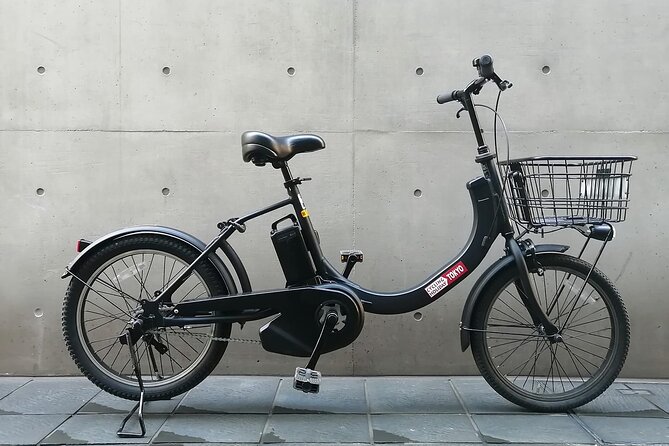
The rental package includes an electric-assist bike, helmet, insurance, and simple rain gear. Winter riders receive simple gloves, while summer riders receive cooling products. I would still bring sunscreen, a towel, and plenty of water in July and August. One rider found the front basket especially useful for carrying water and a small bag.
You should be able to ride a regular bicycle before booking. The electric motor makes pedaling easier, but it does not replace balance, steering, or attention. The guide leads the group through central Tokyo, so you must watch traffic, pedestrians, and the riders ahead of you.
A few more Tokyo bookings worth comparing
- Tokyo Guided Small-Group Biking Tour
★ 5.0 · 1,250 reviews - Tokyo Great Cycling Tour
★ 5.0 · 811 reviews - Tokyo Top Highlights 3h Guided E-bike Tour
★ 5.0 · 714 reviews
Kanda shows Tokyo after the offices close
The ride begins in Kanda, a compact downtown district known for office workers and small Japanese-style bars. It is a useful first glimpse of Tokyo away from the city’s famous postcard scenes.
Kanda feels practical and lived-in. Small drinking spots sit close to workaday streets, giving you a sense of where local office workers gather after hours. The stop is brief, about 10 minutes, but the guide can use it to explain how central Tokyo neighborhoods change from business districts during the day to social districts in the evening.
This is also where you get a feel for the group and the bike. Guides are attentive about safety, and several participants praised the patient way they were taught to handle the e-bikes. Listen carefully at the start, since the ride becomes more enjoyable once you are comfortable with the controls.
The morning route: Tokyo Station, palace moats, and Ginza
The morning route is the better choice if you want a first look at Tokyo’s formal center. You ride through the financial district toward Tokyo Station, one of the city’s most recognizable buildings.
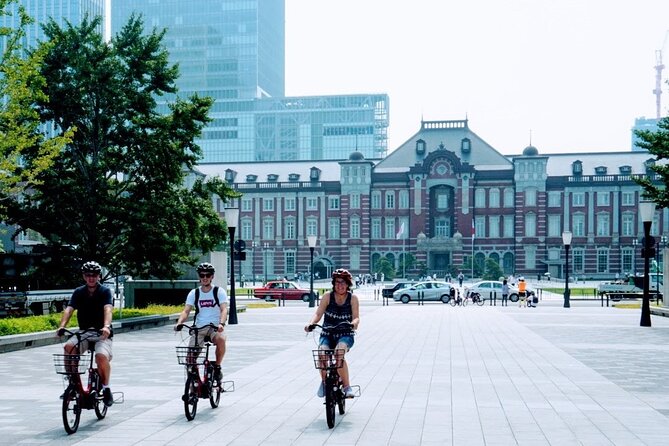
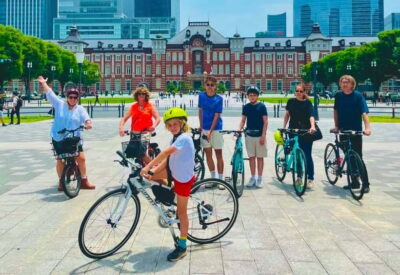
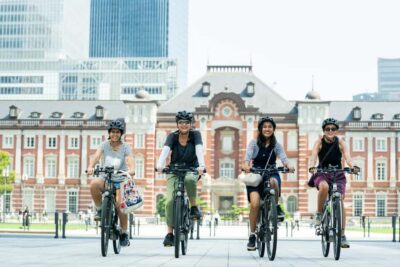
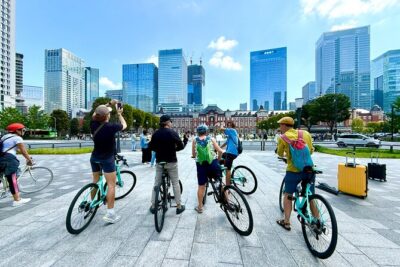
At Tokyo Station’s Marunouchi side, you stop near Gyoko-dori Street for a view of the red-brick station building. The guide explains the station’s past and points out the contrast between its historic exterior and the modern office towers around it. The stop is only about five minutes, so this is a photo and orientation point rather than a long visit inside the station.
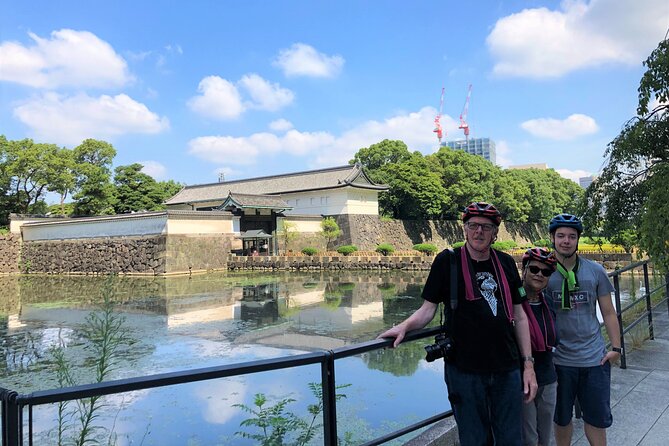
From there, the ride continues toward the Imperial Palace. At Otemon Gate, you look across the moat toward Fujimi-yagura Tower. The scene gives you a rare pause from Tokyo’s dense streets, with stone walls, water, and carefully maintained grounds in the middle of the capital.
The palace area is especially effective by bike because you can move around its broad perimeter instead of treating it as a single train stop. The nearby park covers roughly 200,000 square meters and offers open space and seasonal flowers. The route may include Sakuradamon, a traditional castle gate, and other palace-side roads.
You do not enter the Imperial Palace itself on this tour. The value is in seeing the gates, moats, towers, and surrounding grounds while the guide adds context. If you want an interior palace visit, you will need a separate plan.
The morning ride then passes through Ginza. Depending on traffic and pedestrian conditions, you may use the main avenues or quieter backstreets. Ginza is known for luxury stores, but the backstreets provide a different view, with small restaurants and local passageways close to the polished shopping roads.
The route finishes its main landmark sequence at Tsukiji Outer Market. Small, old-fashioned food shops line the streets, selling ingredients, prepared foods, and cooking items. You have about 10 minutes here, enough to look around and get a taste of the district’s food culture, but not enough for a relaxed meal or a serious shopping session.
Food and drinks are not included, so bring cash or a payment method if you want to buy something. The short stop works best as an introduction. I would return later for a longer visit if Tsukiji is high on your list.
Local streets reveal the Tokyo between attractions
One of the strongest parts of the experience is the time spent connecting the major stops. The guide uses local streets and passages that are more practical by e-bike than on foot.
These stretches help you see ordinary homes, small businesses, and neighborhood roads that are easy to miss from a train window. You are not simply moving between monuments. You are seeing how the city fits together, block by block.
Several guides also offer a backstreet variation in the morning. Jenny, in particular, has been praised for showing quieter roads and pointing out less expensive, more authentic places to eat and drink near the Ginza area. That option suits you if your priority is local atmosphere rather than checking off every major sight.
The tradeoff is that route details can change. Traffic, pedestrians, road conditions, season, and weekday or weekend patterns all affect the ride. That flexibility is sensible for safety, but you should not expect every stop to appear in exactly the same order each time.
Same corner of Tokyo, a completely different plan:
- Mt Fuji and Hakone 1-Day Bus Tour Return by Bullet Train
★ 5.0 · 26,383 reviews - 1-Day Tokyo Bus Tour
★ 5.0 · 14,250 reviews - Tokyo: TOKYO SKYTREE® Admission ticket
★ 4.5 · 11,192 reviews - Tokyo: teamLab Planets TOKYO Digital Art Museum Entry Ticket
★ 4.6 · 9,779 reviews
The afternoon route: Akihabara, kitchen tools, and old Tokyo
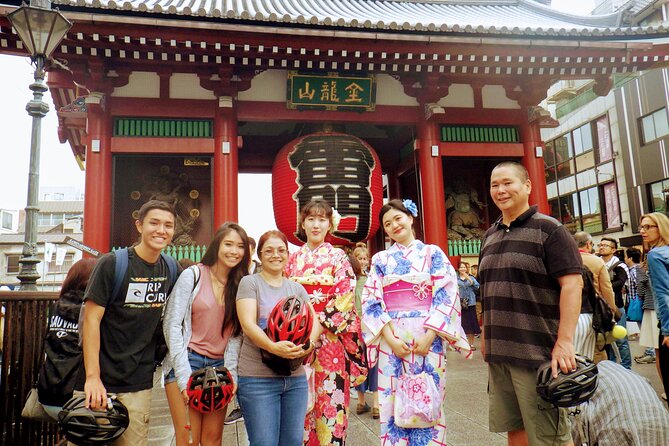
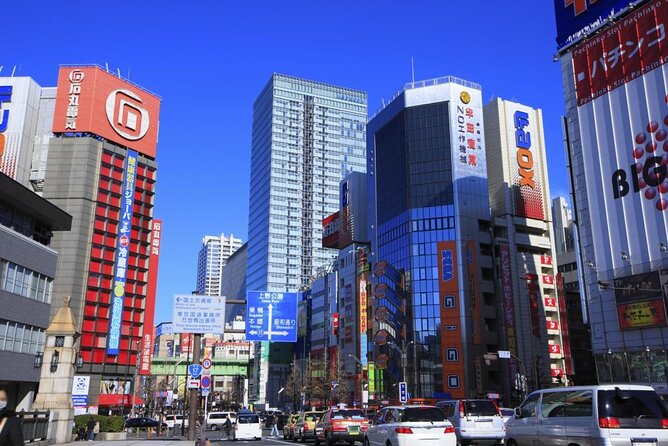
The afternoon route has a different personality. It moves east toward Akihabara, Kappabashi, Asakusa, and Ryogoku, with Nihonbashi included on the morning and afternoon routes.
Akihabara is Tokyo’s center for youth culture, electronics, anime, games, and related subcultures. The guide explains more than the familiar maid-cafe image, giving you a broader view of why the district matters.
The stop is short, about five minutes, so treat it as an introduction rather than a shopping break. If you want to browse shops, compare electronics, or spend time in an arcade, plan a separate return visit.
Kappabashi Street, also called Kappabashi Dogugai, offers a more practical kind of Tokyo culture. Shops sell kitchen utensils, professional cooking equipment, Japanese knives, restaurant supplies, and the plastic food displays seen outside many Japanese restaurants.
You have around 10 minutes to look around, and you may have time to shop. That is enough for a quick look, but knife shoppers should not expect a long buying consultation unless the pace allows it. If you are interested in Japanese cooking, Kappabashi is one of the more distinctive stops on the afternoon route.
Asakusa and Ryogoku bring older traditions into view
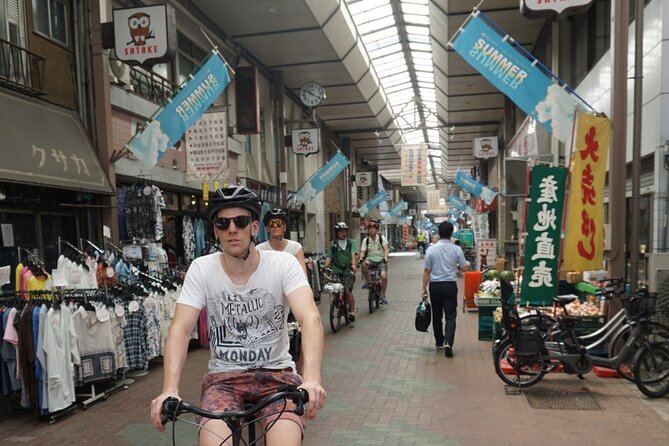
Asakusa is the afternoon route’s big historic stop. It is home to Sensoji, Tokyo’s oldest temple and one of the city’s best-known sights.
The bike does not replace a proper visit to the temple grounds, but it gives you useful orientation before you return on foot. Guides explain temple customs and rituals, which can help you approach the site with more understanding later in your trip.
The stop lasts about 10 minutes. You can take photos and get a quick explanation, but the schedule will not allow a slow temple visit, extended shopping, or a full exploration of the surrounding streets. Think of this as a well-chosen preview.
Ryogoku is associated with sumo wrestling. The route passes through the sumo area, and if timing is lucky, you might see actual sumo wrestlers near the arena. That possibility depends on the day and schedule, so it should be treated as an extra moment, not a promise.
Ryogoku gives the afternoon route a strong local identity. You move from tourist-famous Asakusa into a district shaped by a major Japanese sport. The contrast is one reason I prefer this route for a second or third day in Tokyo, after you have already seen the city center.
Nihonbashi connects old roads with modern Tokyo
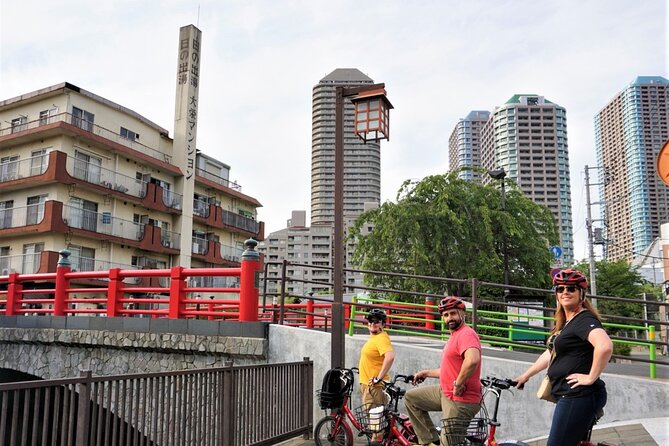
Nihonbashi Bridge appears on both route options. It was once the center of Edo, the old name for Tokyo, and road-distance measurements in Japan traditionally begin there.
The stop is brief, about five minutes, but the bridge has real historical weight. It helps explain why Tokyo developed around certain roads and waterways, rather than feeling like a random collection of districts.
You may find this stop more meaningful after hearing the guide’s explanation. Without context, it is simply a bridge in a busy central area. With context, it becomes a marker of Tokyo’s older road system and its continuing role in the city.
Guides shape the experience
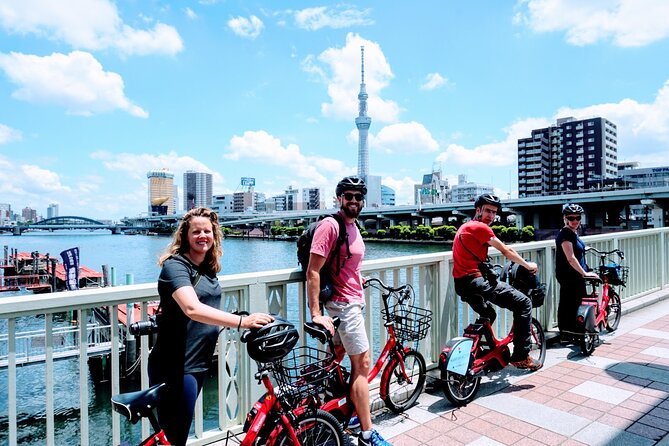
The operator uses several English-speaking guides, including Yo, Jenny, Take, Ted, Kazu, Ninja, Yoshiko, and Yoshihisa, also called Yoppi. Your guide will shape the tone of the ride, but the strongest pattern is clear: the tour depends heavily on personal explanation, safety reminders, and local suggestions.
Yo has been praised for a friendly, easygoing manner. Jenny is a strong fit if you want neighborhood roads and food tips. Take has been noted for offering information that works for adults and teenagers alike. Ted has a calm, safety-focused approach and regularly stops for photos and explanations.
Ninja is associated with the Imperial Palace and bay-area morning ride, while the afternoon Asakusa course offers a more local look at eastern Tokyo. Kazu is a good match for riders who want a steady stream of explanations while covering a lot of ground.
The small group makes a difference here. With no more than six people per booking, you can ask about food, history, temples, or neighborhoods without shouting across a large line of cyclists. You still need to stay with the group. One practical warning from the experience: it is easy to fall behind if you stop watching the guide.
Is $63.01 good value for three hours?
At $63.01 per person, this is not the cheapest way to see Tokyo. It is good value if you want transportation, a bike, helmet, insurance, and a guide packed into a single three-hour outing.
The real saving is time. Tokyo’s train system is excellent, but trains cannot take you through the small roads between Kanda, Ginza, palace-side streets, markets, and neighborhood districts. Walking covers less ground, especially in hot weather. The e-bike gives you a wider view of the city without demanding the effort of a full conventional cycling tour.
Food is extra, and the short market stops are not designed around included meals. You are paying mainly for mobility, route planning, safety support, and local explanation.
The value is strongest early in your visit. I like using a ride like this to identify areas I want to revisit on foot. You can mark a restaurant, market, temple, or shopping street and return later with more time.
Heat, rain, traffic, and riding ability
Tokyo’s weather deserves serious attention. July and August can be hot and muggy, and the operator uses the official heat-stress index when deciding if conditions are safe. A ride may be canceled before departure, or the guide may stop and return to the shop if the heat becomes dangerous. In that case, the tour fee is refunded.
Rain can also cancel the activity. The forecast is checked the day before, but a sunny forecast does not guarantee dry roads throughout the ride. Simple rain gear is provided, though one rider wished for better protection for glasses and hands.
Wear clothing suited to exercise and bring water, sunscreen, and a towel in summer. In winter, bring warm clothes and gloves despite the simple gloves supplied by the operator.
Traffic is the other key issue. You should be healthy enough for three hours of city riding and comfortable managing busy streets. The guides focus on keeping the group together, but no cycling tour in central Tokyo is entirely free of traffic, crossings, or pedestrians.
Who should book this Tokyo e-bike tour?
I would recommend it to first-time Tokyo visitors who want a quick city orientation, families with children aged 12 and older, and repeat visitors who want less familiar streets. It also suits people who like history but do not want to spend an entire day inside museums or temples.
The tour worked well for families with teenagers, especially because the route mixes famous sights, neighborhood life, food districts, and youth culture. It can also suit older riders who are comfortable cycling but want electric assistance to reduce fatigue.
I would hesitate to recommend it if you cannot ride a bicycle, dislike urban traffic, need a slow photographic pace, or hope to spend a long time at each attraction. Three hours moves quickly, and the stops are short by design.
You can cancel for a full refund up to 24 hours before the start time. Cancellations made later are not refunded, except when the operator cancels for poor weather or an unmet minimum of two participants. A solo booking can still run if other riders join, so contact the operator if you are traveling alone.
Should you book it?
Book this tour if you want to cover a large slice of Tokyo without getting lost and you are happy to trade long visits for variety. The e-bike, small group, and local guides make the city feel more reachable, while the backstreets keep the ride from becoming a simple parade of famous landmarks.
Choose the morning route for Tokyo Station, the Imperial Palace, Ginza, Tsukiji, and central Tokyo. Choose the afternoon route for Akihabara, Kappabashi, Asakusa, Ryogoku, and a stronger taste of eastern Tokyo. If weather looks uncertain or the forecast is dangerously hot, keep a backup plan.
FAQ
Where does the Tokyo e-bike tour begin?
The tour begins at Cycling Holiday Tokyo, 3-chome-8-6 Uchikanda, Chiyoda City, Tokyo 101-0047. The shop is about a one-minute walk from the west exit of JR Kanda Station.
How long does the experience last?
The ride lasts approximately three hours and ends back at the meeting point.
What is included in the price?
The price includes an electric-assist bicycle, helmet, English-speaking guide, insurance, simple rain gear, and luggage storage for non-valuable items. Cooling products are provided in summer, and simple gloves are provided in winter.
Are food and drinks included?
No. Food and drinks are self-pay at the shop or along the route.
What is the difference between the morning and afternoon routes?
The morning route may include Tokyo Station, the Imperial Palace, palace gates and parks, Ginza, Tsukiji Outer Market, local backstreets, and Nihonbashi. The afternoon route may include Akihabara, Kappabashi Street, Asakusa, Ryogoku, local streets, and Nihonbashi.
What age and height requirements apply?
The minimum age is 12, and the minimum height is 147 centimeters. You must already know how to ride a bicycle.
How many people can join?
The tour requires a minimum of two participants and allows a maximum of six people per booking. Other participants may join your group.
What happens if it rains or becomes dangerously hot?
The operator may cancel the tour because of rain or unsafe heat. If the tour is canceled, you can receive a full refund or choose another date when offered. If severe conditions develop during the ride, the guide may stop and return to the starting point.
More 3-Hour Experiences in Tokyo
- Tokyo: 3-Hour Bike or E-Bike City Highlights Tour
★ 4.8 · 435 reviews - Tokyo: 3-hour Guided E-Bike Tour of the City’s Hidden Gems
★ 4.8 · 251 reviews - 3-Hour Tokyo Pub Crawl Nightlife Welcome Guided Tour in Shibuya
★ 5.0 · 209 reviews - Tokyo: 3-Hour Bike/E-Bike Tour of the City’s Highlights
★ 5.0 · 209 reviews
New on our Tokyo list
- From Tokyo: Mount Fuji & Hakone Full Day Private Tour★ 4.9 · 25 reviews
- Tokyo Spectacular View Day-Cruise in 90 Minutes★ 5.0 · 25 reviews
- Real Tokyo Runner Club : Daikoku Car Meet Night Tour with JDM Car★ 5.0 · 25 reviews
- 2.5 Hour-Guided Cycle Tour in the Central Tokyo★ 5.0 · 25 reviews
- Tokyo: 2-Hour Night Bike Tour of the City’s Hidden Gems★ 4.9 · 25 reviews
- Ramen Making from Scratch +Akihabara Tour –Cooking Class★ 5.0 · 25 reviews
- [Self-Drive] Tokyo & Daikoku Custom Car Driving Tour★ 4.9 · 25 reviews
- Samurai themed Entertainment show in Shinjuku★ 4.5 · 25 reviews
Cycling Tours, compared.
3-hour Guided E-Bike Tour of the City’s Hidden Gems
Read our review →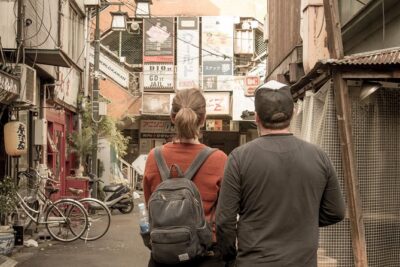
3-Hour Bike/E-Bike Tour of the City’s Highlights
Read our review →
Browse the lists this tour appears in