
Reviewed · CYCLING TOURS
Tokyo Great Cycling Tour
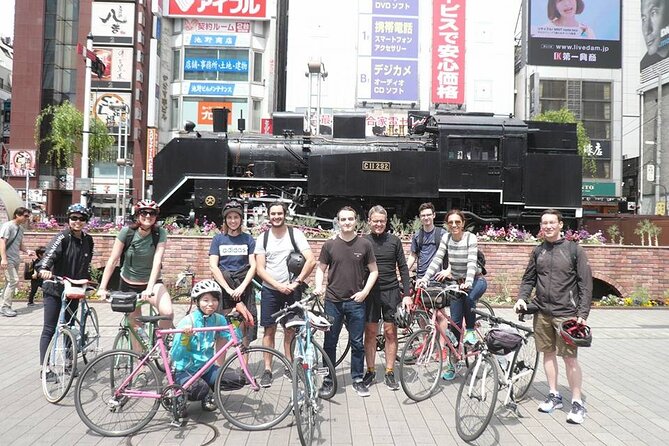
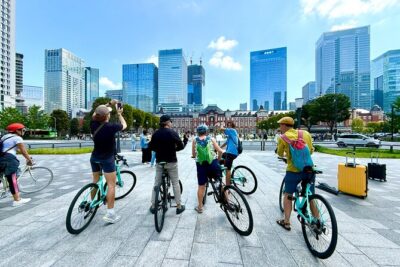
Tokyo makes surprising sense from a bicycle. In six hours, you can connect the Tsukiji Jogai Market, Zojo-ji Temple, Meiji Jingu Shrine, and the Imperial Palace, while also seeing the very different neighborhoods between them. Bikes reach corners buses miss, and you get a closer look at how old temples and shrines fit beside modern Tokyo.
I like the small maximum of 12 people, which gives guides such as Toshi, Nick, and Naoko room to watch the group and explain what you are seeing. I also like the route’s range: market streets, a cemetery in a fashionable district, high-rise shopping areas, Buddhist tradition, Shinto worship, and the Imperial residence all appear in one day. The main drawback is physical: six hours on a bicycle requires moderate fitness, and hot or wet weather can change the feel of the day.
In This Review
- Key points to know before you pedal
- Why a bicycle works so well in Tokyo
- Starting near Tsukiji Jogai Market
- Zojo-ji Temple and Tokyo Tower
- The city between the famous sights
- Meiji Jingu Shrine in a different part of Tokyo
- The Imperial Palace as the final major sight
- Guides, group size, and the feel of the day
- Is $99.49 a fair price?
- Fitness, weather, and practical planning
- Who should book the Tokyo cycling tour?
- Final verdict: a smart first look at Tokyo
- FAQ
- How long does the Tokyo Great Cycling Tour last?
- What time does the tour start?
- Where does the tour begin?
- Where does the tour end?
- How many people can join the tour?
- Which Tokyo sights are included?
- Is an admission ticket required for the stops?
- What fitness level is needed?
- What happens if the weather is poor?
Key points to know before you pedal
- Six hours covers four major Tokyo sights: Tsukiji Jogai Market, Zojo-ji Temple, Meiji Jingu Shrine, and the Imperial Palace.
- The group is limited to 12 people, a useful size for safety, questions, and personal attention.
- The route mixes old and new Tokyo, from a Buddhist temple framed by Tokyo Tower to expensive apartments and office buildings.
- Guides may adjust the food stop in hot weather: one tour changed a planned picnic to lunch at an izakaya.
- The tour starts and ends in the same place, at Tokyo Great Tours in Shinkawa, Chuo City.
- You need moderate physical fitness, and poor weather can lead to a new date or a full refund.
Why a bicycle works so well in Tokyo
Tokyo is huge, and its best sights are spread across districts with very different moods. Walking gives you detail, but it limits the amount of city you can cover. A bus gives you distance, but often leaves you looking at Tokyo through glass.
A bicycle gives you a useful middle ground. You move fast enough to link distant sights, yet slowly enough to notice side streets, residential blocks, temple gates, and the sharp change from one district to the next. The tour is not only about checking off famous places. It shows you how Tokyo changes as you ride.
That matters most for first-time visitors with limited time. Instead of spending much of the day changing trains between separate sights, you follow one continuous route. You see the city between the landmarks, which is often where the best sense of place comes from.
The six-hour length is both a strength and a commitment. It gives the guides time to explain Japanese history and culture at several stops, but you should not treat it as a quick sightseeing ride. Plan for a full morning and afternoon on the bike, beginning at 9 a.m. and returning to the same meeting point.
A few more Tokyo bookings worth comparing
- Tokyo Guided Small-Group Biking Tour
★ 5.0 · 1,250 reviews - Tokyo Top Highlights 3h Guided E-bike Tour
★ 5.0 · 714 reviews - 3h Tokyo E-Bike Tour: Hidden Gems, and Local Life with guide
★ 5.0 · 670 reviews
Starting near Tsukiji Jogai Market
The tour begins at Tokyo Great Tours, at 1-chōme-3-2 Shinkawa in Chuo City. The meeting point is near public transportation, but you should allow enough time to arrive before the 9 a.m. start. The activity ends back here, which makes the morning easier to plan if you have evening reservations elsewhere in Tokyo.
One early highlight is Tsukiji Jogai Market. The former inner market moved to Toyosu, but the outer market area remains active, with local shoppers and tourists moving among food shops and stalls. The stop lasts about 15 minutes and has no admission fee.
Do not expect a long market meal or an extended shopping session at this point. The value is seeing a place that still carries the feel of old Tsukiji, even after the main wholesale operation moved. A short stop also keeps the bicycle route moving.
This is a good example of the tour’s approach. You are not looking at Tokyo through a list of isolated attractions. You are seeing how a well-known district changed while retaining its public life. If you want a long, food-focused visit to Tsukiji, come back independently. If you want it as one part of a wider day, the brief stop works well.
Zojo-ji Temple and Tokyo Tower
From the market district, the route continues toward Zojo-ji Temple. This old Buddhist temple offers one of the clearest contrasts in the day: traditional temple buildings with Tokyo Tower rising behind them.
The stop lasts about 15 minutes, with free admission. That is enough time to take in the main setting, hear the guide’s explanation, and photograph the meeting of old and new Tokyo. The contrast is not carefully separated in a museum. It is right there in the city, where a historic religious site and a major modern landmark share the same view.
I especially like this stop for visitors who want context rather than a string of famous names. Tokyo can seem almost entirely modern at first glance. Zojo-ji shows that older institutions remain part of the city’s daily structure, even beside towers and busy roads.
The short timing is the limitation. You will not have hours to inspect every detail of the temple grounds. Think of this as a focused introduction, not a full temple visit. The bicycle makes that tradeoff worthwhile because it lets you reach several other districts in the same outing.
The city between the famous sights
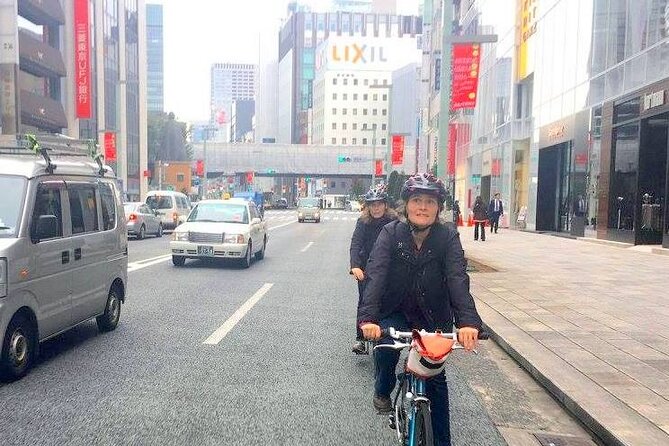
Some of the most useful riding comes between the named stops. The route passes areas filled with tall, expensive apartments, shopping buildings, and offices. These sections may not appear on a first-time visitor’s must-see list, but they help explain how Tokyo works as a living city.
You also pass a cemetery located in the middle of fashionable areas. That detail says a lot about Tokyo’s tight use of space. Religious grounds and burial places are not always pushed far outside the city. They can sit beside upscale neighborhoods, shops, and offices, creating an abrupt but distinctly Tokyo change in atmosphere.
This part of the ride is where a guide can add real value. The city’s scale becomes easier to understand when someone points out the neighborhoods you are crossing and explains the local setting. Guides named Toshi, Nick, and Naoko have led this experience, and the small group gives you a better chance to ask questions as the route unfolds.
You should also expect the character of the ride to vary. It is not a single scenic path. It is a city cycling tour, so the day includes streets, built-up districts, and ordinary urban surroundings along with major sights. That variety is a benefit if you want a broad look at Tokyo, but it may disappoint you if you are seeking a quiet ride through parks or countryside.
Same corner of Tokyo, a completely different plan:
- Mt Fuji and Hakone 1-Day Bus Tour Return by Bullet Train
★ 5.0 · 26,383 reviews - 1-Day Tokyo Bus Tour
★ 5.0 · 14,250 reviews - Tokyo: TOKYO SKYTREE® Admission ticket
★ 4.5 · 11,192 reviews - Tokyo: teamLab Planets TOKYO Digital Art Museum Entry Ticket
★ 4.6 · 9,779 reviews
Meiji Jingu Shrine in a different part of Tokyo
Meiji Jingu Shrine is the next major stop, with about 20 minutes set aside and no admission fee. It is described as Tokyo’s most popular Shinto shrine, making this one of the key cultural stops of the day.
The shrine gives the tour a different religious perspective from Zojo-ji. Zojo-ji represents Buddhism, while Meiji Jingu introduces Shinto tradition. Seeing both in one day helps you compare the two settings without needing a separate temple and shrine tour.
The 20-minute pause is the longest of the listed sightseeing stops, which makes sense. Meiji Jingu is a major destination, and the guide can give you basic cultural background before you continue. Still, this is not an in-depth shrine visit. If you want a slow look at every path and building, you may prefer to return on your own.
For the cycling tour, the shrine is valuable because it breaks up the urban ride with a major sacred site. You get a different sense of Tokyo here than in the market or office districts. The point is not simply that the shrine is famous. It is that the route lets you see how religious spaces remain part of a very large modern capital.
The Imperial Palace as the final major sight
The route also reaches the Imperial Palace, where the Emperor and Empress live. The stop lasts around 15 minutes and does not require an admission ticket.
This is another place where expectations matter. A short stop does not mean a detailed palace tour or access to every part of the grounds. The value lies in seeing the setting and understanding its place in Japan’s national life. Your guide can connect the site to the country’s history and present-day institutions while you take a break from the ride.
The palace is a fitting part of the route because it adds a national center to the day’s local contrasts. Tsukiji shows commerce and food culture. Zojo-ji and Meiji Jingu show religious traditions. The palace brings the route to one of Japan’s most important civic and symbolic spaces.
After this stop, you return to the starting point. Since the activity ends where it began, you do not need to solve a transport problem at the end of a six-hour ride. That is a small but useful advantage in a city where crossing town can take time.
Guides, group size, and the feel of the day
The maximum group size is 12. That is large enough to create a social outing, but small enough for guides to keep an eye on the group. It also makes explanations easier than they would be on a large coach tour.
Several guide names are associated with the experience, including Toshi, Nick, and Naoko. On one outing, Toshi and Nick guided a parent and son. On another, Naoko and Nick paid close attention to safety and general welfare, and the bicycle was reported to be running smoothly. Those details point to what you should look for in this kind of tour: clear riding guidance, attention to the group, and a bike that is ready for city streets.
The guides also appear to adjust the day when conditions call for it. In very hot weather, one planned picnic became lunch at an izakaya. That is worth noting because Tokyo heat can make a fixed outdoor meal unpleasant. The change suggests that the food plan may not be rigid, but you should not assume a specific meal or restaurant is guaranteed unless it is confirmed when you book.
The tour’s strongest praise centers on the guide care, the amount of Tokyo covered, and the sense that cycling is the right way to connect the sights. You can reasonably expect a guided ride with safety attention and cultural commentary, not a race or a free-form bike rental.
Is $99.49 a fair price?
At $99.49 per person, this is not the cheapest way to get around Tokyo. You can use trains and visit many sights independently for less money. A bicycle rental alone may also cost less, depending on the length and type of rental.
The price makes more sense when you count what the tour combines. You get roughly six hours of organized riding, a bike, a guide, a planned route, cultural explanations, and access to several districts in one day. You are also paying for the convenience of not having to design the route or work out how to connect Tsukiji, Zojo-ji, Meiji Jingu, and the Imperial Palace yourself.
I see the best value for someone visiting Tokyo for a short stay, especially if you want a broad first look at the city. It is less compelling for a repeat visitor who already knows the neighborhoods and prefers to set a slow, independent pace.
The small group improves the value. A 12-person maximum is more personal than a large sightseeing bus, and the guides can respond when the weather or group needs change. The price is still a personal decision, but the tour offers more than transport from one attraction to another.
Fitness, weather, and practical planning
You should have a moderate level of physical fitness. The tour lasts about six hours, and even a comfortable city ride can feel demanding in hot weather. If you are unsure about your cycling stamina, consider how you feel after several hours of regular riding, not just a short trip around a park.
Good weather is required. If poor weather causes cancellation, you are offered another date or a full refund. This protects you from being locked into a long outdoor activity during unsafe or unpleasant conditions, but it also means you should keep some flexibility in your Tokyo schedule.
The tour begins at 9 a.m., so it suits early risers. It may not suit you if you want a slow hotel breakfast or a late start after a long flight. The mobile ticket is convenient, and confirmation is sent within 48 hours of booking, subject to availability.
Free cancellation is available until 24 hours before the start time for a full refund. Changes or cancellations made less than 24 hours before the start are not accepted for a refund. The activity also requires a minimum number of participants, so if that minimum is not met, you are offered another date or activity, or a full refund.
Who should book the Tokyo cycling tour?
I would choose this tour if you want to cover a lot of Tokyo in one day and prefer seeing the connections between districts rather than visiting one attraction at a time. It is a strong fit for active couples, families with older children, and solo visitors who like having a guide and a small social group.
It also suits you if Tokyo feels overwhelming on paper. The route brings together market culture, Buddhism, Shinto, the Imperial Palace, and modern commercial neighborhoods without requiring you to plan every train transfer.
I would think twice if you dislike cycling in cities, tire quickly, need a leisurely pace, or want extended time inside each major sight. The listed stops are fairly brief, and the day’s main reward is coverage and context, not a long visit at any single place.
Final verdict: a smart first look at Tokyo
Book the Tokyo Great Cycling Tour if your priority is seeing a wide slice of Tokyo in about six hours, with a guide to connect the sights and watch the group. The combination of a 12-person maximum, named guides such as Toshi, Nick, and Naoko, and a route that reaches places buses cannot makes the experience feel practical rather than packaged.
The key question is simple: can you comfortably ride for most of a day? If yes, this is one of the better ways to get your bearings across several sides of Tokyo. If not, choose a shorter walking or vehicle-based tour, since the bicycle is the heart of the experience.
FAQ
How long does the Tokyo Great Cycling Tour last?
The tour lasts approximately six hours.
What time does the tour start?
The scheduled start time is 9:00 a.m.
Where does the tour begin?
It begins at Tokyo Great Tours, 1-chōme-3-2 Shinkawa, Chuo City, Tokyo 104-0033, Japan.
Where does the tour end?
The activity ends back at the meeting point.
How many people can join the tour?
The maximum group size is 12 travelers.
Which Tokyo sights are included?
The route includes Tsukiji Jogai Market, Zojo-ji Temple, Meiji Jingu Shrine, and the Imperial Palace. It also passes modern apartment, shopping, and office districts and a cemetery in a fashionable area.
Is an admission ticket required for the stops?
The listed stops have no admission ticket cost.
What fitness level is needed?
Participants should have a moderate level of physical fitness.
What happens if the weather is poor?
If poor weather causes the tour to be canceled, you are offered a different date or a full refund.
New on our Tokyo list
- From Tokyo: Mount Fuji & Hakone Full Day Private Tour★ 4.9 · 25 reviews
- Tokyo Spectacular View Day-Cruise in 90 Minutes★ 5.0 · 25 reviews
- Real Tokyo Runner Club : Daikoku Car Meet Night Tour with JDM Car★ 5.0 · 25 reviews
- 2.5 Hour-Guided Cycle Tour in the Central Tokyo★ 5.0 · 25 reviews
- Ramen Making from Scratch +Akihabara Tour –Cooking Class★ 5.0 · 25 reviews
- [Self-Drive] Tokyo & Daikoku Custom Car Driving Tour★ 4.9 · 25 reviews
- Tokyo: 2-Hour Night Bike Tour of the City’s Hidden Gems★ 4.9 · 25 reviews
- Buddha, Bamboo & Zen – Bespoke Kamakura Private Walking Tours★ 5.0 · 25 reviews
Cycling Tours, compared.
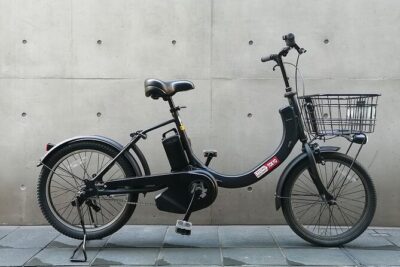
3h Tokyo E-Bike Tour: Hidden Gems, and Local Life with guide
Read our review →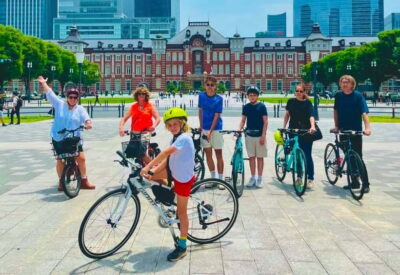
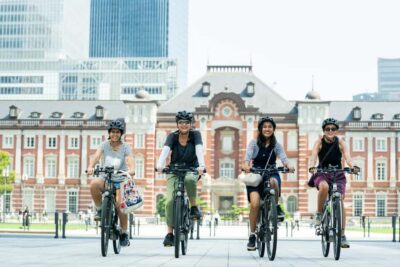
3-hour Guided E-Bike Tour of the City’s Hidden Gems
Read our review →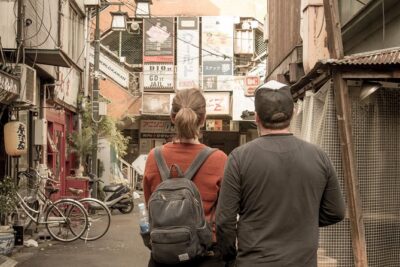
3-Hour Bike/E-Bike Tour of the City’s Highlights
Read our review →
Browse the lists this tour appears in