
Reviewed · TOKYO FOOD TOURS
Tokyo West-Side Cycling & Food Tour
Tokyo’s best surprise may be found far from Shibuya’s crossings and Shinjuku’s towers. On this small-group bicycle tour, you ride through the ordinary streets of Nakano, Koenji, and Asagaya, where local shops, homes, river paths, bicycle parking systems, and neighborhood eateries tell you more about daily Tokyo life than another famous viewpoint can.
I like two things in particular: the route keeps you away from the main tourist circuit, and guide Andy fills the ride with useful details about housing, schools, religion, food, and work in Japan. The included snacks and local-style lunch add real value, too. The trade-off is clear: you need to ride confidently through narrow, sometimes crowded streets for about 12 to 15 kilometers.
In This Review
- Key things to know before booking
- Why West Tokyo works so well by bicycle
- Starting at Koenji Station with a mamachari
- Nakano’s back streets and local rhythm
- Koenji, snacks, and a taste of local life
- The Zenpukuji River and a quieter stretch of Tokyo
- Asagaya and the lunch stop
- What Andy adds to the ride
- Is 3.5 hours enough?
- Who will enjoy this tour most?
- Should you book the Tokyo West-Side Cycling and Food Tour?
- FAQ
- Where does the Tokyo West-Side Cycling and Food Tour start?
- Where does the tour finish?
- How long does the cycling and food tour last?
- How far do I need to cycle?
- Is the tour suitable for beginners?
- Are food and drinks included?
- What happens if the weather is poor?
Key things to know before booking
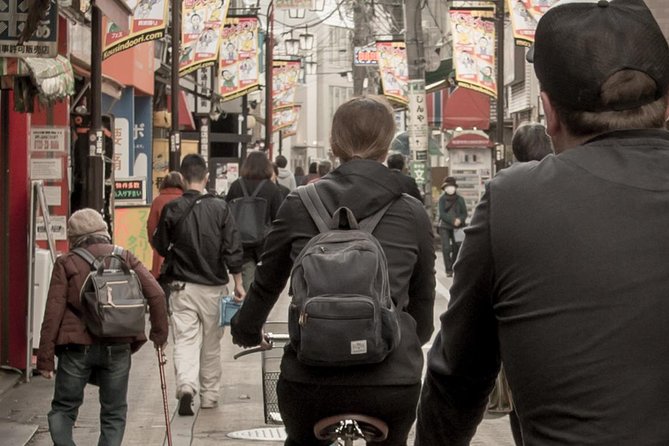
- Ride a salvaged Japanese mamachari: These practical city bicycles have front baskets and are maintained for urban riding, though they may feel smaller and more old-fashioned than a rental bike at home.
- See three local neighborhoods: The route links Nakano, Koenji, and Asagaya, with quiet lanes, neighborhood sights, and a stretch beside the Zenpukuji River.
- Eat along the way: Street food snacks, drinks, and a Japanese-style lunch are included, with stops chosen for local appeal rather than formal dining.
- Expect a personal group: The maximum is eight people, making it easier to ask questions and keep the pace together.
- Plan for roughly four hours: The advertised duration is about 3.5 hours, but food stops, cycling speed, weather, and group size can stretch the outing.
- Meet at Koenji Station: The tour begins and ends at 4-chome-48-2 Koenjiminami in Suginami City, near public transportation.
Why West Tokyo works so well by bicycle
Central Tokyo can feel like a giant stage set of famous sights. West Tokyo is different. Here, you get a sense of how the city works when nobody is posing for a photograph. You pass through back streets where the pace is calmer, then shift onto riverside paths and stop for small bites that would be easy to miss on your own.
That change of scale matters. Walking can show you a neighborhood, but a bicycle lets you connect several of them in a single morning. You cover enough ground to notice how Nakano, Koenji, and Asagaya differ, while still moving slowly enough to spot details.
This is not a sightseeing ride built around major monuments. The operator is upfront about that. The focus is socializing, local discovery, food, and everyday culture. If you want Tokyo’s headline attractions, book a different tour. If you want to understand the city beyond Shinjuku and Shibuya, this route makes a strong case for itself.
More Tokyo food crawls:
- Tokyo: Shinjuku Food Tour (13 Dishes at 4 Local Eateries)
★ 5.0 · 6,603 reviews - Tokyo: Shinjuku Food Tour (15 Dishes and 4 Eateries)
★ 4.9 · 2,033 reviews - Best of Shinjuku: Izakaya Food Tour (4 Stops, 14+ Tastings)
★ 5.0 · 1,863 reviews
Starting at Koenji Station with a mamachari
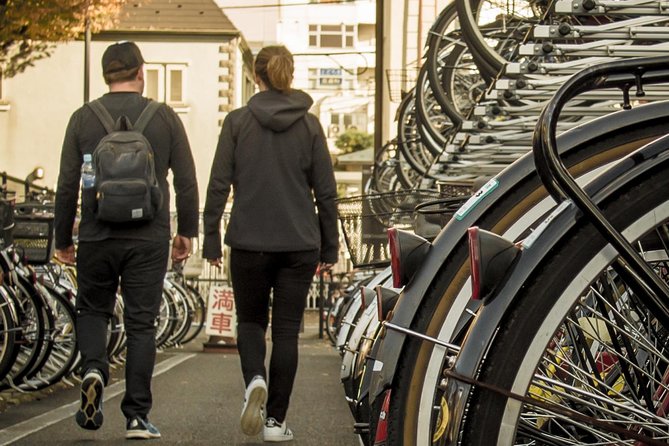
You meet at Koenji Station and are matched with a salvaged mamachari, the familiar Japanese neighborhood bicycle designed for errands and practical transport. Each bike has a front basket that can hold a standard backpack. Helmets are available on request.
The bikes are Japanese-sized, so check the 140-centimeter height requirement before booking. They are not sleek road bikes, and that is part of the point. You are riding the kind of bicycle associated with ordinary city life, not training for a race.
The route is described as mainly flat, but the cycling itself is not completely effortless. You should be comfortable steering, stopping, and adjusting your line on uneven surfaces and narrow streets. A basic ability to ride is not enough if you are nervous around other bicycles, pedestrians, or occasional traffic.
Andy’s role is important here. He is an Australian guide who has lived in Japan for more than 20 years and knows the west side of Tokyo well. His style, based on the experience details, is friendly and conversational rather than formal. That suits this tour. You can ask why a street is laid out a certain way, how Japanese bicycle parking works, or what you are eating without feeling as if you are interrupting a lecture.
Nakano’s back streets and local rhythm
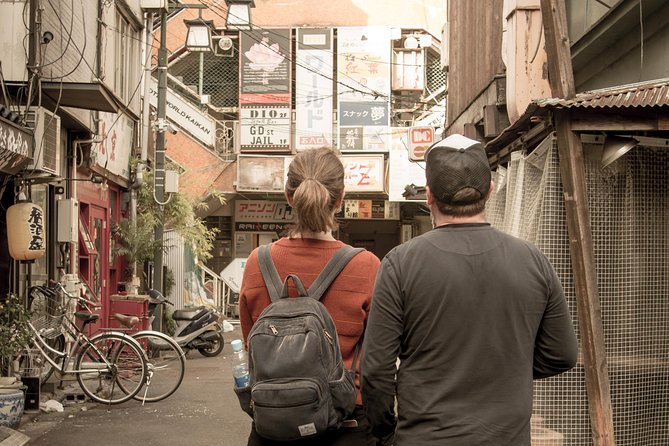
The first part of the outing takes you through Nakano and nearby residential areas. The appeal is not a single stop. It is the accumulated feel of the place: twisting lanes, small businesses, homes, local facilities, and the steady rhythm of people going about their day.
Andy uses these streets to explain how Tokyo functions at ground level. His commentary can touch on housing, schooling, religion, work, and neighborhood customs. Those subjects give the ride more depth than a simple bicycle loop. You begin to see the city not just as a collection of districts, but as a place shaped by routines and limited space.
This is also where the cycling demands your attention. Tokyo’s smaller streets can be tight, and the tour information warns that they may be crowded. You will need to follow instructions, maintain awareness, and ride at a group pace.
The reward is access to areas you would likely skip on a standard first-time itinerary. Several strong impressions from this experience center on seeing where residents live and spending time in places that feel ordinary rather than staged for tourism. For repeat visitors to Tokyo, that may be the main reason to book.
Koenji, snacks, and a taste of local life
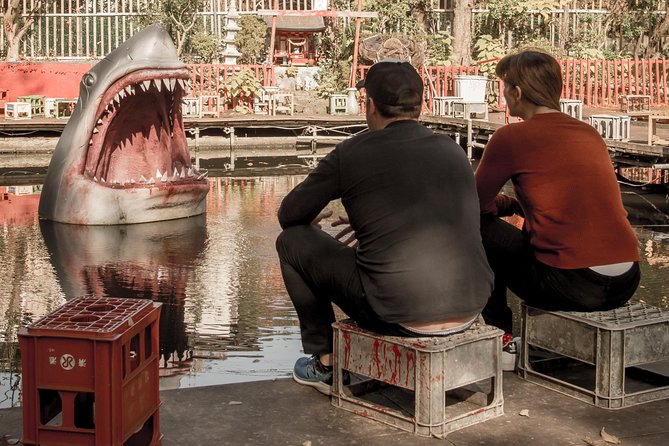
Koenji is known here as part of the route rather than as a checklist of major attractions. You move through its neighborhood streets, pause for selected local snacks, and get a chance to see how food fits into daily life.
The exact food lineup can vary, so you should not book this expecting a fixed tasting menu. The description promises street food snacks and a Japanese-style lunch, and the experience is built around typical local eateries. That means the food should feel connected to the places you visit, but it also means personal preferences may not always be easy to accommodate.
Japanese cooking often uses meat, seafood, and dashi, a stock commonly made with fish-based ingredients. If you have allergies, follow a strict diet, or avoid certain foods, contact the operator before booking and understand that options may be limited. The tour is designed around ordinary neighborhood eating, not a restaurant selected to handle every dietary need.
For adventurous eaters, this format is a plus. You may try food you would not recognize or feel confident ordering alone. The snacks break up the ride, and Andy can explain what you are eating and how it fits into local habits.
The stop also gives the group a chance to rest and talk. That social side is not filler. With a maximum of eight people, the experience can feel more like being shown around by an outgoing local than being moved through a standard tour script.
A few more Tokyo bookings worth comparing
- Tokyo Guided Small-Group Biking Tour
★ 5.0 · 1,250 reviews - Tokyo Great Cycling Tour
★ 5.0 · 811 reviews - Tokyo Top Highlights 3h Guided E-bike Tour
★ 5.0 · 714 reviews - 3h Tokyo E-Bike Tour: Hidden Gems, and Local Life with guide
★ 5.0 · 670 reviews
The Zenpukuji River and a quieter stretch of Tokyo
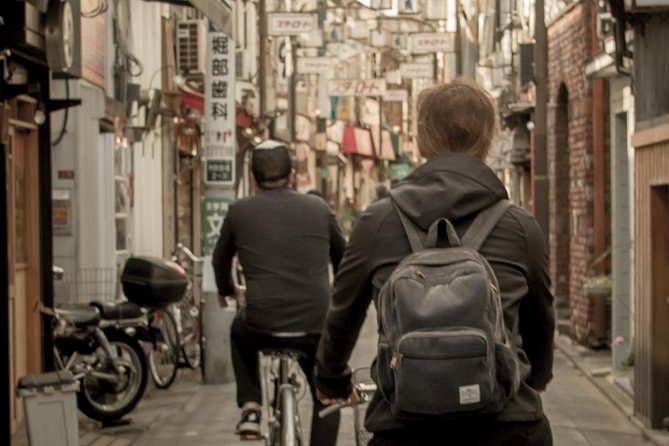
One of the most pleasant changes in pace comes along the Zenpukuji River. Riverside paths offer a break from the tighter back streets and give you a more open route through the city.
Do not expect a grand natural attraction. The value is the contrast. Tokyo is often presented through dense stations, neon signs, and packed shopping streets. A ride beside a local river shows another side of the metropolis, one where people walk, cycle, and spend time close to home.
This section is also useful for settling into the bicycle. The route is generally flat, and the river path provides a calmer setting than some of the narrower lanes. Even so, you remain responsible for controlling the bike and watching the surface ahead.
Weather can affect the feel of this part of the tour. The activity operates in all seasons and may proceed in light rain, with basic ponchos provided. At the same time, the cancellation terms say the experience may be canceled for poor weather. The practical lesson is to dress for an outdoor ride, keep your schedule flexible, and understand that a wet-day outing may still go ahead unless conditions are considered unsuitable.
Asagaya and the lunch stop
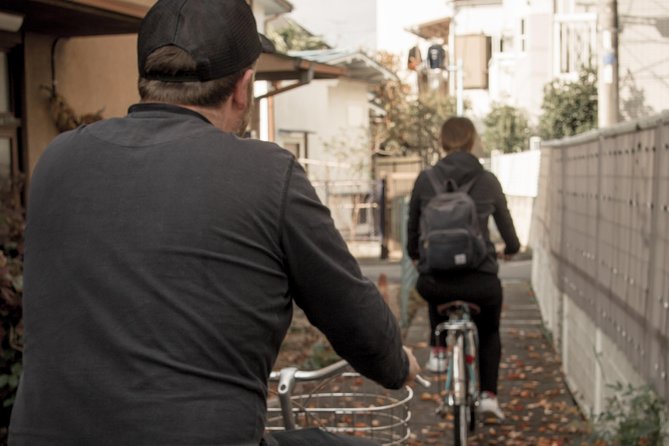
The route continues into Asagaya, another neighborhood that rewards slow observation. By now, the tour has moved from the novelty of getting on a bike to a broader look at local routines and community life.
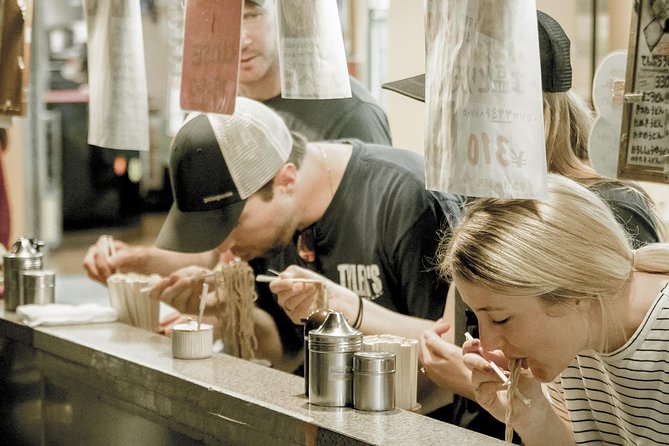
Lunch is served at a typical local eatery rather than a fine-dining restaurant. One especially useful part of the experience is the chance to eat alongside ordinary customers, including the kind of quick, practical meal associated with office workers. The point is not ceremony. It is seeing how people refuel during a normal day.
That can be more informative than a polished food tour. You learn how a place feels, how much time people spend eating, and how a neighborhood restaurant fits into the community. You also avoid paying extra for a formal meal designed mainly for visitors.
Still, the setting may be compact. The description refers to jostling for counter space with hungry salarymen, so do not expect a leisurely table-service lunch. If you dislike casual counters, quick meals, or unfamiliar food, this may feel less comfortable than a restaurant-based tour.
The food is included in the $99.49 price, along with snacks and drinks. That makes the cost easier to assess. You are paying for a guided ride, bicycle use, local interpretation, several food experiences, and a small group. It is not a cheap way to get lunch, but it is reasonable if you value the access and context as much as the meal itself.
What Andy adds to the ride
A route through residential Tokyo could be pleasant but forgettable without a good guide. Andy appears to be the main reason this experience has earned such strong feedback.
His approach is practical and personal. He explains what you are seeing, answers questions, and keeps the ride light. The comments supplied about the experience repeatedly emphasize his warmth, local experience, clear directions, and ability to make riders feel safe.
Several details are especially useful. He has shared personalized food notes and follow-up suggestions after the ride, and he has helped people understand where to go next after finishing. That kind of help is valuable early in a Tokyo trip, when you are still learning how the city’s neighborhoods and transport links fit together.
The tour also works for families with older children. An 11-year-old has taken part, and the activity information says most people can participate. That does not remove the need for competent urban riding. Families should judge each rider honestly, especially if anyone is uneasy on narrow streets or cannot comfortably manage the distance.
Is 3.5 hours enough?
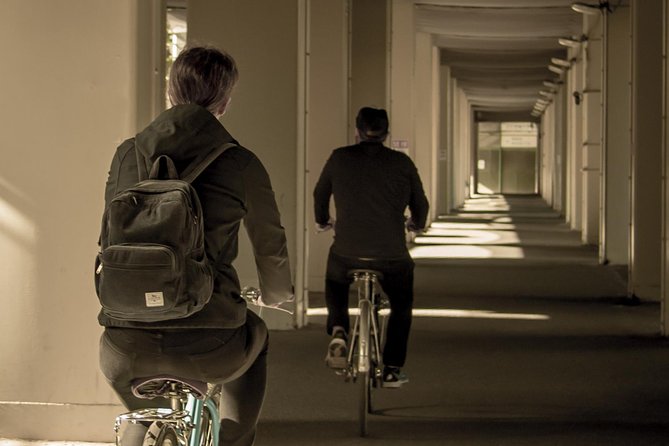
The listed duration is approximately three hours and 30 minutes, but you should budget 3.5 to 4 hours. The end time can shift based on group size, how quickly people eat, cycling speed, and environmental conditions.
That flexible timing is normal for a food-and-cycling outing. A group of eight will take longer to gather, order, eat, and move off than a pair. If you have a train reservation, a theater booking, or a timed attraction immediately afterward, leave a generous buffer.
The tour starts and ends at the Koenji meeting point. Returning to the same place simplifies planning, especially if you want to continue exploring the neighborhood afterward. The location is near public transportation, but the supplied information does not specify a particular station exit or exact walking directions, so check the confirmation details carefully.
The activity is available with a mobile ticket, and confirmation is sent at booking. Free cancellation is available up to 24 hours before the start time. Cancellations or changes inside that window are not accepted for a refund.
Who will enjoy this tour most?
I would recommend it most strongly to people who have already seen, or do not especially care about, Tokyo’s famous sights. It is also a good first-day activity if you want an easy introduction to local customs and a guide who can answer practical questions about the city.
You are a good fit if you:
- Ride a bicycle confidently in urban areas.
- Enjoy small food stops more than formal dining.
- Want local neighborhoods instead of major landmarks.
- Like asking questions about culture and daily routines.
- Can handle a flexible schedule and outdoor weather.
- Are comfortable trying food that may contain meat, seafood, or dashi.
I would be cautious if you want a fast, athletic ride, a fixed menu, grand sightseeing stops, or extensive support for food allergies. The mamachari bicycles are practical and comfortable for an urban outing, but they are not performance bikes. The tour is also not designed for someone who is only technically able to ride but feels unsafe in narrow streets.
Should you book the Tokyo West-Side Cycling and Food Tour?
Book it if you want a human-scale view of Tokyo. The strongest parts are the small group, the quiet west-side route, Andy’s long experience living locally, and the way snacks and lunch turn cultural talk into something concrete.
At $99.49, the value depends on what you want from a tour. For a basic bike rental, it is expensive. For a half-day outing with a bicycle, food, drinks, a guide, neighborhood access, and a maximum of eight people, the price is easier to justify.
My main advice is simple: book this for the streets, conversations, and everyday details, not for famous landmarks. Bring a small backpack, wear comfortable clothing, prepare for possible rain, and leave room in your schedule after the advertised finish time. If that sounds like your kind of Tokyo, this is a smart way to ride beyond the usual visitor route.
FAQ
Where does the Tokyo West-Side Cycling and Food Tour start?
It starts at Koenji Station at 4-chome-48-2 Koenjiminami, Suginami City, Tokyo 166-0003, Japan.
Where does the tour finish?
The activity ends back at the meeting point.
How long does the cycling and food tour last?
The stated duration is approximately three hours and 30 minutes. You should allow about 3.5 to 4 hours because group size, food stops, cycling speed, and weather can affect the finish time.
How far do I need to cycle?
You should be prepared to ride roughly 12 to 15 kilometers, or about 7.5 to 9.5 miles, through narrow streets, potentially crowded areas, and uneven surfaces.
Is the tour suitable for beginners?
Most people can participate, but you need to be competent riding a bicycle in an urban environment. The bikes are Japanese-sized, and riders should be over 140 centimeters tall for a comfortable fit.
Are food and drinks included?
Yes. The experience includes local street food snacks, drinks, and a Japanese-style lunch. Japanese cuisine commonly includes meat, seafood, and dashi, and the local eateries may not be able to meet every dietary requirement or allergy concern.
What happens if the weather is poor?
The activity is outdoors and may be affected by weather. Basic ponchos are provided in rainy conditions, and the ride generally proceeds, but the operator may cancel for poor weather and offer another date or a full refund.
New on our Tokyo list
- From Tokyo: Mount Fuji & Hakone Full Day Private Tour★ 4.9 · 25 reviews
- Tokyo Spectacular View Day-Cruise in 90 Minutes★ 5.0 · 25 reviews
- Real Tokyo Runner Club : Daikoku Car Meet Night Tour with JDM Car★ 5.0 · 25 reviews
- 2.5 Hour-Guided Cycle Tour in the Central Tokyo★ 5.0 · 25 reviews
- Ramen Making from Scratch +Akihabara Tour –Cooking Class★ 5.0 · 25 reviews
- [Self-Drive] Tokyo & Daikoku Custom Car Driving Tour★ 4.9 · 25 reviews
- Tokyo: 2-Hour Night Bike Tour of the City’s Hidden Gems★ 4.9 · 25 reviews
- Tokyo: Mt. Fuji, Owakudani, Hakone Shrine, & Open-Air Museum★ 4.7 · 25 reviews
Tokyo Food Tours, compared.
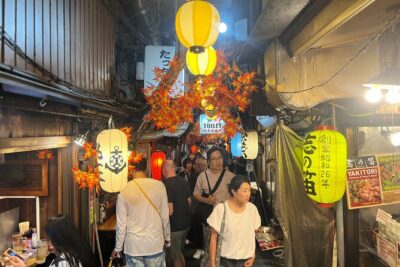
Shinjuku Food Tour (13 Dishes at 4 Local Eateries)
Read our review →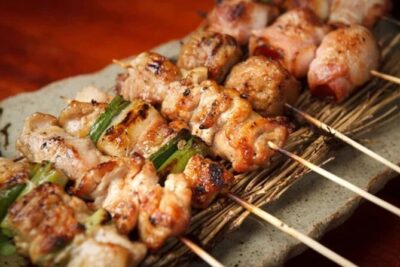
Shinjuku Food Tour (15 Dishes and 4 Eateries)
Read our review →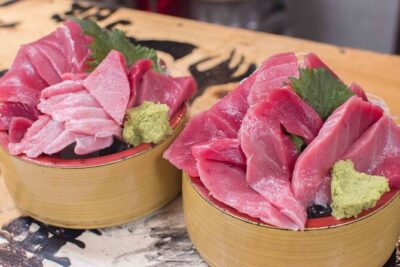
Best of Shinjuku: Izakaya Food Tour (4 Stops, 14+ Tastings)
Read our review →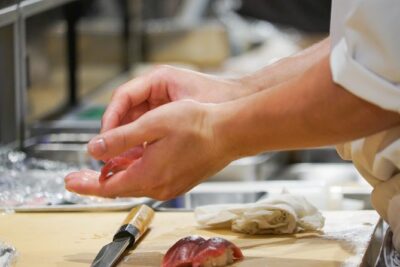
Tokyo Night Foodie Tour in Shinjuku – Seasonal Sushi, Wagyu Beef
Read our review →
Eat and Drink Like a Local: Tokyo Ueno Food Tour-Taverns&Ramen
Read our review →
Tsukiji Fish Market: Street Food & Culture Walking Tour
Read our review →Shinjuku Food Tour – 15 Dishes, 3 Drinks, 4 Eateries
Read our review →Browse the lists this tour appears in