
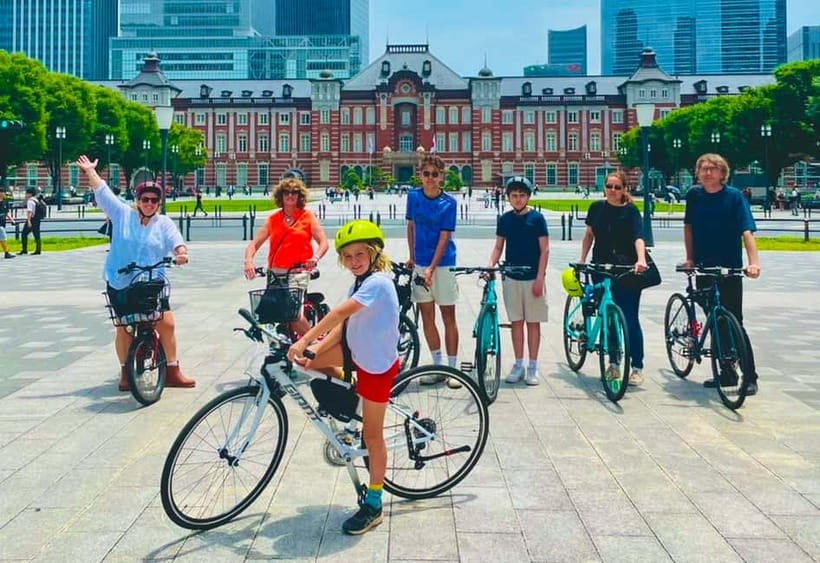
Reviewed · CYCLING TOURS
Tokyo: 3-Hour Bike or E-Bike City Highlights Tour
Tokyo reveals itself differently from a bicycle. In three hours, you can pedal from the Perry statue and Zojo-ji Temple to the Imperial Palace, Aoyama, and Shibuya Crossing, covering far more ground than you could on foot. The route mixes major sights with quieter streets, so you get both the postcard Tokyo and the city between the postcards.
I especially like the wide range of stops, from a temple and palace moat to Tokyo’s youth culture around Cat Street and Shibuya. I also like the friendly guide style. Guides including Naoki, KJ, Atsu, Rinto, and Keiji have been praised for clear English, local stories, safety checks, and useful tips for the rest of your stay.
The main consideration is cycling near traffic. This is not a park-only ride, and you may move between sidewalks and roads. The tour is a good fit if you already ride a bike with confidence. If you lack stamina, choose the e-bike option. Helmets cost an extra ¥1,000 in cash, so bring that money if you want one.
In This Review
- Key points to know before you book
- Starting near the Perry statue in Shiba
- Zojo-ji Temple and the first look at old Tokyo
- Imperial Palace, Tokyo Station, and Ōte-mon Gate
- Akasaka Palace and the Olympic district
- Aoyama, Cat Street, and the city’s younger side
- Shibuya Crossing and the finish at the Bell of Peace
- What the guides add to the ride
- Choosing between a standard bike and an e-bike
- Is $45 a fair price for three hours?
- Safety, fitness, and the real riding conditions
- Who should book this Tokyo bike tour?
- Should you book it?
- FAQ
- Where does the bike tour start?
- Where does the tour finish?
- How long is the activity?
- What kind of bikes are available?
- Is a helmet included?
- Is bike insurance included?
- Is the tour offered in English?
- Can children join the tour?
- What should I bring?
- Can I cancel the booking?
Key points to know before you book
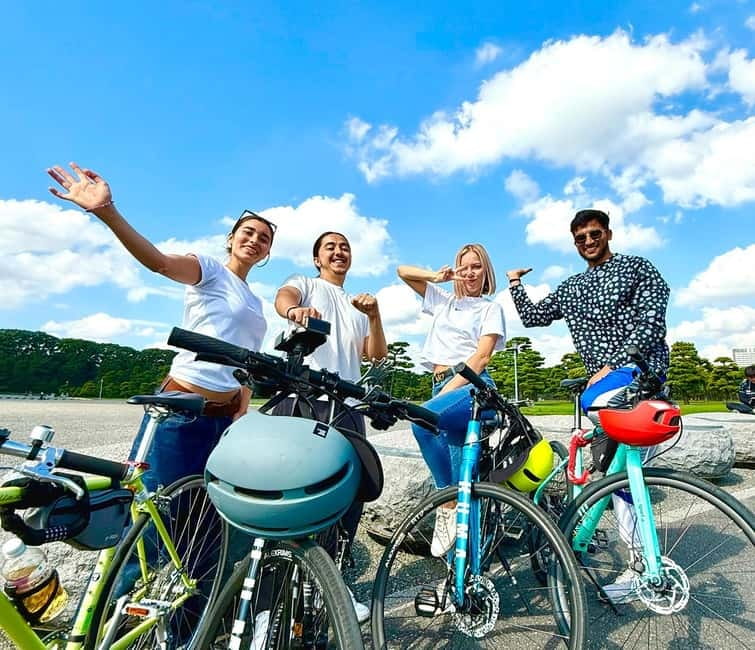
- A broad 15 to 20 kilometer route: You cover a surprising amount of central Tokyo in three hours, with frequent stops for photos and short explanations.
- A strong first-day activity: The ride helps you understand how Tokyo’s central districts fit together before you explore them by train and on foot.
- Two bike choices: Bianchi and Fuji cross bikes suit active riders, while the e-bike is the smarter pick if you do not cycle often.
- Small groups or private rides: Smaller groups make road crossings, questions, and pacing easier.
- Traffic is part of the experience: Guides lead the group carefully, but you need to be comfortable riding around cars and city streets.
- Bring cash for a helmet: Helmets are available on site for ¥1,000 each, and child seats cost ¥3,000 each.
Starting near the Perry statue in Shiba
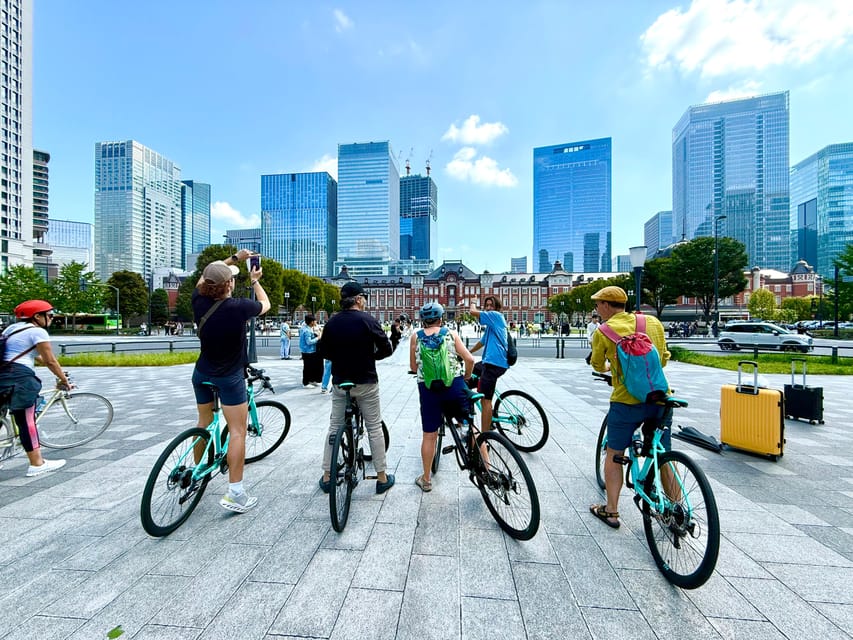
Your meeting point is around the Statue of Commodore Perry, about a three-minute walk from Daimon Station’s A6 exit. This puts you near Shiba Park and Zojo-ji Temple, a useful starting point because the city’s old and new sides appear almost at once.
The first task is getting set up on your bicycle. The standard bikes are quality cross bikes from Bianchi or Fuji. You can request an e-bike option when booking, which I would choose if you rarely ride, dislike hills, or are unsure about handling a long urban route.
The tour lasts three hours, but it is not three hours of nonstop pedaling. Stops are built into the ride, with time for photos, brief visits, questions, and guide commentary. Some riders estimate the route at roughly 15 kilometers, while another describes about 20 kilometers, so the exact distance can vary with the group and route on the day.
The provider includes bike insurance and a small pouch attached to the bike for your phone, wallet, or keys. Comfortable clothing, shoes, and water are sensible. Smoking, alcohol, drugs, and littering are not allowed.
A few more Tokyo bookings worth comparing
- Tokyo Guided Small-Group Biking Tour
★ 5.0 · 1,250 reviews - Tokyo Great Cycling Tour
★ 5.0 · 811 reviews - Tokyo Top Highlights 3h Guided E-bike Tour
★ 5.0 · 714 reviews
Zojo-ji Temple and the first look at old Tokyo
Zojo-ji Temple is the first substantial stop, with about 15 minutes for a visit and guided explanation. The temple is one of the most useful places in Tokyo for seeing how a major religious site fits into a modern city. Its traditional setting near Shiba Park contrasts sharply with the high-rise district around it.
You will not have time for a slow, detailed temple visit. Think of this as an introduction, a chance to see the grounds, take photographs, and hear the basic story before moving on. That short format works well on a city orientation tour, though anyone wanting extended time at the temple should return independently.
From here, the route continues through central Tokyo toward Hibiya Park. The park stop is listed as brief, around three minutes, so expect a quick pause rather than a long walk through the gardens. The value is in the change of scenery and the breathing space between city streets.
Imperial Palace, Tokyo Station, and Ōte-mon Gate
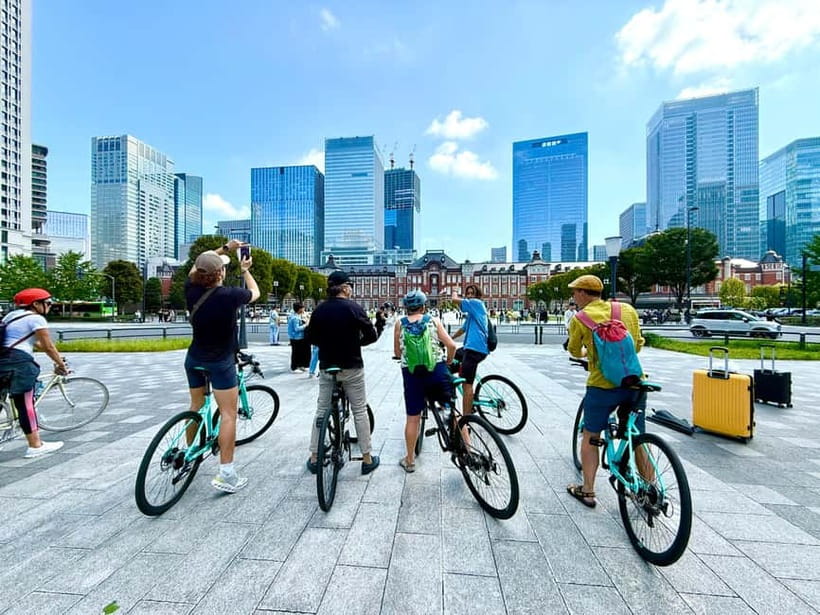
The Imperial Palace area gives the tour its most recognizable central Tokyo views. You get about 15 minutes for a visit, photographs, and guide commentary. The palace grounds are extensive, so this is a look at the area rather than a full palace tour or interior visit.
I find this stop useful because the broad open spaces around the palace feel very different from Shibuya later in the ride. It also gives your guide room to explain how the imperial site relates to Tokyo’s past and present without turning the tour into a long lecture.
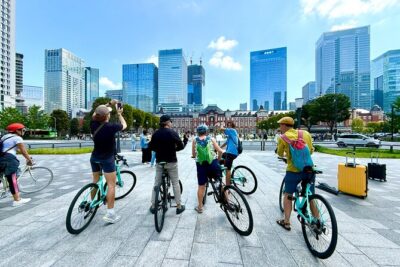
Tokyo Station follows, with about 10 minutes for photographs and sightseeing. Its grand red-brick exterior is one of the city’s best architectural contrasts. Outside, the station area is formal and spacious. Inside, Tokyo’s famous rail system is a maze of movement, shops, and connections. The bicycle stop gives you a quick look without forcing you to navigate the station during a tight schedule.
At Ōte-mon Gate, expect another short five-minute photo stop. The gate adds scale and atmosphere to the palace section, with stonework and traditional defenses set against the office towers of central Tokyo. It is a compact stop, but it helps link the palace grounds to the city around them.
Chidorigafuchi provides about five minutes for a break and photos. The moat and surrounding greenery offer one of the quieter views on the route. Do not expect a long walk or a full garden visit. This stop works as a pause for your legs and camera before the tour heads west.
Akasaka Palace and the Olympic district
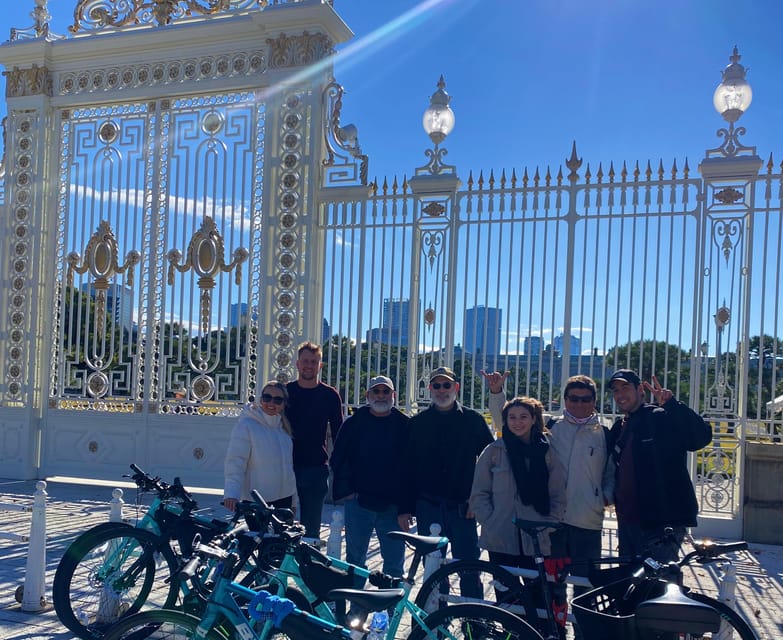
The State Guest House Akasaka Palace is a 10-minute photo stop. Its formal European-style architecture gives you another sharp change in scenery. Tokyo is often presented through shrines, neon, and towers, but this grand government building adds a more formal face to the city.
The route then reaches the New National Stadium for about 10 minutes of sightseeing and photographs. The stadium is tied to Tokyo’s modern sporting identity and gives the ride a strong contemporary landmark. You are seeing the exterior area rather than attending an event, so your expectations should stay focused on the building and its setting.
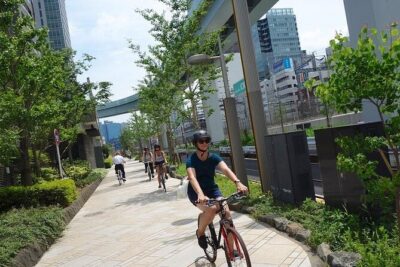
Between these famous sites, the ride may pass through less obvious streets and neighborhoods. That is one of the better reasons to choose a bicycle. On the train, you see stations. On foot, you can explore only a few nearby blocks. By bike, you connect several districts and notice the transitions between them.
There is also a stop described simply as a local spot away from the standard landmarks, with about 15 minutes for a visit and guide explanation. The exact location can vary, so I would not book this expecting one fixed attraction. Its purpose is to show you a side of Tokyo that a standard sightseeing bus often misses.
Same corner of Tokyo, a completely different plan:
- Mt Fuji and Hakone 1-Day Bus Tour Return by Bullet Train
★ 5.0 · 26,383 reviews - 1-Day Tokyo Bus Tour
★ 5.0 · 14,250 reviews - Tokyo: TOKYO SKYTREE® Admission ticket
★ 4.5 · 11,192 reviews - Tokyo: teamLab Planets TOKYO Digital Art Museum Entry Ticket
★ 4.6 · 9,779 reviews
Aoyama, Cat Street, and the city’s younger side
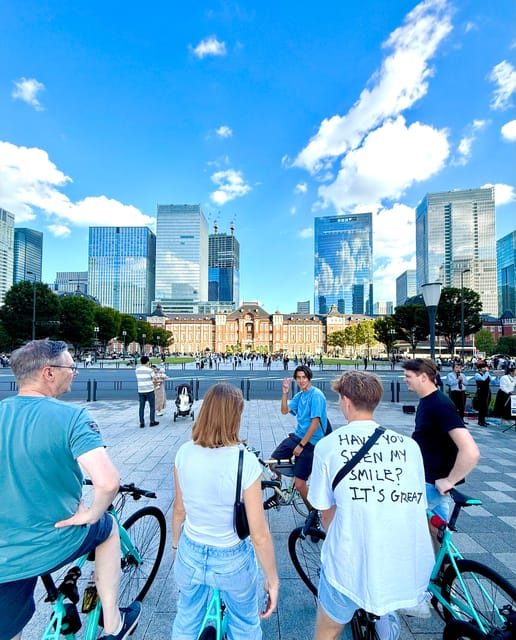
Aoyama St. Grace Cathedral is a quick three-minute photo stop. It is a small visual break rather than a major visit, but it adds another architectural note to the route.
Cat Street receives around five minutes for sightseeing. This area is associated with independent shops, fashion, and Tokyo’s younger street culture. The time is short, so you will not browse it at length or treat it as a shopping excursion. Instead, you get a first look and can mark it for a return visit later.
This is where the route feels more local and current than the palace section. I like that shift. A good Tokyo introduction should not show you only temples and official monuments. It should also help you see how the city spends its free time, shops, meets friends, and expresses style.
The ride may include a quick convenience-store stop. A short break at 7-Eleven has been used for snacks, drinks, and local food recommendations. That small detail can be surprisingly useful, especially on a first day when you are still learning what Japanese convenience stores offer.
Shibuya Crossing and the finish at the Bell of Peace
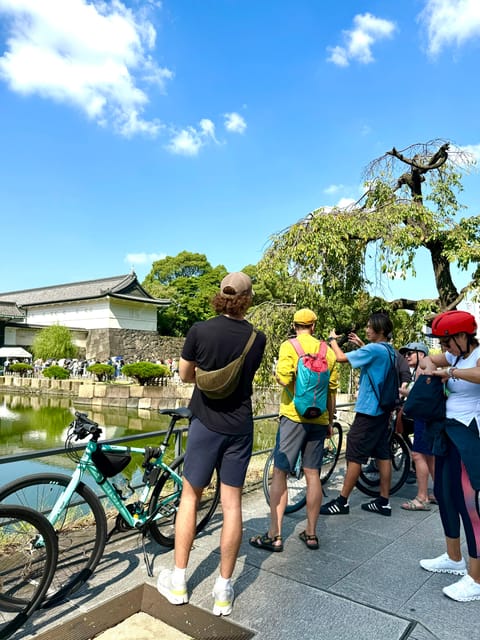
The tour saves one of Tokyo’s biggest visual moments for near the end: Shibuya Crossing. You get roughly 10 minutes for photographs and guide commentary. The crossing is more than a place to take a picture. It is a compact display of Tokyo’s organized crowd movement, giant screens, shops, and electric city energy.
Riding through Shibuya can feel more demanding than the earlier palace roads. The area is crowded, and the tour’s pace may slow as you approach the crossing. One evening ride was especially memorable for its neon-lit view, but timing depends on the departure slot you choose.
Tower Records Shibuya is a quick three-minute photo and sightseeing stop. It points to the area’s music identity and gives the final stretch a bit of pop-culture flavor.
The ride finishes at the Bell of Peace. Since this is not back at the starting point, plan your next move from Shibuya rather than expecting to return to Daimon. The finish is convenient if you want to continue sightseeing, eat, shop, or use Tokyo’s rail network from the west side of the center.
What the guides add to the ride
The guides are a major part of the experience. English and Japanese are offered, and English-speaking guides including Naoki, KJ, Atsu, Kosei, Rinto, Keiji, Tyler, Miguel, and others have led recent departures.
The strongest guide style here is conversational and practical. You should expect stories about the places you see, explanations of local customs, answers to questions, and suggestions for what to do later. Guides have also been praised for taking photographs, checking that riders are comfortable, and keeping groups together.
Do not expect a long academic talk at every stop. One useful description of the experience is that it feels more like a sightseeing ride than a lecture tour. That is a plus if you want motion and orientation, but a drawback if you prefer detailed historical interpretation at each monument.
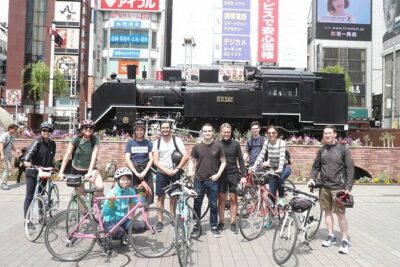
Small groups help. A group of five or six is easier to manage than a large pack, and larger bookings may be split into smaller riding groups. Private and small-group options are available, which can be worth considering for families or friends who want a more relaxed pace.
Choosing between a standard bike and an e-bike
The standard cross bikes are a good choice if you cycle regularly and enjoy covering distance under your own power. They are not described as heavy city cruisers, so you should feel comfortable with a normal bicycle and with changing pace on streets.
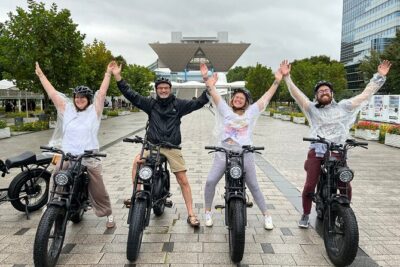
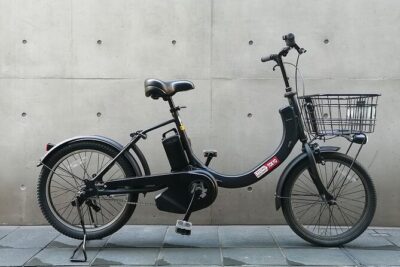
The e-bike is the safer booking choice for occasional riders. Several parts of Tokyo are flat, but the route can include hills, and fatigue matters more than athletic pride when you are riding in traffic. An e-bike also leaves you more energy for listening, taking photographs, and enjoying the final stretch through Shibuya.
One rider reported that one bike had slipping gears while the other three worked well. That sounds like an isolated equipment problem, but it is worth checking your gears and brakes before setting off. Tell the guide right away if something feels wrong.
Helmets are not included. You can get one on site for ¥1,000 per unit in cash. Child seats cost ¥3,000 per unit, though children under 12 are not suitable for this activity, so confirm the age arrangement before booking. Pregnant people, those with back problems, and anyone unable to ride a bike should not join.
Is $45 a fair price for three hours?
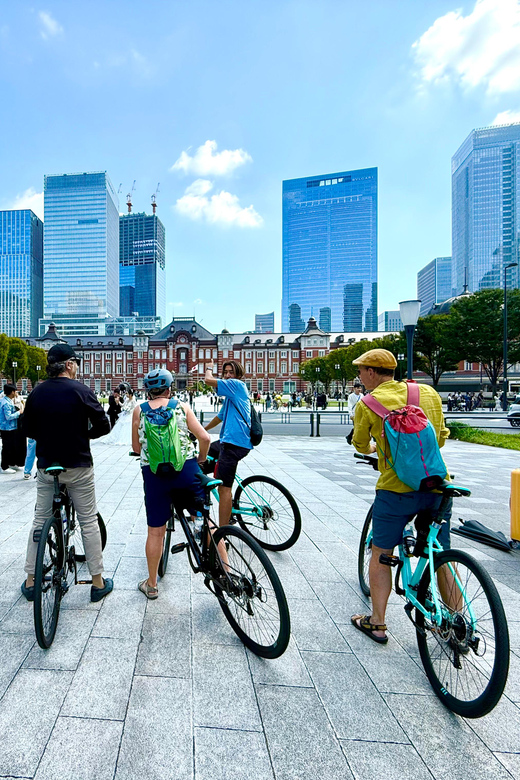
At $45 per person, this is a fair price for a guided three-hour introduction to central Tokyo, especially when you consider the bike, insurance, guide, and the number of districts covered. You are paying for access to a route that would take considerable planning to reproduce on your own.
The value is strongest on your first or second day. You get a working mental map of Shiba, the palace area, Akasaka, Aoyama, and Shibuya. You can then return to the places that interest you instead of guessing how they connect.
The price is less attractive if you want long visits inside temples, museums, or palace buildings. This is an outdoor orientation ride. You pay for breadth, movement, and local guidance, not extended time at one attraction.
Free cancellation up to 24 hours before departure and the option to reserve now and pay later make the booking fairly flexible. Starting times vary, so check availability for your date.
Safety, fitness, and the real riding conditions
Tokyo’s traffic can be lighter than you expect, and the city’s strong public transport system means roads are not always clogged with cars. Still, this is not a traffic-free ride. You may switch between sidewalks and roads, and one rider specifically found the road sections more stressful than expected.
Your guide will lead the group and monitor the pace, but the responsibility is shared. You need to steer, brake, start, stop, and follow instructions confidently. If you are nervous about city cycling, select the e-bike and consider a private or very small group.
Weather matters. The tour has operated in rain, but you should bring suitable clothing. A poncho from FamilyMart or another convenience store is a practical backup. Tokyo’s summer heat can also make three hours feel longer, so carry water and avoid assuming the e-bike removes all physical effort.
Who should book this Tokyo bike tour?
I would recommend it to first-time Tokyo visitors who want a fast orientation, active couples, families with children aged 12 and over, solo visitors who want company, and anyone who enjoys seeing a city at street level.
It also suits groups with mixed fitness if the less-confident riders choose e-bikes. The route moves quickly, but the frequent stops keep it from becoming a race.
I would skip it if you cannot ride confidently, have back problems, are pregnant, or want a slow, indoor cultural tour. I would also think twice if riding beside traffic makes you anxious. Tokyo is easy to explore by train, but this experience asks you to handle a bicycle in a large city.
Should you book it?
Book this tour if you want to get your bearings fast and see how Tokyo’s major areas connect. The mix of Zojo-ji, the Imperial Palace, Tokyo Station, Akasaka, Aoyama, Cat Street, and Shibuya is unusually broad for three hours.
Choose the e-bike if you do not ride often, bring ¥1,000 cash for a helmet, and expect a sightseeing ride with road sections rather than a gentle park cycle. For most active visitors, especially early in a Tokyo stay, the $45 price buys a useful first look at a huge city.
FAQ
Where does the bike tour start?
The meeting point is around the Statue of Commodore Perry, about a three-minute walk from Daimon Station’s A6 exit.
Where does the tour finish?
The tour finishes at the Bell of Peace in the Shibuya area.
How long is the activity?
The bike tour lasts three hours.
What kind of bikes are available?
You can choose a high-quality Bianchi or Fuji cross bike, or select an e-bike option.
Is a helmet included?
No. Helmets are available on site for ¥1,000 per unit, payable in cash.
Is bike insurance included?
Yes. Bike insurance is included in the activity.
Is the tour offered in English?
Yes. English and Japanese are available, with live tour guides.
Can children join the tour?
Children under 12 are not suitable for this activity. Child seats are available for ¥3,000 per unit, but you should confirm suitability when booking.
What should I bring?
Bring comfortable shoes, water, and comfortable clothes. If you want a helmet, bring ¥1,000 per unit in cash.
Can I cancel the booking?
You can cancel up to 24 hours in advance for a full refund. A reserve-now, pay-later option is also available.
More 3-Hour Experiences in Tokyo
- 3h Tokyo E-Bike Tour: Hidden Gems, and Local Life with guide
★ 5.0 · 670 reviews - Tokyo: 3-hour Guided E-Bike Tour of the City’s Hidden Gems
★ 4.8 · 251 reviews - Tokyo: 3-Hour Bike/E-Bike Tour of the City’s Highlights
★ 5.0 · 209 reviews - 3-Hour Tokyo Pub Crawl Nightlife Welcome Guided Tour in Shibuya
★ 5.0 · 209 reviews
New on our Tokyo list
- From Tokyo: Mount Fuji & Hakone Full Day Private Tour★ 4.9 · 25 reviews
- Tokyo Spectacular View Day-Cruise in 90 Minutes★ 5.0 · 25 reviews
- Real Tokyo Runner Club : Daikoku Car Meet Night Tour with JDM Car★ 5.0 · 25 reviews
- 2.5 Hour-Guided Cycle Tour in the Central Tokyo★ 5.0 · 25 reviews
- Ramen Making from Scratch +Akihabara Tour –Cooking Class★ 5.0 · 25 reviews
- [Self-Drive] Tokyo & Daikoku Custom Car Driving Tour★ 4.9 · 25 reviews
- Tokyo: 2-Hour Night Bike Tour of the City’s Hidden Gems★ 4.9 · 25 reviews
- Samurai themed Entertainment show in Shinjuku★ 4.5 · 25 reviews
Cycling Tours, compared.
3h Tokyo E-Bike Tour: Hidden Gems, and Local Life with guide
Read our review →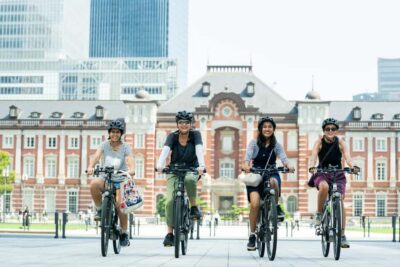
3-hour Guided E-Bike Tour of the City’s Hidden Gems
Read our review →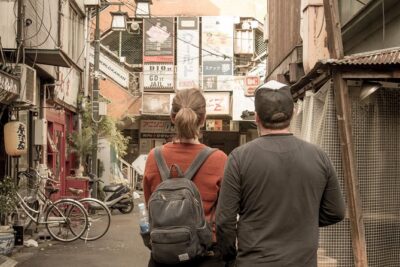
3-Hour Bike/E-Bike Tour of the City’s Highlights
Read our review →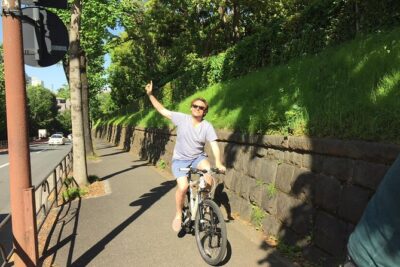
Browse the lists this tour appears in