
Reviewed · DRINKING TOURS
Asakusa: Culture exploring bar visits after history tour
Asakusa’s best stories often make more sense over a drink, and this tour connects the dots nicely. You begin with temples, gates, a river, and old shopping lanes, then move into three local drinking spots for snacks, dinner, and conversation. It is a good way to see the famous sights without stopping at the famous sights alone.
I like the small group of no more than eight, since a guide can explain details and answer questions without shouting across a crowd. I also like that the food and drinks are built into the price, including roughly 3 to 4 drinks and 3 to 4 dishes. The main consideration is the cost: at $156.07 per person, this is not a cheap walking tour, so you should want both the sightseeing and the evening meal.
In This Review
- Key points to know before booking
- Why this Asakusa tour works
- Starting beside the Sumida River
- Getting the big picture from the Culture Tourist Information Center
- Kaminarimon, Nakamise, and the approach to Sensoji
- Understanding the gates and Sensoji Temple
- The shared religious setting at Asakusa Shrine
- From temple grounds to Asakusa’s old entertainment quarter
- Hoppy Street and the first izakaya stop
- Kamiya Bar and a slice of Tokyo drinking history
- Learning about sake at the final izakaya
- What you get for $156.07
- Timing, meeting point, and practical details
- Who should book this experience
- Should you book the Asakusa culture and bar tour?
- FAQ
- How long does the Asakusa tour last?
- Where does the tour start?
- What food and drinks are included?
- How many people can join the tour?
- Does the tour include hotel pickup and drop-off?
- What happens if bad weather cancels the experience?
Key points to know before booking
- Three drinking stops make this more than a temple walk: You visit Hoppy Street, the historic Kamiya Bar, and a sake-focused izakaya.
- The included food counts as dinner: Expect about 3 to 4 drinks and 3 to 4 dishes during the four-hour outing.
- The route covers Asakusa’s major sights: Sumida Park, Kaminarimon, Nakamise, Hozomon, Sensoji Temple, and Asakusa Shrine all appear early on.
- A group of eight keeps the experience personal: You get a better chance to ask about Japanese religion, food, and local customs.
- The 3 pm start is well chosen: You see Asakusa in the afternoon and reach its bar streets as the evening begins.
- You finish where you started: There is no hotel pickup, but the activity begins and ends at the Burger King near Asakusa Azumabashi.
Why this Asakusa tour works
Many Asakusa walks stop at Sensoji Temple, take a few photographs, and call it a day. This experience gives the district a second act. After the temple grounds, you move toward Rokku and Hoppy Street, where Asakusa’s older entertainment and drinking culture comes into view.
That change of mood is the real appeal. The first half helps you understand what you are seeing. The second half lets you sit down, eat, drink, and talk about it. You are not simply ticking off Kaminarimon and Sensoji. You are also seeing how the neighborhood functions after the daytime sightseeing crowds thin out.
The pace is easy to understand. Each sightseeing stop is planned for about 15 minutes, while each bar visit lasts about 40 minutes. That gives you enough time for a proper explanation at the landmarks, followed by relaxed time at the tables.
The tour lasts about four hours and starts at 3 pm. That timing means you should eat only a light lunch, if any, before meeting the group. The food served during the evening is intended to make up a full dinner.
More Asakusa visits:
- Tokyo: Japanese Dance Cabaret Theater Asakusa-Kaguwa Ticket
★ 4.8 · 2,270 reviews - Tokyo: Meiji Shrine, Asakusa, Skytree Bus Tour and Cruise
★ 4.7 · 1,986 reviews - Tokyo: Roll and Authentic Sushi Making Class in Asakusa
★ 4.9 · 1,957 reviews
Starting beside the Sumida River
The first stop is Sumida Park, near the river that has long shaped this part of Tokyo. The guide explains the connection between the river and the origin story of Sensoji, which reaches back about 1,400 years.
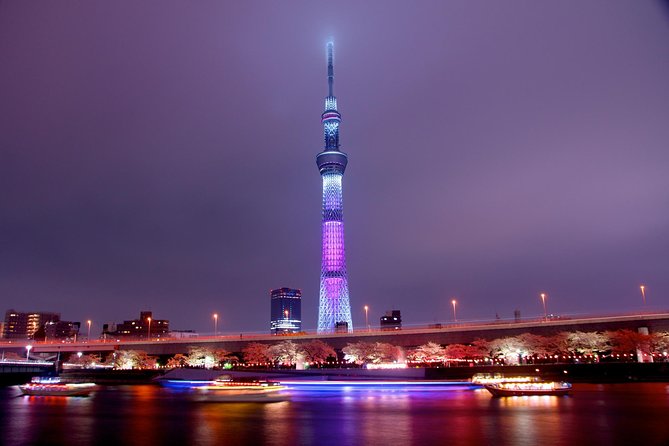
This is a useful beginning because Asakusa can feel like a collection of disconnected sights. The river gives the neighborhood a clear starting point. You also get views toward Tokyo Skytree, one of the district’s most recognizable modern landmarks.
You spend about 15 minutes here. That is enough for orientation and photos, but not a long riverside stroll. If you want extensive time along the water, you will need to return on your own.
Getting the big picture from the Culture Tourist Information Center
Next, the group walks to the Asakusa Culture Tourist Information Center. The building provides a high viewpoint over the neighborhood, the river, and Tokyo Skytree.
I like this stop because it gives you a map in physical form. Before walking into the busy temple approach, you can see how the streets fit together. The building was designed by a well-known Japanese architect, adding an architectural note to the visit.
The stop lasts about 15 minutes and admission is free. It is brief, but valuable early in the tour. You will have a clearer sense of direction as you move from the river toward the temple.
Kaminarimon, Nakamise, and the approach to Sensoji
Kaminarimon, or Thunder Gate, is one of Asakusa’s unmistakable sights. The large red lantern hangs beneath the gate, marking the entrance to the Buddhist temple and Shinto shrine area.
Your guide uses the gate to explain the religious setting rather than treating it as a simple photo stop. The distinction matters, since Sensoji is a Buddhist temple and Asakusa Shrine next door belongs to Shinto, Japan’s indigenous religion.
From Kaminarimon, you walk along Nakamise Shopping Street. The street leads toward Sensoji and is lined with shops, food stalls, and souvenirs. Its friendly commercial feel can surprise you if you expect a quiet, solemn approach to a religious site.
That contrast is worth noticing. Worship, shopping, snacks, and sightseeing have shared this approach for a long time. The tour gives you a chance to ask about that mix while you walk, instead of trying to work it out from signs and guidebooks.
Nakamise is also one place where the 15-minute timing can feel short. The street invites browsing, but shopping is not the purpose of this outing. If you want souvenirs or local sweets, note what catches your eye and return later.
A few more Tokyo bookings worth comparing
- Tokyo Bar Hopping Tour in Shinjuku (All-You-Can-Drink + Dinner)
★ 5.0 · 3,587 reviews - Best of Shinjuku: Izakaya Food Tour (4 Stops, 14+ Tastings)
★ 5.0 · 1,863 reviews - Tokyo: Shinjuku Local Bar and Izakaya Guided Walking Tour
★ 4.9 · 1,794 reviews - Shibuya Meltdown Nightlife Tour: All-You-Can-Drink Bar Hopping
★ 5.0 · 1,058 reviews
Understanding the gates and Sensoji Temple
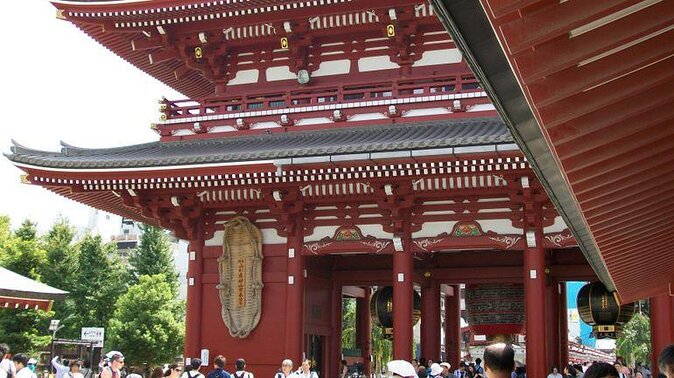
Hozomon is the inner gate leading toward Sensoji. It is a two-story structure, with Buddhist treasures housed on the upper level. Together, Kaminarimon and Hozomon frame the approach to Tokyo’s oldest temple.
Sensoji receives the main explanation from the guide. You learn why it is such an important stop in Tokyo and how its story ties back to the Sumida River. The guide’s role matters here. Without context, the temple can become another impressive building in a camera-heavy crowd. With context, the gates, lanterns, and approach have a clearer purpose.
The sightseeing stops are free, which helps keep the focus on the guide rather than admission lines. You should still expect a public religious site, not a private or quiet museum visit. The schedule allows around 15 minutes at each landmark, so this is an introduction rather than a detailed study of every building and object.
The shared religious setting at Asakusa Shrine
Asakusa Shrine sits beside Sensoji Temple. This is one of the most interesting details on the route because two distinct Japanese religious traditions occupy the same famous complex.
The guide explains how a Buddhist temple and a Shinto shrine can exist side by side. For many first-time visitors, that relationship is not obvious. It is one of the moments when a short explanation adds much more value than another photograph.
Again, the stop lasts about 15 minutes. You will see the shrine and hear the key points, but you should not expect a long ceremony or an in-depth religious lecture. The strength here is the connection between the physical site and the wider culture.
From temple grounds to Asakusa’s old entertainment quarter
After Sensoji and Asakusa Shrine, the route shifts into Asakusa Demboin-dori and the Rokku area. This was Asakusa’s traditional entertainment district, and the streets offer a different view of the neighborhood than the temple approach.
The walk is described as a passage from the Meiji period into the present. You get a sense of older Asakusa beyond the main religious landmarks, with the guide pointing out how the area has changed while keeping its traditional character.
This section helps prevent the tour from feeling like a standard temple circuit. You move through an area that is still active but less dominated by the major sightseeing gates. It also prepares you for the evening portion, when food and drink become the focus.
Hoppy Street and the first izakaya stop
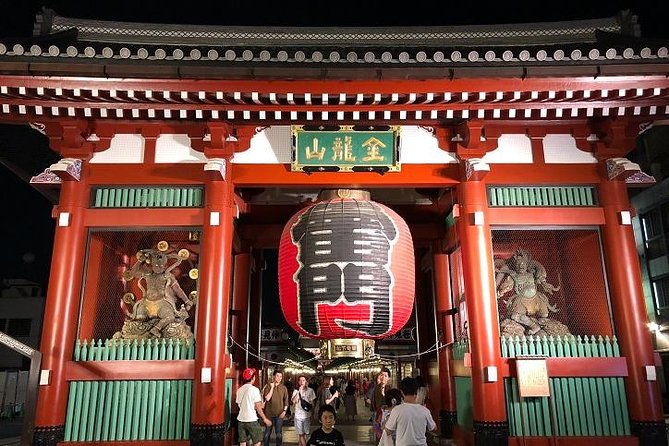
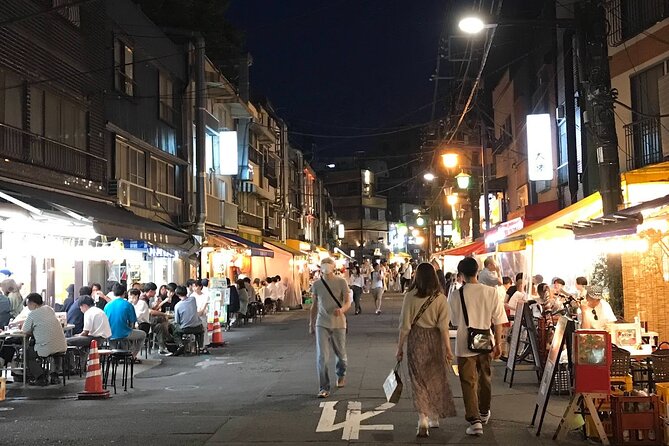
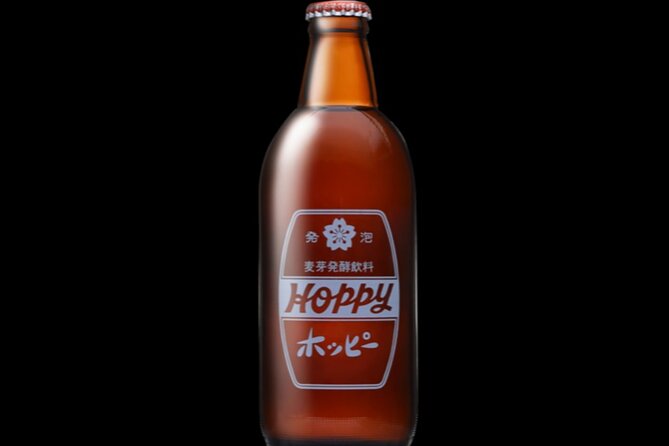
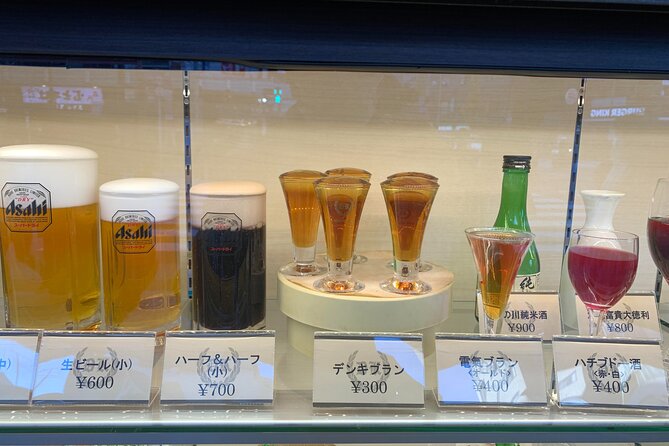
The first drinking stop is Hoppy Street, an approximately 80-meter lane lined with izakayas. Lanterns and outdoor seating give the street its recognizable character. The establishments open day and night, but the atmosphere changes as the evening gets going.
You spend about 40 minutes here. The setting is informal and social, with the street itself forming part of the experience. An izakaya is not simply a bar and not quite a formal restaurant. It is a place to order drinks with small dishes, sit with friends, and let the meal develop gradually.
Your included drinks and food are served across the three evening stops. You should expect local-style dishes rather than a single plated dinner. The exact menu is not specified, so tell the guide about any dietary concerns before ordering, if possible.
Hoppy Street is a strong choice for the first stop because it gives you an immediate feel for Asakusa’s nightlife. The drawback is that an outdoor drinking street may not suit everyone, especially in poor weather. The activity itself requires good weather and may be rescheduled or canceled if conditions are unsuitable.
Kamiya Bar and a slice of Tokyo drinking history
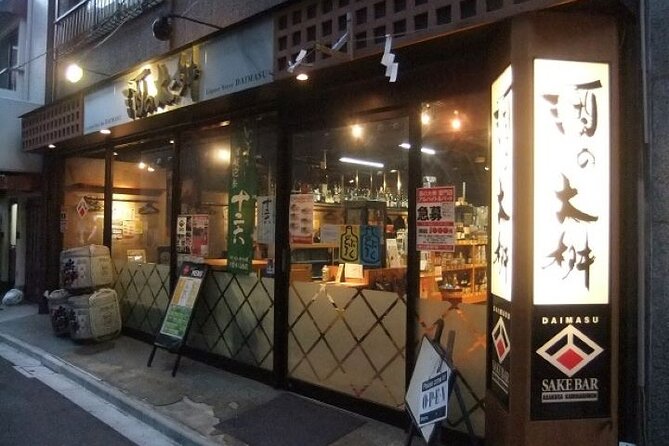
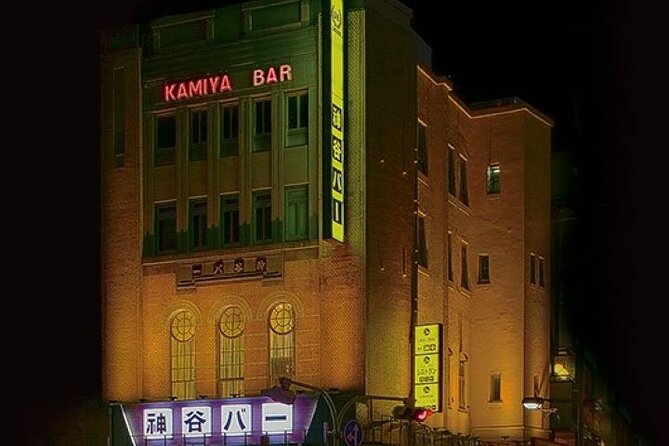
The second stop is Kamiya Bar, established in 1880 and described as Japan’s oldest Western-style bar. Despite its name, it is not simply a modern cocktail lounge. Its long history gives the stop a clear place in Asakusa’s social story.
You have about 40 minutes here. That is enough time to try a drink, eat another dish, and hear why this place matters. The historic setting also breaks up the more casual mood of Hoppy Street.
This stop is especially useful if you care about old Tokyo institutions. You are not just moving from one anonymous bar to another. Each place has a different identity, and Kamiya Bar adds a link between Japanese drinking culture and Western-style bar traditions.
The tour is not designed for heavy drinking. The included amount averages 3 to 4 drinks in total, spread across the evening, along with 3 to 4 dishes. Pace yourself and remember that the value is in the food, stories, and variety of places, not in maximizing alcohol.
Learning about sake at the final izakaya
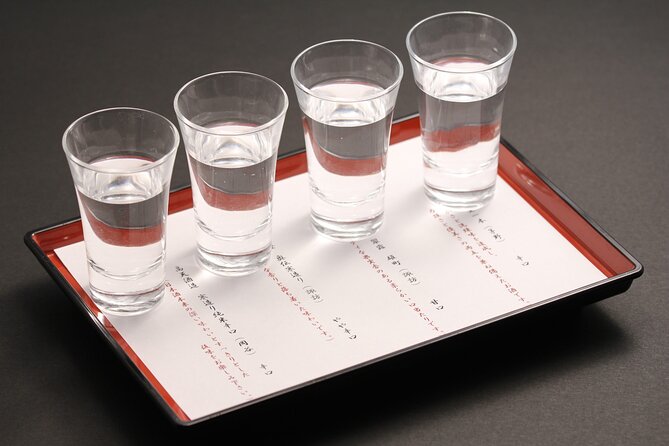
The last stop specializes in sake and carries many varieties. This is where the tour moves from casual sampling to a more focused introduction to one of Japan’s best-known drinks.
The guide explains why sake developed in Japan and discusses the ingredients that shape it. The available information does not promise a formal tasting flight or a particular number of labels, so think of this as a practical conversation over drinks rather than a technical course.
For first-time sake drinkers, that approach can be more useful than a lecture. You can ask questions while trying a serving and connect the explanation to what is in your glass. If you already know sake well, you may find the introduction basic, but the range of available varieties still adds interest.
This final 40-minute stop also gives the evening a natural finish. You have moved from Asakusa’s temples and river stories to the neighborhood’s food and drink traditions, then return to the meeting point after the last stop.
What you get for $156.07
The price is $156.07 per person, which puts this firmly above a simple guided walk. The value depends on how you would otherwise spend an afternoon and evening in Asakusa.
The sightseeing itself takes in free public landmarks. You are paying for the guide, the small-group format, the organization of three separate drinking stops, and the included dinner. With 3 to 4 drinks and 3 to 4 dishes included, you are not adding a restaurant bill on top of the tour price.
I consider the cost easier to justify if you want an introduction to Japanese food and drinking customs. It is less attractive if you plan to visit the temples independently and already have a firm list of restaurants and bars.
Group discounts are available, which may improve the value for families or friends booking together. The group maximum is eight, so the experience should feel more manageable than a large coach outing. Still, you should compare the price with your own expected spending on a four-hour walking tour, dinner, and several drinks.
Timing, meeting point, and practical details
You meet at the Burger King Asakusa Azumabashi, at the listed location in Taito City near Kaminarimon. The start time is 3 pm, and the activity ends back at the meeting point.
There is no hotel pickup or drop-off. You need to make your own way to the start and return to your accommodation afterward. The meeting point is near public transportation, which makes the beginning practical, but check the full address carefully when booking because the listing includes a detailed building and street address.
Most people can take part, and service animals are allowed. The tour includes several walks and about four hours of activity, so you should be comfortable moving between the river, temple district, entertainment streets, and bars.
Confirmation is normally provided at booking. If you book within five days of the start date, confirmation can take up to 48 hours and depends on availability. You can cancel for a full refund up to 24 hours before the local start time. A weather cancellation or a cancellation caused by too few participants results in a choice of another date or a full refund.
Who should book this experience
I would choose this tour if you are visiting Tokyo for the first time and want Asakusa explained by a local rather than viewed from a phone screen. It suits curious eaters, history fans, and anyone who wants an evening introduction to izakaya culture without having to pick three places alone.
It also fits solo visitors and couples who like conversation. With no more than eight people, the guide has a better chance to explain details and keep the group together. A friendly, conversational guide is a major part of the appeal, especially during the bar visits.
You may want a different plan if you dislike alcohol, need a quiet temple tour, or prefer to choose every dish yourself. The food and drinks are included, but the exact dishes are not set out in advance. This is a social group experience, not a private culinary lesson.
Should you book the Asakusa culture and bar tour?
Book it if you want one organized afternoon that combines Tokyo landmarks, local religious context, old entertainment streets, and dinner with drinks. The strongest feature is the progression from Sensoji and Asakusa Shrine to Hoppy Street, Kamiya Bar, and a sake-focused izakaya.
At $156.07, it is a considered purchase, not a bargain walk. I think it earns that price for visitors who value a small group, a guide-led introduction, and a full meal spread over three distinctive stops. If you already know Asakusa’s temples and drinking scene, you may get better value exploring on your own.
FAQ
How long does the Asakusa tour last?
The experience lasts approximately four hours, beginning at 3 pm and ending back at the meeting point.
Where does the tour start?
It starts at the Burger King Asakusa Azumabashi in Taito City, near Kaminarimon. The detailed meeting address is provided with the booking information.
What food and drinks are included?
Dinner is included. You receive an average of 3 to 4 drinks and 3 to 4 dishes, which is intended to provide a full dinner meal.
How many people can join the tour?
The maximum group size is eight travelers.
Does the tour include hotel pickup and drop-off?
No. Hotel pickup and drop-off are not included. You meet at the stated starting point and return there at the end.
What happens if bad weather cancels the experience?
If poor weather causes a cancellation, you are offered a different date or a full refund. The experience also requires a minimum number of participants, with the same options if that minimum is not met.
More Historical Tours in Tokyo
- Tokyo: Imperial Palace and Shogun Historical Walking Tour
★ 5.0 · 2,251 reviews - Tokyo: Imperial Palace Japanese History Walking Tour
★ 4.9 · 987 reviews - Tokyo: Shinjuku Historical Walking Tour & Secret Backstreets
★ 5.0 · 530 reviews - Yanaka Walking Tour: Historic and Traditional District of Tokyo
★ 5.0 · 530 reviews
New on our Tokyo list
- Sumi-e Experience in a relaxing green tea shop in Tokyo★ 5.0 · 3 reviews
- Tokyo : Kamikaze Street Drift Ride★ 5.0 · 3 reviews
- Private Zen Meditation in English in Shinjuku, Tokyo★ 5.0 · 3 reviews
- Onsen Spa in Tokyo and Asakusa Bar Hopping with Local Guide★ 5.0 · 3 reviews
- Easy for everyone! Now you can play handmade mini shamisen and show off to everyone! Musical instruments, sweets and live music★ 5.0 · 3 reviews
- Tokyo: Private Tsukiji Street Food & Sake with Local Guide★ 5.0 · 3 reviews
- Mt Fuji Exploration Tour with Free Japanese Kusa Mochi from Tokyo★ 4.5 · 3 reviews
- Tokyo Tsukiji Fish Market Walking and Exploring Hidden Gems Tour★ 5.0 · 3 reviews
Drinking Tours, compared.
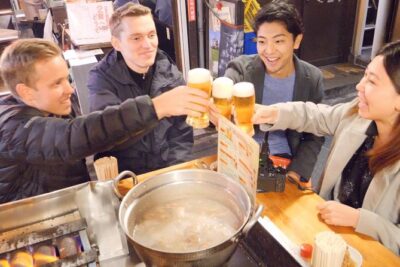
Tokyo Bar Hopping Tour in Shinjuku (All-You-Can-Drink + Dinner)
Read our review →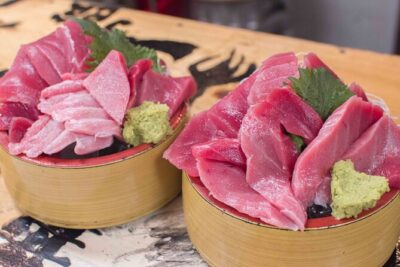
Best of Shinjuku: Izakaya Food Tour (4 Stops, 14+ Tastings)
Read our review →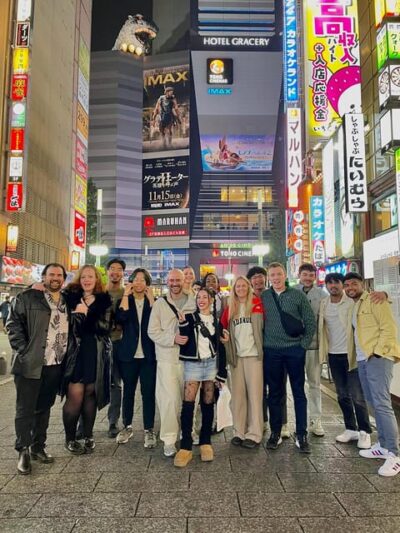
Shinjuku Local Bar and Izakaya Guided Walking Tour
Read our review →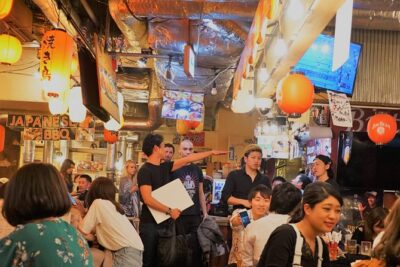
Shibuya Meltdown Nightlife Tour: All-You-Can-Drink Bar Hopping
Read our review →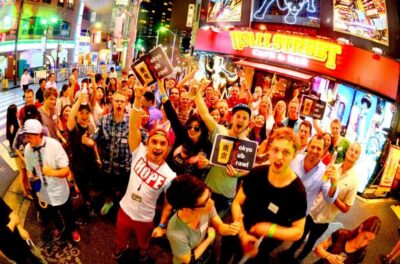

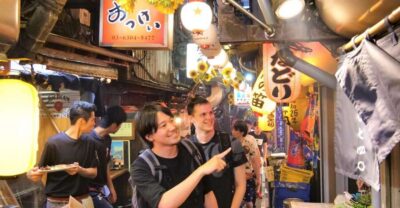
Shinjuku Bar Hopping with All-You-Can-Drink & Dinner
Read our review →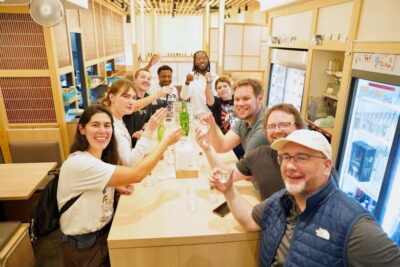
Browse the lists this tour appears in