
Reviewed · HISTORICAL TOURS
Kyoto: Nijo Castle World Heritage Guided Tour with Admission
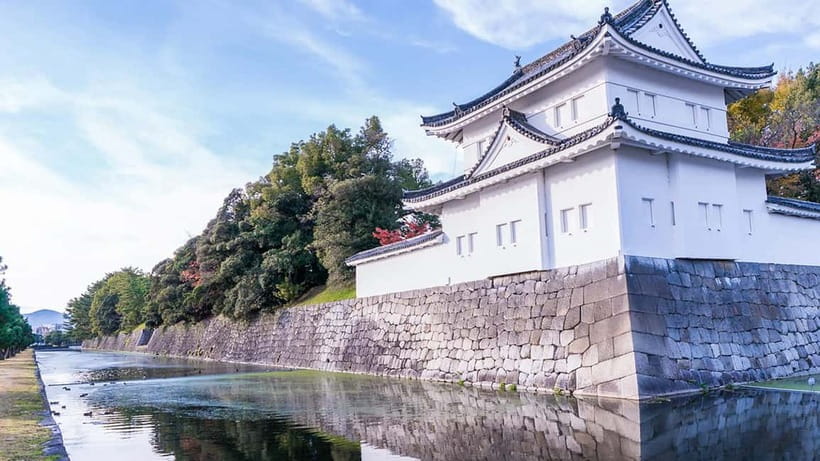
Nijo Castle tells a remarkable story of power without a battlefield. The Tokugawa shoguns built this lavish Kyoto residence beside the Emperor’s home to make one point clear: the military rulers controlled Japan, even in the imperial capital. The final chapter took place here too, when Tokugawa Yoshinobu returned authority to the Emperor in 1867.
I like the small group of up to 10 people, which gives you room to ask questions instead of trailing behind a flag. I also like the way the tour ties the palace details to politics: floor height, room size, gates, and decoration all carried a message. The main consideration is time. Ninety minutes gives you a focused introduction, but Nijo Castle is large enough that you may want extra time afterward for the gardens.
In This Review
- Key points to know before booking
- Why Nijo Castle is more than a pretty Kyoto stop
- A 90-minute route with a clear story
- The gates and courtyards make a political argument
- Ninomaru Palace and the famous chirping floors
- The room where the Shogunate ended
- Gardens, moats, and koi carp
- What the small group changes
- Is $40 a fair price?
- Practical details that affect your visit
- Who should book this Nijo Castle tour?
- FAQ
- Where does the tour meet?
- How long does the activity last?
- Is admission to Nijo Castle included?
- What language is the tour conducted in?
- How large is the group?
- Do visitors need to remove their shoes?
- Is the tour wheelchair accessible?
Key points to know before booking
- The castle was built for display as much as defense: Its gates, corridors, and grand rooms were designed to impress and control visitors.
- The Ninomaru Palace visit is the heart of the tour: You’ll remove your shoes and walk across the famous nightingale floors.
- The end of the Shogunate happened here: The guide explains how Yoshinobu returned power to the Emperor in 1867.
- The group stays intimate: Up to 10 participants makes it easier to hear the guide and ask follow-up questions.
- Several guides receive especially warm praise: Nao, Naoya, Uta, Benjamin, and Alexander are named as friendly English-speaking guides.
- The grounds add a calmer contrast: Moats, gardens, and colorful koi carp soften the palace’s stern political message.
Why Nijo Castle is more than a pretty Kyoto stop
Many Kyoto sights ask you to admire beauty. Nijo Castle asks you to read power.
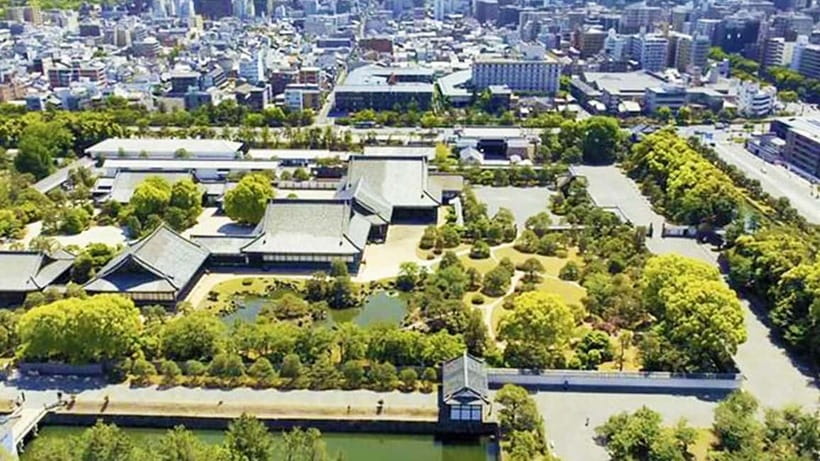
Tokugawa Ieyasu ordered the castle built in 1603, shortly after becoming shogun. The Tokugawa family ruled from Edo, now Tokyo, but Kyoto remained the Emperor’s city. Building a grand palace here, close to the imperial residence, was a public display of authority.
That is what makes a guided visit useful. Without context, you might see ornate rooms, painted panels, wide courtyards, and gardens. With a guide, those same features become political tools. The castle was built to make visitors feel watched, ranked, and slightly overawed.
I find this more interesting than a simple castle tour focused on battles and walls. Nijo Castle was not mainly about surviving an attack. It was about making the shogun’s power impossible to ignore.
The tour begins outside Exit 1 of Nijōjō-mae Station. That is a handy meeting point because you do not need to search through the castle grounds for the guide. Look for the person holding a Local Guide Stars sign.
A few more Tokyo bookings worth comparing
- Tokyo: Imperial Palace and Shogun Historical Walking Tour
★ 5.0 · 2,251 reviews - Tokyo: Imperial Palace Japanese History Walking Tour
★ 4.9 · 987 reviews - Tokyo: Shinjuku Historical Walking Tour & Secret Backstreets
★ 5.0 · 530 reviews
A 90-minute route with a clear story
The official tour lasts about 90 minutes. The walking portion inside the castle is listed as about one hour, with the rest used for meeting, orientation, and moving through the site.
That length works well if you have a busy Kyoto schedule. You get the main historical story without giving up half a day. It also means the guide needs to keep the pace moving. You should expect a focused visit rather than a slow, detailed examination of every garden path and building.
The route returns to the Nijōjō-mae Station area. That makes it easy to continue sightseeing afterward, though the exact end point is at Nijo Castle and the station meeting area rather than a separate neighborhood stop.
The group limit matters here. With no more than 10 people, you can usually stay close enough to hear the English commentary. You also have a better chance to ask about details that catch your eye, including Japanese customs, palace design, or the castle’s role in the Meiji Restoration.
The gates and courtyards make a political argument
As you enter, pay attention to the scale and sequence of the spaces. Nijo Castle leads you through gates, courtyards, and corridors in a way that gradually increases the sense of ceremony.
The design was not random. Each transition helped place the visitor in a lower position. You did not simply walk into the shogun’s rooms. You approached through controlled spaces, passed through layers of access, and waited to be admitted farther inside.
Your guide explains how these details worked as silent control. A powerful visitor might not be physically threatened, but the setting made the hierarchy clear. The castle communicated that the shogun was in charge before anyone spoke.
I like this part of the tour because it gives you something specific to look for. Instead of walking through a beautiful compound and trying to remember names, you begin noticing how the route directs your feelings.
The moats and gardens provide a different mood. Colorful koi carp move through the water, and the garden views offer some of the most photogenic moments of the visit. The grounds are attractive, but the guide keeps them tied to the larger story rather than treating them as decoration alone.
Ninomaru Palace and the famous chirping floors
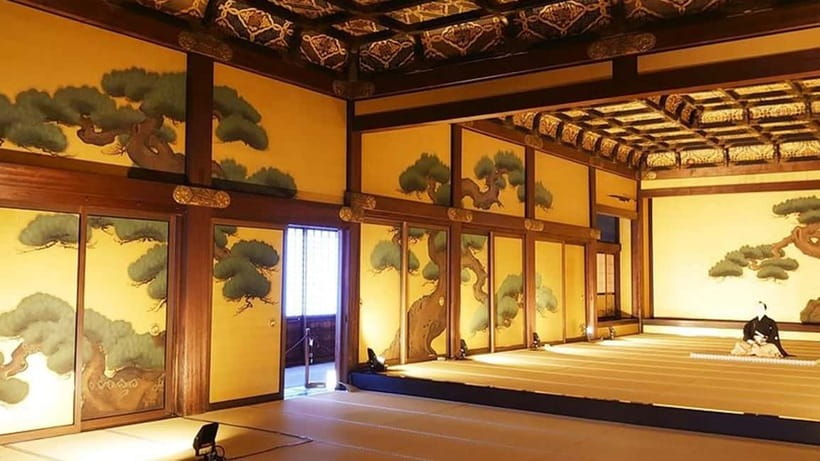
Ninomaru Palace is the essential stop. You remove your shoes before entering, so wear socks you are comfortable walking in. The palace is mostly on flat terrain, and the activity is listed as wheelchair accessible, but the shoe-removal rule is important for anyone planning mobility arrangements.
Inside, the palace rooms reveal a strict social order. Room size, floor height, decoration, and position within the palace all reflected rank. The closer a person came to the shogun, the more carefully the space communicated status and permission.
Then come the nightingale floors. As you walk, the floorboards make a soft chirping sound. They were designed to warn residents of movement in the corridors and help expose intruders.
The sound is one of those details that is easy to remember long after the tour. It also connects the palace to everyday security. Nijo Castle was built to impress, but it was not careless. Even the floorboards helped protect the ruler.
The layered corridors add another clever touch. You may feel that you are moving through a maze of passages and controlled entrances. That confusion was useful. It made it difficult to move freely and gave those inside the palace greater control over who could approach the shogun.
A guide can point out details you might otherwise pass without noticing. Nao is praised for explaining the castle in depth and answering questions. Naoya is described as combining cultural background with practical explanations, including less obvious parts of the castle. Uta is noted for adding information about local customs and culture.
Same corner of Tokyo, a completely different plan:
- Mt Fuji and Hakone 1-Day Bus Tour Return by Bullet Train
★ 5.0 · 26,383 reviews - 1-Day Tokyo Bus Tour
★ 5.0 · 14,250 reviews - Tokyo: TOKYO SKYTREE® Admission ticket
★ 4.5 · 11,192 reviews - Tokyo: teamLab Planets TOKYO Digital Art Museum Entry Ticket
★ 4.6 · 9,779 reviews
The room where the Shogunate ended
The strongest historical moment comes in the room associated with Tokugawa Yoshinobu’s decision in 1867.
After more than 260 years of Tokugawa rule, Yoshinobu returned governing authority to the Emperor. That event helped bring the Shogunate to an end and opened the way for the Meiji Restoration.
The setting gives the story extra force. This was not an abstract change discussed somewhere far away. You are standing in the palace where the transfer of authority took place. The same building that once advertised shogun power became the setting for that power’s surrender.
Your guide connects the room to the larger rivalry between the military government and the imperial court. That context helps explain why Nijo Castle mattered so much. It was close to the Emperor’s residence because proximity itself sent a message. The shogun did not need to occupy the imperial palace to make his authority visible.
I appreciate that the tour focuses on this political turning point rather than presenting the castle as a collection of old rooms. You leave with a simple, memorable framework: the Tokugawa family built Nijo Castle to assert control in Kyoto, and Yoshinobu later used it to hand control back.
Gardens, moats, and koi carp
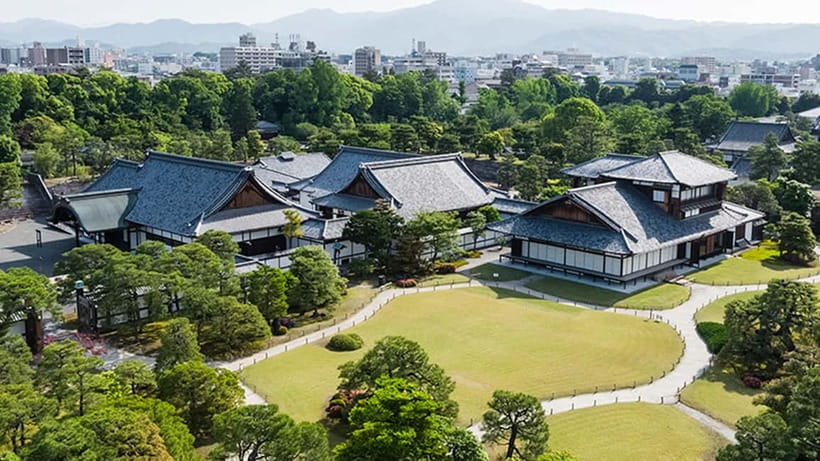
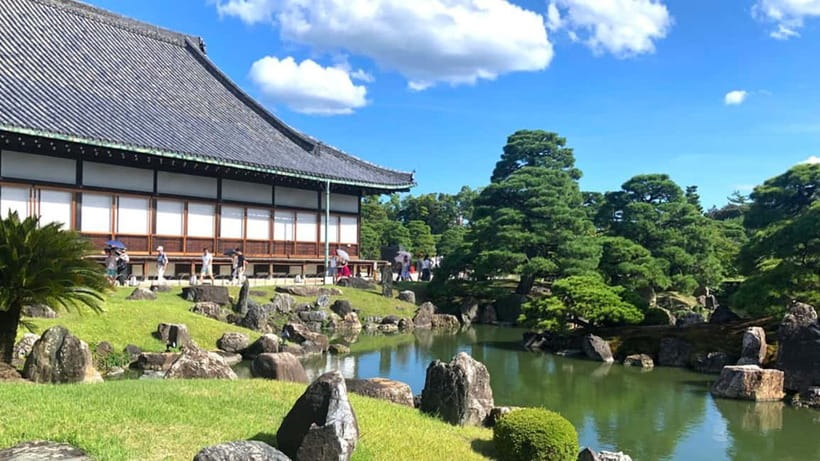
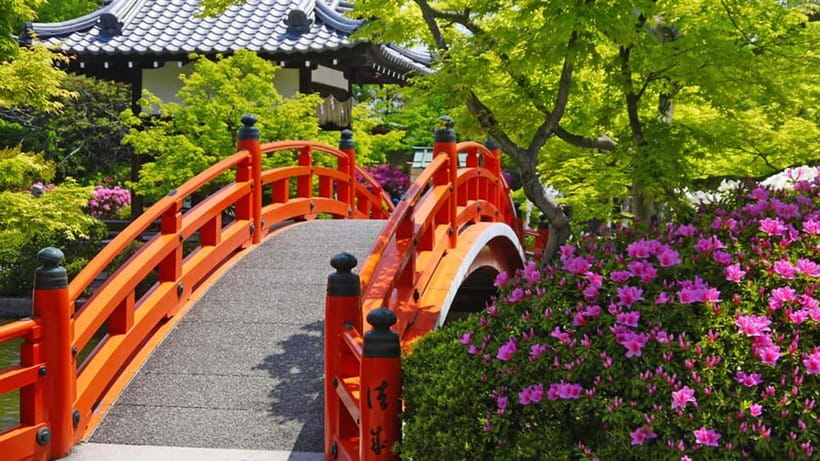
The gardens are a welcome change after the formal palace interiors. Here, the mood becomes quieter and more open. Moats frame the castle grounds, and colorful koi carp move through the water.
If you like taking photographs, allow a little attention for these outdoor sections. The garden views provide a softer side of Nijo Castle and make the visit feel less like a political history lesson.
Still, do not expect the garden portion to be the main focus of this particular tour. The strongest emphasis is on the palace, the shoguns, the Emperor, and the end of the Shogunate. If gardens are your main reason for visiting, you may want to stay after the guided walk and explore at your own pace.
The grounds also help you understand the castle’s planning. The water, walls, gates, and buildings work together to separate public approach from private authority. You can see how beauty and control were placed side by side.
What the small group changes
A group of up to 10 people is a good middle ground. It is more social than a private tour, but small enough that the guide can maintain contact with everyone.
This matters inside the palace, where the route can feel layered and the information comes quickly. You do not want to be standing far behind the guide while trying to hear an explanation about the nightingale floors or the 1867 transfer of power.
The small format also helps families and mixed-age groups. One group with adults in their sixties and children aged 8 and 13 found that Naoya adjusted to their pace and answered questions from everyone. That suggests the tour can work for a family with different levels of interest, provided everyone is comfortable removing shoes and walking through the palace.
Several guides are specifically praised for friendly storytelling and clear English. Benjamin is described as mixing facts with humor. Alexander is praised for explaining the material clearly. Nao is noted for enthusiasm and detailed answers. These comments point to a guide-led experience that depends partly on the person assigned to your group, but the named guides have a strong record of making the subject easy to follow.
Some participants have also received suggestions for other places to see in Kyoto. That can be useful when you want local context beyond the castle itself, though the core activity remains the 90-minute castle visit.
Is $40 a fair price?
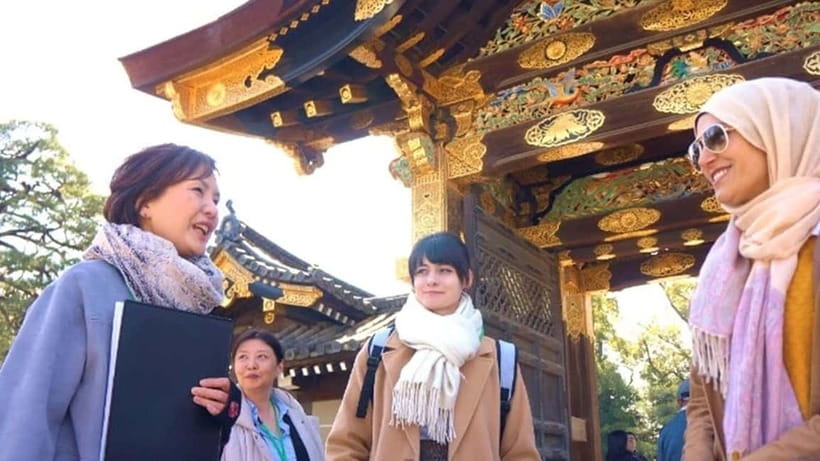
At $40 per person, admission to Nijo Castle is included along with the 1.5-hour English tour. The value depends on how much you want from the visit.
If you are happy reading signs and walking on your own, you can save the tour fee by visiting independently. The castle’s buildings and gardens are attractive without a guide. But the most important parts of Nijo Castle are not always visible at a glance. The shogun’s political message, the hierarchy inside Ninomaru Palace, and the significance of Yoshinobu’s decision all become clearer with explanation.
I consider the price reasonable for a small group, especially if this is your first visit and you want the castle’s details to connect into one story. You are not paying only for entry. You are paying for structure, translation, questions, and someone who can point out why the rooms and corridors were designed as they were.
The value is also better for visitors with limited time. A 90-minute guided route lets you see the essential palace areas and understand their meaning before moving on to another Kyoto sight.
The calculation changes if you prefer complete independence or already know Tokugawa history well. You may want more time for photography, gardens, and quiet observation than a scheduled walk allows. In that case, use the guided tour as your introduction, then remain at the castle afterward if the admission conditions allow you to continue exploring.
Practical details that affect your visit
Meet outside Entrance Exit 1 of Nijōjō-mae Station. The guide holds a Local Guide Stars sign, so arrive with enough time to identify the meeting point without rushing.
The tour is conducted in English. It is wheelchair accessible, and the terrain is mostly flat. The palace requires all visitors to remove their shoes, so plan for that before you arrive.
The activity can be canceled up to 24 hours before the start time for a full refund. You can also reserve now and pay later, which helps if your Kyoto schedule is still changing.
Starting times vary, so check availability when you book. The duration is fixed at 90 minutes, making it easy to fit before or after another planned activity.
Nijo Castle can be a good choice for visitors who want history presented in plain language. It suits first-time visitors, families with older children, and anyone interested in the relationship between the Emperor and the shoguns. It is less suitable if you want a long, unhurried garden visit or a self-guided day with no fixed pace.
Who should book this Nijo Castle tour?
I would book this tour if you want the castle to make sense as a political place, not just a beautiful one. The nightingale floors are memorable, but the story of why the castle was built and how the Shogunate ended here is the real payoff.
I would also choose it if you value questions and conversation. The small group gives you a better chance to ask about the Tokugawa family, Japanese customs, palace design, or nearby Kyoto sights.
Families should consider it, especially if the children can manage the walking and shoe removal. The mix of secret-sounding floors, imposing gates, and a real change in government gives younger visitors concrete details to remember.
You might skip the guided option if you prefer to spend several hours alone in the gardens or if you already have a strong understanding of the Tokugawa period. For most first-time visitors, though, $40 is a fair trade for a focused route, included admission, and a clear explanation of one of Kyoto’s most politically important buildings.
FAQ
Where does the tour meet?
Meet outside Entrance Exit 1 of Nijōjō-mae Station. Your guide will hold a sign reading Local Guide Stars.
How long does the activity last?
The guided activity lasts 90 minutes. The castle visit itself is listed as about one hour, with the full experience including the meeting and return to the station area.
Is admission to Nijo Castle included?
Yes. Admission to Nijo Castle is included in the $40 per-person price.
What language is the tour conducted in?
The live tour guide speaks English.
How large is the group?
The tour is limited to a maximum of 10 participants. On some departures, the group may be smaller.
Do visitors need to remove their shoes?
Yes. All visitors must remove their shoes when entering the palace.
Is the tour wheelchair accessible?
Yes, the activity is listed as wheelchair accessible, and the terrain is mostly flat.
New on our Tokyo list
- From Tokyo: Mount Fuji & Hakone Full Day Private Tour★ 4.9 · 25 reviews
- Tokyo Spectacular View Day-Cruise in 90 Minutes★ 5.0 · 25 reviews
- Real Tokyo Runner Club : Daikoku Car Meet Night Tour with JDM Car★ 5.0 · 25 reviews
- 2.5 Hour-Guided Cycle Tour in the Central Tokyo★ 5.0 · 25 reviews
- Ramen Making from Scratch +Akihabara Tour –Cooking Class★ 5.0 · 25 reviews
- [Self-Drive] Tokyo & Daikoku Custom Car Driving Tour★ 4.9 · 25 reviews
- Tokyo: 2-Hour Night Bike Tour of the City’s Hidden Gems★ 4.9 · 25 reviews
- Samurai themed Entertainment show in Shinjuku★ 4.5 · 25 reviews
Historical Tours, compared.

Imperial Palace and Shogun Historical Walking Tour
Read our review →
Yanaka Walking Tour: Historic and Traditional District of Tokyo
Read our review →
Shinjuku Historical Walking Tour & Secret Backstreets
Read our review →
Mt. Fuji Heritage Tour: Traditional Villages, Lakes & Shrine
Read our review →

The Best of Izakaya in Shinjuku Food & Cultural Tour
Read our review →
Yanaka Historical Walking Tour in Tokyo’s Old Town
Read our review →Browse the lists this tour appears in