
Reviewed · HISTORICAL TOURS
Modern Japanese History Tour in Tokyo
Japan’s wartime past is not tucked away in a single museum here. It is spread across Yasukuni Shrine, the military-focused Yushukan Museum, and Showa-kan, where you see how ordinary Japanese people lived through war and its aftermath. The result is a serious, sometimes uncomfortable morning that gives you more than a standard sightseeing loop.
I like the way a private guide can explain Japanese-only displays and place them in context. I also like the contrast between soldiers’ experiences at Yushukan and civilian hardship at Showa-kan. The main drawback is clear: this tour deals with death, nationalism, starvation, and kamikaze attacks, so it may feel heavy rather than fun.
In This Review
- Key points to know before booking
- Why this Tokyo tour feels different
- Starting at Yasukuni Shrine
- Reading Japan’s military story at Yushukan
- Seeing civilian life at Showa-kan
- What the private guide adds
- Price, timing, and practical value
- Who should book this experience
- Final call: book it for context, not comfort
- FAQ
- How long does the Modern Japanese History Tour in Tokyo last?
- Where does the tour begin?
- What time does the tour start?
- Where does the tour end?
- Is this a private tour?
- Is the guide English-speaking?
- Which sites are included?
- Are entrance fees included?
- Does the tour include hotel pickup and food?
- Is the tour suitable for everyone?
Key points to know before booking
- Three sites in about three hours: You visit Yasukuni Shrine, Yushukan Museum, and Showa-kan in a compact part of Tokyo.
- Private English-speaking guide: Your group has its own history guide, with past guide names including Shun, Hiro, Yasuhiro Suzuki, and Izumi.
- Two very different wartime views: Yushukan focuses on Japan’s military past, while Showa-kan presents civilian life during and after World War II.
- Useful help with Japanese-only exhibits: A guide can interpret displays and explain material that would otherwise be hard to follow.
- A sensitive subject handled directly: The tour covers Japan’s 2.5 million war dead, kamikaze attacks, military practice, and civilian suffering.
- Priced like a private specialist tour: At $204.58 per person, the value depends on your interest in modern Japanese history and the size of your group.
Why this Tokyo tour feels different
Many Tokyo history stops concentrate on temples, samurai, or the city’s postwar rise. This tour takes you into the modern period, from the Meiji era through World War II and into the years after 1945. It asks you to look at how Japan remembers its dead, how soldiers were prepared for war, and how families coped with shortages and loss.
That mix is the reason to book it. You are not simply looking at old objects behind glass. You are comparing official military memory with the daily experience of civilians. The contrast can be revealing, but it also requires patience and an open mind.
The morning begins at Kudanshita Station at 9:00 a.m. You then remain in the same general area, returning to the meeting point at the end. That compact plan matters in Tokyo, where a tour can lose much of its time to trains and long walks between distant sights.
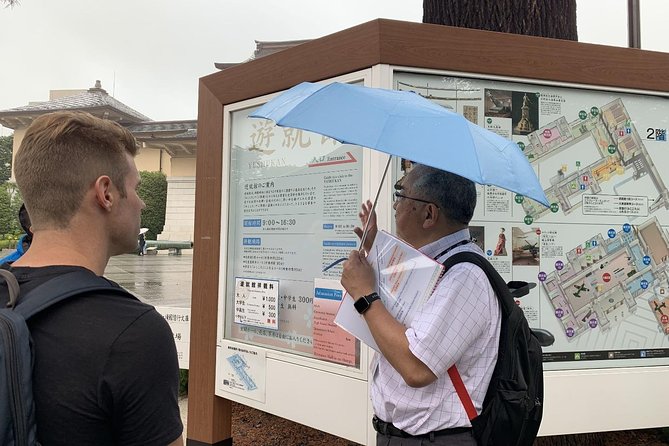
This is a private activity, so only your group participates. That gives you room to ask questions, pause over difficult material, or request more detail about military policy, family life, or the postwar period. Guide names connected with this experience include Shun, Hiro, Yasuhiro Suzuki, and Izumi. The quality of the morning depends heavily on the person leading it, and the available feedback points especially to their tact, patience, and ability to explain difficult subjects.
A few more Tokyo bookings worth comparing
- Tokyo: Imperial Palace and Shogun Historical Walking Tour
★ 5.0 · 2,251 reviews - Tokyo: Imperial Palace Japanese History Walking Tour
★ 4.9 · 987 reviews - Tokyo: Shinjuku Historical Walking Tour & Secret Backstreets
★ 5.0 · 530 reviews
Starting at Yasukuni Shrine
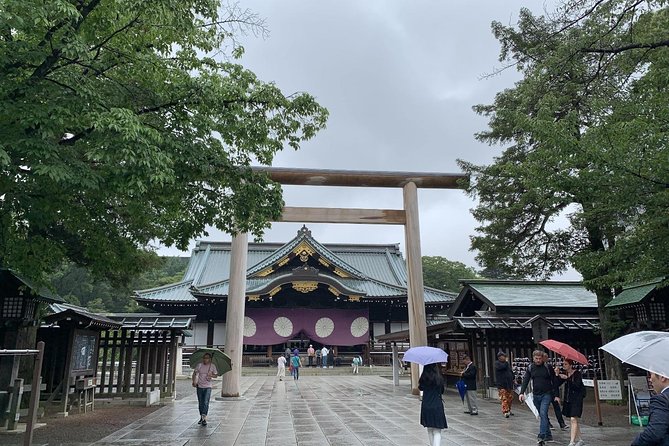
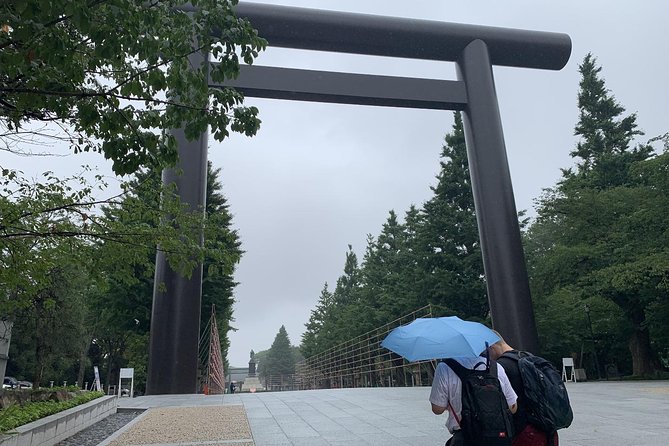
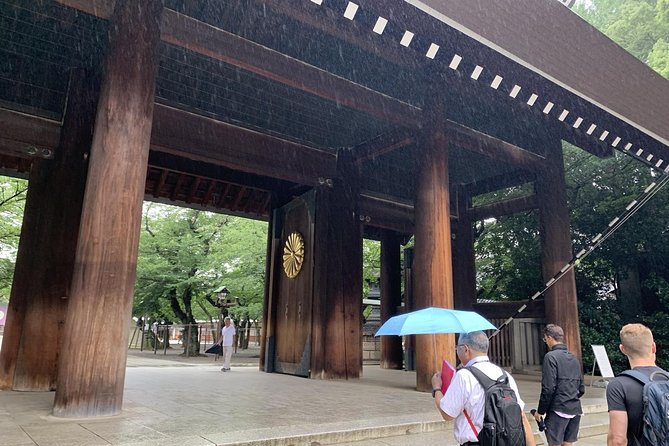
The first stop is Yasukuni Shrine, a Shinto site dedicated to Japan’s war dead. Its traditional architecture and quiet grounds provide a calm setting, but the site carries political and historical weight that your guide should help you understand.
The visit lasts about 30 minutes, with admission included. That is enough time to see the shrine grounds and establish the central question of the tour: how does Japan honor those who died in war, and what different meanings can that remembrance carry?
Yasukuni commemorates around 2.5 million victims of war since 1869. For some visitors, the shrine may first appear to be a peaceful religious site. Its role in national memory becomes more complicated once you connect it with Japan’s modern military history and the museum next door.
You should listen carefully here, especially if you know little about Japan’s postwar debates. The purpose is not to rush through a pretty shrine courtyard for photographs. The setting introduces the ideas that shape the rest of the morning: sacrifice, national duty, mourning, and the way a country tells its own story.
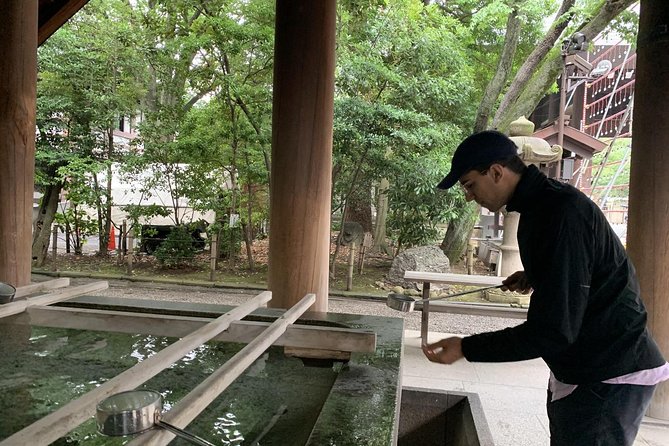
The tour includes photo opportunities, but this is not the place for a casual, noisy approach. Treat the shrine as an active religious site, not only as a museum entrance. The guide can help you understand what you are seeing without turning the visit into a lecture detached from the surroundings.
Reading Japan’s military story at Yushukan
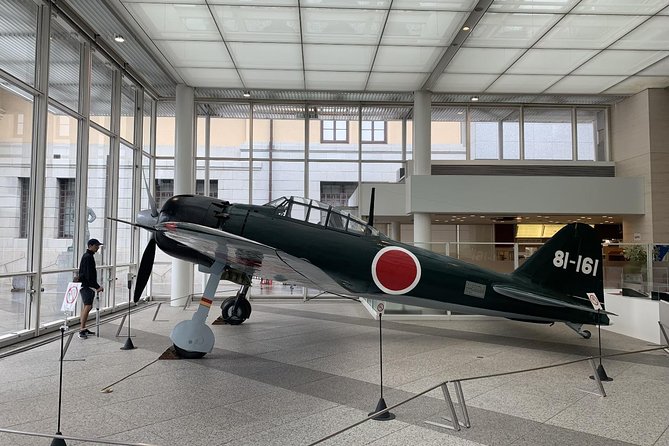
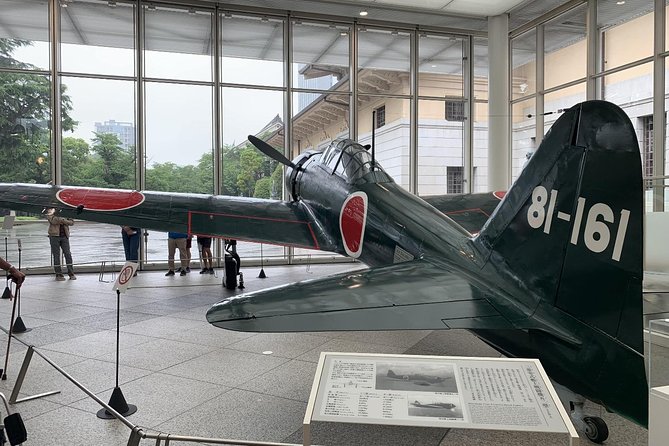
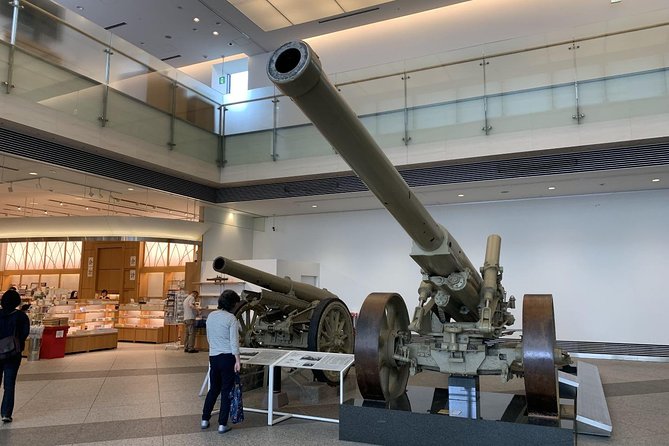
Yushukan Museum is the longest stop, at about 90 minutes. It is located on the grounds of Yasukuni Shrine and presents Japan’s military history through artifacts, documents, equipment, and related displays.
This is the part of the tour most likely to interest anyone who wants to understand Japan’s military development from the Meiji reign through World War II. It also requires the most guidance. Many displays are in Japanese only, and without translation or explanation you may grasp the broad subject but miss important details.
Your guide explains military practices such as kamikaze attacks, also called tokkotai. The discussion includes why this method became prevalent, how soldiers were prepared for their final missions, and what they told their families before leaving. That human angle is important. It shifts the subject away from aircraft and battle dates and toward fear, duty, pressure, and family ties.
The museum also helps explain the way Japanese soldiers understood their roles during the war. You may find the presentation different from what you have encountered in museums in Europe or North America. That is precisely why an English-speaking history guide is useful. You can ask what a display means, how it fits into the period, and where the museum’s viewpoint may differ from other accounts.
I would not treat this stop as a neutral, all-purpose survey of the war. The museum’s focus is Japan’s military experience and commemoration. Your guide’s job is to add context and answer questions, not simply translate labels. Ask directly about omissions, emphasis, and the difference between honoring individuals and judging the policies of the state.
The 90-minute visit can pass quickly if you are genuinely interested in the subject. If military museums are not your thing, it may feel like the heaviest portion of the tour. The private format helps because you are not locked into a fixed lecture. You can ask for clarification or keep the discussion focused on the subjects that matter most to you.
Seeing civilian life at Showa-kan
Showa-kan, also called the National Showa Memorial Museum, provides the tour’s strongest counterpoint to Yushukan. Its focus is the lives of Japanese civilians during and after World War II, using personal belongings, photographs, and other material connected with everyday life.
The visit lasts about an hour. You learn about problems such as food shortages and the strain placed on families during the war. The exhibits also extend into the postwar years, showing how people lived through recovery and the period that led toward Japan’s later economic success.
This stop is valuable because wars are often explained through leaders, armies, and major battles. Showa-kan brings the story down to the level of households. Personal objects can make starvation, uncertainty, and loss easier to understand than a list of dates ever could.
The museum is also another place where your guide matters. Some exhibits may not cater to English speakers, so you might find labels difficult to follow on your own. A guide such as Izumi can interpret the material and explain everyday details that would otherwise pass unnoticed.
I like the balance between this museum and Yushukan. One presents the military story and the culture of sacrifice. The other asks what that war meant for people trying to find food, care for relatives, and rebuild their lives. Neither stop works as well in isolation as it does when placed beside the other.
The Showa-kan portion may appeal even to people who are less interested in military equipment. If you want to understand how war affected homes and communities, give this stop your full attention. It can also help you connect Japan’s wartime experience with the country you see today.
Same corner of Tokyo, a completely different plan:
- Mt Fuji and Hakone 1-Day Bus Tour Return by Bullet Train
★ 5.0 · 26,383 reviews - 1-Day Tokyo Bus Tour
★ 5.0 · 14,250 reviews - Tokyo: TOKYO SKYTREE® Admission ticket
★ 4.5 · 11,192 reviews - Tokyo: teamLab Planets TOKYO Digital Art Museum Entry Ticket
★ 4.6 · 9,779 reviews
What the private guide adds
The museums are the fixed points, but the guide is the real reason to consider booking this experience rather than visiting alone. The available guide names include Shun, Hiro, Yasuhiro Suzuki, and Izumi. The feedback about them is notably consistent on three points: they explain clearly, handle sensitive material with care, and welcome questions.
Yasuhiro Suzuki is described as tactful and personable. Hiro is praised for covering both military events and everyday life. Izumi is noted for patience and for helping with Japanese-only exhibits. Shun is described as bringing a warm manner and a large store of useful facts. These details suggest that the tour is designed around conversation, not just a memorized script.
That matters in a subject where wording counts. A good explanation can separate the experience of an individual soldier from the decisions made by Japan’s military leadership. It can also help you understand why families and civilians responded as they did without excusing wartime actions.
You should arrive with questions. Ask about the Meiji period, the meaning of the shrine, the daily problems shown at Showa-kan, or the reasons kamikaze missions became so prominent. The private setting gives you the chance to shape the morning around your interests.
At the same time, remember that no three-hour tour can cover every aspect of modern Japanese history. You will receive a focused introduction, not a full academic course. The best value comes when you use the guide to connect the exhibits and then continue reading or visiting other museums on your own.
Price, timing, and practical value
The listed price is $204.58 per person. That is a serious amount for three hours, but it includes a private English-speaking history guide and entrance fees to Yushukan and Showa-kan. The value improves if you are traveling with people who share your interest, since the private format allows one guide to work with your group.
Group discounts are listed, though the exact savings are not provided. Check the final price for your party before booking. Since the tour is private, the per-person cost may make more sense for a small group than for a solo visitor.
The meeting point is Kudanshita Station, at 1-chōme-13-19 Kudankita in Chiyoda City. The tour starts at 9:00 a.m. and ends back at the meeting point. Hotel pickup and drop-off are not included, and food and drinks are also your responsibility.
You receive confirmation at booking unless you reserve within seven days of the tour. For late bookings, confirmation may arrive within 48 hours and depends on availability. The stated cancellation terms are strict: cancellations within 20 days can incur a 25 percent fee, within 14 days a 50 percent fee, and within seven days the full amount. The experience is also described as non-refundable and unchangeable, so read the final booking terms closely before paying.
Most people can participate, but the subject is not light entertainment. The provider asks participants to keep an open mind and warns that the tour could end if a guide feels threatened. That is a reasonable reminder for a politically and emotionally charged topic. Come ready to listen and discuss civilly.
Who should book this experience
I would choose this tour if you have already seen Tokyo’s better-known sights and want a focused look at the country’s modern military past. It suits history students, readers of Japanese wartime history, and anyone who wants to compare official remembrance with civilian experience.
It also suits you if English-language help matters. The museums may contain material in Japanese only, and the guide can interpret exhibits while explaining their place in the larger story. That service is more useful here than at a museum with clear English labels.
Families with older children may find the tour worthwhile, but the material about death, starvation, and kamikaze missions requires maturity. The provider says most people can participate, but that does not mean every age group will find the subject comfortable.
I would skip it if you want a cheerful morning or if you dislike military museums. I would also think twice if you expect a completely detached account with no questions about national memory and historical responsibility. This tour asks you to engage with difficult material, not simply admire objects.
Final call: book it for context, not comfort
Book this experience if you want to understand how Japan remembers war and if you value a guide who can explain difficult exhibits in English. The strongest reason to go is the pairing of Yushukan’s military focus with Showa-kan’s account of civilian life. That contrast gives the morning shape and purpose.
The $204.58 price is high for three hours, but a private guide can make two difficult museums far more accessible. I would consider it good value for a small group with a serious interest in Japanese history, less so for someone who plans to spend only a few minutes looking at military displays.
Go with an open mind, ask questions, and allow the subject to remain complicated. If that sounds like the kind of morning you want in Tokyo, this is a focused and worthwhile choice.
FAQ
How long does the Modern Japanese History Tour in Tokyo last?
The tour lasts approximately three hours.
Where does the tour begin?
You meet your guide at Kudanshita Station, at 1-chōme-13-19 Kudankita, Chiyoda City, Tokyo.
What time does the tour start?
The stated start time is 9:00 a.m.
Where does the tour end?
The activity ends back at the meeting point.
Is this a private tour?
Yes. Only your group participates in the activity.
Is the guide English-speaking?
Yes. The tour includes a private English-speaking guide who is described as a history expert.
Which sites are included?
The tour includes Yasukuni Shrine, Yushukan Museum, and the National Showa Memorial Museum, also called Showa-kan.
Are entrance fees included?
Yes. Entrance fees to Yushukan War Museum and Showa Memorial Museum are included.
Does the tour include hotel pickup and food?
No. Hotel pickup and drop-off, food, and drinks are not included.
Is the tour suitable for everyone?
Most people can participate, but the tour covers sensitive subjects including war dead, starvation, kamikaze attacks, and military history. Participants are asked to keep an open mind and behave respectfully.
New on our Tokyo list
- Sumi-e Experience in a relaxing green tea shop in Tokyo★ 5.0 · 3 reviews
- Tokyo : Kamikaze Street Drift Ride★ 5.0 · 3 reviews
- Private Zen Meditation in English in Shinjuku, Tokyo★ 5.0 · 3 reviews
- Onsen Spa in Tokyo and Asakusa Bar Hopping with Local Guide★ 5.0 · 3 reviews
- Easy for everyone! Now you can play handmade mini shamisen and show off to everyone! Musical instruments, sweets and live music★ 5.0 · 3 reviews
- Tokyo: Private Tsukiji Street Food & Sake with Local Guide★ 5.0 · 3 reviews
- Mt Fuji Exploration Tour with Free Japanese Kusa Mochi from Tokyo★ 4.5 · 3 reviews
- Tokyo Tsukiji Fish Market Walking and Exploring Hidden Gems Tour★ 5.0 · 3 reviews
Historical Tours, compared.

Imperial Palace and Shogun Historical Walking Tour
Read our review →
Yanaka Walking Tour: Historic and Traditional District of Tokyo
Read our review →
Shinjuku Historical Walking Tour & Secret Backstreets
Read our review →
Mt. Fuji Heritage Tour: Traditional Villages, Lakes & Shrine
Read our review →
The Best of Izakaya in Shinjuku Food & Cultural Tour
Read our review →
Yanaka Historical Walking Tour in Tokyo’s Old Town
Read our review →Browse the lists this tour appears in