Reviewed · MT FUJI AREA TOURS
Mt. Fuji 6 Attractions Tour: Lake Kawaguchi, Oshino Hakkai
The best part of this Mt. Fuji day tour is how it links the mountain’s postcard views with places that explain its spiritual importance. You climb toward Arakura Sengen Shrine, see the famous pagoda and Fuji view, then visit springs fed by snow that fell on the mountain decades ago. It is more than a photo run.
I like the variety of stops, from a quiet shrine and old-fashioned shopping street to Lake Kawaguchi and Oshino Hakkai. I also like the practical guiding. Anna is especially praised for clear explanations, photo tips, and keeping the group together. The main drawback is the long day and traffic risk. A return that usually falls between 5:00 and 6:00 PM can reach 9:00 PM in peak periods.
In This Review
- Key points to know before booking
- What you are really buying for $50
- Leaving Tokyo at 8:00 AM
- Arakura Sengen Shrine and the 398-step climb
- Honcho Street and the Hikawa Clock Shop
- Oshino Hakkai and Mt. Fuji’s snowmelt
- Oishi Park beside Lake Kawaguchi
- The Lawson stop and a modern Fuji photo
- The return journey and the traffic question
- Guides, languages, and group style
- Who should book this Mt. Fuji tour?
- Practical advice for a smoother day
- Should you book it?
- FAQ
- Where does the Mt. Fuji tour start?
- What time does the tour leave Tokyo?
- What time does the tour return to Tokyo?
- Is transportation included?
- What attractions are included?
- Is Mt. Fuji guaranteed to be visible?
- Are meals and drinks included?
- Should I bring cash?
- Is the tour suitable for wheelchair users?
Key points to know before booking
- 398 steps to the pagoda: The view from Shinkurayama Sengen Park is superb, but the climb requires steady legs.
- Oshino Hakkai’s eight springs: Snowmelt from Mt. Fuji filters through volcanic ground before emerging as exceptionally clear spring water.
- Season changes the whole day: Cherry blossoms, autumn maples, and winter snow each create a different Fuji scene.
- A coach makes the route simple: Transport, a professional driver, guide service, and attraction admission are included.
- Anna and Evita may guide the day: Guide assignments vary, but both names are associated with warm, attentive service.
- Weather decides the headline view: Mt. Fuji may be hidden by cloud, even when every stop runs as planned.
What you are really buying for $50
At $50 per person, this is a strong-value way to see several Fuji-area sights from Tokyo in one day. You get an air-conditioned coach, a professional driver, pick-up and drop-off at the meeting point, a guide, and admission to the attractions. You also avoid piecing together local trains and buses across a spread-out rural area.
The price does not cover food, drinks, or personal purchases. That matters because the day includes several stops but no set meal in the basic package. You can bring cash and buy food along the way. One available option is lunch on the bus, and a McDonald’s is reported near one of the stops, but you should not count on a restaurant-style lunch.
The value is highest if you want a broad introduction rather than a slow, private visit to one Fuji town. You will see many locations, but most stops are timed. If you prefer lingering for an hour at a shrine, browsing every shop, or sitting quietly beside the lake, the schedule may feel brisk.
More Mt Fuji days from Tokyo:
- Mt Fuji and Hakone 1-Day Bus Tour Return by Bullet Train
★ 5.0 · 26,383 reviews - Mt Fuji & Hakone Cruise, Drum Show Bullet Train 1 Day from Tokyo
★ 4.0 · 7,413 reviews - Tokyo Mt Fuji 5th St & Hakone Cruise Bus Tour w/Bullet Train
★ 4.4 · 5,024 reviews
Leaving Tokyo at 8:00 AM
The day begins at a designated meeting point in Tokyo. The exact location can vary with the booking option, so check your confirmation carefully and arrive early. The coach leaves on time, and a late arrival is treated as a no-show without a refund.
The road out of Tokyo gives you a useful change of pace. Dense city streets give way to countryside on the journey toward Mt. Fuji. The coach is a real advantage here. You can rest, watch the scenery, and save your energy for the 398-step climb later in the morning.
Your guide will send bus, driver, and guide details by 9:00 PM on the evening before departure. This is worth checking rather than assuming you will meet the same guide or use the same meeting point as another booking.
Arakura Sengen Shrine and the 398-step climb
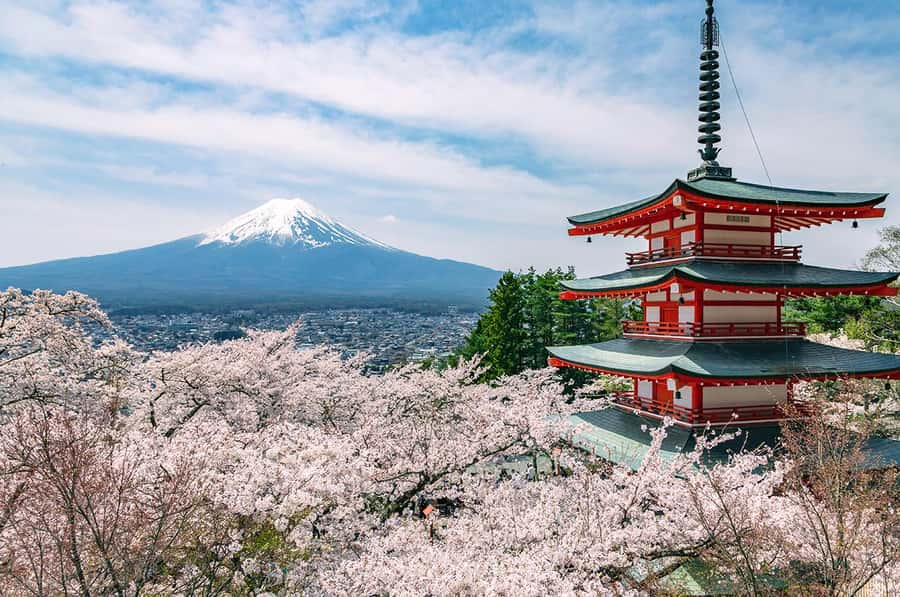
The first major stop is Arakura Sengen Shrine and Shinkurayama Sengen Park, one of Japan’s most familiar Fuji viewpoints. The classic composition includes Mt. Fuji, a five-story pagoda, and Fujiyoshida town below. It is the image many people carry in their minds before they ever reach Japan.
The view is earned by climbing 398 steps. Take this seriously if you have knee, balance, or mobility concerns. The tour is not suitable for wheelchair users, and the stair climb is the clearest physical challenge of the day.
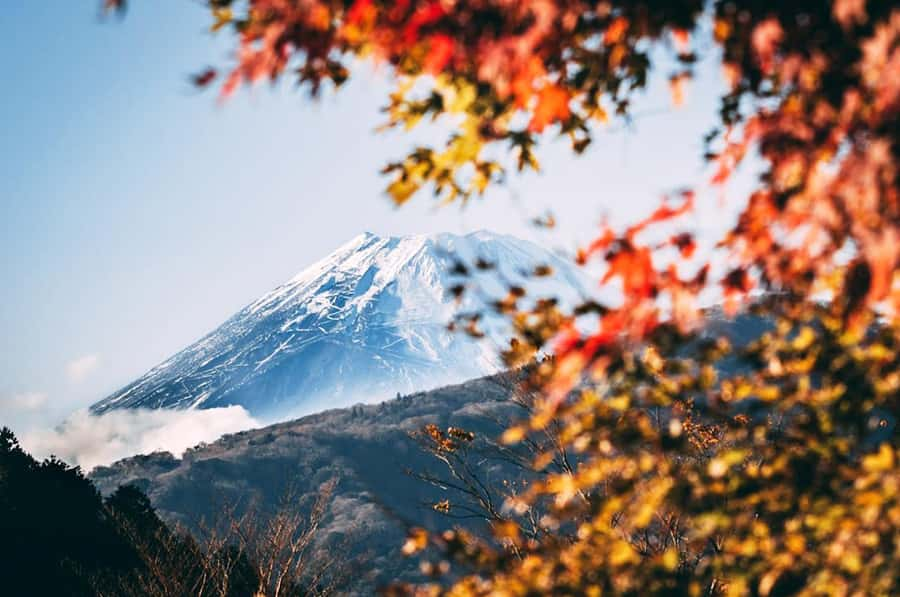
At the top, the reward changes with the calendar. Spring can place cherry blossoms around the pagoda and mountain. Autumn brings warm foliage, while winter offers the clean contrast of a snow-covered peak. Summer is useful for trekking around the wider Fuji area, though the mountain’s visibility still depends on weather.
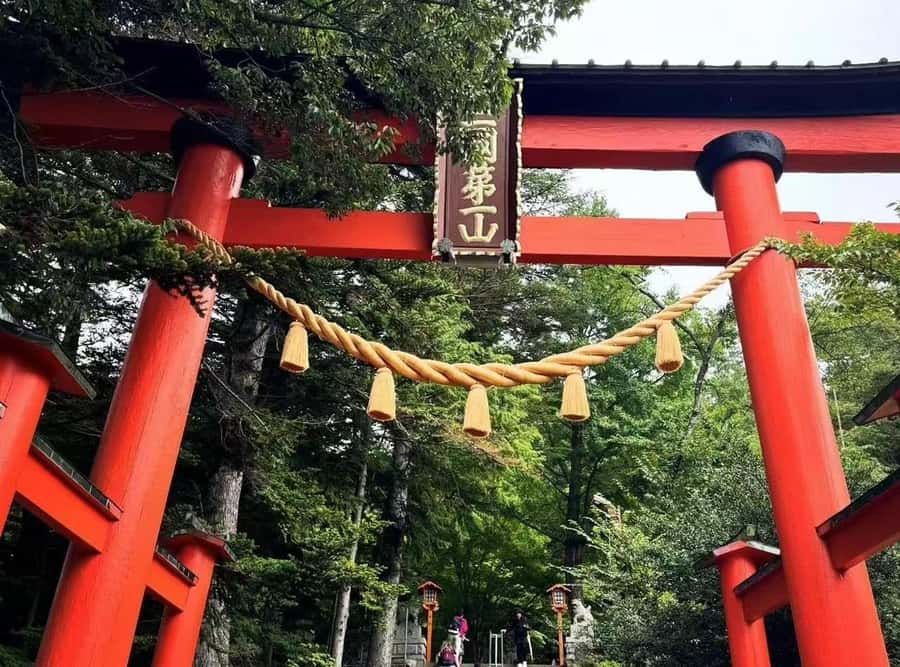
The shrine also gives the trip a sense of place. Mt. Fuji has long drawn pilgrims, and the route here is described as a Path of Faith. You are not simply stopping at a famous camera angle. You are entering a sacred setting where the mountain, shrine, and town have been tied together for generations.
Allow yourself time for the climb, the view, and the return walk. This is the stop where a rushed group can create pressure, so listen closely for the meeting instructions. Anna is particularly noted for helping people with timing and photo positions, which is useful when everyone wants the same view.
Honcho Street and the Hikawa Clock Shop
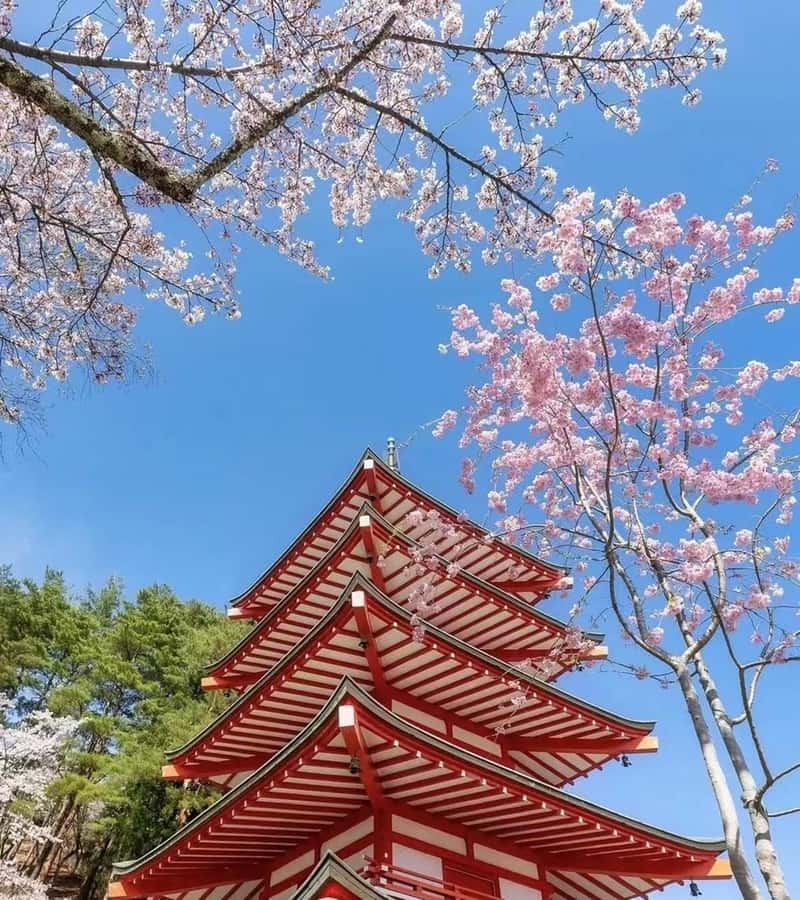
The next stop changes the mood. Around the Hikawa Clock Shop and Honcho Street, you stroll through what is called Fuji’s Sky Ladder Town. The street’s alignment can make Mt. Fuji appear at the far end, as if the road climbs toward the mountain.
The charm here is quieter than at the pagoda. Traditional shopfronts and a Showa-era feel offer a glimpse of ordinary small-town Japan rather than a purpose-built sightseeing complex. The contrast is valuable: Fuji is both a sacred peak and a presence in daily life, framed by storefronts, utility lines, and a working town.
This is also a good place to use your camera differently. At Arakura, you aim upward toward the pagoda and peak. On Honcho Street, the interest comes from the straight street view and the way the mountain seems close but remains distant. Guides can help you find the strongest angle without wasting the whole stop searching.
Keep in mind that this is a public street, not a private photo set. Be considerate, stay aware of traffic, and follow the guide’s instructions. The stop is best for a short walk and photographs, not for a long shopping session.
A few more Tokyo bookings worth comparing
- 1-Day Tokyo Bus Tour
★ 5.0 · 14,250 reviews - Tokyo: TOKYO SKYTREE® Admission ticket
★ 4.5 · 11,192 reviews - Tokyo: teamLab Planets TOKYO Digital Art Museum Entry Ticket
★ 4.6 · 9,779 reviews - Tokyo: Sumo Show Experience with Chicken Hot Pot and a Photo
★ 4.8 · 6,678 reviews
Oshino Hakkai and Mt. Fuji’s snowmelt
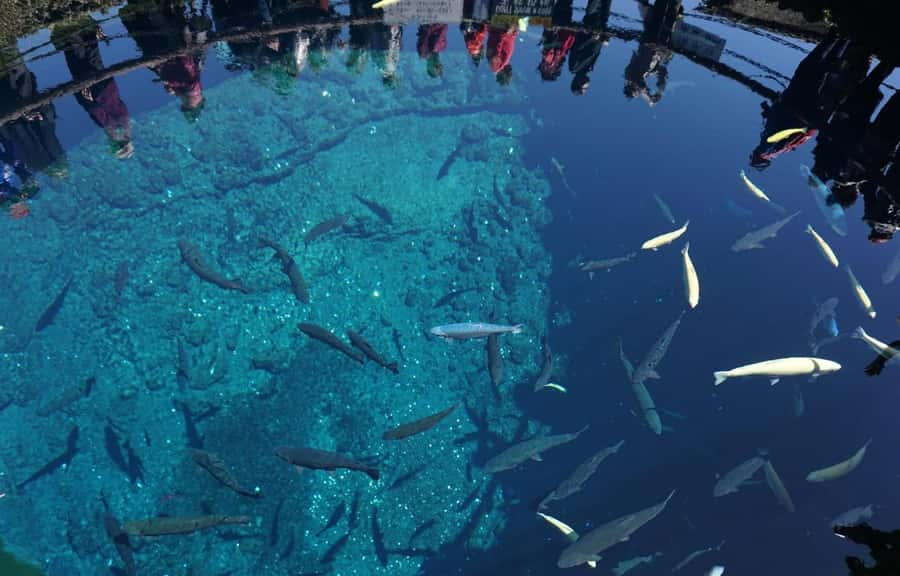
Around 12:30 PM, the tour reaches Oshino Hakkai. This village is known for eight clear springs supplied by melted snow from Mt. Fuji. The water filters through the mountain’s ground over many years before appearing in the springs.
That fact gives the stop more meaning than a simple scenic pond. You can connect the water in front of you with the snow on the summit, even though the two are separated by time and underground filtration. The springs are part of the Mt. Fuji UNESCO World Heritage area and are recognized as a Natural Monument.
Oshino Hakkai also preserves a rural setting, with traditional buildings and a sacred atmosphere. It is a good place to slow down after the steps at Arakura. Bring cash, since some local shops and attractions may not accept cards. Food and drinks are not included, so this can be a practical place to make a purchase if the schedule allows.
The limitation is that Oshino Hakkai can become crowded, especially during popular seasons. The water and village remain worthwhile, but do not expect a completely private rural escape. Stay with the group and note the return time, since the coach cannot wait for late arrivals.
Oishi Park beside Lake Kawaguchi
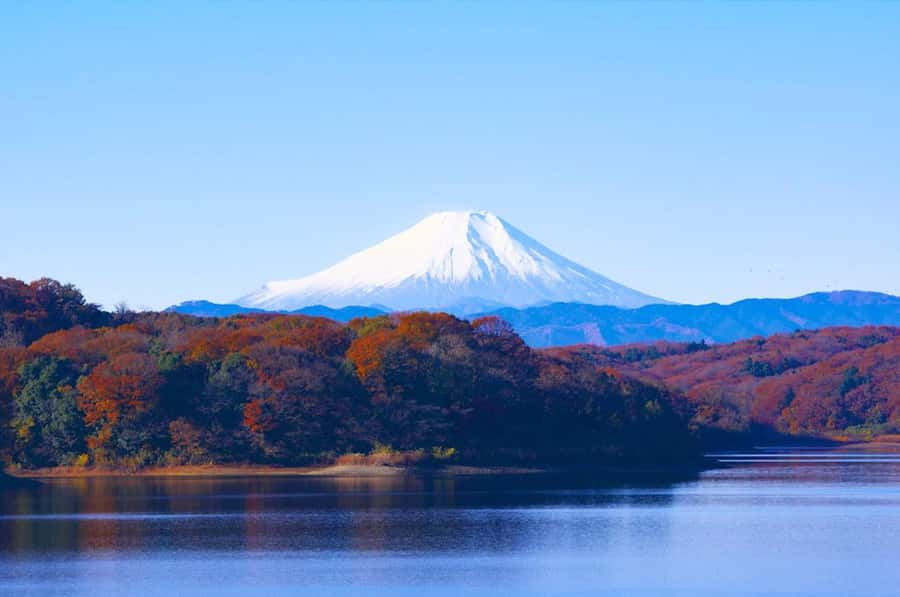
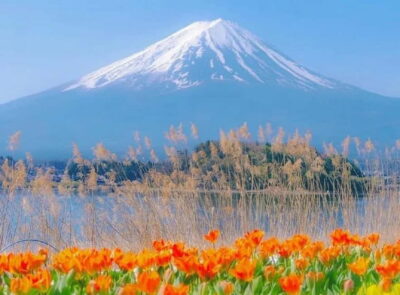
The afternoon brings you to Oishi Park on the northern shore of Lake Kawaguchi. This is one of the day’s strongest broad views, with Mt. Fuji across the lake and seasonal flowers in the foreground.
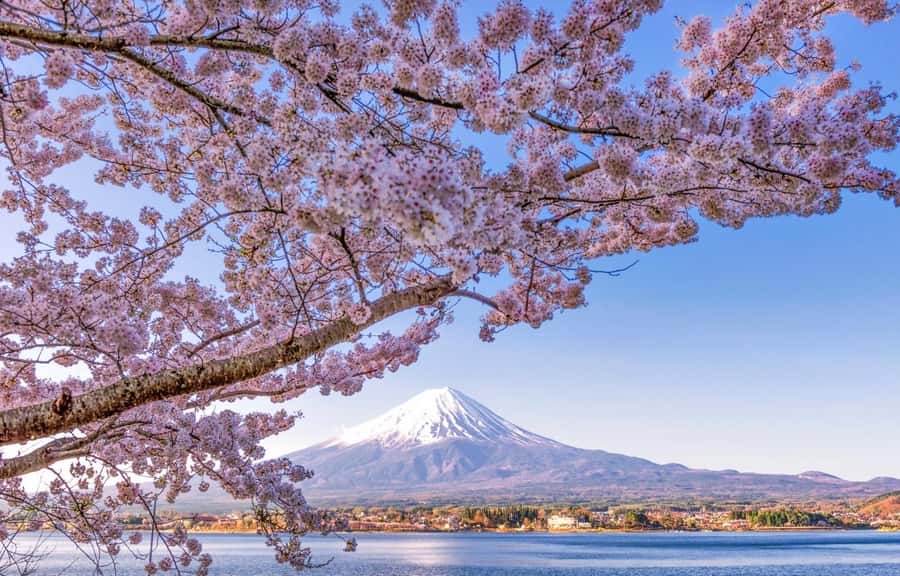
Spring is the headline season for many people. Cherry blossoms can frame the peak and reflect in the lake, and the Fuji Kawaguchiko Cherry Blossom Festival takes place along the northern shore. The combination of water, blossoms, and mountain makes this a prime photo stop.
The park changes character through the year. Autumn brings the fiery colors of the Kawaguchiko Maple Corridor, with snow-capped Fuji behind the leaves. Winter gives you a simpler scene, with the white summit taking the lead. Summer may offer greener surroundings and a better chance to combine the visit with trekking plans, but there is never a guarantee of a clear summit.
A memorial monument made with rocks sourced from across Japan adds a symbolic touch. It is not the main reason to visit, but it reinforces the national importance attached to Fuji.
Oishi Park is likely to be one of the more relaxed stops, though the amount of free time still depends on traffic and group timing. If Mt. Fuji is hidden, the park cannot provide the signature view you came for. The lake and flowers remain, but the mountain is the star of the composition.
The Lawson stop and a modern Fuji photo
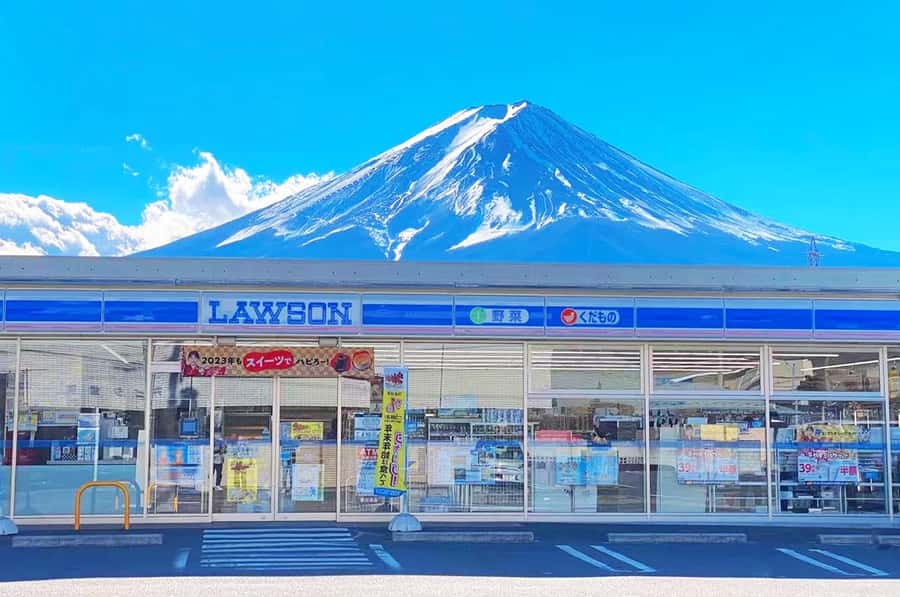
At about 3:40 PM, the coach stops at a Lawson convenience store near Lake Kawaguchi. It may sound like an odd attraction, but its setting gives you a different Fuji photograph. The familiar convenience store, parking area, and mountain create a distinctly modern Japanese scene.
This short break has a practical purpose as well. You can rest, pick up a drink or snack, and take one last set of pictures. It is a reminder that Mt. Fuji is not separated from everyday Japan. A national symbol can appear behind a convenience store just as easily as behind a centuries-old shrine.
Do not expect a major cultural visit here. The stop is brief and simple. Its appeal is the unusual angle and the chance to refresh before the drive back to Tokyo.
The return journey and the traffic question
The planned departure for Tokyo is 4:00 PM, with a usual arrival between 5:00 and 6:00 PM. That timetable is reasonable on a smooth day, but Tokyo-area traffic can change everything. During peak seasons, arrival may be as late as 9:00 PM.
This is the most important planning point for the tour. Do not book a nonrefundable evening reservation, airport transfer, or theater ticket close to the expected return. The route includes several popular Fuji-area locations, and road delays are outside the guide’s control.
Guides such as Anna are praised for keeping the group on schedule and gathering people after each stop. That matters on a route with six attractions. You get more from the day when the group moves promptly, but punctuality works both ways. Be back at the coach at the stated time.
Guides, languages, and group style
The experience is a multinational group tour, not a private excursion. Explanations may be given in multiple languages, and the included guide service covers English, Japanese, and, according to the tour details, Chinese-speaking support may also be available depending on the arrangement.
Anna is singled out for cultural explanations, photo advice, and considerate help with children. Evita is also named as a friendly guide who helped make the day enjoyable. Guide assignments can change, so treat those names as examples rather than a guarantee.
The positive point of a group is cost. At $50, you receive a guided route and transport that would be harder to arrange independently. The tradeoff is less freedom. You cannot usually skip one stop to spend longer at another, and the pace must suit a mixed group.
Who should book this Mt. Fuji tour?
I would recommend it to a first-time Japan visitor based in Tokyo who wants to see Fuji without handling several connections. It suits you especially well if you want famous photo locations, a little shrine culture, a traditional street, and a rural spring village in one day.
Families may appreciate the coach and the attentive guide service, but children and older adults should be ready for the 398 steps. The tour is not suitable for wheelchair users or people over 95 years old.
It is also a good fit for photographers who can accept changing conditions. Each season offers a strong visual theme, but Mt. Fuji may disappear behind cloud. Book this for the range of places and the chance of clear views, not as a promise that the peak will appear.
You should consider another option if you need a flexible schedule, guaranteed evening arrival, or a slow visit centered on one location. The day is full, and traffic can stretch it considerably.
Practical advice for a smoother day
Bring cash for local shops and any food or drinks. Wear comfortable shoes, since the itinerary includes a substantial stair climb and walking through shrine, village, street, and park areas.
Check the weather before you leave, but keep expectations sensible. Clear skies in Tokyo do not guarantee a visible summit at Lake Kawaguchi or Oshino Hakkai. A cloud-covered Fuji does not cancel the shrine, springs, or town views, but it can change the day’s main payoff.
Keep your phone charged. The route offers repeated photo chances, and the guide’s location tips can help you get more than the standard snapshot. Most important, arrive early at the meeting point and return to the coach on time.
Should you book it?
Book this tour if you want maximum Fuji-area variety for a modest price and prefer a guide and coach to independent transport. The mix of Arakura’s pagoda, Oshino Hakkai’s spring water, Lake Kawaguchi’s seasonal views, and the quirky Lawson stop gives the day more substance than a single lookout.
Skip it if you need a guaranteed short day or complete control over each stop. For most Tokyo-based visitors, though, the combination of price, transport, guide support, and memorable views makes this a sensible Mt. Fuji introduction.
FAQ
Where does the Mt. Fuji tour start?
The tour starts at a designated meeting point in Tokyo. The exact meeting point may vary depending on the option booked.
What time does the tour leave Tokyo?
Departure is scheduled for 8:00 AM. The bus leaves on time, so late arrivals are treated as no-shows and are not refundable.
What time does the tour return to Tokyo?
The usual return is between 5:00 and 6:00 PM. During peak seasons or heavy traffic, the return may be as late as 9:00 PM.
Is transportation included?
Yes. The tour includes an air-conditioned tourist coach, a professional driver, and pick-up and drop-off at the meeting point.
What attractions are included?
The route includes Arakura Sengen Shrine and Shinkurayama Sengen Park, Hikawa Clock Shop and Honcho Street, Oshino Hakkai, Kawaguchiko Oishi Park, the seasonal Maple Corridor or Cherry Blossom Festival area when applicable, and the Lawson convenience store near Lake Kawaguchi.
Is Mt. Fuji guaranteed to be visible?
No. Visibility depends on the weather. The tour operates even if clouds hide the mountain.
Are meals and drinks included?
No. Meals and beverages are not included. Personal expenses are also separate.
Should I bring cash?
Yes. Cash is recommended because some attractions and local shops may not accept cards.
Is the tour suitable for wheelchair users?
No. The activity is not suitable for wheelchair users. The 398-step climb at Shinkurayama Sengen Park is an important physical consideration.
New on our Tokyo list
- Sumi-e Experience in a relaxing green tea shop in Tokyo★ 5.0 · 3 reviews
- Tokyo : Kamikaze Street Drift Ride★ 5.0 · 3 reviews
- Private Zen Meditation in English in Shinjuku, Tokyo★ 5.0 · 3 reviews
- Onsen Spa in Tokyo and Asakusa Bar Hopping with Local Guide★ 5.0 · 3 reviews
- Easy for everyone! Now you can play handmade mini shamisen and show off to everyone! Musical instruments, sweets and live music★ 5.0 · 3 reviews
- Mt Fuji Exploration Tour with Free Japanese Kusa Mochi from Tokyo★ 4.5 · 3 reviews
- Tokyo Tsukiji Fish Market Walking and Exploring Hidden Gems Tour★ 5.0 · 3 reviews
- Tokyo: Private Tsukiji Street Food & Sake with Local Guide★ 5.0 · 3 reviews
Mt Fuji Area Tours, compared.
Mt Fuji and Hakone 1-Day Bus Tour Return by Bullet Train
Read our review →
Mt Fuji & Hakone Cruise, Drum Show Bullet Train 1 Day from Tokyo
Read our review →
Tokyo Mt Fuji 5th St & Hakone Cruise Bus Tour w/Bullet Train
Read our review →
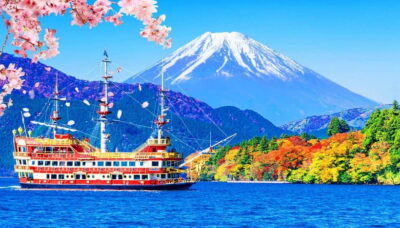
Mt. Fuji Tour, Hakone Ropeway, Owakudani, Lake Ashi
Read our review →
Mt.Fuji,Kawaguchiko Oishi Park,Arakurayama Sengen Park
Read our review →
Mt. Fuji 5th Station & Hakone Cruise 1-Day Bus Tour
Read our review →