Reviewed · GUIDED
Tokyo: 60min Panoramic Open Top Bus Tour with Audio Guide
Tokyo opens up nicely from the top deck, especially when the route reaches Rainbow Bridge and the Tokyo Bay area. You get a moving view of the city rather than a single lookout, with the breeze, traffic, towers, and waterfront all part of the show.
I like the $14 price and the efficient one-hour length. I also like the eight-language GPS guidance, which lets you follow along without needing an English-speaking guide. The main catch is simple: this is a drive-by tour, not a sightseeing bus with stops, and rain may force the roof closed or cancel the ride.
In This Review
- Key points to know
- A moving view of Tokyo for $14
- Meeting the yellow Hato Bus near Tokyo Station
- Hibiya Park and the National Diet Building
- Toranomon and Tokyo Tower from the upper deck
- Rainbow Bridge and Tokyo Bay breeze
- Odaiba and Toyosu from a moving bus
- Tsukiji Outer Market and Kabuki-za
- Ginza and the return to Tokyo Station
- How the eight-language GPS audio works
- Open-top comfort, weather, and what to bring
- Who gets the best value from this one-hour loop
- Booking advice and cancellation flexibility
- Should you book this Tokyo bus tour?
- FAQ
- Where does the Tokyo open-top bus tour start?
- How long does the tour last?
- Does the bus stop so I can visit the attractions?
- Which languages are available for the audio guide?
- Do I need to bring my own phone and earphones?
- Can I eat or drink on the bus?
- What happens if it rains?
- Can children under six ride for free?
Key points to know
- Tokyo Tower from several angles: The bus passes the tower through central Tokyo, giving you changing views that are hard to get from one street corner.
- Rainbow Bridge with open-air views: The ride across or near the bridge brings Tokyo’s breeze and bay scenery into the experience.
- Eight GPS audio languages: English, Chinese, Korean, Spanish, French, Thai, Indonesian, and Vietnamese are available.
- A compact route from Tokyo Station: You begin and end near the Marunouchi South Exit, making this easy to fit into a busy day.
- No hop-on, hop-off confusion: Stay aboard for the full loop, since the bus does not stop for sightseeing.
- Bring your own phone and earphones: The GPS system is free, but the operator does not provide devices or earphones.
A moving view of Tokyo for $14
This is a good first look at Tokyo, not a full tour of its major sights. For $14, you sit high above the road and get a quick sweep from government buildings to Ginza, then out toward the bay and back through the city center.
I like the way the route mixes famous landmarks with ordinary city movement. You see office districts, broad roads, traffic, bridges, and commercial streets instead of only museum entrances and temple gates. That helps you get your bearings fast.
The one-hour format also keeps the cost and time commitment low. You can take the ride early in your trip to see which areas deserve a longer visit, or use it late in the day when your feet need a break.
Still, you should book it for the views, not for detailed explanations at each site. The bus passes every listed location. You do not get off at Tokyo Tower, Rainbow Bridge, the market, or Ginza.
A few more Tokyo bookings worth comparing
- Tokyo: Open Top Panoramic Sightseeing Bus with Audio Guide
★ 3.8 · 254 reviews
Meeting the yellow Hato Bus near Tokyo Station
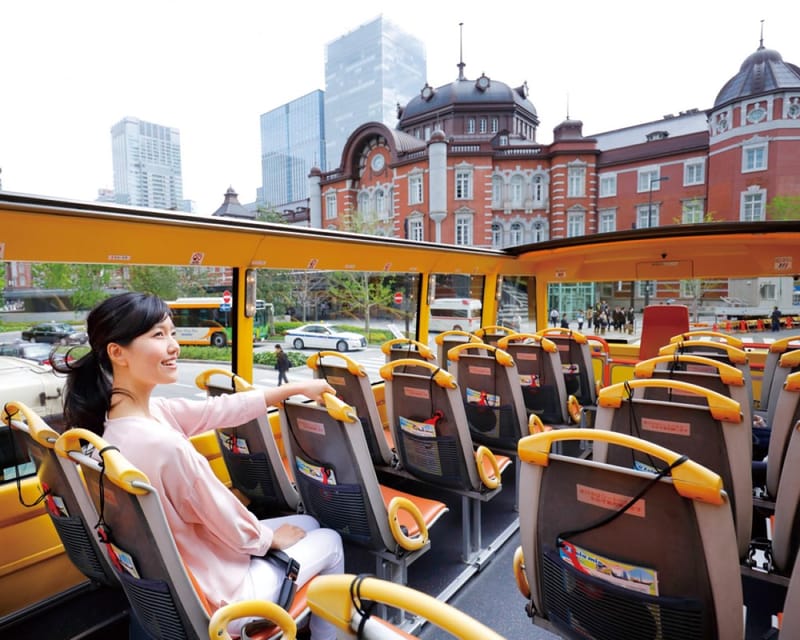
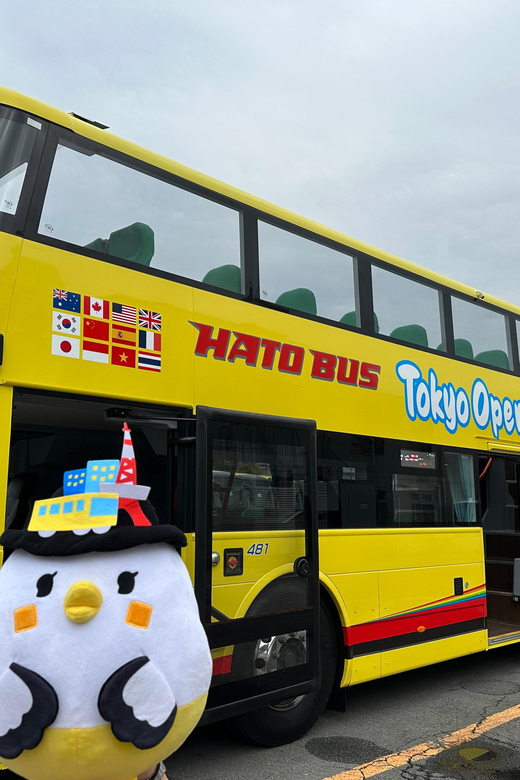
The tour starts and finishes at the Hato Bus Tokyo Office near Tokyo Station. From the JR Tokyo Station Marunouchi South Exit, turn left and walk straight for about two minutes. Look for the yellow Hato Bus stop.
This location is useful because Tokyo Station connects with several train lines, and the route finishes where it begins. You do not need to arrange hotel pickup, and you should allow enough time to find the correct exit in the station.
The stated coordinates are 35.678964, 139.765781. If you use a map app, searching for Hato Bus Tokyo Office should help, but the yellow bus is the practical landmark once you are outside.
The vehicle is a double-decker with an open top. Since the trip is not hop-on, hop-off, you board once and remain aboard for the complete circuit. That makes the ride simple, but it also means you should not expect a break for photos or a quick snack.
Hibiya Park and the National Diet Building
The first part of the route moves past Hibiya Park and the National Diet Building. These are not stop-and-explore portions. You see them from the bus, with the guide and GPS system providing context as the vehicle continues through central Tokyo.
Hibiya Park gives the route a change of pace from the station area and office streets. The National Diet Building brings in Japan’s political center, with its formal architecture and broad surroundings.
I find this early section useful because it eases you into Tokyo’s scale. You are not trying to navigate underground stations or cross busy streets. You can simply watch the city pass by and note places to return to later.
The limitation is camera time. If you want a carefully framed photograph, the moving bus may not give you long. Sit where you have a clear view and keep your camera ready rather than waiting until the last second.
Toranomon and Tokyo Tower from the upper deck
The bus then passes through Toranomon before reaching Tokyo Tower. Toranomon is part of Tokyo’s central business core, so the views here are more about the city’s working streets and modern buildings than a single landmark.
Tokyo Tower is the visual highlight for many people on this route. You do not see it from one fixed platform. Instead, the tower appears from changing points along the road, which can give you a better sense of how it fits into the surrounding city.
I like this part because Tokyo Tower looks different depending on the angle, distance, and buildings around it. One confirmed booking described enjoying the tower from several angles, and that is exactly the value of seeing it from a moving bus.
You should keep expectations realistic. The bus does not stop at the tower, and the ride does not include entry to an observation deck. If you want a long look or sunset photos, plan a separate visit.
Same corner of Tokyo, a completely different plan:
- Mt Fuji and Hakone 1-Day Bus Tour Return by Bullet Train
★ 5.0 · 26,383 reviews - 1-Day Tokyo Bus Tour
★ 5.0 · 14,250 reviews - Tokyo: TOKYO SKYTREE® Admission ticket
★ 4.5 · 11,192 reviews - Tokyo: teamLab Planets TOKYO Digital Art Museum Entry Ticket
★ 4.6 · 9,779 reviews
Rainbow Bridge and Tokyo Bay breeze

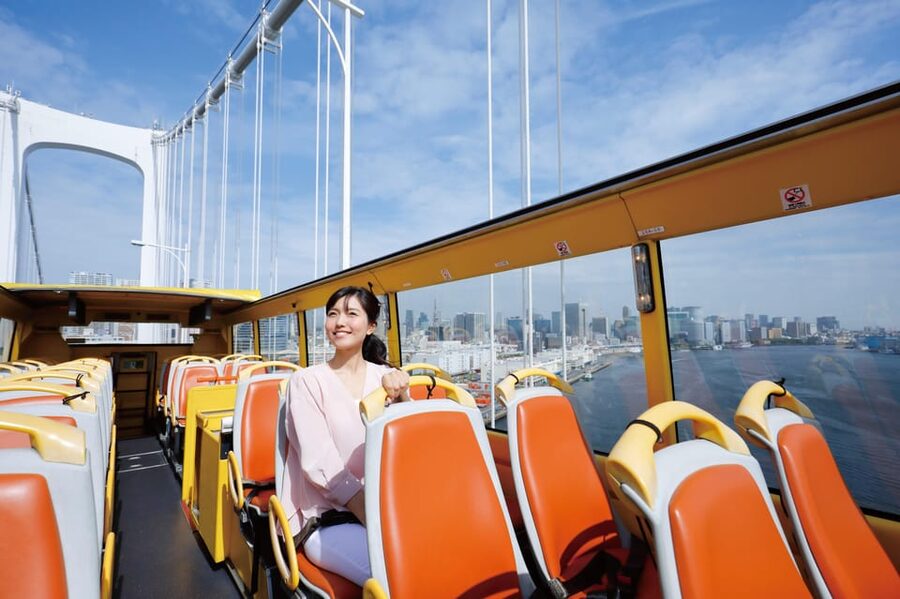
The route’s most memorable section comes as the bus reaches Rainbow Bridge and the Tokyo Bay area. On a clear day, the open top gives you wide views and a direct feel for the air around the water.
This is where the open-top design matters most. From an enclosed coach, you still see the bridge, but you lose some of the feeling of moving through the city. Here, you can feel the breeze and look out without a window frame in the way.
The bridge is also a useful link between central Tokyo and the bay districts. You see how the city connects its older core with newer waterfront areas, including Odaiba and Toyosu.
Weather controls the quality of this part of the trip. Rain may lead the operator to close the roof, and heavy rain or bad weather can cancel the tour. Even with the roof closed, the route can continue, but the open-air reason for booking becomes less important.
Odaiba and Toyosu from a moving bus
After Rainbow Bridge, the bus passes Odaiba and Toyosu. Both areas feel different from the older central districts, and the contrast makes the route more than a simple downtown loop.
Odaiba is known for its broad bay-side setting and newer development. From the bus, you get a passing view rather than time for shopping, museums, or waterfront walks. That is enough for an introduction, but not enough to explore the area properly.
Toyosu adds another modern waterfront district to the route. You can compare it with Odaiba as the bus moves through the bay area, then decide if either deserves a longer stop during your stay.
I would treat these sections as orientation. The bus helps you understand where the districts sit in relation to the center, but it cannot show you every attraction. If you already know you want to spend half a day in Odaiba or Toyosu, use this ride as a preview rather than a substitute.
Tsukiji Outer Market and Kabuki-za

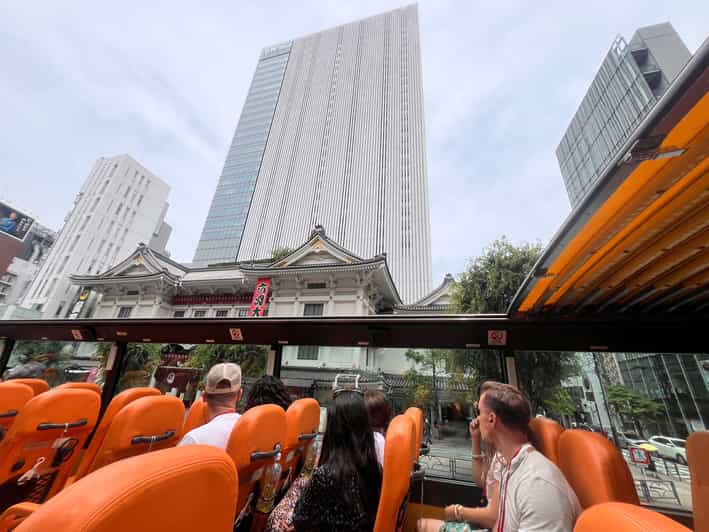
The route returns toward the older central city, passing Tsukiji Outer Market and Kabuki-za. Again, you remain on the bus, so this is not a market tasting tour or theater visit.
Tsukiji Outer Market is one of the places where many people will want to stop immediately. The bus gives you a quick look at the district, but food, shopping, and street exploration require a separate visit. Since food and drinks are not allowed on the bus, do not plan to combine the ride with market snacks.
Kabuki-za brings a strong cultural marker into the final section. Its theater setting helps show another side of central Tokyo after the open roads and bay views.
This part of the ride can feel quick, especially if you are trying to identify buildings while listening to the audio. I suggest using it to mark locations on your map. Then you can return on foot or by train when you have more time.
Ginza and the return to Tokyo Station
The final major district is Ginza, one of Tokyo’s best-known shopping areas. The bus gives you a road-level view of its streets and commercial character before returning to the Hato Bus office.
Ginza works well as the closing scene because it brings the tour back into a central, easy-to-reach part of Tokyo. From there, you can continue shopping, find a meal, or use Tokyo Station for your next train.
The complete loop takes one hour, which is short enough to fit before another booking. I would avoid scheduling it so tightly that a late departure ruins your plans, though. Traffic conditions are not specified, and a city route can take longer to reach the meeting point if you arrive at the last minute.
How the eight-language GPS audio works

The live guide speaks Japanese, while the automated GPS guidance is available in eight languages: English, Chinese, Korean, Spanish, French, Thai, Indonesian, and Vietnamese.
This setup is important for English-speaking visitors because you do not need to rely on the live guide’s language. The GPS system follows the vehicle’s position and provides information as the bus reaches different parts of the route.
You must bring a smartphone that works in Japan and your own earphones. The operator does not provide GPS devices or earphones for rental.
The audio system is supplied free of charge, but technical problems or faulty earphones do not qualify for a refund. I would check your phone before boarding, make sure it has enough battery, and bring earphones that fit securely.
The system also means you should not expect a personal guide speaking directly to you in English. The Japanese-speaking guide handles the live tour, while your language comes through the GPS audio.
Open-top comfort, weather, and what to bring
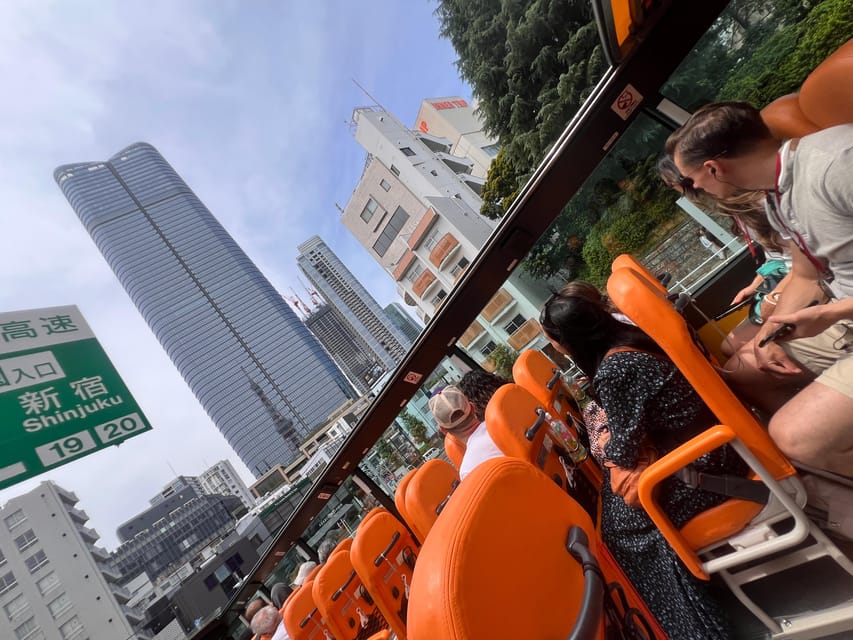
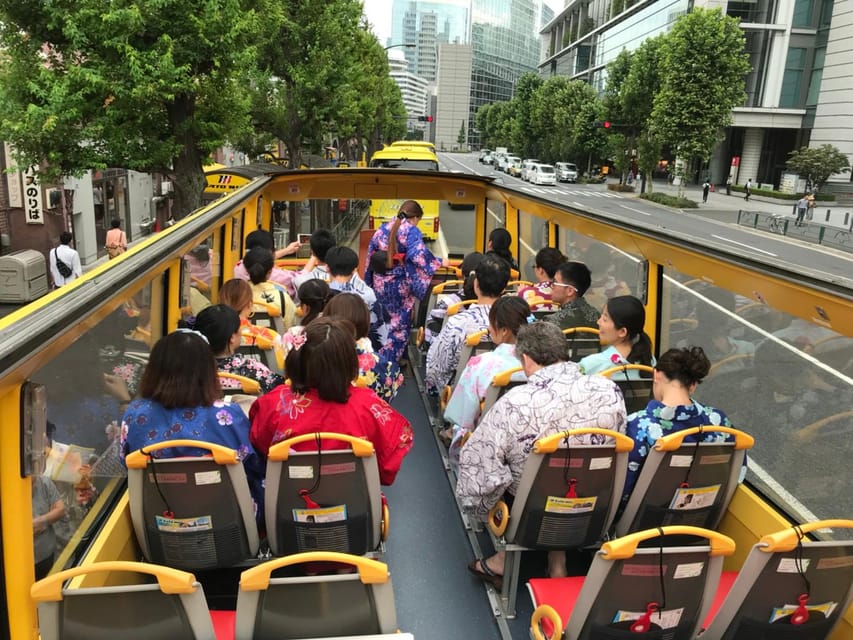
The double-decker design gives you the best views from above the traffic. It also exposes you to Tokyo’s weather, so clothing matters more than it would on a standard sightseeing coach.
Bring a phone that can be used in Japan and your own earphones. Plastic-bottle drinks are permitted, but eating is not allowed, and food and other drinks cannot be taken on the bus.
The roof may close if it rains. Heavy rain or bad weather can cancel the whole tour, so check the operating status and weather before you set out. The open-air format is the central feature, and a closed roof changes the experience even if the route remains available.
Children under six can ride free without a seat, with one child per adult. If a young child needs a seat, the supplied information does not specify the seating charge, so check the booking terms before reserving.
Who gets the best value from this one-hour loop
I would choose this tour if you want a low-cost overview with almost no walking. It suits first-time visitors who want to see how central Tokyo connects with the bay, families who need a short activity, and anyone with a spare hour near Tokyo Station.
It also works well for people who like city views more than indoor attractions. The changing sight lines around Tokyo Tower and Rainbow Bridge are the strongest reason to ride.
You may want something else if you need frequent photo stops, hotel pickup, a detailed English-speaking guide, or time inside each attraction. This is not a private tour, a walking tour, or a hop-on, hop-off service.
The rating of 4 from 40 reviews suggests a generally positive experience with some variation. The strongest praise focuses on the route, the comfort of the one-hour ride, and seeing Tokyo Tower from several angles. One booking described the route as a good way to see the city, while another simply found the ride comfortable.
Those points match the tour’s real strengths. It gives you a broad city view at a small price, but its value drops if you expect admission tickets, meals, or long stops.
Booking advice and cancellation flexibility
The price is $14 per person, which is modest for a one-hour open-top ride in central Tokyo. You are paying for the vehicle, the route, and the audio guide, not for entry to any attraction.
Free cancellation is available up to 24 hours before departure for a full refund. You can also reserve now and pay later, which helps if your Tokyo schedule is still changing.
I would book this early in your stay if the forecast looks good. That gives you a useful city orientation, and you can return to Tsukiji, Ginza, Odaiba, or Tokyo Tower later with a better idea of where everything is.
Should you book this Tokyo bus tour?
Book it if you want one hour of broad Tokyo views for $14, especially on a clear day. The open top, Tokyo Tower angles, Rainbow Bridge, and eight-language GPS audio give the ride more value than a basic city transfer.
Skip it if you need to get off and explore, or if rain is likely to close the roof. For a quick, affordable introduction to Tokyo’s central streets and bay districts, though, Hato Bus offers a practical choice with little planning and no long walking route.
FAQ
Where does the Tokyo open-top bus tour start?
It starts at the Hato Bus Tokyo Office near Tokyo Station. From the JR Tokyo Station Marunouchi South Exit, turn left and walk straight for about two minutes to the yellow Hato Bus stop.
How long does the tour last?
The tour lasts one hour and returns to the Hato Bus Tokyo Office.
Does the bus stop so I can visit the attractions?
No. This is not a hop-on, hop-off service. The bus passes the listed sights, and you remain aboard for the route.
Which languages are available for the audio guide?
GPS automated guidance is available in English, Chinese, Korean, Spanish, French, Thai, Indonesian, and Vietnamese. The live guide speaks Japanese.
Do I need to bring my own phone and earphones?
Yes. Bring a smartphone that can be used in Japan and your own earphones. GPS devices and earphones are not provided for rental.
Can I eat or drink on the bus?
Eating is not allowed. Drinks in plastic bottles are permitted.
What happens if it rains?
The roof may be closed in case of rain. The tour may also be canceled because of bad weather or heavy rain.
Can children under six ride for free?
Children under six can join without a seat for free, with one child per adult. The supplied information does not specify the charge when a child needs a seat.
New on our Tokyo list
- From Tokyo: Mount Fuji & Hakone Full Day Private Tour★ 4.9 · 25 reviews
- Tokyo Spectacular View Day-Cruise in 90 Minutes★ 5.0 · 25 reviews
- Real Tokyo Runner Club : Daikoku Car Meet Night Tour with JDM Car★ 5.0 · 25 reviews
- 2.5 Hour-Guided Cycle Tour in the Central Tokyo★ 5.0 · 25 reviews
- Ramen Making from Scratch +Akihabara Tour –Cooking Class★ 5.0 · 25 reviews
- [Self-Drive] Tokyo & Daikoku Custom Car Driving Tour★ 4.9 · 25 reviews
- Tokyo: 2-Hour Night Bike Tour of the City’s Hidden Gems★ 4.9 · 25 reviews
- Samurai themed Entertainment show in Shinjuku★ 4.5 · 25 reviews
Guided, compared.
Tokyo 6hr Private Tour with Government-Licensed Guide
Read our review →
Shinjuku Local Bar and Izakaya Guided Walking Tour
Read our review →
Private City Highlights Tour with Local Guide
Read our review →
Tokyo 4hr Private Tour with Government-Licensed Guide
Read our review →
Samurai Ninja Museum Guided tour and Experience
Read our review →