Reviewed · GUIDED
Tokyo: Open Top Panoramic Sightseeing Bus with Audio Guide
Tokyo reveals itself in layers from the top deck of a bus. In 70 minutes, you pass Tokyo Tower, Ginza, Odaiba, the Imperial Palace area, and Rainbow Bridge without wrestling with a subway map. At $11 per person, this is a remarkably cheap way to get your bearings fast.
I especially like the choice between the City Course, with central Tokyo and its grand avenues, and the Bay Course, with Rainbow Bridge and waterfront views. The GPS audio guide also keeps the ride useful when you do not have a live English-speaking guide. The catch is the weather: heat, cold, and rain are part of the deal, and knee space can be tight.
In This Review
- Key points before you book
- What this Tokyo bus tour is really good at
- Picking the City Course or Bay Course
- City Course: Tokyo’s grand central districts
- Bay Course: Rainbow Bridge and Odaiba
- The audio guide: useful, but not quite a personal tour
- Meeting at Tokyo Station without a last-minute scramble
- Open-top comfort and the weather question
- How much value do you get for $11?
- Who should book this ride?
- FAQ
- How long is the Tokyo open-top bus tour?
- Where is the meeting point?
- How early should I arrive?
- What happens if I arrive late?
- Which languages are available for the audio guide?
- Are headphones included?
- What are the two route choices?
- Does the tour run in the rain?
- Should you book it?
Key points before you book
- Two different 70-minute routes: Choose central landmarks on the City Course or Tokyo Bay, Rainbow Bridge, and Odaiba on the Bay Course.
- A low-cost first look at Tokyo: At $11, the bus gives you a broad sense of the city before you decide where to spend more time.
- GPS-triggered commentary: Audio information starts according to the bus’s location and adjusts to traffic and road conditions.
- Open-top views come with weather risks: Rain may cause the roof to close, and the upper deck can feel too hot or cold.
- Tokyo Station meeting point: Check in at the Tokyo VIP Lounge, about five minutes from the Yaesu North Exit.
- Plan for a strict departure: Arrive 20 to 40 minutes early. The bus does not wait for late arrivals.
What this Tokyo bus tour is really good at
This is not a hop-on, hop-off service. You board once, ride a set route, and return to the Tokyo Station area. That limitation is also the point: you get a broad, comfortable look at Tokyo without spending half your day changing trains or trying to follow a guide through crowded streets.
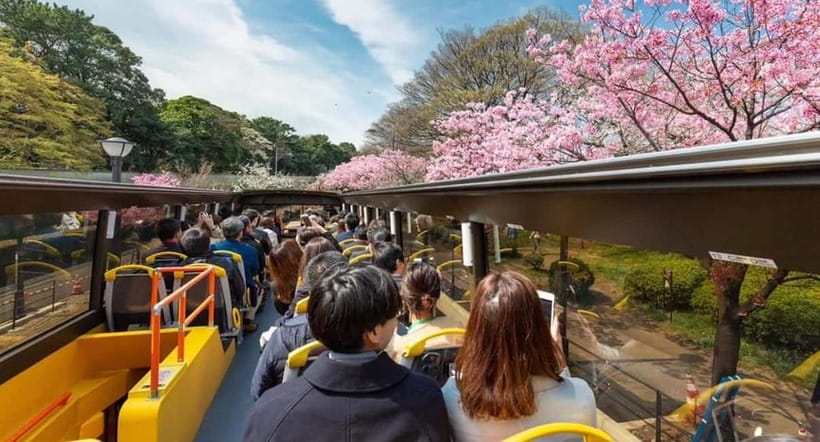
The open top gives you a clear view of towers, bridges, signs, temples, and broad city roads. You also get a better sense of scale than you do from underground. Tokyo can feel like a series of separate districts on the train, but the bus links Marunouchi, Ginza, Tokyo Tower, Roppongi, and the bay into one moving picture.
The audio guide adds basic context about the places outside your window. It is GPS-enabled, so the commentary is designed to match your location rather than forcing you to follow a printed route sheet. The system is offered in Japanese, English, Chinese, French, Korean, Vietnamese, and Thai.
There is no live guide leading the tour in English. Japanese-speaking staff are available to help with boarding and arrangements, but the main information comes through the audio system. That works well for independent visitors who prefer to look around quietly, though the music between announcements can be louder than some people would like.
A few more Tokyo bookings worth comparing
- Tokyo: 60min Panoramic Open Top Bus Tour with Audio Guide
★ 4.0 · 40 reviews
Picking the City Course or Bay Course
The two routes last about 70 minutes, so the choice matters. You cannot cover both in one ride.
City Course: Tokyo’s grand central districts
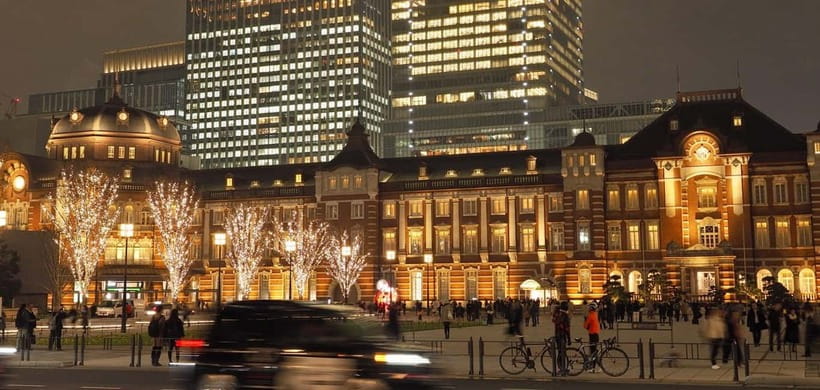
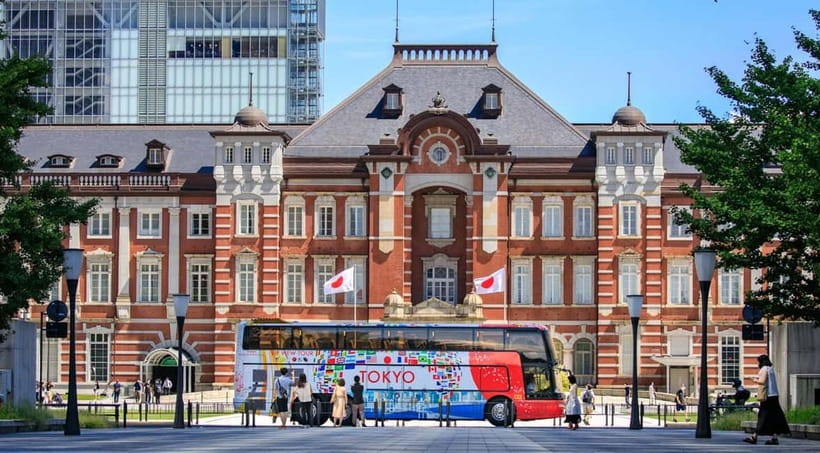
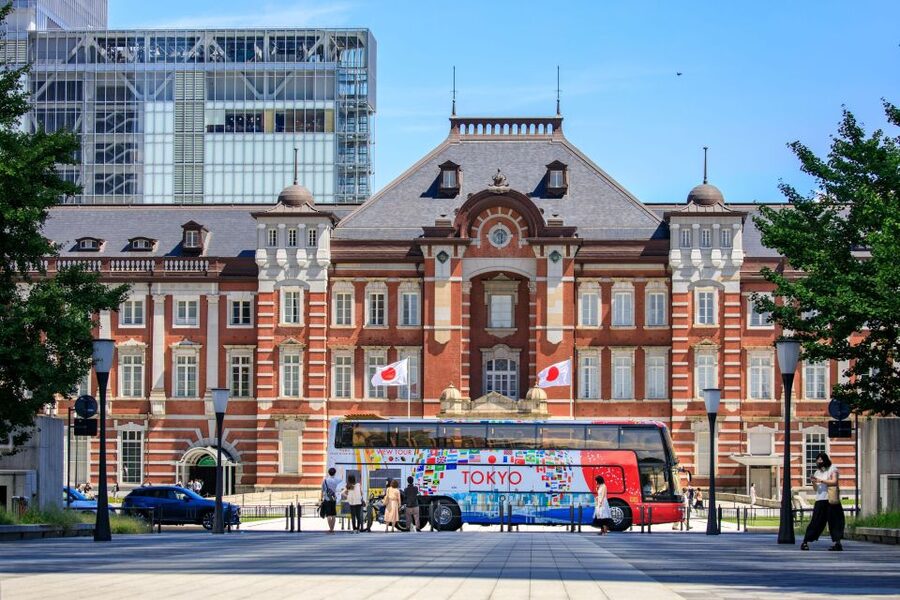
The City Course begins at the red-brick Tokyo Station building, a handsome starting point and one of the capital’s best-known railway landmarks. From there, the bus passes through Marunouchi, the polished business district beside the station. Wide avenues, office towers, and formal public spaces give you an early look at Tokyo’s modern center.
The route then heads toward Chidorigafuchi, associated with the Imperial Palace area. From the elevated bus, you may get a better sense of the open spaces and tree-lined roads around central Tokyo than you would from street level. This is a useful contrast with the dense commercial districts later in the ride.
Next comes the Akasaka State Guest House, followed by Meiji Jingu Gaien. These sections show another side of the capital, with ceremonial buildings, open roads, and park areas. The route is not a walking tour, so you will not enter any of these places. Think of them as visual introductions that help you choose future stops.
Tokyo Midtown and Roppongi bring the ride back to high-rise Tokyo. These districts are known for shopping, offices, restaurants, and tall buildings, and the open-top position helps you appreciate the height of the city around you. Tokyo Tower is the visual centerpiece that many people will be waiting for. The bus provides a different angle from the usual ground-level photo stop.
The City Course continues through Hibiya and finishes via Ginza. Hibiya offers another pocket of open space near the center, while Ginza supplies the grand retail streets and bright urban scenes that many first-time visitors picture when they think of Tokyo.
Choose this route if you want central Tokyo landmarks, Tokyo Tower, upscale districts, and a look at the Imperial Palace area. It is also the better fit if you plan to spend the rest of your day around Marunouchi, Ginza, Roppongi, or Tokyo Tower.
Bay Course: Rainbow Bridge and Odaiba
The Bay Course also starts at Tokyo Station and first passes through Marunouchi. It then heads to Zojoji Temple and Tokyo Tower, giving you two very different sights in close succession. Zojoji’s traditional temple setting and Tokyo Tower’s modern silhouette make a good visual pairing.
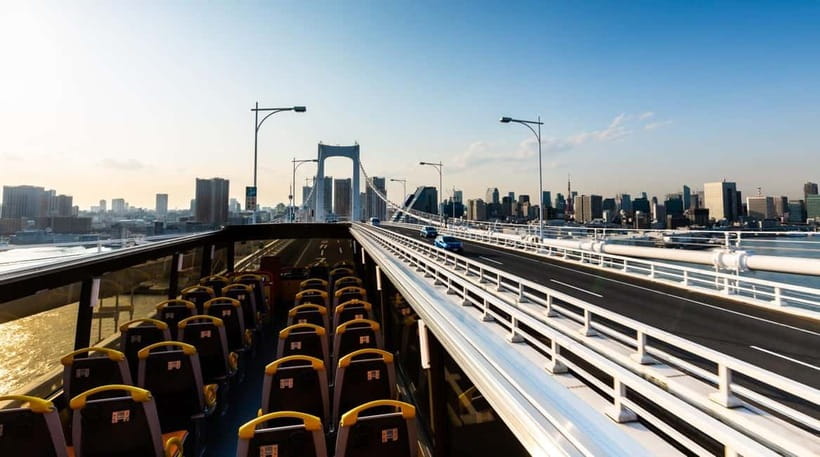
The route continues toward Shibaura and crosses the first level of Rainbow Bridge. This is one of the ride’s strongest moments. You see Tokyo from a long bridge over the water, with the city and bay opening out around you. The bus later crosses the second level, offering another perspective rather than simply repeating the same view.
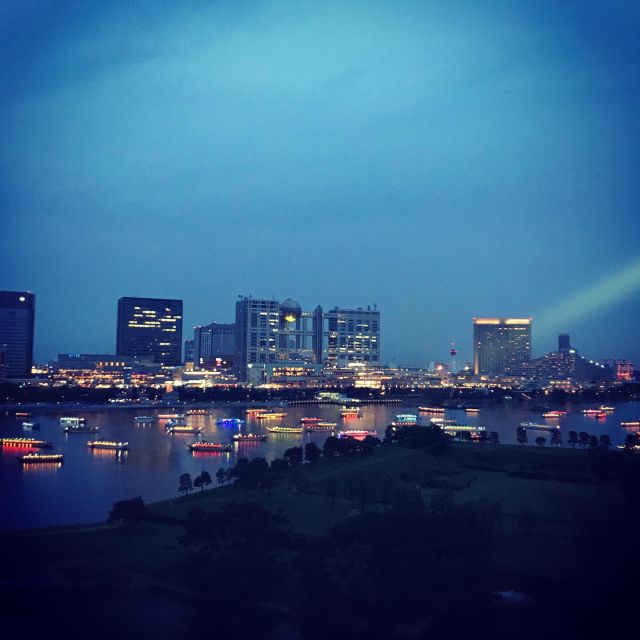
On the Odaiba side, the bus passes the Fuji TV Building, the Statue of Liberty, and Odaiba Seaside Park. The Statue of Liberty is a small replica, but it is an amusing and unmistakable Odaiba landmark. The waterfront park gives you a break from the dense towers of central Tokyo and shows the city’s leisure side.
The route returns through Rainbow Bridge and continues to Shiodome and Ginza. Shiodome is another high-rise district, and the final stretch through Ginza brings the ride back to the polished center of the city.
I would choose the Bay Course if you want waterfront scenery and bridge views. It gives you more visual variety than the City Course, moving from temple and tower to bridge, bay, entertainment buildings, and commercial Tokyo. If you can take only one route, this is likely the more distinctive choice, especially if Rainbow Bridge and Odaiba are not already on your plan.
Same corner of Tokyo, a completely different plan:
- Mt Fuji and Hakone 1-Day Bus Tour Return by Bullet Train
★ 5.0 · 26,383 reviews - 1-Day Tokyo Bus Tour
★ 5.0 · 14,250 reviews - Tokyo: TOKYO SKYTREE® Admission ticket
★ 4.5 · 11,192 reviews - Tokyo: teamLab Planets TOKYO Digital Art Museum Entry Ticket
★ 4.6 · 9,779 reviews
The audio guide: useful, but not quite a personal tour
The automatic system is the practical heart of this experience. GPS tracks the bus and triggers information as you pass each area. Since traffic can change the timing of the route, the system is built to adjust its guidance rather than relying only on a fixed schedule.
The commentary provides facts about the sights and their importance. It is most useful when you are seeing a building or district for the first time and want a quick explanation without reading on your phone. You can keep your eyes up and take in the city.
You should bring headphones with a standard 3.5-millimeter mini plug if you have them. Headphones are not included, though they can be purchased for 100 yen. The supplied information says the headphone jack supports only 3.5-millimeter mini plugs, so wireless earbuds or a different connector may not work.
The audio is not perfect. Music plays between sections, and it may sound too loud compared with the spoken information. On some departures, a Japanese announcement over a loudspeaker can make the recorded guide harder to hear. If you want every detail, sit where you can hear your headphones clearly and do not expect the experience to feel like a private guided tour.
The system is best for basic orientation and landmark context. It does not replace time on foot, museum visits, or a guide who can answer questions about daily life in Tokyo. One useful criticism is that the commentary gives plenty of facts but less explanation of how residents use and experience these districts. That is a fair limit to keep in mind.
Meeting at Tokyo Station without a last-minute scramble
The meeting point is the Tokyo VIP Lounge, on the second and third floors of a building with a Family Mart on the ground floor. It is about a five-minute walk from Tokyo Station’s Yaesu North Exit.
This is the part where you should slow down and check the map before leaving your hotel. Tokyo Station is large, and the Yaesu side is different from the Marunouchi side. The departure is strict. Arrive 20 to 40 minutes early, especially if you are arriving by train, carrying luggage, or visiting Tokyo for the first time.
The lounge is a shared facility, not a quiet private waiting room. Open-top bus customers can use it free of charge beginning 40 minutes before departure. If you arrive earlier than that, a facility fee may apply. Seating and staff arrangements may also be shared with other users, so do not assume you can settle in for a long wait.
Staff can assist in Japanese. Communication in other languages may be limited, so have your booking details and route ready on your phone. The bus leaves on time and cannot wait for late arrivals, even if you contact the operator before departure. Arriving at the wrong meeting point does not qualify for a refund.
That strict policy sounds harsh, but it matters in Tokyo traffic. The bus follows a scheduled route, and a delayed departure would affect everyone on board. My advice is simple: treat the meeting point as part of the tour, not as a place to dash into at the last second.
Open-top comfort and the weather question
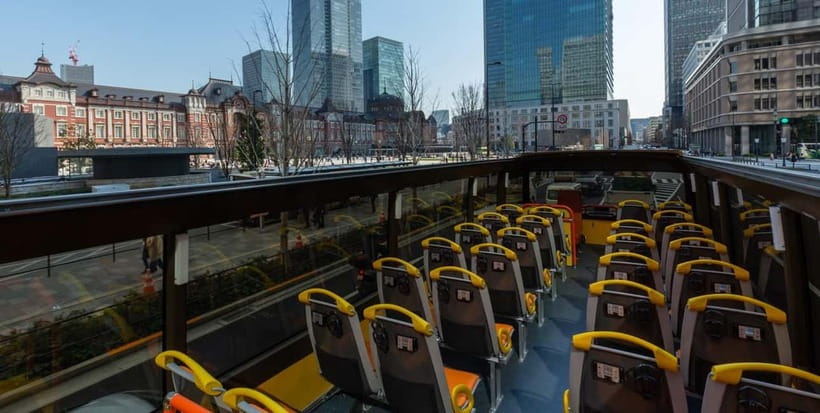
The top deck is the main attraction, but it is not climate-controlled. In warm weather, direct sun can make the ride tiring. In cool weather, the wind is noticeable. One passenger found the knee space limited and the temperature uncomfortable, which is useful information if you are tall or sensitive to heat and cold.
Rain does not automatically cancel the tour. The bus operates in wet conditions unless there is extreme weather, such as a typhoon. If it rains, the open top may be closed. You will still see the route, but the signature open-air view can disappear.
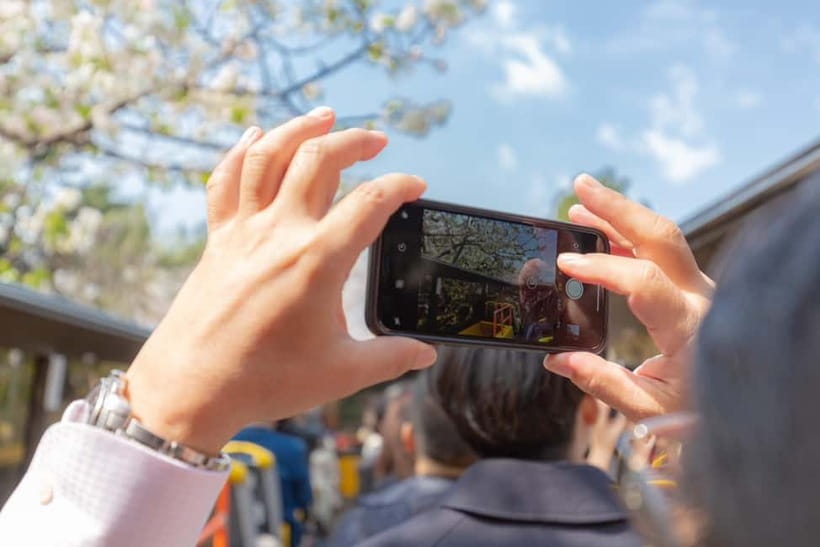
Umbrellas are not allowed in the vehicle. Smoking, food, and selfie sticks are also prohibited. Check the forecast before you go, dress in layers, and keep your hands free for the ride. A phone or camera is fine, but you need to follow the rules and avoid blocking other people’s views.
The best conditions are dry and mild. A clear evening can be especially appealing on the Bay Course, when Tokyo’s city lights and waterfront views become part of the experience. The schedule information does not promise a night departure, so check the available times when booking rather than assuming one is offered.
How much value do you get for $11?
At $11 per person, this is one of the easier Tokyo activities to recommend on price alone. A 70-minute ride covering central districts and the bay costs less than many single-entry attractions, yet it gives you a broad view of several parts of the city.
The value is strongest for a first day in Tokyo. You can see which areas appeal to you, note places to revisit, and learn how the city fits together before committing to a detailed sightseeing plan. It is also useful if you have a short stay, a long layover, or a free hour between other plans.
The low price does require realistic expectations. You are not paying for a personal guide, a meal, hotel pickup, or entry to the landmarks. The bus does not stop for visits at Tokyo Tower, Zojoji Temple, Odaiba Seaside Park, or the other sights. You see them from the road and decide later if they deserve a closer look.
The value drops if you already know Tokyo well or want a slow, detailed look at one district. It also drops on a rainy day if the roof closes, since the open-air viewpoint is the experience’s main special feature. Still, even with those limits, the fare is easy to justify for a first orientation.
Who should book this ride?
I would point this tour toward first-time visitors, people with limited time, and anyone who likes seeing a city from a moving viewpoint. Families may appreciate the simple format, though the no-food rule and limited knee room are worth noting.
It also suits visitors who are not ready to tackle Tokyo’s transport system on their first morning. The ride does not remove the need to use trains, but it gives you a visual map of the major districts. You can then return to Ginza, Roppongi, Odaiba, or Tokyo Tower with a better sense of where you are going.
The Bay Course is the stronger pick for bridge and waterfront scenery. The City Course is better for central landmarks and grand avenues. If you have time and the schedules work, taking both on the same day gives you a much fuller look at Tokyo, as one person did, though two 70-minute rides can feel repetitive around Tokyo Station, Tokyo Tower, and Ginza.
Do not book this as your main history tour. The audio guide supplies useful landmark facts, but the format cannot offer detailed conversation or spontaneous answers. Book it as a smart orientation ride, not as a replacement for exploring Tokyo on foot.
FAQ
How long is the Tokyo open-top bus tour?
Each route lasts about 70 minutes.
Where is the meeting point?
The meeting point is the Tokyo VIP Lounge on the second and third floors of a building with a Family Mart on the ground floor. It is about a five-minute walk from Tokyo Station’s Yaesu North Exit.
How early should I arrive?
You should check in 20 to 40 minutes before the scheduled departure.
What happens if I arrive late?
The bus departs promptly and cannot wait for late arrivals. No refund is provided for arriving late or going to the wrong meeting point.
Which languages are available for the audio guide?
The audio guide is available in Japanese, English, Chinese, French, Korean, Vietnamese, and Thai.
Are headphones included?
No. Headphones are optional and cost 100 yen. The headphone jack supports 3.5-millimeter mini plugs.
What are the two route choices?
The Bay Course includes Tokyo Bay, Rainbow Bridge, Fuji TV Building, the Statue of Liberty, Odaiba Seaside Park, Shiodome, and Ginza. The City Course includes the Imperial Palace area, Chidorigafuchi, Akasaka State Guest House, Meiji Jingu Gaien, Tokyo Midtown, Roppongi, Tokyo Tower, Hibiya, and Ginza.
Does the tour run in the rain?
The tour operates rain or shine except in extreme weather, such as typhoons. If it rains, the open top may be closed. Schedules can also change because of weather, traffic, or other unexpected conditions.
Should you book it?
Book this tour if you want a low-cost, low-effort introduction to Tokyo and you can accept a fixed route, basic audio commentary, and possible weather discomfort. The Bay Course is my pick for the most memorable views, especially Rainbow Bridge and Odaiba. Choose the City Course if Tokyo’s central districts and Tokyo Tower matter more to you.
Skip it if you need a detailed cultural tour, frequent stops, or guaranteed open-air seating in any weather. For everyone else, $11 buys a useful first look at a huge city, and that is a fair deal.
New on our Tokyo list
- From Tokyo: Mount Fuji & Hakone Full Day Private Tour★ 4.9 · 25 reviews
- Tokyo Spectacular View Day-Cruise in 90 Minutes★ 5.0 · 25 reviews
- Real Tokyo Runner Club : Daikoku Car Meet Night Tour with JDM Car★ 5.0 · 25 reviews
- 2.5 Hour-Guided Cycle Tour in the Central Tokyo★ 5.0 · 25 reviews
- Tokyo: 2-Hour Night Bike Tour of the City’s Hidden Gems★ 4.9 · 25 reviews
- Ramen Making from Scratch +Akihabara Tour –Cooking Class★ 5.0 · 25 reviews
- [Self-Drive] Tokyo & Daikoku Custom Car Driving Tour★ 4.9 · 25 reviews
- Samurai themed Entertainment show in Shinjuku★ 4.5 · 25 reviews
Guided, compared.
Tokyo 6hr Private Tour with Government-Licensed Guide
Read our review →
Shinjuku Local Bar and Izakaya Guided Walking Tour
Read our review →
Private City Highlights Tour with Local Guide
Read our review →
Tokyo 4hr Private Tour with Government-Licensed Guide
Read our review →
Samurai Ninja Museum Guided tour and Experience
Read our review →