
Reviewed · KIMONO EXPERIENCES
Tokyo: Calligraphy Experience with yukata or Samue
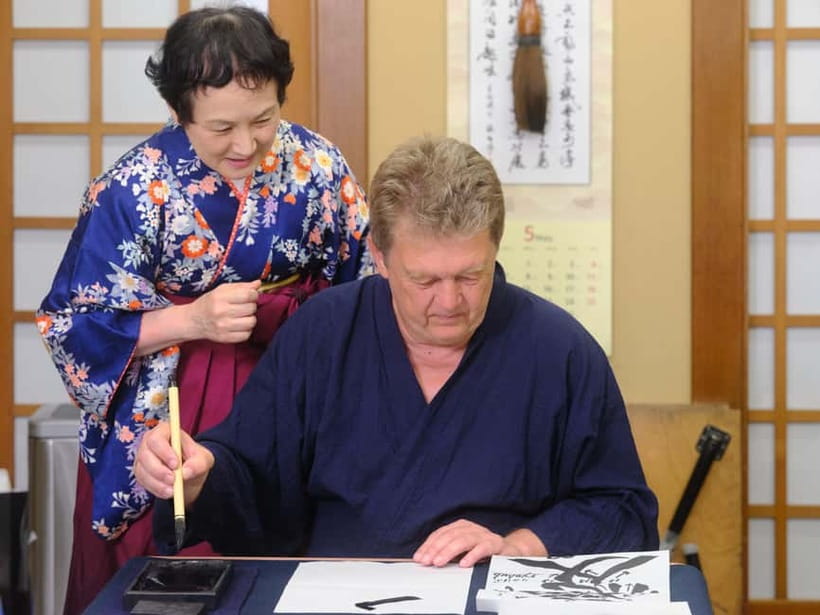
The most memorable part of this Tokyo activity is not simply writing a kanji. You first learn how the brush moves, why each stroke matters, and what the characters can mean beyond their direct translation. With the option to wear a yukata or samue, you get a cultural activity that feels personal rather than rushed.
I like the patient, step-by-step teaching, and I like that your final work goes home with you on a board or card. The tea, snacks, and help with names add warmth. The main consideration is that calligraphy demands quiet concentration, so this is less suited to anyone wanting a fast, casual photo stop.
In This Review
- Key points to know before booking
- Why this 90-minute class feels different
- Arriving beside the nursery and Kaideiji
- Choosing between a yukata and samue
- Learning brush control before writing a kanji
- Understanding the meaning behind the characters
- Creating the final piece to take home
- Tea, snacks, and a calm finish
- Who will get the most from this activity
- Value, timing, and practical planning
- My final call on the Tokyo calligraphy class
- FAQ
- How long does the Tokyo calligraphy class last?
- What languages are available?
- Are calligraphy tools provided?
- Can I take my artwork home?
- Is traditional clothing included?
- What should I wear or bring?
- Is the activity suitable for young children?
- What is the cancellation policy?
Key points to know before booking
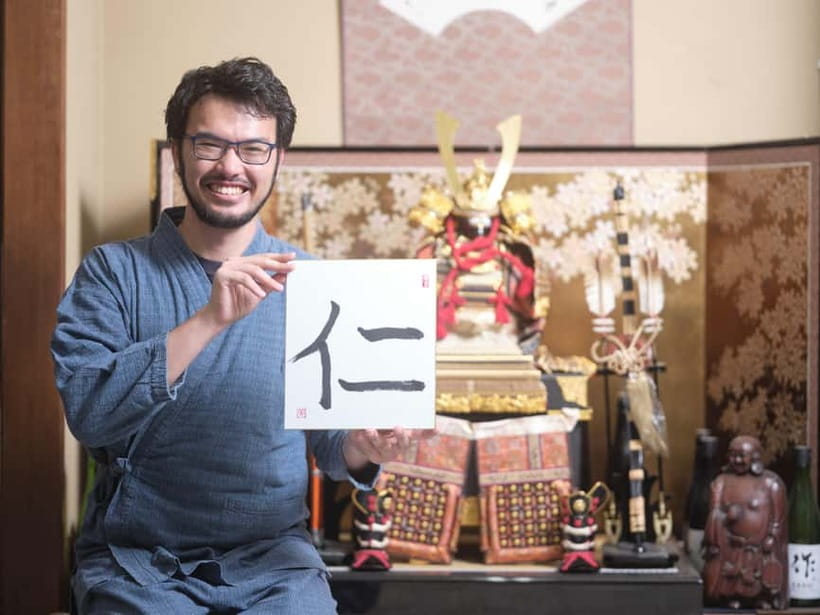
- Your own finished artwork: Practice first, then create a final calligraphy piece to take home.
- Traditional clothing included: You may dress in a yukata or samue before beginning the lesson.
- Teachers who guide closely: Hana, Tomo, and Koushi are among the instructors praised for clear, kind teaching.
- English and French instruction: You can join a session taught in either language.
- Tea and snacks are part of the welcome: The class includes a calm break with Japanese tea.
- Small groups of up to 10: The limited size gives you a better chance to receive brush-by-brush help.
Why this 90-minute class feels different
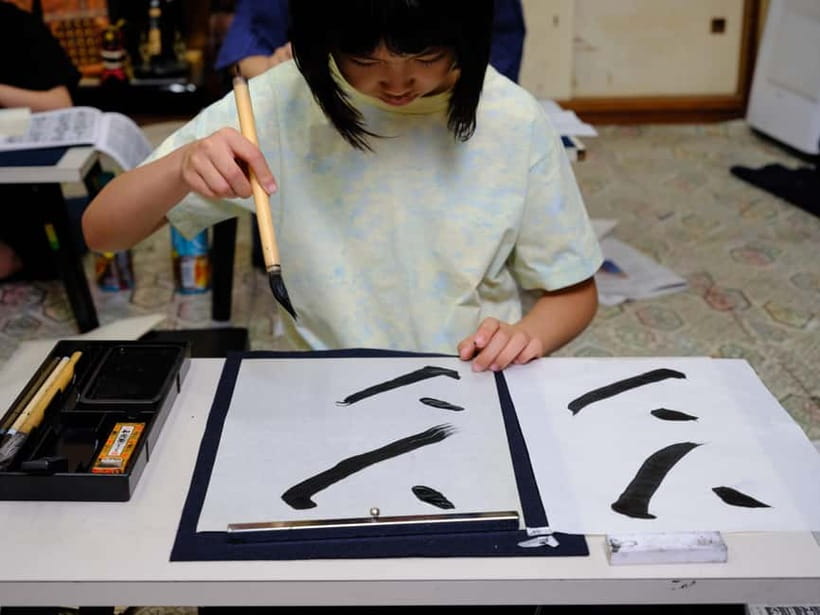
Tokyo offers plenty of quick cultural activities, but this calligraphy class asks you to slow down. You sit with a brush, ink, and paper, then learn to control a tool that responds to pressure, speed, and confidence. It is a simple setup, yet it requires real attention.
The class also gives context. Your instructor explains the spirituality, history, and meaning connected with Japanese characters. That matters because calligraphy is not just decorative handwriting. The direction of a stroke, the balance of the character, and the empty space around it all affect the final work.
You should not expect to become a trained calligrapher in an hour and a half. You will, however, understand why a character looks the way it does and how much care goes into producing one clean result. That makes the finished piece more meaningful than a souvenir purchased from a shop.
The group is limited to 10 people. That is small enough for individual corrections, though the exact amount of one-on-one time depends on how many people attend. The language options are English and French, which is especially useful for visitors who want more than a silent demonstration.
More calligraphy tables:
- Tokyo: Calligraphy on Kanji Fan & Scroll with Drink
★ 5.0 · 210 reviews - Let’s experience calligraphy in YANAKA, Taito-ku, TOKYO !!
★ 5.0 · 127 reviews - Experience all of Japanese culture and Japanese food experience classes “origami, udon, Japanese food, green tea, calligraphy” in 4 hours
★ 5.0 · 105 reviews
Arriving beside the nursery and Kaideiji
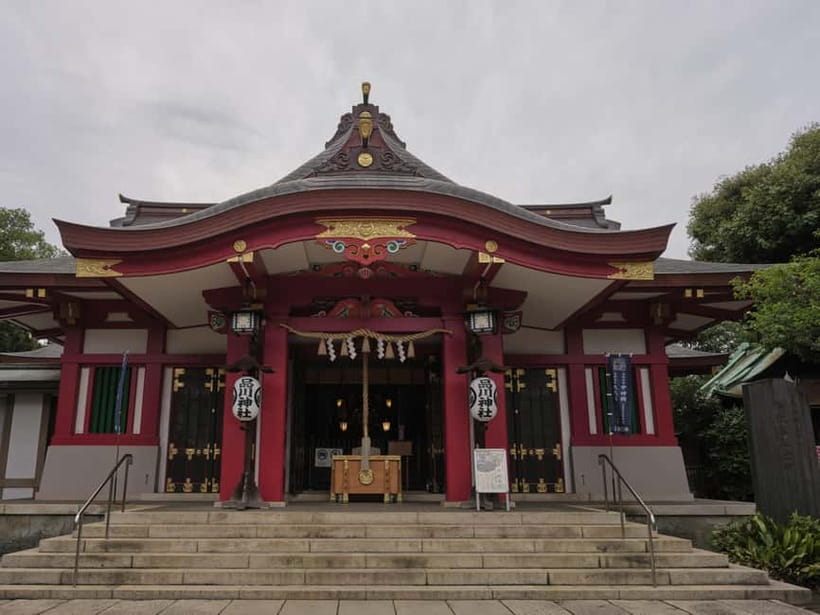
The meeting directions identify the location as next to a nursery and beside Kaideiji, written in the supplied directions as 海德寺. Pay attention to this wording when you plan your arrival. Since individual transportation is not included, you are responsible for getting to the meeting point.
Allow a little extra time to locate the place, especially if you are unfamiliar with Tokyo addresses or are relying on a translation app. The directions are brief rather than landmark-heavy. Once you arrive, the class itself is designed to keep things simple: meet the instructor, settle in, and begin with the cultural welcome.
A cup of Japanese tea and snacks help set the tone. This is a small detail, but it changes the pace. You are not pushed straight into holding a brush. You have a moment to arrive, look around, and prepare for an activity that rewards patience.
Choosing between a yukata and samue
The clothing option adds a visual and physical link to the lesson. You may wear a yukata or samue, depending on the arrangement available for your session. Several people have particularly enjoyed dressing in traditional clothing before beginning the brush work.
A yukata is a light traditional robe, while a samue is practical work clothing associated with craft and temple settings. The choice gives the activity a different feel from a standard art class. It also makes the class attractive for families, couples, and anyone looking for photographs that show more than a crowded Tokyo street.
Wear clothes that can get dirty. Ink and calligraphy practice do not always stay exactly where you expect, and the official instructions make this point clearly. You should choose comfort over your best holiday outfit, even if you plan to change into the provided clothing.
If you are booking for a family, remember the age limits. Children under four cannot take part, and the activity is not suitable for people over 70. That policy is important to check before paying, particularly when several generations are traveling together.
Learning brush control before writing a kanji
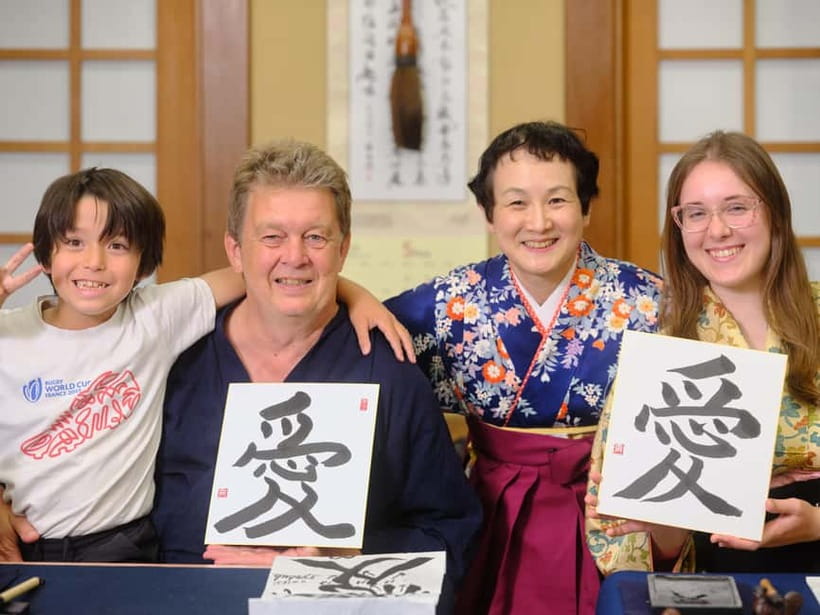
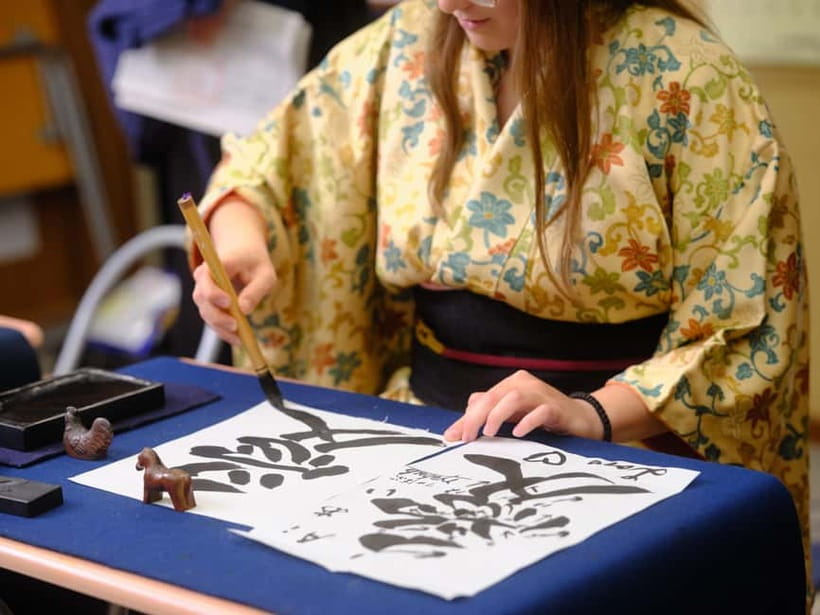
The lesson begins with the basics. Rather than handing you a brush and asking you to copy a finished character, the instructor breaks down the process. You learn how to draw lines and use the brush properly before working toward a kanji.
That early practice is where you discover the difference between writing with a pen and writing with a brush. A brush can produce a thin line or a broad mark depending on the pressure and movement of your hand. A hesitant stroke can look quite different from one made with steady motion.
The teaching style is highly guided. Hana is praised for explaining each stage clearly and helping participants move from simple lines to a complete character. Tomo is also noted for taking time with learners and offering explanations in both French and English through the teaching team.
Koushi is described as an experienced guide with strong artistic ability. In one family session, his daughter and another interpreter helped explain the lesson and offered practical support afterward. That kind of assistance can be useful if you have questions about the class, a taxi, or buying a calligraphy set.
The class is not presented as a contest. You practice, receive help, and try again. That makes it workable for beginners who have never held a calligraphy brush, as well as for people who already enjoy drawing and want to understand Japanese brushwork.
More kimono fittings and strolls:
- Let’s make kimono !(Kimono is a gift for you
★ 5.0 · 252 reviews - Tokyo: Matcha and Kimono Experience
★ 4.7 · 219 reviews - Tokyo: Asakusa Kimono Dressing and Matcha Experience
★ 4.9 · 173 reviews - Asakusa: Kimono Tea Ceremony with Matcha and Sweet
★ 4.9 · 153 reviews
Understanding the meaning behind the characters
The strongest cultural element comes from learning what the characters represent. Your instructor discusses the spirituality and history connected with Japanese classical calligraphy, giving you a reason to think about the character before you write it.
The information is especially useful if you are choosing a character for your final artwork. A kanji can carry an idea, feeling, or value, and the meaning may be more layered than a one-word English translation suggests. The class gives you a chance to connect the visual form with that larger idea.
The exact character you write can depend on the session and your personal choice. The activity information confirms that you will practice and create your own kanji artwork. In addition, instructors may write your name for you. That is a lovely touch because names do not always translate neatly into kanji, and a professional interpretation gives you a keepsake linked directly to your time in Japan.
This is also where the activity feels more substantial than dressing up for a photograph. The clothing is fun, but the character lesson gives the class its purpose. You leave with a better sense of how written language can function as art, tradition, and personal expression at the same time.
Creating the final piece to take home
After practice, you move on to the artwork you will keep. You use what you have learned about line, pressure, and balance to produce a final calligraphy piece. The finished work is prepared on a board or card that you can bring home.
Do not expect every mark to look like a professional’s work. That is not the point. Your piece records the process of learning, and the small irregularities show that you made it by hand. The instructors help you refine the result so it feels presentable and personal.
The take-home artwork is a strong value point. At $64 per person, you are paying for instruction, tools, traditional clothing access, tea, an English or French speaking guide, and the finished piece. You also avoid buying supplies for a one-time activity, since the necessary calligraphy tools are provided.
Some participants have also received additional small souvenirs, and one family was helped in finding a calligraphy set for a child. These extras should not be treated as guaranteed inclusions, but they show the sort of personal attention that may be available during the visit.
Pack the finished work carefully for the rest of your trip. The activity provides the artwork, but the supplied information does not specify a protective tube or special luggage packaging. A flat space in your suitcase or a sturdy folder would be sensible.
Tea, snacks, and a calm finish
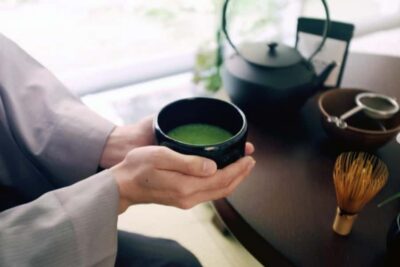
Japanese tea is included, and the welcome may also include snacks. This pause gives your hands a break after the focused brush practice. It also leaves room for conversation with the instructor and other members of your group.
I like this part because it keeps the class from feeling like a production line. You are given a chance to absorb what you have done instead of immediately being sent on to the next stop. The tea is not the main attraction, but it supports the quiet mood that calligraphy needs.
The atmosphere has been described as warm and considerate, with instructors who are happy to answer questions. That is particularly helpful for families. Younger participants can enjoy the clothing and artwork, while adults can ask about the language, traditions, and meaning behind the characters.
Still, the 90-minute length sets a clear limit. You will get an introduction and practice time, not a full study of Japanese calligraphy. If you want a long, technical workshop, you may find this class too short. If you want a focused cultural activity that fits neatly into a Tokyo day, the timing is practical.
Who will get the most from this activity
This class suits you if you want a hands-on cultural experience rather than a performance you simply watch. It is also a good choice if you like making souvenirs. The final artwork has a direct connection to the lesson, and your instructor may add your name in Japanese calligraphy.
Families can do well here, provided all children are at least four and everyone is comfortable with a quiet activity. One family used the class for a birthday celebration and found the personal guidance especially helpful. The clothing, tea, and finished artwork give the occasion several memorable parts.
Couples and solo visitors should also consider it. You do not need previous artistic ability. The instructors teach the foundations, and the small group format gives you a chance to ask for help rather than struggle alone.
French-speaking visitors have a particularly useful option because the class is offered in French as well as English. The language choice can make the explanations about spirituality and character meaning much easier to follow.
This may not be the right pick for you if you want a large-scale cultural show, a food-focused activity, or an open-ended art workshop. It also may not suit anyone who dislikes wearing borrowed clothing, concentrating for extended periods, or risking a little ink on their clothes.
Value, timing, and practical planning
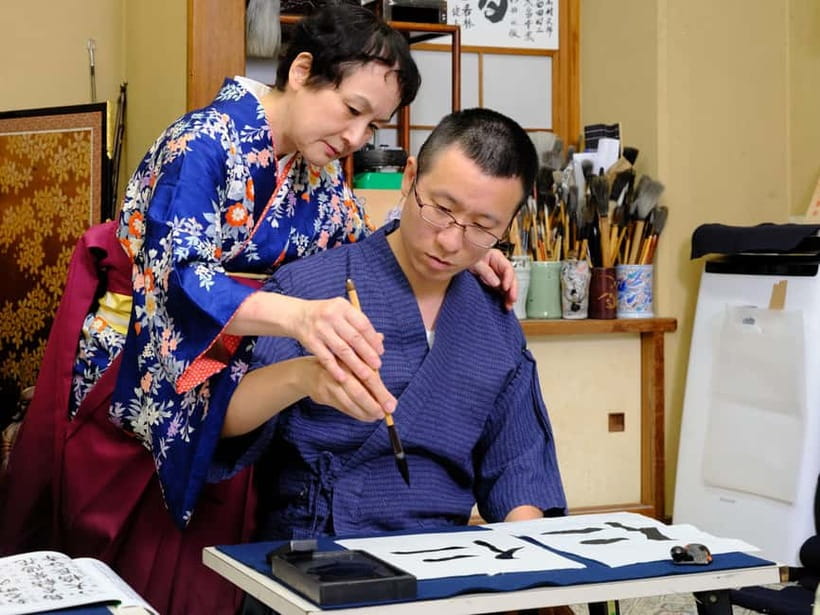
The $64 price is reasonable if you make use of the full package. The value comes from the combination of professional instruction, equipment, clothing access, tea, language support, and a piece of art to take home. A simple demonstration would cost less, but it would not give you the same hands-on element.
The small group limit of 10 is worth noting when comparing this with larger cultural classes. You are more likely to receive direct corrections and help with your final piece. The tradeoff is that the class may feel less flexible if another participant needs extra time.
The duration is 90 minutes, with several starting times available depending on the date. Check the available time before building the rest of your Tokyo plans. Because you need to arrange your own transportation, include time to reach the meeting point beside the nursery and Kaideiji.
You can cancel up to 24 hours before the activity for a full refund, and the reserve-now, pay-later option lets you hold a place without paying immediately. Those terms are useful in Tokyo, where weather, jet lag, and changing plans can affect a busy itinerary.
The instructors speak English or French. The activity provider is 日本書鏡院. The group size is limited, and all necessary calligraphy tools are included, so you do not need to bring brushes, ink, or paper.
My final call on the Tokyo calligraphy class
I would book this if you want a quiet, personal link to Japan that you can carry home. The strongest reasons are the patient instruction, the explanation of character meaning, and the chance to create a finished piece rather than simply watch someone else work.
Choose it for a birthday, a family outing, or a slower morning away from Tokyo’s busiest streets. Hana, Tomo, and Koushi are associated with the thoughtful teaching style that makes beginners feel supported, and the English and French options add real practical value.
Think twice if you want a quick photo opportunity or a broad sightseeing tour. This is a focused workshop, and you need to bring clothes that can get dirty. For most people who enjoy making things and want a souvenir with a story, the $64 fee is well spent.
FAQ
How long does the Tokyo calligraphy class last?
The activity lasts 90 minutes. Starting times vary, so you should check availability for your chosen date.
What languages are available?
Instruction is available in English and French.
Are calligraphy tools provided?
Yes. All necessary calligraphy tools are included, along with instruction from a professional calligrapher.
Can I take my artwork home?
Yes. You create a finished calligraphy piece and take it home as a souvenir. The instructor may also write your name for you.
Is traditional clothing included?
You can wear a yukata or samue as part of the activity. The class information and participant experiences also refer to kimono clothing.
What should I wear or bring?
Wear clothes that can get dirty because ink may stain clothing. You do not need to bring calligraphy tools.
Is the activity suitable for young children?
Children under four are not permitted to take part. The group is limited to 10 participants.
What is the cancellation policy?
You can cancel up to 24 hours in advance for a full refund. You can also reserve now and pay later.
New on our Tokyo list
- Sumi-e Experience in a relaxing green tea shop in Tokyo★ 5.0 · 3 reviews
- Tokyo : Kamikaze Street Drift Ride★ 5.0 · 3 reviews
- Private Zen Meditation in English in Shinjuku, Tokyo★ 5.0 · 3 reviews
- Onsen Spa in Tokyo and Asakusa Bar Hopping with Local Guide★ 5.0 · 3 reviews
- Easy for everyone! Now you can play handmade mini shamisen and show off to everyone! Musical instruments, sweets and live music★ 5.0 · 3 reviews
- Tokyo: Private Tsukiji Street Food & Sake with Local Guide★ 5.0 · 3 reviews
- Mt Fuji Exploration Tour with Free Japanese Kusa Mochi from Tokyo★ 4.5 · 3 reviews
- Tokyo Tsukiji Fish Market Walking and Exploring Hidden Gems Tour★ 5.0 · 3 reviews
Kimono Experiences, compared.

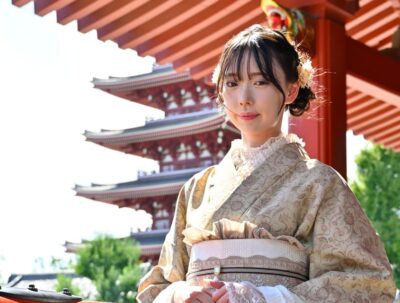
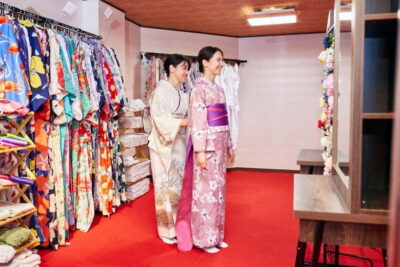
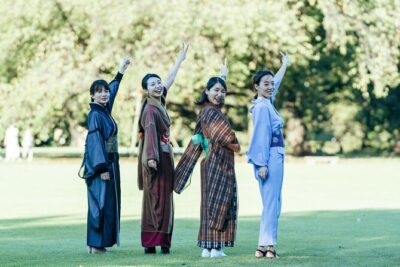
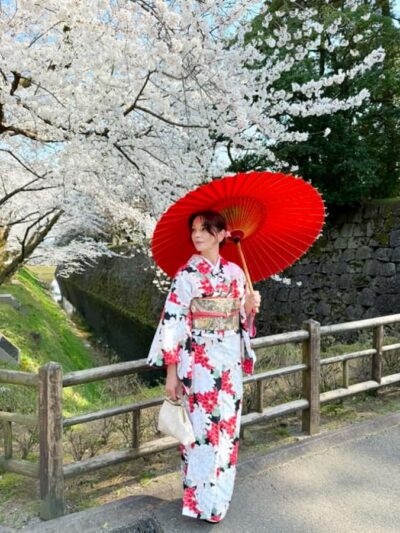
Tokyo Asakusa: Traditional Kimono Rental Experience at Wargo
Read our review →
Tokyo Asakusa: Miu Kimono Rental and Optional Photoshoot
Read our review →
Tokyo Authentic Kimono Rental in Asakusa with Photography Option
Read our review →Browse the lists this tour appears in