
Reviewed · HISTORICAL TOURS
Tokyo: Imperial Palace, the history of Japan (ENGLISH GUIDE)
The most interesting part of this tour is that it takes you across the former base of Edo Castle, the seat of power that helped shape modern Japan. You walk through the Imperial Palace’s eastern gardens, see surviving walls and ruins, and hear why the main castle is gone.
I like the small-group feel, which can make it easier to ask about Japanese mythology, language, the imperial family, and everyday life. I also like the special Koi found only here, plus the chance to see trees connected with different prefectures of Japan. The main thing to check before paying is the language: the title refers to an English guide, while the supplied details list French as the tour language.
In This Review
- Key points to know before you book
- Why Edo Castle explains modern Japan
- Meeting at Wadakuramon Fountain Park
- Passing through Otemon into the palace grounds
- Seeing the missing castle and its miniature model
- Former barracks, trees, and special Koi
- A guide-led history of Japan, not just the palace
- What you do not see inside the Imperial Palace
- How much value do you get for $40?
- Weather, clothing, and walking comfort
- Who will get the most from this walk?
- Booking details that matter
- Should you book the Imperial Palace history tour?
- FAQ
- Where does the Imperial Palace tour start?
- Where does the tour end?
- Does the tour enter the inner Imperial Palace?
- Is the tour in English or French?
- Who is the tour provider?
- What can I see during the walk?
- What happens if I arrive late?
- Can I cancel for a refund?
Key points to know before you book
- Walk through Edo Castle’s former stronghold: See the old base of the castle that ruled Japan more than 350 years ago.
- Visit the eastern Imperial Palace gardens: Expect stone walls, palace remnants, ornamental gardens, and quiet paths rather than access to the inner palace.
- Look for special Koi: The tour includes a chance to see a distinctive breed found only within these grounds.
- Meet near Tokyo Station: The starting point is by Starbucks at Wadakuramon Fountain Park, a 5 to 10 minute walk from Tokyo or Otemachi Station.
- Ask about the guide language: The available information names French as the language, with Franco-Japanese guide Nicolas mentioned in the feedback.
- Plan for any weather: The walk runs in good weather or bad, so suitable clothing matters.
Why Edo Castle explains modern Japan
Tokyo’s Imperial Palace can seem like a polished, formal space from the outside. The eastern gardens tell a more useful story. Before Tokyo became Japan’s modern capital, this was the center of Edo, the huge castle town ruled by the shoguns.
That makes the tour more than a garden stroll. Your guide connects the walls, gates, open spaces, and remaining foundations to the long shift from feudal rule to the Japan you see today. If you want a quick way to place Japanese history in order, this is the main value of the experience.
The former Edo Castle was more than a residence. It was a military base, political headquarters, and symbol of authority. The walk includes the former soldiers’ barracks and the old castle base, giving you physical points to match the historical explanation.
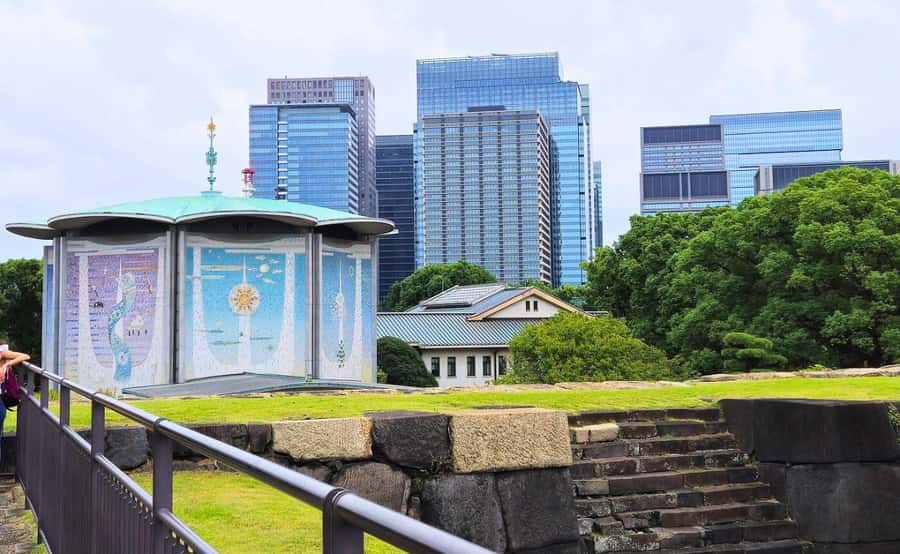
You will not see a complete castle rising over the trees. The main castle no longer exists, and the guide explains why. A miniature structure of the former palace helps fill in the picture, but anyone expecting an intact fortress should adjust expectations before booking.
A few more Tokyo bookings worth comparing
- Tokyo: Imperial Palace and Shogun Historical Walking Tour
★ 5.0 · 2,251 reviews - Tokyo: Imperial Palace Japanese History Walking Tour
★ 4.9 · 987 reviews - Yanaka Walking Tour: Historic and Traditional District of Tokyo
★ 5.0 · 530 reviews
Meeting at Wadakuramon Fountain Park
You begin at Starbucks near the fountain in Wadakuramon Fountain Park. The park is a 5 to 10 minute walk from either Tokyo Station or Otemachi Station, making this a practical tour to fit around other central Tokyo plans.
Your guide holds a sign marked SUNRISE ADVENTURE. I would allow extra time to find the fountain and Starbucks, especially if you are unfamiliar with the large Tokyo Station area. The meeting point is outside the palace grounds, so you should not need to search inside the formal entrance gates.
The tour starts promptly. If you are not there within 10 minutes of the meeting time, the group may leave without you. That rule is worth taking seriously in Tokyo, where a wrong station exit can cost more time than expected.
After meeting, you head together toward Otemon, the large main gate of the Imperial Palace. Walking as a group from the meeting place gives you a little time to settle in and hear what you will see inside.
Passing through Otemon into the palace grounds
Otemon marks the shift from central Tokyo streets to the old castle grounds. Once through the gate, the tour follows paths through the eastern gardens and the former palace area.
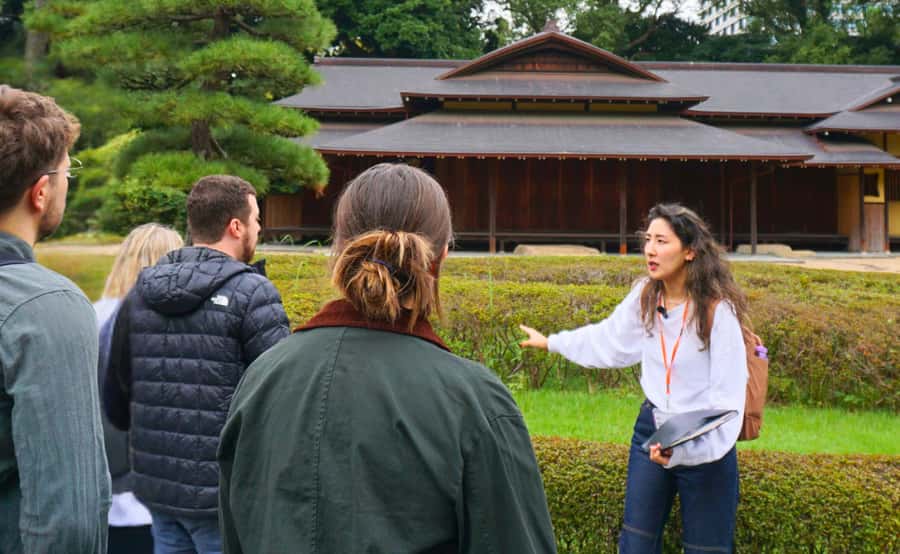
The setting is calm, but the story is not simply decorative. Stonework, open courtyards, garden design, and the remains of buildings all help show how the castle worked. Your guide explains what stood here and how the grounds were used.
This is where a guide adds real value. Without context, you could walk past a wall or foundation and see only old stone. With the history placed around it, the garden becomes a record of military power, court life, and political change.
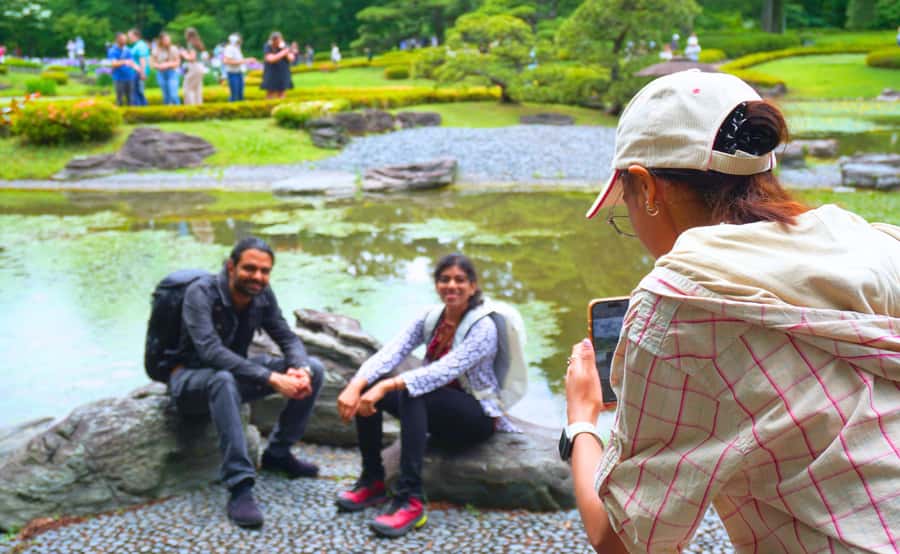
The tour is also designed to pause at good photo spots. You can expect opportunities to photograph the gardens, walls, trees, and remaining structures. The exact conditions will vary by season and weather, but the route gives you more than one type of view.
Seeing the missing castle and its miniature model
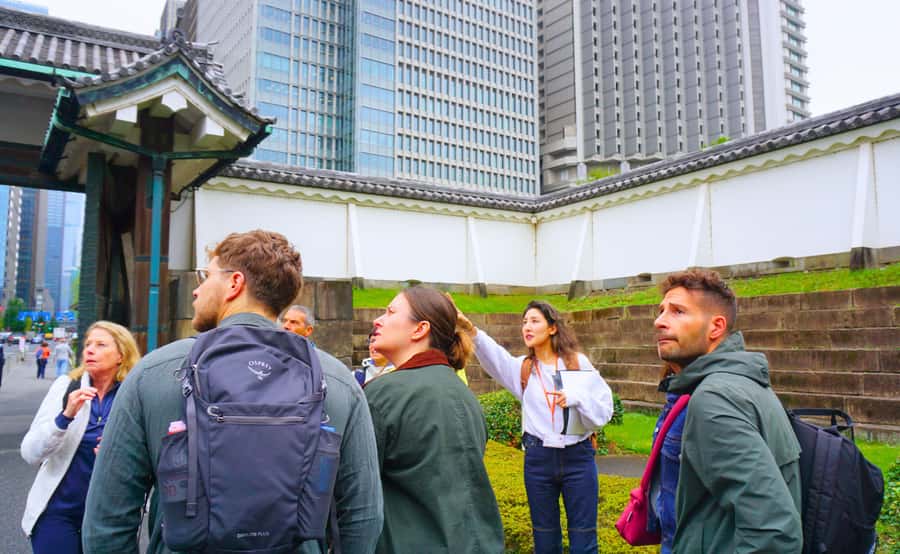
The absence of the main castle is one of the tour’s central subjects. Rather than treating the missing building as a disappointment, the guide explains the reason it disappeared and what replaced it in the story of the site.
You also have a chance to see a miniature structure representing the former palace. This is useful because the surviving grounds do not always make the old scale obvious. A model can help you picture the buildings that once dominated the castle compound.
I like this part for visitors who want history rather than a simple photo stop. You are not just told that a castle once stood here. You get an explanation of how the former palace fitted into the wider Edo Castle complex.
Still, keep your expectations realistic. This is not a full castle reconstruction, and the tour does not include access to the inner palace. The eastern gardens and former castle grounds are the focus.
Same corner of Tokyo, a completely different plan:
- Mt Fuji and Hakone 1-Day Bus Tour Return by Bullet Train
★ 5.0 · 26,383 reviews - 1-Day Tokyo Bus Tour
★ 5.0 · 14,250 reviews - Tokyo: TOKYO SKYTREE® Admission ticket
★ 4.5 · 11,192 reviews - Tokyo: teamLab Planets TOKYO Digital Art Museum Entry Ticket
★ 4.6 · 9,779 reviews
Former barracks, trees, and special Koi
The walk includes the former soldiers’ barracks, another reminder that Edo Castle was a working seat of power rather than only an elegant residence. The barracks help connect the palace grounds with the people who defended and maintained them.
You will also see trees from different prefectures of Japan. This detail gives the garden a national dimension. The grounds are not only tied to Tokyo or the old Edo government. They also reflect parts of Japan beyond the capital.
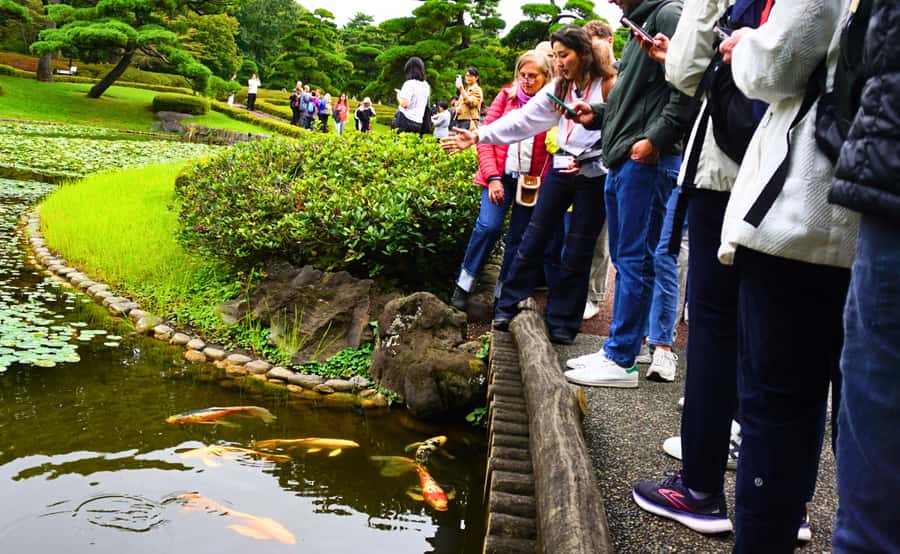
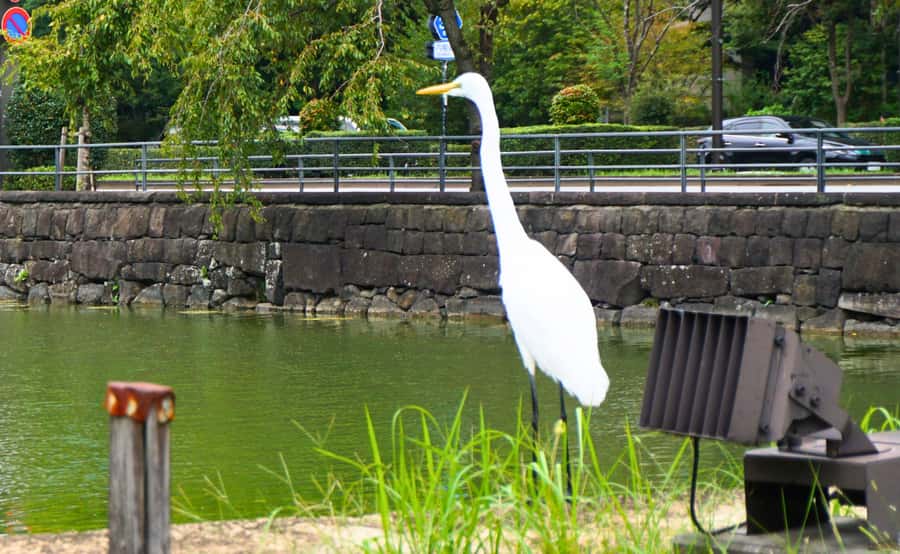
The special Koi are one of the tour’s more unusual details. You have the chance to see a breed that can only be found here. Fish may not sound like a major historical sight, but this kind of small feature can make the visit more memorable, especially for children and anyone who enjoys gardens and living details.
The Koi, trees, and gardens also break up the historical explanations. You are not listening to a nonstop lecture while walking past identical walls. The route combines stories, nature, and visual stops, which should suit you if you prefer history delivered at a relaxed pace.
A guide-led history of Japan, not just the palace

The tour aims to explain how Japan developed into the country it is today. That is a broad goal, so the quality of the experience depends heavily on how you use your guide’s time.
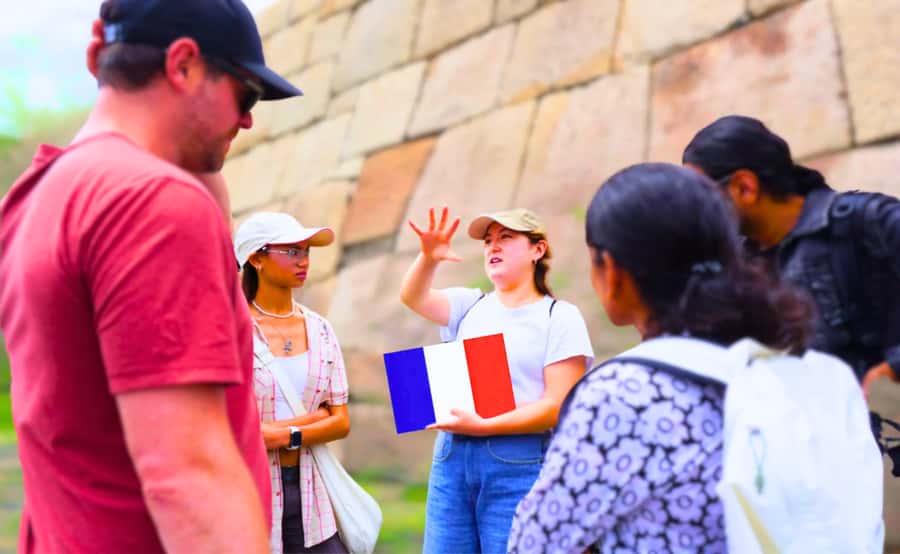
The supplied information identifies the guide language as French, and Nicolas is mentioned as a Franco-Japanese guide. A description elsewhere refers to an English guide, so I would confirm the language directly before booking. Do not assume that the English wording in the title matches the language field.
If French works for you, the tour appears well suited to questions. Nicolas is described as covering the park’s smaller secrets as well as Japanese mythology, language, Japan in general, and the imperial family. The strongest benefit here is conversation. You can ask about a detail as soon as it catches your attention instead of saving every question for later.
A small group makes that easier. One reported group had five people, which allowed plenty of back-and-forth and created a friendly atmosphere. Group size can vary, so I would not treat five as a guaranteed number, but the experience is clearly intended to be personal rather than a large coach-style walk.
If you prefer to explore silently at your own speed, this format may feel slower than going alone. The tradeoff is that you leave with a better explanation of what you saw.
What you do not see inside the Imperial Palace

This experience does not include entry to the inner palace. That distinction matters because Tokyo’s Imperial Palace is still a working imperial residence, and many visitors imagine that a palace tour means entering the main private or ceremonial buildings.
Here, you remain in the accessible eastern gardens and former Edo Castle grounds. You see the old base, ruins, gardens, barracks, model structure, trees, and Koi, but not the inner palace.
For many people, that is enough. The eastern gardens offer the historical setting, and the former castle site is the main reason to book. If your priority is seeing interiors, imperial rooms, or a complete castle building, this is the wrong tour.
I would pair it with other Tokyo sights rather than treating it as a complete Imperial Palace visit. The route gives you the historical foundation, then you can decide how much more of the palace area you want to explore independently.
How much value do you get for $40?
At $40 per person, the tour costs more than entering a garden on your own, but the price pays for a guided history walk rather than simple admission. The key question is whether you want help understanding the site.
If you already know the history of Edo Castle, the shogunate, and the imperial family, you may find the price harder to justify. You can see the gardens without paying for a guide, although you would lose the organized route and the chance to ask questions.
For a first visit to Tokyo, I think the value is stronger. The tour gives you a clear story about how the castle worked, why the main structure vanished, and how the site connects to Japan’s political past. It also saves you from wandering through a large historic area without knowing which walls, ruins, or garden features matter.
The reported small-group setup improves the value. A guide who answers questions about mythology, language, and modern Japan can make the $40 feel more worthwhile than a short scripted talk. Still, the language issue is important. Confirm that the guide’s language matches your needs before you commit.
Weather, clothing, and walking comfort
The tour takes place in good weather or bad. Wear clothing suited to the forecast, and do not treat this as an indoor palace visit where you can escape rain or heat.
You will be walking through gardens and historic grounds, so comfortable shoes are the sensible choice. The supplied information does not give a duration or a distance, so I would not plan a tight appointment immediately afterward.
Bring what you normally need for an outdoor walk, such as weather protection and water, but do not bring prohibited items. Smoking, drones, alcohol and drugs, littering, and skateboards are not allowed.
The route includes photo stops, but photo conditions depend on the weather. On a wet day, stone and garden surfaces may look atmospheric, but the walk will be less comfortable. On a bright day, you may get better garden photos, though you still need clothing that suits the temperature.
Who will get the most from this walk?
I would recommend this experience to you if you want a readable introduction to Japanese history and prefer learning while seeing the actual places involved.
It should suit:
- First-time visitors who want context for Tokyo’s imperial and political past
- History fans interested in Edo Castle and the rise of modern Japan
- Visitors who enjoy gardens but want more than pretty scenery
- People who like asking questions about mythology, language, and local customs
- Couples, families, or small groups who prefer a friendly walking tour
- French-speaking visitors, after confirming the language before booking
You may want another option if you need inner palace access, an intact castle, a fully self-guided visit, or a tour with a guaranteed English-speaking guide. The listing information is not consistent on that last point, so confirmation is essential.
The tour also may not suit you if you dislike scheduled group walks or outdoor activities in poor weather. There is no promise of an indoor alternative.
Booking details that matter
The tour begins near Starbucks at Wadakuramon Fountain Park and ends back at the same meeting point. Tokyo Station and Otemachi Station are both nearby, with a stated walking time of 5 to 10 minutes.
You can reserve and pay later, which helps if your schedule is still shifting. Cancellation is allowed up to 24 hours before the tour for a full refund.
The meeting rule is strict: arrive within 10 minutes of the scheduled start or the guide may begin without you. I would use the exact meeting instructions and look for the SUNRISE ADVENTURE sign rather than relying only on the Starbucks name.
Should you book the Imperial Palace history tour?
Book it if you want the eastern Imperial Palace gardens explained through the story of Edo Castle, and if you value a guide who can connect palace ruins with Japan’s wider history. The special Koi, former barracks, trees from different prefectures, and photo stops add variety to the walk.
At $40, it is a fair choice for a first visit when the history matters to you. Skip it if you mainly want palace interiors or a complete castle, since neither is part of the experience.
Before booking, confirm the guide language. The details supplied for this activity list French and mention Nicolas, a Franco-Japanese guide, while the title refers to English. Once that point is settled, this looks like a friendly, question-friendly way to understand why this central Tokyo site matters.
FAQ
Where does the Imperial Palace tour start?
The meeting point is near the Starbucks by the fountain in Wadakuramon Fountain Park. The park is a 5 to 10 minute walk from Tokyo Station or Otemachi Station.
Where does the tour end?
The activity ends back at the original meeting point near Wadakuramon Fountain Park.
Does the tour enter the inner Imperial Palace?
No. The tour does not include access to the inner palace. It visits the eastern gardens and the former Edo Castle grounds.
Is the tour in English or French?
The supplied tour title refers to an English guide, but the additional information lists French as the language. Confirm the language with Sunrise Adventure before booking.
Who is the tour provider?
The experience is provided by Sunrise Adventure.
What can I see during the walk?
You can see the former Edo Castle base, palace ruins, the former soldiers’ barracks, oriental gardens, trees from different Japanese prefectures, a miniature former palace structure, and special Koi found only here.
What happens if I arrive late?
If you do not arrive within 10 minutes of the meeting time, the tour may start without you.
Can I cancel for a refund?
You can cancel up to 24 hours before the activity for a full refund. You can also reserve and pay later.
New on our Tokyo list
- From Tokyo: Mount Fuji & Hakone Full Day Private Tour★ 4.9 · 25 reviews
- Tokyo Spectacular View Day-Cruise in 90 Minutes★ 5.0 · 25 reviews
- 2.5 Hour-Guided Cycle Tour in the Central Tokyo★ 5.0 · 25 reviews
- Real Tokyo Runner Club : Daikoku Car Meet Night Tour with JDM Car★ 5.0 · 25 reviews
- Ramen Making from Scratch +Akihabara Tour –Cooking Class★ 5.0 · 25 reviews
- [Self-Drive] Tokyo & Daikoku Custom Car Driving Tour★ 4.9 · 25 reviews
- Tokyo: 2-Hour Night Bike Tour of the City’s Hidden Gems★ 4.9 · 25 reviews
- Samurai themed Entertainment show in Shinjuku★ 4.5 · 25 reviews
Historical Tours, compared.

Imperial Palace and Shogun Historical Walking Tour
Read our review →
Yanaka Walking Tour: Historic and Traditional District of Tokyo
Read our review →
Shinjuku Historical Walking Tour & Secret Backstreets
Read our review →
Mt. Fuji Heritage Tour: Traditional Villages, Lakes & Shrine
Read our review →

The Best of Izakaya in Shinjuku Food & Cultural Tour
Read our review →
Yanaka Historical Walking Tour in Tokyo’s Old Town
Read our review →Browse the lists this tour appears in