
Reviewed · MT FUJI AREA TOURS
Tokyo: Mt. Fuji, Arakurayama Sengen Park, Oshino Hakkai Tour
Mount Fuji takes the starring role here, but the best part is the variety of views around it. You’ll see the famous pagoda at Arakurayama Sengen Park, clear spring pools at Oshino Hakkai, old-style houses at Saiko Iyashi-no-Sato Nenba, and the mountain framed from a traditional Fujiyoshida street.
I like the way this tour joins several places that are awkward to connect on your own, and I like that roundtrip transport keeps you from wrestling with rural train and bus changes. The $50 price is fair for a long day with transport, a guide, and the Nenba entry ticket.
The tradeoff is time. This is a 9.5-hour day, with about four hours spent on the bus, and popular viewpoints can be crowded. There are also long stairs and uphill sections, so it is not a good fit if you need crutches or are over 70.
In This Review
- Key points to know before booking
- Why this Mount Fuji day works well
- Meeting at Shinjuku West Exit
- Arakurayama Sengen Park and the famous pagoda view
- Fujiyoshida, the clock shop, and a street-level Fuji view
- Oshino Hakkai and its clear spring pools
- Oishi Park on weekdays only
- Saiko Iyashi-no-Sato Nenba and old rural Japan
- The long road back to Shinjuku
- Is $50 a fair price?
- Who should book this day trip?
- Best seasons for the Fuji views
- Should you book this Mount Fuji tour?
- FAQ
- How long does the tour last?
- Where does the tour begin?
- Where does the tour finish?
- What languages are available?
- Is food included?
- Is admission to Saiko Iyashi-no-Sato Nenba included?
- Will the tour visit Oishi Park every day?
- Is the tour suitable for people with limited mobility?
- Can I cancel the booking?
Key points to know before booking
- Four very different Mount Fuji views: A pagoda, spring-fed pools, a lakeside park, and a traditional village give you more than one standard mountain photo.
- Arakurayama Sengen Park is the visual prize: The five-story pagoda and Mount Fuji line up in the classic postcard view.
- Oshino Hakkai gives the day a quieter rhythm: Clear spring water, village scenery, and time to explore make this more than a quick photo stop.
- Oishi Park is weekday-only: It is closed on weekends, holidays, and from April 29 to May 5, and traffic can force the stop to be canceled.
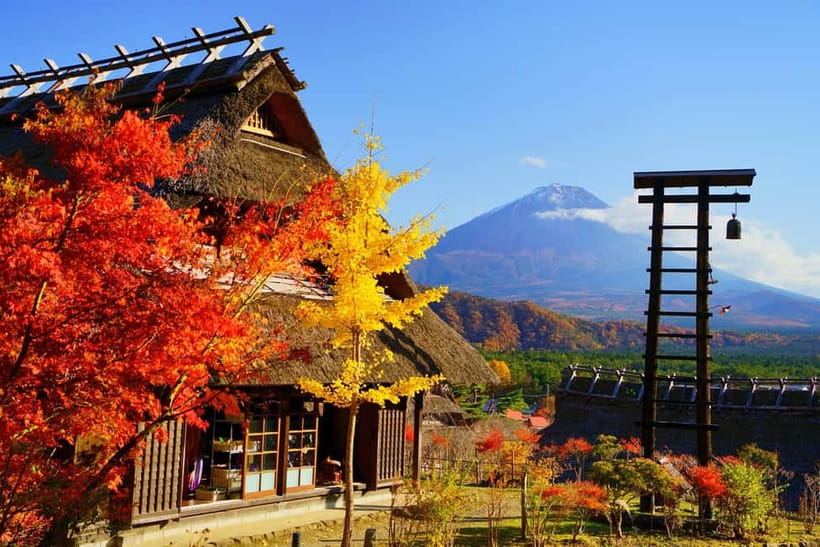
- Saiko Iyashi-no-Sato Nenba includes admission: Its thatched houses and mountain setting offer a strong taste of old rural Japan.
- Plan for stairs, cash, and a long return: Wear practical shoes, bring cash for food and personal purchases, and expect the ride back to Shinjuku to take about two hours.
Why this Mount Fuji day works well
A Mount Fuji outing from Tokyo can become a puzzle of train schedules, local buses, and uncertain connections. This trip solves that problem with one coach from Shinjuku and a guide who helps you move through the day. You leave from the west side of Shinjuku, see several major sights, and return near Shinjuku Station.
The route also has a useful mix. Arakurayama Sengen Park gives you the famous elevated view. Oshino Hakkai brings you close to water and village life. Fujiyoshida Honcho Street adds a town view, while Saiko Iyashi-no-Sato Nenba gives you old thatched buildings and a more rural setting.
You should not expect a slow, private tour. The schedule allows roughly one hour at Arakurayama, 90 minutes at Oshino Hakkai, half an hour at the clock shop and Fujiyoshida area, and shorter visits at Oishi Park and Nenba. That makes the tour efficient, but each stop has a clear time limit.
The overall rating is 4.3 from 35 ratings, and the most consistent strengths are the guide support and the chance to see Mount Fuji when the weather cooperates. One French booking from February specifically praised the guide and the mountain view. A separate booking from Australia noted unexpected walking, which is a useful warning: the day is not entirely gentle or flat.
More Mt Fuji days from Tokyo:
- Mt Fuji and Hakone 1-Day Bus Tour Return by Bullet Train
★ 5.0 · 26,383 reviews - Mt Fuji & Hakone Cruise, Drum Show Bullet Train 1 Day from Tokyo
★ 4.0 · 7,413 reviews - Tokyo Mt Fuji 5th St & Hakone Cruise Bus Tour w/Bullet Train
★ 4.4 · 5,024 reviews
Meeting at Shinjuku West Exit
The meeting point is in front of Kogakuin University, near the west side of Shinjuku. From the Shinjuku West Exit, walk underground from the Central West Exit for about one or two minutes toward the Tokyo Metropolitan Government Building. Kogakuin University is near the Keio Plaza Hotel, and you should look for the Wonder Tour flag.
Arrive on time. The operator says there will be no advance contact, so do not count on a last-minute message if you are lost. I would allow extra time inside Shinjuku Station, which is large enough to turn a short walk into a rushed start.
Roundtrip transport is included, along with an English or Chinese-speaking guide. If your vehicle is a Hiace or microbus, the driver may provide Chinese or machine-translated English commentary instead of a professional guide. That distinction matters if detailed guiding is important to you.
Arakurayama Sengen Park and the famous pagoda view
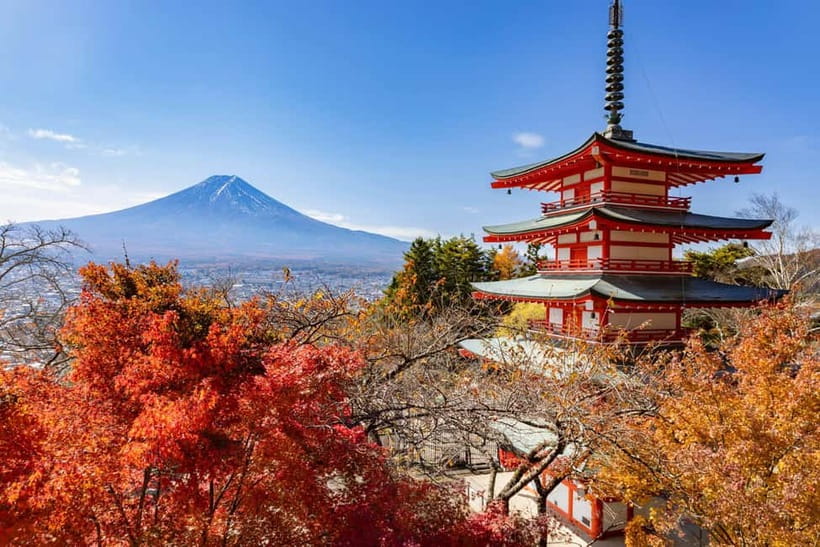
After about 90 minutes by bus, you reach Arakurayama Sengen Park. You have around an hour here, enough to make the climb, take photos, and pause at the main viewpoint if the crowds allow.
This is the scene many people picture when they think of Mount Fuji: a five-story pagoda, Mount Fuji rising behind it, and a hillside viewpoint above Fujiyoshida. The appeal changes with the seasons:
- In spring, about 650 cherry trees bloom around the park.
- In summer, green hills and clear air frame the mountain under a blue sky.
- In autumn, orange and red maple leaves surround the pagoda.
- In winter, snow on the pagoda roof and Mount Fuji creates the cleanest, most dramatic version of the view.
The important catch is the climb. Some parts of the route have long stairs and uphill sections, so this is not a quick step off the coach and into a viewpoint. Wear shoes with a firm sole, and keep your pace steady. If you have limited mobility, ask yourself honestly if this stop is worth the physical effort.
Mount Fuji visibility is never guaranteed. The park can still be attractive in cloud or poor weather, but the famous composition depends on a clear view. Winter often offers crisp air, while spring and autumn add flowers or leaves. Cherry blossom timing around Mount Fuji usually falls from late April to early May, but the exact dates vary with the weather.
Fujiyoshida, the clock shop, and a street-level Fuji view
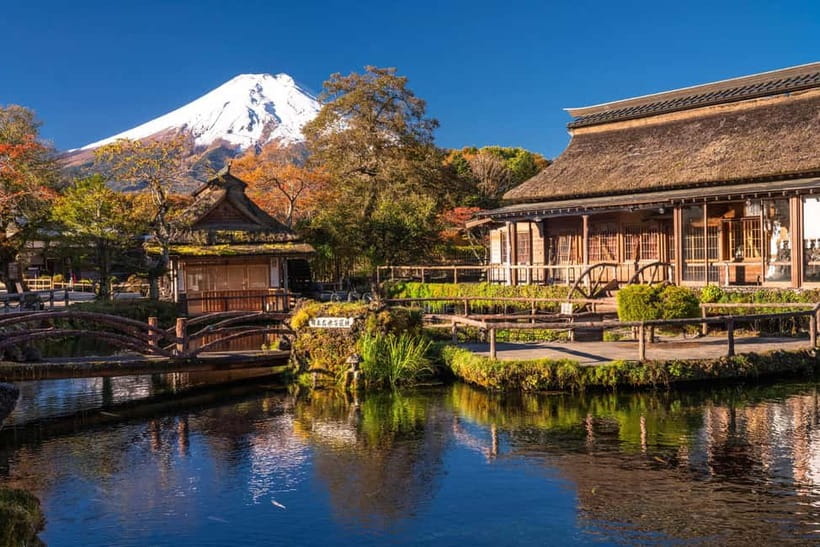
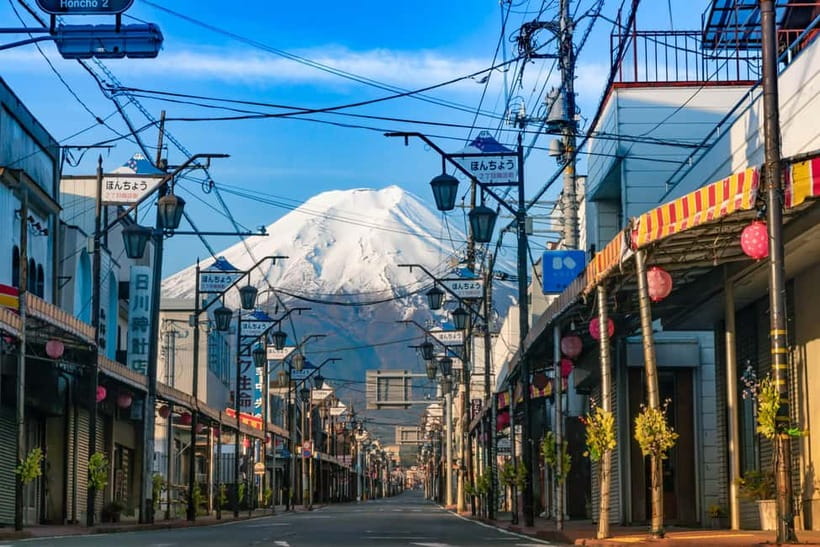
The next stop lasts about 30 minutes at the Hikawa Clock Shop area. This is connected with Fujiyoshida Honcho Street, a traditional town setting where shops and older architecture frame Mount Fuji in the distance.
This stop offers a different kind of photograph. Instead of seeing the mountain from a park platform, you see it beyond an ordinary Japanese street. In spring, cherry blossoms line the road. Summer brings festival stalls and fireworks as part of the seasonal atmosphere. Autumn leaves add color, while winter’s cold, clear air can make the snow-covered mountain easier to see from afar.
Thirty minutes is short, so think of this as a focused photo and orientation stop, not a full town visit. Take care with roadside photography and follow the guide’s directions. The charm here comes from the contrast between daily town life and the huge mountain beyond it.
A few more Tokyo bookings worth comparing
- 1-Day Tokyo Bus Tour
★ 5.0 · 14,250 reviews - Tokyo: TOKYO SKYTREE® Admission ticket
★ 4.5 · 11,192 reviews - Tokyo: teamLab Planets TOKYO Digital Art Museum Entry Ticket
★ 4.6 · 9,779 reviews - Tokyo: Sumo Show Experience with Chicken Hot Pot and a Photo
★ 4.8 · 6,678 reviews
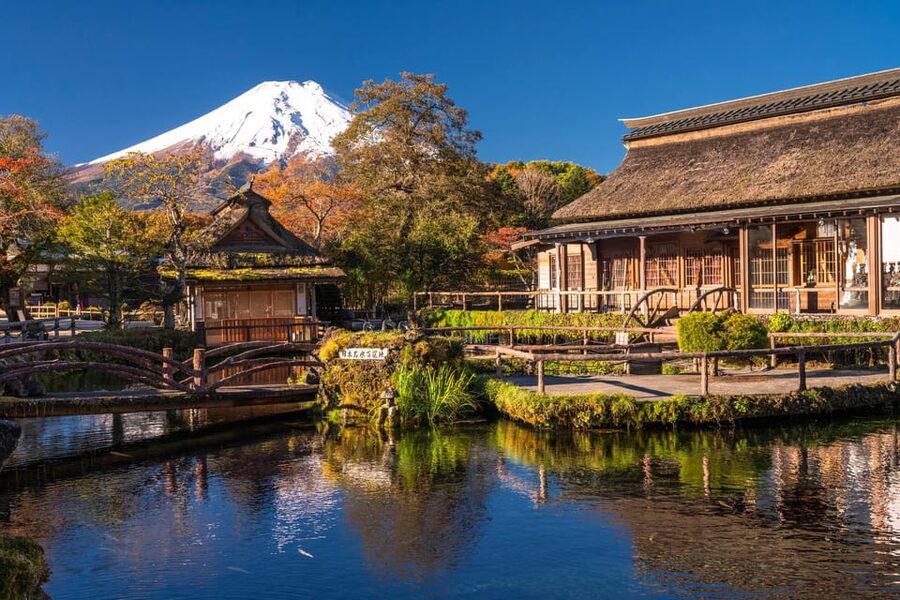
Oshino Hakkai and its clear spring pools
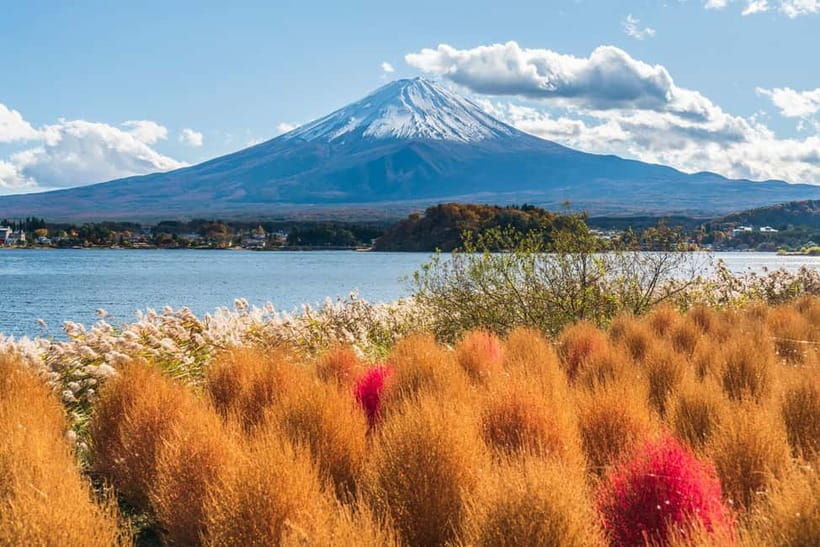
A 20-minute bus ride brings you to Oshino Hakkai, where you have about 90 minutes. This is one of the more relaxing parts of the day. The village is known for clear spring water and small pools, with Mount Fuji often reflected on the surface when conditions are right.
The seasonal character is strong:
- Spring brings cherry blossoms beside the water.
- Summer offers cool, clear pools surrounded by green growth.
- Autumn leaves drift onto the water.
- Winter snow covers the village while the springs remain clear.
I like this stop because it gives you time to slow down. Ninety minutes is enough to walk around, take in the water, and look for food or small purchases. Meals are not included, so Oshino Hakkai is one of the places where cash is useful.
The main drawback is crowding. Oshino Hakkai is a well-known stop, and the narrow village areas can feel busy. Visit with realistic expectations. You are not arriving at an untouched country retreat, but the spring water and mountain setting still make this a worthwhile part of the route.
Oishi Park on weekdays only
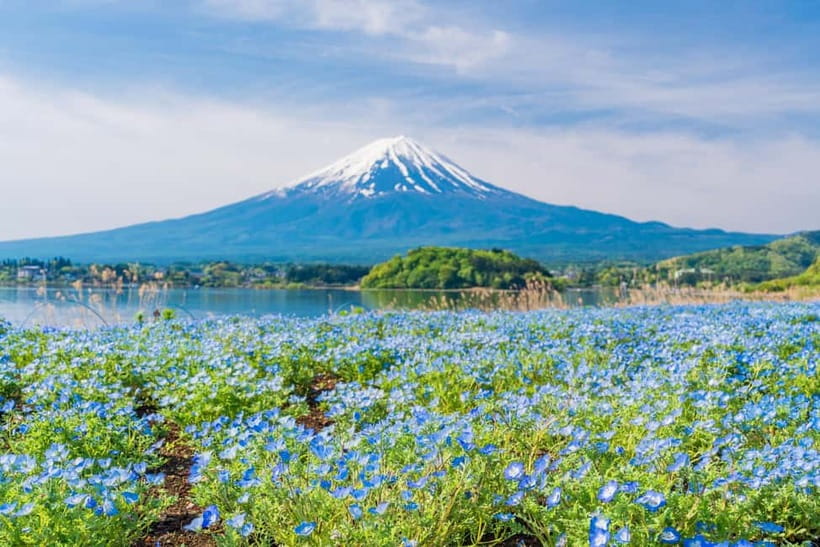
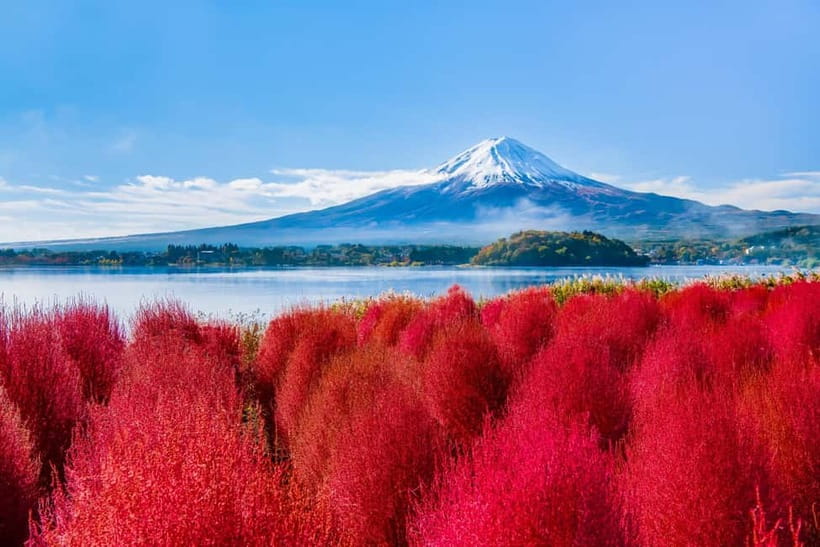
Oishi Park is reached after another 30-minute ride, and the planned visit lasts about half an hour. It sits by Lake Kawaguchi and offers a broad view toward Mount Fuji.
The park changes with the calendar. Tulips and moss phlox appear in spring. Lavender is the main summer attraction, filling the lakeside with purple color and fragrance. In autumn, the grass turns golden and the first snow may appear on Mount Fuji. Winter brings a quieter view, with the lake reflecting the snowy mountain.
There is one major condition: Oishi Park is open for this tour only on weekdays. It is closed on weekends, holidays, and during Golden Week, from April 29 through May 5. Even on weekdays, heavy traffic can cause the operator to cancel this stop.
That policy is worth keeping in mind when comparing tours. You are paying for a full day of sights, but this particular stop is not guaranteed. If Oishi Park is important to you, choose a weekday outside Golden Week and accept that road delays can still change the plan.
Saiko Iyashi-no-Sato Nenba and old rural Japan
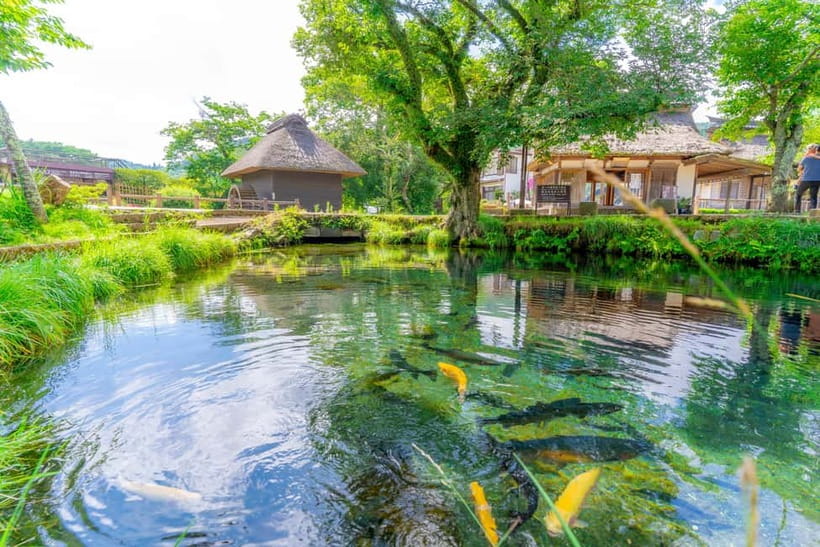
After about 20 minutes on the bus, you reach Saiko Iyashi-no-Sato Nenba. You have one hour here, and the admission ticket is included.
The village is built around traditional thatched-roof houses near Lake Saiko. It gives the day a strong historical and rural note without requiring a long museum visit. In spring, cherry blossoms add color around the old roofs. Summer brings green rice fields, clear streams, and mountain air. Autumn leaves highlight the houses, while winter snow can make the village look almost storybook-like, with hot spring steam rising nearby.
This stop is also a good reason to keep the tour rather than choosing a route made up only of viewpoints. You get architecture, nature, and a calmer sense of place. The hour is enough to walk through the village and enjoy the setting, but not enough for a very slow exploration of every detail.
The ticket saves a small extra cost and removes one simple task from your day. Meals and personal purchases remain your responsibility, so bring cash. Japan is easy to navigate in many places with electronic payment, but the tour specifically advises carrying cash.
The long road back to Shinjuku
The final coach ride takes about two hours. That is a substantial stretch after a full day of walking, stairs, photos, and sightseeing. I would keep water handy, avoid overloading yourself with shopping, and treat the return as recovery time.
The total duration is 570 minutes, or nine and a half hours. About 90 minutes gets you from Tokyo to the Fuji area, and the return takes about two hours, with shorter drives connecting the stops. Traffic is an important part of the calculation. The Fuji Five Lakes area can be slow, and delays may shorten a stop or remove Oishi Park on a weekday.
This is the price of seeing several spread-out locations in one day. A public transport plan might give you more freedom at one place, but it would be harder to combine all these stops efficiently. Here, you trade control for convenience.
Is $50 a fair price?
At $50 per person, the tour offers solid value if you want a broad Mount Fuji day rather than a single viewpoint. Roundtrip transportation covers the costly and time-consuming part of the outing. You also receive a guide and admission to Saiko Iyashi-no-Sato Nenba.
Food is not included, and you will pay for personal purchases yourself. Still, the included transport and long route make the price reasonable for someone starting in Tokyo. The value is strongest if you would otherwise need to arrange several local buses or taxis around the Fuji area.
The price is less attractive if you want a private, unhurried day. You will follow a fixed schedule, spend a lot of time on the coach, and may have only 30 minutes at some stops. I would choose it for coverage and ease, not for deep exploration of one village or park.
Free cancellation is available up to 24 hours before departure, and you can reserve now while paying later. Extreme weather or unforeseen events can change the route. If the operator cancels for those reasons, you can reschedule or request a full refund, but no refund is promised if the activity simply cannot follow the planned route because of such conditions.
Who should book this day trip?
I would recommend it to first-time Tokyo visitors who want to see Mount Fuji without planning a complicated regional route. It also suits photographers who want several compositions: pagoda, street, spring pools, lake, and thatched village.
It works well for people who value a guide and a fixed plan. The English and Chinese language options are useful, though the exact level of commentary depends on the vehicle. Families and active adults may enjoy the variety, provided everyone can manage stairs and uphill paths.
I would hesitate if you dislike crowds, need a slow pace, or have mobility limits. The route includes unexpected walking, a long day, and sections that are not suitable for people who need crutches. The operator says it is not suitable for people over 70.
Best seasons for the Fuji views
Spring is the most romantic choice if cherry blossoms are your priority, but do not assume the trees will bloom on a precise date. Around Mount Fuji, the usual period is late April to early May, with climate affecting both timing and the number of flowers.
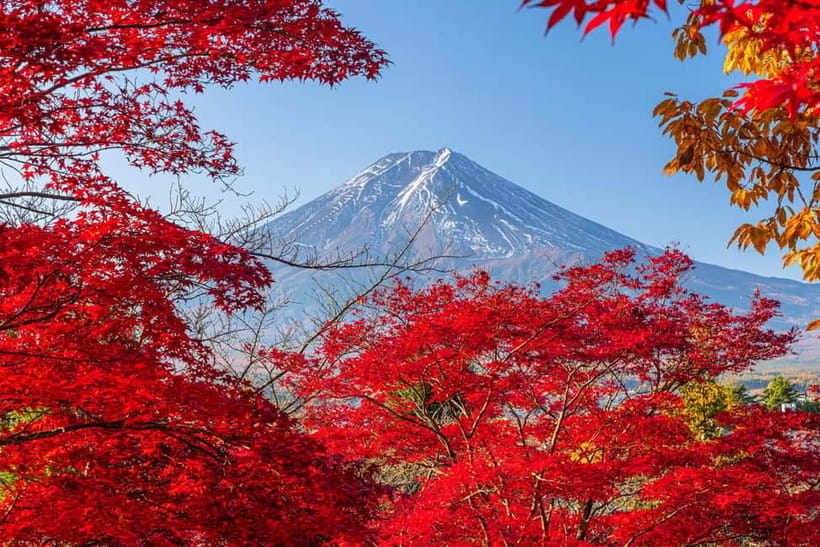
Autumn foliage usually appears from late October to early November. Arakurayama Sengen Park and Nenba can be especially attractive then, with red and orange leaves around the pagoda and thatched roofs.
Summer offers green scenery, clear spring water, and lavender at Oishi Park. Winter can bring the clearest mountain outline, snow-covered roofs, and a quiet feel around the lake and village. In every season, visibility depends on weather, so do not book this day only for one guaranteed photograph.
Should you book this Mount Fuji tour?
Book it if you want a practical, good-value introduction to the Mount Fuji area from Tokyo. The strongest reasons are the classic Arakurayama view, the 90 minutes at Oshino Hakkai, the included Nenba ticket, and transport between places that are not simple to link on your own.
Skip it if you want a private pace, dislike bus rides, or need certainty that Oishi Park will be included. Choose a clear-weather date when possible, arrive early at the Shinjuku meeting point, bring cash, and wear shoes suited to stairs. With those expectations, this is a busy but useful day that gives you several distinct sides of Mount Fuji.
FAQ
How long does the tour last?
The tour lasts 570 minutes, or about nine and a half hours.
Where does the tour begin?
It begins in front of Kogakuin University near the Shinjuku West Exit. Walk one to two minutes from the underground Central West Exit toward the Tokyo Metropolitan Government Building and look for the Wonder Tour flag near the Keio Plaza Hotel.
Where does the tour finish?
The tour finishes at Shinjuku Station.
What languages are available?
The stated tour languages are English and Chinese. If the vehicle is a Hiace or microbus, the driver may provide Chinese or machine-translated English commentary instead of a professional guide.
Is food included?
No. Meals are not included, so bring cash for food and personal expenses.
Is admission to Saiko Iyashi-no-Sato Nenba included?
Yes. The Saiko Iyashi-no-Sato Nenba ticket is included.
Will the tour visit Oishi Park every day?
No. Oishi Park is visited only on weekdays. It is closed on weekends, holidays, and during Golden Week from April 29 to May 5. A weekday visit may also be canceled if traffic causes delays.
Is the tour suitable for people with limited mobility?
Some sections include long stairs and uphill paths. The operator does not recommend the tour for seniors who require crutches, and it is listed as unsuitable for people over 70.
Can I cancel the booking?
You can cancel up to 24 hours in advance for a full refund. If extreme weather or another unforeseen event causes the operator to cancel, you can reschedule or request a full refund.
New on our Tokyo list
- From Tokyo: Mount Fuji & Hakone Full Day Private Tour★ 4.9 · 25 reviews
- Tokyo Spectacular View Day-Cruise in 90 Minutes★ 5.0 · 25 reviews
- Real Tokyo Runner Club : Daikoku Car Meet Night Tour with JDM Car★ 5.0 · 25 reviews
- 2.5 Hour-Guided Cycle Tour in the Central Tokyo★ 5.0 · 25 reviews
- Ramen Making from Scratch +Akihabara Tour –Cooking Class★ 5.0 · 25 reviews
- [Self-Drive] Tokyo & Daikoku Custom Car Driving Tour★ 4.9 · 25 reviews
- Tokyo: 2-Hour Night Bike Tour of the City’s Hidden Gems★ 4.9 · 25 reviews
- Samurai themed Entertainment show in Shinjuku★ 4.5 · 25 reviews
Mt Fuji Area Tours, compared.
Mt Fuji and Hakone 1-Day Bus Tour Return by Bullet Train
Read our review →
Mt Fuji & Hakone Cruise, Drum Show Bullet Train 1 Day from Tokyo
Read our review →
Tokyo Mt Fuji 5th St & Hakone Cruise Bus Tour w/Bullet Train
Read our review →
Mt. Fuji Tour, Hakone Ropeway, Owakudani, Lake Ashi
Read our review →
Mt.Fuji,Kawaguchiko Oishi Park,Arakurayama Sengen Park
Read our review →
Mt. Fuji 5th Station & Hakone Cruise 1-Day Bus Tour
Read our review →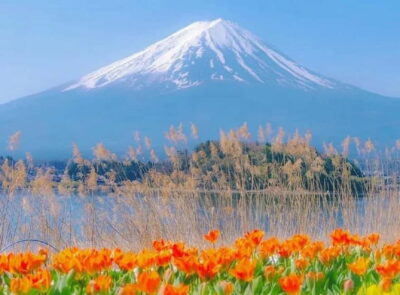
Mt Fuji Top 5 Spots Day Tour: Arakurayama Park,Oshino Hakkai
Read our review →Browse the lists this tour appears in