
Reviewed · TOKYO GO-KART EXPERIENCES
Tokyo Oldtown: Historic Landmarks Go Kart Tour (100 Minutes)
Tokyo’s old neighborhoods look different from behind a steering wheel. This 100-minute go-kart ride links Tokyo Skytree, Asakusa, Ueno, Akihabara, and the Imperial Palace in one guided circuit, giving you a street-level look at the city rather than a quick view from a train window.
I like the comfortable karts, clear radio instructions, and guides such as Satar, Travis, and Hiro, who have been praised for safety help and smooth English communication. I also like the range of sights packed into a short outing. The main consideration is simple: you are driving in city traffic, so this is not a sightseeing bus. You need the correct license paperwork, confidence behind the wheel, and a willingness to follow road rules.
In This Review
- Key points to know before booking
- Why this Tokyo go-kart route is different
- Starting near Tokyo Skytree
- Tokyo Skytree and the first city views
- The Japanese Sword Museum and Ryogoku Kokugikan
- Tokyo Station and the Imperial Palace
- Akihabara and Ueno at street level
- Asakusa and the historic heart of Tokyo
- What the karts feel like on city streets
- Guides, photos, and the small-group setup
- Is the $90 price fair?
- License rules are the key booking detail
- Who should book this experience?
- Should you book the Tokyo Old Town route?
- FAQ
- How long is the Tokyo Oldtown Go Kart Tour?
- Where does the tour begin?
- Which landmarks are included on the route?
- Does the tour include a guide?
- Which languages are available?
- How many people can join the group?
- What driving documents do overseas visitors need?
- Can Japanese residents join with an overseas license?
- Is a camera included?
- What is included in the price?
Key points to know before booking
- A 100-minute city circuit: The route connects Tokyo Skytree, Ryogoku, Tokyo Station, the Imperial Palace, Akihabara, Ueno, and Asakusa.
- Comfort-focused karts: Hydraulic brakes, suspension, and reinforced frames help make the karts stable and manageable for first-time drivers and bigger riders.
- Live help throughout the ride: A two-way radio links you to the guide for traffic instructions, directions, and cultural commentary.
- Small groups of up to 10: The limited group size makes it easier to stay together and hear the guide.
- Camera option: You can use an Insta360 camera on the kart, but you must purchase the Micro SD card.
- Strict license rules: Most overseas visitors need a passport, valid local license, and a 1949 Geneva Convention International Driving Permit.
Why this Tokyo go-kart route is different
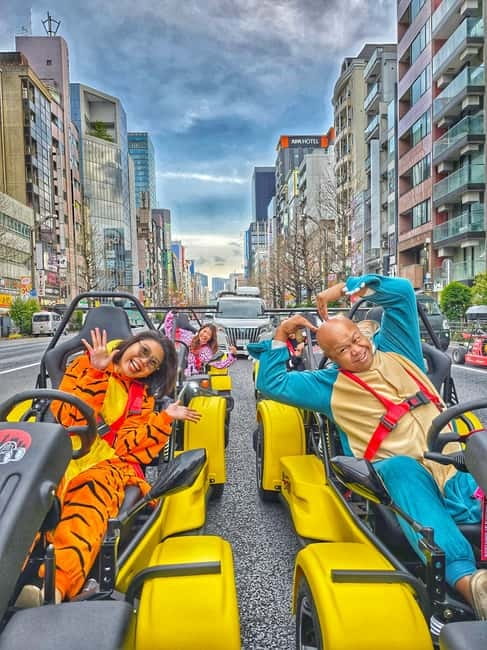
Many Tokyo sightseeing outings keep you above street level. You ride a train, climb a tower, or follow a guide through a temple district. This experience gives you a much more active role. You steer through the city while the guide leads the group and talks to you through a two-way radio.
The route is especially appealing because it joins modern Tokyo with its older districts. You begin near Tokyo Skytree, one of the city’s most recognizable modern landmarks, then pass through areas connected with sumo, traditional worship, old shopping streets, and local daily life.
I would not book this simply as a fast way to visit every attraction. In 100 minutes, you will not have time for long visits inside the Japanese Sword Museum, Senso-ji, or the Imperial Palace grounds. Think of the tour as a moving introduction, with scenic driving and short guide commentary at each area.
The provider limits the group to 10 people. That matters on public roads. A smaller group is easier for the guide to manage, and you have a better chance of hearing directions clearly. The pace is relaxed, with no racing.
More street-kart slots:
- Flagship 2-Hours Official Street Go-Kart Tour – Tokyo Bay Shop
★ 5.0 · 4,974 reviews - Official Street Go-Kart in Shibuya
★ 5.0 · 3,435 reviews - Official Street Go-Kart Tour – Akihabara
★ 5.0 · 1,578 reviews
Starting near Tokyo Skytree
The Kartzilla Go Kart facility is about an eight to ten-minute walk from Yotsugi Station on the Keisei Line. The building has clear signage, and Google Maps should take you to the right place. You do not get hotel pickup, so allow time to reach the facility and find it before your scheduled start.
The tour begins with a safety briefing and basic driving instructions. This is important even if you have used recreational go-karts before. These karts operate on city streets, so braking, spacing, turning, and traffic awareness matter more than speed.
You receive the kart, fuel, accident insurance, costume, drinks, and guide service as part of the activity. Backpacks are not allowed, and locker space is not provided. Travel light and ask the facility ahead of time if you need to arrange storage.
The karts are designed for city driving rather than a small indoor track. Suspension helps soften the ride, hydraulic brakes give you more controlled stopping, and reinforced frames accommodate big and tall riders. The stable handling should help first-time drivers settle in, but you still need to be comfortable operating a vehicle in traffic.
Tokyo Skytree and the first city views
Tokyo Skytree is the first major landmark on the route. From the road, you get scenic views of the tower and the surrounding streets rather than a visit to the observation decks.
This opening section helps you get used to the kart. You are still learning the group’s pace, listening to the guide, and becoming familiar with the controls. I like beginning here because the tower gives you an easy visual reference while you find your rhythm.
The Skytree area also sets up the contrast that makes this tour worthwhile. A huge modern tower rises above districts with older homes, shops, shrines, and temples. From a train, that contrast can pass in seconds. On the kart, you experience it at street level.
The Japanese Sword Museum and Ryogoku Kokugikan
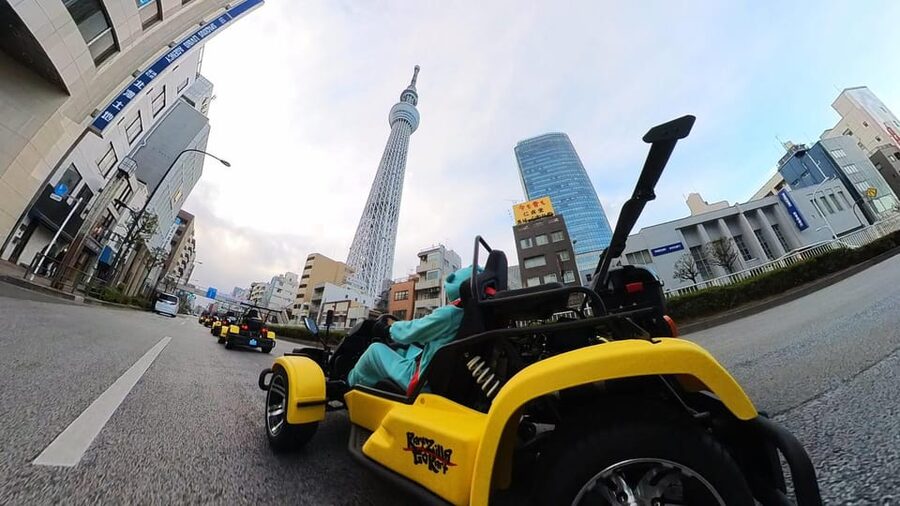
The Japanese Sword Museum adds a traditional cultural note to the route. The tour provides guided commentary and a scenic drive by the area, but the itinerary does not include a lengthy museum visit. If you want to see the collection inside, plan a separate visit.
Next comes Ryogoku Kokugikan, Tokyo’s famous sumo venue. Ryogoku is closely tied to Japan’s national sport, and the area gives the guide a natural chance to explain a part of Japanese culture that you might otherwise miss on a standard city tour.
The value here is the connection between place and story. You are not just checking off a building. You are passing through a district with a clear identity, and the guide can explain what makes it important while you continue through the city.
Since the outing covers many districts, the exact amount of time spent near each landmark can vary with traffic and road conditions. Treat these sections as guided scenic passes, not scheduled stops with long exploration time.
A few more Tokyo bookings worth comparing
- Tokyo: Imperial Palace and Shogun Historical Walking Tour
★ 5.0 · 2,251 reviews - Tokyo: Imperial Palace Japanese History Walking Tour
★ 4.9 · 987 reviews - Tokyo: Shinjuku Historical Walking Tour & Secret Backstreets
★ 5.0 · 530 reviews - Yanaka Walking Tour: Historic and Traditional District of Tokyo
★ 5.0 · 530 reviews
Tokyo Station and the Imperial Palace
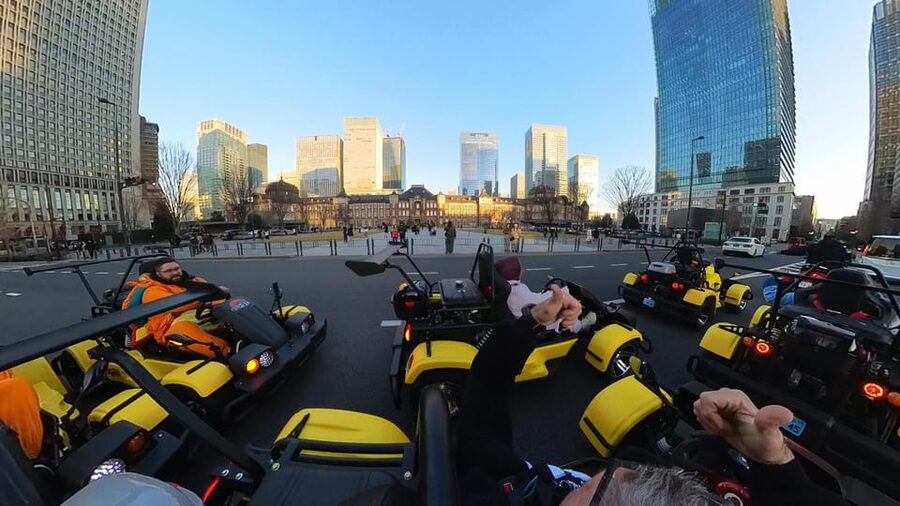
Tokyo Station brings the route into the city’s grand central core. Its historic architecture and role as a major transport hub make it one of the city’s most recognizable urban sights.
You then pass toward the Tokyo Imperial Palace. The palace is an important symbol of Japan, but this tour does not promise entry to the grounds or palace buildings. You will see the area as part of the drive and receive live commentary from the guide.
This part of the route offers a change in mood. Earlier districts feel more local and traditional, while the station and palace area give you a sense of Tokyo’s formal civic center. I like having both sides in one trip, though I would not choose this tour if your main goal is a detailed palace visit.
The guide’s radio communication is useful here. In a moving group, you need clear instructions before turns and lane changes. The system also lets the guide share information without requiring everyone to stop and gather around.
Akihabara and Ueno at street level
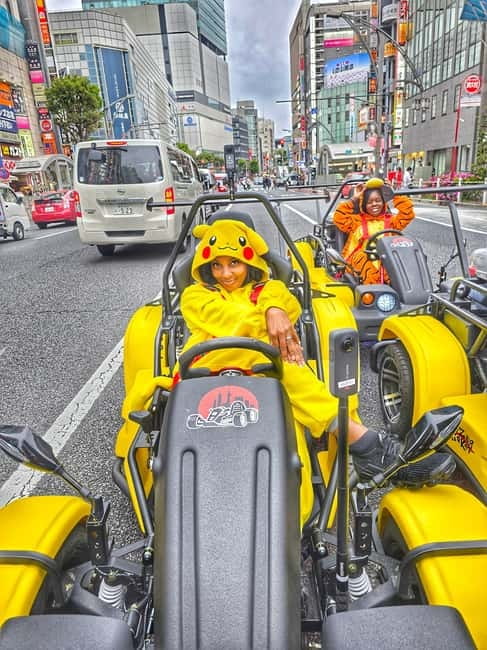
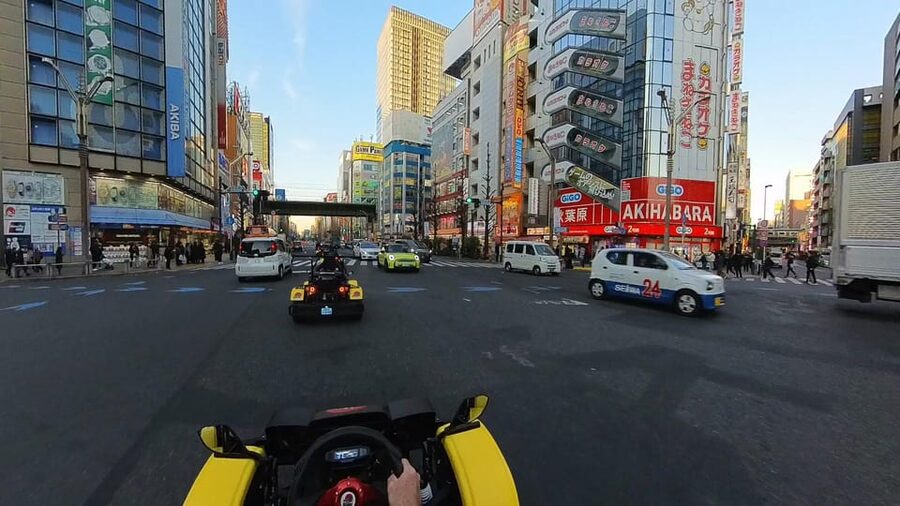
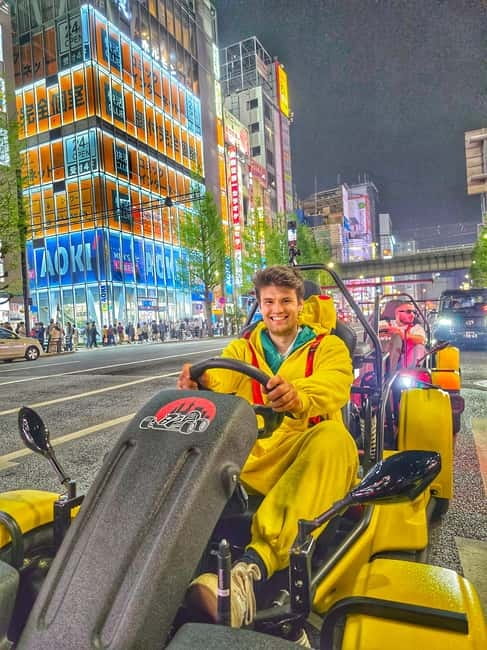
Akihabara is known for electronics, games, anime, and distinctive shop signs. A go-kart provides a fun way to pass through the district, especially if you want to see how its entertainment identity fits into the wider city.
Still, the drive is not a shopping tour. You will not have time to browse stores or visit specific arcades during the circuit. If Akihabara is high on your list, use this section to get your bearings, then return by train for a longer visit.
Ueno adds another layer. The district is associated with cultural attractions, public spaces, and older shopping streets. The route lets you see the area in motion and compare it with the polished central districts and the traditional streets near Asakusa.
The sequence of Akihabara and Ueno works well because the areas are close enough to link in one urban run, yet they feel quite different. You get a quick look at Tokyo’s modern pop culture, commercial life, and older neighborhood character without spending the whole day on transport.
Asakusa and the historic heart of Tokyo
Asakusa is the emotional center of the Old Town route. The district is home to Senso-ji, Tokyo’s oldest Buddhist temple, along with traditional streets, religious sites, historic architecture, and local shopping areas.
You should expect a drive through the district with guide commentary, not a full temple tour. The attraction is seeing Asakusa as part of a living neighborhood. The temple is important, but so are the streets around it, where old customs and ordinary city life continue side by side.
This is the portion that best matches the tour’s cultural purpose. Tokyo can be easy to reduce to neon signs, department stores, and tall buildings. Asakusa reminds you that the city has older foundations, and the guide can explain what you are seeing as the group moves through the area.
The route then returns to the Kartzilla facility. Since the itinerary covers so much ground, the views are the main event. Bring your attention to the streets, architecture, signs, and changing districts rather than expecting time to get out at every landmark.
What the karts feel like on city streets
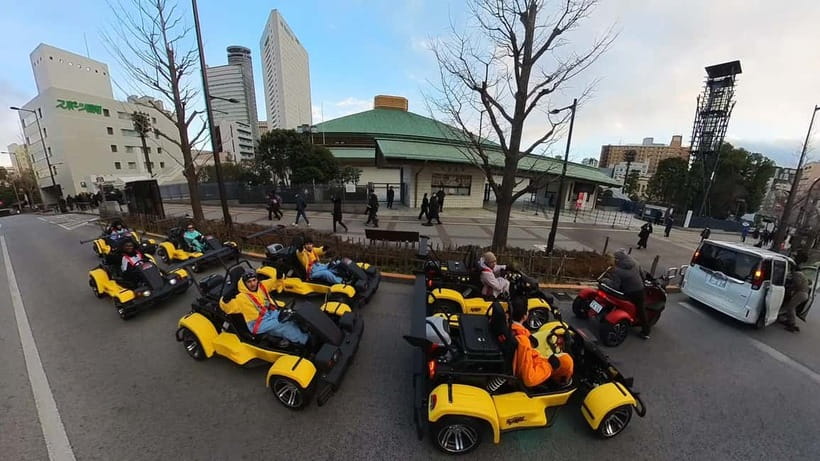
The provider describes the karts as safe, well maintained, and comfortable. The design includes suspension, hydraulic brakes, and reinforced frames. Those details are more meaningful here than they would be on a regular recreational track.
Suspension can make a difference over ordinary road surfaces. Hydraulic brakes give you more precise control when slowing down. The reinforced frame and extra room may be reassuring for big and tall riders who find standard karts cramped.
The karts are street-legal and professionally engineered, but that does not remove the need for care. You must follow the guide, keep with the group, and pay attention to traffic. The tour is beginner-friendly in pace, not a substitute for basic driving ability.
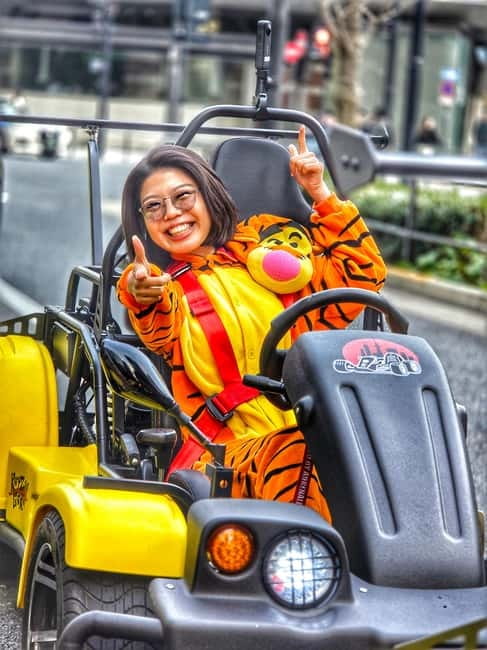
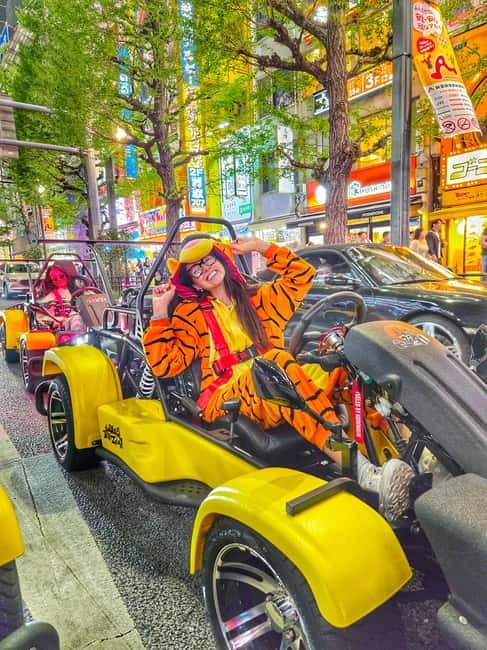
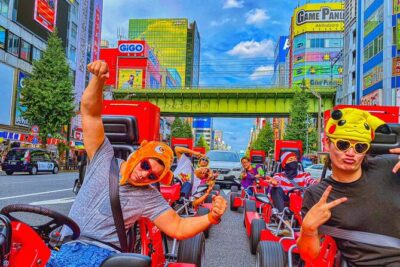
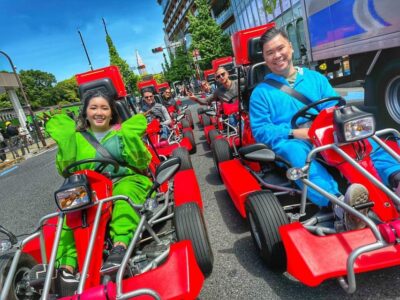
The costumes add a playful touch and make the photos more memorable. You should also dress for the weather and wear proper footwear. Bare feet are not allowed, and the provider does not permit backpacks, food, or drinks in the vehicle.
Guides, photos, and the small-group setup
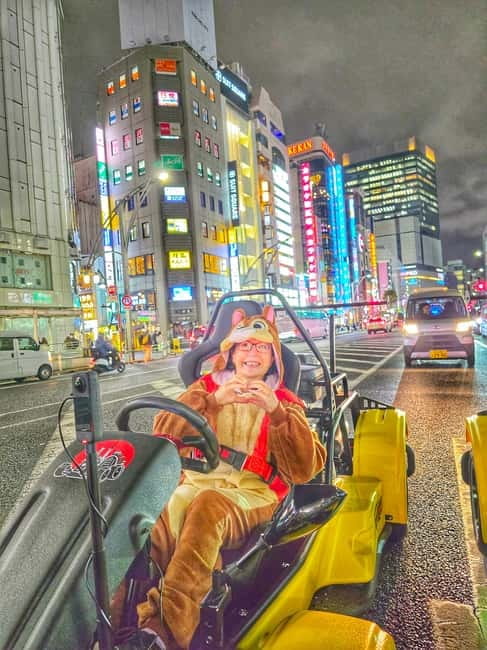
The live guide is one of the strongest parts of this experience. Satar and Travis have been singled out for clear instructions, strong English, and helpful guidance. Hiro has also helped participants with driver’s-license translation questions.
Languages offered are English, German, and Persian. The two-way radio keeps the guide connected to every driver, which serves two purposes: you receive immediate road guidance, and you hear cultural information while passing the sights.
Each kart can use an Insta360 camera. The equipment is free, but you must buy the Micro SD card. The package also includes videos and photos, so confirm the exact camera arrangement and card cost when you arrive if recording matters to you.
Photos are especially useful on this kind of activity because you cannot safely take pictures while driving. The hands-free camera lets you record the journey from the driver’s seat, including historic streets and city views. You can also rely on the guide to take photos during the outing.
Is the $90 price fair?
At $90 per person, this is not the cheapest way to see Tokyo. Public transport costs far less, and a walking tour may offer more detailed historical explanation at a lower price.
The value comes from combining several things in one short experience: a street-legal kart, fuel, a guide, live radio communication, insurance, a costume, drinks, and photo or video options. You also cover a wide section of the city without planning a complicated route yourself.
I think the price makes sense for you if the driving itself is a major part of the appeal. You are paying for an activity, not just transportation between landmarks. If you mainly want time inside temples, museums, or the Imperial Palace area, the money would be better spent on separate visits and local transit.
The free cancellation up to 24 hours before departure and reserve-now, pay-later option provide useful flexibility. Check the available start times before booking, especially if you want an evening ride. One published experience specifically praised nighttime driving, but the exact atmosphere depends on the selected departure.
License rules are the key booking detail
Do not leave the driving paperwork until the last minute. Japanese residents and Japanese nationals need a valid license issued in Japan.
Visitors from overseas generally need three things: a passport, a valid local driver’s license, and an International Driving Permit issued under the 1949 Geneva Convention. Not every international permit is accepted in Japan, so check the issuing convention carefully.
Citizens of Switzerland, Germany, France, Belgium, Monaco, and Taiwan may drive with a Japanese translation of their license. The provider asks you to contact them a month ahead if you need help with the translation.
US military personnel may use a SOFA Permit, specifically USFJ 4E-J, or a state driver’s license together with an active-duty uniformed military ID.
Bring your passport and license to the facility. Drivers must be at least 18, and the activity is not suitable for wheelchair users, people with visual impairments, or anyone over 95. Pets, alcohol, drugs, baby carriages, and food or drinks in the vehicle are not permitted.
Who should book this experience?
I would recommend it to confident adult drivers who want something more active than a bus or walking tour. It suits first-time kart drivers who appreciate close guidance, as well as bigger riders who often find ordinary rental karts uncomfortable.
It is a good choice for a short Tokyo visit because the route touches many districts in 100 minutes. It can also work well near the start of a longer stay, giving you a quick mental map of the eastern and central parts of the city.
You should think twice if you dislike traffic, need a quiet sightseeing experience, or want long stops at cultural sites. It is also a poor fit if you have not confirmed the required license documents.
Should you book the Tokyo Old Town route?
Book this tour if you want to drive through Tokyo’s history, enjoy a little costume-and-camera fun, and value a guide who stays in contact throughout the trip. The combination of Skytree, Ryogoku, Tokyo Station, the Imperial Palace area, Akihabara, Ueno, and Asakusa gives you a broad view of the city in a compact time.
Skip it if your priority is entering museums and temples, shopping in Akihabara, or taking a slow walking tour. Before paying, confirm your International Driving Permit, pack only what you can carry without a backpack, and remember that the Micro SD card costs extra.
For the right person, $90 buys more than a ride. It buys a lively way to connect Tokyo’s old neighborhoods, famous landmarks, and modern streets while a guide handles the route and safety support.
FAQ
How long is the Tokyo Oldtown Go Kart Tour?
The tour lasts 100 minutes, including the guided city route and the return to the Kartzilla facility.
Where does the tour begin?
It begins at the Kartzilla Go Kart facility, which is about an eight to ten-minute walk from Yotsugi Station on the Keisei Line.
Which landmarks are included on the route?
The route passes Tokyo Skytree, the Japanese Sword Museum, Ryogoku Kokugikan, Tokyo Station, the Tokyo Imperial Palace area, Akihabara, Ueno, and Asakusa.
Does the tour include a guide?
Yes. A live guide leads the group, provides cultural information, and gives road-safety instructions through a two-way radio.
Which languages are available?
Guides are available in English, German, and Persian.
How many people can join the group?
The tour is limited to 10 participants.
What driving documents do overseas visitors need?
Most overseas visitors need a passport, a valid local driver’s license, and an International Driving Permit issued by a signatory to the 1949 Geneva Convention.
Can Japanese residents join with an overseas license?
Japanese nationals and foreign residents living in Japan need a valid license issued in Japan.
Is a camera included?
You can use an on-board Insta360 camera, and the equipment is free. You must purchase the Micro SD card separately.
What is included in the price?
The price includes the go-kart, fuel, guide, costume, accident insurance, drinks, and videos and photos. Hotel pickup, meals, locker space, and the Micro SD card are not included.
New on our Tokyo list
- Sumi-e Experience in a relaxing green tea shop in Tokyo★ 5.0 · 3 reviews
- Tokyo : Kamikaze Street Drift Ride★ 5.0 · 3 reviews
- Private Zen Meditation in English in Shinjuku, Tokyo★ 5.0 · 3 reviews
- Onsen Spa in Tokyo and Asakusa Bar Hopping with Local Guide★ 5.0 · 3 reviews
- Easy for everyone! Now you can play handmade mini shamisen and show off to everyone! Musical instruments, sweets and live music★ 5.0 · 3 reviews
- Tokyo: Private Tsukiji Street Food & Sake with Local Guide★ 5.0 · 3 reviews
- Mt Fuji Exploration Tour with Free Japanese Kusa Mochi from Tokyo★ 4.5 · 3 reviews
- Tokyo Tsukiji Fish Market Walking and Exploring Hidden Gems Tour★ 5.0 · 3 reviews
Tokyo Go-Kart Experiences, compared.
Flagship 2-Hours Official Street Go-Kart Tour – Tokyo Bay Shop
Read our review →
Tokyo Go Kart: Asakusa, Skytree, and Akihabara **IDP MUST**
Read our review →
Shibuya Official Street Go-Kart in Shibuya Annex
Read our review →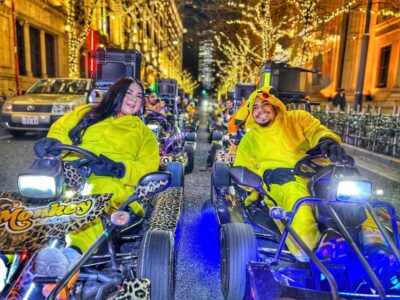
Asakusa, Skytree & Akhihabara Go-Kart City Experience
Read our review →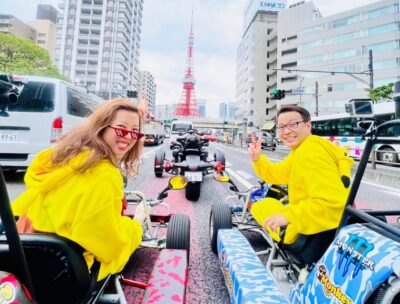
Premium Go-Kart Tour with Tower & Shibuya Crossing
Read our review →Browse the lists this tour appears in