
Reviewed · YANAKA & OLD TOKYO WALKS
Tokyo:Stroll in Old traditional culture towns~Yanaka & Nezu
Tokyo’s past is still visible in Yanaka and Nezu, not behind glass, but in wooden houses, small shops, temple gardens, and narrow lanes where daily life carries on. This 3.5-hour walk gives you a calm, useful look at old Tokyo, with guide Sui leading the way and explaining the customs, religion, and local stories that are easy to miss on your own.
I like two things in particular: the relaxed pace and the close look at ordinary neighborhood life. You can learn how to behave at a shrine, browse a sake shop passed through generations, and watch local residents go about their day. The main drawback is simple: you walk for several hours, use staircases, and may find some shops closed, especially on Mondays or during hot weather.
In This Review
- Key points to know before you book
- Why Yanaka and Nezu show you another Tokyo
- A gentle start through local residential lanes
- Nezu Shrine and the meaning behind the gates
- Tennoji Temple and a quieter pause
- Yanaka Cemetery, trees, and Tokyo’s memory
- Old houses, shops, and the local working neighborhood
- Yanaka Ginza and the Sunset Staircase
- What changes in spring and summer
- Is $29 a good value?
- Who should take this walk?
- Practical details that affect your day
- Should you book the Yanaka and Nezu walk?
- FAQ
- How long is the Yanaka and Nezu walking tour?
- Where does the tour start?
- Where can the tour finish?
- Is the tour conducted in English?
- Does the tour include food or drinks?
- Is the tour suitable for wheelchair users?
- What should I bring?
Key points to know before you book
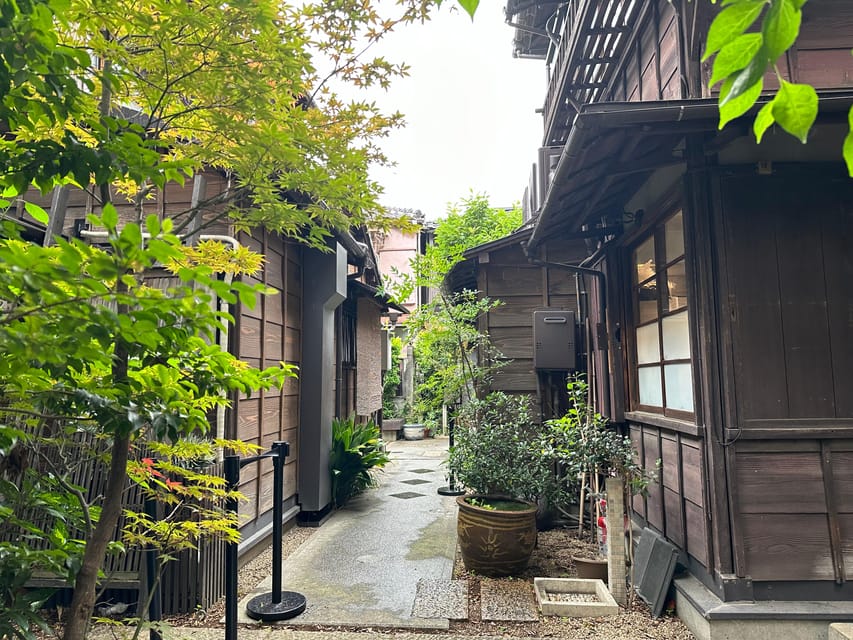
- Old Tokyo without the neon: Yanaka and Nezu offer prewar buildings, quiet homes, temples, cemeteries, and lanes that feel far removed from Shinjuku and Shibuya.
- Sui is the main guide: She speaks English, answers questions patiently, helps with photographs, and often adds local food, shopping, and restaurant advice.
- Religion is part of the route: You visit both Shinto and Buddhist sites, including Nezu Shrine and Tennoji Temple, with guidance on proper prayer customs.
- Yanaka Ginza adds a food stop: Your guide can point out local snacks, small souvenir shops, and traditional products on this old-fashioned shopping street.
- Plan for a real walk: The tour lasts about 210 minutes, includes stairs, and is not suitable for wheelchair users.
- Seasonal changes matter: Sakura mochi is offered during the spring period listed for 2026, while summer tours include a drink in an old traditional cafe and skip Yanaka Ginza.
Why Yanaka and Nezu show you another Tokyo
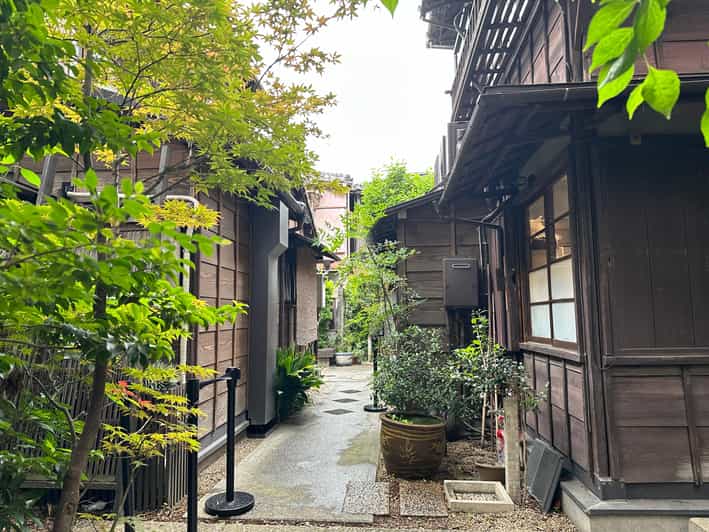
Tokyo is often sold through high-speed trains, giant crossings, department stores, and towers. Those places have their place, but they tell only part of the story. Yanaka and Nezu show you a lower-key city of neighborhood temples, family-run businesses, old houses, and streets where you can hear yourself think.
The area is especially interesting because it retains buildings and street patterns from before World War II, along with examples from the Meiji period, from 1868 to 1912, and the Showa period, from 1926 to 1989. You are not walking through a preserved museum district. New homes sit beside older structures, and residents still use the temples, shops, and local streets.
That mix is the point. You get a look at how the city changed without losing every trace of its earlier life. Sui’s explanations help connect the physical details to Japanese customs and everyday habits, rather than leaving you to admire old buildings without context.
The tour starts at Nippori Station’s West Exit for Yanaka. The guide waits in the station’s waiting area after you exit, and the meeting instructions point you to the final photographs for extra help. Be punctual, since the walk begins on time.
More old-Tokyo backstreet walks:
- The Old Quarter of Tokyo – Yanaka Walking Tour
★ 4.5 · 590 reviews - Yanaka Walking Tour: Historic and Traditional District of Tokyo
★ 5.0 · 530 reviews - Tokyo: Old Quarter Yanaka Walking Tour
★ 4.8 · 406 reviews
A gentle start through local residential lanes
The first part of the walk takes you through quiet residential streets around Yanaka and Nezu. This is where the tour earns its low-key character. You see a mixture of old and new homes, modest shops, and the small details of local life that rarely make it into a standard sightseeing route.
You might pass nursery children, older residents, and neighborhood businesses going about their usual routines. The guide can explain how the area works as a living community, not simply as a place for photographs.
I find this kind of walking valuable because it gives you a better sense of scale. Tokyo can feel like a machine built for millions, but these lanes show the human-sized version of the city. You are not rushing from one famous sight to another. You have time to ask questions, notice a traditional roofline, or pause when something catches your eye.
This is also the section where group size matters. Private and small-group options are available, and a small group makes conversation easier. Sui has been praised for adjusting the pace, answering questions in detail, and adding extra stops when time and group interests allow.
Do not expect every building to be beautifully restored. Some streets combine older wooden structures with ordinary modern residences. That is not a weakness so much as an honest picture of Tokyo’s changing neighborhoods.
Nezu Shrine and the meaning behind the gates
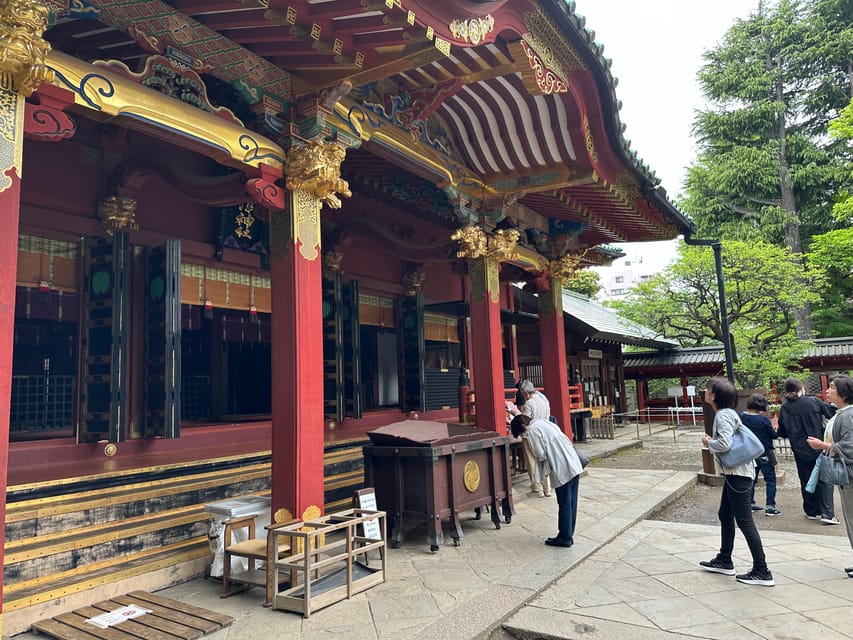
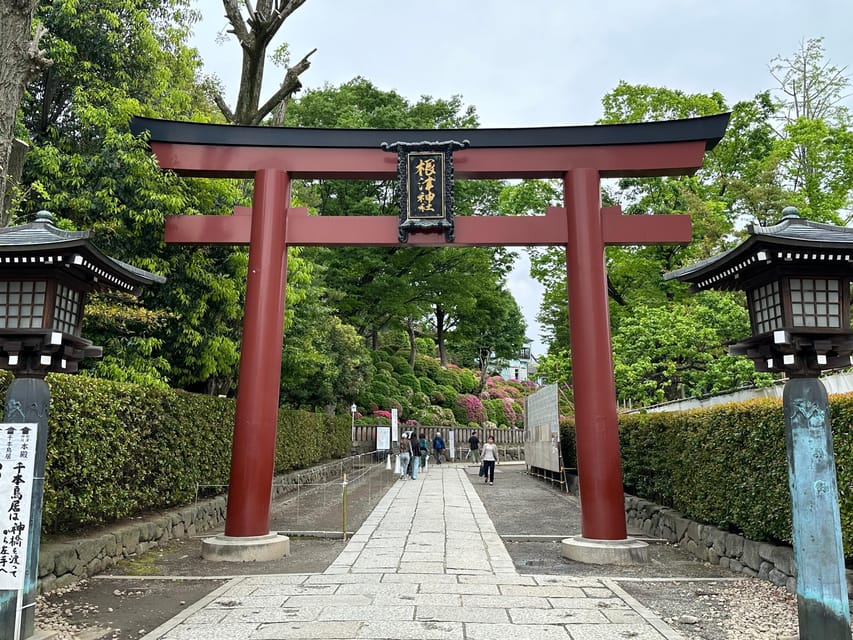
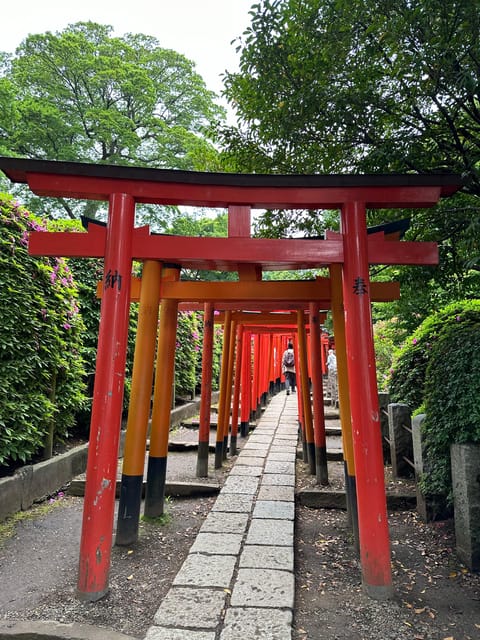
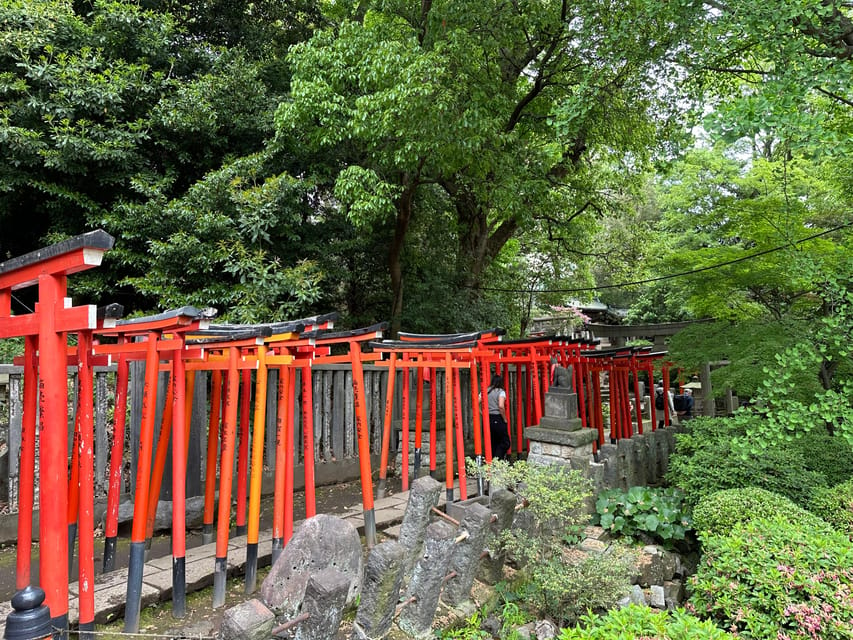
Nezu Shrine is one of the oldest places of worship in Tokyo and one of the most photogenic stops on the route. Its Torii-lined pathway gives you a classic Japanese scene, with repeated shrine gates creating a strong visual rhythm.
The important part is not only the photo. Sui explains the difference between Shinto and Buddhism and helps you understand how people approach places of worship. You can learn the basic steps for praying at shrines and temples, rather than simply copying the nearest person.
This is useful if you are new to Japan. Religious sites can seem quiet and simple at first glance, but the actions people take there have meaning. A guide can explain what is appropriate, where to pause, and how the site fits into local life.
Nezu Shrine can attract more attention than the smaller temples on the route, particularly when flowers are in season. Even so, the walk around it is a good counterpoint to the residential lanes. You get a major local religious site without spending the day in the most crowded parts of Tokyo.
Allow time for photographs, but listen closely to the explanations. The tour is strongest when the visual details and cultural background work together.
Tennoji Temple and a quieter pause
At Tennoji Temple, the focus shifts to Buddhism. The temple is known for its large bronze seated Buddha and attractive Japanese garden. After the movement of the streets, this can be a calming stop.
The Buddha gives the visit an immediate focal point, while the garden encourages a slower look. Sui can explain the religious setting and the role of temples in Japanese life, including how Buddhism differs from the Shinto practices you encounter at Nezu Shrine.
You may appreciate this pause if Tokyo’s noise has begun to wear you down. The tour includes smaller places of worship that are not generally crowded with tourists, so you get room to observe without feeling pushed along.
There is a practical point here: the route is not flat urban pavement from start to finish. You use staircases during the walk, and the experience is unsuitable for wheelchair users. Comfortable shoes are essential.
A few more Tokyo bookings worth comparing
- Mt Fuji and Hakone 1-Day Bus Tour Return by Bullet Train
★ 5.0 · 26,383 reviews - 1-Day Tokyo Bus Tour
★ 5.0 · 14,250 reviews - Tokyo: TOKYO SKYTREE® Admission ticket
★ 4.5 · 11,192 reviews - Tokyo: teamLab Planets TOKYO Digital Art Museum Entry Ticket
★ 4.6 · 9,779 reviews
Yanaka Cemetery, trees, and Tokyo’s memory
Yanaka Cemetery is one of Tokyo’s largest and most scenic cemeteries. Its tree-lined paths offer a different view of the city, with a sense of quiet that can be hard to find in central Tokyo.
A cemetery may not be on every person’s holiday wish list, but this stop adds depth to the route. It shows how temples, burial grounds, trees, and residential streets can sit close together in an old Japanese neighborhood. You are also seeing a place with local value, not simply a scenic backdrop.
The row of trees makes the cemetery especially attractive in spring and autumn, although the appearance naturally depends on the season. During the spring period, the operator lists free sakura mochi for participants, with a replacement traditional sweet or food item if the mochi is unavailable. The listed spring inclusion runs from March 25 to April 25, while the special sakura note highlights March 25 to April 10, so check the exact date when booking.
This is a good place to slow down and let the guide explain the area’s past. It is not a stop for loud conversation or hurried sightseeing. Respectful behavior matters, as it does at all religious and cemetery sites.
Old houses, shops, and the local working neighborhood
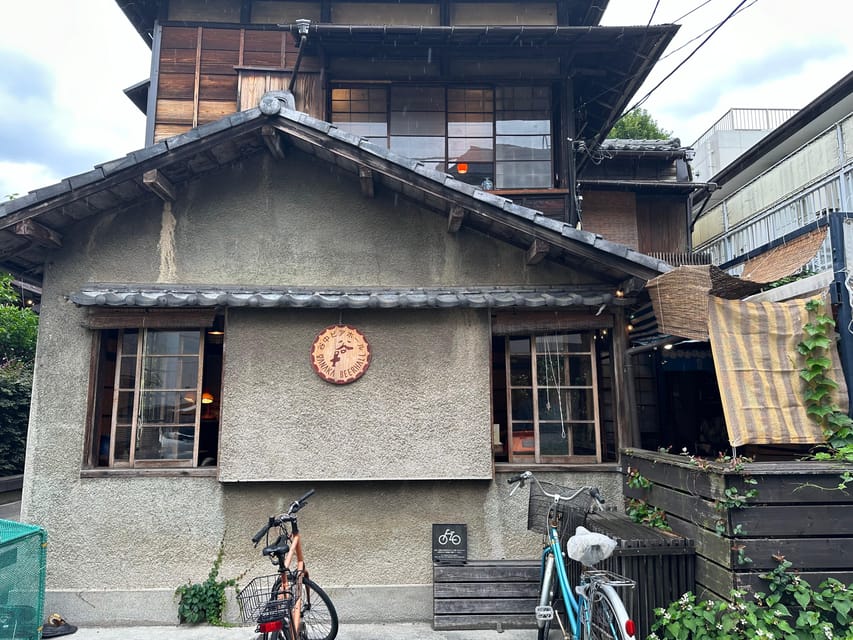
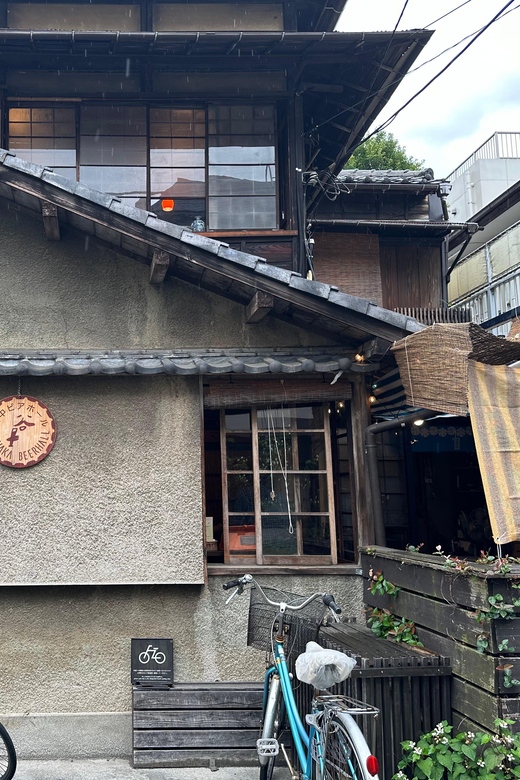
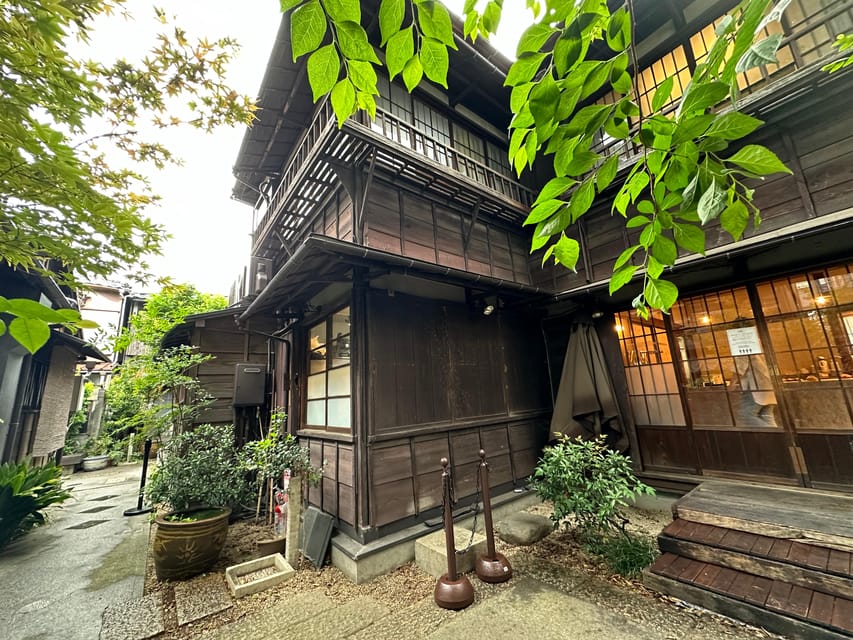
One of the best parts of the tour is the attention given to traditional buildings from the Meiji and Showa periods. You may see old wooden homes, long-running shops, bathhouse-related features, and structures that survived the destruction and redevelopment that changed much of Tokyo.
The charm is in the details. A narrow frontage, an older sign, a shop counter, or a building set close to the lane can reveal how the neighborhood once worked. Sui’s local experience helps you notice things you could easily walk past.
The Yoshida Liquor Store is a particularly practical stop. This traditional sake shop gives you a look at a small business passed down through generations. Depending on the day and timing, you may be able to speak with people at old shops and learn about products or local routines.
Bring cash. Small traditional businesses may not accept every form of payment, and the tour description specifically recommends carrying it. Also keep in mind that shop hours are not guaranteed. Many stores close on Mondays, but the walk itself still goes ahead and remains worthwhile.
Food advice is another strength. Sui can introduce you to local street foods, handmade snacks, Japanese products, and souvenir ideas. Several participants found her recommendations useful, especially when choosing small gifts or deciding where to eat afterward.
Yanaka Ginza and the Sunset Staircase
Yanaka Ginza is the most commercial part of the walk, but it still feels tied to the surrounding neighborhood. This traditional shopping street has food shops, souvenir stores, and places selling everyday Japanese items.
Your guide can help you make sense of the choices. Rather than wandering past unfamiliar snacks, you can ask what is worth trying and which items travel well as gifts. If you enjoy browsing small shops more than visiting large department stores, this section should suit you.
The area can be busier than the quiet lanes and temple grounds. That change in mood is useful, though. It shows how local shopping streets function and gives you a chance to buy something small without dedicating half a day to a major shopping district.
The route finishes near the Sunset Staircase, a photo spot popular with local residents. It is a simple ending, but a good one. You have moved from station streets to residential lanes, religious sites, a cemetery, old businesses, and finally a neighborhood shopping street.
The tour can finish at Nippori Station, Yanaka Ginza, or Nezu Station. That flexibility helps if you want to continue eating or shopping, return to your hotel, or connect with another part of Tokyo.
What changes in spring and summer
Spring brings the possibility of cherry blossoms, and one participant on a rainy April walk was lucky enough to see the trees in full bloom. The timing of flowering depends on the weather, so the March 25 to April 10 note is not a promise that blossoms will be open.
The listed spring treat is sakura mochi. If it is unavailable, another traditional sweet or food item replaces it. Think of this as a pleasant seasonal extra, not the reason to choose the tour.
Summer requires more planning. Tokyo can be very hot and humid, and walking for 3.5 hours in 36°C weather can be demanding. The summer version, listed for June 1 to September 11, includes a stop at a cafe converted from an old traditional building, with one drink included.
In summer, Yanaka Ginza is removed from the route and the tour ends at Nezu Station. The other places remain the same. This adjustment makes sense for heat management, but you should still bring water, wear light clothing, and take the heat seriously.
One useful tip is to eat before the tour or carry a snack. The walk can run into lunchtime, and the regular route does not promise a meal break. The cafe stop is specifically part of the summer version, not a standard feature for every date.
Is $29 a good value?
At $29 per person, this is a strong value if you want cultural context rather than a simple stroll. You get about 210 minutes with an English-speaking guide, access to places that are easy to miss, and practical advice about food, shops, customs, and getting around afterward.
You are not paying for entrance-heavy sightseeing or transport. The value comes from interpretation and local knowledge. Without a guide, you could visit Nezu Shrine, walk through Yanaka Cemetery, and browse Yanaka Ginza, but you might not understand the religious customs, historical layers, or small businesses as well.
The price is especially attractive for a small group. Sui’s style, based on the available information, includes answering individual questions, taking photographs, helping families with children, and offering restaurant or station advice after the official walk. That personal attention gives the tour more value than a large group route with a fixed script.
It is less suitable if you want a food tour, a fast checklist of major Tokyo sights, or a fully accessible route. You also need to accept that some shops may be closed and that the pace can extend a little beyond the stated duration.
Who should take this walk?
I would choose this tour early in a Tokyo visit if you want a cultural base for the rest of your stay. It gives you useful guidance on shrines, temples, local food, neighborhood manners, and everyday life before you head into more crowded districts.
It suits adults interested in history and architecture, couples wanting a quiet half-day, and families whose children can manage a long walk. Sui has worked well with children, providing toys and treats along the way, although the staircase and walking demands still matter.
It also works for repeat visitors who have already seen the major sights. The route offers a different side of Tokyo without requiring a long journey from the central city.
You should skip it if you have limited mobility, dislike walking on narrow streets, need a guaranteed meal break, or are visiting during intense summer heat without preparing properly.
Practical details that affect your day
The starting point is Nippori Station, West Exit for Yanaka. Check the station signs carefully and arrive early enough to find the waiting area. The guide will be there after you exit, but punctuality is required because the tour starts on time.
Wear comfortable shoes and carry cash. Expect staircases and a relaxed but substantial amount of walking. The tour is offered in English, with private or small-group formats available.
Free cancellation is available up to 24 hours before the start time, and you can reserve while paying later. Check the available start times for your date, especially if you are planning around meals, another tour, or a train reservation.
The operator identifies Sui as the main guide for this Yanaka walk. Her role is central to the experience because the route depends less on grand attractions than on explanation, timing, and the ability to point out small details.
Should you book the Yanaka and Nezu walk?
Book it if you want old Tokyo at street level, with temples, shrines, traditional shops, local food advice, and a quiet pace. At $29, it offers an unusually affordable way to understand a part of the city that can seem ordinary until someone explains what you are seeing.
Choose another experience if your priority is Tokyo’s headline sights, a food-focused outing, or easy access for a wheelchair. For everyone else, this is a smart break from the city’s louder districts, particularly if you want a guide who can answer questions, help with photographs, and show you where local life still unfolds.
FAQ
How long is the Yanaka and Nezu walking tour?
The tour lasts approximately 210 minutes, or 3.5 hours. It may finish a little earlier or later depending on the pace and the group.
Where does the tour start?
The meeting point is Nippori Station, at the West Exit for Yanaka. The guide waits in the station waiting area after you leave through that exit.
Where can the tour finish?
The available drop-off points are Nippori Station, Yanaka Ginza, and Nezu Station. The summer version ends at Nezu Station.
Is the tour conducted in English?
Yes. The tour includes a live English-speaking guide. Sui is identified as the main guide for this Yanaka walking tour.
Does the tour include food or drinks?
The regular tour does not include a meal. During the listed spring period, free sakura mochi is offered, or another traditional sweet or food item if it is unavailable. During the listed summer period, one drink is included at an old traditional cafe.
Is the tour suitable for wheelchair users?
No. The tour includes staircases and is not suitable for wheelchair users.
What should I bring?
Bring comfortable shoes and cash. Eating before the walk or carrying a snack is also sensible because the route can run into lunchtime.
New on our Tokyo list
- From Tokyo: Mount Fuji & Hakone Full Day Private Tour★ 4.9 · 25 reviews
- Tokyo Spectacular View Day-Cruise in 90 Minutes★ 5.0 · 25 reviews
- Real Tokyo Runner Club : Daikoku Car Meet Night Tour with JDM Car★ 5.0 · 25 reviews
- 2.5 Hour-Guided Cycle Tour in the Central Tokyo★ 5.0 · 25 reviews
- Tokyo: 2-Hour Night Bike Tour of the City’s Hidden Gems★ 4.9 · 25 reviews
- Ramen Making from Scratch +Akihabara Tour –Cooking Class★ 5.0 · 25 reviews
- [Self-Drive] Tokyo & Daikoku Custom Car Driving Tour★ 4.9 · 25 reviews
- Samurai themed Entertainment show in Shinjuku★ 4.5 · 25 reviews
Yanaka & Old Tokyo Walks, compared.
Yanaka Walking Tour: Historic and Traditional District of Tokyo
Read our review →

Small Town in the Big City: Tasting Tokyo’s Kichijoji
Read our review →
Yanaka Historical Walking Tour in Tokyo’s Old Town
Read our review →
Private Home Cooking in Yanaka – Local Flavors in a Warm Setting
Read our review →
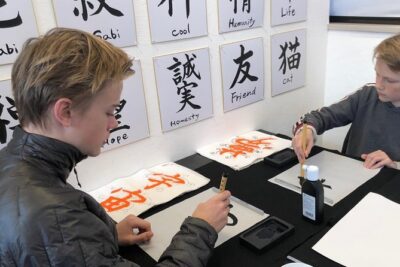
Let’s experience calligraphy in YANAKA, Taito-ku, TOKYO !!
Read our review →Browse the lists this tour appears in