
Reviewed · SAMURAI & NINJA EXPERIENCES
Train in Samurai Swordsmanship and Defeat the Demon in Tokyo
The most unusual part of this Tokyo activity is that you are not simply watching a sword show. You follow a four-part story, learn samurai etiquette and sword movements, then face an Oni in a staged battle about courage and inner fear. The small group, limited to six people, gives the session a personal feel.
I like the mix of practical instruction and Japanese folklore. I also like the thoughtful extras: armor photos, matcha tea, Japanese sweets, and a scroll with your name and learned techniques. The main consideration is that this is a two-hour indoor activity, not a visit to a historic castle or a full martial arts course. The Oni battle is symbolic and theatrical rather than a real fight.
In This Review
- Key points at a glance
- A samurai story in the middle of modern Tokyo
- Prologue: folklore gives the lesson a purpose
- Training: etiquette before strikes and blocks
- The Oni battle: a symbolic final test
- Recognition: a scroll instead of a souvenir trinket
- What the two-hour format delivers
- Why the six-person limit matters
- Price, value, and what is included
- Who will enjoy this most
- Getting there and planning your visit
- Should you book the Oni trial?
- FAQ
- Where does the samurai experience take place?
- How long does the activity last?
- How many people can join the activity?
- Is the experience conducted in English?
- What is included in the price?
- Do I receive a souvenir?
- Is transportation included?
- Can I cancel for a full refund?
Key points at a glance
- Four chapters in two hours: Prologue, Training, Battle, and Recognition give the session a clear story.
- Lessons go beyond sword swings: You work on etiquette, breathing, posture, strikes, blocks, and concentration.
- The Oni represents inner fear: The final confrontation is presented as a test of courage, not brute strength.
- A tiny group of up to six people: This suits visitors who prefer direct instruction to a crowded stage show.
- Samurai details are built in: Uniform rental, armor photos, a live demonstration, matcha, sweets, and a personalized scroll are included.
- Central Tokyo setting: The meeting point is in Kōjimachi, near public transportation, and the activity ends where it begins.
A samurai story in the middle of modern Tokyo
This experience takes place at the International Goshin-Budo Association in Kōjimachi, Chiyoda City. The address is 4-chōme 2-1, MK Kōjimachi Building, Tokyo 102-0083. It is a practical city location near public transportation, but the activity quickly shifts your attention from office buildings and train lines to the world of samurai discipline and Japanese demon folklore.
The story begins with Hyakki Yakō, the Night Parade of a Hundred Demons. Japanese legends describe supernatural creatures, including Oni, moving through the night in a strange procession. Here, one of those demons has returned after being sealed away long ago.
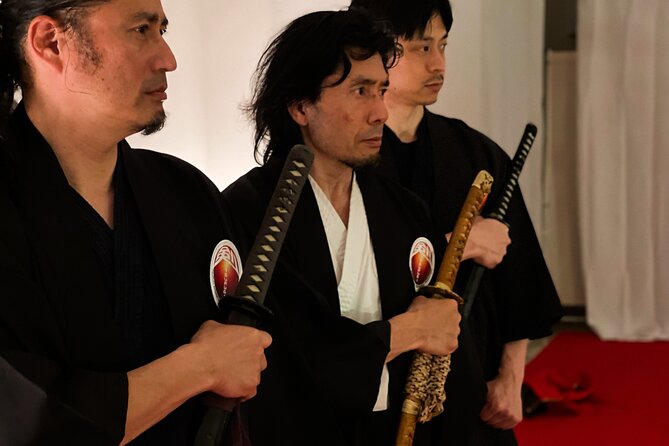
The instructors present themselves as the tsurugi samurai squad, guardians from the past who once fought the Demon. Your role is to join them for a trial. That framing gives the session more shape than a standard introductory martial arts class. You are not just repeating movements. You are preparing for a final test.
I would set your expectations correctly before booking. The story is part of the fun, and the Oni encounter is a symbolic clash of spirit and shadow. This is best understood as interactive theater combined with beginner sword training. It is not a historical reenactment, a combat lesson for real-world defense, or a museum demonstration.
More samurai and ninja sessions:
- Tokyo: Samurai Ninja Museum Guided tour and Experience
★ 4.6 · 1,010 reviews - Tokyo: Samurai Sword & Archery Class from Samurai Descendant
★ 5.0 · 603 reviews - Best Samurai Experience in Tokyo
★ 5.0 · 458 reviews
Prologue: folklore gives the lesson a purpose
The Prologue introduces the Night Parade and the return of the Oni. It also explains why you have been chosen to train with the squad. The central idea is simple: the Demon outside reflects fear, doubt, and weakness inside you.
That theme may sound dramatic, but it gives the activity a useful focus. Samurai training is presented as more than physical strength. You are asked to calm your mind, control your breathing, and approach each movement with purpose. For many people, that makes the session feel more meaningful than putting on a costume and posing with a prop sword.
The folklore also helps families and mixed-age groups stay engaged. Children can follow the Demon story, while adults can pay attention to the discussion of Bushido, discipline, and concentration. The English presentation makes the story accessible without requiring Japanese language skills.
I would not expect a long lecture on Japanese history. The supplied details promise an English guide to sword skills, Bushido, and samurai history, but the activity lasts about two hours, so the cultural explanation must share time with training and the final battle. That balance is useful if you want to move and participate rather than sit through a talk.
Training: etiquette before strikes and blocks
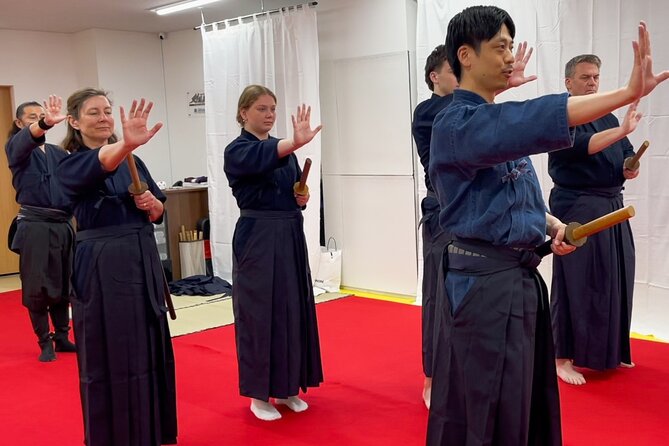
The training section is the heart of the experience. You receive a samurai uniform for the lesson, which helps you shift into the role and makes the later photographs more memorable. The exact style and material of the uniform are not specified, so think of it as activity attire rather than a museum-grade costume.
The instruction covers several building blocks:
- Samurai etiquette
- Breathing
- Posture
- Strikes
- Blocks
- Focus
- Samurai history and Bushido
That order matters. The class is not described as a collection of flashy sword tricks. You first learn how to stand, breathe, and carry yourself, then add offensive and defensive movements. One participant specifically found value in learning both offensive and defensive techniques and joining them together in the Oni challenge.
A live sword demonstration by the instructor is included. This gives you a chance to see the movements before trying them yourself. Since the group is capped at six, you should have a better chance of following the instruction closely than you would in a large entertainment venue. Still, the listing does not promise private coaching, so do not assume one-on-one training throughout.
I like that the session includes focus as a named skill. Beginners often concentrate only on where the sword goes, but posture and breathing can make a simple movement feel controlled. You may find that the lesson teaches a small piece of samurai discipline that applies beyond the activity, even if you never train with a sword again.
The training is also designed to avoid pressure. The experience is presented as friendly and fun, and the available feedback describes learning without feeling pushed. That matters if you are curious about martial arts but worry that a formal class will be intimidating.
The Oni battle: a symbolic final test
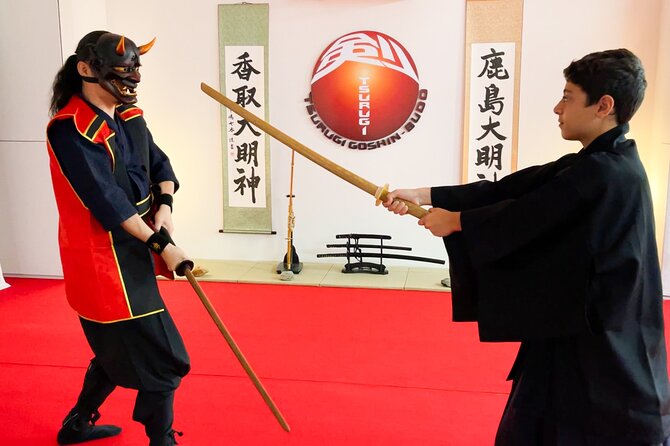
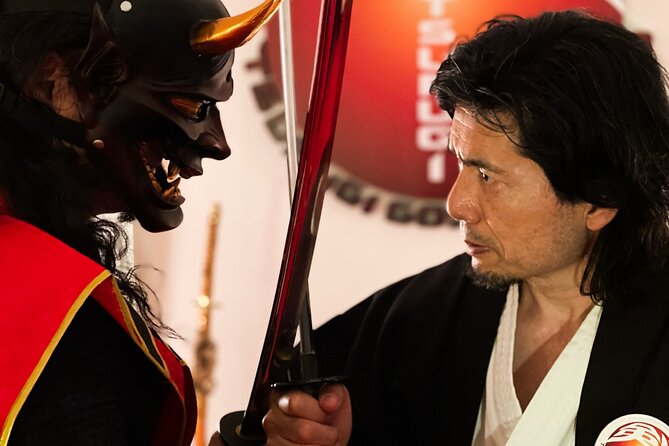
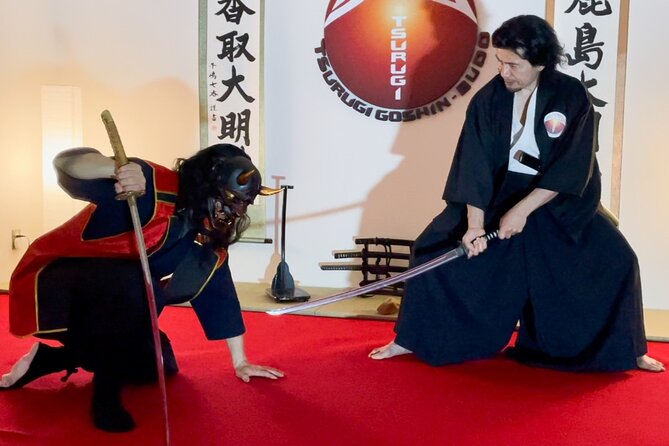
After learning the movements, you put them together in the Battle chapter. The goal is to defeat the returning Oni and help seal the darkness again. This is the dramatic payoff, but it should not be confused with a full-contact contest.
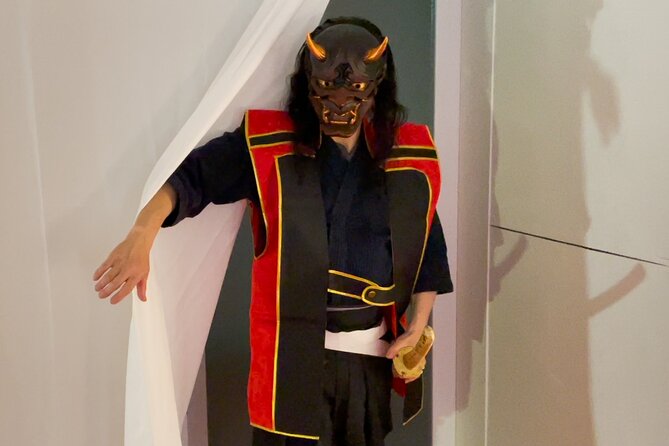
The Demon represents fear, doubt, and weakness within. The battle therefore works as a simple story device: you have learned to breathe, stand correctly, strike, block, and focus, and now you use those skills while facing a challenge. The emphasis is courage rather than physical power.
That setup suits first-time participants. You do not need to arrive as a martial arts student. Most people can take part, and the activity is described as suitable for solo visitors, couples, and families. You may have more fun with friends or family because the group setting makes the final scene more social, but coming alone is also supported by the format.
The battle is probably the part children will remember most, while adults may enjoy the contrast between the playful Demon story and the more serious lesson about self-control. If you are seeking a quiet, historically exact sword seminar, this theatrical element may feel too staged. If you want a story you can actively join, it adds welcome energy.
A few more Tokyo bookings worth comparing
- Mt Fuji and Hakone 1-Day Bus Tour Return by Bullet Train
★ 5.0 · 26,383 reviews - Mt Fuji & Hakone Cruise, Drum Show Bullet Train 1 Day from Tokyo
★ 4.0 · 7,413 reviews - Tokyo Mt Fuji 5th St & Hakone Cruise Bus Tour w/Bullet Train
★ 4.4 · 5,024 reviews - From Tokyo: Mt. Fuji & Hakone Tour w/ Return by Bullet Train
★ 4.2 · 1,278 reviews
Recognition: a scroll instead of a souvenir trinket
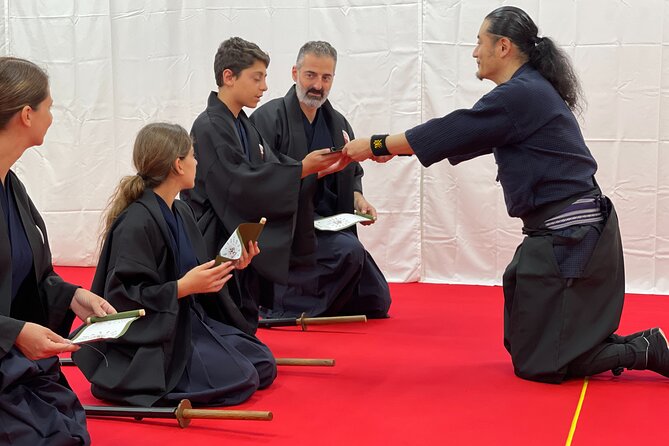
The final chapter is Recognition. You receive a personalized scroll with your name and the techniques you learned. It is a small but thoughtful touch, especially if this activity marks a birthday, family outing, or first visit to Japan.
The scroll gives the lesson a physical ending. Instead of leaving with only photographs, you have something that records your role in the trial. The wording suggests that the real lesson is carrying the sword in your heart, a poetic way of saying that courage and calm matter more than the object itself.
A commemorative photo with a samurai is included as well. You can wear the samurai uniform and take photographs with armor, so allow a little time for the visual side of the experience. The photos may be especially useful for families, couples, and solo visitors who want a clear memory of the activity.
Matcha tea and Japanese sweets are also provided. These refreshments add a cultural detail without taking over the session. They give you a quieter moment after the battle and round out the experience with something distinctly Japanese.
What the two-hour format delivers
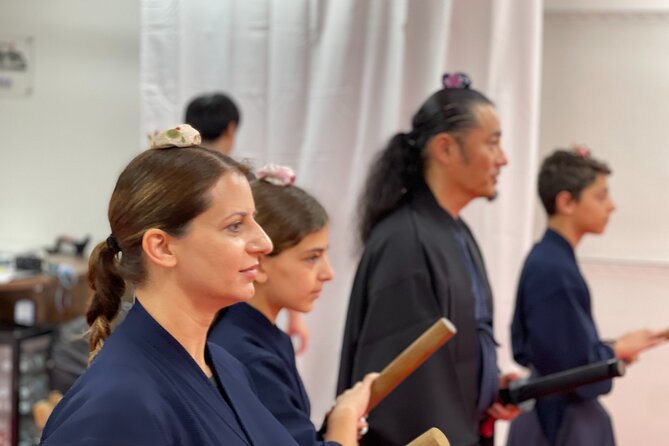
Two hours is a sensible length for this activity. It gives enough time for the story, demonstration, instruction, battle, photographs, refreshments, and scroll without turning a beginner lesson into a tiring half-day commitment.
The short format also makes it easy to fit into a Tokyo schedule. You could pair it with sightseeing elsewhere in the city, provided you leave enough time to reach Kōjimachi. The activity starts and finishes at the same meeting point, so you do not need to arrange a separate return transfer.
The tradeoff is depth. You will receive an introduction to sword skills, not a long course in Sengoku-era martial arts. The experience promises techniques from the Sengoku period, along with etiquette, Bushido, and samurai history, but two hours cannot cover every detail of Japanese sword traditions.
That is not a flaw if you see the session as a cultural activity with hands-on practice. I would book it for the story, the personal instruction, and the chance to participate. I would choose a longer specialist course if my main goal were serious martial arts study.
Why the six-person limit matters
A maximum of six participants is one of the strongest practical features. Small groups make it easier to see the instructor’s demonstration, hear the English explanations, and take part in the story without waiting behind a crowd.
The group size should also help during the training sequence. When you are learning posture, strikes, and blocks, it is useful to have room to pay attention to your own form. The information does not promise a private session, but six people is far more intimate than a large commercial stage production.
A small group can have one drawback: the experience may feel less lively if you arrive alone and the other participants are quiet. The available feedback suggests it remains enjoyable solo, but friends and family can add extra humor and encouragement during the Oni chapter.
Price, value, and what is included
At $84.70 per person, this is not the cheapest short activity in Tokyo. I think the value depends on what you want from your two hours.
You are paying for a guided experience rather than simple costume rental. The price includes the samurai uniform during lessons, the live sword demonstration, English instruction, the cultural explanation, matcha and sweets, a commemorative photograph, and a personalized scroll. The small group also adds value because the experience is built around participation.
If you only want a quick samurai photograph, the price may feel high. If you want a structured activity that combines folklore, movement, cultural context, and a keepsake, it is easier to justify. The birthday example is a good fit because the session has a clear beginning, challenge, and presentation at the end.
The mobile ticket makes booking straightforward. Confirmation is provided at booking, and free cancellation is available up to 24 hours before the local start time. Changes or cancellations inside that window are not accepted for a refund, so check your Tokyo schedule before committing.
There is no private transportation or air-conditioned vehicle. That is not a major issue because the activity takes place at one city location and ends there, but you are responsible for getting to Kōjimachi.
Who will enjoy this most
I would recommend this for:
- First-time visitors who want more than a passive cultural show
- Families looking for a shared activity in Tokyo
- Couples seeking a memorable birthday or vacation experience
- Solo visitors who like guided participation in a small group
- Anyone curious about samurai etiquette, Bushido, and beginner sword movements
- People who enjoy folklore and theatrical storytelling
It is especially well suited to people who want an English-friendly experience. You do not need to understand Japanese to follow the story or training.
I would be more cautious if you want a rigorous martial arts qualification, a long historical lecture, or an outdoor activity. The experience is short, staged, and story-led. It asks you to play the hero, not to become a trained swordsman in two hours.
The activity is described as suitable for most people, but the details do not specify age limits, physical requirements, or particular accommodation arrangements. If you have concerns about mobility or injuries, ask the provider before booking rather than assuming every movement will suit you.
Getting there and planning your visit
The meeting point is the International Goshin-Budo Association at MK Kōjimachi Building in Chiyoda City. It is near public transportation, and the activity ends back at the same place.
Because the session follows a set four-chapter story, arriving on time matters. Missing the opening Prologue could make the later Oni story harder to follow, and arriving late may interrupt the training sequence. The supplied information does not give a recommended arrival time, so check your confirmation for the exact start details.
Wear something that allows comfortable movement under the rented uniform. The tour does not state a specific dress code, so avoid assuming that special clothing or equipment is provided beyond the samurai uniform. Toilets are available in the building.
The group size is limited to six, and the activity is booked on average 29 days ahead. That booking pattern suggests you should reserve early if your Tokyo dates are fixed, especially if you want a particular day or are arranging the experience for a family or couple.
Should you book the Oni trial?
Book it if you want an active, English-friendly Tokyo experience with a clear story and a personal keepsake. The best parts are the small group, the step-by-step introduction to posture and sword movements, the symbolic Oni battle, and the scroll bearing your name.
Skip it if you are looking for a major historical site, a full martial arts course, or a quiet cultural lecture. The theatrical Demon story and photo-friendly costume are central to the experience.
For most visitors, I see this as a memorable two-hour activity rather than a deep study of samurai combat. At $84.70, it offers fair value when you make use of the whole package: training, story, refreshments, photos, and recognition at the end. If you want to do more than look at Japan’s samurai past, this gives you a chance to step into it for an afternoon.
FAQ
Where does the samurai experience take place?
It takes place at the International Goshin-Budo Association, 4-chōme 2-1, MK Kōjimachi Building, Kōjimachi, Chiyoda City, Tokyo 102-0083.
How long does the activity last?
The experience lasts approximately two hours.
How many people can join the activity?
The maximum group size is six participants.
Is the experience conducted in English?
Yes. An English guide covers sword skills, Bushido, and samurai history.
What is included in the price?
The price includes samurai uniform rental during the lesson, a live sword demonstration, English instruction, matcha tea and Japanese sweets, a commemorative samurai photo, and a personalized scroll with your name and learned techniques.
Do I receive a souvenir?
Yes. You receive a personalized scroll with your name and the skills you gained during the session.
Is transportation included?
No. Private transportation and an air-conditioned vehicle are not included. The activity begins and ends at the Kōjimachi meeting point, which is near public transportation.
Can I cancel for a full refund?
Yes, if you cancel at least 24 hours before the experience start time. Cancellations or changes made less than 24 hours before the local start time are not accepted for a refund.
New on our Tokyo list
- Sumi-e Experience in a relaxing green tea shop in Tokyo★ 5.0 · 3 reviews
- Tokyo : Kamikaze Street Drift Ride★ 5.0 · 3 reviews
- Private Zen Meditation in English in Shinjuku, Tokyo★ 5.0 · 3 reviews
- Onsen Spa in Tokyo and Asakusa Bar Hopping with Local Guide★ 5.0 · 3 reviews
- Easy for everyone! Now you can play handmade mini shamisen and show off to everyone! Musical instruments, sweets and live music★ 5.0 · 3 reviews
- Tokyo: Private Tsukiji Street Food & Sake with Local Guide★ 5.0 · 3 reviews
- Mt Fuji Exploration Tour with Free Japanese Kusa Mochi from Tokyo★ 4.5 · 3 reviews
- Tokyo Tsukiji Fish Market Walking and Exploring Hidden Gems Tour★ 5.0 · 3 reviews
Samurai & Ninja Experiences, compared.
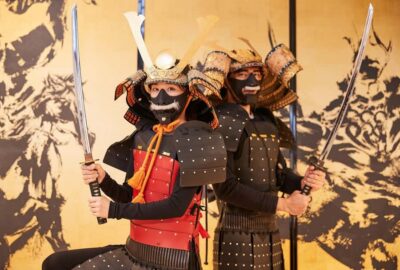
Samurai Ninja Museum Guided tour and Experience
Read our review →
Samurai Sword & Archery Class from Samurai Descendant
Read our review →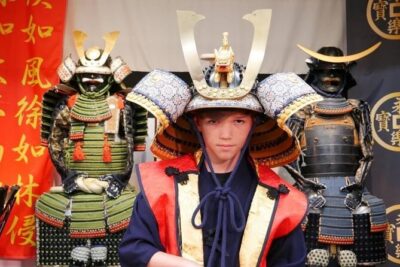
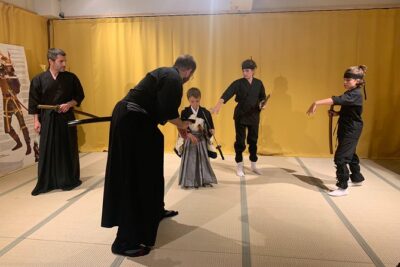
Ninja Experience (Family Friendly) at Samurai Ninja Museum TOKYO
Read our review →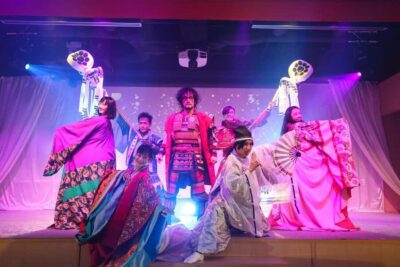
Samurai Entertainment Night Show in Kanda Shrine
Read our review →
Tokyo Sword Experience – includes Museum Ticket/Ninja Experience
Read our review →
Samurai Ninja Museum Asakusa: Samurai Sword Lesson & Tour
Read our review →
Ninja Samurai 2-hour hands-on lesson by Japanese master in Tokyo
Read our review →Browse the lists this tour appears in