
Reviewed · KAMAKURA TOURS
Yokohama and Kamakura 6hr Private Trip Government-Licensed Guide
Kamakura’s temples and shrines, or Yokohama’s waterfront and Chinatown, make a fine day away from Tokyo. This private six-hour tour lets you choose three or four places instead of following a rigid route. A guide such as Mami, Yoshi, Sami, or Suzuki can shape the day around history, religion, food, modern Japan, or your walking pace.
I like the personal planning, especially for first-time visitors who would rather not sort out local trains and temple locations alone. I also like the guide support on foot, with past tours including help with IC cards, trains, taxis, restaurant choices, and slippery stairs for an 83-year-old parent.
The catch is that transportation, entrance fees, lunch, and private vehicles cost extra. Six hours is enough for a focused visit, not a grand tour of every stop on the long menu, and Yokohama and Kamakura together can make the day feel rushed.
In This Review
- Key points to know before booking
- A private day with two very different cities
- Kamakura’s major sights, from shrine to Great Buddha
- Choosing among Kamakura’s Zen temples
- Smaller shrines and a bamboo grove
- Enoshima adds coast and variety
- Yokohama’s port, food, and foreign history
- Old foreign settlement streets and garden time
- Walking, trains, weather, and the real pace
- Who should book this six-hour tour?
- Should you book it?
- FAQ
- How long is the tour?
- Is the tour private?
- Which cities can I visit?
- How many sites can I choose?
- Is transportation included?
- Where does the guide meet me?
- Are entrance fees included?
- Can I cancel for a refund?
Key points to know before booking
- Pick three or four sites: The guide customizes the day from a broad list instead of trying to force all 26 places into six hours.
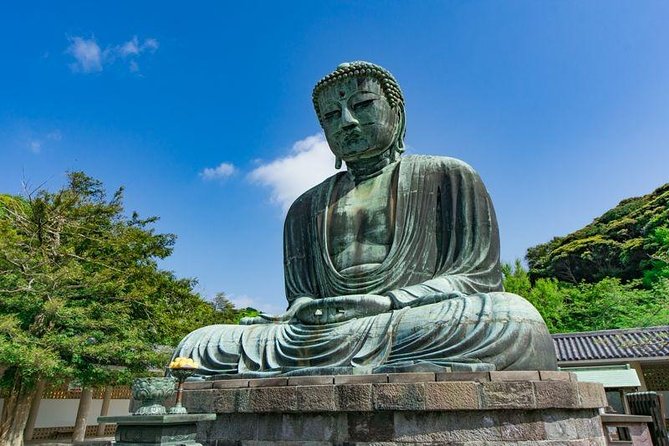
- Kamakura offers the strongest historical focus: The Great Buddha, Tsurugaoka Hachimangu, Hasedera, and Zen temples make a natural plan.
- Yokohama works well for a modern city day: Chinatown, Minato Mirai, Yamashita Park, Sankeien Gardens, and the port each show a different side of town.
- You meet on foot: Pickup means meeting your guide within the designated Yokohama or Kamakura area, not a private car collecting you.
- Local transit is part of the day: Travel between Yokohama and Kamakura takes about 30 minutes each way, with fares paid separately.
- The guide’s flexibility is the main value: Guides have adjusted routes for rain, stairs, meals, family needs, and specific interests.
A private day with two very different cities
At $154.84 per person, this is not the cheapest way to see Kamakura or Yokohama. You are paying for a licensed English-speaking guide, private attention, route planning, and help with the details that can eat up a day in Japan.
The value improves with a small group. A couple receives a tailored day, while a larger private party can benefit from the same guide fee being spread across more people, subject to the operator’s group arrangements. You also avoid joining strangers and can ask to slow down, skip a site, or spend more time on a subject that catches your interest.
The choice between Yokohama and Kamakura matters. Kamakura is the better pick if you want shrines, Buddhist temples, samurai-era stories, and traditional scenery. Yokohama is better for port history, food, international influences, gardens, and modern city views.
You can combine both, but be realistic. The trip from one city to the other takes about 30 minutes one way, before you add walking and waiting for trains. A mixed day can work if you choose one or two major sites in each city. It will not work well if you expect a leisurely visit to the Great Buddha, several temples, Chinatown, and the waterfront all in one sweep.
More Private Tours in Kamakura
- Private Car Tour to see Highlights of Kamakura, Enoshima, Yokohama from Tokyo
★ 5.0 · 48 reviews - Kamakura 6hr Private Walking Tour with Government-Licensed Guide
★ 5.0 · 42 reviews - Private Kamakura plus Yokohama Tour – English Speaking Driver
★ 4.5 · 28 reviews
Kamakura’s major sights, from shrine to Great Buddha
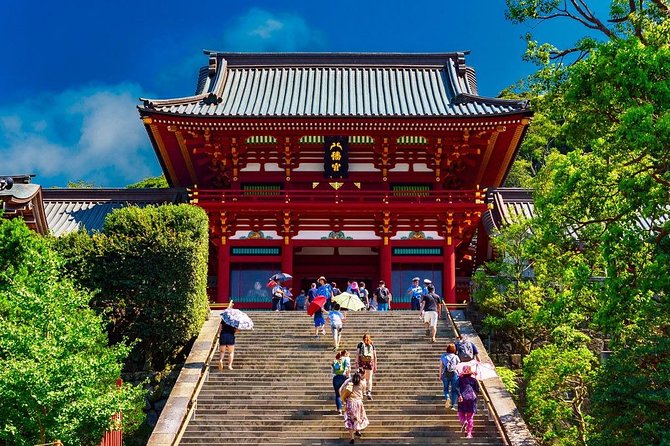
A classic Kamakura plan begins at Tsurugaoka Hachimangu Shrine, the city’s major Shinto landmark. It is dedicated to Hachiman, associated with Emperor Ojin and revered as the patron deity of the Minamoto family and samurai in general.
This is a good place to begin if you want political and religious context. Your guide can explain how Kamakura became a center of warrior government and how Shinto practice differs from Buddhism. The listed visit time is only a brief orientation, but you can ask for more time if the shrine is central to your interests.
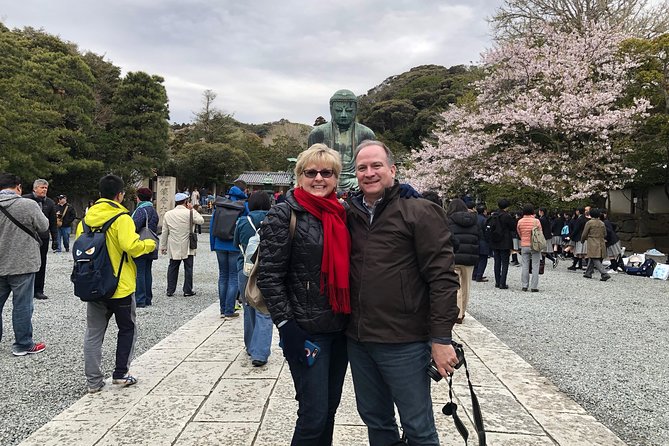
Next comes Kotoku-in Temple, home of the Great Buddha of Kamakura. The bronze Amida Buddha measures 11.4 meters and is one of the city’s defining sights. The statue is impressive because it sits outdoors rather than inside a grand hall, giving you a clear view of its scale and calm expression.
The admission fee is not included. The suggested stop is brief, so confirm in advance if you want time to enter the statue or linger around the temple grounds. This is one of the places where a private guide helps most with context, but the actual visit still depends on your pace.
Hasedera Temple adds a different mood. It is known for its eleven-headed Kannon, a gilded wooden statue measuring 9.18 meters, and for its temple setting. The visit can introduce you to Kannon, the Buddhist figure associated with mercy, while also giving you a quieter counterpoint to the Great Buddha.
Hasedera requires an admission fee. The short suggested timing makes it better as one of three or four main stops than as part of an overloaded temple circuit.
Choosing among Kamakura’s Zen temples
Kamakura has an unusually strong concentration of Zen temples, and the tour menu gives you more choice than most half-day excursions. You should not try to visit them all. Instead, tell your guide what kind of setting and history you prefer.
Engaku-ji is one of eastern Japan’s leading Zen temples and ranks second among Kamakura’s five great Zen temples. It was founded in 1282 by Hojo Tokimune, the regent associated with the defense of Japan against the Mongol invasions.
Kencho-ji ranks first among the five great Zen temples and was founded in 1253 by Hojo Tokiyori. It is the oldest Zen temple in Kamakura. If you want a major temple with strong historical importance, this is a sensible choice.
The suggested time at both Engaku-ji and Kencho-ji is 30 minutes. That is enough for an introduction, but not a slow, detailed visit. Entrance fees are extra, and the walking can be demanding if you try to add several more temple grounds afterward.
Other choices offer a more specific angle. Jochiji is the fourth of the five great Zen temples and belongs to the Rinzai tradition. Jufukuji, the third, was established by order of Minamoto Yoritomo’s wife, Masako. Jomyoji, ranked fifth, was founded by the Ashikaga family and sits in the hills of eastern Kamakura.
Tokeiji is a small Rinzai temple near Engaku-ji, while Zuisen-ji sits at the far east of Kamakura in a narrow valley surrounded by wooded hills. Meigetsuin, often called the Hydrangea Temple, is especially associated with its seasonal hydrangea flowers and belongs to the Rinzai Zen sect.
These smaller temples may suit you better than a checklist of famous monuments. They can also require more careful routing, which is exactly where a local guide earns the fee.
Smaller shrines and a bamboo grove
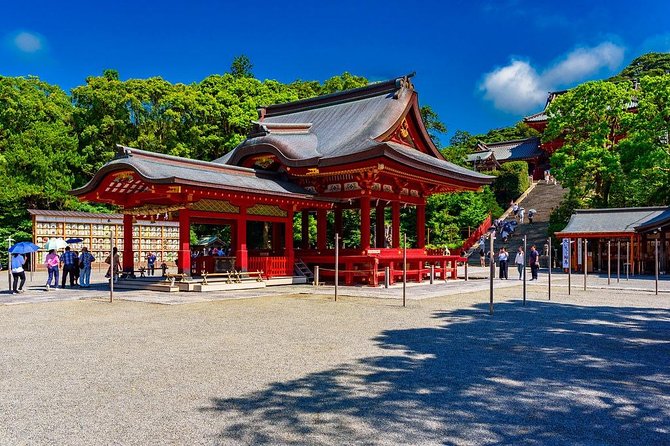
Zeniarai Benten Shrine is one of Kamakura’s most distinctive stops. People visit to wash money in the shrine’s spring, following the belief that money washed there will multiply. The ritual gives you something active to do, rather than simply looking at another building.
The shrine is free, but the route may include uneven ground or slopes. Mention mobility concerns before the day begins. One guide, Sami, planned a route with fewer stairs, and another guide helped an older family member on wet, slippery steps during a rainy tour.
For a short dose of greenery, choose Hokoku-ji Temple. Its small bamboo grove contains more than 2,000 dark green stalks, with narrow paths behind the main hall. The grove is not huge, so it works best as a focused stop rather than a half-day attraction.
Hokoku-ji charges admission. If you want to see several major temples, you may prefer to skip it. If you want a quiet, photogenic break from shrines and city streets, it can be a smart choice.
Eishoji Temple is especially notable as the only surviving nunnery in Kamakura. Founded in the early Edo period by a woman connected to the Tokugawa family, it gives the tour a less common historical angle. The suggested visit lasts 15 minutes, making it easy to add if it lies near your main route.
Ankokuronji and Myohonji introduce the Nichiren Buddhist tradition. Ankokuronji was founded by Nichiren around 1253, while Myohonji was founded by Hiki Yoshimoto in 1260. These are useful choices if your main interest is the development of Japanese Buddhism rather than only the best-known sights.
More Private Tours in Yokohama
- Daikoku & Tokyo Private JDM Tour by 700HP R34 GT-R
★ 4.9 · 101 reviews - Tokyo 8hr Private Tour with Licensed Guide from Yokohama
★ 5.0 · 94 reviews - R34Skyline Daikoku PA Fast & Furious Private Experience
★ 5.0 · 63 reviews - Yokohama 4hr Private Tour with Government-Licensed Guide
★ 5.0 · 34 reviews
Enoshima adds coast and variety
Enoshima Island lies just west of Kamakura and connects to the mainland by bridge. It offers a shrine and other attractions, with a more recreational feel than Kamakura’s temple districts.
The island is listed as a possible stop with no admission charge for the tour itself, but getting there still requires transportation. Since it is reached by train from Kamakura, you need to allow for travel time. Enoshima works well if you want scenery and a change of pace. It is less suitable if your priority is a concentrated study of Kamakura’s temples.
A guide can also help you decide if the island fits the day’s weather and your energy level. One particularly successful day included Enoshima and Kamakura, with the guide explaining Japanese history, culture, and religious beliefs along the way. Clear weather does not guarantee views of Mount Fuji, so treat that as a bonus rather than a promise.
Yokohama’s port, food, and foreign history
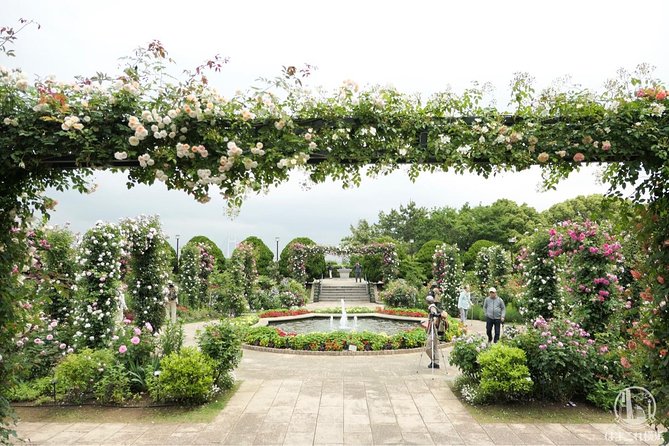
Yokohama offers a very different six-hour plan. Begin with Sankeien Gardens if you want traditional Japanese design and historic buildings. This spacious garden in southern Yokohama includes ponds, small rivers, flowers, winding paths, and buildings moved there from other parts of Japan.
Sankeien charges admission, and three minutes is not a meaningful visit. Give it real time if gardens matter to you. It may be difficult to combine with many central Yokohama stops unless you use local transportation efficiently.
Yokohama Chinatown is Japan’s largest Chinatown, with narrow, colorful streets packed with Chinese shops and restaurants. It is the best choice for a food-centered plan, though the tour does not include lunch. Ask your guide for help choosing a meal, but pay for your own food.
For waterfront views, consider Yamashita Park and Osanbashi Yokohama International Passenger Terminal. Yamashita Park stretches about 750 meters along the harbor and is free to enter. Osanbashi Pier lies between Yamashita Park and Minato Mirai, making it useful for broad harbor views and a sense of Yokohama’s port setting.
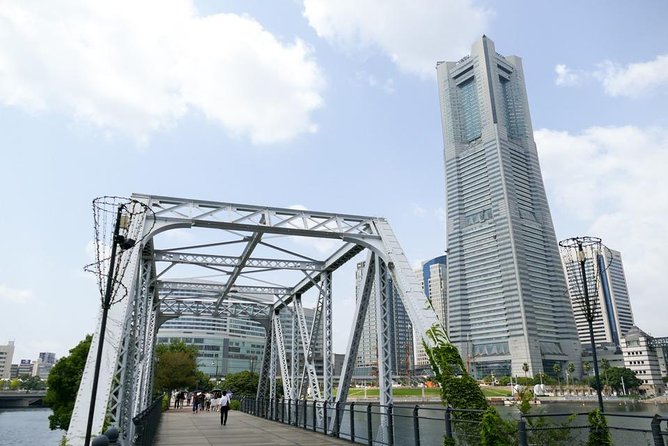
Minato Mirai 21, whose name means harbor of the future, shows Yokohama’s modern side. High-rises, including Landmark Tower, shape the district. It pairs naturally with Yamashita Park, Chinatown, or the Cup Noodles Museum.
The Cup Noodles Museum Yokohama offers an interactive look at the history of instant ramen and the work of Momofuku Ando. Admission is extra. The suggested stop is short, so confirm how much time you want before adding it to a packed waterfront route.
At Shinyokohama Ramen Museum, you can explore the story of ramen, a noodle dish introduced to Japan from China. This stop is farther from the central waterfront sights, so it makes more sense as the anchor of a food-focused plan than as a quick detour.
Old foreign settlement streets and garden time
Motomachi Park and the Yamate 234ban Residence help explain Yokohama’s opening to foreign trade. For most of the Edo period, Japan restricted contact with other countries. When that isolation ended in the 1850s, Yokohama became one of the few ports open to foreign interaction.
This area gives you a different kind of history from Kamakura. Instead of samurai and Buddhist institutions, you see the beginnings of Yokohama as an international port. Both stops are listed with 30-minute visits and may include admission fees.
A guide’s commentary is especially useful here because the streets and buildings do not explain their importance on their own. One guide also added an unexpected modern art gallery in a department store to a Yokohama day, showing how the private format can make room for a good suggestion when the opportunity appears.
Walking, trains, weather, and the real pace
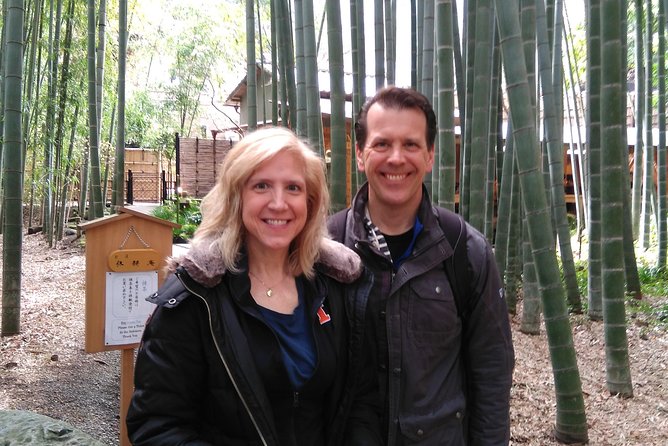
This is a walking tour, and the meeting or pickup is on foot within a designated area of Yokohama or Kamakura. There is no private transportation included. You pay train, taxi, or other transit fares yourself.
That arrangement keeps the tour flexible, but it also means you should wear comfortable shoes and be ready for stations, sidewalks, hills, and temple steps. Rain can change the feel of the day. A guide named Shinji successfully led a full Kamakura visit in wet weather, but slippery stairs and reduced comfort are real considerations.
The private format helps with pace. You can ask for fewer stairs, spend longer at a favorite temple, or stop for ramen. Guides have helped visitors obtain IC cards, arrange taxis, and navigate trains, which is valuable if Japanese transit feels intimidating.
Still, tell the operator your priorities before the start. The guide can customize three or four sites, but not all 26 options. Also remember that guide entry fees are covered only for sights listed among the tour choices. Your own entrance fees remain extra.
Free cancellation is available up to 24 hours before the start time. A late cancellation or change is not refundable, and one booking was cancelled because a guide could not be secured after a date change during a busy period. If your schedule is tight, avoid changing dates at the last minute.
Who should book this six-hour tour?
I would choose this tour if you want a private day with room for questions and personal interests. It suits first-time visitors, families, older adults who need a gentler pace, and anyone who wants help linking temples or city sights by public transit.
It is also a good choice if you cannot decide between Kamakura’s religious sites and Yokohama’s food and port districts. Just choose one city as the main focus, then add the other only if your selected stops are close and your group is comfortable moving quickly.
The tour is less suitable if you want a low-cost group excursion, a private car, or a fixed sightseeing route with every expense included. At $154.84 per person, the guide service is the product. You still need to budget for transit, admissions, and lunch.
Should you book it?
Book it if personal attention, local explanation, and a flexible route matter more to you than the lowest price. I especially like it for Kamakura, where five great Zen temples, Shinto shrines, the Great Buddha, bamboo, and hillside sites can be hard to arrange in a sensible order.
For Yokohama, book it when you want help connecting several themes, such as Chinatown, port history, Yamashita Park, and Minato Mirai. Before paying, send your guide a short priority list and state any stair, weather, or food concerns. That small bit of planning will help turn six hours into a focused day rather than a hurried sweep.
FAQ
How long is the tour?
The experience lasts approximately six hours.
Is the tour private?
Yes. Only your group participates, and you cannot combine multiple tour groups.
Which cities can I visit?
You can choose an itinerary in Yokohama, Kamakura, or a combination of both, depending on the route and available time.
How many sites can I choose?
The tour includes a customizable itinerary of three or four sites from the listed options.
Is transportation included?
No. Transportation fees are not included, and there is no private transportation. Travel between Yokohama and Kamakura takes about 30 minutes each way.
Where does the guide meet me?
You meet the guide on foot within the designated area of Yokohama or Kamakura. Pickup is offered on foot rather than by private vehicle.
Are entrance fees included?
No. Entrance fees are not included for you. Guide entry fees are covered only for sights listed among the tour choices.
Can I cancel for a refund?
You can cancel up to 24 hours before the experience start time for a full refund. Cancellations or changes made less than 24 hours in advance are not accepted for a refund.
New on our Yokohama list
- Tokyo Full Day Tour with Licensed Guide and Vehicle from Yokohama★ 5.0 · 26 reviews
- Daikoku & Tokyo JDM Night Tour in R34 or TopSecret R35 GT-R★ 4.8 · 27 reviews
- Yokohama: Guided Cup Noodles Museum Tour & Make Your Own Cup★ 4.9 · 27 reviews
- Tokyo: Kamakura and Yokohama Private Day Trip with Guide★ 4.6 · 27 reviews
- Private Kamakura plus Yokohama Tour – English Speaking Driver★ 4.5 · 28 reviews
- Japanese Tea Ceremony at Private Home in Yokohama, suburban Tokyo★ 5.0 · 32 reviews
- Yokohama 4hr Private Tour with Government-Licensed Guide★ 5.0 · 34 reviews
- Private Car Tour to see Highlights of Kamakura, Enoshima, Yokohama from Tokyo★ 5.0 · 48 reviews
Kamakura Tours, compared.
Kamakura & Enoshima Day Trip including Temple Tickets
Read our review →
Mt. Fuji, Kamakura, Big Buddha, & Lake Ashi Day Trip
Read our review →
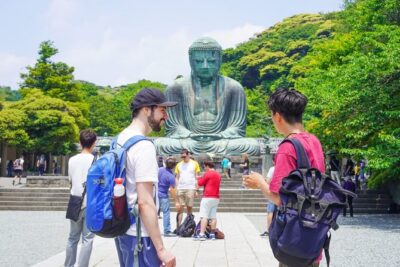
Kamakura Historical Walking Tour with the Great Buddha
Read our review →
Kamakura Private Tour: Temples, Nature, and the Great Buddha
Read our review →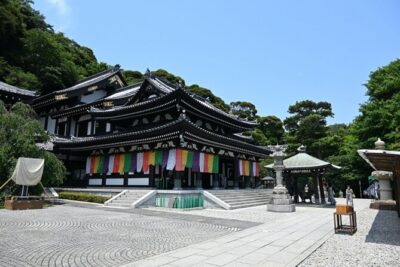
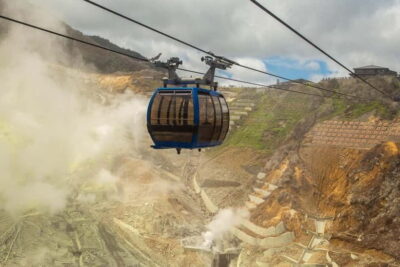
Sea of Mount Fuji, Hakone Ropeway, Ōwakudani, Enoshima
Read our review →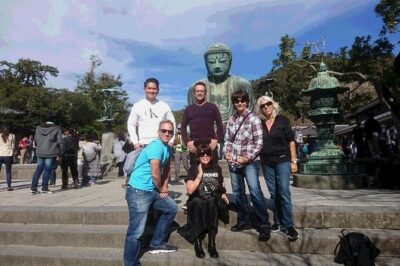
Kamakura 8 hr Private Walking Tour with Licensed Guide from Tokyo
Read our review →Browse the lists this tour appears in